Why K-12 Education Is Broken for High Achieving Kids | Niels Hoven (Mentava)
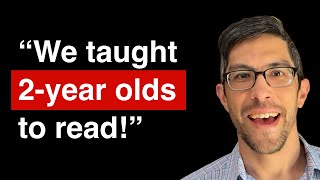
Niels Hoven, founder of Mentava, argues that gifted kids get bored in traditional schools because the system isn't built for them. He discusses how AI could work as a personalized tutor and why most ed-tech fails to actually change how kids learn.
You built this new tool, you know it's going to help kids learn. I remember one response where a teacher said, oh, that's really cool, but won't some kids then learn faster than others? They're like, like, this is a non starter. If this tool is going to allow some kids to learn faster than others, then we can't use it. The idea that you should take kids and give them material based on their ability, it's just a non starter with some of the most powerful educational organizations in the world. The craziest thing about this is that when you implement all these programs, when you basically nerf the public school system and say, okay, we're going to ensure that this school system does not give opportunities to high achieving kids, then who is really bearing the price of that? Like, who are you hurting the most? Because the rich families, they're the ones who can afford these after school programs. They can send their kids to private schools, they can afford private tutors. It is the families without those financial resources who are dependent on those public school systems to create those opportunities for their kids to level up that are being penalized by this, I think, very narrow sighted perspective.
All right, welcome everyone. My guest today is Niels Hovind. Niels is the founder of Mentaba, an education startup that's teaching two year olds to read at a second grade level and more. I'm excited to talk to him about why he thinks K12 education is broken for high achieving kids and how he's building his software to enable personalized learning. And also we'll close the discussion about AI. Welcome, Niels.
Thanks so much for having me here. Peter, it's a pleasure.
Yeah, thanks so much. So you're a parent and I'm a parent too. Why don't we start this? Like, what do you think is the problem with K12 education policy in this country? I guess what's good about it and also what's problematic about it.
Yeah, so I think this is something that a lot of parents just don't realize until you actually have your own child in the school system and you get to see it for yourself. And the thing is that modern education policy, particularly here in the US is not focused around helping every kid reach their potential. It's just not the goal. The goal of modern education policy is closing the gaps between high achievers and low achievers. And of course that's an important goal. It's a noteworthy goal and it's absolutely something that we should be working towards. But when that is the only goal that you're optimizing for what you see in practice is that the way schools try to close that goal is by making sure that high achieving students don't have the opportunity to succeed. And I mean, it sounds crazy to think about that, but you go look at districts like San Francisco for example, where you are literally just not allowed as a teacher to teach material above grade level. Lots of schools all around the country are getting rid of their accelerated programs in math and science, essentially trying to close the gap between high achievers and struggling students by limiting opportunities for those high achieving students to succeed and send their kids to private schools. They can afford private tutors, they can leave the Bay Area and find a better school system. It's the families without those financial resources who are dependent on those public school systems to create those opportunities for their kids to level up that are being penalized by this. You know, I think very narrow sighted perspective.
Yeah, you're basically, yeah, you're basically lowering the bar for everybody. And yeah, like, you know, I have money to spend to send my kids to these after school programs, but yeah, if I've, you know, this stuff costs like hundreds, thousands of dollars every month and if you don't have money, then you're kind of screwed.
Yeah, yeah. So. And I think if you are one of those unfortunate families who has, you know, a high achieving kid but you don't have, you know, money to dump on them, then you're dependent on the public school system that serv. Serve. Serve that kid. And currently it is not doing that.
Personally, you know, I being like, I think the math education in this country is especially lacking for some reason. You know, like I only took grade one in China, but in China like I already knew, like I think in grade one they already started teaching algebra and I have a six year old and I try to introduce some algebra concepts to her. Like you know, you know, three plus x equals five, what is X? Right? And it's like, it's actually pretty simple to grok for a kiss. I don't think it's that complicated. So does it have to be exposed to is.
And I think if you go back and you look at the common core standards, essentially the math standards in the United States, they sort of make sense if you think of them as like a minimum bar that like we expect our kids, every kid to get over this hump. But instead of becoming a minimum bar, instead of becoming a floor, it has become, everybody has been pulled down to that floor. This is the expectation for every kid. And we don't want to allow you to move faster. So what are the expectations, what are the common core curriculum standards for kindergarten? It's basically count to 20 and what are the common core standards for, you know, first grade? It's like add the numbers 1 to 10. Being able to add the numbers up to 20, maybe doing some subtraction. So you probably know, like, if you're hanging out with smart families, with smart kids, you probably know three to five year olds who are well through first grade math standards and they are going to go to school and they will not be taught any more math for the next two years. They will be assumed they'll just sit in the class and be bored out of their minds. And that's what they're going to think that school is.
That's crazy. That's crazy. So, so if you're a parent of one of these, like high achieving kids, like, what do you think is the unlock here? Like, do you just have to keep sending your kids to after school education or like, what can you do?
I mean, it's so hard because it's like, what is the unlock during the school day? There's only so much you can do to affect what your child is being taught in school. And I think the biggest takeaway that I can give parents is that you should never be ashamed of advocating for your own child. If you have a child who, who is capable of more, who needs more opportunity, whose learning needs are not being met in school, if they are bored in school, the only way that they're going to, that they're going to get those opportunities is if you advocate for them. And the crazy thing is this is not just private schools. I mean, this is not just public schools. These attitudes infiltrate private schools as well. I, I have a friend who is a, is a hedge fund manager in New York. So essentially, like, money is not, you know, money is not an issue. They can afford anything they want. Their kids were in one of the best schools in Manhattan and his kid was not being supported in math and he went to the school to advocate for his kid and the kid and the school basically said, look, there we have a whole waiting list of people who would be dying to take your kid's place in our school. So if you don't like the way that we teach math, you are welcome to like clear out and we'll find someone else to take your spot. And that's what he ended up having to do. So like, this person for who money is essentially not an option, is now homeschooling his Kids because like, there was no price that could buy them an acceptable education.
That's crazy.
Yeah, it, it is great. Now, now I think that there is essentially the, the needle that we're trying to thread that I hope we can thread with Mentaba, is, is independent study. And this is actually how I learned math as a kid. And so when I was a kid, I was a year ahead of math in, you know, in elementary school and like, you know, K through third grade. And that worked fine in like in second grade, I would just go to the third grade classroom and I would learn math there. And then in third grade, my school didn't have a fourth grade, it only went up to third grade. So they didn't have a classroom for me to go to during math class for an hour. I would just go to the back of the classroom, I would study out of a book and then at the end of the class, then I would rejoin my class, my peers for the rest of the day. And it was fantastic. I got to go to a public school with friends from my community, with kids my own age. I got to study at my own pace. I didn't have homework. I essentially did that for the next four years until I rejoined a regular class in seventh grade for pre calculus. That is a way that kids can basically, to me, when I think about it, is the unbundling of school. So school is a bundle of childcare plus academics. Lots of companies that come into this space try and replace that entire bundle, which is very hard, it's very expensive. Childcare is very hard and labor intensive to replace. So let's not replace that piece, let's just replace some of the academics piece wise by allowing kids to do some independent study and ensure them. So when you basically nerf the public school system and say, okay, we're going to ensure that this school system does not give opportunities to high achieving kids, then who is really bearing the price of that? Like, who are you hurting the most? Because the rich families, the wealthy families, the families with other options, they're the ones who can afford these after school programs. They can send their kids to private schools, they can afford private tutors, they can leave the Bay Area and find a better school system. It's the families without those financial resources who are dependent on those public school systems to create those opportunities for their kids to level up that are being penalized by this, I think, very narrow sighted perspective.
Yeah, you're basically, yeah, you're basically lowering the bar for everybody. And yeah, like, you know, I have money to spend to send my kids to these after school programs. But yeah, if I've, you know, this stuff costs like hundreds, thousands of dollars every month and if you don't have money, then you're kind of screwed.
Yeah, yeah. So. And I think if you are one of those unfortunate families who has, you know, a high achieving kid but you don't have, you know, money to dump on them, then you're dependent on the public school system to serve, serve that kid. And currently it is not doing that.
Personally, you know, I being like, I think the math education in this country is especially lacking for some reason. You know, like I only took grade one in China, but in China like I already knew, like I think in grade one they always started teaching algebra and I have a six year old and I try to introduce some algebra concepts to her. Like you know, you know three plus x equals five. What is X? Right? And it's like, it's actually pretty simple to grok for kids. I don't think it's that complicated. So just have to be exposed to it. It might be.
It is. And I think if you go back and you look at the common core standards, essentially the math standards in the United States, they are, they sort of make sense. If you think of them as like a minimum bar that like we expect our kids, every kid to get over this level, this hump. But instead of becoming a minimum bar, instead of becoming a floor, it has become, everybody has been pulled down to that floor. This is the expectation for every kid and we don't want to allow you to move faster. So what are the expectations, what are the common core curriculum standards for kindergarten it's basically count to 20 and what are the common core standards for? You know, first grade it's like add the numbers 1 to 10. Being able to add the numbers up to 20, maybe doing some subtraction. So you probably know like if you're hanging out with smart families with smart kids, you probably know three to five year olds who are well through first grade math standards and they're going to go to school and they will not be taught any more math for the next two years. They will be assumed they'll just sit in the class and be bored out of their minds and that's what they're going to think that school is.
That's crazy.
That's crazy.
So, so if you're a parent or one of these like high achieving kids, like what do you think is the unlock here? Like do you just have to keep sending your kids to after school education or, like, what can you do?
I mean, it's so hard because it's like, what is the unlock during the school day? There's only so much you can do to affect what your child is being taught in school. And I think the biggest takeaway that I can give parents is that you should never be ashamed of advocating for your own child. If you have a child who is capable of more, who needs more opportunities, whose learning needs are not being met in school, if they are bored in school, the only way that they're gonna. That they're gonna get those opportunities, you advocate for them. And the crazy thing is this is not just private schools. I mean, this is not just public schools. These attitudes infiltrate private schools as well. I. I have a friend who is a. Is a hedge fund manager in New York. So essentially, like, money is not, you know, money is not an issue. They. They can afford anything they want their kids who are in one of the best schools in. In Manhattan, and his, you know, kid was not being supported in math, and he went to the school to advocate for his kid. And the kid. And the school basically said, look, there we have a whole waiting list of people who would be dying to take your kid's place in our school. So if you don't like the way that we teach math, you are welcome to, like, clear out and we'll find someone else and take your spot. And that's what he ended up having to do. So, like, this person for who money is essentially not an option, is now homeschooling his kids because, like, there was no price that could buy them an acceptable education.
That's crazy.
Yeah, it is great. Now. Now I think that there is essentially the needle that we're trying to thread that I hope we can thread with Mentaba, is. Is independent study. And this is actually how I learned math as a kid. And so when I was a kid, I was a year ahead of math in, you know, in elementary school and, like, you know, K through third grade. And that worked fine in, like, in second grade, I would just go to the third grade classroom and I would learn math there. And then in third grade, my school didn't have a fourth grade. It only went up to third grade. So they didn't have a classroom for me to go to. And so that year, during math class, for an hour, I would just go to the back of the classroom. I would study out of a book, and then at the end of the class, then I would rejoin my class, my peers, for the rest of the day. And it was fantastic. I got to go to a public school with friends from my community, with kids my own age. I got to study at my own pace. I didn't have homework. I essentially did that for the next four years until I rejoined a regular class in seventh grade for pre calculus. And so like, that is a way that kids can basically, to me, when I think about it, it is the unbundling of school. So school is a bundle of childcare plus academics. Lots of companies that come into this space try and replace that entire bundle, which is very hard, it's very expensive. Childcare is very hard and labor intensive to replace. So let's not replace that piece, let's just replace some of the academics piece wise by allowing kids to do some independent study and ensuring that they can meet their own learning needs. And so really from the beginning, that has been our goal with Mentava, to essentially build this track where kids can support their own learning needs if they are not in a place where to have a school or a teacher or even a parent who is able to support those learning needs for them.
Yeah, because you know, like, going back to the, you know, what can the parents do? Like, you know, if I ask the school to like, hey, you know, let my kids go to the third grade classroom to learn math or something, or just go to third grade in general, like, that could affect her social development. Right. Like all of a sudden there's like a bunch of big kids.
Yeah, I mean, I would say so. I'm not personally a huge fan of like skipping grades, whether it's for one class or like, you know, for classes in general or like, you know, just moving up to the next grade. But on the other hand, there's a lot of research behind it that says it's not that bad and a lot of kids really like it. So like, I don't know about the social development, but the problem, the real problem is that it doesn't actually solve the problem. Because the problem is not that they're like a year up in math. The problem is that for a lot of these kids, they can learn two or three years of math in a single year. Like they want to learn faster. They're hungry to learn. You've seen kids who are like learning to walk, they fall down to get up again. They fall down to get up there. They're so hungry to make that progress. And for a lot of kids, they have that in school also. And so it doesn't matter if you go to the next year up because that class is still learning One year of math year, it's still really boring. And so how do you compensate for a kid who just wants to be learning more, faster?
Got it. That makes sense. Going back to the Mantala story, let's go back to the, to the pandemic for a second. Right. So I believe you and your wife were in a one bedroom apartment and you had three kids. And the kids were pretty, pretty young, right?
They're like, so, you know, we were in a 600 square foot apartment in San Francisco with three kids. I think they were like, you know, a newborn age. You know, a newborn age, basically. 0, 2 and 4. And the pandemic hit and you know, people, we used to say, oh, the thing that makes our apartment life work is because during the week our kids are in daycare and on the weekends we spend all weekends in the playground. And they, and then the pandemic hit and they closed down the daycares and they closed down the playgrounds. And so it was, you know, it's hard to maintain sanity.
Yeah, exactly. How do you stay sane during that period? You actually like build a. You actually taught your kids to learn, right? Or like to learn themselves. How did you do that?
Yeah, so, you know, my, my wife and I were still both were, we were working full time jobs like, and we, we kind of like shifts during the day. So I would do like, you know, calisthenics with the kids in the apartment in the morning to try to like burn off a little bit of steam. But then like, they're hungry, they want to learn. So, so what do we do? I have, you know, I had two kids who are hungry to learn at the same time. I can't teach both of them at the same time. We're also taking care of the newborn while also, you know, doing my own work. And so the only way to essentially make that work is to give them the skills to teach themselves. And it turns out that kids can build those skills a lot faster than you would think, especially with the new tools that we have with software. And one thesis that we've always had from the beginning for mental is that the hard part of learning, the hard part of solving education is not actually the teaching, it's not the curriculum. It's like, we know how to teach reading, it's phonics, we know how to teach math, we've been teaching math for hundreds of years. The hard part is just keeping the kids interest and keeping them motivated. Motivated during the period of time that you need them to focus. And fortunately that is also A solved problem in gaming, right? You go walk through a casino, walk through the slot machine aisle, and look at all the people just pulling those handles over and over again and tell me that we haven't solved motivation, we have solved human motivation. So the hard part is basically, how do you put those two together and solve motivation in a piece of software that is also doing a legitimate job of teaching and then get that to a kid? And so I went out looking and tried to find some pieces of software that actually did this. And it turns out that, you know, most education software is actually pretty terrible. It's more designed for edutainment. It's babysitting without guilt. But we found a couple pieces of software that I thought were pretty good at the time. One of them was Headsprout, which is a phonics, which was a phonics based, essentially learn to read piece of software. It wasn't great, but it was good enough. You could see the direction where it needed to go. And it was good enough to essentially get my kids learning. And then after Headsprout, we moved into Dreambox, which is still alive. It's a. It's a pretty good piece of sort of gamified math learning software. I think it's got some issues, but, like, it was also good enough for my kid. And I. I liked both of those, and they were super effective.
So you just gave them, like two separate iPads and then, like, load software.
So I only had one of whom was old enough to read. So the oldest one got the iPad and essentially learned to read on that. And then once he was able to read, then I migrated him into math, at which point my next youngest daughter was like, I want to play all these games also. And I said, you know, she was two at the time. And I said, oh, you know, you're far too young to learn how to read, but, you know, we have this software, so let's try it. And then she learned to read. So, yeah, it worked out really well.
Yeah, I mean, the iPad is like, you know, the iPad, like, parents, you know, like, should avoid screen time. But I think it's not the iPad problem. I think it's the stuff that's on the iPad. Right. Like, if you just let your kids watch YouTube, like, they usually go down the wrong direction, so.
Exactly. Right. You know, I think YouTube is like, it's like brain candy. It's, you know, it's junk food for the brain. And. And, you know, when we say that junk food is bad, we don't ban all food. We Just ban the bad food. And the problem is like, I see why parents come to this conclusion because you look at essentially, you know, if the iPad, if the screen is a grocery store, basically 99.9% of everything that's available to it is junk food. So you look at it and you're like, okay, this is all junk food, let's ban it entirely. But if you look for it, there is, there are examples of really high quality software and we're trying to, we're trying to make that better understood. I think there's a big difference essentially between passive consumption and active learning. You know, active learning on a screen tends to be self limiting. The kids will, your brain gets tired, you're done after, you know, for a young kid, 15, 20 minutes, like that's all the learning you're going to do at that sitting and then you're done with the screen.
Yeah, I had to like delete YouTube and like, you know, they have YouTube kids, but I had to like limit to like five channels that I approve.
Yeah, they can watch that. Yeah, it's fun actually, because with our customers, the parents who are strictest about screen time are the ones whose kids tend to do the best in Metaba because they're not used to essentially this brain rot on YouTube. It's not like our vegetables are no longer competing with candy. The kids are like, oh, I can do screen time. This is amazing. Let me just learn how to read super, super fast and they have a great time.
Got it. That makes a lot of sense. Yeah. So let's talk about Mentala. So what is the software? Like, what does the software do? And like, why did you want to focus on the early age for the first version?
I guess?
Yeah.
Yes. I don't know if this is something that I've talked about that much, but when I started Mentava, what I actually wanted to teach and still want to teach is actually math. What I really want to teach is math and computer science because that's where I see the biggest opportunity to essentially accelerate kids far beyond what's possible in schools. But in order for kids to be able to teach themselves math, first they have to be able to read. And so during the early pilots of Mentaba, I actually was doing both of these at the same time. I wanted to focus on math. And I said, okay, if you have a three year old who's able to read, or you have a 4 year old who's able to read, just come to me and we'll focus on math. And if they're not able to read yet. Like, well, okay, we'll figure out how to get them reading. And then it turned out nobody had 3 year olds and 4 year olds who were able to read. And I was like, what? My 3 year olds and 4 year olds, they're all reading. Why is nobody else teaching their kids to read? And so if we wanted to accelerate math, it turned out that we needed to teach kids to read first. And so that's what we've started doing.
And like a very tactical thing to learn how to read. Like, you have a booklet on this. Right? But learning the ABCs doesn't actually help you learn how to read.
I think I've sort of become less dogmatic about this lately. But it is something that I still believe that if you have an early reader, learning the names of the letters is not helpful. Because, you know, if you're sounding out the word cat, the names of the letters C A, T, like that does not help you sound out that word. Like, the sounds are C. And so if you. It's very confusing to teach a kid that this letter is, you know, the letter R. But don't say R. You know, when you read it, say R. You know, my daughter, we were learning the word rat. She was learning the word, the sound at home. And then she went to school, they taught her that, you know, this is an R. And then she came home and started reading R rat. So I actually had to unteach her what they were teaching her in school. And it's very frustrating.
Yeah, they need to have like the ABC Sonic episode phonics. It's not like the actual LAY address.
Yeah, you know, I think. I don't know if I don't have book. We actually, you know, we actually built a book to do exactly that. You know, the Alphabet book based on phonics. Because there's like, there's 44 sounds in the English language. You know, there's only 26 letters. So most of the sounds in English are actually written with more than one letter. And at the early ages, what's important to learn is the sounds, not the letters. And so we built an Alphabet book based around the sounds. It's actually available on our website. You can download the ebook for free@montabo.com, but we're very close to having the print version ready, hopefully within the next couple weeks.
That's awesome. Yeah, I'll definitely buy that. So I got to try Mentala. You gave me access to try it with my kid. And so, you know, just describing the software or maybe it's changed recently. But like when I tried it, it was like a bunch of farm animals, pretty cute. And a lot of it was, you know, like teaching the phonics, kind of repeating the sounds, playing different kinds of games to try to kind of get the kid to internalize the stuff. Right. Is that still what it's like?
Yeah, it basically comes back to our philosophy that the real problem that we're solving for is motivation. So teaching kids to read is not rocket science, it's phonics. So essentially it's these letters make these sounds, you memorize all of them and then you learn to blend them together. That's basically the entire process of learning to read. And then English has some tough sounds, so it takes a while and there's a bunch of sight words you have to learn. But basically learn the letter sounds and learn to blend them together. And like I said, there's about 50 letter sounds in English. So give an hour to memorize each one, maybe two hours. So about 100 hours to learn to read is what it takes. And so it's just. Okay, how do you keep a two year old or a three year old or a four year old engaged and like actively focused on learning for a hundred hours? And the answer to that is, you know, animated farm animals and also a lot of ux. A big focus on how do you make this usable and intuitive for a two year old who doesn't know how to read yet.
Got it. And like you have a lot of like success stories on your website. Like what has been some like really awesome success stories. Like our kids learning how to read like after a month.
Yeah. So I think so we are just having the first wave of customers essentially complete our curriculum and which gets right. We're aiming for a second grade level. I think right now we, I would say we built up to about mid first grade. We're very close to like getting to second grade. But we had, we had the parent of a three year old write in and say, I think it took about three months for their three year old to make it through our curriculum and you know, essentially get to this mid first grade reading level. Now you know, I will say like, I will candidly say like that is an outlier. Like not all three year olds are going to learn to read at a first grade level in three months. And that particular three year old had had some practice before. But at the same time essentially like this is a business for outliers. We, we are building this for those outlier students. Whose learning needs are not being supported. You know, in schools that are aimed at the average, you know, to, you know, you know, below average student, does.
The parents still have to, like, make the kids use the software, or are the kids like, hey, mommy, I want to use this now?
So I'd say we have a mix. I would say that the. If you were a parent coming in, I would say we want to set the expectation that you will probably be. That you will probably have to encourage your kid to stay on task. Now, I think we have a lot of. We do have a lot of families, especially the families whose kids have no other exposures to screens, who say, like, their kids love it and they just want to do it every single day. But I would say the expectation going in would be that the software is going to do the teaching and you as the parent, are going to be encouraging the kid to stay on task for, you know, The. The. The 20 to 30 minutes a day that they'll be practicing.
Yeah, it makes sense. Yeah. I think it's like. I totally agree with you. I think, like, learning how to read is like step number one, because once they learn how to read, then they can really explore their curiosity and do, you know, read whatever hell they want, you know? Yeah, that's kind of.
Yeah, it's so cool. You know, kids are so curious about the world around them. And especially when you take a little kid, it's. And the ability to read, it's like unlocking this secret key where all of a sudden, like, the, you know, the secret language that was in the menus and the signs and the trucks all around them now. Now they can understand what this world is that they exist in. And it's so delightful.
And what is the math equivalent of that? Right. Because, like, a lot of math education is just like doing a bunch of exercises, like three plus five. And like, how do you make kids curious about math?
Yeah.
Have you thought about this?
So, I mean, we've been so focused on reading that we haven't dug into math that much yet. But I think I can give you my philosophy, which is that basically the big difference between reading and math is that reading is very much about memorization, which sort of makes it easy for us to test. Okay, has this kid memorize this sound where math becomes more about foundational understanding. And so I think the real challenge for any piece of math software is to be able to test a kid and figure out, has this kid memorized this, or do they actually have the fundamental understanding that they need in order to Essentially build the left and next layer of math on top of that. Now at the same time there has been a pushback in math against memorization. And I think you also need that, especially for basic facts. You need to be able to know seven times eight as fast as one plus one. But you get the foundational understanding first. And then essentially that memorization is sort of like building fluency in reading. You need to build that fluency so that you can start building on top of that.
So maybe it's like making the kid realize the everyday use cases of math if you know subtraction or multiplication, like you can count your money or pay you back or something.
Yeah, I think that's an interesting question. That question is sort of about, I guess in games what we say is that the transition from extrinsic motivation to intrinsic motivation. So if you play any game like Candy Crush, when you first start, they shower you with all these sparkles and fireworks. Like everything you touch lights up the screen and you're like, oh, this is so delightful, like my brain needs more of this dopamine. And then eventually as time goes on, you develop the intrinsic satisfaction of solving the letters, of solving the levels, and then some of that dopamine can be backed off and you can enjoy just the process of essentially making progress. And so that's, you know, I'd say that is our goal. You know, in the beginning we're going to shower the kid with dopamine and try and get him hooked. But long term, the only way this works in long term is if they start to appreciate the intrinsic joy of learning and progressing.
Yeah, it's interesting to think about how some of this gaming free to play mechanics, like some of these dark patterns can actually be used for good. You just try to incentivize the right thing.
Yeah, it's very dark. I mean, I spent almost a decade in mobile games. First the first Facebook games and then mobile games building very casual addictive re engagement mechanisms. And towards the end of it I did. I think the reason I left the industry was I was starting to feel like a digital drug dealer. You know, I was building these products that I personally didn't love, that I didn't really believe in, that I didn't really want to use myself or want my own kids to use. And you know, I think I, I can certainly make a case for why it is not as bad as I am framing it. And I think there are a lot of good things that can be said about gaming. But I would say for me on a Personal level, it didn't resonate, and I'm very happy to have essentially, like, found a direction where I can take those.
Yeah.
The skills that I developed, which were super fun and interesting and applied to something that I am more personally, you know, passionate about.
Yeah, you can use the dark side of the force for goodness.
Yeah, yeah, it's, you know, it's, you know, with great power comes great responsibility, so we're doing our best to be responsible with it, but it is a fun challenge.
Okay, so. So now let's talk about. Let's talk about AI a little bit. So have you exposed your kids to any of the AI tools or not so much?
A little bit. We've used, you know, chatgpt a little bit. There's, you know, there's one time when I was hoping to help them, like, start a T shirt business. And so they were like, you know, design T shirt designs on ChatGPT. But, yeah, they know, basically, they know that it exists right now because if.
You think about it, like, you know, just like, talking to AI or like, interacting with AI, like, it can become a really awesome personalized coach. Right. If you.
If there's some guardrails to it, I think there's. I think there's so much potential there. So in our software right now, we're not really using much AI. And that's. That's because my belief is that essentially that the core learning pathway, you know, whether it's reading or math, is pretty linear and pretty predictable. Predictable. And so you can kind of just build that out and optimize it by hand. For me, the real power of AI is in its adaptability. And so what I see is the main use for AI is essentially having this very core optimized learning pathway that is probably somewhat deterministic, not AI based. But then when someone gets confused and falls off of it, then you have the AI teacher essentially performing like a coach to essentially catch you in that safety net and guide you back onto that optimized learning pathway.
Yeah, that makes a lot of sense to me. Yeah. Because the AI is really patient. It's available anytime. So if you don't understand geometry or something, it can try to get to explain it.
Yeah. Now, I mean, I may be sort of underselling AI, like, maybe there is a world that might not be too far off where you don't even have to optimize that core learning pathway because the AI into math. @ which point my next youngest daughter was like, I want to play all these games also. And I said, you Know, she was two at the time and I said, oh, you know, you're far too young to learn how to read, but you know, we have this software, so let's try it. And then she learned to read. So yeah, it worked out really well.
Yeah. I mean, the iPad is like, you know, the iPad, like parents, you know, like, should avoid screen time. But I think it's not iPad problem. I think it's the stuff that's on the iPad. Right. Like, if you just let your kids watch YouTube, like, they usually go down the wrong direction, so.
Exactly right. You know, I think YouTube is like, it's like brain candy. It's, you know, it's junk food for the brain. And you know, when we say that junk food is bad, we just so good at it, it'll do it anyway. But at least for now, that's what we were planning on. Sort of an unoptimized core learning pathway with AI as a safety net.
And let's talk about like older kids for a second.
Yeah.
So how old is your oldest kid now?
My oldest kid is nine now.
Okay, so you're not quite at that high school, like trying to get a college.
Yeah, yeah.
Like what do you think, like by the time your oldest kid grows up or by the time my kids grow up, do you think, do you think getting to like the Ivy League is.
We don't ban all food, we just ban the bad food. And the problem is like, I see why parents come to this conclusion because you look at essentially, you know, if the iPad, if the screen is a grocery store, basically 99.9% of everything that's available to it is junk food. So you look at it and you're like, okay, this is all junk food, let's ban it entirely. But if you look for it, there is, there are examples of really high quality software and we're trying to, we're trying to make that better understood. I think there's a big difference essentially between passive consumption still going to be.
A thing or you think it's going to be is that different or like what's your.
I hope it won't be, but I think it probably will be. Like they're a very entrenched institution. I think of them as the college credentialing cartel and active learning. You know, active learning on a screen tends to be self limiting. The kids will your brain gets. If you've done any research into college, you know that the main value of college is not the learning that happens there, it's the credentialing and so I think it's actually a really interesting question to ask. Why is this happening? Why have these institutions that charge half million dollars for this attire, you're done after, you know, for young K15, 20 minutes, like, that's all the learning you're going to do at that sitting, and then you're done with the screen.
Yeah, I had to like delete YouTube and like, you know, they have YouTube kids, but I had to like limit to like five channels that I approve.
Yeah, they can watch that. Yeah, it's fun actually, because with our customers, the parents who are strictest empty credential, why are they able to persist? And my belief there is that it's actually an artifact of this K through 12 system, which is trying to essentially optimize for equal outcomes. So basically you have this K through 12 system which is trying to ensure that kids come out of the system as indistinct, Englishable as possible. And then you have employers who want to say, okay, I don't want just any kid. I want the top kids. I want the very, very high achievers who are motivated in a high agency about screen time are the ones whose kids tend to do the best in Metaba because they're, they're not used to being very smart and, but they can't find us. And so colleges essentially become the middleman. They're like the talent scouts. They're like, okay, we are going to go out, we're going to look at SATs, we're going to look at grades, we're going to do the heavy lifting of figuring out, out who the talented kids are. And then we're going to be essentially the kingmakers. We're going to stamp them with credentials, we're going to charge them an arm or leg for that, and then we're going to feed them off to the employers. And so I think it's really interesting to ask what happens in a world where you start allowing those kids in K12 to actually distinguish themselves and show what they are fully capable of. And I think what that starts to look like is it starts to look more like sports. In sports, we don't have this idea that every kid has to look the same. We say, okay, if you're LeBron James, you should, you know, achieve your fullest potential and, you know, you should play in the varsity league, not the JV league. And what happens there? Well, essentially like this brain rot on YouTube. It's not like our vegetables are no longer competing with candy. The kids are like, oh, I can do screen time. This is amazing. Let me just learn how to read super, super fast and they have a great time.
Got it. That makes a lot of sense. Yeah. So let's talk about Vantava. So what is the software? Like, what does the software do? And like, why did you.
LeBron James did not have to go to college because he was able to showcase his potential while he was still in high school. And all the employers, the NBA said, that kid is incredibly talented. He does not need to go to college. We want to hire him right now. And maybe that won't get rid of colleges entirely, but I think what it will do is it'll mean that elite college credential is going to be worth a lot less money. They won't be able to justify the same price tag.
They want to focus on the early age for the first version, I guess.
Yeah. Yes. I don't know if this is something that I've talked about that much, but when I started Mentava, what I actually wanted to teach and still want to teach is actually math. What I really want to teach is math and computer science, because that's where I see the biggest opportunity to essentially accelerate kids far beyond what's possible in schools. But in order for kids to be able to teach themselves math, first they have to be able to read. They can justify right now. And to me, that would be a huge win.
Yeah. Like one of the. So, you know, I've been working at tech companies for a while, and one of the schools that really stands out is Waterloo in Canada.
Yeah.
And, you know, they stand out because all the kids who go there, like, by the time they graduate, they have, like, eight internships at different companies. So. So then, you know, like, my thinking is, like, why don't you get the high schooler to actually just, like, start a company or, like, try to fail them?
And so during the early pilots of Mentaba, I actually was doing both of these at the same time. I said I wanted.
Instead of, like, trying to, like, get perfect grades or, like, you know, do the stuff that does actually matter in the real world.
It's true. I totally agree. I mean, I think you're starting to see that more in the real world, where essentially I would say that colleges are beginning to sort of dilute their own credential. You know, they haven't diluted them so much that they're worthless. But, for example, being hired by Facebook is now a stronger signal. It's a better credential than, say, a Stanford degree. Right. So there are now better credentials out there than a college degree. And you can find ways to get those credentials earlier. And so I think there's some story where Facebook hired, you know, some 16 year old or something who had built an app that had gotten to number one on the app store. And so there, there are credentials that you can get on your own for free or even make money while doing it that are going to be worth more than that sort of standard path credential of going to Stanford to focus on math. And I said, okay, if you have a three year old who's able to read or you have a 4 year old who's able to read, just come to me and we'll focus on math. And if they're not able to read yet, like, well, okay, we'll figure out how to get them reading. And then it turned out nobody had 3 year olds and 4 year olds who were able to read. And I was like, what? My 3 year olds and 4 year olds, they're all reading quant. Why is nobody else teaching their kids to read? And so with my own kids, I really want to find that essentially credential path without having to go play the elite college admissions game.
Yeah, I really strongly believe this too because like that kid who built.
So if we wanted to accelerate math, it turned out that we needed to teach kids to read first. And so that's what we've started doing.
And like a very tactical thing to learn how to read. Like you have a booklet on this, right? But learning the ABCs doesn't actually help you learn how to read.
I think I've sort of become less dogmatic about this lately, but it is something that I still believe that if.
You have an app. Actually, no, I'm like Michael Sabins. He's building skills that actually matter to the real world, right? Like if you don't get a Facebook, he can actually build another app and just like get some real customers. But the people who are playing a game aren't building real skills now.
They're like, yeah, an early reader. Learning the names of the letters is not helpful because you know, if you're sounding out the word cat, I've told my kids that I don't care about their grades. I don't want them to be stressing out over good grades. I don't want them to be stressing out over college admissions. If they find a way to be excellent and like make into an amazing college, that's great. But if they can't, then names of the others, Cat, like, that does not help. You sound out that word, like the sounds are C A T. We will find a way to work around the system. Like, there, those doors are open. You know, everybody, when I wanted to become a product manager for the first time, everybody told me, you know, this was back in the mid 2000s. You cannot be a product manager without going to, you know, business school and getting an mba. And by that point, you know, I had gone through grad school, I dropped out of my PhD. I was like, I am not going back to school again. I will find a way to do this without going back for an mba. And I did the same thing. I built an app and that was enough to talk me through the interview process and get into my first PM role. And then, you know, I was kind of off after that. So, like, there, there are back doors. We'll find them.
Yeah. You know, the funny thing is, if you have an MBA right now, like, and try to become a product manager, it's actually kind of frowned upon. Like.
Yeah, the pendulum swings back and forth. And now it's like, you can't be a product manager if you haven't spent time at a fang. Well, you know, there's a backdoor for that also.
So do you have any, like, closing words of advice for parents, you know, other than obviously?
And so if you. It's very confusing to teach a kid that this letter is, you know, the.
Letter R check out mental. Like, do you have any other closing words, advice?
Yeah, I mean, I think the biggest thing for parents of high achieving kids to understand is that school is not set up to support your kids. You know, the goal of school is to close the gap between high achieving students and struggling students. And so your child will not have their learning needs supported. They will not be supported in learning at their own pace. They will not be encouraged to reach their potential. And so that is your role. You will have to advocate for them if you want them to have those opportunities. And your school will try to make you feel bad or guilty about doing that. They will say that other kids, you know, have all these other needs too, but this is your child. You are their parent. It is your responsibility to them to advocate for them and never let anybody make you feel bad about doing that.
Got it. So. So you want to advocate for them in the school system itself, maybe you want to do some extracurricular stuff. But also, like, I also think the third thing is just like, actually spend time with your own kids and teach them yourself. Because like a lot of parents that I see, like, they send their kids to like, four different classes on the weekends, but they don't actually, like, spend time teaching them themselves.
Yeah, yeah. I mean, I think, yeah, I think that's. When I say advocate for them, it doesn't necessarily mean, you know, push them inside the public school system. Maybe that means go to private school. Maybe that means find a tutor. Maybe that means teaching yourselves. I mean, I think I'm not sure who my audience would be here. If I'm talking to the tiger parent, then I would also say don't push your kids too hard. Like, kids should have a life. If you look at homeschoolers, they spend something like, like two hours a day doing academics, and then the rest of the time they're like, you know, like off playing in the woods, hanging out with friends. Right. It doesn't take that much time to kind of support your child's academic potential. And so, yeah, don't stress them out. Let them enjoy their childhood. Spend a little bit of time each day supporting their academic needs. And then other than that, have a lot of fun.
I love that. I love that. And where can people learn more about Mentava or like, is the software available to everybody now or.
Yeah, we are fully live. Go to mentava.com to check us out. We have our ebook that you can download to. If your child is not yet ready to read with our software yet, you can download our ebook and start teaching them some phonemic awareness and the sounds of English. We have a seven day free trial if you want to try out our software. So give it a shot and see if it's a good fit for you and your kid.
Awesome. All right, thanks so much, Neil. It was such a pleasure ranting about education with a fellow parent.
Thanks so much. This is a really fun conversation for me too.
More from Peter

Dropbox VP's Best AI Workflows to Help You Take Back Time at Work | Morgan Brown


Canva Co-Founder: The AI Playbook Behind the World's Most Popular Design Tool | Cameron Adams

How OpenAI's Head of Business Products Uses ChatGPT to Save Time at Work | Nate Gonzalez

Complete Vibe Coding Tutorial: Build a Full Stack App in 30 Min with AI | Matt Palmer (Replit)


Complete AI Course (2025): Prompting, Evals, RAG & Fine-Tuning | Adam Loving (Meta)



