9/19/25 Phash LIVE
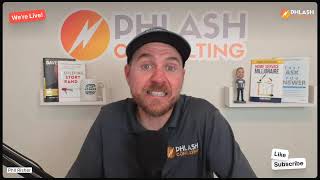
Phil Risher answers questions from home service business owners on growing revenue. Key tactics: optimize for AI search with Q&A content and pricing pages, test discount pop-ups with dollar amounts, max out Google and local service ads over broad Facebook, and build a review-generation system with tracking numbers and instant autoresponders.
Chapters
LinkedIn, YouTube, Instagram, and we have questions from 7 and 8 figure home service business owners. If you have questions, you can drop them in the chat as well. You can also go to flash consulting.com? and you can submit them there. We're all about growing home service businesses, so whatever we can do to help you grow your business, drop the comment and we'll add it to the queue. All right, so first up. Oh, waiting for LinkedIn to connect on here. All right, the first question that we have is, let's see. We are a seven figure gutter cleaning company with two locations. We're busy right now, but curious how to keep momentum going. And we have a couple questions. All right, good. So they're a gutter cleaning company, seven figures, two locations busy. But they're trying to figure out how they're going to keep things going. And the first question that they have is what do we need to do for AI search? All right, well, you're in the right place for that. So I just did a webinar for AI search and we talked about the things you need to be doing for your website and content that's going to help you rank for AI search. So those things are one, you need to be creating content with the they ask you answer framework. So there's this new thing called aeo. What A is basically answer engine optimization. Oh, hey Jeff from New Jersey, thanks for joining, man. What AEO is answer engine optimization. And inside of ChatGPT, these other AI platforms, they are pulling content from all across the Internet. These are literally large language models that are getting trained on content. And so the content that you want to be creating for your website is what people are asking. The traditional search on Google is like H vac repair near me. But when someone is using AI platforms, they're asking more Q and A type stuff. They're saying, well, how much does it cost? How long does it take? This is the content that you need to be creating on your website and inside of social content that's going to be training these large language models. So that's the first thing. The other thing that we found in our research is that having a website that makes it very, very easy for customers to use, that helps AI recommend you. Because Google, ChatGPT, whatever, they want to make the best recommendation possible. So that way people trust their recommendations. So you need to build trust with these platforms. And the way that you do that is you make your user experience so nice on your website, so easy on your website that they say, wow, this is the company you want to use. How do you do this? You create an estimate calculator, you create a pricing page, you have a seven second form which makes it easy. On mobile you want to have sticky headers, call now, book now chat widget. This basically is signals back to them saying that you clearly care about serving the customer and educating them. And this is going to allow them to say hey, we want to recommend this company. One other thing that we found in our research was that on your Google business profile in particular, you need to make sure that you're responding to reviews and posting on your Google business profile regularly. Why is this important? It's a trigger back to these platforms that says that you care about customer service and that if something goes bad you're going to be there to respond. So even 1 stars but also 5 stars responding to reviews shows that you care. Google says that this helps with their rankings and also ChatGPT. If you were to go to ChatGPT, how should I rank my home service business on your platform it's going to tell you. Response reviews is one of the things as well. So that's some of the things you can do in your content on your website is make it very easy to utilize. All right, the same seven figure gutter company with two locations that's busy. Should we keep discount pop ups on the website or switch that the offer? All right, well actually let's see. Jeff just asked a question. So let's see what this question is. Have a one day bath company almost one year old, 1.3 million in sales, dude, killing it. One year. Awesome. Primary marketing budget is lead aggregators. Should I be concerned about our lack of Google investment? Lsa gmb. Yeah. You know the, the thing with, with your just just on lead aggregators is that you know, thumbstack, they could raise their cost per lead right away and, and then you're like okay, well now I got to find another lead aggregator. So I don't think that it's bad. Like you have a system that's working that's got you a million dollars. However, what I would say is that your reputation needs to be built on other platforms. So basically capture the lead on these lead aggregators, num Tech or whatever it is, but get reviews and build a brand awareness on Google and other platforms like your website and stuff. Because what you don't want to do is be bound by these lead aggregators and have no brand or system that actually brings leads in and that you're not paying for like through organic traffic or through these other Platforms. I think that paid ads and running that is a very scalable way to grow your business. And I think what you're doing is fine. There's also better ways by building brand in the long term that's going to help compound that. So that way you're not as dependent on lead aggregators. So what does this look like? Like, let's say you're on thumbtack, for example, you get customers coming in, right? You did a million dollars in sales. So if you do bath stuff, you know your average tickets, maybe five or $10,000. So all those people should be leaving you reviews on Google. And also what I would recommend doing is turning their projects into case studies for your website because then it's real content that's local with before and after pictures and also maybe like a pricing guide or something like that that you can use on your website in your sales process. But more importantly, it's going to allow you to rank for SEO. Make sure your title tag meta description. At H1 you say bathroom remodel in. You said you're in New Jersey. So like whatever specific city in New Jersey and then say in their title tag put that in your meta description in your H1, have that rank, use that in your sales process. And it's going to also be used, you know, for social content, stuff like that. That's the first thing we did. I have a video coming out actually. Yes, our rep can, yes, our rep. Can you help? That's something that we do. Yeah, we could probably help you with that, but we have a webinar that I did two days ago about AI search and branding that that's going to come out on our YouTube channel in a couple weeks. That would be very helpful for this. If you, if you, if you were to set up a meeting, we can go through it. I can send you the replay. Also, if you go to Instagram or LinkedIn and shoot me a message, I'll send that over to you. Really great question though. All right, so back to the seven figure gutter company. If you have any other questions, obviously put them in the chat because I'm here talking. Thanks so much Jeff for sending that over. So should we keep discount pop ups on the website or switch the offer? All right, so I was just on a call yesterday, $11 million H VAC contractor. And they were like, hey, should we put a pop up on our website? Because it slows down our page load speed. And what I recommend to people is this, if you go to an e commerce website and you're going to buy a new shirt or something, they're going to give you some type of like 10% off on your website. And what you want to do is you want to make sure that on your website that you're converting leads at the fastest possible. So we see a lot of times people are like yeah, we have this promo, we give $25 off this, we give a free this when we do this. This is the perfect pop up on your website that's going to convert leads. You don't want to bury that in your content. You don't want to hide that on your call when someone calls in. You need to put that right front and center on your website. There are ways to do this that's not going to hurt your page load speed and allows you to have a pop up on your website. So the two different pops ups like this company's talking about is do you want a discount pop up or do you want an offer pop up. And what my recommendation is is to play with both of them. So if you do a discount pop up then I would recommend doing one that's a dollar amount, not a percentage because people don't know about the percentages but like hey, you know, get a hundred dollars off when you sign up for this or get $10 off when you do this, $25 off when you do this. Those type of offers correlate very well with people and they'll convert. The other thing I would say is if you do an offer, you need to make it make sense. So if you sign up for this, then you also get this. If you sign up for that, then you also get that. A really, really great way to be able to take your pop up and turn it into some type of like package deal that people would get. So really, really either way you should use pop ups, offers or discounts and then test them out. Whichever one works best is good. Real quick, we got some other people hopping on. So if you have questions, drop them in the chat. I'm live so. And the, the chats will pull in directly to my live stream. So drop them in there. We're talking about growing home service businesses. All right, next question that they had is a seven figure gutter company with two locations. How should we structure fall content if we're already busy? Okay, good problem to have. If you're already busy then the content that you should be creating now is straight educational brand awareness. I wouldn't really worry too much about your offer if you're already busy. Obviously you can ramp up but Going into your shoulder season, you might say, like, hey, I'm not, you know, I don't really want to hire people necessarily right now, but what I would recommend doing is making sure that you are creating content that's educating your customer and preparing for your shoulder season. So what that mean? What does that look like in your shoulder season? Let's say it's January, February, March. What are the services that you're doing and how can you prepare your customers or content for that season? This could be like B2B partnerships reaching out to other complimentary services and saying, hey, right now we're, you know, this is what's going on. But going into the shoulder season, here's what we're doing. That's the first thing. The second thing is all the people that you're busy with right now, I would recommend trying to push them off into your shoulder season. Not push them off in a bad way, but say, this is what we used to do was, hey, you got this big project coming up. Is it something that's important to you right now to do, or do you just want to get this done in the next six months? Next six months is fine. And I want to work with your company. Okay, cool. What we'll do is we'll take your deposit now and we'll schedule it for January, February. That way, you know, right now our guys are really busy, but in January, February, maybe we'll give you 5% off or something like that for scheduling out further. Or it's just like, hey, are you cool with doing this in January, February, and then push it out? This allows you to then forecast for shoulder season, get jobs on the books, and still maintain your busy season right now, which is great. So that would be my recommendation. If you're busy now, what should we do for content and how should we be preparing for that time? All right. They also ask, okay, are Facebook campaigns worth it for lead gen? All right. We get this one a lot. Jeff was actually just asking about these lead aggregators, and a lot of times people are doing Facebook ads. Meta, ads, whatever. Here's exactly what we found. I used to be at a home service business, $3 million running ads, Google, Yelp, meta, Angie, Thumbtack, all the stuff. And I was trying to grow. We ended up growing to $5 million. The way we did that was not through Facebook ads. What we found with Facebook ads and what we found as a company with Facebook ads, that it's very awareness oriented. And a lot of times it's people that are looking for a Price or tire kickers. And here's the big problem. This goes back to what Jeff was asking about. Should we stay on these lead aggregators or should we be concerned that we're not as much on Google? People that have done their research and they reach out to you, they are much more warmer and they're going to close. People that are scrolling through Facebook and they see an ad and they say, I wonder how much that costs. They know nothing about you. It's super, super cold audience. So what does that mean is that they're not going to convert as high and you're going to spend a lot of time chasing these people down and trying to convince them to work with you. Where people that are on Google are reading your reviews, they're checking out your website and they're looking for this service and they say, okay, this is the company I want to use and they're going to be much quicker to convert. This is exactly why you could run Facebook ads and get top of the funnel people. But don't expect them to be as warm of leads as Google local service ads or Google Ads in general or even other platforms like Thumbtack or Yelp, because those people are actively searching for this Facebook. They're not. They're just tire kickers and price shoppers. Not bad, but not the best audience that you would get. One other thing on this, when we look at this interest graph, what we look at is where are people going to search for H vac repair near me? They 80% of the time they're going to Google to search for this. So if you're not maxed out on Google, then why move up the interest gaff to more tire kickers and price shoppers when you could go directly to where your clients and prospects are searching and max that out first and make that work. That's our 2 cents on Facebook ads. How do we respond fast enough to Yelp form leads. Okay, so love, hate relationship with Yelp. I used to be in the trades. Everyone's like, you know, I got bombarded with calls about increase my Yelp spend and set up my Yelp profile and people are looking and all the stuff that everyone faces with yo. However, a couple months back, we had a client that spent $10,000 a month on Yelp and generated $117,000 on Yelp 10 extra turn and now. And they're a small fish in a big pond in a big market and they 10x return on an investment and we have a system for that. And I'm going to Break it down. But basically what I'm saying is, you might be like, I hate Yelp, but at the end of the day, we know that Yelp works if you run a good playbook. And I'll give you the playbook of what we recommend. So first you want to use a tracking number. The reason the tracking number is important is because you're able to track your performance based off of the calls that you get. So if you get calls from a tracking number, you can go into your CRM and say, all these phone numbers. What turned into them. Perfect. So that's the first thing, set up a tracking number. Second thing is Yelp has a Zapier integration. This came out a couple months ago where you can actually connect your Yelp messages through Zapier for an auto respond message. Yes. Before you could not do autoresponse. Now you can do an auto response message. So all the messages that come through. You can set up an autoresponder via Zapier with Yelp to send a message back to someone. This will instantly help you convert more leads on messenger because the Yelp message platform is messages coming in all the time and it's hard to keep track of it because it's a separate platform and it doesn't integrate with anything. This is why they set up the Zapier integration for the Yelp auto message back and forth. I was on a call with literally the VP of growth at Yelp two weeks ago because they know this is an issue and they're trying to build things out. And we're actually working with them to come up with a solution on this as well. But right now, the fastest way is Yelp autorespond message via Zapier to get to Yelp messages fast. And there's no way that you're not going to close deals if you have an auto messenger set up and then you capture their phone number and you give them some information right away. All right, we're still live. We got people hopping on. If you have a question for your home service business, you can drop it in the chat. I appreciate everyone that's already messaged as well and commented. All right, next questions we got. I own a seven figure remodeling company struggling to generate consistent leads. We're not about. We're not sure about our ads and want to figure out other channels to get leads. Here are my questions. All right, well, here's here. We got some good ones. We doubled our budget, but clicks fell and cost per click rose. What's happening? Okay, so this is a seven figure remodeling company struggling to generate consistent leads. They doubled their budget, but clicks fell and cost per click rose. What's happening? All right, it's kind of hard to say but what my recommendation here would be, you were running ads, let's say you spend $2,000 and you got your data back and you said okay, my cost per click is this, my return on ad spends this. So we want to do more of this. Then you increase your budget and now it doesn't stay linear, it actually increases your cost per click and you don't get the results that you thought that you were going to get based off of what you received in your return on ad spend reporting, which is first off good, you're, you're tracking your return on ad spend. So you'll know I just increased my budget over here, decrease it over here, which why you should do that. However, sometimes as you, as you probably experience as well that your business is going to be seasonal. So what worked last month might not work this month based off of the season seasonality of your business and the general searches that are going on. The other thing I would recommend looking at as well is inside of your sales process. So okay, your cost per click went up and based off of increasing your budget, which that might not be, you know, the end of the world, it could be based off of the total number of searches that are happening and competition, it's going to increase your cost per click. But what I would look at is inside of your sales process from a return on ad spend perspective. Are there leak points in here? Because let's say you spend a thousand dollars and you got 10 leads. If you only converted two of those, that's 20%. So your return on ad spend is going to be way off to, to what you actually need if you're not tracking that number. So I wouldn't just focus on cost per click going up and budgets doubling and cost per click rising, that kind of stuff. I would look at more return on ad spend heavy sales process of what this actually means for your business, opposed to just focusing on cost per click because cost per click doesn't really matter if the return on ad spends there. If you spend $1,000 and you made 10,000, if your cost per click is $1,000, I'll take that all day long. All right, more a couple more questions here on ads from them. Should we run ads late nights and weekends? Sure. You can actually see when people are clicking on your ads and what the best time to run Is the big thing I would say about this is that if you're not going to be there to respond to leads that come through, if you're not going to be, you know, you get a, you get a form late at night and you don't have any automation set up to text or email these people or you get a form on the weekend and you don't respond to them until Monday morning. Well, yeah, of course don't do that because then you know you're going to be wasting money on leads that are not actually going to convert. So you want to make sure that if you're running it late at night and weekends that you're actually going to get revenue out of it. Not just try to get the cheapest cost per clicks, but whatever makes sense for your business so that you get return on ad spend. All right. Oh, this is exactly what I was saying about your follow up. So this is the question, our follow up isn't consistent. What's the right speed to lead? This is why I'm saying cost per click doesn't matter. If the return on ad spend is there and if the return on ad spend is not there, then I would first look at your follow up and process. And same exact thing with running ads late at nights and weekends. What's your follow up process look like and what's the right speed to lead? The right speed to lead is instant. Okay? The fastest that you get to a lead, the faster you get to a lead, the quicker that the customer is going to work with you. Because here's what consumers are doing. They say, all right, I need to get my gutters clean, I need to get my kitchen remodeled. I need to get whatever the services that you offer. They go to Google 80% of the time and do their research. They might even go to social media and look up before and after pictures, whatever. Then they go to Google and they read your reviews and say, okay, this company has decent reviews. Then they go to your website and they say, wow, this is a decent looking website. I'm going to reach out to this company. They've done so much research before they got to that point. So it's not like they're just randomly reaching out to you, right? They've already read all this stuff. They reach out to you. Now here's what they want. They want to fill out a form and they want a text and an email right away acknowledging that you got it. And maybe a question, ask them for pictures or additional information. So that way when you reach out to them, you're educated on whatever they need. They want to move the ball forward. If they don't get a text or email right away, they're like, oh man, I hope that they got it. Let me just send out another two or three just to other companies to see who gets back to me first and what the process is. Right? That's what people are doing. That's the exact process people are doing. So knowing that, here's what you do. Speed to lead is the most important thing. So set up an automatic text, automatic email. When someone fills out a form on your website, automatically do that. Then you want to get to them obviously as fast as possible. But if you have the automation set up, you're good to go. The other thing you can do is you can actually do what's called a call connect. So in some CRMs or some web form platforms, if someone fills out a form, you can do what's called call connect. That means that it's going to call out to your business and it's going to say, press one and I'll connect you with the lead that you got. A lot of times if people have a CSR who's a little slower to get to leads, this could be a way to speed up that process because they're going to get calls coming inbound that connects them with web forms. So it's a nice way to speed, to lead it for your team. All right, and then the last one question that this seven figure remodeling company had. How do we get more reviews without breaking platform rules? Okay, great question. So what are these platform rules that they might be speaking of? All right, so the platform rule is on Yelp, for example, you can't ask, you can't ask for reviews, you can't solicit reviews, they call it. So don't solicit reviews. If you want to get Yelp reviews, then this is why they have this whole like back and forth. If you want to get Yelp reviews, well, spend money on Yelp and you're going to get more Yelpers, Yelp people that use you that then are going to leave reviews. So this is kind of like the, the, you know, you can't get Yelp reviews if you don't work with Yelp people. So work with Yelp people. And the way you work with Yelp people is you spend Yelp money. However, on Google, you can solicit reviews. You can actively ask customers for reviews. I just had a Jobber podcast come out on this on Tuesday. If you want to listen to it. It's 30 minutes about how I helped the home services I was at. They went from 36 Google reviews to a thousand Google reviews in one year, and now they have over 4,000 Google reviews. And we actually got rid of automation. What we did was we built a culture in their business for getting reviews. So if you're worried about getting more reviews or breaking platforms, my recommendation would be to make sure that you're building it into your culture. All right, we had a couple of people hop on here. So if you have questions, I'm live, so drop a message. We've already got a couple that have come in, and I answered them live. We're talking about growing home service businesses. So whatever burning question that you might have, drop it and we'll get to it. All right, next up, we have a $1.6 million H VAC contractor in Colorado. They're closing out a great year, but they want more clarity and a better plan for shoulder season. What should we do? All right, don't we all? So I was at a home startup business, $3 million. We were going into shoulder season. We had 28 technicians, 13 routes, and March, April, February, March was pretty much our dead season. It would be like, maybe we're running six routes, seven routes. This was before I came in. I had never worked at a home service business. I had never experienced shoulder season. And going into shoulder season, I'm like, okay, is shoulder season a mindset or is it actual, like, results? And I think it's both. But I would encourage anyone going into shoulder season and to not just think of it as like, oh, we're going to be slow, so what are we going to do? Like, now is the time where you need to be proactive about shoulder season and what are you going to do? So my recommendation is this, like, going into shoulders and they have some questions in here. But I'm just going to give you my two cents on shoulder season. Is first off, right now, you need to be preparing for what you're going to do in shoulder season. What does that mean? You need to have a game plan of how are you going to get leads coming into your business. And I'll give you a couple ideas. I. I've been. I've been thinking about doing a YouTube video on this. So if it's something that you'd be interested in, drop a comment about, like, yes, I want to talk about shoulder season or maybe other ideas that you have. But here's what we did at shoulder season. First, we went back through all of Our estimates that we did not close the year before. And we reached out to every single one and we gave them an offer. We said, hey, we have a couple available slots on the, on our schedule for tomorrow. We're offering a 5% discount because we're actually going to be in your area. And we wanted to see if we could come out and take care of that for you. Here's the beauty of it. You already have all these people that already raised their hand and they might not have gotten the work done. And now you just go back through and offer them something and see if they come back onto the books. That's the first thing. Second is look at everyone that you did work for a year ago that hasn't done work with you in over a year. So basically, if it's February, I would go back and look at last February and I'd say, who did all this work, right? Who did dryer van cleaning? Who installed their hot water heater? Who did this? Who did their gutter cleaning? That didn't work with us yet for a whole year. And I would reach out to them and say, hey, it's been a year since we worked with you. It's time to schedule your next. Whatever service it is. We're going to be in your area in the next couple of days and wanted to see if we can schedule that for you. Basically, you're taking people that you know that you should be servicing because you did it last year or the year before, and you're telling them it's time to get your service done again. So you're basically going in and creating this opportunity. The other thing you can do, we did this as well, was people that haven't worked with you for a year before or past. So go back five years in your database and say, if you haven't worked with us in a year, I'm sure there's something that you need at your home. I'm sure you need a gutter cleaning. I'm sure you need a dryer van cleaning. I'm sure you need a hot water heater flush. I'm sure you need a H Vac. I'm sure you need some type of electrical inspection, a plumbing inspection, whatever it is, go back in your database and during your shoulder season, this is where you hit these people. Don't waste it. Use your shoulder season. All these people that you built this trust with, now you go in and you bring them forward. So that's how you can use your past customer database to get this. Now, how do you generate New leads coming into your business from not these past customers and shoulder season. First you want to make sure that you have B2B partnerships, business to business partnerships with complimentary services. What this looks like is you need to have, if you're a roofing contractor, a gutter cleaning company that's going to refer you gutter cleaning company, have a landscaping company that's going to refer you a bunch of them. Because in your shoulder season you want them to be out talking to their customers and bringing in leads for your business. So you need to have this in place. And if you don't have this in place, then in your shoulder season, build this so that way you have leads coming in going forward. Another thing that I have a video about this coming out and I think it's going to be pretty sick. It's about giveaways. And we ran giveaways for our home service businesses, our clients, and some for Flash. Basically, in your shoulder season, giveaways is a gold mine of leads. We ran an oldest H Vac contest. So what we did was we said, hey, submit anyone that has an old H Vac unit and we're going to pick one and someone's going to win. And if you refer someone, then you both might win something. So basically it created this contest loop giveaway of leads coming in for oldest H vac units. Now, the company that we work with, I would say that they didn't execute it to the fullest extent. We helped them from a digital perspective. You know, landing pages, ads, social post, email content. And they generated 30 new replacement leads. Each lead is worth about $10,000. So that's $300,000 of revenue potential based off of all these warm leads that came in. And here's the, the secret to this. The first place winner, the first place winner, they win something, right? And you want to turn this into a news outlet interview, something big for your community. So get the news involved in your business. You know, reach out to them and say, hey, we're giving away an old, a new H Vac unit to a resident because they have an old one and they can't afford one. And we want you to feature us and tell the story about how we're helping a local community member. Boom. Then all your other people that are in here, you give them a secondary offer. So you give them a second place offer and you contact them and you say, hey, you didn't win the first place, but you did win the second place offer and that is this. So now you have a secondary offer that you can offer them and bring them back into the funnel. I'm telling you, in shoulder season, this will work to get new customers coming in the door. So that's a couple of ways. In shoulder season, that would be my recommendation. They ask, should we continue investing in Facebook ads if they're not producing leads? No, very simple. If you're not getting leads from Facebook ads, which is the cheapest leads? Tire kickers. Do not, do not spend any more on Facebook ads. How do we measure Yelp ROI accurately with so many spam calls? Perfect. You need a tracking number like we talked about. So add your tracking number and it will. You just pull out the spam calls and then you're going to know your actual return on investment or return on ad spend. Because the spam calls are going to be not correct. You know, they're not going to be real people. That's not going to translate into your CRM. How should we approach shoulder season dips in revenue? I just laid out a really great blueprint for how you should do that. You know, build B2B partnerships, do giveaways, contact your past customers, have a game plan going into this, and how do we get the most out of school PTA partnerships for marketing? All right, this is another great one. So these B2B partnerships I mentioned about having a complimentary service, however, you could also partner with PTAs, Parent Teacher Associations, or local charities. And you could do, you could say this in your shoulder season. Hey, we're doing a winter promo. And what we're doing is anyone that hasn't scheduled their fall inspection, they need to do that because we have a big freeze coming up. And we're going to actually give a discount to your PTA members or your charity. And anyone that signs up, we're going to match their. Their inspection. So, you know, we, or. Or tuneup, we usually charge $79 for a tuneup. And we're going to give them a discount of 50 bucks or $49 if someone signs up for a tuneup. So that way they can make sure that their H VAC unit can go through winter. We're also going to donate $50 to your organization. We all know that the tuneups is just an opportunity to go and find opportunities inside of their home. And even worst case, you're spending $50 to a charity to get a lead. Let me say that again. You're spending $50 to a charity to get a lead. If you were to go on Google and try to get a lead in your shoulder season, you're going to be spending $150 or $200 probably for a lead because no one is actively searching in shoulder season, which is why it's shoulder season. That's why I'm not saying spend more on ads, which most marketing companies would tell you to do. You need to leverage B2B partnerships, PTAs, charities, all things that I just said. Do that in your shoulder season. That's the perfect time to drum up business. When the demand's not there and it's not going to be, people are not going to be searching for your service. All right, so that's our live. We got. We went through, man, like 20 questions probably. I'm going to hang out here for another minute or two. If you have a question, you can drop it in the chat. And I really appreciate everyone hopping on and asking their questions. I'm thinking about doing another live probably on Wednesdays where I'm going to actually pull up news articles of things that are going on, things that, you know, maybe jobber, shared service titan, maybe industry information, and just go through and kind of break down like my 2 cents on it. If you think that might be helpful. I'm curious to know. I want to keep adding as much value as possible. You know, like when people hop on, it's like, hey, let's get after it. So. All right, well, this has been great. This is going to go on our YouTube channel. It's going to be saved on our YouTube channel and LinkedIn. I'll see you. I'm trying to do this every Friday, so I'll probably see you gu.


