AI Agents Local Search | Humans vs. Agents | Ai Overviews | Q&A
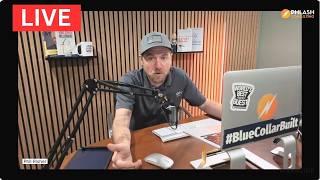
Phil Risher explains how Google search is shifting from rankings to AI agents completing tasks for users by 2027. Home-service companies need clear pricing guides, online scheduling, and machine-readable content from call transcripts to stay visible. Track brand mentions and share-of-voice with tools like BrightLocal as traditional rankings disappear.
Chapters
AI search. We're also going to be going through Marcus Sheridan. He had a great LinkedIn post about humans versus agents and the big shift that's happening right now as I speak. And then we're going to go over AI overviews and what that means for your business and the way that search is shifting. And then I got some good Q&As, so it's going to be an awesome livestream here. If you're hopping on live, I'm actually— I'm live, so feel free to hit the chat, drop some questions. And I will answer them as we go. Uh, while I go through this, my name is Phil Risher. I'm the owner of Flash Consulting. We work with home service businesses. $1 million to $10 million is our bread and butter. And, uh, let's get right into it. So I'm gonna actually share my screen. I'm gonna pull up these articles so that we can talk about them. Let's pull up this one first, which is, uh, all right, so Sundar Pichai, he's the Google, Google CEO. Uh, he had an interview that he did on April 11th, so a couple weeks ago, and he talked about the future of agent managers. And the big shift that, that we, that, that came up was that the agent manager line didn't come up out of nowhere. His language has been shifting over the past 18 months. So in December 2024, he was saying change profoundly in 2025, that search is gonna change. Then October 2025, He was calling it expansionary moment for search. And this is when like AI overviews and that knowledge panel came into Google Search. And then in 2026, they made a bunch of money. But now he's talking about that search will change and search is expanding, but search as an agent manager. And this is the part that where users complete tasks. So this is the part that's the big inflection point coming up. He mentioned 2027. I definitely expect in some of these areas, 2027 to be an important inflection point. For certain things. There are some groups within Google who are shifting more profoundly. And so for, for me as a big task, for me, a big task is how do you diffuse that to more and more groups, particularly in 2026. All right, so let me hop to what this actually means and what he was talking about. All right, so down here, what this means for search professionals. Pichai's description of search as an agent manager changes the question that SEO professionals need to ask about their work. In a results-based search model, you go to Google and type in HVAC repair near me. That's a results-based search model. The goal is to rank. In an agent-based model, the goal is to be useful to a system that's completing a task. Those are two different problems. This is a big shift, okay? This is not like, okay, I need to rank higher for SEO. This is literally rankings going away, and now you need to position your business to be useful to these agents. So consider what an agent-completed search looks like in practice. You tell Search to find a plumber, check reviews, confirm availability for Saturday morning, and book an appointment. The agent doesn't return 10 blue links that you have to click through and read reviews and everything. It pulls from structured business data, review platforms, and booking systems to complete the job. The businesses that are chosen are those whose information is accurate, structured, and accessible to the agent. The ones with outdated hours, no booking integration, or the review profiles don't get surfaced. For home service business owners, if you're listening to this, this is not just head-in-the-sand type stuff or me being woo-woo with, you know, magic wand. This is the CEO of Google talking about these agents and the shift that's coming. So we're going to talk about a little bit, you know, things that you can do to prepare your business on this live stream. But I just want to call out that this is happening whether you like it or not, and the inflection point is 2027. So you have 12, 18 months to get this figured out. But things are definitely shifting. Um, let me pull up the next one here because Marcus was talking a lot about this as well. Marcus wrote They Ask, You Answer, this book right here. He's been on the podcast several times. And basically what, what the shift is happening is this shift from, from humans that are finding rankings and then to the agents. The agents are actually performing these tasks on behalf of, of us. So here's what he said: for 25 years, you've been optimizing your website for human visitors, okay? People who browse, people who click, people who scroll. That era is ending, okay? I want to say this again: that era is ending. And I agree with exactly what he's saying. The reason is, is because if there are agents that are going to be doing all this stuff on your behalf, it doesn't matter if this word says like this or this thing looks like this— nitpicky stuff. And a lot of business owners are going to get left in the dust because they are focused on the wrong things. They're focused on, oh, how does this look? What does this look like? I'm not I'm not saying it needs to look bad, but a small little tweak is not going to make a difference, specifically when you're not even optimizing for human eyeballs anymore. So what's coming next is something most businesses aren't remotely ready for. In fact, I'm likely writing this post about 6 months too early, but this is really going to matter to your business, so please lean in. As I mentioned, 2027 is the inflection point. Here's what the future looks like. Instead of a person visiting your website to research a purchase, they'll send their AI agent to do it for them. Find the best option for X, compare pricing, check reviews, tell me who I should talk to and who I shouldn't, come back with estimates and recommendations. You see the difference? The visitor won't be a human, it'll be a digital representative. So here's the big shift. For the last 20-ish years, here's how it looked. Clear design, smart headlines, emotional storytelling, and helpful content. Getting someone to stay on the page and convert. Here's what, what will matter. Clear, honest, structured information, transparent pricing information, direct answers to hard questions. Content for the machine can read, evaluate, trust, and take action on. Specifically for your home service business, you want to have a pricing guide on your website, like a pricing page. What makes the price go up? What makes the price go down? What is our price-ish? Why is it this price? What does a low price look like? What does a high price look like? Why is it like that? Basically answering all your customers' questions and educating them on the price. It's not just so that you can get price shot by your competitor. A lot of people say that. It's because you need to educate these agents on your business, because these are the questions that people are asking these agents is, how much should it cost to do X, Y, and Z? Or how much does it cost? Or how much does this company call— this company charge? This is why you need to give the information to the agent. The second thing is you need to have online scheduling. The reason online scheduling is important is because these agents— there's already agentic booking for restaurants where they can go and book on OpenTable or Resy and find an Italian restaurant for you. But for home service businesses, it's the exact same thing. And people say, oh, but my route density, and I, I don't want it to schedule something over here and then something way over here, and I need to be able to manage it. And that's fine, just set up something that's like a virtual estimate at least, so that way you have something that it can book on. So having those two things is like crucial right now. You should be building those out if you haven't done them already to at least start to educate this system on your business. But calling this out is that this is why the AI agent won't be impressed by your hero image. It won't care about your brand colors. It won't care about the colors and the latest CTA that you added to your navigation bar. It will ask one thing: does this business answer the buyer's questions better than the alternatives while allowing me to take the actions I need to take? I know it might sound intimidating, and it should. And the reason is, is because a lot of marketing companies are still doing the same old stuff. They're still going to ChatGPT and writing your ChatGPT regurgitated blog posts and social media posts and blah, blah, blah. They're still pushing you to, you know, rebuild your website to make it look pretty so that way you can get more leads. Like all of these things that you're spending money on and doing that are not actually helping you prepare for the future of your business, and you're just doing them now. And it's unfortunately in 12 to 18 months, there's a huge land grab that's happening. It was Yellow Pages to Google search. It now is Google search to AI search and Agentic search. And it's all shifting very quickly. That 20-year gap of Google search was great and SEO and ads and all that stuff, but we're about to shift in the next 3 to 5 years and you want a company that's talking about it and looking at this stuff. All right, right now what I do wanna call out is that there are AI overviews happening. So if you were to go to Google and type in HVAC repair near me, a forward type of search like that is gonna get your standard Google results right now. Google LSAs, Google Search Ads, your map pack, and then your on-site SEO. Still pretty standard, but when you spread out those keywords, which more and more people are searching with questions opposed to just HVAC repair near me, get a list and find it, the results are actually pretty crazy. And it's very important to be watching this. So let me share this. Um, this was a study from Neil Patel. And what he found was that with AI overviews, there's actually a number of frequency that happens based off of word count. So notice right here, AI overviews appear most on 6 to 10 word queries. So 0 to 3 words, 23.6%. 3 to 5 words, about half. 6 or more word phrases, 77.2%. What does this mean for your business? HVAC repair near me. Is 4 words. About half of them are going to get an AI overview. We already know that that's not happening right now. But how much does HVAC repair near me cost? 100% is getting an AI overview. Search is shifting from just me telling Google and getting a list to the actual questions people are asking. Hopefully over these last 3 articles, you can see the shift that's happening. When we talk about AI overviews, there's a really big opportunity here for businesses. That opportunity is you need to be answering your customer's questions. And the way that you do that is this. You take your call transcripts that are happening by your customer service representatives. Even if you use AI agents, they're probably asking questions on those calls. Take the call transcripts. Those call transcripts have the real questions your customers are asking. The same questions that those customers are asking on the phone, other people are asking online to AI platforms or even Google. Those are the questions that you need to answer. You could easily take that call transcript and revise it a little bit with your answers and then turn that into a content piece for your website that is now indexed, that, that agent, algorithm, Google, whatever you wanna call it, LLM, can pull that information and now have something that you can rank on. The problem is that most businesses are not doing that. They are working with a marketing company or they're doing it themselves and they're going to, they're starting at ChatGPT and saying, I need to write a blog post for April. And I need that blog post to be about this, this, and this. And it's regurgitated slop from these platforms so that way they have something on their website. But it's not about— we just talked about— it's not about having things on your website that look nice. It's about training the agents on your business with real stuff. Big shift that's happening here. All right, I got a couple Q&A that my team put together. Um, I'm going to pull them up real quick and then we're going to talk about these. Again, I'm live, so if you got a question, drop it here. If you're watching this after the fact, feel free to drop a comment. And, uh, we'll get to— you'll get your answer, or we'll get you on another live. All right, I own a $1.5 million plumbing company. I'm seeing a higher cost per lead on PPC than LSA. How do I decide which channel I should actually be investing in? Okay, great question. So for those of you that don't know this lingo, PPC, pay-per-click, this is going to be traditional Google search ads. LSA, Google Local Service Ads, these are the Google Guaranteed things at the top. So this person is seeing a higher cost per lead on PPC, which is search ads versus LSA. And that's very common. 9 times out of 10, search ads are gonna be more expensive than Google LSA. And the reason is, is because search ads is based off of a bid structure. So you're gonna be competing against other people in an auction-style bid to be shown for keywords, and then you actually need to get a click, and then ultimately they need to go to your website and also convert into a lead. So there's a lot of steps that happen for it to actually turn into a lead, which is why they're usually higher cost per lead. Where Google LSA is literally one, one click. They search for something, the Google LSA pops up, and there's a button, and they click call. Boom, they call right from your, um, the Google Business Profile that's connected to the Google LSA, and then the lead happens. So there's less friction, less steps, which is why they're usually less expensive. The problem is, is that with Google LSA, it's pay-per-lead. So that means that you can't really pay any more to get a lead because Google's only going to show the option, the options to people based off of the likelihood that they're going to click on it. So for example, if you have a Google Business Profile that has 30 reviews and someone else has 300 reviews and you both have 5 stars, Google's going to prioritize the 300 one because it's more likely that you would click on it because it has more reviews and it's more likely for Google to make money because it's pay-per-lead. Where pay-per-click, you could say, I'm going to spend $3,000 on a click and Google's going to say, cool, we'll take your money because you're just paying for clicks, not leads. So it's hard to say, how do I decide which channel I should actually be investing in? Here's how you would do it with LSAs. Inside of the reports, you can see how often you're being shown, and you can also see if you're maxing out your ability to be shown. So you would be able to see, okay, I'm being shown 95% of the time, which means that you're maxing out your budget. If you're being shown you know, 100% of the time. You can't say necessarily that I'm going to spend more money. What we have seen is that you're only being shown 40% of the time and you have the most Google reviews in your area, so you're actually capping the number of leads that you can get. Another benchmark for this is if you set your budget at $10,000 and it only fulfills $2,000, well, that $8,000 gap— Google wants to make the money, but you're not being shown enough for them to make that $8,000 gap. So there's no amount of money that you could put that you're gonna actually get leads. This is why it's not truly a scalable lead channel because it's only scalable to the cap that is available based off of Google. However, with PPC, it is more of a scalable channel depending on how much you're willing to spend for leads based off of return on ad spend, because you could easily increase your budget and get more clicks and get more leads coming through your business because it's not based off of demand or people clicking on your thing to turn into a lead. If that makes sense. So it's a big shift, I would say, and I don't know, you know, your business, but I would recommend to set up the LSAs and then track on a monthly basis how many leads that you're getting and increase your budget. For example, we had a client, $10 million plumbing company, they were spending $2,500 a month on Google LSA. The first month they got 5x return that we started tracking it, and they had been working with the agency for like 3 years. and no one had ever pulled return on ad spend. So we said, okay, well this is good, so let's increase this to $5,000. So they doubled their budget. The next month they did an 8x return. So $2,500, they did 5x, so they made like $12,000. The next month they went to $5,000 and they did 8x, so they made $40,000. So they went from $12,000 to $40,000 by only spending $2,500 a month more. And this is what I mean by scalable, but you have to have the data and you also have to have the demand to support it. PPC, a lot different. All right, um, this person submitted a second question. Let's see. If my LSA cost per lead is lower, how do I make sure I'm getting as much lead volume as possible from LSA? Okay, that's kind of what I was mentioning. Yes, LSA lead volume, uh, cost per lead is lower, but you can't necessarily artificially increase the amount of leads that you get. The only way that you can do that is you can get a bunch more reviews so that way you outrank anyone else that's running Google LSAs. Because Google's going to prioritize the company that has the most reviews with the highest ranking, because that's their best shot at getting a click or, or lead generated, which is how they make money. So they're going to want to put their best foot forward with the best company possible for them to generate a lead for you so that they make money. So prioritize reviews, add pictures. The only other thing I would say to this is going in and auditing the different geographical areas in your LSA, because You could, uh, take out, let's say that you set up just like a circle around your business. Well, you might be spending money on leads in other areas that you don't necessarily want to serve, but you're just getting shown there anyways. And they're cheaper leads. So you might go in and just only select the higher, more affluent areas that you would want to target, which might increase your cost per lead, but give you much higher quality leads and give you a much targeted area that you're, that you're serving up your LSA to. So that's one way to look at it. It's hard to scale up LSAs to get more volume out of it because it is so subjective to whatever Google wants to do or show. Um, all right, next questions we got here. I own an HVAC business. Do backlinks still matter with AI search, or is this becoming less and less important? Great question. A lot of people have this question about backlinks and what matters for AI search. Um, let me just pull this up real quick. So Um, let's see, I have Claude put up. So when searching, let me just talk to it. When searching for, for a local home service business, do backlinks matter on ranking criteria for AI search? Um, I always like to go to these platforms and just ask to see what they say because, um, I have my two cents on it, but I want to ask these platforms and see what they say about it. So let me go back here and see. Okay, great question. Uh, this is from Claude. Great question, and the short answer is yes, backlinks still matter, but their role in AI search has something some important nuances worth understanding for your clients. Let me actually share my screen so you can just see this real quick. Um, and again, I'm live, so if you have questions about AI stuff, uh, specifically with home service businesses, feel free to drop a comment or anything in general. Um, I'm happy to be a resource here. Let me just share this. So this is the Claude, um, response that I just asked it. When searching for AI, uh, when searching for a local home service business, do backlinks matter on ranking criteria for AI search? So backlinks in traditional local SEO Despite endless predictions of the demise, backlinks are still the backbone of authority. They demonstrate authority, connection, and trust, even with AI parsing context and intent. So to give you context, what backlinks are is building links that directly go back to your website. Um, sometimes they could be talked about as citations. They're a little bit different, but essentially it's a platform linking back to your website that says this is a viable, real company. And historically, when we talk about backlinks, it would be like, okay, I have a blog. This is how I used to do my blog. I have a blog. I write about personal finance. This is a real story. I write about personal finance and I wanted to get backlinks so that way Google recognized my business as an authority. So I actually got featured in Forbes, which had a high domain authority. And so when Forbes linked to my blog and told a story about me and then linked to my blog, my domain authority on my blog went up. Because it was a trigger back to Google that if Forbes is linking to this person's blog, then they must be an authority in the space and must be credible. Based off of that domain authority, the credibility piece, Google said, okay, I'm going to show their stuff more often on my platform because I trust them because they have more links coming in. That is the traditional backlinks story and domain authority. Now with local SEO, does this matter as much? No. The reason is, is because you could get links from all over the world, but who cares? You want links locally to build a local SEO infrastructure. So that said, like for local pack of Google Maps, backlinks are supporting signal, not that, not the dominant one. Proximity, review signals, and semantic alignment, blah, blah, blah. Citations in general matter for your Google rankings and also for AI search, and it's a little different. So I'm going to, I told you about the backlinks. Here's why citations matter. Citations are your name, address, and phone number matching up across many, many listings. So think about your Yelp listing, your Better Business Bureau listing, your Black Book listing, your House Listing, your Yelp listing, your Facebook listing. Like, all these platforms have these listings, and on these platforms they have your name, your address, and your phone number. and you want those to be consistent across the board. The reason is, specifically when we talk about local SEO, the reason is, is because when, when Google, or even AI search is important as well, when they pull your information, they want to give the most credible information to the end user so that way they trust it. So imagine someone goes to ChatGPT, Claude, whatever, and they ask it a question and they say, what's the phone number for this business? If they can't verifiably say that this is your phone number because you have many phone numbers going on or many addresses or many names of your business, They're going to lose trust in your business because they don't want to show information that's not trustworthy. So you have to build these trust signals with these platforms, and that's why you would build out citations for name, address, and phone number. Backlinks are more for on-site SEO to get recognized back. Here's— it talks more about this from what I'm seeing. So how AI search changed the equation. This is where it gets interesting for home service clients. Early analysis of AI search patterns suggests backlinks are actually becoming more important as a ranking signal, not less. Every reliable study finds that strong backlink profiles improve rankings, not only in traditional results, but in AI overviews as well. Why? Because 76% of AI citations come from pages already ranking in the top 10 organically, which makes SEO and by extension link building essential for visibility in AI search, which I don't disagree with any of that. Here's, uh, my take on this. Let's see what, what this means for home service. Okay. Being mentioned in lists and roundups is the equivalent of a backlink. AI search, AI search engines like ChatGPT or Plectidy they want these things. So there's a big push right now for these listicles and being ranked and being shown in different lists. My two cents on this is that locally in your local markets, you want backlinks from local people in your market. The reason that you want local backlinks is because it's true authentic things in your local area. When we talk about local SEO, these platforms care a lot about local people talking about your business. And so if you could get in your Chamber of Commerce, if you can get in a sponsor of a high school team, If you can get in a sponsor of a local college thing, if you can get a sponsor in a local newspaper or whatever, all of these links back to your website are great. So a simple way to do this, let's say that you have a buddy who's a business owner. You could have him add your website as a resource to his website and you do it to his. This is essentially a backlink. I'm not saying that this is going to magically help you rank on AI search. I'm giving you some guerrilla marketing type strategies to do this. Another thing would be go and sponsor something at a local event. And if you do that, ask them to link to you on their website. It could be a simple blog post, and you could write it for them. You could say, hey, I'm going to write a blog post about me sponsoring your event. Do you mind just adding it to your website and linking back to my website? Just to— it helps me out, right? Getting featured in listicles and roundups. Okay, we just talked about that. Local backlinks from relevant sources. Okay, I just mentioned this. Local newspapers, community, practical priority. Okay, practical priority orders for clients. You Given the research, here's the hierarchy that makes sense for home service companies right now. Google Business Profile, still the single biggest lever for map pack rankings. I agree, focus on that. Reviews, get a bunch of reviews. Local backlinks, community sites, local press, sponsor mentions, industry directories, very important. And I would agree with this. If I was to rank backlinking in general, I would say focus on citations to get your Google Business Profile name, address, and phone number correct. Then get a bunch of reviews. Then focus on local backlinks. Your local community stuff, doing things in your local community and having them link back. Listicle roundup and mentions. I think this is a little outdated, is this holistic approach to it, but they're saying that this is important. And then structured data schema. This is again happening on the back end of your technical SEO, so this is not something that has to do with your backlinks. Um, so the question's great. Here's my two cents on this. If you work with a marketing company or not, you you should find some type of a platform that can help you see your overall rankings on AI search and rankings. We talked about in the beginning of this is the rankings are kind of going away and what is going to be true right now is, um, it's called the share of voice. So SOV, and then the number of mentions that you have on a specific topic. And a lot of these platforms, like we use a tool called BrightLocal, and on BrightLocal's platform, they have this AI overview section where you can actually see your share of voice and your brand mentions. And this is really the most important piece of it because again, if rankings are going away, how do you even calculate, am I being shown on certain things or not? And it, what it comes down to is the brand mentions and the, the share of voice. Here's another thing I'll say on this. Content is so important to rank in AI search. We just talked about AI overviews, taking your call transcripts, turning them into content. To help you rank in AI search. If it was me, I would go way more on that than I would on backlinks. And the reason is, is because I want to feed these large language models as much content as possible about my business so that it knows that to trust me, opposed to going and trying to find other trustworthy platforms to backlink to me. I would be the one that's educating these platforms opposed to just going to try to hunt down backlinks for my business. All right, let's see, next question. With AI search like ChatGPT, Google AI results growing, what should I actually be doing differently on my website right now? Okay, well, this is a nice summarizing question. You need to have a pricing page on your website. We talked about agentic booking at the beginning of this, and the Google CEO saying, hey, you need to have some pricing pages so that way these agents can go and pull pricing— not exact pricing, you know, recommended pricing or ballpark pricing. You need to have online booking. These agents are going to your website doing, you know, they're going and they're saying, hey, it's this company available this day or that day. It's not there yet, right? 2027, this is The agent is gonna be there. The other thing would be content. We talked about AI overviews as well. AI overview section, the only way to be shown in AI overviews is to actually have the answer to the question that people are asking. So if people are asking more and more questions and these AI platforms are showing them answers, well, who would've thought? You need to be the one that's answering the question online on your website and in content so that way they show you in AI overviews. I know it's kind of crazy, but it makes sense. Um, so those are the things right now you should be doing, those things, creating content on your business with real customer questions, doing online scheduling, and doing a pricing page. That is going to set you up. And hopefully this summarizes all of this with this live stream that I did. Um, thanks so much for joining. If you guys have questions, I think we have a couple people here, feel free to drop them in the chat about home services, uh, or SEO, local SEO stuff, AI search. Happy to be a resource. Um, if not, all good. I appreciate y'all hopping on the live stream, and I'll see you in the next one. All right, I'm out.


