Beat These 3 Bosses to Hit $10M (Most Never Make It Past Level 1)
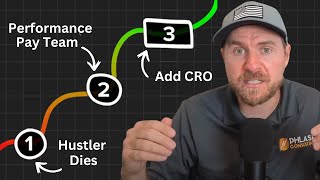
Phil Risher breaks down three growth stages that kill most businesses scaling from $1M to $10M. The 1-3M phase needs systems and culture. At 3-5M you need a leadership team and CRM-driven marketing. Beyond 5M you need a dedicated revenue leader and stronger hiring practices.
Questions this video answers
1–3M ("the swamp"), 3–5M ("the sweet spot"), 5–10M ("the slog").
Typically 3–10% of revenue.
A 20% profit margin on $1,000,000 → $200,000.
From $80,000/month to $240,000/month (went from ~$1.5M annual to triple in one year).
Chapters
To go from 1 million to 10 million in revenue. There are three levels that you have to beat. In this video, I'm going to break down all three levels. What the problems are inside of those levels and how you beat them. The first level is the 1 to 3 million dollar trap. And that is called the swamp. And the second level that we're going to talk about is the three to five million dollar trap, which is called the sweet spot. And the third level is going to be the five to ten million dollar trap. And that one's called the slog. So in the video, I'm going to break down each one. We've helped companies in all three parts grow, grow. And we. These are the main things that they get tripped up on. All right, so problems that need to be solved from 1 to 3 million. First one is the hustler has to die. And the leader has to be born. We all know that to go from zero to a million dollars, you gotta hustle. You gotta put in the work. It's all on your shoulders. It's all on you. You literally built this thing from scratch. To go from 1 to 10 million and even 1 to 3 million, the hustler has to die and the leader has to be born. What does this actually mean? You can't be the one that has everything on your shoulders. Because things are gonna start to slip through the cracks. And so if you're the one answering calls, if you're the one sending estimates, if you're the only one doing sales, Those are things that are getting heaped on you that, you know, fall through the cracks. Same thing with AR bookkeeping. So what can you do in this specific situation is start to buy back your time. So a lot of people buy. They want to spend money. In the book Buy Back youk Time from Dan Martell, he says people spend money and they pay money to grow their business. When they should be spending money to buy back their time. It's a different framework. And that's why the hustler has to die and the leader has to be born. We have examples of this. We had a company that we work with that was doing a million dollars, like around $1.5 million. When we. After one year of working with them, they tripled their revenue. So they went from $80,000 a month to $240,000 a month. All because the hustler died and the leader was born and started to buy back their time, Bring in a csr, bring in a sales team. And start to shift the way that the business is running to actually scale the business. The second thing that we found is that there's no strategic budget in place for the 1 to 3 million dollar swamp. Usually at this point, people might be running their checking account out of. They might be running their business out of a checking account. So what this means is you have, you know, $80,000 one day, the next day you have 10,000, then you go up to 150,000. And you don't know your budgets. Especially if you want to grow the business, you need to have budgets in place. So for example, like a profit margin or profit percentage, you should know this number on every single job. Your payroll percentage, is it 20%, is it 30%, is it 40% of your holistic amount of money that's coming in? And also a marketing budget. Typically you should be spending like 3 to 10% of the revenue on marketing. This gives you the permission to deploy this money into the different markets while still maintaining your profit margin. There's a good book on this called profit first. He talks a lot about this. But once you get these numbers in place, it's pretty easy to go from 1 to 3 million. The next thing is no visibility into numbers. Again, the hustler mindset is just grow at all costs. There's no strategic growth aspect to it. There are some, but when I talk about numbers, the numbers are okay. How many leads did we get year over year? How many jobs did we run year over year? How many quotes did we generate year over year estimates? What was our closing rate year over year, and how many new customers did we get those numbers. When you start to dial those in inside of your CRM and it allows you to zoom out on your business each month and make decisions based off of the numbers. This is what I mean by visibility. You might look at your revenue, you might look at your checking account, you might look at how many jobs you want and that kind of stuff. But really what you want to look at is those five areas, because that's going to illuminate the problem in your business that then you can go and solve. And holistically between the $1 and $3 million trap is the lack of systems. They're still running around. They're not doing one to ones with their team. There's no leadership meetings, there's no transparency of like who's doing what. Maybe there's some defined roles, but not much. The reason that I know so well is because I worked at a $2.5 million home service business. And when I came in the first year they went to 4 million, and then I went to 5 million. And these are all the things that we were still fixing. They have been stuck there for about years. So I know these in and out because I was literally director of business development coming in. And these are the issues that I faced grow. And the last one is building culture. Same thing that I faced was everyone's just kind of doing their own thing. We had 28 technicians, we had four CSRs. We had an office manager, an owner. And there was not really much culture being built. It's just whatever's happening is happening. So what we did was we started to roll out, okay, let's have some different games, let's have some different competitions, let's have some breakfast in the morning, maybe some team lunches, and have everyone kind of working together. Because we know the CSRs and the technicians, they have this constant battle back and forth about, can you do this job? I'm running late to this job and frustration. So we need to build this culture internally. We had a company that we. Probably one of the first companies that we started working with when I started Flash six years ago, home service business, that doubled from 1.5 to 3 million, and they beat this level in 12 months. So if you take what I'm telling you today and you implement these things within 12 months, it's very realistic that you can make this jump. You might not go from 1 to 3 million, but you might go from 1 million to 2 million and start to alleviate all of the pressures on you. One of the big things that people fall into in this part is, let's say you do a million dollars in revenue and you're doing a 20% profit margin. That's $200,000. Maybe you pay yourself and, you know, you make 250, 300,000, which. Which is good at a certain point to start building out all these systems, start hiring people to buy back your time, that money starts to dwindle pretty quick, right? 250. You hire good people at 70 to. To 150,000. That money's gone very, very quickly. But I would say that this is called the swamp, because you have to make that trade or you're going to stay stuck just trading your time and being run down and running ragged all over the place. That's why, literally, why it's called the swamp. All right, the 3 million to 5 million sweet spot. And this, I face this as well. Like I mentioned before, at the home service business, we helped him go from like 2.7 million to 4 million in the first year it was, I. I helped him go. Cause I was working there. And what we found was that he hit a sweet spot. And this is literally why I started the business, because we hit this friction point where when you're doing. He was doing 4 million and I was an employee there at $4 million, at a 25% profit margin, you're making a million dollars a year. And, you know, we had really good numbers. So whether it's 20% or, you know, 80, 800,000 or a million dollars, it's more money than he thought that he would be making in his business. And we got to this friction point, which was you're at a sweet spot, right? You could chill and coast here and be good, or we could kick it to the next level and really scale this thing out and build a bigger business. But you have to take, you know, the sweet spot of 800,000, 600,000 to a million dollars and now deploy it back in for a lot of pain and suffering that's going to happen. Because now you really have to scale a business. So a lot of companies, when they get here, they start to look at selling the company or scaling. That's the two decisions. Because you have good numbers. People are going to want to come in and buy it and deploy the capital and scale it, or they fit in the sweet spot. And what ultimately ends up happening is that it fades off into the distance because they lose that fire. They kind of maintain, and then it kind of tails off a little bit. So what do people do from the 3 to 3 million to 5 million? I helped them go 3 million, 4 million. Then I started flash because we had this friction point where it was like he was like, I'm kind of good, but I don't know, maybe. Maybe you can work with me on the side. And then he went to 5 million and then ultimately sold to private equity. So the biggest thing that we did in these, in these parts is first built an initial leadership team to scale. What we had to do was hire a gm, a coo, someone like that. Because I was director, I was sales director, right? I was growth mindset. But we didn't have the infrastructure to implement all these things or bring on new team members or manage the team. Cause I wasn't managing anyone. I was just out here growing the business and, and fixing all these problems, tracking everything all the way through. And so we had to build out initial leadership team to scale. This is why I'm saying it's sweet spot because at this point, you kind of have Team members who are know, know their roles. Right? You might have an operations guy who's a good firefighter. You might still be in that sales and marketing role, kind of driving sales and marketing. But you have a salesperson and a good marketing company to work with things. You have a good fractional CFO and bookkeeper and you're kind of like in this cozy situation where you can go out and do what you like to do and be the CEO of the business and kind of run things. If you want to go to the next level, you have to build out the initial leadership team to scale. You got to have a sales and marketing leader, you got to have the operations leader, and then you have to have the finance, hr, all that dialed in and even a coo, GM type because I'm sure, you know, we face this as well. Is that the owner of the business, you. Yes, you may say that you're a CEO or integrator, but to get to the next level, you can't be the integrator. And I think that you would agree with that. There's a book called Rocket Fuel on this. You can't be that COO because you need to focus on the next highest tier things, which is the vision for the company and ideas and deploying them through your team. So that's what we did. We hired a gm, helped tremendously get us to the next level. We had an operations guy, I was the sales and marketing guy and kind of built out our team from there. The next thing is marketing is working, but needs to refine with CRM feedback loop. So usually to get to 3 million, right. You can work with decent marketing companies whether they're cookie cutter or not. But at a certain point, to get to this level, the data is what you need to grow your business. You can deploy $5,000 a month on Google Ads, but if you don't know if it's generating a return on ad spend at this point, you start to get really frustrated because you've kind of tapped out. You know, the organic stuff, you kind of tapped out the BNI relationships, you tapped out, okay, we do an email newsletter and you really ought to figure out, okay, how are we going to get to that next jump? And the way you get to the next jump is by dialing in all of your data and building out performance. Pay incentives, we'll talk about in a sec. But you dial in all your data so that way you know your numbers tight, you know what you're spending on marketing, you know where things are coming from and this will help give you confidence in how you're going to get more leads, how you're going to get more quotes, and how you're going to build and drive performance for your business. This is exactly what we did. And the last part here is aligned performance pay incentives and CSR teams. Kind of what I was just alluding to, which was you get your data dialed in and now you have a team that's rearing, that's on fire because they all get paid on performance. So how can you do this for your business? This we did, we had CSR's customer service representative for them. So what I did was I said, okay, last year we did 500 jobs. This year to grow, we need to do 600 jobs. So if we do 600 jobs, then we're going to have $600 that we can split amongst the four of you and we're going to go out to lunch, dinner, whatever it is. And we also gave them individual performance numbers because as you know, some CSRs probably do billing over here. One is really good at answering the phones, another one does next day calls or call aheads to appointment confirmations. So not everyone is just answering phones, answering phones. So we gave them different thresholds of what we wanted them to book and this is going to lead us to our ultimate goal. The other thing is performance pay for your technicians, making sure that they have some aligned incentives. For example, if you generate an additional estimate on the job, you'll get X amount, whether it's a percentage of the job or a dollar amount to create estimates. This is what I'm talking about by having this performance pay and aligned incentives which is going to help you get the most juice out of every single lead and you get your marketing dialed in to bring that in. So all those things that I just said is exactly what we did to fix this, this process. It's the sweet spot. It's the sweet spot because it takes the pain, like all these things that I'm saying are very painful to do, right? Hire this leadership team to scale, build this marketing, refine feedback loop in your business, figure out the performance pay because your team might already be paid a bunch of money. Like what is this going to look like and how does this affect our profit margin and really start to build this thing so that it can scale to the next level. Those couple things will get you to 5 million. And we did that. All right, the next One is a 5 to 10 million. This is the slog. The reason that I say that this is the slog. Is because at this point you went through this sweet spot, you're making a bunch of money. Now you have headaches again. A bunch of headaches again. Where it's like, okay, I have all these people on performance pay. I really need to look at these numbers and manage these numbers. But then it flips again where it's back on you to try to come up with these ideas and put this stuff in place. And the reason that I call this log is because the owner knows they should be doing things right. They are solely responsible for revenue growth. All this pressure is on them to do this stuff and they don't have team members to do it. So what we see at this point to go from 5 to 10 million is, is this. And I kind of flip these. I'm going to start with this one owner solely responsible for revenue growth. We had a company that they're doing 8 million, $9 million. And the owner is the one who in the sales and marketing seat. He's the one that is trying to drive sales and growth in his business. He's trying to figure out his customer journey, like what happens for this full lifecycle management of his customer. He's the one that has ideas. And it's like, okay, this is going to add this much to our bottom line. This is going to do this over here. And the problem is, is that he doesn't have anyone in his company to delegate that to and give them upside. And what I mean by that is hire a sales and marketing person for $100,000 a year and give them upside to get you to 10 million or 15 million and they can make 120 to like 300,000 in the business and have aligned incentives to help them scale. Then you as a business owner can have the idea and you can work through this team member to then implement and scale it. What usually happens is that the business owner gets stuck because they went through the sweet spot, right? They know what it's like to kind of have that sweet spot life. And now they have to get back involved. And they're like, I don't know, you know, all the processes and team members. And I want to work through people, the who, not how mindset, because you've learned that at this point. And so you need to have that person in place which is going to be the revenue driver in eos Entrepreneur operating system. We talked about this integrator thing. There's this role which is an integrator and a sales and marketing director hybrid. So they're directly responsible for driving Revenue CRO type of stuff in the business, Chief revenue officer and also coo, which means they can make the decisions holistically on the business to drive growth for the business. That is what this seat needs. The other thing is that we went through the marketing feedback loop from a digital perspective. We got the performance pay dialed in. But there's this next layer when you go from 5 to 10 million and that is getting back to the basics almost, which usually at this point you've kind of lost the basics, which is going to local events, creating localized content, building local relationships in the business. When I mean local events, I'm like hosting local events, going to BNIs, going, meeting with people in the local community that would brand with you or you know, build the local branding in the, in the company. And a lot of times the business owner, they know that they should be doing this and they might do, they might do some of these things, but they need an internal person to run point or be the face. And usually they need to hire like around 7 or 8 million a marketing coordinator internally. So they get a sales and marketing director who's driving growth and revenue and, but they need a coordinator for maybe like 60, 70, $80,000. Usually a young person in their late 20s, early 30s who's very outgoing and personable, who can create some type of content, you know, get on a video or do things and is willing to walk into places and just build a relationship with them as almost like a brand ambassador for your business. Every single time we talk to companies that around 7 or 8 million, they face this exact pinch and they need to hire this person. I'm not saying they replace your digital marketing team. They'd be an extension of your digital marketing team and they should work with them. This is exactly how we work with these types of companies. They have this person, we connect with them and it's like fuel on the fire because we do all the digital stuff, support them, they have internal ideas and can deploy their local marketing tactics and just work together and boom, it's gold. And the last piece of this is that you're only as good as your team and training. We see this all the time. You went through that sweet spot of 3 to 5 million. You, you kind of got your initial team of management, you know, you, you, you got the operations person. You might have a COO or something like that and maybe a sales and marketing person, but you didn't have the full on cash to deploy like a great, great person. And also the training piece, you might have promoted someone that's been with you for years. And it's like, yeah, they're good enough, they do a great job. But are they really like that, that top level management person in your business or they just like, I know that they're a firefighter, they'll put out the fires, they'll figure this stuff out. This is the hard part, is that those people, you got to either move them to a different role or find someone else to plug in. That's going to get you to that next level. And it's very hard because you have the relationships built over the years. Right. They built company with you and you put them into this position. But maybe they're not the right fit. And that's why I say you're only as good as your team in the training. Can you train this person up and put them in monthly, quarterly, weekly training to help them as a leader and help you grow the business? Yes. Is the person going to be the right fit? Maybe, maybe not. This is why you're only as good as your team in training at this point. To go from 5 to 10 million and then beyond that as well. So we had a company, they were doing 3 million and in 36 months they went 8 million. But specifically they went 3 million to 5 million in the first year. Then they went 5 million to 8 million in the next 24 months. Here's what they did. They had another person in the business who is a revenue growth driver. So they brought someone in who was like a sales director, sales manager. They actually gave this guy equity because they ended up selling their business at $8 million. But they gave him some type of phantom equity. So that way if they sell their business and he gets a percentage of this, and he was directly invested in driving revenue growth for the business. And that allowed them to go from 5 million to 8 million. Because he helped with everything. He helped, okay, how can we make this more money in this? How can we make more money in this? He was a young guy in his, like mid-30s, early-40s, had a family, like, hungry for growth. That's the type of person that you want. Not, not just women, and we work with women too in this role, but that's the type of growth that we want. And they were able to scale 24 months and grow from there. So all this to say, if you're trying to scale from 1 million to 10 million, hopefully some of these parts resonated with you and gave you some ideas of what you need to focus on how you can fix these in your business. I'M curious to get your thoughts. Are there other battles that you had to face going through these different stages in your business? And what were those and how did you solve them? Comment below and be sure to like and subscribe and I'll see you in the next video.


