Building an 8 Figure Home Service Business While Getting More Free Time with Phil Green
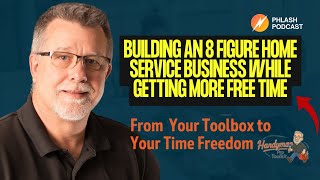
Phil Green scaled his St. Louis home service business to eight figures with five field technicians and a lean admin team. He uses standardized $180/hour rates, Jobber CRM, and pays technicians bonuses tied to revenue per man-hour plus $50 per five-star review. His goal is reaching $5-10M while working less.
Questions this video answers
2007
2015 (scaled to $1,000,000 in the first year)
2019
Five technicians on the road
Three-person admin/marketing team
Chapters
Welcome back to the show, I'm your host Phil Risher. And on today's episode we are diving into building an eight figure home service business while getting more free time while doing it with Phil Green. Thanks so much for joining us today Phil.
Hey, thanks. Glad to be here.
Yeah, for sure. So Phil is the founder of Rapid Repair Pro, which is a home service business that evolved from a remodeling startup in 2007 into a full service system driven company serving the St. Louis area. With over 30 years of hands on construction and service experience, Phil now helps other trade business owners build scalable and profitable operations applying the same principles that transformed his company and talking pre show. The thing that really excites me is that not only is he just help people but he's actually doing it himself. Which that's what I appreciate about myself as well. I've been in the shoes of having technicians and doing all of these things. So it's nice to talk to people that have actually done it. So with that Phil, could you give us maybe like minute, two minute summary of like how you got to this point and like what you do and what your business is?
Yeah. So I started out in remodeling like you said. And then in 2015 I, I started a, a actually a restoration company, purchased a franchise and went in partnership with my son. Nice. And then in 2019 I sold my share of that business to him and I rebranded my remodeling company which I had kind of scaled back a little bit on.
Yeah.
Into Rapid Repair Pro. Focusing primarily on smaller projects, handyman, smaller remodeling jobs. Nice. So you know, and I'm in the St. Louis Missouri market. Since then I've, I've scaled that up to the point where I have five technicians on the road. I have a team that takes care of my admin, takes the inbound calls, does my marketing for me, a team of three. I use virtual assistants out of the Philippines to help me with that.
Awesome.
So and my, my sole role is just to you know, lead, lead the people love it, make sure things are going the way that I've designed them to go and, and it allows me to also spend time mentoring other guys that are kind of getting, getting started in the business, kind of guide them, direct them the ways to go and how to, how to get their businesses rolling and give them some, some time freedom.
Yeah, that's awesome. So it sounds like when you were working with your son through that franchise experience, did you learn anything inside of that experience of maybe like SOPs and processes of scaling or was there something that you could take away that quickly got you to apply that to this rapid repair pro that got you to scale quickly?
Yeah, absolutely. You know, the thing about a franchise is you're, you're buying systems, right?
Yeah.
So when I got into that and I. And actually that first year when we bought that franchise, I scaled that business to $1 million in the first year. Wow. Got the, received the franchise or the rookie of the year award from that franchise. So, you know, I couldn't have done that on my own. I learned that having systems in place for everything you do is the key to the business. The old way before, I mean, my life was in business before as a remodeler. I was a typical remodeler. It was kind of chaotic. I was always wearing the tools, always, you know, putting out fires. Didn't know how to grow, didn't know how to hire. Always thought there were just no good people out there to hire.
Yeah.
Um, so, you know, having systems and following a process is definitely the way to go.
Yeah. So people that listen to this show, they're, you know, like one to ten million dollar type home service businesses. What would you say is a system or two that helped you scale? Like, is it your sales system, Is it your inbound call script? Is it management, managing by the numbers? Or what would you. If you could pinpoint, like two or three, maybe.
Well, I think the first thing you got to kind of get down correctly is first how to get customers and then what do you do with them when you get them. Right. So that you can develop some consistency there. Even when you're the guy doing everything in the beginning, you need that. Right. Because otherwise you get busy working in the field and the phone rings and you do it differently every time. Or you, you know, you don't realize, you, you sound rough, you sound like you're aggravated, or you just, you, you forget to follow up, you don't write it down, you don't get all the details, or you go to look at the job and you end up having to call and go back because you missed something. So that's got to be number one so that you can do that even yourself. You got to train yourself to do it right.
Like a good customer intake process. Someone calls, have a script, follow this process, get them through your funnel. Not just like, oh, what's your cell phone number? I'll text you back and send me some pictures.
Right. You know, it not only helps you develop consistent process to get, capture all the information you need. But by doing that later down the road, you'll have a lot of valuable information that you can use for your business. You know, for marketing, reaching back out to people that didn't buy from you the first time, or determining where your calls are coming from, which marketing methods are working for you. There's just so much information there that if you don't have a process and a system to capture it, it's. I mean, you're literally missing out on a bonanza right there.
Yeah, for sure. One of the big things that I faced when I was. I was at a $3 million home service business was we got a lot of inbound calls and we did like, everyone's price shoppers. How much does it cost to do this? How much does it cost to do this? And we didn't have a good process for overcoming the objection and capturing their information. We were just almost like order takers. Like, this is the price. See it later. And once we fixed that process, which was like, well, I need a little bit more information from you in order to give you this thing, and a little bit more salesmanship, we ended up closing a lot more deals, and we actually had a refined process that then we could bring someone else on and get them up to speed. It wasn't just like spitballing ideas. Oh, this person's nice on the phones.
Exactly. If you don't have that, you'll never get off the phone yourself.
Yeah.
Because you hire somebody that you'll think you're is going to do it for you, and they'll. They don't know how to do it. They. They just don't have anything to go by.
Exactly. Yeah. One of the things that we see with like 1 to 3 million dollars home service businesses is a lot of times they're stuck in that sales role or like the firefighter, the swamp of like, they got to put their touch on it. They have to be the sales thing. And I'm very curious about your business, specifically handyman, because every time I talk to a handyman, it's like, every job is different. So, like, how do you even price it? And then how do you, like, get your guys to price this stuff? So I'm curious, like, how you've solved that to get five technicians and be able to, like, you know, have a system.
Yeah, I use a very simple process for estimating. It doesn't require, you know, figuring every nut and bolt and wire nut and everything on every job.
Yeah.
It's basically you look at a job and you just determine okay, how long is this job going to take me to do even a technique? I can train a technician to do this. So if he looks at a job and he goes, okay, I think I can finish this job in three hours. Okay. Then I have a dollar rate, not that we give customers, but that the technician uses to estimate or whoever's estimating.
Like a burden rate that's going to. This is what it costs you to run.
Like it'll be for say, example, it's $180 an hour just to use that number as an example. That number would cover the labor, the basic materials on the job, and the overhead and profit. So. But what I also do is I don't let them go by. Okay, I think it's gonna take three hours. They have to, they have to bump everything up. So it's either up to the four hour block or anything over four hours gets bumped up to the eight hour block. And that makes it very simple to estimate. And it's, you know, it's always, you know, pretty accurate. Yeah. So that works well for us.
Yeah. I think for people that are out there listening to this one, you got to try to figure out how you're going to standardize your. And whether that's going to be on time blocks. Like what my home service business is was we had three hour time blocks and then we knew you're either going to fit in the first time block, the second time block, or the third one, or all three, depending on the size of your job.
Right.
We can ask you a couple questions and we'll figure that blocking out and we'll be able to give you some type of ballpark price.
Right.
For a lot of people, if you're listening to this, like your H vac, plumbing, electrical, you're going to be using dispatch fees and you're going to have to go out there, but you got to try to standardize the process so that way everyone's on the same page.
Absolutely. Yeah.
Yeah. Can you talk to me a little bit about like, okay, you got this basic stuff in place. You got a couple technicians and CSRs. How do you manage the business? Like, do you have an operations director, sales director, marketing, finance. And then like, how do you actually pull the strings and set the vision? Like what you said that you do?
Yeah. So this year I took on an operations, I guess you call him an operations manager. He's, he manages the guys. He schedules them. He actually goes out and does, you know, he'll meet clients and do estimates. Okay. So. And I found him by specifically looking for a guy who was working for himself and just sick of everything he had to deal with and not never making any money. So I found a really good guy who does a great job, and now he's, you know, he's doing well. Doing very well, actually. And so that took care of the operations side as far as the marketing. I personally decided to hire someone full time to do that for me rather than some of my experiences in the past. So I work with her. Like I said, she's a va. She's got experience in it, does a good job. I work with her on my goals for what I want her to do, what I want to try to do. Areas in marketing I want her to work on. And in the call center, the guy that answers the calls. Of course I did. I developed scripts for him and send him on some online training for sales and things like that. And then I have an assistant that kind of watches them and helps me with the admin side, you know, documenting all this. These processes work because processes are always changing. Right. They're always developing.
Yes. I think people listening it sounds. You make it sound so easy. But it's like, that is a pretty, like, lean, clean business that you can operate. You got someone that's overseeing marketing, someone who's answering the phones, someone to help you out as almost like an executive assistant. Guys in the field, someone to manage the guys in the field. And then you can be the one that sets the vision, make sure that everything's working. Like that's a clean business and it's a scalable business and things are working. So I. What I'm hearing you say is you gotta replace yourself in all these buckets and have team members that you can hold accountable to results, and then kind of plug and play from there, which is absolutely.
And. And you got to be able to. You got to be. You got to be able to lead and delegate. You got to tell them what you want, what it looks like when it's done.
Yeah.
So it's no different. I kind of always say that. It's like being a football coach, you know, you put. You put a team of players together, you design the plays, you tell them what plays to run with, what time, and then you train them on how to do it and you send them out and let them execute. Yeah, that's really. It's no different than that.
Yeah, I. It's so funny because I use the same example with my team. We have 17 people, and I'm like, okay, I used to be a player I used to be the quarterback. I used to be the wide receiver. I used to be the running back. And then now I'm like on the sideline, like coaching, right. And I'm watching the plays happen and I gotta let you run that play and you're gonna probably fumble, but like, I gotta let you do that and then coach you on what you need to do better. And a lot of times it's easier just like, ah, let me get the helmet on and go in here and like run this two minute drill, you know, but it's like you can't, you can't do that.
No, you can. You got a coach?
Yeah. What would you say, do you use like a CRM, like to keep track of all this stuff or how do you.
I do. I use Jobber.
Oh, use Jobber. Oh, okay, cool. I was just on a webinar with Jobber earlier today. So, yeah, I'm. I'm a Jobber brand ambassador. So. Okay, yeah, pretty cool. So Jobber, I think for a lot of people, if they don't have a CRM or they're not using their CRM to the full extent, they're missing out. And I would imagine for you, when I talk to people, they're like, oh my gosh, how could I have someone that's overseas, let alone not in my office and manage them? And the thing is, is that you have to use your CRM to be able to look at the numbers. So can you talk to me a little bit about like how you work with an outsourced team? Like, what is your day to day? Are you meeting with them every single day? Do you have goals that they need to hit? Do you are looking at certain numbers? Like, what does that look like?
So I meet with them on Monday mornings. My VR team and my operations guy, we have a virtual call on Monday mornings where we go over each one of them's job, what they've been doing, what they need, anything like that. And then every day, each one of them has to fill out an end of day report listing what they got accomplished for the day. And that gets submitted to me on slack at the end of every day. Nice. In addition to that, I mean, I've laid out, you know, KPIs for each of their roles. Like the call cent, the call guy has, you know, he has a KPI for his booking rate. The marketing girl has KPI for a number of leads, qualified leads, every week. And so they each know, you know, what's expected of them. And then it's just A matter of just trust but verify, right?
Yeah. I love it. It's so. I keep saying it like, you make it sound so easy. It's just like, this is the game plan. So many people, they don't have this framework. And like, I talk to, you know, I talk to them in like a sales process or other businesses, and it's like, no, just do this. Like, yes, this is so good. So if you're listening to this, it doesn't have to be complicated. It's like, have your booking rate, know what your booking rate is. Have your lead goal. If you get leads coming in and you can book these things, then you can figure out, is it my booking rate? Do I need to fix my call script, or is it our lead problem? Do I need to fix my marketing? Can you talk to me a little bit about, like, marketing? Like, is it Google local service ads, Google business profile, Google Ads, referrals from Realtors, or like, what does that look like?
Yeah, I mean, it's a mix of things, right? You don't want to put all your eggs in one basket. So, yeah, I do have local service ads. I have very active on my Google business profile, making sure we're posting updates regularly, pictures. I also sponsor my Google profile on Google Ads.
Nice.
I do a lot of Facebook. Every day we're posting on Facebook, not advertising on Facebook, but just posting on Facebook.
Like in groups and stuff or just on your Facebook page or doing groups.
Also, my girl, she does. She'll get on local groups and just. We don't really get any work from it, but it's. It's a. It's a brandy play. Right. We're just putting our. Actually, we're posting our Google business profile on Facebook on those groups. I do. I use Sin Jim because I love that they send out cards to the neighbors after every time we do a job, it's nice and easy.
You have it synced with your jobber. So after an invoice, they do radius bomb, where then they send out the postcards to all the neighbors houses that you were just at. They probably saw your trucks and it's like, hey, you should use us. Love that.
Yeah. So in addition to that, I mean, we have branded vehicles. We.
Do any email marketing or text marketing or anything like that.
We do a few times a year, we'll do email marketing to our past clients just to stay top of mind with them.
Nice.
And then we're working on instituting a. A newsletter.
Yeah, yeah. What we recommend is what we do. We have a content calendar so like every single month we'll have a content calendar. Like right now it's Thanksgiving time. So it's like prepare your home for the holidays. And then we'll do like a newsletter and social media post based off of the theme. So then you know what your email newsletter should be about and then your team knows what it should be about. And then you can get like a nice review before and after picture and then like cross sell certain service that people would be interested in at that time.
Right.
So yeah, that works really good. I'm curious with your technicians, so you have five technicians. How do you manage their performance and make sure that they are making, you know, enough money but also like maybe upselling or doing good work or maybe you pay them for reviews or like what does that look like?
Because I'm a big believer in performance pay good. Yeah. So I, you know, part of their work, they do have a checklist that they have to go through every day because I, you know, I made the play. Right. How I want a job to be done.
Yes.
There's a checklist for how they do everything and then I give them a bonus based on the revenue per man hour that they generate. So they get a base, base hourly rate. And then at the end of the month, I calculate their average revenue per man hour for the entire month and they, there's three different levels. First level gives them $2 an hour extra for the entire month.
Wow.
Second one gives us $4 and the third one gives them $6. So they get a really nice bonus. And the, and then I additionally, I incentivize them with $50 for every five star review they get.
Wow. Okay, so if we break this down, they are going to be incentivized to do more revenue in a shorter amount of time.
Right.
So then they have a higher revenue per hour and if they can hit that number, they could get $6 an hour bump on top.
Right.
And they could get to more jobs, presumably and be willing to take on more jobs within a day. So that way they can make more money and do good work in a timeframe. But then also the kicker on that is that don't just rush through your jobs. Also get five star service so you can get $50 on top. So you're kind of covering both sides.
Absolutely. Yeah. You got to do that.
Yeah, definitely.
Yeah. You don't want to, you don't want to incentivize them to rush to a job and get callbacks and.
Yeah, well, this is what happened. My home, my home service was we switched to that revenue per man hour, but then we didn't have the kicker with the review, so he was just rolling through and it was just like a mess. So we had to revise it a little bit. Okay, I like that. That makes sense. And what about your operations manager? Like, performance, however much you want to share. But, like, what does that look like as far as making sure that everyone's aligned? Is he. I'm sure he troubleshoots and firefights, callbacks or issues inside of that and manage the textbook. What does that look like?
So with him, since he does operations and he's also doing estimating sales, I give him a 5% of the revenue.
Great.
Every month as a bonus.
Great.
So he's bought it. You know, he's bought in. Literally, he kills it.
Yeah, I bet. Because he already has that entrepreneurship mindset. He just doesn't like all the minutiae of everything else. So, like, let him cook in his lane. Give him all the tools and team around him and just let him go for it. And if he's hungry, you're already giving him a great playbook that he can act like an owner, like an entrepreneur almost.
Right. Yeah. And he did. He does. I mean, I never get a phone call.
Yeah.
Any issues in the field? He's. He's on it.
Yeah. It is so good. There's a book called buy back your time from Dan Martell. Yeah. And he has these replacement ladders, like, hire an admin executive assistant. Like, you got that part covered with your admin, Then delivery piece, like, get the technicians, then marketing piece, which you got a marketing person. Then your sales team, which you standardize that. And then your management piece, which is now you have this guy who can oversee it. Sounds like a pretty bulletproof business. Do you. Do you want to scale it even more, or is it kind of like this? I mean, from what I'm hearing, it's like this is just a solid business that you can just, like, kind of keep running. But, like, what does it look like as far as trajectory goes?
Yeah. I mean, for me, I do want to scale it more. I'm really looking at five years. I want to be able to. And honestly, I'm not really looking to sell the business. I want. I want to create a money printing machine that just pays me.
Exactly.
Allows me to travel in my boat and do what I want to do. So that's my ultimate goal.
I love it. And I think for people listening to this, the less important you are to your business, the more free time that you can get by just having this structure and framework inside of your company with your business in particular, because this is something that a lot of people ask is like, does that mean maybe opening another office in another location so that way you can capture that market, or is it scaling up what you currently have with more technicians and more volume?
No, I think honestly for, for my goals, what I want to do, I mean, I think I'm okay staying with one location. Yeah, I can, I can get it to, you know, between 5 and 10 million a year operating, you know, the way it does. I think it'll, it'll provide me what I need. Yeah, but it's certainly something that you could scale. You know, you can add additional cities to. And if you do that, I would look at, you know, cities that are one of the days driving distance of you and do it that way. If I was going to scale it to the cities, that's what I would do.
Yeah. Awesome. So when you're like coaching people, I know I don't know like the type of people that you coach, but is there any like specific things that you ask them to uncover problems in their business or maybe like the first or like, can you walk us through, like what that looks like? I'm trying to be helpful for people that are listening that like, maybe there's some things that you could coach them on just, you know, virtually.
Yeah. You know, the first thing that, you know, everybody always has the same question is, how do I get more leads? Right.
Yeah.
So the first thing we're doing is we're, we're looking at how are they getting leads, where are they coming from, what methods are they using, what's their, who's doing their website, what's that producing. So we try to correct that problem first and then from there, you know, we talk about performing once they start getting leads, how to perform the work. And everybody's first, you know, inclination is I need to hire another technician or a helper. But I always caution against that. Hire an admin first. Like a, you know, a VR admin or whatever.
Yes.
So that they can help you get some of these things streamlined and sops taken care of. And you could be out in a field working, you know, until you can get that. Because if you try to hire a field guy and you don't, you're not properly set up for. Just ends up not working out. And then I. Then you're telling me that you can't hire good people.
I want to, I want to pinpoint this because there are People that we know that, that we work with that are like 1 to 3 million dollars, that they're like, you know, maybe the, the top tech, also the top salesperson, and they still don't have an admin or executive assistant or someone to help them. And they think that, oh, I'll just hire more people and I'll increase my revenue. But it's actually the complete opposite, which is you need to take off all the junk off your plate, right. So that you can just do what you do best and then build the systems out. So then when you hire someone like what you're saying, they don't just burn out because you don't have the time to spend to help coach them and bring them up to speed is what I'm hearing from you.
Absolutely. And, you know, most guys that are doing this, that, you know, let's be honest, they're. We're businessmen. We're not businessmen. We're tradesmen in the beginning. So. And they hate doing admin stuff, but it needs to be done, so why not? If you can get a virtual assistant for $500 a week, that saves you all that time and let's still let you go out and make some money in the field. It does the crap that you don't want to do anyway. I mean, I've. I mean, come on, who doesn't blow 500 in a week?
Yeah, exactly. So nice. So it sounds like first, it's like, hey, where are your leads coming from? And if you don't know that, you need to figure that out. If you don't have enough leads coming in, what are, you know, is there any, like, small quick wins that you might recommend if you don't have that many leads coming in or you don't really know? Like, what would you say?
Yeah, you know, everybody's first. Their first response is to. Is they, they get desperate and buy leads and yeah.
Angie Home Advisor. Some, you know, junk.
And, you know, maybe when you first, first start out, you might have to do that. But I always encourage guys to, you know, get scrappy, get out there and network, join a BNI group or go talk to other trades guys at Home Depot. When you see them say, hey, I'm a handyman, or I'm a plumber, I'm electrician. Hey, let's work together. I can send you work and, you know, we can. All these people, when you go to somebody's house, are always asking who, you know, does this or, you know, does that. Yeah, right. Those are. That's free. Doesn't cost anything and be really big on asking for referrals from your customers, getting around and, you know, spend 100 bucks on some door hangers and go hang door hangers in a neighbor in a nice neighborhood. You know, all that kind of stuff. It just requires your time. It requires you to, you know, to, you know, just be doing something. Sometimes just doing something makes all the difference. Right. If you're sitting at your computer because work is slow, trying to, you know, buy leads from Angie's list or whatever, I mean, that's just not the way to go.
Yeah, I think the activity of just going out and doing things is going to create momentum in your business. And the ironic thing, Phil, is that we see people that gets like 3 to 5 million, they kind of get in this like cozy phase of like, oh, my Google business profile is fine. You know, like I got some Google Ads running. And then they kind of lose that fire in the belly of like go out there and build a relationships. Not that you have to go out to BNIs, but what you can do is incentivize your team to do those same actions like your technicians. If you do a self generated lead, then you get X amount of dollars self generated referral and you can almost build that component of what you're talking about, that hunger inside of your company as well.
Absolutely.
It works all the way around. But definitely if you don't have leads, then join bni. Go out there and do things. But also don't lose that as you continue to scale because that's really what scales businesses.
Right? Absolutely.
Yeah. I love that. All right, Phil, this has been great. So where should people go to connect with you? Maybe they want to reach out to you, they have questions or check out your business.
Now the easiest way is just to find me online atrapidrepairpro.com.
Awesome.
And if you want to talk to me personally, just when you fill out the form, just say, hey, I heard about Phil on a on this podcast and my people get me in contact with you.
Awesome. Cool. Well, it's been great to connect and look forward to continue the conversation.
Hey, I appreciate it. It was a good time. Thanks.
Yeah, man. See you.


