Built Her Home Service Business to $10M...Then Almost Lost it all
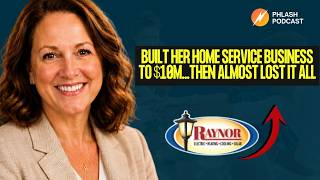
Keri Rayner grew Rayner Services from $600,000 to $10 million by diversifying into solar and HVAC, then nearly lost it all to a wage lawsuit. She sold to Flint Group and now mentors contractors through the Rayner Standard framework.
Chapters
Welcome back to the show. I'm your host, Phil Risher, and on today's episode, we're talking about scaling a home service business to $10 million without losing control of operations with Keri Rayner. She's co-founder of Rayner Services. Thanks so much for joining us today, Keri.
Thank you so much for having me. I'm excited.
Yeah, for sure. I know we were just talking pre-show and you got some really great wisdom and knowledge, and obviously you built a $10 million business, which is awesome. So could you take maybe a minute or two and just give us a background of who you are, what you did, where you're at now?
Sure, sure. So who am I? I'm Carrie Raynor. I married the master electrician who started Raynor Services. He— I used to be an oncology nurse, so I worked primarily with adult and adolescent cancer patients. I'm a huge lover of advocacy, and I love advocating for whatever direction I'm pointed in. There's benefits to advocating for the patient, for the patient's family, with the doctors. And I use the same thing in home services. There's advocacy for the customer, there's advocacy for the employees and for the business. So when I came in, probably about 2000, I brought a lot of processes, procedures. I'm very much the implementer and my husband is very much the visionary. So that's where we really worked well together to grow the business. And it's been 25+ years that I've been there and I have learned So many things on the fly that I'm excited to always pay it forward because people paid it forward to me.
Yeah, I love that. Okay, so I first— there's a lot of things that we're going to talk about, but I first want to unpack the scaling to $10 million and then selling the company. And I'm more so— the people listen to this show are like $1 to $10 million, and they love the, you know, you built it and then sold it. So, and you've been doing it for 25 years, right? So yeah, what I found is that there are like 3 main peaks and valleys in the businesses, like $1 to $3 3 to 5 and then 5 to 10.
Yes.
I know you came on in 2000. You said, was there like a specific ramp period or unlocks that happened between the 1 and 10 million that you would say like, this was a big unlock for us and made a big jump?
Oh my gosh. It's funny because you're— I call it a wall because that's what it feels like when you're in it. You're like, darn it, I just hit a wall. I think, you know, from 2000 to 2008, 2009, which was the housing market crash, it was kind of steady eddy. Like, how do we just kind of keep doing work, keep the guys busy, keep, you know, implementing more processes. But for us, what really changed, I think, like a really unlock moment, was in 2009 when we joined Nexstar. Um, they're a best practice organization, and I think you can get so far on just common knowledge, but once you hit that wall— and really, we hit a wall before a million. When we joined Nexstar, we were probably about $600,000 in revenue, and joining Nexstar really like opened and unlocked best practices, and it opened what I love the absolute most, which is networking. Being able to go talk to other contractors who were in it, maybe right where you're at, or were ahead of you and were generous enough to share, whether it was, you know, tangible items. I remember somebody handed us an invoice and I was like, oh my gosh, this is the most amazing invoice ever. This is what I've been looking for. And then going to the Nexstar Northeast Regional meetings where we met and were able network and just share a meal with people who became some of our best friends. And when we hit that, we actually went down a little bit because we started implementing what we learned. But from there, the trajectory and the growth, even in the housing market crash of that time, was unbelievable. Um, we grew so much in that like 2009 to 2012 time that Um, it was incredible. And hands down, it was networking, humility, and, um, you know, just applying what we learned. That's really what got us next level.
I love it. So as you scaled from, like, let's say maybe 2012, you're around like a million or 2 million, you think? Something like that?
I would think we were around 2 million at that point. Yes.
Okay. So this is a big pivotal part for a lot of businesses as they go to 10 million. I want to talk about, like, you and your husband, you mentioned visionary integrator. How did your guys' role change and how did, how did you change as leaders to show up for your team to help that scale and opportunity come about?
Yeah, we, I want to say like we've always stayed visionary and implementer, but how we envisioned and how we implemented really changed. I think it became a real serving of humble pie because we thought we knew what we knew. And when we came into Nexstar and learned those best practices, we really learned so many better ways to do it, coming down to even how you explain it, to how you, how you teach it, how you present it. And you're so tempted to come back from those events and firehose the living daylights out of your staff. Go ahead and do that once, and you'll learn the hard way not to do it like that ever again, to chunk it down, to be patient. So I think we just changed in we kept the same roles, but how we did them was so much better through that networking practice, coming back, building action plans, assigning people to do it, um, figuring out what the steps were to kind of chunk it down, um, made a huge difference. And really realizing that you, you need to look backwards to see where you've come. From, not with regret. You're looking back to go, hey, I'm going to cheer myself on to keep going, as opposed to always feeling like there's another problem, there's another issue, there's another point to change. You like start to become you and your team's cheerleader, which changes the whole dynamic completely. Yeah, it changed the whole dynamic.
Yeah, very cool. So you mentioned he was a master electrician. Was that the main trade that you went all the way to $10 million, or did you bring on HVAC or plumbing or anything else?
No. So he was a master electrician. When we joined Nexstar in 2009, we were working primarily for general contractors, which is high volume, low margin. And your admin work of chasing your money is like— it's quadruple what it is when you work direct for the homeowner. So we actually spent some time firing ourselves from all the general contractors, and we felt bad, so we found replacements. Ourselves with our general contractors because they had become our friends. And we turned the whole business to direct to the consumer. And so, in doing that, we learned electric really well. And then that's when we decided like, hey, we want to get into solar. And so, solar is a ton of red tape. So, we had to really network hardcore to find somebody who was willing to share the secret sauce with us on how do you go from start to finish on those jobs. And then generators we started adding, which is not a trade in and of itself, but it is a different model and things to do. So we actually decided with a customer that we would let them know it was our first generator and we would give them a discount if they would let us guinea pig at their house. And we wired it the wrong way. We shot 240 through the whole house. Poor man comes home, he's older, he's like, my TV's dead, my microwave's dead, my this is dead.
Crap.
We wired it the wrong way. And so we replaced everything and wired it correctly, learned the hard way how to do it. And he's still our customer today just from how we handled it. And then probably about 15 years ago, we added HVAC organically, which was a challenge that I'm open to talk to anybody who's willing, who's like trying to do that. Um, we started adding HVAC and really grew the business. So I would say solar got us to like 3 You know, solar and generators got us to like $3, $3.5 million. And then adding HVAC is what really took us next level for sure.
Yeah, pretty cool. One of my first clients that I worked with, they were a $3 million HVAC business and then they brought in an electrician and electrical and then they did generators and all the stuff, Generac, Power Cells, you know, all the stuff. And then that got them to $8 million and they sold within like a couple of years. So it was the other way around. But I think the hardest— the reason I wanted to ask you this question was because with electricians, a lot of times they get pigeonholed into just residential $200 service calls and they don't have those bigger ticket items. They don't have a membership, they have nothing, and they're just like on call running around. I'm sure you probably faced that in the beginning a lot.
Oh, yes. Oh, yes.
When, when you— so it sounds like your split when you were $10 million was like maybe $3 or $4 million electrical and then $5, $6 HVAC, and you could cross-sell and do different things.
Yes. So, I would tell you actually the split was almost 50/50. It was starting to get a little 60/40 when we sold. Now, it's significantly the opposite way with HVAC being the higher producer. But yes, it is so hard to sell memberships in electric. Electric is very set it and forget it. What do you mean you want to come in and do a home safety inspection? Everything's fine. Exactly. When we added HVAC, that's when we really were able to sell more memberships. And that really was a very pivotal piece in turning things into another direction. But when we sold, I would say we were almost 50/50. We are very well known for electric in this area. Thanks to Nexstar's processes, we were probably one of the first electricians in this area to kind of work to the standard that a lot of Nexstar companies work towards with the shoe covers and the booties and the dispatch fees and the call scripts and all of that. So we had a real advantage there in this area of being known as much more professional electricians. So I think that really helped us to kind of keep electric 50/50.
Yeah, it also helps build your brand so that way it's like, oh, we do HVAC. You're like, oh, you guys are so great, let me have you do my HVAC as well.
Yes.
And then, oh, I'm here for HVAC, and they're like, do y'all fix this, you know, by any chance? You're like, yeah, we have an electrician team. So it's nice to be able to cross-sell and build life. You can't get lifetime value without a lifetime relationship. And so if you have more things that you can add on to lifetime value and you're already doing a great job, it's really nice.
100%. It really, it really was a pivotal piece for us in this market. We, we really were able to level up and a lot of electricians around us have since started to follow suit.
Yeah, I bet. How would you say like getting to $10 million? A lot of people when I talk, so like we do digital marketing consulting for home service businesses and a lot of times people say, oh, I'm going to scale my business by just like spending more on ads. And I'm like, don't do that, please. Yes, there's other ways to do it. Like a lot of times people are stuck like 1 to 3 and they just think, I'm just going to throw tons of money at marketing and try to grow my business. And we know that that doesn't work if you don't have like all of your, your call scripts, your estimate nurture sequences, like all these things.
How—
what would you say, like from a marketing perspective, are some of the strategies that got you to $10 million? Was it relationships? Was it just good organic reviews? Was it staying top of mind with your customers? What would you say are those big things? And could be ads, I don't know. What would you say?
I would tell you it was all of those things.
Okay.
Yeah. When you're little and you're trying to grow, you really have to find grassroots ways to do things because you can't afford all of the vendors that are like, hey, if you just spend this much, I'll make you a trillion dollars. Yeah. So, I think it was a combination of things. I love problem solving. I love making connections. So, I think it was relationships. Who in the industry could I be friends with? Could I talk to? Could we share information in both directions? Like, I do not believe in just taking and not giving. So, you know, what have I learned that I can help you with? And what have you learned that you can help me with? And then it was like thinking about these vendors as you get to know these vendors, like, okay, I can't afford to do that right now, but what can I do in the interim that will help me start step by step, chip by chip, getting in the next level? And a silly example was, um, a review company who said, oh, if you get these reviews, if you can really increase them, that's really going to increase your SEO, it's going to help with, you know, marketing and whatnot. And I thought, I cannot afford the amount that you want to charge me for this, so how can I on my own build my reviews? And so I built this very rudimentary, back then, email that was like colorful, had some graphics, it had links to different sites where you could directly post a review. And I set up my office staff that every single job, they were required to go and in the Happy Call, they would let them know there's an email coming and we would love to have you post a review. We run contests, we— our staff really gets motivated by them. And so just by sending that email and implementing the Happy Call, we were able to more than double our reviews. Just at no cost really. It was just the time of the staff. So finding like rudimentary grassroots ways to do things while helping cost, I think really is what helped us to be known. And then just word of mouth, like bad news spreads faster, you know, than good news. So try to keep the bad news at a minimum. We're going to make mistakes. We're human, but let's keep it at a minimum and let's take negative reviews and turn them into opportunities to show your customer that you're real. So every single negative review was replied to directly by me. And if you go back and you look, it was always, how can we make it better? Or explaining the scenario kindly and how we want to do it. So people would call and say, I called you because of your negative reviews. And I would say, because of my negative ones? Well, you responded to them. I knew you were real. And that if you made a mistake, you were going to fix it. So I think a lot of those things were really what did it when we couldn't put more marketing dollars in.
Yeah, so good. A couple of things I want to point out there. So business owners listening to this, if you follow the content that I share, it's like respond to your 1-star reviews, show that you're human because this is what your actual prospects are looking at. They're saying when things go south, how does this company respond? And at my home service business, the owner cared so much about 1-star, but a lot of business owners that I work with after the fact, they would like literally try to blast these people with 1-star. It's like, you guys, da da da da da, saying all this bad stuff. And I'm like, no, no, no, no, no. We need to say nice things and try to resolve the issues. Yeah. So important. And then the second thing that you said, which is a gold mine most people miss, is the happy calls. So at my home therapy business, we were $3 million. And I used to work at Enterprise Rent-A-Car and I was built in their management trainee program and we did happy calls. Okay. So when I went to the home service business, I said, we need to start doing happy calls. So what a lot of people miss with happy calls is one, yeah, you can troubleshoot if there's problems. You can also get the review like what you're saying, but then you can also cross-sell other services. Yes. Like, oh, by the way, did you know that we did this? Or, hey, I saw that you didn't sign up for a membership. Do you know that? And there's so much opportunities in just that one relationship piece that most people miss.
Yes.
And it's a goldmine opportunity for a lot of businesses.
Yes. And I think if you also are a company who cares about your customers and you know you work for a company that's going to take good care of them, you're proud to sell those memberships, to let them know. Who wants to work for a company that you know is going to screw the customer in the end? You're not going to sell those memberships. You're not going to cross-sell. And one thing I can say without a shadow of a doubt that Tom and I were always proud of is that we were going to take good care of our customers. We were going to admit there's times where we're going to screw up. We're a company trying really hard to be perfect, but we're filled with imperfect people. We're going to screw up. The best thing that I can tell you about us is we're not going to leave you. And so, my staff in the office really could see how we did that. So, they were comfortable offering those cross-trade sales or discussions. And so, I could feel good about not feeling opportunistic, but instead providing a good opportunity for my staff and my customers because I know we were doing it in an honest, filled with integrity way. So I felt really good about that, and so did they.
Love it. Um, I have like 3 really specific questions that I want to ask you about. Okay, this—
gotcha.
First is a lot of businesses that are trying to get to $10 million, they have technicians out in the field that are not generating cross-sell opportunities for them. And I would imagine that that was part of your process, and maybe it wasn't, but I'm curious how you implemented with your technicians out in the field to cross-sell other services and generate leads and opportunities for other parts of the business.
Yes. So I think everybody has to have buy-in on your company that you're going to do a good job. And so I think you also, you need to really work on that cross department culture. Are you having meetings where everybody is in the room? Are you as an owner showing up for these meetings and letting them know that like, hey, we've grown, but we're still here, we're hands in, we're, you know, going to take good care of them? Because if they feel— technicians are not going to sell what they don't feel good about.
Yeah.
You know, they have to be face to face with these people, these customers. They don't want to go out there and sell something and they're going to screw it up. They're going to do this. So one, build relationships across departments. You don't want animosity between the departments. Then two, I would tell you to reward them when they find good things to help the customer. You know, we do spiff them if they flip a lead from, say, HVAC to electric and vice versa. But, and the spiff is not based on if the other trade sells something. It's based on, did you make an attempt to help this customer with something they truly needed and send them to the other department where, you know, the guys you have a beer with after work are going to take good care of them? Um, and, and so that they felt good about it. Because in the end, yes, you have to make numbers, but you don't do it in such an opportunistic way that it becomes without integrity.
Yeah, I love that. And if you're willing to spend $200, $300 for a Google lead that doesn't know anything about you. You'd be willing to spend $100 for someone who already knows, like, and trusts you, and also to pay that to one of your team members to send you that lead coming in. It's like way better on both sides, and it's a warm lead, probably going to close.
So yes, yes. And they, they have— every single one of these guys, like I've said a million times, um, that my husband is a trades guy, he's still on a roof now and again. Yeah, I— every single one of these tradesmen and women deserve to have retirement They deserve to be able to take care of their families. They deserve to be able to feel good about their jobs. Yes, we have to hit goals, but not pushed in such a way that we forget the integrity and they feel bad about what they're doing. And they deserve to retire someday and enjoy their families. So, teaching them the right way to do these things is imperative and supporting them financially so they can do it is imperative. They deserve that, that spiff for making the customer aware that there's a good company out there to help them with this other item also.
Yeah. I'm curious to get your thoughts on technician-led sales versus comfort consultants. I know there's some wolf in sheep's clothing or, you know, like, eh, eh, eh. Curious to get your thoughts on that.
So I have two sides on that. I think that technician-led sales can be good. I think ultimately though, their drive ends after they leave the call. And the reality is, in sales, some of the things that you're working on are overcoming what the customer doesn't know that they don't know, right? And so I think that I prefer having a project manager or a comfort consultant come out and work with the tech to sell the product. But A, number one, the technician, that service technician who's there, has to do a full diagnostic. They have to write a full set of options and then let the customer know this may not be worth repairing. Let me get a comfort consultant, a comfort advisor, a project manager, whatever your company calls it, out to help substantiate what I found and also give you information on replacement. Because in the end, you need to be proud of whatever option you're presenting to that customer that they choose to proceed with. I think if you don't give them all those options, it's like malpractice in the medical field, you know. So I like the aspect of the two of them working together. And I will say, working with Flint, having sold and partnered with them, they have really found a way to take that next level. It's like jet fuel, the way they have figured out how to combine the education and the knowledge and the options from a service side, and then the confirmation and the education and the knowledge and the options built on the replacement side is like nothing I've ever seen. It's hands down taken the company to a next level. So I understand the balance of doing it each way. But I think in the end, if you want to support customers the best and you want to support your staff the best, you need to have that model separated. So that the salesperson is still going to continue to work with the customer to help them get to what they want, whether it's replacement or repair or what replacement. So that's what I found.
Yeah, yeah, I appreciate you because from just this interaction, I'm like, you have high moral integrity, and it's not just about taking advantage of the customer and selling them a new unit when it might not be that case. So that's why I was really curious to get your thoughts on how to balance that with like also, you know, growing your business and doing the right thing by both parties. Yes. All right. So you told me pre-show that you sold at $10 million, but it was actually from a lawsuit that came or something. Yes.
Yes.
So could you explain that? Because I think people, they want to sell their company, but then it's like, who's going to magically find me to sell my company? And how does that work? And then the lawsuit came. So like, I'm curious to unpack that.
Yes. I would tell you, you know, in 30-something years that my husband started the business almost 34 years ago at this point, we've never been a lawsuit-heavy company. Even when we would have, you know, a customer who was upset and they'd send something to Consumer Affairs or whatnot. Consumer Affairs would always say to me, oh my gosh, like, there's no argument. You have all the documentation. Like, there's no case. So, you know, as a nurse, what's not written is not real. What's not documented is not done. So I'm very big on integrity and being able to document it. And so we had been trying to just run our company in a good way, take care of our staff. We would bonus them for appropriate things. You know, if you'd taken good care of enough customers, you would get this bonus. Or, you know, if you'd sold a membership, which we truly believe helps our customers, we would, you know, give them a bonus for that. Here's what we never knew, though. You're supposed to take— in an hourly employee, you're supposed to take those bonuses that they earned in that time period. You're supposed to add it back in to the pay that they received in that time period. You're supposed to divide it into the number of hours they work and come up with a new regular hour rate. Once you have that, you can still pay them the, the hourly rate that they were originally hired at, but you have to take that new hourly rate and calculate a new overtime rate. So their time and a half is now based on that new rate that included their bonuses. So now you have to pay them their overtime based on that, which in some cases, if they don't have a lot of overtime, it's only a few more dollars. You know, HVAC service techs in the summer have a ton of overtime, so it adds up a lot more. We had no idea that this loss— that, that this was a law. No clue. We'd never tried to do anything unintentionally, like intentionally to, to not pay our staff correctly. We always And, you know, we're not perfect, but we had good intentions. Yeah, you try to pay them more, give them gifts and stuff.
Like, it's not about trying to shake down the system. It's just like, I'm trying to help you guys out.
Yeah, I thought a bonus was a bonus. I had no idea that it had to go back into their hourly rate. So we had a disgruntled employee who filed a lawsuit. It ended up being class action that we would have to go 6 years back and recalculate what we owed staff because we didn't do that adjustment. Um, wow. And so, yeah, and so it turned out that when you go 6 years back, we really didn't owe people a lot of money. We could have paid them back, and I would have gladly paid them double to just say I made a mistake. But because this is a class action lawsuit, it's going to be potentially upwards of over $500,000. And I don't know about anybody else, but I didn't have $500,000 just hanging out in the bank like, hey, I could lose this. Um, and so at that point, that was really for Tom and I the breaking point of we could lose a lot because the other piece that happened to hit us was we did not have the correct employee practice liability insurance. We had employee practice liability insurance. We did not have the rider or the level that needed to be there in order to handle wage and hour issues. Wow. So the double whammy was nobody taught us about employee practice liability insurance. Like levels, and we didn't know that this law existed. So it was like we didn't have any insurance coverage and we paid people wrong. And we really, again, we didn't mean to. And so that for us was just too heavy. We knew our staff, we have an awesome culture. We knew that our staff was ready for growth. We knew that that growth was going to require a huge infusion. And we knew we were the bottleneck. If we stayed, we were going to stop the growth of them. And we didn't want that. We wanted Rainer to grow. So, at that point, we decided, I remember, you know, when you're a husband and wife business, I call them bathroom morning meetings. You're brushing your teeth and your husband or your wife and you're like, what are we going to do about this? Or what are we going to do about that? And so, we had one of our infamous, you know, teeth brushing bathroom morning meetings. And we just looked at each other and we said, This is too much. We're the bottleneck. Our staff deserves more. We love them. We need to sell. We need to partner with a good group. Let's find one. And so that's when we decided it was time to, to find that group and allow our team to, you know, spread their wings even further and grow. And we were just like, we were blessed with the fact that we found Nexstar on our first try. We were blessed with the fact that we found Flint on our first try.
Yeah.
And that it's been what it's been. So yeah, we were the bottleneck and you have to have humility and say, are we at our point? And we were. So that lawsuit kind of was like the change of our life. And that's why I became the president of NJACA. It's why our September meeting is about this lawsuit. I know 3 companies now with the same lawsuit as us. And I don't want anybody else to go through this. I am here to spread the word, pay it forward. I don't want anyone to go through this.
Wow. Um, I'm curious on, so, so that company that I mentioned, the $3 million to $8 million, and then they ended up selling, uh, unfortunately they went out of business 2 years later.
Oh my.
Yeah. Like an $8 million business, like gone.
Wow.
And it was a mess to earn out, like all this stuff. And it was a roll-up. Like it was not just like some fly-by-night guy, you know, like it was a roll-up. They knew what they were doing. I'm curious about your experience because pre-show you told me like not all PE is bad. And I would agree with that. I would say I've seen that experience, but then I've seen other good experiences. Can you talk to me about like how you found this company, how they found you, even going through due diligence with this lingering lawsuit? Like, I'm curious how that all went down.
So let me start by saying due diligence is a financial colonoscopy. Yeah, it is crazy. Yeah, but I understand it. All right, how did I find this group? So they found us, um, and I knew of them because of Nexstar. So, you know, there's, there's some pivotal pieces in your business journey that you will run into that you will never forget, and being a part of Nexstar gave us such a broader view of the trades and the capabilities and the possibilities and, um, Trevor Flanagan is the CEO of Flint. And so, he used to work for a shop at Nexstar. I believe it was Bob Hamilton. And he worked his way from, I believe he was a call center rep answering phones, all the way up to operations manager. He's a very smart guy filled with integrity. And he eventually grew a home service chat company and grew that amazingly. It was a great company. I was a customer. I didn't know Trevor at the time, just of him. And he sold that company and he partnered with a gentleman by the name of Colin Hathaway and they formed the Flint Group. And when you look at them, they are all about preserving the legacy, right? We had a lot of conversations when Tom and I listed with a broker. We didn't know about the Flint Group at that point in time, but when we listed with the broker, one of our things was we are not selling our souls. To the devil with the sole intention of making as much money as humanly possible, and we don't care about anybody. We interviewed every company that came to us like we were gonna date them or marry them. It was hours of, what about this, what about that, what do you do about this, what do you do about that, how do you handle this, how do you handle that, what are your goals, these are our goals. Um, and the only group that was talking to us about what do you want to do? This is your company, this is your legacy. What do you see yourself doing in this company? And my husband knew, I don't— he knew for him, I don't want to work as hard as I've been for as long as I've been. I'm almost 60, my knees hurt, my back hurts, my, you know, everything hurts. Um, me, I'm about 10 years younger than him, and I was like, I don't— I have more steam in my engine. I don't want to just do nothing. And so the Flint Group was the only group that offered to let us stay in whatever capacity we wanted, to keep our team intact, to not close our call center, to not destroy what we'd already built. And that's what we wanted. We wanted that from a group. And with their help, we, we went through the financial colonoscopy. It's hard with any group. It takes a while. You're back and forth, you're pulling reports, you're still trying to run your business.
What did they think of the lawsuit?
Oh yeah, the lawsuit. Okay, so I have to say, I will say, all the PEs were okay with the lawsuit in the sense of they know it happens, and their thing was we had to agree to keep the lawsuit. Did that mean we weren't going to have assistance from them? No. But was the lawsuit our fault? Yes. And so with all integrity, Tom and I both were like, we screwed up. So, you know, they are assisting us with the lawsuit. It's still our lawsuit, but now we have the means with which to handle it, which we didn't have before. Of course. And they check in with us, like the CFO, his name is Mike. He's wonderful. He's like, hey, what's going on? How can we help? What can we do? So they've really been partners in that. I can't even— like, I'm so thankful for that because they have a bird's eye view that Tom and I don't have. Yeah, for sure. So we had that. And then the financial colonoscopy, it is what it is. It's going to happen. We have friends who have sold to other groups and you just have to go through it. I think the hardest part was balancing the daily business at the same time as doing this. And you're told by brokers and bankers don't do a lot of hiring in this period of time, don't increase your marketing, don't buy lots of trucks, right? Because in the end, it does come down to EBITDA and what are you going to sell. And if you're going to sell after all this hard work, you want to be able to retire if you want to. And so, you know, we did, we did, um, go through all of that and do all of that, and it was rough. But, and I don't like being stagnant, I don't like not growing. So we've seen like 200% growth since we joined the Flink Group. Which part of it was sitting still for a while.
Yeah, of course.
But the majority of it was our team was ready to go. I have the best call center manager on the planet. He's amazing. He's like the gentle giant and he leads so well. We have amazing team members and they were ready, like open the gates and they flew.
Wow.
Flew.
I, I'm kind of taking this a step back, but I'm curious about the call center manager. Yeah. Cause like 1 to 10 million, a lot of the big leaks that we see is on the, us on the phones. And like, I had Brigham on here several times from Power Selling Pros and like talking about that, but like finding someone like that, like what you're talking about is a rock star. Like, yes. What could you talk to me like what he does that makes him a rock star and like makes that engine work for the call center?
Yes, they love him. He is the gentle giant. They know that they're not going to get away with stuff, that they are held accountable, but they're held accountable with such a level of integrity that they want to do well and they want that level of accountability. He just handles it like he drives that ship like nothing I've ever seen before. They look up to him, they reach out to him. I've never— it's— he's— I would just tell you, it's, it's in him. And he, he applies the tools that he gets and he believes in his staff. He has contests for them. He meets with them consistently for one-to-ones. Um, all numbers are posted everywhere. So I'm the whiteboard queen. I like to write it. For me, written is real. And so yeah, he does a little bit of that, but he has the TVs around that office with true numbers. Like, Flint instituted this amazing heat map, and that man is driven. But he's driven with integrity. Like, if they— if he were to ever leave, and let's say 10 years from now I find out he's out there, I'm starting a new business and bringing him on. Like, he will be who helps me grow.
How'd you find him?
It was the craziest— we just found him on Indeed. It was the craziest thing. I would love to have him on your podcast because he's a flipping rock star. When he applied—
sign him up, sign him up.
I will totally— he's amazing. Okay, he's amazing. I just— we just found him on Indeed. Back then I was doing all the recruiting, and when his resume came up, I said to my, my one staffer who's been with me for 6, 7 years, Mike, I said, Mike, why is he applying for call center rep? He should not be answering the phones. He should be leading the call center. And don't you know, somebody offered him more than I did, and it was going to be a remote job, so he took that. And I was devastated. And I'm like, you build, you build bridges every day. Every connection is a connection that you build a bridge, you're going to cross it now or you're going to cross it later. You just don't know. Don't burn it. And so I said, if it doesn't work out, I need to be the first person you come back to. Didn't work out. He came back and I was like, why don't you want to be a manager? He's like, I just want a more peaceful life. Like, it's crazy to be a manager. He came in, he was a CSR, booked calls better than anybody I've ever seen. He decided he wanted to learn dispatch, dispatched almost better than anybody I've ever seen. And we have some good dispatchers. And I like had a conversation. I was like, you have to be the manager. Come on. Come on. And I like pulled him into it. And now he's like, he's the best manager we've ever had in that call center. So he needed a little cajoling. Yes.
But you got it.
He's amazing. I love him. I could like glow up over how good he is.
Well, yeah, definitely please connect us.
Yes.
So I'm curious, now you are doing with NJACA and stuff, can you tell us a little bit about that? If someone has never heard of it, what is that? And then what is your role there and what are you doing, that kind of stuff?
Oh yeah, so NJACA is the New Jersey Air Conditioning Contractors Association group. I've been the secretary treasurer for a couple of years. I'm not a big fan of not doing things. Like, if I'm going to do something, I want it to be valuable, engaging, and productive. And it just hasn't been for the last couple of years. And it's not for, not for bad leadership, just maybe leadership who hasn't been involved in best practice groups and seen the value that can come from those in-person relationships. The, you know, when you have a friend, you build that friendship through conversation, through getting together, through sharing a drink, sharing a meal, sharing experiences. And that just doesn't come across over Zoom and seeing them, you know, almost never. And so when the president decided to step down, I said I would step up. But I'm only stepping up if we're going to do this. And so my goal with NJACA as the president is to bring back the relationships with contractors that are face-to-face, to help them learn what they didn't know they needed to learn, or to get tools that they didn't know they could use easily for growth, to become like-minded and raise the bar across the state. Um, so I am very much involved in— we just had, um, a golf outing, which doesn't seem like it would be valuable, but for making relationships, it is. The highest turnout we've ever had. We had to, we had to stop registration because there's no more space.
Wow.
Um, we had more members join. We've had more associate members come on. The summit we're working on for October is going to be all about how to take your 1 to 3 or under 1 business and start stepping it into a place where you can have a life and a business, where you can have profit and family time, where you can scale, whether if you only want to scale to $5 million, okay, you don't have to be a million, $100 million company, but to help you get where you want to be with assistance through the whole thing. So my main goal is to bring value partnerships with vendors, um, and just help them to find each other. That's what helped us grow. So that's what I'm, I'm working on there. And then connecting them if they want to grow into a succession plan of their kids are going to take over the business, or they want to grow and they want to sell. I want to help them find what works for them because people did that for us and we wouldn't be where we are today without it. Not one bit.
Yeah, I love it. It's kind of full circle, like networking and community has been kind of a whole through line for you all the way up until now, which is really amazing. And it's so cool. Like, I know when I talk to people like you're a nurse and I can just hear your heart through talking with you and it's just like so pure. So I just love it.
Thank you.
Yeah, for sure. Thank you so much, Carrie, for sharing everything. Where should people go to learn more about you or what you're doing now?
They should find me on LinkedIn. Um, you will see I'm posting a lot of things about, um, you know, I just started something called the Rainer Standard, and the goal is not ego, ego. The goal is not, um, a new business. It's just sharing how do we do things according to a standard of profitability with integrity and with heart. Because 100%, I think it takes heart and passion to grow the courage that you need in order to grow your business. And I, I think that humility is imperative. So finding me on LinkedIn would be amazing. Messaging me if you're a contractor who's like, I'm stuck, I don't know what to do about this. Let's brainstorm. I have great passion for the advocation of it all. So just find me and I'll give you my cell number. And, you know, through a DM, I'll give you my cell number and, you know, talk to you. I've spent a lot of time these last couple of weeks, especially just connecting with people that Hopefully I can help in some way and just pay it forward.
Awesome. Well, thank you so much for coming on, sharing your story. It's a very cool starting and then coming in not knowing anything and then scaling it and then selling it and lawsuits. And then it's like, this is some like documentary. Yeah. Netflix show or something.
The Ride to the Rainers.
All right, cool. Thank you so much. Great getting to know you on this and look forward to continuing the conversation.
Yes. Thank you for having me. I really appreciate it.
Of course.
Thanks.


