Built to Sell | Maximize The Value of Your Service Business | John Warrillow Interview [Podcast]
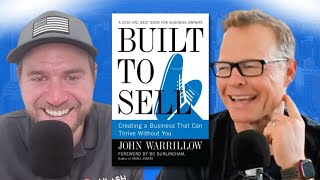
John Warrillow built a $6M market research firm that looked worthless until he stopped being the bottleneck. He shares how to productize services, delegate to a second-in-command, and document processes so your business can run without you and actually sell for a multiple of profit.
Questions this video answers
~2004
About $6 million in revenue and $1.5 million in profit.
TVR — Teachable, Valuable, Repeatable.
Scale 0–10; scores 7+ indicate an initiator in that behavior; scoring lower than 4 on follow-through indicates low inclination to create SOPs/processes.
Chapters
Welcome back to the show. I'm your host, Phil Risher. And on today's episode, we are talking about building your business to sell with one of my favorite authors, John Warlow. I actually got introduced to John because I used to be the guy that was selling my time as a consultant and I was making all the mistakes that he says, don't do this. And I read your books. I'm like, man, this just changed my life. So thanks so much for joining us.
Oh, man, that's great to hear, Phil. Pleasure.
Yeah, for sure. So, John, best selling author, two of my favorite books, Built to Sell and the Automatic Customer. Also founder of the Value Builder System and, and podcast host of the Built to Sell radio. Can you take us back to how you even learned about this stuff? I think you, you had a market research company and it was a couple of million dollars and, and you found out it wasn't worth much or something.
Yeah, yeah, yeah, yeah. It was probably 2004. So this is going back 20 years ago now, but I used to own a market intelligence firm and we had about 6 million in revenue, million and a half in profit. And we had great clients. I mean, we were working with bank of America, American Express, Express, Apple. I mean, it was like a who's who of the Fortune 500 were clients. So I thought this thing was worth a mint. And I went to see a guy named Phil Perry. Mieli, not Phil. I'll try to get that right. Perry is an M and a guy in Toronto, so his business is selling companies. And I kind of went to him and I'm like, hey, what do you think it's worth? And I was kind of rubbing my hands together thinking this thing's going to be lots of zeros on the end of this check. And he said, it kind of depends on the answer to a couple questions, John. I said, shoot. And he's like, all right, well who does the research? And I'm like, well, I'm involved in that, right? Because it's big companies like Apple America. I've got to be involved. And he's like, all right, well who does the selling? Yeah, and, and I'm like, well, I'm involved in that too. And he's like, well, I can't. There's nothing to sell here. You got a job, you don't have a business.
Yeah.
And, and that was, you know, I left that, that room feeling about an inch tall and.
Yeah.
And like I'd been, you know, sucker punched in the face. It was a difficult time. And, and so over the next few years, I transformed that business. I had a coach, so I believe in what you do, Phil. I had an advisor, a coach, and together we worked on that business. I got out of doing the selling, I got out doing the research, I put in a subscription model. So we had recurring revenue. Ultimately, the company was acquired by a New York Stock Exchange listed business. So it had a happy ending. But that's when I kind of light bulb sort of went on for me is to like, there's a difference between revenue and profitability and value. And so now that's really kind of all I think about is like, what drives the value of a business, not how do you reach the next top line revenue milestone, which is I think sometimes something we often kind of chase as entrepreneurs.
Yeah, I think a lot of people get stuck. We had Mike Michalowicz on here, profit first. And it's like, you know, driving profit, driving profit. And so to your point, you're doing 5 million and you're doing 1.5, bottom line and you're making a great living. But then how did you make the decision of, okay, I need to take 100,000 out here and hire a GM, I need to take a 200,000 out here and allocate that towards sales. Was it that easy or how did you go through that process to come up with, well, I'm going to take a hit here, but it's going to make my business more valuable in the long run. How does that, how did you come to that?
Yeah, it really comes back to figuring out your end game. So, you know, I think every entrepreneur needs an end game, like what's the long term vision? And I think once you're really clear on the end game, and by the way, that could be passing your business onto your kids. It could be bringing in a management team, could be going out boots first and not actually selling, but dying in the job, which I wouldn't recommend. But still, some people do that or selling your business. There's a lot of private equity companies right now rolling up various trades. So that's another option, a strategic acquisition. But I think it's important to know your end game. And for me, I got really clear on my end game. My end game was to leave Toronto. I live at the time in a very cold, blustery, wintry place that's crappy six months of the year. And my wife and I, we had two kids at the time. We still have two kids, but they were very young at the time, very young. And we decided that we Wanted to live somewhere else. We wanted to try living in Europe. And to do that, we decided we needed to sell my company. And that's when I went to see Perry. So for me, it was triggered by my end game. And I think until you start thinking about your end game, you're kind of just. You're just kind of like juggling the plates, right? Like you're chasing revenue, chasing the next client, making sure they're happy. Oh, we got some profit, I can get a new truck, whatever. Like, it's very day to day. But I encourage entrepreneurs to really think about, okay, what's the end? What am I chasing? And when you start to think about that, it really opens up a new way of thinking and you start to think about, okay, well, you know, if my end game, for example, is to sell to a private equity group, like, okay, great, so then what do I need to do now in order to make myself irresistible to the next PE company that's doing a roll up in my industry? If my end game is to pass it on to my kids, which is totally legitimate, like, what do I need to do to make sure that my kids don't struggle when I am passing it over to them? And so it's like figuring out your end game, I think is a big deal.
Yeah, I think figuring out your end game. And through that process, you uncovered eight drivers of making your business sellable. One of them in particular, I think a lot of the companies that are in our audience, home services, contractors, H Vac, the hub and spoke model that, the spinning of the plates, you're the, you're the hero, you're the centerpiece. Can you talk through that process and how you solve that? What is it? And then how do you solve it?
Yeah, yeah. Well, the term hub and spoke actually comes from a trades guy, guy who I actually interviewed. This goes back a long time ago. This is in my research company was doing. I was doing a focus group with him and he was on the old Nextel. You remember Nextel, Walkie talkie, cell phones, right? Like, you push to talk. This goes back a long time. Some of your listeners would be like, what is this guy talking about? Is he like, using a typewriter? But in any event, push to talk was a thing, right? And so he described his business model. I said, kind of what, like, visually, if you had to, like, paint a picture of what you do every day, what, what, what does your company look like and how would it feel to somebody who works in your company? And he said, well, for me, it's like a wheel, right. Like I'm a hub, right. And all of the spokes come into me, right. So my trades come into me, my suppliers come into me, my customers come into me. So I'm in total control all the time. And he was holding up his walkie talkie phone and saying, and this is my, you know, lifeblood. Right. So when anyone on the wheel needs to get me, they just push to talk. And, and what he was describing was an incredibly efficient business. Right. I mean this thing ran like clockwork and it was totally worthless. Right. Because the moment he's out, whether it's vacation or he's sick or whatever, the business collapses. And, and so that's the hub and spoke manager. Right. Where everything comes through the hub. Like if you've ever tried to fly through o' Hare on a snow day, you know that the entire transportation system falls ap there's snow in Chicago, right. Because it's a disaster. So that's something that really acquirers are going to look at and it drags down the value of the most successful businesses. The most profitable businesses are also oftentimes unsellable because the manager is a hub and spoke owner.
That's right. And even if, even if you don't want to sell your business, it's going to pull you back from growth opportunity. To your point is that okay, maybe you don't want to sell or you want to sell in 50 years, but if you want to really scale your business, you can't be the linchpin. There's very few $20 million businesses, 5 million, $10 million business that they're the go to person on the next out getting the calls.
Yeah. I mean in a home service like it caps out at a million or two, Hub and spoke managers will cap out at a million or two in revenue. Right. Like they can be incredibly profitable million dollar companies. Right. And totally worthless. And that might be fine. Like if the end game is I'm going to scrape all the cash out of this thing, I'm going to run it at a million dollars in revenue, six employees, and I'm just going to scrape out 300 grand a year.
And.
I'm going to do that until I die. Okay, great. We know you're in game. That's good. Ignore the rest of this conversation. Right? But if the goal is I want to build something that I can one day step away from, I can have quality vacations, I can leave something to my kids, if that's what you're into, I can one day sell it. Totally takes a different approach to building it. And it really is like, I don't want to be hyperbolic, but it's kind of night and day. Like, the things that you were taught to make your business profitable, you personally being the rainmaker for your company, you personally overseeing the jobs, you personally making sure clients are satisfied. Right. Is all the things you're taught and they're all wrong.
Right.
Like, if the goal is to, again, transfer the business, you need other people doing all those things. You need someone else doing the selling. You need someone else on the job site supervising that the quality is good. You need someone else making sure the customer's happy. And all these things need to be done by other people. And again, it's such a big head scratcher for guys who grew up in the trades who are really good at dealing with customers and being the rainmaker and being on site and with the trades. Like, all that's great if you want to build a really profitable job. It's like you have to have a lobotomy if you want to build a company that's worth something to anybody else to buy it.
Yeah, you hit the nail on the head. You definitely know the audience. That's exactly. They're all shaking their heads because I'm shaking my head like, yes, yes, yes, yes. Okay, so they're a million dollars and they want to go to $5 million. And they're exactly what you're saying. They're running the sales, they're doing a production, all that stuff. Where do they start? Do they hire a production manager who oversees production? Do they hire a sales manager? Do they pick what they like and what they don't like? How do they begin that process of delegation and grow growth?
Yeah, they do an exercise called tvr. Teachable, valuable, repeatable. So what I want you to do is grab a whiteboard, piece of paper in half, 11 sheet of paper, and write down all the services that you offer. So if you' H Vac guy, you install H Vac systems in homes, you install H Vac systems in commercial buildings. You do. I don't know much about H Vac, but you do filters and you do air quality audits, and you do all kinds of stuff. You write it all down, and then you rate all those things on the degree to which they're teachable to employees, give them a score of 0 to 10. The next is you look at how valuable they are in the eyes of customers. And so if it's a commodity, like there are a hundred other H Vac companies that do exactly the same thing. Give it a zero, right? Versus if you've got a little niche and you're known as the guy or gal in town that can do that better than anybody else, give it a 10, that's value. And then repeatable is the degree to which customers have a repeatable need for that service. So like installing an H Vac system in a commercial building is a zero, right? Like hopefully that lasts for 25 years, right? But a service contract on that H Vac system would be a 10 because customers need that on a recurring basis, right? So you're just going to write down all your services down the left hand side of the whiteboard of the sheet of paper and then score each one on teachable, valuable, repeatable, and then you're going to get a score out of 30. If you give a score 10 on each of those attributes. And the first thing I want you to do is look at which of those offerings scores the highest and then ask yourself, okay, could I build a business on that attribute? Now here's what's going to happen when you do that. Most people who do that will find that there's a really, there's a really difficult tension between what is most teachable and what is most valuable in the eyes of customers. The least commoditized thing you do, right? Like those two things compete with each other, right? So the high teachable stuff like residential changing the filters on a service contract in a residential deal on an H Vac company, right. Like you could teach a monkey to do that, right? But the installation of the system is much, much more difficult to teach. Like, but the opposite is true of value, right?
Yes.
There's a lot of commoditized people. So what I want you to do is take the thing that's teachable and make it unique. Let me say that again. Take the thing that's teachable and differentiate it. Improve your score on value. Make it less commoditized by effectively productizing it, making it look like a thing that you own. So instead of just offering generic H Vac service contracts, which are a dime a dozen, every H Vac company does it have the five step home air quality system, right? Where you come in, it's your brand, it's your system. You are providing it in a unique way. You name each step and it's branded you. So all of a sudden you've differentiated what you offer, but it's still teachable to employees.
I love that.
So that's what I would recommend doing before you go hire Somebody and start buying Google AdWords or optimizing your site for search. Start by doing your tvr.
Yeah, I think there's a huge component here in productizing your service and branding it to your company that a lot of people miss. They're competing on. Well, we do H vac filters better or we install better or our price is lower when it's not. Like we have a comfort package that's a 10 step package that we offer. We come in and we implement this system in your business or in your home, whatever that is. And I think so when they do that, then they have a repeatable process that then they can take that and productize it and build SOPs or those types of things and then train other people on that exact process. Is that kind of the thought process?
That's exactly right. And then, and then once you've got the team executing what it is that you offer, two things happen. One, you can start delegating the responsibility of the actual doing and the overseeing of the doers. The people are on site, you know, in the trucks. You can also hire other people to sell it. Because here's the thing, the reason you're probably a great rainmaker for your home service company is because of your depth of knowledge in the industry, right? Like people look at the whites of your eyes and know that you understand, right? Like you've seen it all, right? And they can just look at the wrinkles around your eyes to know that you've done everything there is to do around a home. And if you're a roofer, you know how roofs, you know, flat roofs, if you're H Vac, you know what, you know it all, right? They can see that, right? And so you don't have to be the world's greatest salesperson to win clients because they want their home in the hands of someone who's been around the block, right? So by definition you have a default advantage over your employees on selling because you've got the wrinkles around the eyes to prove that you know what you're talking about, right? You hire some 25 year old and go, okay, go in there and sell Johnny. He's going to fall flat on his face unless you productize your service. Because they're going to look at him and say he's known nothing about roofing or H vac or plumbing or whatever it is you offer, right? What Johnny needs is a productized service. You need to give him or her a brochure that says this is the five step process. We follow here. Are the happy customers who've gone through this five step process. Here's our guarantee around what happens if the five step process for some reason doesn't work. In your case, you're productizing that that allows Johnn or Jamie or whoever you hire to sales to sell your thing as opposed to some generic service that only you and you alone can really do with legitimacy, credibility.
That makes complete sense. And once you get that nailed down about what you sell that's productized, then you can go into your actual production side of things and say, okay, these are the actual things that we're selling. So now let's build out this production. Because my question was about where do you start with hiring people so that you're not the hub and spoke? And you're saying, well first you got to kind of know what you do and make sure that it's pretty tight because you can't really hire people and train them if you don't even know what you do and if it's all in your brain.
Yeah, like most entrepreneurs I think are pretty similar to the place I was, which is like they're involved in the doing of the service, providing of the service, and they're involved in the selling of the service. Right. And the question is like, which do you delegate first? Yes, I would delegate the doing of the service first. So the first step is to like get yourself out of being the one that is on site at the client's place of business. Right. That's the place to start, I believe. And then you can start working on getting out of the selling of the product or service. But I think it starts with like what it is that you're offering. And I think we're the, our own worst enemies here. Like, you know, we have fantasize or we sort of romanticize revenue and growth. And the Inc. 5000 got ahead, you know, and then we kind of show up at the cocktail party and we boast about how many people we employ or you know, how, how much we've grown or how we've started these new locations. It's all bullshit. It's all focused on sort of like revenue goals. And as I've described, I found out the hard way that all that stuff is useless if the business can't do something without you. And so I'm a big believer in this kind of notion of like, of thinking of yourself as the parent of your company and not the CEO of your company. You know, most of us are thinking we're the CEO, we gotta chase top line revenue, we gotta get bottom line profit. And while those things are important, I don't want to diminish them. I think there's a different way you think about your business. If you think about yourself as the parent, right? Cause a lot of your listeners are parents, right? And, you know, if we're honest with ourselves, sure, some of them want them to be the, like, starting quarterback for Notre Dame or Alabama or what? Like, some of us have these grandiose visions of what our kids will do in their lives. Most of us, however, really just want our kids to grow up as, like, functioning, happy, contributing citizens in society. Right? That's really what we want and to be happy. And whether they're the quarterback or the cheerleader, that's kind of irrelevant. If you take the same attitude of really trying to support your company to thrive without you, just as you would as a parent, as your teenager goes off into the world, you're really trying to support them to thrive without you. I think it just takes a totally different turn as to how you think about your business. Instead of taking that sales call, you may do the ride along and you have somebody else do it, and you're like, hey, you know, after the fact, you resist the temptation to step in. And after you think, how'd that go? And you do a little coaching conversation about, like, well, maybe next time the client says this, you could say that, right? But most of us, because we are sort of the dopamine rush of making that sale and, like, thrilling that client and having that satisfaction, like, it's. We're just lazy. And ultimately those things feel good in the time. It's like eating candy. It feels great. That client slaps you on the back and says, man, that was a great job. Thank you for saving my bacon. Whatever feels good at the time, but it's just empty calories. It doesn't actually do anything for the value of your company.
You're absolutely right. And it's funny. It's so funny you say this because about two years ago, I was in that position with my business where I'm like, all right, guys, we're going to sink or swim here. Like, I'm a parent. I'm letting you fly. Like, you're either gonna fly or not. And we're gonna figure it out because, like, you gotta go and be great. Like, I think of, like, the bird.
Like a mama bird, like, throwing the baby chickens out of the. Out of the Cooper, out of the nest. And, like, some of them are gonna fly, others aren't. But, like, we gotta find out if you guys can fly.
Exactly. And it's like the parenting and the businesses. A lot of people are so scared that their business is going to fail without them that they don't even take the risk to say, well, let's just see how this goes. And, like, I'll be here to pick up the pieces and hopefully put things back together, but I need you to go out and do your thing.
Yeah, you could always go back to, like, getting in the truck and selling customers. Like, you could always do that. That's always available. Right.
You.
You will always be able to build that business back up again because you're who you are and you know your industry and clients love all that stuff. So you always have that as a backup plan.
Exactly.
It's just, it's. It's just a backup plan. It's a. It's a consolation prize. It's not, I think, what really makes a business valuable, you know, something that someone would want to buy one day.
Yeah, I completely agree. Okay. So someone they nail down, hey, this is our productized service. This is what we're going to do. They kind of get some pieces in place. How, how, what's. Have you seen a good way to document SOPs and processes and businesses or how they should have things structured? Some of these people are out on the. They have technicians out on the truck, they have CSRs in the office, answering phones. There's a lot of moving parts. Is there an efficient way to maybe document processes that are productized at that point?
Yeah. It's funny, you know, when I had that fateful meeting with Perry back in 2004, or whenever it was I mentioned, I hired Perry as an advisor, and I also hired a coach. Coach's name is Dan Sullivan. And I had Dan as my coach. And he asked me to do something called a Colby score. Colby is K O, L B E. Kathy Colby is her name, and it gives you a score on these four attributes. And Dan does group coaching. So I was with this group of 60 other entrepreneurs and we'd all gotten our Colby score. First attribute is fact finder, that is agreed to which you need kind of information before making decision. The second one is called follow through, which is the inclination to create process, standard operating procedures, checklists. Third is fact quick start, which is like the idea, like coming up with new ideas, being good with clients, being good, solving problems in the moment. And then fourth is implementer, meaning you're good with your hands. You can make 3D models. My guess is a lot of people listening to this are really high implementer scores. So Dan has us all do this Colby score, it's personality test. And he has this kind of raise our hand. He says, look out of interest, did anybody score 7 or higher? So the scale is 0 to 10. Anyone who's a 7 plus is an initiator in that behavior. It means you're like inclined to do that naturally. And he has this all kind of raise their hand and says, anybody in the room? A seven plus on Quickstart. And there's like 60 entrepreneurs in the room, Phil. And like every hand goes in the air and he's like, all right, out of interest, did anyone score lower than a 4 on follow through? Right. This is the inclination to create standard operating procedures, checklists, process. And again, literally every hand goes in the room right up, right? And, and what I'd learned that day, again, this goes back 20 years now. But what I learned was that most founders are need process the most and are least inclined to create them.
I completely agree.
And it's why, you know, like, you can tell an entrepreneur till they're blue in the face, you need standard operating procedures. And it will roll off their back, they will roll their eyes, and it will just not land or register. Because for them, it's like, it's totally anti to what they're about as people, right? They're about solving problems in the moment, dealing with client problems, coming up with the, you know, the, and, and the idea of like sitting down and methodically developing standard operating. Here's how we answer the phone. Here's the six opening the store. Here's how to, you know, log your timesheet. I mean, it's just brutal stuff that no entrepreneur wants to do. So I think we're, we're kind of flying with some heavy headwinds to get entrepreneurs to create standard operating procedures. So I think it's a, I think it's a challenge. One of the reasons, I mean, it's kind of a. I don't mean to talk my own book, but we developed this thing called VidGuide, which is standard operating procedures with a twist. It's, it's a video based tool to create standard operating procedures. So think of it like loom with built from the ground up for creating and sharing standard operating procedures. So it's a new tool that we developed and it's something that's kind of resonating with a lot of folks. So that, I mean, that's why we created it, because there's lots of standard operating procedure software out there and it's unfortunately under subscribed because unfortunately, we're just not inclined to do that.
Yeah, that's right. I'm actually in Dan Sullivan's coaching program for strategic coach. So I know.
So you, you, what's your Colby?
Yeah, I'm Colby. So I get it. It's. It's what we're gonna ask.
What, what's your Colby?
I'm 6, 6, 6, 3.
So the devil 6, 6, 6, 3. That's an unusual Colby.
That is an unusual one. I am actually very good at follow up and very good at documentation. I'm a little hesitant on implementing things. I'm naturally more reserved about taking action on things.
Interesting.
Yes, it's very strange, but a lot of the companies that we work with, to your point, it's that, it's that flow and that's we do the marketing consulting for them because they can't stick to a process of marketing. They, they see Instagram, they see TikTok and they're, oh, I need to send out this email blast.
It's not a ball, right?
Yeah. It's not a process. Every month of doing the same thing that's going to produce a predictable outcome.
Right.
And so they're chasing all over. So I completely agree with you and I think that is the hard part. So does someone hire someone to build the processes for them or do they build that into their, into their workflow for their technicians or people to like this is. How do they document the process? How do they go about that? Because if they don't like doing it, do they hire someone to do it or what?
Yeah, I mean, with VidGuide, you just record your computer screen when you're doing a processor, record your camera. So that, that's, that's super easy. But more broadly, I, every company would benefit from having a two ic, a second in command, a general manager who is, is the person who kind of runs the show day to day. Gino Wickman, eos calls this an integrator. And he separates the role of visionary and integrator. So I think, you know, once you get to a million or two in revenue, it's probably a good idea to have somebody who has a different skill set than you running the day to day. Right. So you carve off the role of visionary. You know, just defining what your company stands for in the marketplace. Heavy emphasis on, like marketing. You separate the role of actually doing the doing. So the integrator, in Gina Wickman's sort of language would be the person who kind of makes sure that the trains run on time and that the trucks have fuel in them and that the timesheets are up to date. And I'm trivializing the rule because it could be much more than that.
That's right.
I do think separating rules when you can afford it makes a ton of sense.
Yeah. And I think back to the sellable side of things is when you have that piece, yes, it's going to help you grow your business. Going to, it's going to alleviate a lot of stress off your plate, it's going to give you a quality business. But it's also when someone's going to look at buying your business, they want to make sure that someone's going to be there to run the business on a day to day. Because they don't know about H Vac. They probably don't. Especially if it's 5, $6 million business. And so to your point, by having those processes in place, it's going to be way more attractive down the line.
Yeah, yeah, no, for sure. Again, like if you're hoping to build to sell one day, you know, you have to think about the acquirer. For most entrepreneurs, when I ask them, like, what's the sporting event that entrepreneurship most? Like, if you would have an analogy for it, like, what would you say is the most apropos analogy? And most of them use the marathon, right? Like it's a long term slog, not pretty at times, and they think of selling or transitioning their company as the finish line. Right. Like they're going to just kind of will themselves across the finish line and like collapse into a puddle at the end of the 26.2 miles. You have to remember that for an acquirer, it's their starting line, right? Like so, so they need to know if you've got this business to 2 million in revenue, that's an incredible accomplishment, right? Like less than 4% of companies ever achieve that. Right. So pat yourself on the back and know that for your company to have value, the buyer needs to understand, okay, you got it to 2, but how am I going to get it to 20, right? So everything that you can do to say we built the guts, the infrastructure, the foundation to go from 2 to 20, including a second in command, a general manager who's had experience doing that is going to make your company really attractive to an acquirer. Because for them, you know, think of they're starting the marathon, you're finishing it, which is admirable, but they're, they're starting it. So they want to know kind of how do they get their race finished.
Yeah, I think putting yourself in the other person's shoes is extremely important. A lot of times we talk to business owners and they're like, like, I'm tired, I'm worn out. I'm the, I'm the sp. I'm the hub of all this stuff. I just want a break. I did. And then they're like, but I want to sell my business for multi million dollars. Like, who's gonna buy that business that you just told me is you, who's gonna buy that job? And so I think to your point, you gotta get out of the job and actually build a business.
Yeah, that's the, that's the, that's the most difficult, you know, component of it. But again, I think to go back, it starts with this tbr. That's where I would start everything. All roads fall from there. And once you're getting, you know, more precise about what it is that you can do that other people can be taught, that's when you start to free up the time to start investing some of the strategy work, some of the sales marketing that you do, and. But it does come back to starting with tbr.
Yeah. Okay. Switching gears a little bit. And you, you talk with people that sell their business for hundreds of millions of dollars on your, on your podcast. And you've seen, you've seen the gamut. So I remember I was sitting in an office. I had gone through a couple of due diligence and private equity deals with some of my clients. And so one of my other clients is $1.5 million cabinet maker, that type of business. He's like, hey, so you just went through this. I'm doing 1.5 million, and my business got to be worth like five or six million dollars because I'm doing 1.5 and like two or three times that. I'm like, okay, well, you pay yourself $100,000 and you have $50,000 in profit leftover. So where did you figure out that you're worth $5 million in this whole equation? And he's like, well, isn't it a multiple? So can you kind of talk through what that looks like for different size businesses? I think 1 to 2 is a certain threshold or something, and 2 to 10 or 2 to 20 is kind of different. Can you talk through that?
Yeah, sure. So home services businesses are generally bought and sold on a multiple of profit. And profit is described in different ways depending on the size of your business. If your business is more than a few million dollars in revenue. So 3 or 4 million DOL revenue. It's more likely that your profit would be expressed as what's called ebitda, right? Earnings before interest, taxes, depreciation, amortization. If your business is smaller, a million in revenue, for example, it's more likely to be something called SDE sellers discretionary earnings. Both are just similar in that they try to summarize the profitability of the company for the acquirer. And so again, depending on what size of business you have, you're going to want to think about. And it's a very slight difference in terms of the calculation. I wouldn't get too hung up on it, but it's a multiple of profit, not a multiple of revenue. Companies that trade in a multiple of revenue are SaaS companies, software as a service companies. But home services businesses will typically trade at a multiple of ebitda. Okay, so that's the first thing to know. So your cabinet maker who's making 150 grand between his salary and his profit, that would be what is referred to as SDE in its simplest terms. It's going to be a, for as a service companies. But home services businesses will typically trade at a multiple of ebitda. Okay, so that's the first thing to know. So your cabinet maker who's making 150 grand between his salary and his profit, that would be what is referred to as SDE in its simplest terms. It's going to be a fairly modest multiple of that 150 grand, right?
Yeah.
The second thing to think about is larger companies get better multiples, right? So while that business is generating $150,000 in SDE might trade at two or three times SDE. The business that gets to $10 million in revenue and $2 million of EBITDA might trade at a much better multiple. It could be 5, 6, 7, 8 times EBITDA depending on a lot of factors including, you know, recurring revenue and so forth. So another set of major adage is that bigger businesses will attract higher multiples. The other big thing to remember in home service is that contracts, service contracts will have a huge impact on the value of your company. So if you're a one and done guy to go back to my H Vac guy, if you're, if you all, if all you do is install H Vac systems and they last for 25 years and you're always chasing the next deal, that business is going to be very low valuation. Okay. Because an acquirer is going to realistically say, well, there's nothing here to buy, really. They've Got to chase revenue. Whereas if you've got a $10 million book of recurring contracts where homeowners pay you $300 a year to manage their furnace, that's worth a mint.
Yes.
Right. Because you've got recurring revenue. And so. I've forgotten your question now, Phil. I've gotten on a total tangent, but effectively that's some things to think about as it relates to valuation.
Yeah. So companies that are going to be higher revenue, that are going to sell for higher amounts are typically have automatic customers and they've gone through those different phases of like, okay, I was just selling this one off thing, and then now I actually have repeatable customers coming in. And so can you. I think, kind of tying this together, that, that, that worksheet that you had us go through or go through, that would produce your productized service, and you could tie that into building that into some type of an automatic customer or contract or something like that where you get this, you get this specific thing, but then you also get this program with us. I think for a lot of H Vac is pretty easy. You sell service contracts, but for a lot of people, lawn care maintenance is the easy one. But like electrical contractors, it might be a little bit harder to come up with a program or carpet cleaning company or moving company, like, what does that program look like? And I think you have some unique examples that you've talked about before. But can you maybe share a couple ideas for different. For those different industries?
Yeah, I mean, I think that you're right. Home services businesses, the most likely is going to be some sort of service contract. Right. So you may say, well, that's easy if you've got lawns that need to be cut every week. It's different in electrical contract, et cetera. Remember that a lot of service contracts are preempting the problem. So that's one word I would sort of kind of think about. Have a scotch with tonight and say, what is it that I preempt? What is the problem? I preempt. So, for example, guy named Jim Vagonis runs a company called Hassle Free Homes. He manages residential homes, right? And part of what he offers his company on a service contract and part of what he offers is preemptive management. So instead of installing the roof when it leaks, he goes and inspects the roof once a quarter, makes sure that the tiles are all in place. And if there's a tile that's out of place or needs to be replaced, he replaces it. So it's preempting the five six figure disaster from happening in return for a couple hundred dollars. So I would just, I would just think about what is the disaster scenario that I preempt by showing up in advance. Yeah, that's the frame of reference I would be thinking about.
Yeah, we had a unique situation, a moving company, and they're like, hey, how do we, you know, get these automatic customers? And one unique strategy that they came up with and we helped them implement this is they work a lot with Realtors. And so it was like, well, what if we could partner with Realtors and come up with a program for them where we did the staging for all their customers, we did the moving for all their customers, we did the storage for all their customers, and they paid to be a preferred provider, that we're their preferred provider and we give them a discount. So for all these different services. And it's thinking outside of the box of not just, oh, I got to go chase another move. It's thinking about, well, who are your partners and how can you use them to build these automatic customers?
Yeah, yeah, I think that's, that's a great example. Oftentimes the, you know, you discover your automatic customer model by looking at the, like the people you sell to and, and whether they have a recurring. So, you know, home builders, for example, it's like the worst business when it comes to recurring revenue. Unless you think of your customers, not the end homeowner, but the developer who may need the same home 26 different times and 27 different tracts of land. You can think about who is buying my service or who's influencing my service. And you may find that that's where you discover your accounts for all these different services.
And it's thinking outside of the box of not just, oh, I got to go chase another move. It's thinking about, well, who are your partners and how can you use them to build these automatic customers?
Yeah, yeah, I think that's, that's a great example. Oftentimes the, you know, you discover your automatic customer model by looking at the, like the people you sell to and, and whether they have a recurring so, you know, home recurring revenue model as opposed to, is it the end consumer or is it actually some sort of channel partner that is kind of have as a recurring need for what it is that you sell.
Yeah, I completely agree. Okay, so wrapping up here, the, the last thing I wanted to ask you about was kind of the changing market. I know with COVID PE was going crazy. People were buying companies like Left and right now the interest rates are higher. Maybe people have pulled back a little bit on the multiples that they're willing to put up. What do you see coming down the pike for home service type businesses? Is it, is it going to be are people still buying companies, rolling them.
Up or builders for example? It's like the worst business when it comes to recurring revenue. And unless you think of your customers, not the end homeowner, but the developer who may need the same home 26 different times and 27 different tracts of land, you can think about who is buying my service or who's influencing my service and you may find that that's where you discover your.
Or is there a threshold that people should be shooting for? I know it's not as crazy as was before, but what are you seeing coming up?
Yeah, I mean I think a lot of businesses have been picked over like a lot of cat. Like the private equity playbook has. Has been played. There are a lot of companies that have been rolled up by private equity groups. And when it's done right is an incredibly profitable model. Right. So that the private equity company raises a bunch of money from institutional investors and so they get a war chest of let's say $100 million. They go out and buy businesses for let's say five times EBITDA. So they buy a million recurring revenue model as opposed to is it the end consumer or is it actually some sort of channel partner that is kind of have as a recurring need for what it is that you sell?
Yeah, I completely agree. Okay, so wrapping up here. The last thing I wanted to ask you about was kind of the changing market. I know with COVID PE was going crazy. People were buying companies like Left and right now the interest rates are you.
But the company for five times. Right. But they don't buy it for. They don't actually sell spend the 5 million. They buy 60% of it. Right. So they'll buy, they'll write a check for $3 million and they'll ask the owner to roll 2 million of their value and reinvest with them. So they're really only out 3 million. Now the 3 million is usually partially borrowed, right. And so they're borrowing some of that money. So maybe they've only put in a million or two of cash into that deal. Then they try to improve your company because they've got scale, right. So instead of buying one truck, they're buying 100 trucks. So they get better pricing. They're usually going to tack you on to other businesses just like yours. And when they go to hire Maybe.
People want to pull back a little bit on the multiples that they're willing to put up. What do you see coming down the pike for home service type businesses? Is it, is it going to be, are people still buying companies, rolling them up, or is there a threshold that people should be shooting for? I know it's not as crazy as was before, but what are you seeing coming up?
Yes, Sal, as we talked about earlier, the bigger companies attract bigger multiples. Right. So instead of being a 5x, I mean I think a lot of businesses have been picked over like a lot of cat, like the private equity playbook has EBITDA company at. You may go and trade like a portfolio of 200 companies like that for 10x. And so they're getting that accretion in value just by the fact that they're larger. So it's a very, very profitable model and it's why private equity groups and private partners can become very wealthy. However been played, there are a lot of companies that have been rolled up by private equity groups and when it's done right, is an incredibly profitable model. Right. So that the private equity company raises a bunch of money from institutional investors and so they get, get a war chest of let's say $100 million. They go out and buy businesses for let's say five times EBITDA. So they buy a million. It has been played out in a lot of industries. And so to your point, I don't know that all of the music has totally stopped in the game of musical chairs, but I do think it's getting a little long in the tooth in some industries, some of the ones that have been well publicized. H Vac as an example, is a well publicized one. So I don't know that you've missed the boat, but I do think it's getting a little more competitive. Valuations as a result certainly went up in the 2122 during the kind of ZIRP where the low interest or zero interest timeframe. Now interest rates have gone up so much that the business model has changed. It's harder for private equity companies to run the same playbook and get the same returns. As a result, they have to buy the businesses for a lower dollar. EBITDA company for five times. Right. But they don't buy it for. They don't actually spend the 5 million. They buy 60% of it. Right. So they'll buy, they'll write a check for $3 million and they'll ask the owner to roll 2 million of their value and reinvest with them. So they're really only out 3 million. Now the 3 million is usually partially borrowed. Right. And so they're borrowing some of that money. So maybe they've only put in multiple. So while you may have seen companies in your industry trading it at higher multiples in 22, 2022, I would expect them to come back to earth a little bit in 2024. I don't have a crystal ball. I don't know where it's going. But that's just a bit of the landscape.
Yeah, I think what it boils down to, the whole built to sell and I think you do a good job articulating this, the book is that whether.
You'Re in a million or two of cash into that deal, then they try to improve your company because want to sell or not.
I think we all get into business because we have the dream of freedom of time, freedom of money.
They've got scale, right? So instead of buying one truck, they're buying 100 trucks. So they get better pricing. They're usually going to tack you on to other businesses just like yours. And when they go to freedom of.
Doing what we love and what we enjoy and a lot of times people end up in the cell, as we.
Talked about earlier, the bigger companies attract bigger multiples. Right. So instead of being a 5x entrepreneurial.
Jail of like, you know, yeah, I got into doing all this stuff and now I'm stuck at a job with all this weight on my shoulders and I'm responsible for all these people and this is not what I signed up for. And to your point of building a business to sell doesn't mean you have to sell, but it's building something that you actually enjoy working on. And I think that's what it comes down to.
Yeah, I mean entrepreneurs in general, home service guys in particular, the ones I've met, it's like freedom is their highest value. Right. Like, like, like of all of the value you talk about any other. But like don't tell me what to do. Like freedom is like my highest aspirational value. And to your point, if you build an EBITDA company at, you may go and trade like a portfolio of 200 companies like that for 10x. And so they're getting that accretion in value just by the fact that they're larger. So it's a very, very profitable model and it's why private equity groups and private partners can, can become very wealthy. However, a company that is dependent on you in the hub and spoke mind, you are trapped you are totally trapped. You're the beck and call of your clients. You're at the whim of your employees, your supply. I mean, you have no freedom. In fact, you could make a case that the guy or gal who you pay hourly has way more freedom than you do. Because at 5 o' clock at night, they check out, man. They're fishing on the weekend, they're enjoying their family, they're having a great time. Right. While you're dealing with that disgruntled client that you screwed up the job. It has been played out in a lot of industries.


