Do Billboards Work For Home Service Businesses? Outdoor Advertising Explained With Eric Murr
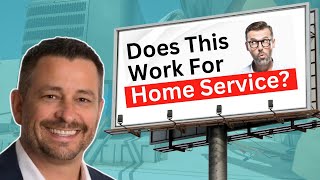
Eric Murr from Cagris Outdoor Advertising explains why billboards still work for home service companies. They're cheap in many markets, build brand awareness that lowers digital ad costs, and work best with geofencing and Google ads. Keep copy to six words, use strong contrast, and test by geography.
Chapters
Welcome back to the show. I'm your host, Phil Risher. And on today's episode, we're going to be discussing how to utilize outdoor advertising to grow your home service business with Eric Murr. Eric, thanks so much for joining us today, man.
Great to be here. Thanks so much, Phil.
Yeah, for sure. So Eric is the VP of integrated marketing with Cagris Outdoor Advertising, which is actually the 11th largest in the U.S. he is also the co founder of Cagris Digital Marketing, which helps tie digital marketing outdoor advertising together, which is something we're going to be talking about today. We actually both recently spoke at a conference and connected afterwards and we're like, hey, we got a lot of similarities. Let's hop on a show and talk together. So with that being said, I usually like to start with how did you get involved in. I know you've been with cagris for like 20 some years, but how did you get involved in like home services and outdoor advertising, that kind of stuff?
Well, our footprint naturally leads to relationships and home services. On the billboard side, where we're mostly a rural billboard company, we run the I81 quarter. So we have a lot of inventory. Not, you know, not as big as some of the revenue side for billboard companies, but we have tons and tons of clients and many of them are in home services. So when we launched the digital agency side, we really wanted to be sure that we brought appropriate services along for the ride so that we could attend to our needs for our client base and that just naturally fit to home services.
Yeah, makes sense. I think a lot of people, when they think of marketing, they think of digital marketing now and they think, oh, billboards and papers is dead, or something like that. And that's really why I'm curious first how we tie it together. But more importantly, like what, like a home service business, like 1 to 10 million in revenue. What's like a budget that someone should be thinking about? Billboards? Because when I think billboards, I'm like, you know, tens of thousand dollars a month, you know, New York, Times Square, something like this. But like, what does it look like as far as, hey, you know, you spend this much a month. This is kind of what we've seen to be actually work.
Sure. I think it's very different in metropolitan areas, urban areas versus rural areas, where rural areas billboards can be quite affordable and they're really a fantastic tool to drive sales in larger markets. It might make more sense if you're part of a co op. You have say it's a franchise group that has similarities and synergies there, that could be a possibility. I would also look at your independence because as you get into some of the sizable stuff in New York, certainly that's gonna be probably cost prohibitive. That's a space for bigger brands. But in rural America, billboards, extremely low cost, high value and they, and they do a lot of good things. I mean, I don't know how much. We'll talk about it later. But billboards do some wonderful things on the back end for digital. And one of the biggest surprises people find out is that outdoor is not dead. It is actually alive and kicking. And it's a secret weapon for doing some wonderful things on the digital side. Apple, Amazon and Google are all top 10 outdoor advertisers, the smartest tech companies in the world. The these are the folks that go to out of home. It's a Gen Z favorite for confirming legitimacy, for making sure that the, the brand is, is real. It's not fake news as, as it were. So, so definitely. But it's, it's a great tool and we can talk about it more here in a second.
Yeah, for sure. So when you think about like a budget, is it someone could say, hey, I got $500 this month. I'm going to put that towards a billboard or billboards or you know, $1,000 or whatever. Is there a percentage of your marketing spend or is there a bottom, you know, thing that you should start with?
Yeah, yeah, forgive me, you did mention that about budget. Apologies for not addressing that question. The. So you can go at it a couple different ways. Certainly KPIs are going to be a key factor and then you have to decide really what you're trying to do. Out of Home can be so powerful in changing local Google search algorithms that it can actually pay for itself in lowering your pay per click on the Google side. So that, that's a key factor to watch and monitor because if you're thinking about leads and, or cost, I mean from a budget side, you probably want to stay within a window that feels safe. But our digital agency is a return on ad spend model. So we're agnostic with an actual approach. And when we introduce out of Home, it's because it does specific things. When a brand is performing poorly in a specific marketplace, it's a game changer. It dramatically lowers cost per click and it also of course improves conversions because of the familiarity, the memorability of it. So when you, when you determine a budget, I would certainly stick with some percentages that feel safe and Then I would be very specific in testing an actual market so that you can see the outcomes and confirm it. So be sure to coordinate efforts in an integrated way with both your billboard reps as well as your digital side and bring those folks together because that's really where I think the magic can happen and you begin much more specific and strategic with your approach.
Yeah, I think a lot of times companies, they're spending around 3 to 10% of their revenue on marketing. So if your budget's 30, you know, $30,000 a year, take a percentage of that and then stick it towards. You're gonna. If you do yard signs or something like that, this is basically a glorified yard sign that's going to be much more impactful and get a lot more eyeballs than just in a specific neighborhood. But maybe on like an interstate or something like that. One thing we're going to talk about the digital stuff because I am really curious about that as well. I had a couple listener questions about billboard specifically. Are there, are there like specific things that help increase your conversion rate by using billboards, for example, like adding promos or special offers to a billboard? Is that good or is that bad?
So when it comes to your, your, your approach with billboards, it all comes down to the, the data that you've evaluated on the front end. Where are you. I believe the obstacle is the way as a mantra with respect to defining strategies and dictating your approach to, to really growing your business. So if the obstacle is you've got a very strong competitor or the obstacle is no one's converting because of your brand or you know, weak conversions. Discover and determine really what is the issue that's preventing that because that's going to dictate your general billboard approach. If you've got key competitors and you've evaluated that you've got weak performance in specific zip codes or neighborhoods, that should be the place for your billboard to change that dynamic. Specials are, they're just hard to believe in this world. So specials are not really, I wouldn't say the right strategy for out of Home. I would think it. And you want to really think ontologically by that I mean word associations because people don't, you know, billboards have been such a workhorse behind the scenes, but they rarely get the full benefit, you know, the full credit because of multi click path. But you don't know that until like you're us where we get to really compare and contrast performances when one's using out of Home and one's not and you really start to see that difference. Whereas before you had a 3 to 1 return on ad spend, now you might have a 10 to 1 return on ad spend. Or your cost per click was previously, you know, 30 bucks and now it's $17, for example, as you make those adjustments. But the real people will search randomly. It'll be a hodgepodge of keywords. They'll pick the various categories, particular brands, but, but ultimately you want to find the, the right terminology that, that matches up to what you discover on the data side of, of where your weaknesses are or where your strengths are. Google's algorithms are brutal or they're your best friend whether you're swimming upstream or swimming downstream. And you really want to find ways where you can win swimming downstream first with success. Because Google is going to continually reward relevancy. The less relevant you are, the tougher that slog will be. So if you can find those winning keywords, those winning things that people really associate with your particular brand and or category opportunities that have yet to be realized, that's really, I think, the, the cornerstone of the approach.
Okay, so if I'm hearing you right, special offers on billboards, probably not the best tactic, but you have to test it out and see if it makes sense. But if you have a special offer like let's say, let's say you have 25 off on your website, then you run a billboard for 25 off, it's going to be hard to associate. Did this work or did this not? And maybe it's more of just a branding to keep people aware of, of your service or something.
Yeah, the one thing I've certainly learned in and out of home is that there's many ways to tackle your objectives and in every market's different. So I'm not saying that, that specials don't work, of course, but I would be cautious of that. And it also depends upon what medium you're using because if you're using a digital billboard versus a traditional @ digital in a specific period of time is wonderfully tested, testable, so you can actually run a specific special. But the problem with pricing, as you all probably well know, is that the devil's in the details. And next thing you know it's like, hey, I thought I got a free oil change. Well, no, it's not, not in this particular car, not this kind of stuff. And then that just creates a bad, you know, user experience and they'll, you know, customers today will just go right to your reviews and say it's all, they're not going to, they're not going to give you that price point. And of course it's a race to the bottom because what's your competitor going to do next week when they decide to do that? But it's hard to market and really say things that are specific and believable. And so pricing does give you that advantage of being specific, but it doesn't necessarily give you the believability. Whereas brand marketing can be very, unfortunately too generic. So I would just really find, I think sometimes there's some really powerful ways, like if you look at say Geico or certain entities that animate their brands, there's flow for progressive. There's, and I know this is insurance, but there's the lizard for Geico. There's possible connective tissue with brand associations that you can win on. And I think those might be the ones that you want to put a little more creativity into.
Okay, and another question from a listener was about colors on the billboards. Is there specific colors that you see resonate better or worse?
That's a great question actually, because there are def. There's a color wheel combination out there that you can pretty easily get on a Google search and say, what are the best contrasting color schemes? Red and white's great, yellow and black's great. But the more impactful it is, the more, the stronger the associations with color and what they mean as well as the limited ability to build a feel good brand color association. So it's a very tricky situation, but I would argue for starting with an understanding of what the strong contrasts are. Because billboards are pure advertising, it doesn't get buoyed up by editorial content. It either lives or dies by its, its appeal aesthetically on the side of the road as a static message. So it's got to be bold in order to be effective. Yet bold can, can have some negative conn and associations if you're talking about clearance sale or you know, just basically harsh color combination. So I would. So for example, if you're starting with a red and white as a strong contrast, I would maybe move to the, to more of like a crimson and a cream, for example, as a softening of the core essence that really, you know, gave you that strong contrast in the first place, but move into those peripheral kinds of shades that still bring out some good positive associations.
Yeah, okay, that makes sense. And you mentioned a little bit about the digital advertising for like billboards changing things out. How long should you leave a billboard up for? Is there a certain time period that makes sense or it's all about the results.
Yeah, that's another good, good, great question. And definitely it is all about the results. I would say the reality is that brand marketing takes time. There is no silver bullet. And if you're thinking about testing digital without a call to action or something specific in a brand marketing capacity, I think that's probably likely to fail. Is that you would really better off budget to a number that you feel safe with that is not going to break the bank. That bill doesn't freak you out when you get it every day and really look at ways that are, that are long term focused. But if you're going to do long term focused, billboards are not, they're really not the place for a bland business card. I mean that's, it's, it's hard, it's extremely hard to design billboards. You ask any designer. And again, because it's pure advertising, you're going to really struggle to have, you know, unique, meaningful copy out there that really jumps off the page in a space that's crowded generally speaking. But, but like, you know, one quick brand that comes to mind is like Mighty Dog Roofing for example. Like you've got a dog. Dogs are wonderful, iconic, lovable, very, very, you know, kind of things that we, we identify with in our own lives. And 70% of people own dogs. So, so that's a perfect example of really crafting a message that's going to have some staying power from a branding perspective. But, but in terms of timelines, I mean it really, you, you've gotta, you gotta think long term. You really do.
Yeah. Okay, and then the last one on this and then we'll jump into more on the digital side of how we connect the dots. Is there, this was a listener question. Is there like a, a bulletproof outdoor advertising idea? If I came to you and said, hey, here's a thousand dollars a month for 12 months and this is what I would do if I was you.
So we'll have to get specific with the brand and the category, which is very hard to do. Or are you going to go there or not?
If you want, let's say it's like an electrical contractor. Let's say that they're in like middle America, they're not in like a huge city, but it's like a decent sized suburb or something like that.
This is where creativity is essential. I mean, so I'll put it this way. If you put a four letter swear word on red copy on a white billboard with your phone number on it. Comments? Call me a great Billboard is like a UFO landing on the side of the road. You can't miss it. It's absolutely impossible to miss. That is, its great strength is. But you've got six seconds to tell your story, and hence you've got to put creative minds to bear on figuring this out. If it's electrical contractor, for example, or what are the. What are the images that are striking that you can't miss? And what would be a play on words that really get things started? You know, for example, in the H Vac space, there's. There's been people that have run the your wife is hot routine. All right, so your wife is hot. What does that mean? Oh, my gosh, my wife is hot. Are you trying to hit on my wife? Oh, no, it's a H Vac. She wants to be cool. So. So please make sure that you, you know, because if mom ain't happy, ain't anybody happy. So. So some play on words create, you know, creatively will certainly get you plenty of attention. The. The difficulty, of course, is balancing shock value with positive brand association. And so if you feel like you're getting duped, it's a little too annoying. I mean, in. In Philadelphia, the I hate Stephen Singer is that on every billboard in town? It feels like. I mean. And yes. I mean, do you really want, like, what's the goal there? Because, yes, it's winning, and maybe everybody's happy, but, you know, it's. He's a jeweler and now you're pissed because. I hate Stephen Singer because they. My wife wants to go get a piece of jewelry. So, I mean, and forgive the broad brushstrokes with, yeah, yeah, gender here, but. But that's just an example of how people sometimes go, I think, too far with shock, because in a world of digital marketing and website experiences, I mean, it's all about the user experience, right? And people finding safety and comfort and happiness with your brand. And so if you're doing things that are working against that, I think it's, you know, everybody's got their own game plan, but I personally don't go that way.
I would.
I would focus on the benefits of. Of using your. Your services.
Yeah, I got you. So have some type of an image that correlates the benefit of your service or the problem that someone might be having, but make sure that it's, like, big and in their face and catches there, because they only have six seconds to catch their attention.
Yeah. Six words or less is absolutely key. Do not. You know, this comes back to the marketing funnel When I think of out of Home, I think of it as flour in your cake, all right? It's not sugar and eggs. You can only do so much flour, and that's a critical ingredient in making a cake. Right? So I think awareness, top of the funnel, brand familiarity is flour in your cake. And this is the place where out of Home can really shine for you. And you can't make a cake without flour. You can't make a cake. You can't. You can't build a brand without familiarity. You can't. You know, you go to the voting booth, you don't know that Pete Wasikowski is running for, for Congress. You know, you're not going to vote for him because he's not on the ballot. So making your way to the ballot is the key factor and benefit, I think, of out of Home, it's that flour in the cake. It's such a critical ingredient and it affects all the key metrics on the digital side. And it's why, again, the sophisticated, most sophisticated brands in the world are using out of Home because it breaks through the clutter, builds familiarity. It becomes, you know, it builds trust. And these are the cornerstones of quality digital marketing. So it's, it's a really powerful tool to complement those efforts.
Yeah, okay. I completely agree. Okay. Shifting gears a little bit. So.
Oh, God, forgive me, Phil. I just want to also say negative space is your friend. All right? You know, don't expect people to go the full way through the funnel with your billboard message. Oh, I've got. And this is the mistake that I see a lot of small businesses do, and that's understandable. The resources are really challenged. They've got such small discretionary spending and they really want people to go the full distance in that funnel. In a billboard experience in six seconds, it ain't going to happen. You know, focus on being memorable. Focus on creating a positive brand association so that when they see it, they're like, I like these guys. You know, it's the classic Dale Carnegie at a party. You know, I mean, you want to become, win friends and influence people so that you're like, that guy was awesome or that gal was awesome. Why? Because they were so likable and they actually asked questions about me. So when you, when you focus on the consumer, you do it in a playful, fun way. Lots of negative space, great simplicity. Remember the four letter swear word example? Like, you know, go. The numbers behind billboards are outrageous. Like, we have bus shelters, which is one of our six products. It's 50 cents for every thousand impressions and they're close to the road, I mean, find some really great independent, you know, any sign that you see is visible. Find good spots and do it right. And don't try to pretend that people can go from A to Z in a heartbeat. They can't. They just don't have time and they don't. They don't have their phone ready and they're not doing it. So. So take full advantage and leverage the strengths of the medium and don't pretend that it can do things that it can't.
Yeah, I think this kind of ties the bow with the special offers thing that if someone sees $25 off, are they going to pick up the phone and call you to get $25 off? Probably not. Use the medium as more top of the funnel. So people, you're building the brand and awareness kind of thing.
Now, I've seen some good plumbing ads for like $99 for a, you know, clogged toilet or a sink. And that's a way to get people in. But I mean, this is an age of reviews, right? So if somebody's coming in and you're. And you're doing a toilet for 99 bucks and then you get the bill for, for 250 and they're like, what do you mean? Well, because that only included X and what, you know, you can't play those games anymore without getting, I think, abused on the web with, with bad reviews. So people have got to have, you know, there's no shortcuts to this. You've got to really make sure the experience is exactly how you've described it.
Yeah, I agree. Okay, so shifting gears a little bit from a digital perspective. So obviously we do digital marketing consulting. I think a lot of times business owners, they say, okay, I want the electrician near me keyword on Google. And that's like the holy grail from digital marketing. But really what it comes down to is you actually want people to search your name in Google, your brand. That is going to be the holy grail, which is to your point, how you can kind of tie these things together. So can you talk a little bit about how you make that connection from outdoor advertising to digital?
Yeah, that's a lot to unpack there, Phil. But you're right, that is actually, that's the holy grail is to get those searches starting from your brand name. And it's very difficult. And it goes back to the previous feedback about finding associations like, you know, puppy dog electrician would be is a better secret plan than Trying to get the electrician named or a lot of folks, they start with names of their businesses when they were small and they've grown and next thing you know they're not really, they're tough to market. Yes, the logos are tough to market. And that's one of the biggest challenges in out of home is that if you started in a with your Honda Civic and you're now putting the fin on the back and you're souping up the front is still a Honda Civic. So I think that's really hard. How do you go about doing that? I think, gosh, that's a tough one to answer because it is definitely difficult to be. But memorability is the answer. I mean, creative and memorable and finding ways to create that connective tissue with your brand or memorability is going to be key. And I would just put some lots and lots of time into it because at the end of the day, electrician near me is like you said, the number one, you know, most competitive search term. And you're better off in billboards focusing on the brand and why you're specifically better. So identify your core value proposition and hammer that home and be prepared to dedicate yourself to it. But it's a long term play. The smartest brands do it because otherwise you're always dealing with that hyper competitive situation and you've never moved away from that category search. And the key shift as you just alluded to is moving it to a brand search. And that's, that's, that does so many wonderful things. Not only do you get the best shot at the business because you've, you know, that's where someone wants to go. Yeah, but the lowered cost per click because Google sees that pathway rep, you know, repeated over and over again and that's how you can really start to win in the long run.
Yeah. So I think what you're saying is like if someone keeps searching for Mighty Dog Roofing over and over, Google's like, wow, a lot of people might want this company. And so Google recognizes that and they're going to push you up in your organic rankings as well, which then is going to pull down your cost of ad spend. What about tracking ROI from a billboard into digital? You, you mentioned that before. Is, is there like tracking numbers or like, like your customer journey that you're tracking? How do you pull these numbers out and figure out what's working?
Well, you really have to have the willingness to kind of approach it from a data scientist perspective. So you've got a B testing you've got multivariable testing and you've got to know the marketplace to really see what kind of events could occur so that you can compare and contrast the before and after. When we typically do a program, we're doing billboards and this is not something that we do specifically or uniquely but we, we have the ability to really kind of control the variables and it's where, why we've been successful at finding the right kinds of partnerships that we can win in the long run. But the. I'm losing my train of thought here but. So when we do a program, we do billboards, we geofence it and then we're also comparing it with a, or adding to it a Google search game plan with, with the trifecta. So it's an out of home, it's geofencing and that and you see a multi click path in that arena and then you compare it with other territories where you've not done that. So you really have to kind of be willing to test it and say I'm going to run this program in this county, I'm not going to run it in the other county. See what that differences are compared to the, you know, the month before, compare it to year over year and then have a, you know, and then be willing to take that information and of course make the appropriate adjustments to your programs and your strategies going forward. But that's not that difficult to do. I mean if you have a campaign where you've been running something for a long time, you introduce out of home and make no other changes and you have an intelligent strategy recognizing that billboards are going to take you a portion of the way, but they're not taking the whole way, then that shows up eventually over time and it's pretty clear and evident if you actually study it and, and then take that data and apply it.
Yeah. So if I'm hearing you right, it's like you run, you take it by a county that you want to target or maybe even a city and then you run or neighborhood, you do billboards, you do Google Ads and then maybe a local search. The trifecta. What was the third one?
Geofencing. Geofencing. So geofence. You've.
Yeah. Tell me a little bit about how y' all do that.
Yeah. So geofencing is really another top of the funnel game plan because it's in a digital environment but nobody clicks on ads because we all, none of us trust them. Right. So so basically this is, this is a tactic to, to specifically target neighborhoods, counties, wherever you want to, to focus on. And you're pairing your, your brand messaging on the billboards with geofencing and having those things align nicely. That ensures that you are hitting all your target audiences. And what it typically does is it inspires search. And you just want to be sure, of course, that you're tackling that search successfully with a strategy on Google. Because if, you know, at the end of the day, if, for example, if you're a small mom and pop lawn care company and say you're running, you got a new batch of Toro motors, if you're going to run Toro Motors, no, say, called a Z turn mower. If you have not if you don't have a Google strategy, you're going to be driving lots of search, but somebody else is going to be the beneficiary of that because you're not ranking in those particular keywords. Home Depot and Lowe's will tear that up. So geo fencing is just another way to kind of tie the puzzle pieces together. Give people, at the end of the day, billboard's greatest weakness before digital age was that we were driving search, we were building a brand, and then there was no understanding about the pathway to get to the other side. Now we see that billboards still do all that, but when you give people a similar message in geofencing, you're like, ah, that's the billboard that I've been seeing. It's much more meaningful when you see it in your phone, which is a, which is in your hand, a tool to go search. And boom. That's what happens is people take that information, they do a search and then they find it when they are again, intelligently designing their Google strategy.
Yeah, makes sense. So the billboard and the Google Ads line up. So that way when you're, when someone searches for something and then your billboard or Google Ad pops up with the same graphic, it ties it all together and you can easily.
Yeah, it goes back and forth because of course in our mobile phones there's a zillion things coming through our feed and we're like, oh yeah, I got a call about that leak, right? And then, and then you can see the billboard on your commute and you're like, ah, I gotta call about that leak. I mean, who doesn't have an overwhelmed schedule on their to do list that they're. That. I mean, there's so many things that aren't to do list that are orphaned and those nagging, annoying little things that are kind of important but not urgent in the classic matrix, they get left behind. So Billboards, geofencing are a wonderful tool to kind of bring that all together, and you're ensured that the ads are being served in areas that are geographically relevant, such that the rep competition really works in your favor.
Yeah, it makes sense. So I think there's two parts. Someone that's running Google Ads, and on Google Ads, let's just say your average cost per click, let's say, is 20 bucks. And then you incorporate running billboards. That's external. And now you have this brand awareness. So now your cost per Click is not $20 anymore, it's $15. So you just cut that down by $5 cost per click, and hopefully that correlates into your revenue on the other side. But it's really about building this brand awareness to then decrease your cost per click so that way you get more traffic. That makes sense.
Yeah. And I think I said earlier, I can't remember, but there's been times where the savings on the Google side have been so significant that it's paid for the billboard program entirely. So it's worth investigating. And it really comes down to what kind of companies you have in your area, how mature they are, how much competition there is, how much scarcity there is. And there's lots and lots of factors. We have seen 12 by 24 or 11 by 23, which is the classic billboard size basic. I've seen them run for 300 in a market, and I've seen them go for 3500 in a market. So it's quite a range. And you just have to investigate. And you want to go deeper than the big three because the big three are the most mature organizations that are in outcome. And there's a big gap between us and the big three. Even though we're the 11th largest, we're a fraction of the size of those big three. But. But we have, we have 300 billboards in our market. And. And those things are gold, Absolute gold if you do them right.
Yeah. And what about, like, AI and outdoor advertising? And is there any, like, tech that's coming in? Like, I could, I could imagine one day where it's like you have these digital billboards and they can even, like, see how long someone's eyes stay on this thing and analyze it and then switch it up and like, you know, refine this process or something?
Yeah, well, the. If you go back to my Minority Report with Tom Cruise movie back in the day, which is now, what, 20 years old or so, I guess, I'm guessing. I don't remember, but Minority Reports, a Perfect example, you walk into a mall and then the billboard flips to your, to your messaging that's relevant to you and this is happening and this is available. Actually Mini Cooper did a program where they had transponders baked into their, their car DNA. And as you hit a billboard it would name the actual. Hey Susie, hope you're enjoying your Mini Cooper. I mean, it's crazy what you could do. There was some, there was a really cool program in, in Europe where a flight would. This billboard was selected to digital billboard where it was tied into the understanding of the flight patterns of the airport. And as an airplane went across in front of the billboard, the billboard said, you know, told you about which particular where it was headed. And it's. But it was much more for viral benefit than anything else because the actual return on ad spend for that was probably grotesque. But it got them the front page, it got them their big awards and the whole nine yards. But there's crazy stuff like that if you want to go that deep. But to me that's, that's for those that are tech geeks and not for those that are bottom line minded. And in my experience, SMBs and Home Services, they're like, I don't have time for that.
Yeah, definitely. All right, so wrapping up here, last question I have for you is, is there like a threshold in business that you should start running billboards? Like, hey, if you're, you know, a million dollars, you're trying to go to $10 million, you definitely got to do billboards. Is there any like a coaching or something that you, you would tell someone, hey, now's the time to do this?
Well, I think all of it has. Yeah, that's a great question. And it really depends on a lot of factors. I think it comes down to your scalability number one, because advertising's an amplification tool. And to me especially, I'm sure you could speak to the, the importance of getting your back end correct. Don't, don't do any sort of application advertising until you've fixed your back end. Customer service responsiveness, I mean the classic three Rs of LSAs for Google, at least to our Google rep out of New York, we're certified Google partner. And it's like radius responsiveness. And what's the other one? How's it relevancy, Radius responsiveness. And anyway, it's all good.
Yeah.
Yeah, you got to focus on, you know, the stuff that matters most. Because if you're not responsive, if the customers aren't happy, then there's no sense in amplify, amplifying it. But as you evaluate your marketplace, if there's affordable billboards, I would say do them right away because again, they're the foundation of your business, which is name awareness. And like anything, name awareness is critical to being considered in the game. And that's what you really want, is a shot. And you just want a shot at a quote. And then from there, you can prove out you're being a great service provider.
Yeah, I think a lot of times people get hung up on trying to do cutesy stuff in digital advertising when it's like if more people just knew about you and your business and who you were, you would get more business from it. It's very simple as that. Yeah.
For sure.
Yeah. They try to overcomplicate it so. Well, this has been great. Thanks so much for diving deep on some of this stuff. Where can people go to learn more about you if they're interested in setting up some billboards on east coast, that kind of stuff? What's the best place to get in contact with you?
Yeah. Thank you. Go to our website. You'll see my face as the interactive tool. Actually, I know.
I saw that.
So it's K E G E R R eis. It's not your average spelling and brand that we I, I repeat every single day of my life the last 23 years anyway. But yeah, one one G, two Rs and. And we, we would love to help you out for sure.
Awesome. Well, thanks. Eric's good getting to know you and learning more about your business and look forward to continuing getting to know each other.
Thank you. Appreciate it.
Phil.
Thanks very much.
Yep.


