Get New Customers For Your Home Service Business in 30 Days From Podcasting With Mark Adams
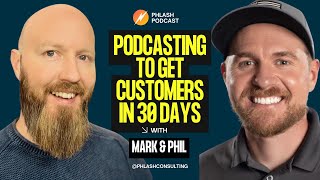
Mark Adams explains how home service businesses can replace paid ads with podcasting to generate leads in 30 days. Invite referral partners and past clients as guests, turn their stories into social proof across platforms, and feed conversations directly into your sales process. Simple setup: Zoom, an affordable mic, and treating the podcast as a relationship tool, not a content project.
Chapters
Welcome back to the show. I'm your host, Phil Risher. And on today's episode, we're going to be discussing how to use a podcast to grow your home service business with Mark Adams. Thanks so much for joining us today, Mark.
Hey, Phil. Thanks for having me.
Absolutely. So Mark and Katie Adams are the founder of Profitable Podcast, which is a company that helps business owners start and monetize a podcast in the first 90 days. I was actually a guest on Mark and Katie's podcast and we started talking through our audience of home service businesses, one to $10 million. And. And he's like, oh, well, have you ever thought about having someone to talk about podcasts to grow their business? And I'm like, no, but that sounds really cool and a great thing to talk about. So that's how this. That's how this idea came about. So, Mark, can you tell us a little bit, like, how did you get into the whole podcasting world and figure out that this is a way to actually make money with your business?
Oh, yeah, absolutely. So, yeah, we've been podcasting crumbs for years now, and it's all came about through, through necessity because we, our business. Unforget yourself. We helped entrepreneurs with the mindset, the personal development, you as the business owner. Because with my own marketing agency back in the uk, I could give people marketing plans, websites, email sequences, and the business owners would mess it up because it's them. So that took me on a sort of journey of becoming more in tune with the mindset, the personal development, how we get our own way as business owners. But Unforget yourself. We created an amazing system of how to help entrepreneurs, but then we went on a journey of spending. So we talk about this on our podcast. We spent so much money on ads and agencies to try and get our message out there, and it didn't work. We spent about 64,000 and we didn't have anything to show for it. And literally put our last sort of 500 bucks on a credit card for the agency and still not see anything. I mean, we get a few sales, but nowhere near enough to. We were. It was a negative and a family of four kids, two dogs and us. So we turned to podcasting out of necessity of how, how can we reach people for free? How do we get our message out there? How can more people find us? And Phil, it works. So we didn't realize what we were doing at the time. We didn't realize just how amazing this could be. But our angle was always, how do we selfishly get Clients. Because then if we have clients, we can actually help them. So the focus wasn't just on content, on sharing and putting stuff into the world. It was how can be strategic. And now fast forward, you know, a couple of years later, and this is now the only way that we get visibility, get clients, bring in leads, get testimonials. It's the only thing we do for marketing. No emails, no social media, no networking. And it's a method that we love. I mean, this is fantastic. We get to just chat and have a good time all day. And so along the way, our clients started to talk to us and say, can you. Can you help us to do this for our business? And we're like, yes, because we systematized it. So, yeah, long story short, now this is our new business that we help people with their podcasts from nothing or with a podcast is not monetized and help it work strategically for. For their business.
Yeah. So cool. So for home service businesses specifically, some of the things that you and I were discussing in preparation for this was like, was the first one, which was building referral partnerships. So a lot of times I talk a lot about, you know, home service business owners. You do your electrical contractor, you need to partner with H Vac or plumbers. And the process for that is like, you got to reach out to them and then try to build a relationship where when I brought that up too, you're like, well, they should just be a podcast guest. Okay, that's a great idea. Can you talk a little bit about, like, how would someone go about, you know, leveraging a podcast to have one of these referral partners on and then building the relationship and maybe even getting them. And then what does that look like?
Well, first of all, I want to talk about the problems. I think most people do. Most people, I may be on generalizing here, but what we've seen is a lot of people, they use podcasts as a content creation tool. It's just more content to throw into the world in the hope that. Well, first of all, that's where the marketing starts. You create your podcast. Now you have to market your podcast. Now you have to actually do something. Then they have to listen to it. Then they have to do, take the download, go to the websites. There's a whole journey you take people on. Whereas really it's like, what are you trying to. What are you trying to achieve? What's the end result? And so the end result is, I mean, how do you get partners? How do you get clients? It's built on A relationship, they need to know, like. And trust you and know that you are a good fit for them. So let me ask you this. What. What is the end result? Your. Your clients, these home service providers are looking for. What do they want?
Yeah, so I used to be in the trades. So what they want to do, you know, is grow their business. And one way that they can do this is by getting referral partners. Instead of praying to the Google gods that hopefully they get leads, you know, that they're going to build a relationship with a referral partner that would refer them business. That they don't do that work, but they're going to get the referrals coming in.
Okay. So rather than. Yeah. Playing to the algorithm gods or whatever, it's okay. You want referral partners, you want maybe partnerships or you want clients directly. That's right. Everything is based on, if it's for a business, how do I get clients? Everything goes towards that. So let's talk about the referral partners. So, I mean, which is based on a relationship. I mean, crumbs. We could be a referral partner for each other.
Yeah.
It's kind of beautiful how this works. And how do we meet? Podcasting on my podcast, was that by accident or is that strategic?
Right?
For me, it was strategic.
Yeah.
I knew there was. There was a great chance that you'd become a partnership, a referral partner, or maybe even a client.
Yeah.
So strategically, it's like. And also, we did our research. I knew we'd like each other. I knew you'd get on. So it's like, okay, this is going to be perfect. So referral partners. What better way to start a relationship than a fantastic conversation? What better way to bring that conversation together than have a mutual. A shared mission. Yeah, we have a shared mission. How do we help business owners to grow their business, reach more people, make a bigger impact? We just have different modalities of doing it. So we bonded and shared over that joint mission. We could riff and we could have a good time talking about what it's like in here. So for you to be able to create that kind of environment on your podcast, bring those referral partners onto your podcast as guests. Oh, and now you're. You're building a real relationship, not one out of content thrown at them. Not the hoping that they will see you, but strategically bringing those people on, either with an invitation or the fact that they find you.
Yeah, that's so good. And I think a lot of people get in their own way of thinking that it's more Complicated than just having a conversation. Like, just like you would say, hey, let's go grab some coffee and get to know each other. We're both drinking coffee right now, and we're getting to know each other, so.
Oh, I've got my British tea. Thank you very much.
Okay, there you go. But it could be as simple as. As that, as having conversations like this and building referral partners. One other one that you mentioned was about testimonials with the home service space. A lot of the testimonials that people have are Google reviews, because that's like, the number one thing that will help you rank. But there's another layer that's coming down the line, which is video testimonials. And a lot of times homeowners are a little bit more reluctant to, you know, record themselves on a video in their home and leave you some type of review.
Hold on, let's pause you there. Every human being is reluctant. I mean, every company, every coach you have says, get testimonials and share them. It's like, doesn't even matter if. Even if you have the best clients ever. And they're so happy to extract a testimonial. And we've got different. Different strategies how to do this, but. And one is through an interview style, but it's. It's hard to do. Even if they want to help you out, they want to do it. They probably get stuck in their own head. Can't do it. Press record. So, yeah, video testimonials are the hardest things to get. Yeah.
So can you talk through some of those strategies? Because I think this is a really big unlock for a lot of home service business owners, specifically when it comes to video testimonials. Because eventually written word is just going to be AI, you know, bots. But the video testimonials from home owners themselves, I think are going to be a lot more impactful coming into the future. So what are some strategies that they can leverage? A podcast to get testimonials.
Yeah, well, you're making it real. I mean, AI, even. I had a podcast yesterday that was created by AI. It was two AIs talking. I'm like, oh, but you. You can. You can tell there's a flavor to it. So I share that because the human. The realness.
Yes.
Makes a huge difference. So strategies for testimonials. I mean, crumbs, you could have a podcast, which you bring in some of your clients. You want to share their story. Maybe there's a. Again, what's the shared mission? Why would they come on your podcast. But to be able to bring them on and just talk them through in a nice organic way with your cup of tea or your coffee, and they get to share this, then you've created some amazing dialogue that you can either use outright, hopefully, or maybe crop as. Here's, here's a testimonial. A second thing, and this is beautiful, what you could do for. We're launching a new podcast now because, because we love podcasts. And it's a fantastic way of doing into a podcast roadmap, a blueprint so they can then launch that podcast, take your genius, take your skills, take your gift, and craft what that podcast could be. So that's kind of coaching style, podcast service based. I mean, this is where I need you to riff with me on this. What?
Yeah.
So could that be.
Yeah, so some of the, the big ones that we see is like when you go out to homes, nine times out of 10 every week, you get three or four questions that pop up. Sometimes they're all the same questions, sometimes they're not the same questions, and you need to write them down and then have a Q A podcast session where you answer those questions. They might not even be as a guest on your show because they don't want to come on your show. But you take that question, you say, hey, I was out at a home in X, Y and Z city and this was the builder of their home. And this was the question that they had. Let me explain.
But that's, that's not testimonial. That's answering a question. So now you're still doing content. If you need a testimonial to bring on people with, again, we need to get the concept for your podcast down first. Super strategic. But once you have that nailed down, which is the fun part, then when you have these people on, if it is a bit of live coaching, if it is talking about, you know, the building in the house or changing their basement or preparing it for winter or whatever it might be to have people on and to be able to solve, because they have a number of problems. If we talk about challenges that people have on levels, if you live on a podcast can solve a level one or a level two problem for them, but your services sell level two or level three, level four, level five, who are they more likely to seek out to help them with that next level? So, but by solving that level one or level two problem, live with them.
Yeah.
I mean, then even on the podcast, even after the podcast, they will be like, oh, my gosh, that was fantastic. Yeah. Phil, tell me how. How exactly do we help you? Well, you've helped me too. And as long as you can actually help them, then there's a beautiful way to gain their testimonial through. We've actually just helped them, changed their outlook, changed what they can do, given you've given them something. And also sneakily, you've actually given your audience this as well, because your audience now hear who you are, they hear your knowledge, and now who they're going to come to.
Yeah, that's right. I see what, I see what you're exactly saying that instead of creating content, you're leveraging the podcast interaction and relationship to create content. But more so when you're talking about getting testimonials, it's about having someone on and discussing it with them live.
Phil, content is the end product.
Yeah.
This is why with this, as we, as we talk with our clients through this and prospects who are like, oh, my gosh, this sounds amazing. I don't quite get it. It's because they've got this idea flipped around. It's not, we're going to give you a podcast that brings in leads. It's. No, no. We can give you a lead and sales system that just happens to be a podcast as a byproduct. Does that make sense?
Yeah, it's a shift in my perspective after I just said that. It makes complete sense with what you're saying. So let's, let's go a layer deep. So once you get these podcasts recordings, then you can incorporate them into your sales process for like, hey, listen to this thing over here. That might be helpful for this. Or I just did this episode with X, Y and Z Expert. Is that kind of how you would take this content and then use it for sales?
No.
No. Okay.
Okay. That's how you. That's how you could use it. So that's content marketing. This is how you could use this in the future. So, yes, let's call that. Let's call that phase two. Okay, but phase one, I mean, again, this is where. Look at the life cycle that I sort of shared earlier. Most people plan a podcast episode. They record a podcast episode, they edit and prod the podcast episodes, then they launch it into the world, then they market it and tell their email list, social media, anyone with a pulse about the podcast.
Yeah.
Then hope people will listen to the podcast, listen all the way through the podcast to the call to action, then download the thing, click on the website, book a call then, and it continues. Then we Enter an elongated sales cycle, whereas, skip the planning. I mean, did you plan for this? Did I plan for your podcast? We just get to show up, we know what we're going to talk about and have fun doing it. Content is automatically created, but the relationship, client partner referral happens even before you stop recording, even before you publish your episode. That's how we say, look, we're going to help you launch your podcast in 90 days, but we're going to help you monetize it in 30. Yeah, you monetize with the relationship.
I completely see what you're saying. A lot of times people think podcasting is this whole big shebang, when it's really the relationship that you build when you just get on a call and talk to people and you have an excuse or reason to talk to them because you have a podcast.
Yeah, that. Oh, oh, you said it there. The reason or the excuse. So let's call it cold outreach. So podcast, it could be. It is your lead magnet.
Exactly.
It is your lead magnet. So if, if you didn't know us. Well, actually, you're a good example because, I mean, crumbs.
Yeah. We didn't know each other.
We didn't know each other. And. And you. You found us. Yeah, I wanted to talk to us now with other people. It might be a case of, ah, that person may be a great entry. They have the audience I want to talk to, or they know someone who, who could be a great partner. Or crumbs, they could be a perfect fit as a client. If I told you, hey, Phil, do you want to come on a sales call and be sold how to use a podcast, what would you say?
No.
No. If you saw a post saying, use your podcast to get money, would you click on it? No, probably not. But you didn't. You saw a post about being a guest on a podcast and you were like, oh, yes. So if I reached out to you privately and said, hey, Phil, love what you're doing in this. This arena, I would love you to be a guest on my podcast to share how you help home service providers with their marketing to increase the profits, you'd be like, hell, yeah, that sounds amazing.
Yeah, that's it.
It breaks through the. In a time where I think the sales resistance is an all time high, attention span, all time low, how do you build an authentic relationship and build a connection? And what we found is there's no better way. Trust me. We've tried them all. We've thrown money at all of them. Podcasting is fantastic.
Yeah. What do you Think about having your own team members on as guests. Like, is that. Is there a way to leverage that to maybe build a strong relationship with your team members? Get answers, questions and answers from them or anything. Or is that still more content esque?
Well, what are you, what are you trying to. What are you trying to achieve from that? What's point B? What's the point?
I think the point is like getting into their expertise of things. Maybe it builds a little bit more of a employee retention because they feel like they're a part of something bigger and they're featured on Azure podcast. Naturally, from the home service side, it would be to leverage the questions and their expertise. That's good. They get out in the field, that kind of stuff. But there might be some other layers in there as well.
Okay. So it's interesting so to look at the relationship angle. So to increase employee retention, they feel part of something. They feel valued. That is a good value. That's a good reason to utilize their questions. Well, now you're going back into podcasting for content. So the audience, so the listeners will. I don't.
Yeah, I get it.
Again, looking at what's your. What is your metrics? Our metrics for our clients are how many leads are you getting? How many clients you're getting, how profitable is this? Not how many downers did you get? How many people listened to the episode? Because that's a vanity metric that comes from the other metrics. So to help relationship with your team. That's interesting. That could be. There's a purpose behind that, but to just to create content so that the audience. I think I've sort of flogged that one to death right now. You know my stance on that.
Yeah, I think you hit it with the vanity metrics versus what actually matters. And I think a lot of people, when they think podcasting, they think that they have to market it. Like what you were saying before, but really it's about building relationships, Referral partners, getting referrals, passing referrals, and the relationship side of things.
Yeah, you said about making things. We overcomplicate everything you just said there about the. I mean the marketing. Yeah. The way that we approach podcasting, everyone thinks it's so hard. There's so much tech, it's so this. So that it's like, no, no planning tech with ease, no editing. It's. How do we make this as easy as possible? Just show up, be yourself, have a conversation. Everything else is taken care of for you because of the system that will help you to install so that takes care of the show notes, no editing because of the procedure. We show you how to do. So again, all those things where it's, it's hard to do. It's. It can be absolutely. It can also be super duper easy. Again, it's just a shift in perspective.
Yeah. All right, so you sold me, Mark, on starting a podcast. How do I get welcome? How do I get my first 10 guests? Or how do I do that?
Yeah, well, I mean, crumbs, you can look for absolute strangers. You can look for the low hanging fruit if you want the low hanging fruit. Great. What, what potential clients or partners that are slipped through the cracks with your current strategy could you re. Engage with not through a cold email or a sales campaign or a price increase campaign or whatever, to be able to strategically reach out to those. For. To be a guest on your podcast. I mean, you look at anyone's, you know, if you're tracking this stuff, you know, there's a lot of people within sales who have fallen. Fallen through. Okay, there's your low hanging fruits. How do you re. Engage by bring them onto your podcast. Yeah. So that's what you have. Also, you could look at your, your current audience if you have an email list, if you have social media to, to publish and just say, we're starting a brand new podcast. Here's the angle. And those people with this shared mission who want to be on there will be like, this sounds amazing. Let's. I would love to be part of that. And why? Because people love to talk, people love to share. I mean, Katie always says that even her dad, who doesn't know anything about podcasting, if we told him, come on our podcast to talk about church choir, he'd be like, oh my gosh, yes, I want to talk about that. Yeah, it's.
You're giving them a platform to talk about themselves.
Absolutely.
Yeah.
But for you, it's a strategic platform and the output can be so many things.
Yeah, I see that. Okay, so that's how you can get people onto your show. What about, like, what do I, how do I even record this or do that and post this thing? Like, what is that? What's the simple process for that?
Well, a simple process is, I mean, you can use Zoom for podcasting. Yeah, there's so many different. I mean, we're on Riverside right now, but there's so many platforms you can use. I always look at what's the simplest way of doing this. And right now, Zoom, you click a button and you're on. Click a Button and it's recording. It is so super duper simple. Set it up and we'll show you how Automatic downloads, everything's taken care of. So again, how do you simplify? You don't have to buy this big equalizer or production pack. Again, you can do, but you don't need it. Yeah, I've got a nice mic, but I upgraded mine. You can get a nice mic for 50 to 100 bucks a camera. You can use your laptop computer. I actually use an old iPhone as my camera and it's fantastic because iPhone cameras are better than most cameras out there.
Yeah.
So there's sneaky ways to make the tech and the platforms so easy and work for you. And we got our clients through all of that too. You don't know what you don't know. That's fine. Let's. Let's take you through.
Yeah, makes sense. Okay. And then so once you have these conversations, we all, you know, met someone that could be a referral partner and then like, oh yeah, we'll refer you, send you all of our deals and then, you know, crickets. How do you maintain this relationship or, or utilize like what's kind of step two to actually turn these into actual referrals or profit opportunities?
Yeah, Give me an example.
Okay, so you have someone as a guest on your show that you want them to refer you business. And through getting to know each other, you start building a relationship. Do you have any. Once you're done recording, do you say, hey, you know, we have a referral program. You can send us referrals, kind of like that little chit chat at the end. Or do you have some way to re engage them? You know, maybe my marketing brain's coming out, but like some, some email newsletter that you stay in touch with these people or that kind of stuff. But I guess I'm getting from how do you take the relationship on the podcast to actual profit?
Yeah. Well, this is why I think we're entering your world as well. Because with the podcast is how do you get absolute strangers, bring them into your world so stranger to lead and go from lead to. To clients. So I mean, look at our relationship. It's fantastic. We met on our podcast. You came into our podcast before you jumped on a podcast, you already knew us, liked us, and trusted us because you went through our nurture sequence. You got to know all about, you were prepared for the podcast and you knew all about us. And from this. What am I doing right now? I'm on your podcast talking to your audience about something that may be beneficial to them. I mean, crumbs. If anyone start a podcast, number one, we'll get some clients from this. But two, we actually get to help them with something that really does change their world. And by combining the services that we do, to use your podcast as a lead generation, nurture relationship tool and have your consulting to actually add other elements to this, it's fantastic. So, holy smokes. This is a real life example of a potential partnership, a potential referral resource. It's beautiful.
Yeah, for sure. What are some common objections or issues that people run into? Like, I'm not that sociable, I don't like to be on camera. It's like from that, it's like I'm not tech savvy or what are like the big ones that people tell you.
Oh, crumbs. Yeah, I mean, so tech. I think we covered this earlier. It was, yeah, I'm not tech savvy.
I don't know.
I don't know how to do this. I know you don't. But there's a simple, easy way of doing this. So it's the tech gets in the way, the equipment gets in the way. Oh, but how do I edit? How do I even how to get this recording into the podcasting world so people can listen to it? Yeah, we show you how to easy upload onto the platform, so it goes onto Spotify, goes onto Apple. Again, there's all these things that, from the tech and the platforms and how does podcasting work? So we roadmap that all out, make it super duper simple. But back into the personal side of it, we get in our own way. Right. We are our own worst enemy. And this is where our other business, unforgett yourself comes in. The fears, the doubts, the overwhelm. Maybe that's it. Fear, doubts and overwhelm. So the fear of having conversations. I mean, for introverts, this can be a fantastic tool because, Phil, right now I, I don't like public speaking. Put me on a stage. I mean, side point here, podcast has got Katie on stages, he's got her speaking. It's given her more and more opportunities. It's fantastic. Me, I get kind of nervous. I don't like seeing so many people.
So.
But this podcast, hopefully it'll go out to thousands and thousands of people. But right now it's just me and you. It's one on one. So you kind of forget about the listeners and it just becomes a Mark and Phil cup of tea and a coffee. We're just going to right the wrongs of the world and just talk about the cool stuff that we do. It's a nice way of doing that. So. And also it could be a. It's a gateway to speaking engagements. It's practice for talking about your offer. It's practice about talking about your service. It's practice engaging with people. And here's another good thing about the podcast, because. Because you're talking to people on a daily basis, you get to see what works. You get to see what, what makes Phil nod his head. I get to see what makes you smile. I get to see what makes you disengage. And then it's like, ah, as you optimize, do more of the good stuff and less of the stuff that doesn't work. Like, unforget yourself. I now know through talking to thousands and thousands of entrepreneurs who are solopreneurs, if I talk to those people and talk about the solopreneur syndrome, people pleasing, over delivering, undercharging work, life balance goes, my people will start to smile at that point because they can resonate with that. I only got that drilled down by repeating this to the right people. So it's just, it's safe but really good practice that communicating is the short answer to that long, long rant.
Yeah, but you actually hit on something that's really important for home service business owners, which is being the authority in your space and something that we didn't hit on yet. But when you podcast and you have guests on that are authority figures in your space, it immediately elevates you. Like, for example, when I started the podcast, I had some of the top authors in our space, like Mike Michalowicz, John Warlow, Marcus Sheridan, these authors that people would know their books. And I had them on my show talking to them one to one, just because I started a podcast, literally, my first 10 guests was Mike Michalowicz from Profit first, who's like a renowned international speaker.
Yeah.
And then when I'm talking with my prospects, I can bring this up that this guy was on my show and I spent 30 with him one on one, asking him any question that I wanted to. And for local home service businesses, a lot of times you're trying to find, well, what's the difference between you and this other business? And that could be one thing that can help elevate your brand, whether it's a local politician or someone else that someone else might know in the local area by giving them this platform to speak to an audience, which I think is really what you're mentioning about. Katie, how? Just by having a podcast, and then people are like, oh, she has a podcast, so she should be a speaker here, or something like that.
I mean, yeah, we can talk about authority, because that's. That's a sort of. That could be a whole podcast on.
Its own side benefit.
Because I want. I want to challenge you directly there, because being the authority about bringing on all these other. Other leaders and global figures depends on what you're trying to achieve, because I would argue the exact opposite. So for me, for podcasting, to bring on other podcast experts, who are they going to listen to if I'm bringing on another expert? And my attention, my focus is on them and the audience is on them. Like, you see all these. The big global leaders in podcasting that bring on these great guests. I listen to the guests and I try and, oh, I want to buy his book. I want to do that thing. I'm going towards the guest. So unless you're known, you just reduced yourself in authority. So while you're thinking, you're going to increase yourself by the association, which can work if you use it correctly.
That's right.
By being someone that's maybe not known in your local region or area to have other people, it starts to reduce your authority. Rather than you want to be the authority, you are the leader. They want to listen to you. I want to be the one given the advice and helping rather than other people. So it can work for you, it can work against you. Does that make sense? Yeah.
Yeah, for sure. I think you have to have the balance of the conversation, but I definitely see what you're saying. Like, if I talk about marketing and then I bring someone else who's maybe more authoritative in marketing, it's like, well, why would I listen to this guy if I can listen to this guy?
Well, nothing that it might be, oh, I'm gonna go and buy their stuff or I'm gonna go see them, or. So it's, again, attention span of everyone. It's how you best use that, which is why, again, what the audience does, you have to know mindfully, what do you want to achieve? What do you want to give your audience? So again, with the people that you can look at straight away, your guest is your number one audience, the audience of one. Then it's your audience, those listeners, but also it's the borrowed audience. So right now, Phil, I'm borrowing your audience. No one's probably heard of Mark Adams or profitable podcasts or unforget yourself. They have now. So I'm borrowing your audience. You're gaining some more authority, you're gaining some more information, you're gaining content from me. So it's kind of a win, win all round. So yeah, looking at the I can I come back, what's the intention? What are you trying to achieve? What's the point in this? And then make sure your strategy works for that.
Yeah, it makes complete sense. So if someone's thinking about doing a podcast, how long should they give it? Because I think there's a stat like someone doesn't get past nine episodes or something, something silly when they do a podcast or something.
Oh yeah, Pod fade as they call it. Yeah, most people, most people give up on podcasts. Well, there's the biggest false. Everyone has a podcast. There's too many out there. Well, no, I think only like 2% are actually active and still going. Most people give up. Reason being they become an expensive hobby, a labor of love. Or it may be a business podcast, but it doesn't bring in clients. I can't track anything, so I'm going to give up because it's not bringing an roi. Yeah, there's the problem which, why we focus on the roi. So I mean, we're about to hit a thousand episodes on the Unforgett Yourself show. That's a thousand episodes. That's a lot of commitments. But because of the baked in consistency, because of the value we're getting, because of the results we're getting, it makes it super duper easy to keep on going. So yeah, I, it's a shame to see podcasters get to nine episodes, as you say, and stop. But it's because there was a lack of guidance or lack of, lack of strategy.
Yeah. I think there's a good saying like people say, you know, Facebook ads don't work, or Google Ads don't work, or podcasting doesn't work, but it's really, you're probably just not good at it. It's really what it comes down to. Or you don't have a plan that's actually going to be effective. Yeah.
I mean, look at, listen to our story we said earlier about the, the ad. Facebook ads didn't work for us.
Yeah.
Does Facebook ads work? Yes, for some people, absolutely it does. You have to. Do Google Ads work? Does networking work? Everything works. We had to find what's right for you authentically and naturally. So when I found that you mean just talking, just building relationships, having fun can be my only source of lead generation, marketing and sales, that was revolutionary. But then if it feels more aligned and it feels More fun, then naturally you can get better results with that.
Yeah, makes so. Yeah, it makes total sense. So if people are thinking about starting a podcast, your business called Profitable Podcast, where can they go to learn more or gather some more information? What should they do next?
Yeah, absolutely. Go to profitablepodcast.com and you can read all about us. You can book a call, have a chat, really, if you're thinking about starting a podcast and if you want, I mean, crumbs, our new podcast, the profitablepodcastshow.com Sign up to be a guest. You can come onto our podcast and live on the podcast, we'll help you to create your idea, your strategy. So you can either go and implement it yourself. I'll give hints and tips on how to do that. If you want some help and support, we'll. Well, of course we can help you with that, but really it's about how do we get more people out there? So, yeah, go to profitablepodcast.com or the profitablepodcastshow.com and check it out. And if you want to hear more of our other podcast, it's called the Unforget Yourself show, go and check that out and enjoy other entrepreneurs talking about their entrepreneurial journey, what they've been through, sharing their nuggets on, on business, on mindset, on this crazy world of being a business owner. So those are. Those are three ways that you can get in touch, reach out, or just find out more.
Awesome. Well, Mark, it's been great getting to know you and I appreciate you having me on your show and you coming on here and sharing all this information with us. So keep it up, man. I look forward to continue the relationship.
Oh, man, thank you so much. It's been so much fun. Again, I love this stuff. So thank you so much for. Yeah, thanks a lot.
Sure thing.


