Going All In & Profit First With Mike Michalowicz
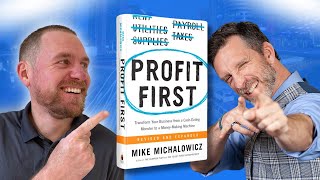
Mike Michalowicz lost his wealth as an angel investor, then developed the Profit First system: split money into separate accounts for profit, owner pay, materials, and operating expenses so you know what's actually available. He also explains how investing in employees' personal visions and celebrating milestones builds the teams that stick around.
Questions this video answers
February 5, 2024
Eight
How great leaders build unstoppable teams
mikemotorbike.com
9 years old
Chapters
Welcome back to the show. I'm your host, Phil Risher. And on today's episode, we have Mike Michalowicz. I was actually introduced to Mike from one of my clients, and he told me, hey, you got to read this profit first book. It's going to transform your business. And I'm like, okay, I'm all about that. And so I read the book and I'm like, man, this guy's amazing. So I went down the whole rabbit hole of books. And that's Mike Michalowicz to me. So, Mike, thanks so much for joining us today.
Phil, it's a joy to be with you. Thanks for that little story. Yeah.
Oh, absolutely. So you've written eight books of what I could see, but I know you have a couple other ones that are out there lingering, but take me back. So when you were 35, you had sold two businesses, and you had sold two companies, and you went into angel investing.
Yeah.
And it didn't. It didn't really go too hot.
No. And I think that is the most important part of my life's experience in business because it transformed my perspective of business. So the real quick story is I was in the tech space, tech services, built one company, private equity, acquired a second one, was a Fortune 500 exit. And I thought, oh, my God, I'm so smart. I achieved wealth I'd never had before in at age 30 and thought I knew everything. So I was like, I guess I should become an angel investor. And if you an idea, I'd be like, phil, I'm in. Like, let's do this. Someone else had an idea. I mean, and I was arbitrarily investing in businesses. And when I say investing, I didn't know what I was doing. Money is not an investment. It's. It's. It's money applied to a specific outcome. It's. It's leveraging networks. It's leverage. And I didn't understand that whatsoever. I lost everything out of ignorance, but mostly arrogance, too, thinking if I showed up, we'd. We'd do this. And I lost my home. I lost my possessions. I. The one thing I didn't lose was my family. And I remember the day that I had to share with my family what was going on. I sat him down and I was sobbing because I had not told them the truth. At this point, everything's fine, life is great kind of thing. And it wasn't. And I remember my daughter. She was 9. She ran to her bedroom to grab her piggy bank, and she came back. She goes Daddy, since you can't provide for us, I'll do it. And that moment is just. It's. It's like a. Like it's stamped on my heart. I'll never forget became the inspiration to figure out what entrepreneurship is now. It wasn't like the next morning I woke up and said, I'm going to figure this out. I started to drink. I went through depression. But years into that challenge, I started realizing, what if I knew nothing about entrepreneurship? What if everything I think was wrong? And I started to investigate it, and I became an author. It sparked the whole author career. I started to write down everything. And today I realize I know a modicum of what exists in the entrepreneurial space. I know so little, and my mission is to figure the stuff out selfishly, to serve the businesses that I own now. And if it works for me, my gosh, share with others who want to try it out. And that's how all my books, including Profit first came about.
Yeah. So your mission now is to eradicate entrepreneurial poverty.
Yeah, I got show. Absolutely love.
I absolutely love that.
There it is on my wall. Every. Every room that I work in has that sign up somewhere in some capacity. Yeah, because entrepreneurial poverty is this perception of, you know, you started your business because you wanted to be, I assume, Phil, wealthy. Financial freedom, personal freedom to do what you want, when you want to express yourself. That's why I started mine. And almost every entrepreneur has a vision or dream, and then the reality is totally the opposite. We work our tails off. We. We don't have financial freedom. We're actually feeding the money, our scraps of cash that we can find. Just keep it going. That gap is what I call entrepreneurial poverty. It's not something we talk about. You can't go to a client, say, I'm struggling. Hey, you want to do business with me? So it's this hidden secret that most entrepreneurs have, and I want to fix that for everybody. I have, for the most part, fixed it for myself and exploring ways to keep on expanding that I know there's other entrepreneurs that are still going through that journey that I had gone through, and I want to serve. Serve those folks. I get it.
Yeah. So most of our audience are home service businesses. So, you know, movers, carpet cleaners, H Vac, and so the profit first mindset of not just running an avid checking account, it blows them away every single time that I say, you got to read this book.
Yeah, yeah.
How. How did that come about to, like, figure out, okay, I can't run it out of a checking account when I have $100,000 in there?
Yeah, well, you, you kind of can, but you have to tweak it to your point. You can't run out of one checking account. The realization was, and Phil, every time I do a speaking engagement, anytime in front of entrepreneurs, I'll ask, how do you manage your business? Now, these are businesses that are doing a hundred thousand, five hundred thousand, but businesses are doing 5 million, 10 million, 25 million. The vast majority say I log into my bank account and I make a determination if I have money I can spend. If I don't, I panic. I don't read my income statement, my balance. I don't even know how to. So I said, okay, if our natural behavior is to go to our bank account, that's how we have to manage our business. Don't. It's really hard to change ourselves. It's really easy to leverage an existing behavior.
Yeah.
The best example is this is about maybe 10, 12, 15 years ago now. I wanted to start working out regularly. I thought I was. And I looked at myself and measured what I was doing and said, my gosh, I think I work out like three or four times a week. I wasn't even doing one a week. So then I said, well, what do I do? I realized every morning I wake up, go to the bathroom, make a cup of coffee, scroll through the news, and then I go, oh my gosh, I can't work out today. I have to get to work. There was an existing pattern, and the pattern was I'd always wake up, always go into the bathroom. So I said, okay, what can I do to set up a behavioral intercept? I put my sneakers on top of the toilet seat. And when I wake up and walk in there, the first thing I do is grab my sneakers. I put my shoes, I mean, I can't use a toy without it, put them on my feet. And then momentum kicks in with profit. First with realize is if you log into the bank account, don't try to force yourself not to go to the bathroom. Like go. That's where you go. Awesome. But instead, one account, where all the money sits there. We set up multiple accounts with different pre intended use. So one is to pay you a proper salary, One is to reserve profit, which is different than a salary. Once you pay your tax bill, maybe you have to buy materials. You got to get the, you know, the supplies and stuff. You have a materials account, other expenses account. So now every time a deposit comes in, say 500 bucks, you don't have 500 bucks. A portion is for profit. A portion is for you. A portion's for materials. A portion is to operate the business. And now we can see very clearly by logging to our bank account like we always have, what money is available for what intended use before you spend the money. That's the whole trick.
Yes, yes, I completely agree. And I, I for my business specifically logging in and when I'm trying to hire someone and I can see in my payroll, oh, I got an extra couple thousand dollars in here, so I could probably allocate that towards another person.
Yeah, yeah, yeah.
It's mind blowing that it like works like that when you scale by percentage and not by dollar amount. That part to me was pretty transformational.
When you have one account where you put all your money in, what we revert to is basically it's a form of a confirmation bias. The next thought we have, which we look at the account and say, oh, I can do that. So maybe it's hiring that person or oh, we need a new piece of equipment, oh, there's enough money in there. We revert to what's immediately or urgently needed. But then the next morning when payroll comes or another bill come that we didn't think about and we see an empty bank account, there's this panic. So we go into these vacillations of peaks and valleys by pre allocating money based upon percentage. Say 500 comes in, we put 10% of profit, we have 50 bucks there, maybe 25% of that goes here and maybe three remaining 50% goes into your operating expenses. So now instead of $500, we realize we have $250, 50% of 500 in the OpEx. Then when we say oh, we need to pay some operating expenses, we look at that and see what's available. Now here's the biggest hack. If you don't have enough money in the account to pay your bills, that's your business speaking to you and saying you can't afford these bills. There is a flaw in the business. We're underpriced, we are charged more for what we do. We're inefficient, we, we have exorbitant or unnecessary costs. But when you can't afford your bills, the trick is do not borrow from your profit account. Because now you're unwinding the whole system. If you want to be profitable, if you want to pay yourself, you must use allocations. And then your business is telling you what it must operate off of the profit first. Once you realize that, it starts triggering innovative Thought it starts making you reverse engineer the structure of your business a very healthy way.
Yeah. I got one other profit first question for you. This was from one of the listeners. They were saying, okay, Mike, I did everything that you told me to do, and I've eradicated entrepreneurial poverty, and I have all this profit. When do I reinvest it back in and when do I take it out? And how do I make those decisions?
Yeah. So many entrepreneurs blur the term of what a reinvestment is. So I'm not saying it's for this, this listener, and I'm congratulations on their profitability. That's miraculous. I hope you're celebrating with that. Many entrepreneurs say, I need more money to do more advertising. Oh, I have some money. I'm gonna take my profit and spend it. Well, the second you spend that money, it was never a profit. You just put it in a categorical profit, but you spent it, so it is an expense. So these arbitrary expenses are very risky. What we have to do is an ROI analysis. And everyone's heard this. No one does it. An ROI is, if I put a dollar into something, will I get a greater return in a reasonable time frame than the investment? So if I gave you a dollar, and by the end of 30 days, you had $2 in your hand, oh, wow, you can pay me back my dollar, plus maybe a fee for the loan, 10, 20%, and you've made a difference. So now it makes sense to take as much money as possible to borrow as much as possible. When you're profitable, you would need to borrow effectively, that profit from your business and invest in something. But we got to ensure it facilitates a return. I've seen businesses that don't do the ROI analysis. They just arbitrarily say, well, everyone else is running Facebook ads. That's why I do. They don't understand the return, and they reinvest. Plowbacks, another soft term, all their money into business, and then they never are sustainably profitable. Panic ensues. Then it's like, well, I can't pay my bills. I'm barely getting by. I need to sell my way out of this. And it becomes the sell the way out trap, where it's like, I need more sales, I need more sales. And now you're playing a game of, can I collect money fast enough to cover these bills I can't afford? And that inevitably, inevitably will sink your business.
Yeah. So if. If I'm hearing you right, it's more. Look at the ROI analysis for this example of the person has all this profit. Maybe you can make 20% profit in your business if you reinvest this. But also you can make, you know, 7% if you invested in the stock market. But you have to make the decisions on your business of how much revenue, risk or allocations do you want to do to have maybe a blended portfolio or whatever you feel comfortable with.
Yeah, I love. That's a great analogy. Because inevitably our business that we own, you know, we're a shareholder. I'll go to an audience and say, hey, anyone here own stock? You know, and a few hands go up. And I'm like, why isn't every hand going up? You're a business owner. I'm not talking about public stock like Ford or something. I'm saying, do you stock in your own business? And most people are like, you know, 100%. That's a massive investment. And so if you're going to put money, more and more money into it, we want a return. It wouldn't be funny. If Ford's trading on the stock market, we say, well, it's likely going to go down. It's going to keep going down. Actually, everyone knows it's going to go down. Let's start pumping money into it. You would never do that because you lose money. But ironically, many of us do it with our own business, so. So get a clear roi, get some predictability, and the more predictable, the better. And then for sure double down on that investment because it's a good return. If you know the ROI on your own business.
Yeah. If you don't know what your profit margin is and your percentage, then you don't know if it's a good investment.
That's right. So you got to know. Yeah, it's okay to get outside help too. Like. Like that's that analysis stuff. Sometimes it's better even if you know how to do it. Most people don't. I don't really understand how to do it myself. I bring in an outside expert. The benefit of that is the outside expert doesn't have emotional bias. They won't play the emotional games and say, yeah, but, you know, there's these great clients. Yeah, but I know instinctually they'll say, here's what the numbers say.
Yeah. I think that's something that, from what I'm seeing from you, that you do an exceptional job of is you're not just writing books and doing speaking engagements. But it seems like almost every book you have some type of a business or coaching attached to it of some sort.
I do, I do. So I just Released All In. We were talking off the air about that. And I have a business partner. Her name is Danielle Mulvey. All In's about recruiting and retaining employees, raising the bar at your organization. But here's the. What I've experienced, Phil, is when someone reads a book, a percentage of folks say, I get it, but am I doing it right? They want someone to help enforce it. They want someone to coach them around the nuanced components. They want an accountability partner. They want someone that can just do it for them. So Profit first has it. We call Profit first professionals. All in has it. We call it the all in company. Clockwork has it. So all my books, I do have a company that does the teachings and the enforcement and the support behind it, because some folks want that and need it.
Yeah. Yeah. Well, I think it's so important because you read a book and then you try to implement it as best you can and you get like 50% ish. And then it's like, well, what do I do next? And show up to my keynote.
Yeah, right, exactly.
So with all in that book, probably in my opinion, the quote that hit me the hardest was, if you want your employees to be all in, you need to be all in on your employees. And I think a lot of times business owners don't look at it that way. Obviously, they're like, hey, I'm paying you, you know, 50, $60,000 to do your job. Like, why aren't you doing a good job? Right, right. And so I think connecting the dots for business owners is you got to be all in on your people, and then they're going to be all in on your business. If you do this, then they're going to do that.
Yeah. It's the essence of reciprocity.
Yeah. How did this idea come up for your. For this book?
Well, so I own my own businesses and I have many them invested in. And I have also been an employee of companies because I've sold my businesses and then got employed by these companies. And sadly, many businesses I've experienced, not all, hopefully less and less, are in this fill in the blank mentality. Like we have this need insert person resource to do this, and if they fail to do it, get them out and insert a new resource. It's this very transactional experience. What great leaders do is they see that work is not a transactional experience as a transformational experience. The transaction is, do your job, here's the money. The transformation is there is meaning in the job, there's meaning in the experience, but here is the greatest realization. It's not saying we have a great mission to eradicate entrepreneurial poverty. That may not rally the troops here. For me, it does. That speaks to my value, but might not speak to theirs. I was with my second business. We did computer forensic investigations. Computer crime investigation. That's the one that I sold to a Fortune 500 one day. Phil. I was a couple years in business and I sit in my office for a full day running numbers. I'm like, oh my gosh, we can achieve $10 million in revenue this year. Which I've never had up to that point achieved a business of that size. So I was like, this is exciting. And I know how to do it. If we just do step one, two, and three. I came out of the office, I wrote on our whiteboard, we had this meeting area in big bubble. Letters wrote 10 million. And I hid it behind this jumbo post it note. I then called in my colleagues. I had 30 employees at the time in this area. And I even queued up the cheesy eye of the tiger music just to get the anticipation going. And I did this bullshit speech like, we're gonna crush it this year if we just do this and that. Here's the big reveal. And I, with great flair, rip off the post it note and says $10 million in revenue. And you know, right then, eye attire is going into the chorus. And no one got excited. There wasn't like, yes, we got this. There was no like team rally. People were like, meh. And you know, sulked back to their office and like, what the hell just happened? Like, this is such a big deal. My assistant, her name was Patty, she came to me and she said, mike, if we achieve $10 million, you get the new house, you get the new car. But why should we care? What about our vision? I was like, oh my God. That was when I realized the vision of an organization, be it 10 million, be a dominated space, be it whatever it is, is not the vision of an organization. It's the vision of the leader or leaders. This is what we want. And it means something significant to me. But my colleagues don't care about that. Their significance may be, I want to buy my first house, or I want to learn a new language, or I want to learn to play guitar or whatever it is. But we all have these individual visions for ourselves, great leaders. And it took me, I had that realization, took me a long time to learn. This is I need to invest in my colleagues vision, I need to support them in their goals. I need to appreciate at the same level as my vision, which is the corporate vision. It's my vision. So we have right outside my office here this big tree. You can actually see an example. There's one behind me, but we have another tree outside the office that's barren of leaves like that one. But every time someone achieves a personal vision, one person here has been fighting cancer and they're cancer free. They're going on their fifth year. We celebrate and say, you've achieved it. Someone buys their first house, you've achieved it. You're taking guitar lessons, we're putting up a leaf. That's how we recognize the achievement on this tree. And it's, it's blooming. When we. A leader cares for the vision of the individual, their own dream, they, through reciprocity, care for the vision of the company. When my colleague sees I'm supporting them in every way I can reasonably support them in achieving their outcomes. I'm not going to buy them the house, but I want to get them on that path. I want to remind them of the importance of it. They're not going to deliver $10 million into my pocket, but they're going to support my vision because of reciprocity. That's what I found great leaders do.
Yeah, I completely agree and I think for a lot of our audience, the home service space, they have technicians that, you know, they're going out into the field. When am I going to meet with them? One of the big things in the book is like having one to ones every single week and learning what they like and learning about what's their vision and what's their goals. And I think a lot of time business owners is just like getting the work done and not, you know, working in the business, not working on the business and developing your people and their techs are out in the field and they're like, how do I do these one to ones, you know, just get the work done. I could see how that would be very difficult. But to your point, if you make an effort to do that, it can be transformational to your employees and your business. Yeah.
Oh yeah. And the efficiency efficiencies can come about. What if you had, what if you were the first company in your industry says, you know, we're going to have a fantastic Friday. And fantastic Friday is we work till noon. Everyone comes back to the shop and we're going to talk about your personal visions. We're going to use one on one means or maybe for each individual, you're working four and a half days a week. But one day you're coming back to the office for, for and one on one meetings can be 15 minutes. But it's just talking about, tell me about your dreams, tell me about your life and caring for the individual. What you'll find is the productivity increases radically because when someone feels supported and they're moving towards something, there's an energy around that and the output during the rest of the time will increase. We've seen and in our own company, we every employee now takes off Fridays. We produce more in four day work weeks than we do and we had in five day work weeks, which sounds absurd, there's less time, but there is more concentration on the welfare, the happiness, the vision of the colleague. And they reciprocate and they put more into the organization. So I challenge people to test with it and play with it. You got to prove it to yourself. It sounds like work people hard. It sounds like, you know, if you have a vehicle truck, just grind it and push it and push it. But we all know if we don't change the oil, if we don't maintain it a certain point, it's just going to lock up and freeze and break down. The human experience is very similar. If it's just push, push, push, go, go, go. There's a certain, certain point where there's a breakdown or it just can't perform as well. You know, we too need the oil change.
Yes, I completely agree. Another thing in all in that it actually, this, this really scared me actually was when I, and maybe this is just me, but I'm sure other people feel this way too is when I go all in on employees and they break that trust or, you know, like you're almost getting married to someone and then they want to get divorced from you and you went all in on them. That feeling scares me.
Yeah.
Because I'm all in. And then they break my trust and I have to go all in on the next person again.
Yeah. And that, that's painful. And it does happen. You know, this is not all, you know, rosy colored glasses problems do happen. So here's how most owners respond to that fear. They say, well, I'm not gonna go all in on anybody. Like it could happen. And so I'm going to, I'm not going to get training for people, I'm not going to advance them, I'm going to effectively restrict them. Here's the thing, if, if you educate, if you improve, if you support and care for your colleagues, it may not work out, but you have an improved team. If you restrict Constrain, don't improve, don't enhance. Those people will stick, but they're, they have nowhere to go because they can't perform well. So you're, you're, you're retaining underperformers and people that are unhappy just so they won't leave. Or maybe you support people in flourishing and some people leave, but those people that don't transfer trust, that can't be trusted and they burn it, Remove them from your organization. But maybe that's a life lesson they have to learn at some other place. But they're going to burn trust and trust and trust. But the other folks who stay, who do reciprocate in the trust, my gosh, you've now built this invincible team. So it's not perfect. There will be problems. But when you default to caring, the majority of colleagues you have, people that work for your organization are going to default to caring more for your organization. So it's a net win.
Yeah, I completely agree. And I think as business owners we, we take, you know, chances and risks with money, with whatever we're doing with our time. Well now we're also risking our emotions and that relationship to potentially have something that's better down the line to your point, transformational inside of that.
Yeah. And you know, and we can build trust levels. Like it's not like, you know, you and I meet for the first time. Like, let me just tell you about my life story. Let me give you every single thinking detail and you got it all. And by the way, here's a knife just holds my throat as long as you want to and whatever you want to do. I trust you, bro. Like, no relationship starts that way. There's these trust transfers. One great way to build trust and confidence in each other is, is in building what I call remember whens. And if you look at any of your friends over life, you probably have certain friends where you have remember when moments. Remember when we went to the park? Remember, remember that party we went to when we have shared stories. There's a commonality that builds trust. So we want to build this with our team. So one way to build trust is through activities outside of business. Go out to the bar once a month and, and the boss pays for it. Do something that, that allows people to have the human experience outside of work altogether. So, so we're not going to talk about work. We're not gonna do anything. We're just gonna be people together. And those remember wins will present themselves. Doesn't need to be expensive, there doesn't need to be trust falls or any of this stuff. We just want to have human experiences together and ideally a variety of them. And the bonding and the trust comes about from the. Remember wins.
Yeah, that's. That's very powerful. And I think a lot of people don't make time for that. It's just. It's just work.
That's right.
So, yeah, to your point, I think going all in on your employees has some major benefits. So thank you so much for hopping on our show today. Where can people find you or where's the best way to connect with you? Get your books, all that kind of stuff.
Yeah. So here's what the book looks like because, you know, they all look different, but it's all in if you. Thanks for. Yeah, there you go too. There. That's awesome. So if you want the book all in, the best place to get is on Amazon. Just type in all in by Mike or All in all in Mike. You'll find on Amazon the subtitles. How great leaders build unstoppable teams. If you want not to get the book or if you want to start somewhere else, the best place to start to just dive into any of the entrepreneurial topics I talk about. It's available for free. I write for the Wall Street Journal. I have a podcast, Mike Motorbike. As in the motorcycle. Mikemotorbike.com it rhymes. Very PG. I have other nicknames too, that aren't PG. So mikemotorbike. Com brings you to my site and you'll find all those resources for free.
Awesome. Well, thanks so much, Mike. I really appreciate you coming on and look forward to talking to you sometime soon.
Phil, I appreciate you. Thanks for this, brother.
You got it.


