How to Build, Track, & Scale a Referral Program For Your Business with Kendall Hines
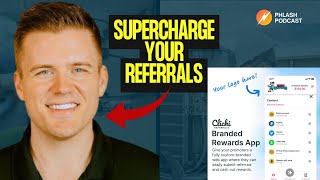
Kendall Hines walks through Clicky, a referral platform for home-service companies that handles branded links, leaderboards, and payouts. His newer product Bravo tracks upsells and reviews for technicians. Clicky has 300 customers; Bravo has 60.
Questions this video answers
Approximately 300 companies (reported by Kendall Hines).
Approximately 60 companies (reported by Kendall Hines).
Processing about $40,000–$50,000 per month in payouts (reported).
If a person earns more than $599 in a calendar year (per Kendall: not legal advice).
joincliki.com
Chapters
Welcome back to the show. I'm your host, Phil Risher. And on today's episode, we're diving into closing more sales with automation and tech that actually converts with Kendall Hines. Thanks so much for joining us again today, Kendall.
Yeah, thanks for having me. Good to be back. Good to be back in the Flash studio and good to see you again.
Yeah, man, for sure. So Kendall is a repeat guest. Quick buy on him, used to work in the lawn care industry at a franchise with his family. And he built a tool called Clicky, which we talk about a lot, which is a referrals platform. And Clicky 2.0 just came out, which we're going to talk a little bit about what that is and what that means. But then he also has another tool which I'm very excited to talk about, called Bravo, which is something that I wish that I had when I was at a home service business. And just overall, a really cool mesh of home service experience with tech and building tech tools for home service companies, which is why I'm so thankful to know you and also have you here today. So can you tell us a little bit about a quick synopsis of how you got to the Clicky point? Just like, you know, you're at the lawn care and then like, how did you come up with this and then how did you employ this?
Yeah, well, what's really interesting about me, and I guess different from a lot of other people in the software space, specifically in the referral software space, is I've actually owned a home service business myself. Grew it to about 2,000 customers before exiting. It was a lawn doctor franchise. And then I built a software tool called Lonbot, which was basically like an online ordering tool for lawn care companies. Think Shopify for lawn care. That company was acquired by Workwave and they're still selling that product today. It's called Service Bot. And my last 10 years, I just, whether it was running my own company or working with some of the biggest brands in US And Canada, there's just this recurring problem and that small businesses are spending more and more on Google and Facebook ads and cost per leads are going up for everybody. So it's like, how can we reduce that cost per lead and cost per sale? And you're like, well, how does our referral program look? And you start looking around and nobody really had like a year or two ago, there was no really good software for automating your referral program. So we set out to start seeing how that would look and we created Clicky. So basically, Clicky is a referral system. It allows, it becomes your operating system for referrals in the business, allows you to pay customers partners for new leads and opportunities they send into the business. Thank beautiful referral links they share to Facebook and they can text to friends. So we went zero to, you know, we have 300 companies today on Clicky and growing that business and the team fast and 100% proudly bootstrapped and just building, you know, what our customers want and really hyper focused on that. So I guess that's a little bit of my background. Yeah.
And before we get into the Bravo, can you, can you share a little about this, the Clickly launch week that you just had and clicky 2.0 and like. Yeah, what are the new things or what's that?
Yeah. So when you're a bootstrapped software company, they have a thing called a minimum viable product. So that's basically what we had when we first launched and it's basically how quickly can we get something to market that like does functionally like what you want it to do and that's generate referrals, pay people out, that kind of thing. But you don't really know what you want the UI and UX to look like. So basically over the last six months we were working on Clicky 2.0 and basically that's a completely refactor of our entire dashboard and experience for our customers, making it even easier to visualize their data on referrals. We created this thing called Newsfeed where they can just think of it as like Facebook for your referral program where they can just see at a moment's glance what happened yesterday, what happened this month, what happened this week really laid out. Everything's deep linked within the app and I use the word beautiful because it is way more beautiful than our V1. We released a lot of stuff. So Leaderboard, formal API redesign of the UI UX and what's the leaderboard?
What's the leaderboard?
Yeah, so leaderboards allow the brands to internally see across all of their referral campaigns who their top promoters are. They can build different views and podium views as well. If they're doing like a competition within their like somebody just did a giveaway to Great Wolf Lodge as part of their like referral competition. So they could take screenshots of that podium and post it to social and be like, Karen Johnson is like our number one promoter. Keep up the word. Click here to keep referring. So that was, that was leaderboard and, and very cool. So yeah, that's, that's 2.0. But the biggest thing about 2.0 is we refactored our app to be AI first and friendly. And what that means is typically a typical development cycle in any other software company, especially the big ones, is there's like a PM project manager, product product manager who's interfacing with clients. They take that back to the designers, the designers go to the engineers. There's this huge long development window and what that causes is like time, time delays, number one. But also the further away the person that's pushing the code is from the customer, the more you're losing that, that the voice of the customer. So what we did with clicky 2.0 is all of our developers use AI tools now, biggest one being Cursor to like develop. So we're literally taking on calls with customers. And now Clicky is in a format where we can take feedback from customers in the morning and by the evening that feature shipped. So we've completely reset the path where we're able to just move extremely fast. And I think I talked to you about it before we hopped on was Sam Altman was talking about this idea of we're in this era of fast SaaS now. You know, if you think, you know, Zara H and M, they call it fast fashion. We're in fast SaaS. You're going to see a lot of people crossing over into verticals where maybe they didn't go before or feature sets of maybe where they didn't because the time and the expense was so high to kind of in the focus of going into these verticals didn't make sense. But now if I can talk to a customer and they're saying, kendall, this would make my life so much easier to do this one little thing in the app and we have a really agile, quick moving team where voice to text into Cursor. Hey, they want this feature. The cursor goes back and does its thing. We ship that feature that evening that makes customers really happy. And chances are if one customer wants it, then probably a lot of our customers want it so very that really, that's what I'm really excited about is the ability now to shorten our development cycles, make customers happy and, and think about the future. I mean, I think what we're really, I'm trying with this company over the last one to really be creative with how we grow it instead of just hiring a bunch of engineers and developers. Like what, what AI tools can be used to scale before hiring physical human headcount. So all the best products that I use is. Is usually it's, it's a tight, it's a tight technical team that has like an obsession with like caring about customers problems. And like that's, that's us. There's like six people bootstrapped. We have to build a great product, we have to listen to our customers. There's no safety net, there's no venture. Like literally our customers fund our growth. So we have to build what they want. And that's. You think that would just be like normal. But that's not the case with most software companies. If you've ever had a software company and you had a recommendation like I wish it would did this one thing and it's like add it to our feature list, have people vote on it and then like it's two years from now, it's still not done. That would be why? Because there's so much time between the customer voice and people actually pushing the code. So at least that's my opinion. There's a lot of opinions out there. That's mine.
Yeah, makes sense. So before we hop into some other feature, the Bravo tool and some other things, I want to hit on one thing. So our people listen to this are like 1 to 10 million home service businesses. And you mentioned about this giveaway for Great Wolf Lodge. So can you walk through like how does someone deploy that using Clicky more so not the whole tech stack side of it, but just like how do they go about deploying that in their company? Whether it's a Great Wolf Lodge thing or something else.
Yeah, well usually these companies are already posting on social quite a bit. So Pest Badger is like a good example. That's the Great Wolf example. And so like we're the back end operating system for the tracking and the links and like making it easy for customers to track. Well like where do I rank versus everybody else in the program? But typically they're the ones that are going out to like Instagram making the content and talking about the giveaway. In Pest Badger's case, they actually created a reminder automation in field routes to where every time the technician checked in to start the job, there was a reminder text message that went out and said by the way, we're doing a Great Wolf Lodge giveaway. Person with the most every referral is an entry into the competition going back to the leaderboard feature I was telling you about. And the call to action is the link to the clicky portal for them to submit referrals to the business. That's the missing link. Usually with a lot of These things and the referral efforts, there's no call to action. So the fact that the brand was already using us, and then we become the call to action, the operating system for the referrals. That's how they did it, at least.
Okay, so I'm a business. I say I want to give away this great Wolf Lodge thing. It's going to be two, $3,000. So I'm going to make some social media posts, then I'm going to tell my customer base about this program. And basically each referral that they send me, they're going to get one drawing in this raffle or whatever. And then basically, using Clicky, they're able to keep track of the number of referrals, and then they have a leaderboard that they can show. And most of the times it's very hard for people to keep track of this. But I could imagine that now all these people are taking their referral link and just posting it everywhere and saying, like, hey, by the way, if you need this, if you need this, if you need this. Because they want to win this great Wolf Lodge.
Right? Well, the numbers that we saw were insane. I mean, like, it. It created more activity in the program, more referrals that came in, more. More new customers. So, yeah, it. I think. I think there's just an overall, like, thing that's happening. And it's like what you just said, Brands, 1 to 10 million. They're just sick of, like, working with marketing agencies. And the only answer they have for them is like, let's go spend more on Facebook ads. Like, so I think that's why we've been growing so quick, is like, people are just looking for a third door, I call it. And that's. If we're gonna just throw money into this black hole, like, why don't we just pay it to our. Why don't we do a great Wolf Lodge giveaway? That'd be exciting and, like, keep the customers engaged. And it actually does generate more leads and referrals. So, yeah, it's so.
And I think the missing. The missing piece for a lot of people is like, I want to do this, but how do I keep track of it? Which is obviously why Clicky exists, because you can do that automatically. It's just about these ideas that people. All these business owners have these ideas. They just don't have the tech to actually put it together.
Right, Exactly.
Yeah.
And some do, by the way. Some do. There's some CRMs that have some light referral functionality. But, yeah, they didn't Take it all the way. They didn't land the plane, for example. Like, there's a CRM we all know and a lot of people use, and they have a referral component built in. There's actually two of them. And like, the referral links. What's that?
I was on the Jobber podcast and. And literally we're talking like, I have a whole. I was out in Vegas. We had a whole episode about generating additional referrals for your business. A whole episode. Me, 30 minutes.
Yeah.
And I mentioned clicky. I didn't. And they have a tool that they built. And I'm like, it's not good. It doesn't get to the point that it's completing this.
Right. It's pretty thin. It's pretty thin.
And it only gives credit to the account. It can't pay out. That's the problem that a lot of these companies have is that they're not going to pay out. You'll get credits on your account.
Right? Or like, what if you want to do a partner program? Like, if you're a pest control company and you want to start a Realtor program and go start soliciting realtors to be referral partners for you.
Well, the account, I did a whole episode on that. Yeah, I did a whole episode on that too. And. And they're like, yeah, there's no. They don't have. Because they need the payout piece and they need the attribution piece 100%.
So. And. And the branding piece. Like brands 1 to 10 million, they really care about their brand. Having, you know, Jobber in the referral link or JBB or whatever that short link is, is not very beautiful. Like, it should be on your domain. So refer Flash consulting dot com. That should be the base of the referral link. And it honestly, it takes more work technically to make that happen. Like, we had to stop and be like, okay, we could just ship some like refer dot refer clicky or whatever. Yeah, flash refer clicky.com and it'd be fine. But it. Wait, it would be way better if it had the brand. Because your customers know your brand, they trust your brand. That's what needs to be front and center. At least that's what we believe. And so I think that matters.
Yeah, I agree. Speaking of this, because it leads right into Bravo. I was on did another Jobber podcast and we're talking about generating additional estimates for your business. So when your technician goes out on a job site, they have technician blinders. They're not up. They're going for 200 jobs. They're not generating additional estimates. And I believe, from what I know about Bravo, is that solves this problem.
Correct? Yeah. What we saw, and this goes back to, like, listening to customers. What we saw was our customers were using Clicky internally in their business. And we were like, well, we didn't really think about that use case when we built it. We built it for people outside of your company, not employees. So we started looking around, and there were some other apps out there that kind of were already doing employee incentives. Customers were using these apps and Clicky together. And it causes a really bad customer experience because now Clicky's texting the customer X, and X is texting the customer after a service. It makes sense to have it all under one umbrella, one vendor, have them deeply integrate and talk to each other. So we started fleshing this out, and our customer Travis at Nice Pest, came to us and said, hey, I'm using this other platform for my tipping, my Google reviews. And. And at the time, NPS scores, so surveys, right? And we're like, okay, that's pretty cool. We're in the age of AI. Like, how hard could that be to create? So we recreated that product in about two months, or at least the premise of it, and we made it better by integrating referrals into it. So basically, the way we think about Bravo. Bravo is what you use internally for internal incentives. It allows you to incentivize your team members for anything. NPS scores, Google review bonuses. You can do spot bonuses and reimbursements on there. And the biggest one I'm most excited about is technician leads. So imagine technician logs. And there's a tech app too, so that all of their earnings flow to this technician apps that. And there's leaderboards in there so they can see all the other techs and how they're doing. It's where they go to cash out. They can set their profile picture. But the way that the biggest thing about technician leads is imagine Technician starts their day. They're in the Bravo tech app. All of their jobs for the day from Jobber are in there. So they don't have to sit there and fumble around and find the account and type it in and all that. It's all there. They tap on the property and then it allows the businesses to actually put bounties on different upsell opportunities. So if the technician's there, maybe they're doing power washing, but they notice, like, the windows are super dirty and they want to do that upsell, they can recommend the upsell through The Bravo tech app that gets sent to the back office creates a call log notification or a note on the account. It's looped in. So as soon as that job gets sold, that bonus would be released to the technician automatically. But I think connecting it back to the technician can actually track the status of every upsell they're submitting to the business. That's the important part. But also if a technician can submit an upsell in the morning and take home money in the evening, that's the ball game. Like, that's the big disconnect that's happening right now. And that's the problem that we're really tying into, because every brand I talk to, like, we've been trying to do this forever. We're trying to get our technicians ecstatic about selling more product and selling more services. And that's the big disconnect is it needs to be a quick feedback loop from, if I submit a lead today, I have an opportunity to earn money today, take it home to my family, cash it out to Venmo, and I'm taking it home. So Bravo makes all that process really easy for the business, but also for the technicians and really excited. I mean, there's like, we just. We just launched Bravo, like, two months ago. We have 60 companies now on the platform. Not only are you getting more Google reviews, you're getting more referrals that flow right into Clicky, by the way, and then you're getting more technician upsells. So. And honestly, every customer I talk to that has both products, they're like, we would much rather just use one vendor. Kendall, we like working with you and your team. I don't want to have to go do more demos and this and that. It doesn't make sense to have Podium and Bird Eye and all these people, like, exactly. Clicky is external incentives. So for customers, partners, Bravo's internal incentives is the way we're thinking about this and building it moving forward. And we were really intentional about that to separate it, because the way that customers use the referral app is completely different than the way the technicians use the tech app. I mean, they're in there daily, all day, like, submitting leads and upsells and cashing out and seeing their Google reviews they've generated for the day. So, yeah, it's good. This is something exciting, man. I. It's hard work, but it's super exciting.
Absolutely. I wish I had this. When I started working at the home service business six years ago, we had 36 Google reviews, and I'm like, okay, well, let's just incentivize the technicians to get reviews. And we would literally keep track of them manually. You know, like, okay, they got one review and it has their name in it. So then after they got 10 reviews, we'd give them $100 gift card. And it's like we now that that company has 4,000 reviews. So imagine like someone's job is to keep track of all this stuff.
Yeah. So it's like.
Yeah, it's insane.
Yeah, exactly. So we're tied into the Google reviews that are coming in and then we're doing, doing, we're using an algorithm to do the match. Obviously, if we're sending a survey to the customer, we know who got the survey. But then on the back end, if there's content that mentions the technician's name, we can do a secondary match using AI based on that and then connect the two and then give the bonus out. And so that's been, it's just a really exciting product. And because brands that are using Bravo are seeing more referrals on Clicky, Go figure. It's like, yeah, so during that survey flow, when you're asking like, how likely are you to recommend us to a friend? An NPS perspective. Yeah, well, holy crap, we should probably ask for a referral. If they give us a 10 out of 10, imagine that, like it actually generates more referrals. So that's, that's been fun. And it creates a stickier product for us and makes our customers more happy. And we were able to use a lot of the components from Clicky on Bravo and there's even, you know, more on the way with that product. So because people are coming to us every day and be like, can I incentivize for this? Can I have my CSR staff added to Bravo?
And that's literally what I was thinking because like our CSR see the referrals flowing in and they want to post on their social media and get stuff. So like. Right, yeah, like that's a really great one.
Or even, here's this use case. They finish a phone call, they phone call ends, survey goes out to the customer asking how Maddie, how was her level of customer service today? And they can give Maddie an NPS score. I don't know if you have tipping turned on for that yet. That might be a little risky or like forward thinking, maybe you turn tipping off. But they can quickly submit a referral and then leave a Google review for Madi as well. There's no reason to not try to get Google reviews for your CSR work too. I mean, that's. Customer service is a huge part of what we do. And typically most people only think about technician referral or reviews, but not what a lot of owners are like, can we get the CSRs in on this as well? And so we're listening to them and building that into the product.
And yeah, that's what, that's what we did in our, in our actual process was the CSRs, when they do call aheads, like appointment confirmation calls, we would tell them, hey, make sure that you mention about another service like, hey, while Kendall's out there taking care of this, do you want him to also take care of that?
Right.
And basically build the upsell into the initial call. Then you set your technician up for the sale.
Right. 100%.
And there's a lot of opportunity there. One question I have for you, because this comes up a lot every time I talk about whether it's like B2B partnerships or referrals. How do you. Because don't you have to 1099 these people if you pay them out a certain amount or like, how does that work? Because that comes up a lot. And I don't really have an answer. I just say it's marketing expense or something. But like, what do you say?
So we handle all that for. We handle that whole part. So if somebody earns, I mean like the laws I understand it. Not a lawyer. It's not legal advice. The laws I understand it is if you earn more than $599 in a calendar year, then you should get a W9 from that person. That person needs to be 1099 to come tax time. So we handle all of that and we monitor if somebody gets tries to cash out their 600th dollar. Like, hey, you need to fill this out before you can get any more money. The entity on there is Clicky Inc. And then as people cash out like from the referral program, the money is actually coming from our bank account, not yours. We're actually charging your credit card. So on your side, your accountant is seeing Clicky Inc. Clicky Inc. Clicky Inc. And usually most of our brands get categorize that as like an advertising or a marketing expense. So exactly to your point on that.
And then that's what I tell people too. And I think that's the. Because it truly is a marketing expense if you think about it. Yeah, but yeah, I agree. Okay, that makes sense. So bravo, Clicky. I think to me, if I don't see a reason why a home service business wouldn't use these tools. Is there any like common objections that you get or things that's like maybe they can't deploy technology or something or what?
Yeah, I mean the objections we get on demos are, you know, for people that are kind of stuck in their ways of giving account credits and stuff, certainly that's an objection that comes up quite a bit. The reason why we got away from account credits was all these CRMs suck. Like their AR systems, like they're a mess and they don't make a lot of them don't make their credit ledger available via API. And the reason is, is because then you could go buy your own credit card processor, bring your own credit card processor into the software and just apply credits for every payment that comes in. So we did, we decided from like first principles to like just delete that part of the process. And the nice thing about cash payouts is they're instant real time. They're generally instantly settled. So if somebody picks a Venmo, it's in their account in five minutes. And you know what's crazy to me is last time we Talked, we're processing like 40 to 50, 000amonth in payouts for brands right now. This is just insane. Like, yeah, it's insane to me that we have that much money that we're moving through the system and like it's continuing to grow and like it's wild. Like it's gonna, I, like, I, maybe a year from now, come on, come and do the show. I feel like 100k a month. I'm like, damn, that's a lot, lot of, a lot of money moving through the pipeline there. But yeah, yeah, so yeah, objections would be like, you know, we, we just want to do account credits for some businesses. It's, it's this the cost of our. So obviously it takes a lot of money to like develop software like this and, and do it. But a lot of the brands I talked to, like you can really see an ROI case pretty quickly. I mean typically it's like one or two or three new customers and you've already paid for the software for a year. So I think it's really easy just to, to make. For me to make sense of it. But yeah, for smaller companies probably if, if you only do a hundred thousand in revenue, you probably don't have three grand a year to spend on a referral system. Right? Just. Yeah, not going to spend 3% of your revenue on a tool. So yeah, yeah, you don't. And pro, frankly you should probably not do that. Yet start knocking on doors, doing whatever it takes to get over half a million revenue, and then we can have that converse conversation. Because the brands that really understand the value prop for us is the ones that do spend money on marketing and advertising already, they know how much their cost per lead is. They know how much their cost per sale. And now they're really trying to optimize and drive that cost down. Because as we, we both know, that cost is only going up for everybody. So.
Yeah, yeah, I agree. I think if you, if you have a home service business, you should be spending 3 to 10% of your revenue on marketing. That's just a benchmark number. And then this, you know, any tools or anything that help you with your advertising, marketing should be built into that. I got a couple more minutes with you. I want to know, do you have any other, like, cool use cases of Clicky? Like one guy I saw on LinkedIn, he commented on our conversation and he was like, yeah, I actually work with nonprofits and I do this with Clicky. But like, are there any other really cool ones that you're like, this is a unique way to use this tool.
Yeah. So we have been seeing people use the QR code functionality quite a bit. So think of it is if you do a partner program with like brick and mortar business and they're like, yeah, I'd love to promote you guys. Well, you could get us, we allow you to print their QR code or maybe make them a sign and they could put at their place of business, think of like a hairdresser or whatever. So and so scan here. And then that hairdresser is now earning money and getting paid for generating those referral opportunities. So I think QR codes are pretty cool. The fundraiser stuff is pretty interesting to me. And Hippo Turf, Will over at Hippo Turf did that really well this year. So I think he has the best close rate of his referral program. He had like 92 referrals and 92 new customers. And he really utilized our campaign feature. And I think that's really the another thing that we've really figured out is this ability to build unlimited campaigns. So you'd have one campaign for your customers, which you'd probably want to pay them differently than like a realtor partnership. And you probably want to pay the realtors different than like this fundraiser you're doing. So I think that's what's really special about what we built is this campaigns feature. So in Will's case, they did a fundraiser with like Jackson Lacrosse. Right. So they Built a Jackson lacrosse campaign. The, the landing pages for this campaign had his logo and the Jackson lacrosse logo and had the wording on there talking about if for every, you know, parent that signs up for Hippo turf care, they're going to donate a hundred dollars back to the organization. So, you know, using us again as that operating system, that leaderboard, and then the tracking metric to know how much do we owe the organization. Right. And to facilitate those programs and make them branded to that organization. I think that really it ties everything together. Right. It just, it's tight. I like to say it's nice and tight. Like we've thought through all that and then if we haven't thought through something, will comes to us and hey, I'd love to see this. And we go and build it for him. Like that simple.
So I think youth sports teams, I never thought of that. But like before, like old school youth sports team, they had like these little discount cards that they would sell door to door and then make some money or something. But like in that example, they could. They presumably raised like $9,000 just by, you know, building this relationship with the sports, like a, like a youth sports team, which I think is pretty insane that it's like another use case for this.
Yeah. And the B2B referrals is something I. Nobody is doing it. Like, if you're listening to this and you're looking for like, how can I grow my business in this off season? I remember when I was running my lawn care business, every time I saw we did chemical lawn care. So like fertilizer, weed control, that kind of stuff, every time I saw a mowing business, I would like stop my truck, get out of the truck. At the time I only had business cards because like clicky didn't exist. Yeah, like, hey, my name's Kendall, who does your fertilizing and weed control. He's like, well, I'm recommending TruGreen. I'm like, all right, great. I'm a local guy growing my family business and I'm partnering with other grass cutters like yourself. And I love, you know, to take care of your customer. And this, you can find these relationships is. I know you're big on. This is the B2B referrals. These relationships exist in every industry. So like another one for us was like an irrigation company. They're on a lot of lawns, Right. Their technicians are on a lot of lawns. How do we co market together and co brand and so another one like pest control. Realtors are great for them. I think realtors could be good for any vertical or business, so. Yeah.
Cool, man. Well, I really appreciate you sharing all this. I mean, I love the tools that you're building. Like, I didn't even know about Bravo before and then it comes out, I look at, I'm like, this is so good. I wish I had this. So it's great stuff. Where should people go to learn about Bravo and Clicky? To separate website, I guess set up a meeting and they can talk about both there.
Yeah, so it's, it's all, it's all tied together on joincli.com you'll see Bravo there. So you can get the link to Bravo from there, but it's joincliki.com and that's where you can go check us out.
Yeah, and I recommend Clicky because I believe that I, I literally was responsible for 100 B2B partnerships. And if I had Clicky, I know that I could have grown my business more if I would had a tool like this. So I think that it's really good what you're doing and I just appreciate you coming on sharing this stuff and obviously, if I can help you in any way, you know, I'm here for you, so.
Oh yeah, I appreciate that. Appreciate that and appreciate you having us on today.
Yeah, you got it. See you, man.
All right, see ya.


