How To Create SOPs For Home Service Businesses With Adi Klevit
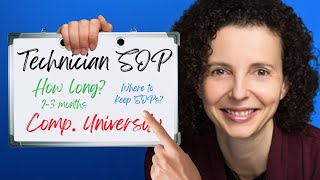
Adi Klevit explains how to build and roll out standard operating procedures for home service businesses. She covers why to document field technician work, how to extract procedures through video and screenshots, and an eight-step implementation plan. Most home service businesses spend 2 to 3 months per department and see results like fewer callbacks and faster onboarding.
Chapters
Welcome back to the show. I'm your host, Phil Risher. And on today's episode, we're going to be discussing how to create standard operating procedures that actually grow your business with Adi Klevitt. Thanks so much for joining us today, Adi.
You're very welcome. I'm very happy to be here and thank you for having me.
Absolutely. So, Adi, I was actually a guest on her podcast and she's the founder and CEO of Business Success Consulting Group and they specialize in helping businesses systematize and scale through implementation of effective processes and procedures. She does also work with home service businesses, which is why I was like, hey, please come on here, because we all need help. So Adi, can you tell us, like, what's your background? How did you even figure out that you could help businesses with processes?
Absolutely. So I started my career as an industrial engineer, which is all about process improvement. So I've been doing it for over 30 years, is designing and optimizing processes for companies. And I really realized that it can be applied to smaller companies, bigger companies. It is the same, those are the same principles that can be applied. And I really like working with entrepreneurs, especially with the trades and with smaller to medium sized businesses because you can see the impact right away and it creates a huge difference on the business.
Yeah, for sure. So the big question that I have for you that I asked you in preparation for this call was when I was in the trades. Okay. You know, we can educate our CSRs, we can build some processes of people that we can oversee, but what about our technicians out in the field? So can you talk a little bit about your process for helping businesses, specifically when they have people out in the field that they need to document processes for, train that kind of stuff?
Absolutely. So first of all, I do believe that we need to document the, all the areas of the company. Right. Because if you are training a new csr, you need to have a manual on how to do that. When you have a dsr, a dispatcher, you need to know how to do that, accounting, hr, et cetera, but also your technicians. So if you look at it, we can separate it into the actual technical aspects, for instance, how to install a water heater, and also everything that goes around it in terms of how do you start a job, what do you do when you first go into a, you know, when you arrive at a customer's home, how do you, where do you park the van, you know, how do you present yourself, how do you present options, how do you close the estimate, how do you present the Estimate to begin with what happens when you start a job, how do you end a job, what do you do at the end of each day, etc. So those are definitely procedures that apply to the technicians in the field. Then we also have those instances where we document the actual processes themselves, like the installation, the repairs. And the reason why we do that is to create a university for the company. So then you can hire good people that want to work, but you might need to train them a little bit. Right. Or a lot, because we hear it a lot. Phil, I'm sure you hear it. Oh, I can't find good people. Right. So it is not a matter of finding good people. It's how you make good people. Meaning if you are actually hiring people that want to work, that have the aptitude, you know, they can actually have the skill to become technicians, and they align with your culture and your values. If you have those processes documented, then you can actually train them to do it your way. And it's a win, win situation because you get wonderful people to work for you and you also have that ability to train them according to how you want them trained.
Yeah, I completely agree. And I think you're actually, you're building processes, but you're also building people. At that point, when you have them come in and you can coach them up, they feel like they're getting some professional development as well. So two things that usually come up with this is one, okay, how is, how do you exactly document that process? You know, do you strap a GoPro to them and follow them around all day, or do you interview them and then you're creating the SOP process or what does that actually look like?
So for my company, it's a done it for you service because we realize that, you know, the busy entrepreneurs do not have the time or the know how on how to sit down and actually document their processes and procedures. So what we do is we extract the information and we have a very specific process, very proven process that we've done with hundreds of companies of extracting that knowledge from the key people that hold that knowledge. And then we document it and we use all kinds of, you know, the different methods of learning, which will be, we use videos, we use audios, we use pictures, we use screenshots. So it's very, very clear and very nicely presented. It's kind of like people look at it and they think it's a work of art. Right? It's beautiful. That's. Those are the things that they hear. Oh, it's so beautiful. So Easy to read, very easy to understand. That's what we are going for. That you have something that people will be attracted to and would like to learn.
Yeah, it's easy to read and follow along. It's not just some binder up on a wall that puts them to sleep. Absolutely, that's exactly so. So in your company you would interview them, get the information, you know, from start to finish, all the, some of those things that you mentioned in the beginning. And then you would document in some type of an easy to use, maybe with some quizzes or some process for them to, to follow. If someone wasn't to hire you, they could interview their technicians and say, hey, what is your process here? And then document all the steps. Now the big thing that always comes up as well is okay, I have these SOPs, but how do I make sure that my technicians are doing them out in the field?
That's a big one. And I tell all my clients that if they're not going to follow through and if, if we do not complete the followed by all, like ensure those are followed by all, there is no point in documenting because what's the point then? You have really beautiful documented procedures, but we do not really have anything that they're not being used. So it's very important that are followed by all. And we have a very specific way to do that. We have an eight step process to ensure all the processes are followed and we implement it to ensure that everyone in the company are actually aware of those procedures and is following them.
Can you outline like those eight steps or what are some of the key ones that are very important?
Absolutely. The first step is the mindset. So we have to make sure that the owner of the company, that the main person that is in charge of everyone, the CEO, the president, whomever is running the company is really behind it, that there is buying. Because there can be instances where you have the owner going. They go, well, you know, processes is not for me, I'm not a process person. Yeah, when that happens, it just sabotages the whole thing because nobody would follow. So we really work on mindset and getting by not just from the top, all the way down to everyone in the company. And we do it by creating surveys and by interviewing people and finding out what is in it for them. Right. You know, I was just listening to an audiobook by Zig Ziglar and he loves to mention it. It's like everybody listen to the FM station of what it is in it for me, you know, and it is true. You want to get that buy in. You know, you want to get that buying. But it is in terms of like, okay, how having processes and procedures will actually help me. And when every person in the company identifies that and understands what is in. In it for them and how it's going to help them, then they're going to be more enthusiastic and more willing to actually follow and be part of this process.
Yeah, yeah. So mindsets number one, what are some of the other ones?
So one of them is to, first of all, you have to make it accessible. That's another one. So you have to make the procedures accessible. And that's why we like to use platforms, process documentation platforms where everybody can actually access that on their tablet, on their phone, on their computer. And there is version control, there is control of who access what, very easy to update, etc. So there has to be accessibility.
Do you have any recommendations like is tranual or I've heard that before or any of these other things?
Love tranule. I actually interviewed the founder of Tranul, Chris Ron, on my podcast. I was on his sweet process. Love sweet process. Also interview Owen on my podcast. Playbook Builder is another one where I also interview John Laduca, who is the, who is the founder and Whale IO. There are different platforms that are excellent platforms that I recommend for my clients. So we're going to use that, those platforms. The next thing is that we have to make sure that everyone in the company actually read those procedures. So we do a rollout. Because procedures cannot be only for new hires or for onboarding new employees because then you're running into the situation where you bring on a new employee, they know all the procedures, but the people that already are in the company, that you don't speak the same language because there is no alignment. So you have to make sure that the existing personnel also goes through all this training and we roll it out, we have them read it, we send out a survey to ask them for their feedback, anything that is missing, et cetera. It's a very thorough survey. So then at the end of it, they really understand what is written. So that's another step, another crucial step is to actually be able to use those processes in your management into day to day operations. So when you're processing your issues, you have to bring the question. The, the question has to be brought up, is it a people problem or a process problem? And if it is a process problem, then we have to pull out the processes and ask yourself the question, is it was the process followed? Is the process missing anything? Is the process not working. And if so, why was it working and why wasn't it implemented? I mean, is there anything missing here that will trigger the implementation? So there's a bunch of questions that we go over that I think this.
Is a really important one because a lot of times in the home service space, when something is broken, the business owner just runs to the fire or flies off the handle, however they respond. But instead of pausing and saying, what process is broken here and how can we fix this going forward, they immediately just jump in and try to solve the problem. And is this kind of like what you're saying, where if you have your process documented and then you can make a quick change and it uploads it or updates it for everyone, then you know that it's fixed across the board? That's kind of what you're saying?
Absolutely. If the process is documented and then when there is a problem, you actually refer back to the process and you see what was missing. So then you don't lose the integrity of the process and the process is still followed. But it's very specific, pinpointing what step is not followed or what step needs to be edited or what else do we need to add in order to make it a complete process product.
Yeah, makes. Makes sense. One question that I, I just thought of when you were talking about the rollout was so you're. It sounds like you document everything first and then you roll it out to the team. How long should that process take for building the sop, you know, university?
It really depends on how much time you are investing in it. Right. So I realized that we are dealing with busy entrepreneurs that do not have time to just close their business and do this exercise for 3, 4 days at a time and not do anything else. So my suggestion is take about an hour and a half a week. Anybody can find an hour and a half a week. And if you're listening right now and say, I can't, so we have a problem. We have to work on time management first. So somehow you have to figure out the hour and a half, doesn't mean that the same person does it every week for an hour and a half. We can alternate and rotate, but it's an hour and a half, basically alternate and rotate between the people that we are documenting with. But I would allocate an hour and a half a week where you actually extract information. You know, granted, then we, we do have a team of technical writers for every hour and a half that we actually work with the client. It's probably a day or so of actually processing it and writing the procedure. So that takes hours, that's for sure. Yeah, but you know, if you're doing it yourself, you can also, you know, you will have to allocate that time, but if you go that in that pace, I would allocate about two to three months per department, including the rollout and including the testing. So depends on how many departments you have. Usually project like that will take between six to 12 months.
Yeah, okay, that makes sense. I think two to three months per department. When you said that, it's like, okay, that makes sense. Like your, your operations, definitely that's going to take a while. Your sales process, because it's not just getting it, but then you have to iterate back and forth like, do we want it like this? Is this really the best way to do it? I'm sure there's a lot of back and forth after that.
Yes, there is, absolutely.
Yeah. Okay. We talked about scaling through some processes. What are some success metrics, like how can you measure in terms of system implementation or KPIs that like all of our SOPs are being measured or followed? Is there something that you can pinpoint that you've seen?
Absolutely. So clients report, let's say errors, errors done or callbacks. Right. We can reduce that. You know, you can reduce that to zero. Let's say you have used to have that many callbacks a week and now it got reduced to zero. Because if there are callbacks, you always have to look at your process and what went wrong and what was not followed. Another key metric is the amount of time that it takes you to onboard a new employee. So I had a client that reported that now it is 75% reduced by 75% the time that takes them to onboard a new employee. Another client, also in the trades said that he regained 25% of his time back where he can actually spend time with his family. He finally was able to take a vacation without worrying. And he was also able to attend his daughter sports practice, which was amazing for both him and her. So that is a metric of success as well, is like how much more time you have to invest in the things that you want to invest on.
Yeah, I definitely think the callbacks one is really good because if you're not keeping track of your callbacks, then you're never going to know if you're actually fixing the problem or not. You're just running from fire to fire. So I think that one's very important. What are some common mistakes with SOPs that you see People fall into like trying to do it on their own is probably one of them. But like what is some more details of. Hey, don't do that please.
Yeah, it's just like spending a lot of time on one sop. Like, you know, I had a client that told me that they have an SOP, it's like 200 page long and they are not the first one. I've seen it. No, I've seen it several times. Also in construction, I one time saw 600 page long because there was a safety manual that was just copy pasted in the middle of the sop. Who's going to read it? Nobody.
Yeah, when they want to go to sleep. How long should they be? Like a typical sop? Like couple pages maybe.
Yeah, and we make it a few. Basically, rule of thumb, about 10 steps and each step not very long. So it's better to write several SOPs and then you can jump from one to another or go with one to another when you need it. As opposed to overwhelming somebody with an amazing amount of data that nobody's going to look at.
Yeah, okay, that makes complete sense. 10 steps. I think if you can crunch it into, hey, here's these 10 steps. It's very easy for someone to follow. Maybe even stick it, you know, on their desk or on their truck or.
Something like that, or on the phone. I mean I'm definitely, I'm in a very strong advocate of doing it online, on a platform, on a software platform because it's also very easy to maintain, to see the versions, to change, to upload a video. So it's definitely, you can email it to them, email the link and have them actually look at it and follow it.
Yeah, that's very good. Are there any other big mistakes that you see?
Not following it is a huge mistake. Writing it and not following it or not keeping it up to date. So not updating it make it let it go obsolete. So let's say there was a change and then the SOP was not looked at, it was not changed. And so that's why we are very much, we advocate that you create, you know, you create a change either triggered by an event. So if you had a change that you know it wasn't change, then you change the SOP or it triggered by time. You get those SOPs reviewed every 30, I mean every six months or so on a regular basis to make sure that they're actually up to date and make any changes. So you have to make sure your SOPs are actually alive and being used.
All the Time, I think that's really important. One is that something like where the person that owns that sop, maybe on a quarterly basis they would go through and audit their SOPs and make updates based off of their normal job function or something.
Absolutely. It doesn't necessarily have to be every quarter. It depends on the maturity of the sop. Some of them every six months is okay, but if it's a newer SOP or newer procedure, yes, every quarter will be. I would recommend that.
And you would delegate it to whoever that is their SOP that they're following. So that will be.
Yeah, absolutely. Yes, yes, yes. Another key mistake is not referring back to the SOP when you can, but answering questions instead. Now I don't mean that now there's going to be no communication inside the company and you're not going to answer any questions. But when somebody comes to you and asks you a question that you know, it's already documented in an sop, the correct way to do it and correct answer is have you checked our database? Or let's take a look together at our database or go check the database and if you don't get the answer that you're looking for, let me know and I will help you.
Yeah, I think that's really good. Instead of people bringing you problems, you say hey, first check here and then come to me and maybe with some solutions or just figure it out.
Absolutely.
Awesome. So we talk about sales and marketing on on our podcast and YouTube channel. So if we look at like scaling processes for sales, for marketing, what are some of the low hanging fruit opportunities that you would say maybe that have had success? Like scaling a sales process that was broken before but now has had good success. Any like hidden gems there?
Well, you and I talked about it and you are the expert at that and we talked about follow up. You know, that is a process that a lot of people do not do. I mean and they are miss on sales when they don't follow up. Right. Because you have to have your follow up process with follow up with new prospects. Right. So if you document it and you have a good CRM and you follow up and you actually keep track of it, you will get more sales and also basically reactivating or following up on your existing customers and you had great examples about it. And that is a whole process you have to create in terms of winning back those customers and make them into loyal raving fans because you're constantly in communication with them. That's a low hanging fruit that is not being utilized a lot.
But should yeah, for sure. We, I interviewed Chuck Toki. He is with a company called Top Rep. He's the founder of it and what he talked about was scaling sales teams and the biggest area of opportunity was making sure that all of your sales rep do the exact same things over and over again. One guy doesn't have, oh, this is my way of doing it. This is my way of doing it. It's like, no, this is the standard way the company does it because it produces the correct results. So you have to do it this way and everyone does it that way.
You got it. You got it. So if you, they use like, let's say somebody uses an expert like yourself where you are going to go in and give them all the strategies and the tactics and the actions for successful marketing, then you take that and you document it so then it doesn't get lost and you make a checklist out of it. So whomever internally is responsible to work on it with, you are going to do those actions on a regular basis because you can give them leads, you can help them with their marketing and their sales, but then you get a lead, what do you do with it? Well, that's a whole process that you immediately have to get in communication. We talked about it like in terms of like the communication has to be almost instant because otherwise you are going to lose the lead.
That's right. It's not a lead problem, it's a lead management problem. And a lot of times people don't have a lead management system documented or processed and then a new customer service rep comes in and they're doing something completely different and it's all over the place.
Right. And that is very important to have that lead management soft system.
Definitely. What, what about people, I'm sure you work with companies that they're resistant to change. Like the owner, you know, he's doing EOs or she's doing EOs and they're like, we need to, we need to document all of our SOPs and they have an operations person that's like, oh my gosh, that's going to be so much work. We don't need to do that. Is there any like strategies or processes that, that you've come across that's like, okay, this really alleviates that stressor from them when this happens?
Yeah, it's again, we're going into the what is in it for them? You know, if you have an operation process person that doesn't see the benefit of having processes and procedures, honestly we have a problem there because it's usually the operation person is the first one to see and then the other people around maybe are more resisting. Right. Change. So that is my experience. But it is very easy to overcome by getting buy in because if we can actually show what is in it for them, they are going to be your biggest fans because they will see that you can actually help them.
Yeah. Do you see like using AI AI for example, and saying, hey, I don't have a CSR process that's good. Like ask Chachi BT to write an SOP for me and then maybe just tweak it a little bit for my stuff. Is that something that works?
You can do it, but then you always have to look at what you got and how you can actually adapt it to yourself. You know, I had a client that just recently gave me an example, said here, I wrote this amazing SOP about, you know, part of my handbook and I used AI. Can you read it? And I read it and I go, wait a second, it says here that your employees have to use badges and they have to wear uniform. Now your employees work from home, so do you, do you have them wear uniform at home? And what badges are we talking about? Oh, I didn't see that. Yes, exactly. So you really have to look for it and make sure that it's meaningful, that it's really what you want. You know, I was doing, I was writing a policy with one of my clients. She has an H VAC company and it was really important for her to give amazing customer service to her people. I mean to her clients. And I asked her, like, what is important for you? And then, you know, she really rattled off what is important for her. And I asked somebody to write it and they actually used AI in order to write it. And it interjected all kind of things that were not. And she looked at it and she goes, I don't like it. What is this? This is not something that I wrote. This is not something that it comes from me. It is, it looks very nice. The words are amazing. So that can be a little bit of a problem. Now I'm all into using AI. We use it in my company. It's not a problem. But it will not replace what you, how you feel, your culture, what is important for you. And you have to use the AI in order to get maybe ideas or maybe edit text and make sure no grammar mistakes. But the actual idea should come from you.
Yeah, makes complete sense. So on a broader note of scaling a business, usually people listen to this one to 10 million in revenue. What are some, obviously sops aside, what are some of like the biggest, the biggest areas of opportunity to help people scale? Let's say they're a two million dollar business or trying to go to five million. Are there any nuggets there that you would say I see this a lot in these types of companies.
Absolutely. So if you want to do that, go from let's say 2 million to 5 million, you really have to identify where, what is the opportunity. You know, I would do a very good SWOT analysis, right. Like I would look where the strengths are, where the weaknesses are, what are the opportunities and what are the threats and actually start handling each and every one of them. And the processes and procedures that we document those are helping to strengthen areas so people will know about it and they will continue doing it. Or maybe there are weaknesses so it fixes it. Maybe there are new opportunities, so we are trying something new. Maybe there are threats and we need to actually handle it in order to. So the threats would not affect our organization. So. So we really need to look at where we are at and then take the actions accordingly. But don't be afraid to scale. Meaning you know how I'm going to do more of the exact thing that I'm doing that is working for me or stop what is not working for me and do something else that is working for me, but being able to do it on a larger scale. So in order to do that, you have to hire people, you have to train your people, you have to delegate to people and then you are going to be able to influence and conquer a bigger aspect of your environment and that's how you're going to actually have a bigger business.
Yeah, I think it goes kind of back to that mindset thing for me. A lot of times people that are at that $2 million mark, they're still a little bit, you know, pretty involved in the day to day in the business stuff. And it's like you got to start trying to really run a business and build processes, build people, build culture. So that way you can scale the business and you're not going to be touching everything. But you have to trust that you have good people and processes in place. Which I think is kind of what you were referring to as well.
Absolutely.
You got to look at your business and say, what's my strengths, what's my weakness, what's my opportunities and threats? And then attack those head on. Well, this has been great. Where could people go to learn more about you and to discuss maybe even having you guys do their processes? What does that look like.
So LinkedIn is a great place. I am very active on LinkedIn. We actually, I think, met through LinkedIn. So my. I mean, just look me up. Adi Klevit so a D I K L E V I T I am the only one with that name on LinkedIn, so you can find me there or you can go to our website, which is bsuccesscg.com awesome.
Well, D, it's been great getting to know you and I look forward to continuing our friendship in partnership.
Absolutely. Thank you, Phil, for having me.


