How to Outrank Competition with Local SEO in 90 Days
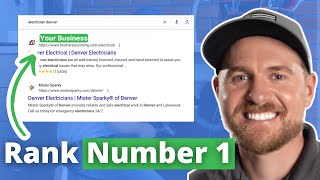
A YouTube tutorial (Phil Risher) explaining a practical local SEO playbook used to improve clients’ rankings. Covers tracking keyword rankings (BrightLocal), optimizing Google Business Profiles (categories, review count, consistent NAP/citations and tools like Yext), on-site local SEO basics (title tag, meta description, H1), and building unique service-area pages for surrounding cities to capture local searches.
Chapters
In this video, we're going to look at how to dominate local search and outrank your competition. What you're looking at here is actual real results from our customers. And I'm going to walk you through how we got these results so that way you can replicate them for your business. So this is a tool that we use. It's from a company called Bright Local. And basically what it allows us to do is to get 500 keywords and plot them every single week on their rankings. So these would be keywords like bathroom remodel in this city or bathroom remodel in this city. Basically think about whatever service you offer in the cities that you want to target. And there might be different types of services. So what you're looking at is when we first ran this July 5th, they had five keywords in position one and six in position two through five. And you can see over time we're slowly chucking away at these. And now currently we have 19 in position one and 76 and two through five. So they went from five in position one to 19 four times and six in position two through five. Now they have 10 times more. We're actually going to look at this company. I'm going to break down what we did to get these results, but I'm going to show you a couple other results just because I pulled them up and I just want to show you like this is. This is what we do. So it's something that you're going to get a lot of value out of this video because this is the actual strategy. So 40, 73 to 64 versus 142. And then this company went from what is this, 52 to 24 to 76 to 53. 52, 24, 76 to 53. So this is how we track our performance. You've seen as videos that I made before about tracking your performance from an SEO perspective because it's all black magic and voodoo. So this is a tool called brightlight. Cool. There's other ones out there, Semrush Ahrefs, where you can plot different keywords and track your progress. But I'll just show you what we did. So the first thing that I like to tell people is go to Google and type in your service, in your target area. And this is the search engine results page for SEO. When we're talking about dominating search, there's two things that we're looking at. We're looking at your off site SEO, which is this section here, your Google Business Profile ranking and then your on site SEO which is right here. This is your actual website stuff that you do. So we're going to look at your off site SEO first. So you do this search in your area, hopefully show up here. If you don't. These are the big misconceptions that we see from a lot of people. I'm just going to pull up. This is actually the first company that I showed you. This one here, they went from 5 and 6 to 19 and 76 and they're continuing their growth. Usually this takes a good like three to six months. And you can see like in the first month they had a decent pop and then slowly it's been chugging along and in 12 months from now it's going to be even higher, I'm sure. So on a Google Business profile perspective, there's a couple of things that people miss. First, you only can select one main category. This section right here, you can see that they're a kitchen remodel. Now they do kitchen and bath and they do other services too. But they selected specifically kitchen remodeler. So what you can do for your business is do this search in your area, electrician, Dallas, Texas. And look over here in your Google business profile and see do these people classify themselves as an electrician or something else? Because that's going to tell you that Google is saying that this category is being shown here. This happens pretty frequently with these types of companies. They say I'm a general contractor or something else and they want kitchen remodel jobs, but they're a general contractor. So they're not shown in the kitchen remodel results or an electrician. They're looking for EV charger and they select something else. So it's very important to select your main category. The other thing that's important and probably the number one thing that they look at is your actual review count. And your review count can either make or break you, right? So if you only have 200 reviews and they have 522 reviews, they're not going to be shown here if everything is consistent. So reviews are a really big part of this. And this can be a hard one for people that are just starting out because they don't have any reviews. So how am I going to be ranking? How am I going to get customers if I don't have reviews? The whole circle? So you got to get reviews, you know, ask vendors, ask employees, ask people that would refer you that you've done work for in the past to leave you reviews. Some other quick things that people miss on their Google business Profile is what's called Nap, Name matters and phone number. What that means is your name, your address and your phone number need to be consistent across the board. For all your different listings, like Yelp, like LinkedIn, like Better Business Bureau, like Facebook, your name matches. The phone number has to be the same. The reason it's important is because when Google pulls all your data, they're looking at is this the same company and you're building trust with them? Is the address the same? Is the phone number the same? Is it name the same? If it's not, Google says, okay, well what number should I show here? Is this, you know, does this company actually update their stuff and it builds a lot of trust. This is called your nap, like I mentioned before, or citation building. So there's a couple tools for this that are out there. We use a company called yext, Y, E X T and also Bright Local, the tool that I showed you before. They also have a citation builder. And the reason that we use yext is because on a monthly basis we go in and audit these accounts and we make sure like Google could change your main category from kitchen remodel to bath or something else, or roofing or something that you don't do. So someone has to go in and make sure that AI is not just wrecking, wreaking havoc on your, your citations, but that someone's making sure that they're consistent across the board. So that's very important. Last thing I'll say is if you are not located in Dallas, Texas and you're trying to rank for Dallas, Texas, it's going to be very, very hard to be shown here. The reason is because location is literally the number one thing that they take into consideration. I did mention reviews, which on a rankings perspective is true. But if you're not located in Dallas, Texas, and this is Dallas, Texas, you're never going to be shown here because you're not located physically in Dallas, Texas. And that's why it can be very hard. If you have a location that's outside in the suburb, you're not going to be shown in your main area, which is why it leads us to the next section here which is your on site SEO and on site SEO. This is right with your, with your off site SEO, if you get enough reviews, you're going to be shown here regardless. Especially if you have a decent name and you're in your target city of where you want to be. A lot of it just comes down to getting reviews is how you're going to get on this Section. Now, with on site SEO, it's a whole different ballgame. And to be honest, like, most people miss this. And I'm going to show you the strategy that we did for this website and we talk about this a lot on this channel, but it's called on site SEO. So when you go to your website, there's three things that you have to do. There is your title tag, your meta Description, and your H1. These are the big three for local SEO. On site post. So what is a title tag? A title tag is in this description here. This is literally a title tag. Electrician, Dallas Electrical repairs with the phone number. What does Google want to see? They want to see the service that you offer. Custom kitchen remodeling in the city that you want to target. Custom kitchen remodeling services in Jacksonville, Florida. That's what they want to see in your title tag. When you go to your next one, your next service that you offer, they want to see it right here too. Custom bathroom modeling in Jacksonville, Florida and beyond. Next thing they want to see is your meta description. Same thing, blah, blah, blah, blah, blah, blah, blah. In Jacksonville, Florida. What is a meta description? This right here is your meta description. And finally, they want to see your H1. So title tag, meta description, and H1. And if you notice, all of these are very consistent with the service that you offer in the city that you offer, the service that you offer in the city that you offer, and the service that you offer in the city that you offer. Most people miss this, which is why I like to go through it and literally show you exactly what to do. Because if you want to rank for bathroom remodeling in Jacksonville, Florida, you hit those things and, you know, you should be shown here. It obviously depends on how competitive is if someone's been doing. And this is just one thing. I'll go through some other SEO strategies after this. But this is like the basics. If someone's been doing this SEO for a long time, it's going to be hard to outrank them. But most companies miss the mark on this. So just by optimizing yourself correctly, you, you should be shown in the top five. All right, so how do you take this to the next level? Now, this is something that again, people miss. It's by building out what are called service area pages. So I mentioned here, let's say that you do service Dallas, but you also service Allen and McKinney and Terrell and Kaufman and Wills Point and maybe 4th Worth and Decatur. You service all these sub communities well, you Only pick Jacksonville, Florida, but you service all these other areas around. So what you do is you create what are called service area pages. Service area pages. We usually have a tab here for service area, but basically you have areas we serve and then you see like they service St. Augustine. So this is professional kitchen and bath remodeling services in St. Augustine, Florida. And again, title tag meta description H1 all consistent. And you build a map around your business. So all surrounding areas. You're basically like building a content map around your business for all the different cities that you serve. And every month you just add new ones. Very important to this though is that you have unique content on these pages because when Google indexes your content, if it's duplicate content, it's not going to index it and then it's not going to be shown on the Google search engine results page. So I'll show you this in actual practice and this is just live because I didn't actually look this up. But I'm just going to show you an example. Let me just pick one of these outside ones. Let's do Denton. All right, so in Denton there's companies like this Baker Brothers that we just saw. So I'm going to go here. Now if you look in this website URL, you see how it's bakerbrothersplumbing.com Electrician Denton and it's all about Denton Electricians. And when we go here, it's going to be Electrician in Denton, Denton Electricians. H1 Denton Electricians. So this is what a service area page literally is. And this is how they work. Same thing here you can see Electrician in Denton, Texas. This is going to be a service area page. And if we look here, the title Electrician in Denton, Texas, meta Description and the H1 Denton's best. And if you notice here, it's callmilestone.com denton electrical. So hopefully you get the point. This is literally how you dominate search. This is the strategy that we use on these websites and Google business profiles. As I mentioned before, a big focus on Google reviews, big focus on getting your categories correct and your citations cleaned up, and a big focus on optimizing your website for local SEO. The whole goal of SEO and dominating search is is that when people search for you, obviously they're going to click on the first 5ish people that they see. You want them to go to your website and interact and convert into a lead. So the higher you can increase your rankings, the more likelihood someone would go to your website and interact with your business. If you need help with this or you want an audit of your stuff? We do free marketing audits. I'll put a link down below. If not, it's all good. Hit like and subscribe and we'll see you in the next video.


