How to Transition from Commercial Work to Residential Home Services
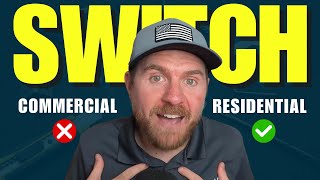
Phil Risher walks through how service businesses move from commercial to residential customers. Residential buyers need different marketing: Google Local Service Ads, strong reviews, mobile-friendly websites with chat and estimate forms, and a budget of 3 to 10% of revenue to make it work.
Questions this video answers
87%
3–10% of revenue
BrightLocal
Phil Risher, owner of Flash Consulting
A free marketing audit from Flash Consulting
Chapters
Are you a service business owner? Mostly working in the commercial space, but you want to get into the residential home service side of the market. In this video, I'm going to break down a complete B2C marketing plan and how you can go about marketing your business and making that transition real quick. My name is Phil Risher. I'm the owner of Flash Consulting. We actually recently got this review. A great company to work with. Leslie and Phil have been instrumental in helping our company take our digital marketing, SEO and SEM to the next level. Highly recommend using them, especially if you're a B2C contractor, which is why it's important. For this video, I'm going to break down B2C game plan that I would recommend for your business. All right, before I go into this game plan, let's talk about the differences between B2B marketing and B2C marketing. So B2B is going to be more relationship built and a long sales process. Usually people are going to find out about your B2B relationships in some type of a trade group or referral from someone or a salesperson that's actually hunting down and selling people on a service for a commercial space. When it comes to B2C, we actually found that 87% of people are going and doing research online and then reaching out to that business. They're using platforms like Google, which is bottom of the funnel. People that are looking for a product or service that you offer and they're going online, searching, finding the company, reaching out to them and then turning into a lead. So it's a completely different game plan. B2B, longer sales cycles, more complex decision making process. B2C is more quicker decisions, driven more by emotions, convenience and price. So another big differentiator from B2B to B2C is urgency. In the B2B space, usually it'll be longer, you know, months out of projects. When B2C, it's like, hey, my H Vac is not working, I need service, right? So the urgency is a lot different, which is going to change the way that you would market the business. So let's look at what an actual game plan looks like for B2C. The first thing that we're going to look at is people go to Google and they ask whatever service that you offer in the location that you offer. So in this example, we're looking at H Vac service. West Palm Beach, Florida. There's going to be four main areas that you want to be shown in Google local service ads, which is this section right here. These are Pay per lead. And these you need to make sure that you have Google reviews. A big part from a B2C perspective is to have Google reviews. Google reviews are the lifeblood of your organic ranking. They also help people make a decision. Just like if you're looking at a restaurant and you see one with 100 reviews versus one with five reviews, you're going to go with 100 reviews just based off of the number of views that they have. So having reviews and setting up Google Local service ads is one way to generate leads. The next one is Google search ads. This is pay per click, which means people click on this and then they go to your website and they turn into a lead, which we're going to talk about how to convert website traffic into leads down the line. The next one is your Google Business profile. This is where reviews come in to be a big factor to your ranking. So you can see like, these companies have 2,000 reviews, 4,000 reviews, 739 reviews. So if you have zero reviews, it's going to be hard to rank here if you don't have enough reviews. So it's unrealistic to think that, hey, just start getting reviews and you're going to be seen here. A big part of this is your location, the number of reviews you have, and the name of your business. So if you don't have enough reviews, you're not going to be shown. If the name of your business does not mention the service that you offer, it's going to be hard to be shown. And if you're not located in that specific area, it's not going to be hard to be shown. So those are the main three things. Especially when you shift from B2B to B2C. This is what people are looking at, are those three things. From a Google Business Profile perspective. The next thing is optimizing your website properly for local SEO. What this means is go to your website and you want to make sure that it's optimized for the specific city that you want to target. You should usually pick one city that you want to target, and from there you can build out what are called service area pages. And you target other cities around you, and you build out landing many landing pages for those cities. All right, the next thing is when you go and you're running all this stuff and you're doing SEO. B2C. It's very important to track your SEO performance. We use a tool called Bright Local, but basically you want to take all of your target services. So, like gutter replacement, and you want to put them with a city that you want to target and you want to plot them out on a weekly basis and see how you're performing. So with this example, in June 20, 2024 they had 153 in position one and currently they have 176 in position one. So the SEO that they're doing is helping them increase their rankings. So if we look at this, they're going up in the rankings which is then going to lead to more traffic to their website and conversions. Let's go to the next thing. The next thing is actually when they land on your website, how are they converting into a lead? So you want to make sure that you have a mobile friendly website design. What that means is when someone comes to your website on their phone, it looks clean. There needs to be headers and call to actions that say call now, book now. Very strong call to actions. Because again, these, these leads are based off of urgency. They're not just looking, you know, for the company and reach out to them and hopefully in three months they get some service done. They need service right now or within the next week or two. You want to also make sure that you have your quick estimate forms. You want clear call to actions, a chat widget, that kind of stuff. Let me show you some examples of what this looks like. So on this website you can see they have like a get an instant estimate and they have an estimate calculator where people can fill out this form and get a basic quick estimate of what it's going to charge to do this service. Same thing with the chat widget. A lot of times people don't want to just fill out a form. They want to chat and say, hey, do you do the service? Do you do the service in this area? They want an instant connection with that business which is going to turn into leads faster and convert more leads. For B2C, this is extremely important because of the urgency and also making it very easy for people to convert into leads once they land on your website. We said it before, 87% of people are doing research and then going to your website. When they go to your website, you want to call them to action so that way they can reach out to you and turn into a lead. Very, very important. One important thing when it comes to home service businesses and B2C, you want to make sure that you have a budget allocation for your marketing spend. A lot of times people spray and pray and they just spend money on marketing, but they don't actually have a budgetable line item in Their expenses. Typically what we see is 3 to 10% of your revenue is marketing. What that means is if you have a million dollar revenue business, you're spending 3 to 10%, 30 to $100,000 a year on marketing. The first thing this allows you to do is to have a budgetable expense. The second thing it allows you to do is to give your business permission to spend money that's already been allocated. At that point, all you have to do is to figure out like what marketing company I'm going to work with and what am I going to spend my money on. It's going to give me the most amount of leads and the biggest bang for my buck. Ideally, you want to work with a marketing company that's going to show you return on ad spend reporting. It's going to track all of your data all the way into your CRM, whether that's jobber, housecall, pro, service titan. You want someone that's going to close the loop on your marketing. Not just generate leads, but generate an actual return on ad spend and use your CRM data to help you grow your business. The last part to a good marketing plan is retargeting. So when we look at a marketing plan, there's three sections. There's create visibility for your business, which we talked about. SEO, running ads, some social media content, that kind of stuff. Then converting website traffic into actual leads. So people come to your website, they convert into leads and then you take them through some type of a sales funnel, converting them into an estimate and then ultimately selling them something. The last part to a good B2C home service strategy is retargeting. This is a honeyhole for most businesses. We actually scaled a company from 3 to 8 million just by doing retargeting. And this is how we did it. All of your customers and prospects go into an email newsletter that gets sent out every single month. That's cross selling different services and has call to actions and you're retargeting them to bring them back into your funnel and through the conversion process. Retargeting is huge for home service businesses because it allows you to cross sell and it allows you to stay top of mind if you don't sell service contracts and that kind of stuff. It's a very, very good way to grow your business and I highly recommend it. In B2B, it's more educating the customer and standing out as the subject matter expert. And B2C is being top of mind for referrals and being the go to company when they need your service. If you're looking to transition from commercial based to residential, my company does this exact thing. You can set up marketing audit where we can go through and come up with a game plan for you. Whether we work together or not. It's completely free. If not, be sure to hit like and subscribe on this content and check out our YouTube channel. We have tons of videos about helping you grow a B2C residential home service business. We'll see you in the next video.


