Podcast: How Ken Rusk Scaled His Home Service Business to 200 Employees
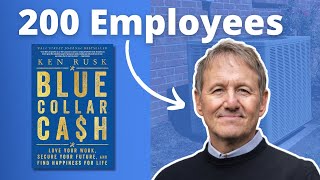
Ken Rusk talks with Phil Risher about growing his home service business to 200 employees. He shares how he built a strong company culture, scaled operations, and achieved financial freedom in the trades without losing what made the business work.
Chapters
Welcome back to the show. I'm your host, Phil Risher. And on today's episode, we're going to be discussing achieving financial freedom through the blue collar dream with Ken Rusk. Thanks so much for joining us today, Ken.
Thanks, Phil, appreciate you having me.
Absolutely. So Ken is the author of Blue Collar Cash. He's also the owner of Rusk Industries and works in the home service space construction type of businesses. So I'm really excited to pick his brain about obviously being an author, but then also scaling a business. So Ken, could you tell us a little bit like how did you get into the trades and home service business? Construction stuff?
Yeah, yeah, quickly. When I was 15 years old, my high school shared a fence with an industrial park. And there was a hole in that fence that had been well worn over the years and we would cut through there to go through the industrial park and go to the carry out and hang out after school, which is what kids did back in that, in that day.
Yeah.
So I just remember walking through all these companies and there was a lot of energy, lots of, lot of motion, a lot of big boy toys, you know, backhoes and dump trucks and all that kind of stuff. And so there was one company that I thought was particularly interesting, a lot of people milling about. And I walked in and said, what do you guys do? I knew someone that worked there and they were like, well, you know, we dig ditches. And I said, okay, well I'm qualified to do that. So, you know, I wanted to get my first used car, I wanted to take my girlfriend out for pizza, have some money in my pocket. So it was time to get my first full time job. I had several part time ones, but so yeah, I did that. I dug ditches in the summertime when I wasn't in school and in the wintertime I worked in the office after school. And so what happened is I got to kind of learn over the next three or four years the front and the back of the house, as they say. And when it came time for me to decide if I was going to college or what I was going to do, you know, the boss man came to me and said, hey, we're going to open franchises around the country and we want you to do it. So at 18, I, you know, packaged together a sport coat and some, and some pants and a tie and spent the next three or four years traveling around the Midwest opening franchises from scratch. And so that was a pretty good college degree in my mind, you know, or making mistakes with other people's money and Opening up these. But we did great. We, we opened up, you know, Chicago and Columbus and Cincinnati and Pittsburgh and, you know, all those places that, that were, they were thriving. And then I would move on to the next one. And so finally, when I was 23, I think it was, I said, I'm tired of, you know, living out of a suitcase. And, yeah, I moved to the western end of Lake Erie, a little town called Sylvania. And we now we have three franchises in, in northwest Ohio and southeastern Michigan. So we started with six people, and we have, I think, 200 some today. So it's been a hell of a ride.
Wow, that's crazy. So when you started doing the franchising stuff and going and franchising different things, did they kind of have a kit that you would then teach these people how to do or how. How did you know what to even teach people?
Well, I think, Phil, the biggest thing that you can use in any business is having a vision of what you want it to look like first. And, you know, I don't care what you do in your daytime. I don't think you do anything without knowing what it is and where it is and why you're doing it. So I don't care if you drive to the store. I mean, you have a predetermined path and you have a reason why you're doing it and an end goal. So all I really did was try to emulate the successful business that we had in Cleveland and just move about the country just trying to make, you know, cookie cutter copies of that. And yeah, it worked really well. I mean, that's, that's one of the reasons that you, you would franchise is because someone else has made some mistakes and you can kind of take. Take their, their lessons and go from there.
Yeah. So let's say someone's like a $2 million business and they want a franchise. Have they gone through enough struggle to be able to franchise, or is there a certain amount of revenue that you should have done or team members that should have. Should have done to have a proven system to franchise?
Well, that's a great question. I think for me it is. Have you as a business experienced all the problems that could possibly affect your company? Have you gone through that? Have you come out the other side? Are you experienced enough, whether it's two years or 10 years, are you experienced enough to answer any question that someone who's paying you money could need to ask or say, hey, bail me out of this because I've got some city department doing this to Me or I've got some insurance company trying to do that to me or some bank trying to do this to me, whatever. So I'm not so sure it's the revenue amount as much as it is. How prepared are you to say, I am uniquely qualified to charge you money? Because I know it all. Okay. Or at least I know most of it. So, yeah, I think that's kind of the measuring stick there.
Yeah, definitely. From six team members to 200, what would you say? Like, from. Obviously the operation side is a whole another thing, but, like, maybe from six to like 20 or 30 team members, what are some of the big things that you had to overcome, like marketing, sales processes? Are there any big things there that you. That you've seen?
Well, I think every business has a little bit of what I call qualitative predictability or quantitative predictability. Right. You all know that if you stand in front of so many people, you're going to talk to so many people, you're going to make a relationship with so many people, you're going to go see so many people, you're probably going to present to so many people and enclose so many people. And so there should be a mathematical equation that every company has. And then all you need to do is just, you know, pour gas on that. Right. If 10 gets you this, then 20 gets you that, then 30 will get you that. So the first thing we need to do is we need to figure out what that predictability is. And again, every company can do this. They just have to look back at their history. So growing from that point is simply replicating what you're doing. And the other thing is that we have to be careful that we don't get caught in this ego trap of ownership. Okay. Yeah. When people ask me how to grow a company, the first thing I say is, well, okay, so you need to become irrelevant to your business if you want to grow it. And they look at me like, well, no, wait, wait, whoa. I'm the boss. I make all the decisions. I beat my chest and I fix this and change that and motivate this and tell people that. And I said, you're right. But you're also going to work 80 hours a week and you're going to have high blood pressure and diabetes and everything else if you keep that up. So in my opinion, pulling yourself out of the organization so that you can become that visionary and then putting people in the company around you in a. Intrapreneurial fashion, maybe not an entrepreneurial fashion, is really the key because then you have all these really super interested mechanics around you that are doing the mechanical part of the business and you're just driving the vision.
Absolutely. I heard a really good quote. It was, the more valuable you are to your business, the less valuable your business is.
Absolutely right. 100% correct.
Yeah. And kind of tying that back to the vision of setting the vision. When you would go into these places and try to set the vision of like, where are we going here? I think a lot of times people get bogged down in the technician mindset of like doing the work instead of actually building a business. Some of the things that you mentioned was EOS related. The entrepreneur operating system with the book Traction. Is that something that you implemented in your business?
It's really funny because I have read the book and several friends of mine have taken the EOS method.
Yeah.
But each one of them looked at me and said, well, you don't need to do this. You already know this stuff. And so I, I think, I'm not saying that I'm on the same level as Gino Wickman. He's a genius. But I think because I was in the ditch digging business, I was kind of forced to work on culture before culture was cool. So I've been doing culture work for 30, 35 years only because I had to. You know, Traction talks about how to build great culture in, in today's day and age. And it's a great book for me. I had, I was forced to do it a very long time ago. So I was kind of, I was kind of cultureish before culture was cool. I guess you could say, yeah.
Would you. If, if someone were to ask you, like, hey, Ken, how did you build a great culture? Or what were some of those things that you did? What was like one or two of those big things that you're like, if you're not doing this, this has really changed the game for us.
The first thing that I would say is stand in front of all your people and say the following sentence. I can't get what I want for my company, nor can I get what I want for myself until all of you get what you want for yourselves first. Because most companies, Phil, are linear. Okay? There is input, there is work product, whether that's a service or a product or a software, whatever it might be. And then there's revenue, sales and revenue. And then hopefully there's delivery and then profit. And as the owner, you're always on the end of that line. So know that and make sure that everybody wins in front of you, because the more people that win in your organization for themselves, the more likely you're just going to kill it. And oh, by the way, be very careful because this happened to me about 15 years ago. I had my group of entrepreneurial candidates around me in the office. I gave him each piece of paper and a pencil and I said, I want you to tell me how far you think we can take this company in the next year in revenue. Wouldn't you know it, every one of those people wrote down a million or $2 million higher than I had in my own head. So be very careful that you're not your own self limiter. Okay.
Yeah.
Because what, what then, what then causes the explosive growth? At least it did for us was I said, okay, well if we get to that place, I'm going to share some of that newfound revenue with you. Yeah. Which is easy for me to do because I don't have it yet. Right. It's not in my current budget. So if we get there, you're all going to have a piece of that. And they went, cool, get the hell out of my way and let us go do this. Right. Yes. So. And we never, we've never looked back. And so there's probably half a dozen or so things that we do from a financial and a, you know, a revelation, a celebration standpoint that keep, continue to drive that, that, that will fuel that fire, if you will. Yeah. And, and they're just so important. And again, you got to let go. If you want to go anywhere, you got to let go of the thing and you know, help drive it rather than, than, than actually the mechanics of steering it every day.
Yeah. Tommy Mello, he's in the trades. I don't know if you know him or not, but he has a really good quote that says if you don't want to limit your team's performance, don't limit their pay and basically like let them run free. I think a lot of times in a home service space, that first layer of management, like the sales director, the operation director, the finance, they, they bog them into like a 80 or 90,000 salary instead of giving them that piece of the growth where they missed out on. Actually, the whole reason you're putting these people in place is to scale your business.
Well, I can tell you this, everybody in our company can make double their salary in bonus. So in other words, if someone's making a hundred thousand dollars a year here, they're making 50 salary and 50 in bonus. Okay. And I just think that's it's been that way forever. I, myself included. So. And, you know, as an owner, if things go well, they go well for you. If they don't, they don't.
That's right.
So it's just a group think mentality. It is a collective mentality. And I really applaud and I celebrate and I show the wins that people have around here. And I think that's important, too. People have to believe you when you say that, that you're interested in their future for them. And the reason, the reason that's so important is because so many times we hire an individual or a human being, and if there's 24 hours in a day, we don't get to sleep, obviously, that's eight hours. We. We get the eight hours that they're here performing their duties, but we don't know what the other eight hours is all about. Are they a hobbyist? Are they a sports person? What are they doing? Are they a health person? What are they? So I, I want to know what that eight hours is all about, because I want to hire the whole person. I don't want to just hire one third of them.
Yeah, I totally agree. And I think Mike Mallow, he's. He wrote the book Profit First. He has another book called all in, and we, we interviewed him on this podcast, and he. He has a quote in the book all in, that when you go all in on your employees, they go all in on the company. And until you do that part of going all in, it can be scary, but you're not going to get that part. What's in it for them? And you said it in the beginning, like, build their goals, and then they'll build your goals on top of their goals.
Well, we take it so far as to have them create vision boards. And I don't mean vision boards like, you know, theoretical ones. There's no hopes allowed. There's no dreams allowed. There's no wishes allowed. They have to be physical pathways that are specific. You know, I would rather have anyone out there listening drop the word goal and replace it with the word pathway, because they're completely two different subjects. One of them is a hope or a wish or a dream or someday. The other one is, this is exactly how I'm walking towards that eventuality. And I think that's the biggest difference. We actually post them on this giant black glass board that we have in the. In the hallway here. And they are down to the nickel and to the date line and to the specific item and the color and all of it. As to what People are chasing. Because I feel like if we're also good at planning a vacation down to the minute detail, and then we're also good at anticipating that next three or four months until that vacation shows itself, why aren't we good at anticipating everything else in our life? So it's really important to me to be involved in all that process.
Yeah, there's a good quote. A goal without a plan is just a wish.
Absolutely. Always has been.
Yeah. So kind of tying this into your book. When we talk about blue collar cash, I think a lot of times business owners, you know, they set the vision of what they want. Do you have any, like, goal setting things for business owners of like, how do you even set goals? It's not just revenue, but like, how do you set goals and visions as a company and how does it tie into what you talk about in the book?
Well, certainly, I think the first key is to align all of your intrapreneurs with their own vision boards and their own goal setting. Because again, you need as many people as possible to say, I'm going to run my department like I own it. I'm going to be responsible for the budgets, for the revenue, for the profit of that department and then I'm going to share in that eventuality. I think if you line up a bunch of entrepreneurs around you in a circle who are all driven like that, then you can say, all right, let's rock and roll. We're going to do quarterly updates and bonuses on top of your monthly bonuses and then we're going to have a year end celebration that if we hit this goal, we're going to go to someplace like an all inclusive in Cancun for four or five days and you're going to, we're going to hand out your checks. Okay. Because what happens in those situations is, you know, they're sitting around the pool, they're celebrating what they've done, which is awesome. But I have so many times over the years caught them having conversations about the upcoming year even though I wasn't there.
Yeah.
And that's when you know you're onto something because they're saying, okay, well how do we do this next year and how do we get this and how they'll have these conversations and I won't even be around. So that's how, you know, you kind of got this secret sauce working for you. But again, it's so transparent because I want you to win. And when you win, the company wins. And then I'm going to win. But it always starts with you first, because if, if something isn't happening prior to, you know, revenue and profit, then you don't have much to go on there.
Yeah, I think if you're a business owner listening to this, it's like, know what your goals are for your team members, build a culture and a pathway for them to attain those goals. That also helps build the company, which then would help you reach your goals, whether it's revenue or whatever that looks like for your business.
Well, sure, because, you know, if I went out to the board right now, which is just outside that door, you would see someone wants to go to Europe to visit their relatives. Somebody wants to play golf in California, Somebody wants to add a deck under the back of their house. Somebody wants to get a new car. I mean, there are all these things, but they're very specific. Okay, I'm saving $5,000 to go to Europe. I'm saving $50 a week for two years. I'm going to go in, you know, March of 2026, and they dated, they sign it, and then everybody high fives them along that journey. So I think the big thing there is to make sure that these things aren't like most people. They stop at goal, they stop at hope and wish and dream. You got to get to the point where it's so specific that it's actually in action. It's happening. The money's being deposited in their check every week and it's, it's coming out through the bookkeeper. So they can't get their hands on it. And all they have to do is kind of breathe and make their world happen and then that's going to happen for sure. Not if it's. It's only a matter of when. So line up a bunch of people getting those types of things done. It's easy to do, it's free, doesn't cost anything, and then again, get out of their way because they're going to take your company way further than you can by yourself.
Yeah, it's really building that team environment of knowing what they want, knowing their goals. So so far we've kind of discussed more about building the culture and scaling a business and what the, what that takes. I also want to make sure that we hit on this because blue collar cash, there's a lot of people right now that are running 2 million dollar businesses that have cash flow pinches and they're like, what cash are you talking about, Ken? So can you kind of talk about financial freedom as a business owner and what that means from a cash flow perspective? What you've felt or gone through, trials and tribulations, best practices.
Well, I can tell you that I've always opened and closed my business every week. Okay. Some people, like for example, you get a workers comp bill in Ohio. You get that twice a year. It could be 30,000, it could be 70,000. Okay. You don't know based on your experiences and whatever.
Yeah.
So I take the, the worst case scenario of 70,000, I divide that by 52 and I put about $1400 a week away. Okay. Yeah. All I, I simply use your, your grandfather's method of coffee cans only. They're digital coffee cans. I save for our vacation digitally, I save for the big bills digitally. I save for everything I say for my year end taxes every week. We estimate that stuff and we have all these digital coffee cans that we put this money into. And the reason I do that is because once you've got all those expenses handled, then you truly know what money is yours and what money isn't yours. Okay? The worst thing in the world you can do is come up at the end of the year and say, wait, what, what do I got to pay? What's going on there? So, and here's the other beauty of this method. God forbid you overestimate some of those cans and the bill comes out cheaper. Those digital coffee cans, man, you're going to find 30 or 40 or 50 grand at the end of the year or maybe 100 that you thought was spent. And it's really not because those bills came in cheaper than you estimated. So it's kind of like a forced little savings account too. But I mean, we, we, we, we save for the fun, we save for the bill, we save for the eventuality. We save for all these things so that all of it's covered. And no one ever comes to me and says, hey, Ken, where are we going to get the money for this?
Yeah, I think it's so good. I, when I was in the trades, it was a three, four million dollars business running out of a checking account. And I'm like, this is crazy. There's hundreds of thousands of dollars in this thing. Like, what are we doing? So I think a percentage based off of revenue of like, okay, for payroll, it's 45% of whatever money you made that week. You stick that aside. I think there's a lot of scalability in knowing your numbers off percentages, and it helps you with that scaling process.
Well, that's a fact. And not only that, but it also helps to tell people how much money slips through their hands every year. I mean, I remember this had to be 25 years ago. I remember telling my production manager, who's still with me, he's one of my first employees. Do you realize that last year you personally approved four and a half million dollars worth of expenses? And they look at you like, wait, what? I mean, seriously? I, I said, yeah, you yourself spent four and a half million bucks last year. They're like, oh my God. And it kind of gets that reality set to them. So I, I don't think it's, it's, it's an, it's a big issue to, to share with them how those things work. I also don't think it's a dirty word to talk about profit because, you know, when you talk about making, I don't know, some people try to make 10%, some try to make 20, some try to make 30. It depends on how big your company is. The bigger it gets, it seems like the less that profit goes. Yeah, but, but I will tell you this. You know, it's not like all that money goes in the owner's pocket. I mean, that's where things like bonuses come from. That's where things like new cars, new trucks, new equipment comes from. So, yeah, you need to make more money than you're spending so that you can innovate and update and do those kinds of things. And when that guy jumps in that brand new Ford that's all stickered up and looks beautiful, he's going to know where that money came from. Okay? Yeah. So, yeah, I believe in being as transparent as you feel comfortable being because again, for all the people that do well with, and if you want to say under you, it's just going to push your, your, your company to, to places you've never seen.
Yeah, I completely agree. And this kind of ties back into the goal setting and vision is when we are successful as a company, you can be successful in reaching your dreams as well. And it all ties back together. And I think something that's very important that I think a lot of people miss is like, with the profit thing is that people want to work for companies that are profitable that are going to be there in the next three months, in the next six months, it gives them a lot of stability. And even going as far as sharing, like in our emergency fund, we have three months reserved to cover anything. So like, we're good because employees want job security and the more that you can show that to them, I feel like it's important.
Oh, for sure. And especially when you have, you know, let's face it, we were on a pretty good run for the last 15, 20 years with cheap money and good economies and this and that. And now you've got this pesky inflation happening and interest rates are rising, and it's causing people to change some of their decisions. And it's. It's harder. I mean, let's just face it, it's harder to do business today than it was two, three years ago when the money was flowing free and, you know, interest rates were really good. So you have to be ready and you have to be prepared for those eventualities. And again, you know, I like it when people say, when the company does well, you do well. But I also like it when you say, when you do well, the company does well. Because if I can get you to build your little world that's within our organization of companies in a great way, and you're winning off of that, man, that's just one more check in the box that drives, you know, the major company overall. And that's why I always say, you know, let's not lead if then lives, okay? If you do this and if you do this and if you do that, then you can start living. I want to know what your then looks like first, because then I can help you design all the ways, the pathways to getting to that eventual then. It's kind of like, don't wait for life to happen to you. You have to happen to your life. I mean, you just. That's just the way it is. And we have a lot more control in that than we think we do. And I try to put that out there every day.
Definitely. Some of the key ideas from the book, I believe, are like visualization, goal setting, financial freedom, and the value of blue collar work. Can you talk a little bit about the value of the blue collar work and what that means to you and what you talk about?
I wrote an open letter to parents several years ago, and I said, listen, I understand it. I'm a parent, too. You birthed your child, you swaddled your child, you clothed them, you fed them, you sheltered them, you taught them what you could teach them. And now you think that for some reason, the only way you can be considered a good parent is if they have an expensive degree on the wall that they borrowed money for, which is pathetic. Okay, so that part has never been true. I mean, Maybe in the 40s and 50s it was true when that was first getting popular, but it's not true. It's not true today. It won't be True. Next year or in the next 10 years. And the reason that is, Phil, is because supply and demand is a pesky but wonderful force that you can't mess with, okay? Where supply is low and demand is high, that's where the money goes. And the more we see kids playing with their stupid cell phones and spending time on their iPads, and instead of getting in the backyard and building a tree for it, or fixing their bike or planting bushes or flowers or raking leaves, the less we're going to see of people willing to go into the trades. That is an absolute silver lining for anyone who is like, well, wait a minute, if all the herd is going that way, maybe I should go that way. The opposite way.
Yeah.
And again, go to any Home Depot, go to any Lowe's, go to any Menards, go to the contracting desk and say, hey, you guys sell stuff to these guys every day. What's missing in this town? Well, I happen to know that the masons are all retiring. And, you know, there's not going to be any masons around the next three to five years. Boom. There's your ticket. Go hire into a mason company, work for that guy for a while. Either buy his company out or go start your own in five years. And you will never look back for money. Okay? Yeah, it's. It's just simple economics. There is 165 million people or so working full time in the United States today. 77 million of those people still do something with their hands, so it's not going away. The supply of people might be dwindling, but that only makes it better for the people who are willing to do it because it'll be financially viable for you to make that happen.
That's right. I completely agree with you. And I think I heard you tell a story about you went to a rental car company and some mismatched suit stuff or something like that. Is that right?
Yeah, yeah. This is a sad story. And it was actually part of the reason I wrote the book. I mean, I had several impetuses to write it, but this is, this was one sad story. I. I had a car, it had a complicated issue that, where they had. They had to take the dashboard out. So I was going to lose this car for two weeks, so I had to go rent one. I go to this place. Here comes this kid from behind the desk. He's got a three piece suit on, and each piece is from a different suit. But he was trying to make it work. And I was with him. I'm like, all right, he's cool. He's doing it. Well, I had to wait, like a half an hour for this car. So I got involved in his conversation about his world, and he goes, yeah, you know, I'm 88,000 in debt. I went to school because my parents said I had to go. I'm kind of pissed because I got led down the wrong path by my teachers and my guidance counselors and everybody else. Now I'm making 28,5 at this car rental place. How am I ever going to pay that debt off? And when do I get to live my life? I mean, I felt sad for this kid.
Yeah.
And I said, well, what do you want to do? And he said, well, I always wanted to be a carpenter. I said, quit right now and go become. Well, after you rent me the car, go become a carpenter. Because if that's really what you want to do, you're going to make it big. Okay? Because carpenters are dwindling. They're for every 10 Carpenters that are retiring, only, like, four are coming online. What does that do for you in supply and demand and the money you're going to make? And, yeah, I mean, he never looked back. So. Pretty, pretty, pretty interesting story.
Yeah. The reason it stuck out to me, because I'm that exact guy. I actually, I went to school because I was the first. My parents are. My. My mom is first generation here. No one went to college. None of my parents, so they're like, go to school. Went and got the $30,000 in student loans, worked at Enterprise, Rent a car coming out of college, had the mismatch suit, sucked up my. My tie in the vacuum, you know, the whole thing, cleaning the car. And I worked my way up. I paid off my debt in the first year. I was very big on financial freedom, but then I ended up working at a duct cleaning company, and I saw, you know, a $3 million business doing 20% profit. I'm like, this guy didn't go to college and he's cleaning ducks. This technician makes $120,000 a year. I was making 40,000 at Enterprise or whatever.
Yeah, like, hold on.
This is. There's something here that I'm missing. And so I completely agree with you that blue collar is. There's so much opportunity out here for everyone. Another thing I want to say is business owners, if they're in 1, 2, 3, $5 million, $10 million, and you feel like, oh, my gosh, I can't keep going. It's terrible. There's so much hope at the end to, like, get your stuff Together because there's so much opportunity.
It's.
It's. It's worth it. You just got to clean up your stuff.
All I'm saying in that regard is, you know, lay off some of your. Your stressors on the people that are standing next to you, and then share with them the newfound revenue that they're going to help you create. It's. It's so easy. If you're at 7 million bucks and you say, hey, we can get to 9, and you have that extra 2 million coming in, take some of that profit from that 2 million and feed it to these people. They're the ones that helped you create that 9 million, and they're going to help you get to 11 and 15, because if you don't put a limit on them, there's never going to be a limit. They're always going to say, well, we can do another million or another 2 million or another 3, and pretty soon you're going to have a 20, $30 million company or more. And now you're like, holy cow, how did this happen? Well, it happened because you were willing to theoretically hover in a helicopter above your business, rip the roof off, look down in there, and say, where do I need to plug myself in today? Okay. It's a much better way to run a company. When you aren't letting it run you, you're kind of running it, right?
Absolutely.
Awesome.
Well, thank you so much, Ken. This has been great. Getting to know you and learning more about your thoughts and scaling a business. Tremendous value. Where should people go to get the book or learn about you? What should the next steps be?
Well, what I did is, you know, we were talking about Traction earlier today. One of the things that I did was I built the course around my book, Blue collar Cash. And what so many businesses are doing is they're buying the course and taking their people through like a book club, like you would with Traction. So the course is 179 bucks. You get a free $25 book with it. I didn't charge 2,3000 like some of these guys do. That's not. No way. So I donate most of that money to charity anyway. I've been doing it for years, so they've been taken. If you go to kenrus.com you can see where you can buy the course in the book, and then you can kind of book club it with your people. Take eight weeks to do it. They will, I guarantee you be thinking different when you're done with it. Wow.
Okay, awesome. We'll make sure to put that in the show notes, and it's been great. Ken, thanks so much for all the insight and wisdom.
Thanks, Phil. Appreciate it.
You got it.


