What Drives Today’s Winning Customer Acquisition Strategies?
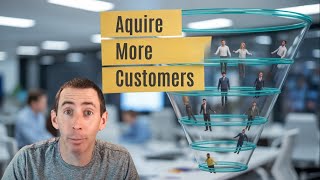
Phil Risher from Flash Consulting explains how home-service businesses win customers by turning call transcripts into SEO content, running paid ads with tracked ROAS, and texting leads instantly. He covers four channels: organic search, paid ads, B2B partnerships, and cold outreach like radius texting. Private equity buyers want to see reproducible growth and a monetizable customer database.
How can you start to look at marketing differently? What's up blue collar business owner? Welcome back to the Blue Collar Prosperity Podcast. I'm your host Paul Masker where we focus on helping guide you to have a prosperous blue collar business. Today we have back with us for a second time, Phil Risher. He is the owner of Flash Consulting. He helps local service businesses increase their sales, keep their schedules full through data driven digital marketing consulting. After helping a 20 year old $3 million service business scale to 5 million in 24 months and then sell to private equ, Phil took that blueprint and now helps other people just like you grow and scale their home service business. Phil's efforts in technology and small business have been featured on Jobbers, Masters of Home Service Podcast, Forbes, cnbc, Yahoo Finance and the Wall Street Journal. So that is Phil Risher. Welcome back Phil. What is happening today?
Thanks so much for having me man. It was nice just catching up pre show. So I appreciate you having me back on. Thank you.
Yes, I am excited about this. For those of you that don't know Phil, Phil's probably one of my favorite marketing guys because as we said in the intro, he does everything based on data and numbers instead of just doing what everybody else does. So I'm excited to kind of jump back into the conversation, see what's changed in the last year and a half since you're on the show and then obviously give our listeners a whole bunch of tangible, actionable steps they can take to scale their business. For those of the listeners out there that haven't listened to the first episode that we did, Phil, back in 2024, give our listeners just kind of quick rundown of obviously you scaled that home service company, but give, give our listeners a little bit more insight into your journey to get to where you are today.
Yeah, I came out of school, I was working at Enterprise Rent a Car in their management training program and I learned how to run a local service business. So I became a branch manager. I got paid off the bottom line as a business owner would and I was directly responsible for $2 million local service business, 20 team members. Then I read Rich Dad, Poor dad, he said, hey, you need to learn how to sell. So I went into the corporate enterprise and I learned how to sell and I sold fleet management services to home service companies. So I was calling on 10, 20 $100 million home service businesses and setting up meetings with them to sell them on fleet management through enterprise. At the same time I started a blog about personal finance. So I learned how to build a WordPress website. I learned about SEO. I learned how to do email marketing, social media content. And I did that for four years, all blogging. I ended up leaving my job at Enterprise and did my blog full time. Bought a school bus, traveled around in a little tiny home with my dog. Then I ended up working at this home service business. And within the first month, all my worlds collided. My enterprise experience management training program, running a solid business, looking at data with digital marketing. Now I had a company that I could take data from their CRM and good marketing principles and put it all together and help them grow. And that's what we did. Got them to 5 million, sold to private equity. And now we help home service businesses do that.
Awesome. You have said that once or twice before. That was super, super succinct. Super. I mean, it's, it's really interesting. It's funny how everyone's story is a little bit different, but how at some point in our career, we get to the point where we combine all the things we've done, all the experience we have to then really start, you know, to kind of take it to the next level. So let's get into marketing. Probably every home service business owner's favorite topic and probably most frustrating topic as well. Me too. I would say things are changing quicker and quicker. So in the last 18 months since you're on the show, what, what are some, some of the biggest shifts, changes that you've seen in the marketing home service space?
Yeah. So two years ago, if you would've asked me, hey, should I be posting on Facebook or Instagram? I would have said, don't waste your time. It's nice to do. You know, you might get a little bit of boost in the algorithms. Maybe people see your stuff. Cool. That thinking is still in people's minds to this day. And the problem is that they're going to get left behind when this shift happens. And the shift that I'm talking about is with AI search. The reason that these two things go together is because creating content for your home service business is no longer just about likes and shares, or people may be seeing it and then reaching out to you to do business with you. It's about training large language models and AI search platforms that your business is a subject matter expert and arming it with transcripts of content that you've created and letting it know that you know the answers to this stuff. So when someone goes to an AI platform and asks it, how much does it cost to get a roof replacement? Or who's the Best company to do gutter cleaning. It recommends you based off of the content that you've produced years over year of being the subject matter expert. That is the number one shift that's coming and people still have their head in the sand. That is just likes and shares. When content on social platforms is what's going to be the next layer to building authority on AI certs.
So let's dive into that a little bit further. What kind of content? Obviously we need to build authority, we need people to see this, we need AI to pick it up. What are some of the best, some of the companies you work with, some of the best things you've seen, type of content that they're putting out on a regular basis?
Yeah. So here's the thing. Everyone runs into this problem, me included. You're running a home service business and you have technicians out in the field, you have CSRs answering the phone and you're like, okay, Phil, I need to make content. What the heck do I say? Right? Very, very simple process for this is if you have CSRs and you are recording calls and you have call transcript, go to where your call transcripts are and take anyone that was longer than five minutes usually in there, you're going to have real customer problems or questions that are coming up. Take those call transcripts, plug them into ChatGPT and say, give me 10 topics on video content that I should make based off of this call. It's going to be your real customer questions and it's going to be you giving the answer in a unique way. So to answer your question is take your customer's questions and answer them. That is a very good way to get a flywheel in your business. Let's say you don't. I don't wanna do a video. I don't wanna be on video. I don't wanna be on video. Okay, cool. Take the call transcript and turn it into a blog post. Now you have real customer questions and real answers from your business. This removes the chatgpt fluff that it's gonna give you and it gets directly to what your customer's asking and the answers that you're giving them. So that's the first thing is like, start with what you got. The second thing is if your salespeople are out in the field, if you use a tool like Rilla or something else, or just turn on voice memos on your phone, what this will allow you to do is to capture that transcript to then get the questions and turn that into a blog post and then get the Hooks that you can get from there. If that sounds like too much work, here's what you got to do. What are the common questions that you get about pricing? What are the common questions that you get about this versus that? Should I do this or that? What are the common questions that you get inside of your, you know, sales process or your lead process? And then the other things that you can do is basically like they ask, you answer. Framework from Marcus Sheridan. Read this book is going to give you, you know, the breakdown of stuff like, hey, I'm going to review this product or this service and, and, and go from there. There's a bunch of different types of content, but that's the premise, like what are the questions that your customers are asking and then create that.
So I feel historically in the home service, home service business, owners are very reluctant to answer these questions because they feel if I don't answer the question, I have more, a higher chance of actually having a technician come out there to turn this person into a, into an actual paying customer. Whether it's, hey, what do you charge to put in a hot water tank or what type of material to use or how much does this actually cost? Like all these things, I think historically we're like afraid to give it away because we feel we're going to lose a customer because they're just price shopping. They're just wasting my time. What are you doing? Tell those people that have that mindset.
Yeah, the number one thing that people want right now with AI, with fake, with this and that is they want trust. They want to trust that you are going to solve their problem. And the number one way that you build trust is through educating them. And this is why I'm not telling, say, hey, you know, a hot water heater is going to cost you 500 bucks or 5,000 bucks, right? Like no one knows that. Right? But what I am telling you is that imagine if you're at a family function and someone says, hey, I'm thinking about getting a hot water heater put in. You know, what should I be looking for? Like what is a good ballpark price or what should I be doing? That is the answer that you want to give and you want to educate them to build trust. So it could be like, okay, well is it gas or electric? Do I need to pull permits for this or not? Do I need to haul your thing away or not? Do you have this size tank or that size tank? Those are some of the questions that you're going to give inside of the content that you're creating. And then maybe you give a ballpark, but maybe you just talk about what the price drivers are up and down. It's all about building trust. And especially with Google search, right, they're just showing ads, ads, ads, ads, ads. A lot of these AI platforms, they want things that they can trust with real examples and real stories. This is why they're pulling these transcripts, which is why you could still have a technician, I need to come out there and take a look. That could be your call to action at the end of the content. But what you want to do before is educate them.
Yeah. And I, I feel like a lot of times homeowners don't know what they don't know. So they'll say, Well, I paid $2,000 for my hot water tank. Why is his only a thousand? Or why is his 5000? You must be ripping somebody off. But when we tell them, the drivers of that price, how far is it away from the gas source, how far is away from the electrical panel? Is it in the third floor or the first floor like you said, all these things that drive that go into the price, then all of a sudden it's like, oh, that makes sense. But when we withhold all that information now, they don't trust us and they might go somewhere else.
I'll give you a better, I'll give you an even better way to take this like to the next level. Okay. If you get price objections about your prices inside of your sales process, Paul, take the video that you just made and attach it with the estimate that you send over. You send the estimate and you educate them through this process. So there should be no price objection and you're standing out as a subject matter expert. So if you're getting price objections, the reason is because you haven't educated the customer enough to explain why the pricing is what it is.
That is so true. Because at the end of the day, if we are priced too high, nobody will buy and we'll be out of business. Right. Like there's a reason people charge what they need to charge. There's a reason private equity charges what they need to charge in order to deliver on all the things that they've put in place. It's not that they're just out there ripping people off. So I love that idea as well of, I mean, technology allows us to do these things so, so much more easily than they did 10 years ago. We can send them a video and walk them through the process and say, this is why it's this way. And the other Companies probably aren't doing that. So as we start to scale this business, obviously you went through a private equity exit. You also help a lot. I'm 100% confident a lot of your clients have sold to private equity. What are some of the things that we are overlooking as business owners when it comes to selling our business, whether it's a private equity or not. But what are buyers actually looking for? Because I feel like we get so caught up in the numbers that we forget about sales and marketing. But what are some of the things that we need to do or need to have in place if we ever want to sell our business from a sales and marketing standpoint?
Yeah. So I was at the home service business. Took him 3 million to 5 million. I was the director of business development. Then private equity came knocking and a search fund came in. I literally was at the first lunch with the search fund guy and the business owner. And we're sitting there and I'm there, and the guy, the search fund guy says, okay, so how do you get new customers? And the owner looks over at me and says, can you tell him how we get new customers? So I'm breaking it down to him, okay, well, how do you, once you get the lead, how you convert that through your sales process? The business owner says, can you explain what we do? And then he's like, how many people do we have in our database? And are you doing anything to retarget these people? What do you do? Those are the three things that they want to know. They want to know how do you get new customers coming in the door? How do you convert them through your sales process from a lead to a sale? And how are you retargeting your past prospects and customers? The number one gold mine for private equity. And if you're not doing this as a home service business, I guarantee you're missing out on millions of dollars for your business. These private equity companies, they come in and they want to know how many service contracts you have and how many people you have in your database. Because nine times out of ten home service businesses have not done a great job of retargeting or cross selling services to these people. And they want to buy that database and cross sell and retarget services. Because they know it's going to be an instant lift of 20, 30%, bottom line, just by doing that in the first year. So they want to know how you going to get new customers, how are you going to convert them to your sales process? How are you going to retarget?
Love it. So let's go into all those. How do we get, how do we get more customers? Obviously everyone thinks there's a magic bullet out there of like, oh, they have this and we don't have access to that. Or they can just spend more money on ads and they can outspend us. What are some of the, the ways that you see working in 2025 to get new people to learn about us and either fill out the form or give it a call even before we convert them? What's the first way to get those, what's some of the best ways to get those leads?
Yeah. So the beauty of this Alex Horozi, no strip guy, if you like content, he has a great book on this. There are only four ways to get new customers for businesses. There is people that see free content. So how, what does this mean for your business? You can do SEO, you can do off site SEO on site SEO, right? Get Google reviews, people see you. You can do service area pages on your website, you can post free content online, social media content like what I'm talking about, people find you. The second thing is you can run paid ads. And in my hierarchy it's this Google local service ads, Google search ads, Yelp tube, Etta Ehlers are way down. But that's the hierarchy that I would recommend. And the big thing with ads, I solved this in the home service business I was at is if you do not have return on ad spend tracking, then you're just gambling. And when I'm talking about running ads, I'm Talking about spent $2,000, I quoted $20,000 and I return on ad spend closed $10,000. So that's a 5x return. Let's do more of that. This is what we help our business owners do. But if you don't have that data, private equity is going to come in and get the data and then they're just going to pull the lever that makes the most sense. The third thing that you can do is build B2B partnerships. B2B partnerships, this is like, you know, cold outreach to people that can Refer you business. B2B partnerships is I'm an electrician and I need to partner with plumbing contractors, realtors, property managers, harbor cleaning companies that are going to refer me business. We help businesses do this. I think that this is a big gold mine. Getting back to the good old shake hands, you know, business partnership, local, a great opportunity. And then the fourth way is cold outreach, truly cold outreach, which in home service we think about door knocking, but there's a, there's a. There's tools out there now where you can actually do cold outreach via text and email to specific people. So those are the only four ways. Create free content, run ads, build partnerships, and get referrals, or do cold outreach.
Yeah, that's. It's. It's interesting to, to kind of look at those. When you, when you simplify it, it really actually allows you to put it. Put a game plan in place of like, okay, how can we get more organic customers? How can we get better at our ad? So first we have to track them and then let's see what's converting. Where do we optimize all that? I would say B2B to me, is probably the. One of the biggest gold mines outside of then once we get to retargeting. But B2B is every day our technicians are in people's homes and they're like, hey, Mr. Plumber, I'm also looking for an electrician. Do you know one? A lot of times they're like, no, my owner probably does, but I don't. Are we arming our technicians with the tools they need to answer the questions that the client has? Going back to what we said at the beginning, just answer the questions that our customers have. If you ask your technicians, what, what questions do you get all the time? Many times it's, hey, do you know a plumber? Hey, do you know an H vac guy? Hey, do you know a roofer? Because they already trust you. Now whoever's in your circle, they probably. They're going to trust as well. And then cold outreach as well. Like you said, there's. There's a lot of different tools. Let's hit on that a little bit because I know there are some also legalities on what we can and can't do. But what are some of the cold outreach things? Because I feel probably a lot of home service business owners aren't doing this that we can start to implement to drive new leads to our business.
Okay. So from a digital marketing perspective, there's only one thing that I found, and I'm having this guy on my podcast, but I got connected with him and it's a tool called Glass House. He's a guy named Jimmy. He's a good dude. Basically, what this is is it's a tool where you can. There's a manual way to do it, an automated way. I'm going to explain the manual way. You can go to a map. You can draw a circle around the map. You can filter out by number of rooms, year it was Built a couple other qualifiers. Then it will text, cold text those people and cold email those people personally and say, hey, I'm going to be in your area working on one of your neighbor's houses. Wanted to see if I could stop by and do this cold. Okay. And it takes care of all of the legalities of cold outreach and doing this and that, the song and dance, and it allows you to do this cold. You can also automate it inside of your CRM with, I got a job on the calendar. I got this on the books. Let's do this cold. Think send Jim with his radius bombs or something. But with text and email, it's wild. It's wild. And he just built this product last October, so not even a year old. There's not many companies that are doing this. But from a cold outreach perspective, our clients were saying, hey, let's set up meetings with them and then let's get this rolling. Because it's going to be, I think, pretty cool.
Super cool. Love it. All right, we're moving on. In the. In the funnel. We've got a bunch of leads now. Now we're at. In my opinion, one of the places where millions of dollars go to die before we even retarget them is conversion. Whether it's responding to web forms, whether it's actually booking the call or answering the phone, or converting them out in the field, we need to get better at conversion. One of my favorite things about what you guys do at Flash is before you go get more leads, you look at, does it even make sense to get more leads before we fix. We need to fix all these other things first. What are some of the biggest opportunities in converting a lead to a paying customer that home services. We're missing right now?
Yeah. So the number one thing that every single home service business can do right now is when someone fills out a form on your website, instantly text them and instantly email them. The reason this is so important is because homeowners are trying to solve problems on their home. They reach out to a business, they want to move the ball forward. And the way that they move it forward is by contacting that business. And then hopefully the business calls them or gets a hold of them and then they move the ball forward. You can instantly move the ball forward by asking them in a text message, hey, Paul, can you send me a picture? And I can get a little bit more understanding of what's going on. Ball moved forward 1 yard, much further than someone else would do. Right. Same thing with an email asking them the same Thing like, hey, could you send me some more information on this? This instantly moves the ball forward in your lead process and it will convert more jobs for you because you are moving the ball forward faster. The second thing is when you call these people and they don't answer or you get a form that comes in and it's a bad phone number or whatever the circumstance is, you just paid probably $100 or $200 for that lead. You probably want to treat that a lot better than a one and done type of relationship. You want to put it into a nurture sequence and text and email and follow up with it, not just call it one time. All these heartburns I faced at the home service business that I solved. Which is why when we partner with companies like what you said, it's like, okay, a digital marketing company, right? I would call these digital marketing companies and say, hey, I'm slow. What should I do? And they would say, spend more on ads. Well, of course they say spend more on ads because they get a commission of whatever they spend. Well, what if you got the same amount of leads but you fixed the holes in your bucket and you converted more jobs with the leads that you're already getting? This is why I'm so passionate about fixing the lead management system. The other system that you can implement is an estimate nurture sequence, which is you send out an estimate and you have some type of a rehashing program. Maybe it's on your salesperson to follow up with their own estimates. However, we all know that if they are doing their job, they're getting busy. If we're keeping them busy, they can't follow up on their estimates. This is why we need to estimate nurture sequence to get people to a sale. So your question was about how do we get people from a lead to a sale? You install a lead management system and an estimate nurture sequence and then you close more deals just like that.
Super simple. And yet most companies don't do it when not only the cost per lead, in my opinion, being a cfo, I also look at like, what's the value of that lead? Yes, we paid $200 for it, but when you guys start to do the math of what it at what a lead is actually worth, and you'll probably realize it's worth, I don't know, $1,000, you'll probably start treating it differently. Because if I came and took $1,000 out of your pocket every time you didn't call back a lead or respond to form, they filled out or Text them or do anything like that, you're going to be upset. So love the, the thought process behind that of just kind of compartmentalizing it. Hey, look at your lead management system. Okay, now we've got them and we're going to give them an estimate. Well, there's plenty of people, especially depending on your industry and the average ticket, that they're not going to decide right on the spot. Maybe they need to talk to their spouse, whatever it is. But let's stay top of mind with them. It's our job because they called us to solve a problem, and until they tell us they solved it, it's our job to continue to help them solve that problem. So we've done that. Now they're a paying customer. In my opinion. Most business owners, once they get payment or even they just get it on the board, they're like, all right, onto the next one. Onto the next one. Let's go get more leads fill. Let's go get more leads fill. You guys are big on retargeting. What is retargeting? Why are most people not doing it and how can it be done successfully?
Yeah, I'll give you one pro tip in between that. And this is specifically from a private equity company that they want to see this data. What I would recommend pulling out. So once you get through the sale is monthly. This is what we do. We'll pull out these five numbers, leads year over year. So we know last year in January we got 50 leads. This year we got 60 leads. So that's good. Then number of quotes. So how many quotes did we generate? How many jobs did we run? How many quotes did we close and then number of new customers, Those five numbers year over year. This will allow you to figure out the issue in your business, right? Is it a leads issue or is it a sales issue? It's also going to allow you to know what your new customer acquisition cost is, your cac. But more importantly, if you are thinking about selling your business, the private equity companies, these are the data that they want to know that they're going to pull out. If you're already doing this in your business, you're going to look like a rock star. Like they're going to say, oh my gosh, like you're looking at this stuff already year over year. So then it just becomes a numbers game. Okay, I want to grow 10% in my total revenue. That means I need to grow all these things at 10% or increase my average ticket. And you have all the data there. So before you Move on to retargeting. You got to make sure you get the data out. And this is the last piece on this. You got to make sure that you take the data and you drive it back into your top end marketing lead funnel, like return on ad spend, SEO, B2B partnerships. Because then you're going to know what to double down on. This is the biggest issue is that people just try all these random things but they don't have the data to support it and then they, they're just floundering and it's just a flavor of the week. But if you have the data in a campaign summary report or something that's clean, this is a fight, all that. So, all right, retargeting. So everyone that comes through your funnel, they turn into a sale or even if they don't, they're all sitting in your CRM. And we had plenty of instances, but one that comes top of mind, we have a company that does custom closets. And custom closets usually like a one and done type of thing, like a big project and then it's gone. But they also do offices, mudrooms, you know, bigger ticket things. He had never done one email newsletter to anyone in his entire database. So the first monthly email that we sent out was about home offices. So we took all his database, sent an email out for home offices and a lovely woman responded. She says, hey, you didn't do my custom closets and I wish I would have gone with you because the person that did it messed up. I'm redoing my office now and I want you to do it. And it turned into a $20,000 job. I'm sharing this because if you don't think that email marketing is real or you're one and done or you're not going to get big ticket jobs out of it, you will. Sometimes people go through your funnel and they phase out because it wasn't the right time, but now you're cross selling them again and they come back into your funnel. So we have two types of emails that we do. One is an email newsletter. So every single month we come up with a content calendar. January, February, March, every month. What should we be talking about? Email newsletter is a little bit like educating them, answering a frequently asked question, maybe sharing one of the videos, customer testimonials, very high level stuff. Then we do promos. Promos would be like, hey, get $500 off a new hot water heater installation. That's a very promo driven email. And the way that we execute this game plan is this we send an email like that. The subject line is very specific. 500 off hot water heater. We know that anyone that clicks on that email to open it is going to be interested in whatever that topic is. They wouldn't open it if they weren't interested. So now we have a trigger that says interest. We take all of those opens and we send them a second email. The second email says in your area in the subject line and it says, hey, Paul, gonna be in your area next week doing an estimate on a new hot water heater. Wanna see if we can stop by and take a look at yours? We have interest now we have a call to action. All inside of an email. This is how you take your email newsletters and retargeting and turn them into actual sales opportunities.
That's amazing. And I think, to me, as I think through this process, probably the most amazing thing to me is one, how simple this is when you actually break it down. And also, like you said earlier, most marketing agencies aren't doing any of this because their compensation model is, hey, we get 10% of all AD spend.
That's right, that's right.
All the things we've talked about, very little was related to ads. When you look at all the different opportunities and even the holes in the bucket, when we can get 10% better at turning a lead into a booked, you know, booked appointment, or we can get 5% better at closing in the field, or we can send a newsletter out once a month and generate $20,000, all those levers combined, we're growing revenue and we're not actually spending any more money on marketing, which is then driving our marketing down. From a percentage standpoint and as a fractional cfo, that makes me happy. Kudos to you guys. In flash, we've talked about a lot. We've talked about getting leads, we've talked about converting leads, we talked about retargeting all the different holes in the bucket and how we can take advant of all the hard work we've already done. What are some, what's one or two things we haven't talked about that most people aren't doing?
Yeah, we hinted at B2B partnerships. I'll give you the framework for B2B partnerships that we do. So the first thing is you want to find complimentary services that you know, you do roofing, find gutter cleaning companies. If you're like, I don't really know the complimentary services, find a local charity or PTA to partner with parent teacher association. And basically the pitch to Them is you have customers that are asking about our service or you have people in your network that want to donate to your organization. So work with us. So what we do is we pull a list of all these people and then we send out a cold email. The cold email has three parts. The first one is in the subject line partnership. It says, hey, Paul, came across your website looking for a good electrical contractor to partner with. Want to see if you'd be open to having a quick discussion about what that might look like. Boom. Okay, send that email. Anyone that opens it, call them. Say, hey, I sent you an email, Paul. Not sure if you got it or not, but I'm trying to partner with some local electrical contractors. Want to see if we could talk about what that would look like? Okay. Second email, subject line, looking for a good electrical contractor. Same body came across your website looking for a good electrical contractor to work with. Want to see if we could talk about it? Third email. Are you the right person? Same exact thing. Okay. When you do this, people will reach back out to you and say, yeah, let's work together. What does that look like? Okay, now this is where you have to change your thinking. You are not the hero. They are the hero that has a problem. And the problem is that their customers, like what you said before, are asking them if they know a good plumber. Their problem is that their employees want to make more money. And you are the guide that's saying, hey, I have a program where your employees can refer me to your customers and make more money solving your customer's problem and your employees problem. All they have to do is, I'll come in, I'll do a lunch and learn. I'll bring donuts, I'll educate them on my service, and I'll give them a little business card with the QR code. Anytime they talk to someone, they just scan this QR code and fill out a referral form. And I'll call them and take it from there and make sure that they get paid. This is the B2B game plan that if someone were to execute, they would generate millions of dollars for their business. And you know how I know this? I was at a $3 million home service business. They were $2 million with this program. I just told you, Okay, I know that it works because I was the one in charge of deploying it and executing.
That's amazing. I think that's a great place that normally ask for one thing that our listeners could take action in the next 24 hours. But I think that's it even if the first step is just to create a list of complimentary services, do your research, make sure they got the Google reviews you like, make sure that they have similar values and, you know, similar type of company. But there's so many, so many stones left unturned in the marketing sales world that our home service friends are not taking advantage of. Phil, that was amazing. Thanks again for coming on the show, sharing your journey and providing a whole bunch of actionable advice, wisdom, insight, especially when you've done it. You know, it works for all the blue collar business owners out there as we continue on this journey to prosperity. Before we sign off though, where can there go to reach out to you? Learn more about what you guys do at Flash.
Yeah, if you're, if you're one of those home service businesses and you feel like every time I talk to my, my company they're saying spend more on ads, clearly there's a bunch of other things to do so you can reach out to us. We do these free audits, we get on a call, we walk you through our playbooks, what it looks like for your business. You can go to flash consulting.com p h l a s h consulting.com click discuss your business. If you're like, hey, Phil, you seem like a cool dude. I usually hang out LinkedIn, Instagram, we connect, connect there. It's Phil Risher. I'm just happy to be a resource.
Awesome. And something that I learned from Phil that we'll leave you guys on is Phil gives away all the recipes. If you want to do the baking yourself, you can. Or if you want them to do the baking for you, they'll do it as well. Phil, Richard, thank you again guys. Flash Consulting is with a P H L A S H consulting dot com. Phil, thanks again for coming on the show today.
Yeah, Paul, thanks for having me.


