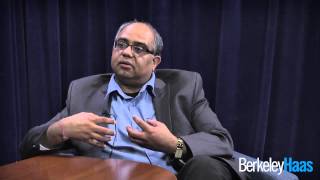
20220901 Piyush Malik Interview

Piyush Malik, a former IBM executive and ISIP ambassador, spent 30 years moving from telecom engineering in India through management consulting to AI and cloud work. He founded the ASCEI Silicon Valley chapter in 2015 and runs mentorship programs using structured 15-minute calls, focusing on high school students and entrepreneurs navigating enterprise sales.
Chapters
Welcome everyone. This is Jim Spohr with ISIP, and it's my pleasure today to introduce the ISIP community to an old IBM colleague of mine who's now an ISIP ambassador, Payush Malik. And Payush is our ambassador connecting us with the American Society of Engineers of Indian Origin. And Payus, welcome to iZip. Thank you for joining the last board of directors call. Thank you for being an iZip ambassador. And it'd be great if you could just introduce yourself to the community and touch on maybe a little bit about your support for entrepreneurship, maybe a little bit about your, your day job and the venturing work you do. And, and tell us about this amazing organization that you helped found, I think, 5 to 7 years ago, the American Society of Engineers of Indian Origin. So please welcome and let's get to know you.
Thank you, Jim. Hello, everyone. And great to reconnect with you, Jim, after my IBM stint ended about 7 years back. And here I am getting in front of the ISEP community. So first of all, for many of you who I have not met, Glad to be connected. I have multiple hats. One of the hats I like to say is I am basically an engineer, but then I've dabbled in entrepreneurship. I do a lot of social entrepreneurship, and essentially I'm a volunteer for the community. So I've done multiple things, but on the professional side, I've got a CDO role, Chief Digital Officer role, which I took on not too long back, about 4 or 5 months back, and I'm happy to talk about all of that. But basic thing is that I have always been a services person, having started my career back in India as a telecom engineer and then moved on to do stuff in the software industry. Then I pivoted into management after my MBA, and then when I landed up here I started establishing communities of practice, service organizations within big large organizations, PricewaterhouseCoopers, and then IBM. And then my last stint was with a startup in the Google ecosystem. So partnered a lot with Google on AI/ML kind of projects. And of course, now I'm deeply entrenched into cloud and transformations for Fortune 500 clients as well as startups. So I've had a 30-plus years career, most of it in the commercial sector, but I've had some dabblings in academia as well as public sector. So I have soft corner. And along the way, I have been volunteering for a number of organizations, professional consortia, as well as for nonprofits. And one of the organizations was a data organization called IAIIDQ, International Association for Information Data Quality. And that's where I did a lot of data governance work. And again, through IBM, I was invited to speak to a national convention of American Society of Engineers. And I flew down to SoCal after the convention. They asked me if I would want to, if I would help them establish a footprint in Silicon Valley. And, you know, I had stayed in Silicon Valley for almost 20 years by then. And then, you know, they asked me if I could start a chapter, and with IBM's blessings, we started the ASCI Silicon Valley chapter in 2015. But then this organization was not new at all. I mean, it is today a 40-year-old organization having formed in 1983. So I just acted as an ambassador for them initially, got the chapter started, and now I've been running and sponsoring chapters around the country. And we are growing, of course, with partnerships with corporates as well as with universities and running mentorship programs and a lot of things that you do, Jim, at ISEP. So My motive is clear. We are focused on developing the next generation. That's it.
Yeah. And I think, you know, the wealth of experience that you bring to your mentoring is fantastic. And I'm sure a lot of the people you mentor, you know, I think is probably inspiring them to great heights. But I think that's one thing, Payush, I think a lot of industry people sometimes feel too busy to mentor students. And I'm just wondering, how do you manage? I know you're here, there. I mean, you do so much. How do you make sure, you know, when you're mentoring, you're taking a little bit of time and making it super impactful for the, the people that you're mentoring. How do you do that? How do you think about that?
That would be a very, very good point, Jim. And actually, I feel, you know, when I first started, I started because I was at IBM. There were a lot of folks who wanted to get connected with IBM. And so a lot of entrepreneurs would come and say, you've started divisions within big companies like PricewaterhouseCoopers and IBM. Can you help us connect with the people? Can you guide us? And I would say that I'm not an entrepreneur, I'm an intrapreneur. And so I can guide you about how do you sell to an organization at the enterprise level, how do you navigate the politics, because as a management consultant, that's what I have served clients across the world doing. Variety of things within each of my clients' organizations. So I just translated that experience into those nuggets for the entrepreneurship circuit, and that's when TIE had the Indus Entrepreneurs. That group had tapped me back in 2012 when I first gave them my first talk, and since then, a couple of years, I was the track chair. And then the convener and a lot of things I've done for them. And that built my rapport with the VCs and angel investors and entrepreneurs in that circuit. But then when I'm today doing mentorship, I have started focusing on high schoolers. I mean, I was always mentoring while at IBM, I was mentoring PhD students, I was mentoring graduate students, but then there were times that I would go and work with our students as well. And I find highly gratifying how to work with high schoolers who have great ideas, but all they need is a little bit encouragement. So to your question, Jim, how do I make it worthwhile is yes, I have to time slice, but then anytime I have a mentoring call with one of my mentees, I structure it in such a manner that we spend 5 minutes general, and then there are 10 minutes where there are some specific questions if they have. They either email to them, me to them, to me in advance, and then we talk in general about things as well. And this is where we continue doing mentoring through that. So, Jim, I think I lost you. Are you there?
Yeah, I joined by phone. I don't know if you can hear me, but yeah, we're still recording, so I'm hoping the recording is going to be okay. I do have one more question for you.
Sure.
And then maybe we can wrap it up and try to reconnect at another time.
Absolutely.
But I'm curious, have you— one of the things that ISIP does is we have a book series. And I'm wondering— I've read some of your wonderful blogs. And I'm just wondering, have you written any books? Is that something that you might distill your mentoring wisdom about entrepreneurship and put it in a book someday? Have you thought about that? What are your thoughts on that?
Jim, great question. You are the second person this month who has asked me this question, and I'm grateful. And actually, I feel that I've still got a lot of things to research before I will write something. But I've started in a small way by at least microblogging, and that's what I've been doing. And one of these days when I fully retire from the corporate world, And I might find time and inspiration to write a book, but great suggestion. Thank you.
Well, it's wonderful to have you as part of the ISIP community, and we look forward to a long and productive relationship. I think, you know, it's just wonderful to have you part of ISIP, and I look forward to future interactions. I'll, I'll stop the interview now and try to recover the Zoom. But thank you so much for making time. I know you're super busy. Would it be okay if I call you back in just a minute?
Sure, Jim. Thank you so much. And to the audience, I am very active on LinkedIn and Twitter, so you can always look me up. And of course, Jim, thank you for the friendship. Thank you for the opportunity to talk to your members, and I look forward to working together.
Thank you.
Thank you.
More from Piyush
Bridging Technology, Community, and Global Perspectives: Piyush Malik on AI, Ethics, & Social Impact

Startup Culture, History of Silicon Valley, Unicorn Science from TiE & ASEI Veteran ft. Piyush Malik