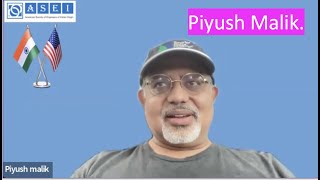
Startup Culture, History of Silicon Valley, Unicorn Science from TiE & ASEI Veteran ft. Piyush Malik
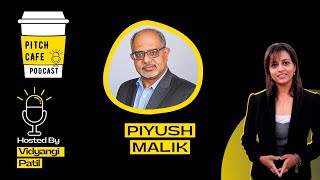
In this Pitch Cafe Podcast episode, host Veda interviews Piyush Malik, a Silicon Valley veteran, Chief Digital Transformation Officer at Veridic Solutions, and President of the American Society of Engineers of Indian Origin (ASCI). Malik recounts his personal journey from engineering to management consulting, IBM, and startup ecosystems, describing how Silicon Valley has transformed over the past 27 years—from orchards to sprawling campuses—and noting the low survival rate of startups. He shares his formula for startup success: aligning passion with real-world problems, maintaining a hustle culture, attracting top talent, and mastering sales and storytelling. Malik discusses what makes a unicorn, using historical case studies such as IBM’s early smartphone prototype, Apple’s Newton, and the rise and fall of Second Life, emphasizing market timing and technology convergence. He then details his involvement with ASCI, its chapter expansion (Silicon Valley, SoCal, Seattle, student chapters), and five strategic pillars—Mentor Connect, University Connect, Youth Technology Exposition (YTE), STEM programs, and community outreach. Through anecdotes of young innovators, he illustrates the impact of mentorship and youth empowerment. Malik also highlights Indo‑US technology transfer efforts, collaborations with Consul Generals, and encourages networking within the Indian diaspora. The conversation concludes with advice to stay humble, listen to the market, persevere, and serve society.
Chapters
So a combination of all that is required to be a successful startup, whether it is Silicon Valley or anywhere now today, but never forget the lessons from that. And also market is a great teacher. And I think about myself, what was I doing when I was in high school?
Hello and welcome to another fantastic episode of Pitch Cafe Podcast. I am super excited today because today I have with me a very multifaceted, multi-talented personality from Silicon Valley. He has seen the Silicon Valley grow. He has seen the booms and busts in Silicon Valley. He's one of the key members in a very cornerstone organization, American Society of Engineering, ASCEI. And he has seen the Valley and the engineers in India grow from strength to strength. The top organizations today have Indian CEOs, and many of them are from the Indian Institute of Technology. As an educational institution, you know, they produce these CEOs. We have an IITian here on our guest seat, and he is amazing. When I met him at one of these IIT conferences, he had brought with him a young genius, an inventor. And I thought, this person who is spending time spotting young genius where everyone else is going after startups and, you know, investing, thinking about millions of dollars, I must bring him on the show. Someone who has seen Silicon Valley, who's able to spot talent, and who's giving back to the engineering community. None other than Piyush Malik from ASCI. He holds the Chief Digital Transformation officer role at Veridic Solutions, but to me he is a mentor who has kept the Indian community glued together with his amazing attitude of giving back. Piyush, welcome to PitchCafe Podcast. Truly an honor to have you.
Veda, this was a fantastic introduction. Glad to be here, glad to have met you, and I'm happy to answer any questions you may have. Now after that introduction, I'm charged up and ready to go.
Awesome. So Piyush, let's get started with a rapid fire. Who is Piyush Malik? Who is this amazing multi-talented person who is not only a Chief Digital Transformation Officer but also President of ASCI? He's serving on the boards of top universities. Who is this person behind this aura?
Vida, at the core, I'm a human being. An engineer turned social entrepreneur. I happen to have a management education after my engineering education, and that, I would say, kind of corrupted me in a bit, that I drove away from my engineering roots. But then I got back to it when I got associated with organizations like TIE and ASCI, where I get to meet the top entrepreneurs, top engineering entrepreneurs, as well as innovators. And happy to be involved with all these nonprofits because That's a part of me, I would say, without which my entire story wouldn't be told. So yes, I have been a management consultant working for Big Four management consultants in the past, then big tech. I've spent 14 years with IBM as well in the innovation space, in the data space. But now I'm totally entrenched into the world of startups, helping legacy companies transform themselves digitally. Using cloud technologies, using AI/ML, using IoT, and leveraging any of the emerging technologies that surface up. So that's my domain and that's my profession. But actually, I love— like to give back using the offices of ASCI and some of the other nonprofits that you are also aware of. So we'll limit the questions to whatever you feel like.
Awesome. So, you know, let's start with your journey in Silicon Valley. You said you've been with a Big Four management consulting firms, and then now you're totally entrenched in the startup world, but you also, you've built a bridge from startups to these corporate world. So tell us, what did you see change in Silicon Valley? What is your message to the career aspirants, startup founders who come with big dreams to Silicon Valley? What is the trajectory you've seen? Where do you think this is going?
Silicon Valley, when I arrived here 27 years back, wasn't as congested and We could still see some fruit orchards over there. And, you know, 237 was a two-lane road, not the highway that you see today. So I've seen the sprawling campuses of Silicon Graphics transform into Google's wide campuses, and a lot of buildings have changed their names. That's the nature of the corporate world. Big eats small. And at the same time, not every startup is successful. I've seen venture capitalists pouring in millions of dollars into many, many ventures, and out of which maybe only 1 to 2% survive. And the average length of a company's survival is, I would say, less than 20 years. And I've been fortunate enough to work for a company that survived 111 years. And I learned certain things from my IBM stint. Still keep that in high regard. There were some great researchers I met there. I still have wonderful friends who are continuing to work with IBM, but I have taken the plunge into the startup ecosystem and really enjoying my last 6 years that I've been in the startup ecosystem.
So tell me, Piyush, what is, um, your biggest learning from working in a corporation to moving to a startup? You've been in an organization which is 111 years old or so And now you've moved to startup which is 6 years old and you're saying that companies don't last more than 20 years. What is it that companies are doing wrong? This is a startup and exit culture wherein, you know, you build a startup and you're looking at a— they call them dragons, multi-decade cons, you know, like they've lasted forever and their valuation is I don't know how many trillion. But what is the mistake which people are making as startups? This is a very short attention span culture we're in. What do you think is happening here?
So startups, if you form startup out of your passion, that's one thing. But if you form a startup that is really solving world's problem and you're matching the passion with world's problems, then you get backed by VCs, then you are golden. If the startup founders are only looking at the exit options or what money they are going to get out of it. That's not the way it succeeds. There are a lot of things that one has to be— you are a startup, you've got to be nimble, you've got to be having a hustle culture, you've got to be able to identify the right top talent to attract to your company, and you also have to be able to sell. A lot of engineering entrepreneurs who transform themselves from engineering directors or VPs of engineering at one company and then say, okay, I'm gonna start my own firm— if they are not not good at selling, that's where the entire company kind of falls. And of course, if they're not good at selling, then they've got to bring on somebody who can really sell their vision. Yeah, but at the heart of it, being able to communicate your vision, being able to get others on board, that's very important. Whether you are giving the pitch to a VC, to an angel, or you are giving a pitch to a prospective customer, you are selling all the time and you also selling the vision to your employees who you are trying to hire. So a combination of all that is required to be a successful startup, whether it is Silicon Valley or anywhere now today.
Fantastic. So, you know, with all the experience you've had, you constantly run into startups. You know, you're in Tycon, you're in ASCI, and you're on the board of universities. What are some of the signs of a unicorn? I know you told that the founder should be able to sell The team should be able to build products which are built out of passion but match the needs of the market. But really, what kind of signs do unicorns have? Have you developed some wisdom or insights on that? Like, you've seen the Valley for so many decades now.
I wish I had the crystal ball and hindsight. Everything is 20/20, right? So not to talk about the year 2020. 2020 coronavirus. And think about, you know, the signs of a unicorn are all dictated by the market. If you have something that you have created, it fits the market needs, and then you are able to sell it properly, then you succeed. I'll give you an example. You all know, think that perhaps Apple invented the smartphone. A lot of people think that way because in 2009, Steve Jobs came on the stage and said one more thing, and boom, there was a combination of a music player, a phone device, and a smartphone was born. But how many of you know that in 1992, IBM had prototyped a smartphone? Before Palm Pilot also, there was something that was created which could have been a very, very successful thing. But again, right timing, right product, and being able to market it properly is very, very important. There's another example of a device called Newton. Anyone heard of that? Have you heard of that?
Yeah, I see it in a lot of these Silicon Valley historical documentaries. They do mention Newton. It's a very significant product, and this was from Apple. It was Yes, it was.
Absolutely. Absolutely.
They copied IBM probably. They copied IBM.
So I saw a Newton prototype back in 1996-97 when I came here. It was not very prevalent and I had seen it in somebody's hand. And at that time, the most prevalent handheld device used to be something called Palm Pilot, which you may have forgotten as well. And after that, both of them kind of took sideways and then BlackBerry came on. And I know I'm taking you down the memory lane of the mobile phones, but I happen to be a telecom engineer. This is close to my heart. So I saw how these devices and their popularity rose and then went down. But clearly, in the case of IBM smartphone, idea ahead of its time, not able to market. In our case here today, everybody talks about metaverse, everybody talks about AR/VR the latest thing and metaverse being the next hot thing. How many of you remember Second Life? Second Life was a metaverse equivalent of those days in early 2000s. And we were building some applications on it. People were acquiring islands on that. We were having meetings in that Second Life, and it was a precursor to today's metaverse. Why did that not succeed? Because the computing power, the power of the laptop, devices were not there. Convergence of technologies and improvement all around is needed for innovation and market adoption. So I give you a few examples from the dinosaur history, but I think folks in Silicon Valley will understand. And the lesson here is, you know, you always as an entrepreneur, you've got to keep an eye on the market, ear close to the ground, and be humble enough and to learn from anyone who can share their knowledge and be hungry to read and be curious to acquire new knowledge in everything and then apply forward for your problem. That's my formula.
That is amazing. You know, I just want to snatch those words. I want to make them mine. I want to, I want to blow it to the whole world and, you know, say it. Be humble, keep your ears to the ground, listen to the market. You know, amazing, amazing. I think you said it all. You probably gave the best advice in the last few seconds. Thank you so much for that. And I love the way you went back and pinpointed Second Life and the Newton example. Tell me, what can people learn with the retro news? How can they move forward with that? What can we learn from such case studies?
Never forget the past. Learn to forgive people if they have hurt you, but never forget the lessons from that. And also, market is a great teacher.
Market is a great teacher. I love that.
If something doesn't succeed, just don't give up. Keep trying until you say you are done.
It's not done.
Done. It's not done. So it's always be— keep an eye on the prize and keep forward. And again, when I say prize, prize is not only money.
Yeah.
Prize is what drives you to get up in the morning, do something, If your passion is to do something for the world, if you want to give your expertise to the world, by all means do that. And today's creator economy lets you do that. You are a creator. Yeah. You are doing it through your pitch cafe and your podcast and your books. And I would say people should follow these examples as well. You are also setting a great example for the folks around here.
Yeah. Yeah. Thank you so much. I really appreciate it, Piyush. And leaders like you With the kind of work you're doing, I want to get to what you're doing at ASCI. It really amazes me because I followed so many of your conference, you know, sessions, and I think you're awarding the right kind of people who have achieved a lot in the technology field. It's hard to recognize somebody who's doing credible work in the technology field because technology is hard to understand, to wrap your head around, especially with AI/ML. It is so mathematical. If you say some jargons, you have to literally unpack it for people. So tell me about your journey in ASCI, and you managed to create so many events. There's a lot of buzz around it. So tell us all about ASCI and what are your events.
Thank you for asking, Ovida. And actually, ASCI happened to be by accident. It was in 2012-2013 timeframe that TIE had approached me. And at that time, I was leading IBM's Big Data Analytics Center of Excellence. So obviously, I was all around, flying around the world, talking to clients, meeting, you know, hiring all around the world. And then I was reached out by the president of TIE to, you know, give a talk on big data and be part of a panel. So that started my TIE journey back in those early days. And lo and behold, a couple of events there, and, uh, Tycoon came. And as you know, Tycoon is a big event where a lot of entrepreneurs, not only from Silicon Valley but from all around, travel. And it's, you know, considered as impactful as a TED conference, right? And I was asked to co-chair the big data track for Tycoon. And standing on the big stage with some of the greatest innovators, engineering innovators, and facing an audience of more than 5,000 people, you know, it gives me goosebumps. At the same time, somebody from the audience after my session there approached me and said, have you heard of American Society of Engineers of Indian origin? No, I haven't. And then they introduced me and said, can you come and talk at our convention in Southern California? I flew down a couple of months later spoke at their event in UCR wine. After that, one thing after another, and they requested me to give them a footprint in Silicon Valley. And with IBM's blessing, we were able to start the Silicon Valley chapter. And that was about 6, 7 years back. And after that, we were going low-key because this is an organization, it's a volunteer-driven organization, right? And despite this being now today This organization is almost 40 years old. It was formed in 1983, but nobody in Silicon Valley had heard of it. When I met with some of the folks who had been running this organization, I met with the founder of this organization and they had dreams, but they could never establish a foothold in Silicon Valley and they pleaded me for help. I said, "Fine. I'll give it a shot." The beginning of every river is a trickle. Of streams. So we three of us got together, then slowly, slowly we started building our board. And today, if you go and see who's who of executives, whether it's from Juniper Networks or Salesforce or any other company out there, they are on my Silicon Valley board. And now we are expanding into other areas as well. We have 6 chapters, many, many student chapters as well. And this is something which I always—
Bay Area, you have 6 chapters?
No, Silicon Valley is one chapter, but Michigan was the original chapter, which was formed in 1983. And at its peak, this organization had a lot, many chapters in other universities as well. But volunteers come and go, and sustenance strategy was not there. So chapters kind of withered away. And now we've revived SoCal chapter this year, Southern California, which at one point had 700 members, but it went to almost zero in the last few years. So this year we revived the SoCal chapter. Of course, Silicon Valley chapter has been going strong, and we are about to revive the Seattle chapter. There are student chapters in the University of Maryland, and of course, we have our chapter in Washington, D.C. It used to be called National Capital Corridor, NCC chapter. It's been now renamed to D.C. chapter. And collectively, we work together for one objective, which I had picked up while picking up the Silicon Valley chapter leadership role. Said I would focus on youth empowerment. And then whatever programs we put together, they become a template for other chapters to follow. And now we have 5 pillars in our strategy. One is Mentor Connect, where we connect experienced managers, engineering managers, executives with early career engineers. That's mentoring, one-on-one structured mentoring program. Then we've got a University Connect where we have the student chapters as well as we create career opportunities, internship opportunities, job opportunities for younger folks who are just getting started with their career. And we provide them a structured way of following through with recruiters. Then we have STEM programs through our YTE, Youth Technology Exposition. We get one of the innovators that you met. I had spotted her 3 years back with one innovation at a science fair, and we Invited not only her, but 25 other kids who we awarded, and we brought them for a next level of competition. And out of that, top 3 won. And then out of those top 3, they participated in the national YTE program. And once again, that particular girl stood second in the first year, and then next year when she improved her application, she stood first. So that's where, say, consistency in keeping at a problem It's a sign of not only an innovator, but also an entrepreneur. And when you see these kind of traits in somebody as young as a 16-year-old, you feel very proud about it. And that's the core of our youth programs, to encourage youth to do these kind of things. And I take pride in it because many of these kids have gone on and filed patents. They have gone on, one of them has gone on and filed a company as well. Formed a company even before they went to college. So in high school itself, they are achieving so much. And I think about myself, what was I doing when I was in high school? I was not doing anything as interesting as these kids are doing. And they are very bright kids, not only in Silicon Valley. I have to admit, there are kids all around the nation. We just need to spot them, support them, mentor them, and, you know, give them opportunities to rise and shine.
Yeah, this is amazing. I spoke to that girl, and, you know, thanks to you, we were sitting at the table, and I a long chat with her. I did her podcast with her, it's still in the works, and she doesn't seem to be fazed by competition, but she's very competitive. That attitude, I think it not only comes by working hard, but people around you, role models and mentors like you, when you encourage them, they overcome fear and they do things they're, you know, not able to imagine. So thanks.
I still recall her very first time when I saw her at the science fair. She would respond in one-syllable answers and was very afraid. And I've seen her journey over these 3 years. Not only has she matured from that perspective, she's become confident. And one thing that she was doing, building an application for blind— when I gave her a suggestion that why don't you contact Shankar Eye Foundation here, and I happen to know some folks there, the leadership level, and she had already contacted a blind school in India to get her prototype in the hands and do field testing. So I appreciate such innovators who take the time as a student when you're trying to get into college, you find time to do this thing for an application that will ultimately help the world. So I definitely respect these kids.
So I think there's an opportunity here for all parents who want mentorship like this for their kids. To approach Piyush Malik from ASCI, who is also an industry leader in AI/ML. So Piyush, what is a great way to connect with you? If I'm a parent myself and I have a lot of friends and there's an entire community here who wants to reach out to people like you, what is a good way to connect with you?
Wonderful thought there. I would say organizations like ASCI offer free membership to all students. So check them out, aseiusa.org, where we have most of our members, professional members who are life members we have had for over these years. They want to give back. Many of them are now getting retired, so they have time at their disposal, they have experience on their hands, and they would like to share. So we pair them up with youngsters and young entrepreneurs as well as students. And so you make use of that. The programs that we've been putting together, you mentioned at one point Too many programs going on. I think that's a byproduct of COVID because we couldn't go out anywhere in lockdown. And earlier, this organization used to do maybe 1 or 2 programs in a single year. And during COVID we put together 55 programs in a span of— you can imagine, in 24 months, 55 programs. So almost every other week we were doing a program, virtually of course, and also encouraging local small groups to get together. So in the universities, kids prefer to be in front of each other. So last month we did in University of Maryland. I was there in Washington, DC, um, saw the energy. We had women's panel and then all the students listened very intently to all these industry leaders, various companies. And day before yesterday, we had multiple folks, career coaches, as well as industry executives come together. And we beamed this program to all our chapters, all the student chapters. But at— in Dallas, we had the largest gathering. We had more than 300 people wanted to get into the program, and we had seats for only 100. So obviously we'll make the recording available. So I'm just giving you an example here. There is hunger and thirst for these kind of programs, and our sole objective is with the corporate help, we would like to connect with the corporate ambassadors and put these programs in front of the kids. And see how we help the society.
Fantastic. There are so many collaborations I could think of just as you were narrating about your, you know, outreach here with the numbers you have given in. So thank you for that piece of information. I'm sure a lot of people will want to connect with you. On that note, it's very difficult for me to wrap up, but all good things have to come to an end. The podcast has to end. Is there any one message you have for the listeners today as you're spearheading so many initiatives, anything you wish to tell them as we close the podcast?
I would say stay networked. The Indian community is a very vibrant community, and we are all Asians. We have to stay together, rise against Asian hate, and we've got to assimilate ourselves into the environment, into the region that we work in. As I always say, Bharat is our Janma Bhumi, but US is our— and we've got to adapt to this and learn to network, learn to network with a purpose, and learn to serve the society. That's all I would say here. Thank you very much for the time.
Thank you, Piyush. On the closing note, I have seen that you are very active with the Consul General of India community. You're bringing together people across borders. Are you working with people from India at this point?
So one of the tenets of ASCI originally was to facilitate Indo-US technology transfer. We are still at it. And due to that, we've had great relations with the Consul Generals who are in our jurisdiction, not only in San Francisco, but our Michigan chapter falls under Chicago Consul General. So whether it is Consul General Dr. T.V. Nadeem here or Amit Kumar in Chicago, we've had great relationships with them. And also in those areas where we don't have a chapter per se, But we have members, for example, in New York, New Jersey. There are Consul Generals and they call upon our board members to be present. And again, it's all about representing, being, showing up. And we are happy to show up anywhere if it inspires the Indian population, if it helps in any way between Indo-US relationship, we're all there for it. So with that, LinkedIn and Twitter are my best ways to be in touch with me. So happy to connect with anyone, happy to collaborate with anyone. Thank you very much.
Thank you. On that amazing note of connecting, collaborating, staying together, and bringing the Indo-US talent pool together, standing united, we like to thank Piyush Malik for gracing Pitch Cafe Podcast, and I hope to have you back soon again with more amazing achievements from your end. Thank you, Piyush.
Thank you.
More from Piyush
Bridging Technology, Community, and Global Perspectives: Piyush Malik on AI, Ethics, & Social Impact