6 Reasons Alcoholics Have Trouble Recognizing Their Drinking Problem
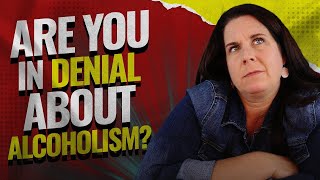
Amber Hollingsworth (YouTube) explains six reasons people with alcohol problems often fail to recognize the severity of their drinking. Key points in this chunk: many affected people appear highly functional (e.g., professionals), alcohol-related blackouts distort memory and self-assessment, social normalization of drinking and selective social circles hide the problem, consequences are often misattributed to other relationships or stressors, denial exists on multiple levels (minimization, helplessness, "only affects me"), and perceived barriers to treatment are frequently rationalizations. The video concludes by directing viewers to playlists and recovery-coaching resources.
Chapters
Alcoholic denial is actually a little bit trickier than other types of addiction denial. And there are a few reasons for that. In fact, I'm going to tell you six reasons why alcoholic denial is sort of different than other types of addictions when it comes to other addictions, like maybe like stimulant addiction or opiate addiction or cocaine addiction, anything like that. People may deny to the people around them that they have a problem. They may even deny to me that they have a problem. But usually deep down inside, they know good and darn well that they have a problem. But. But when it comes to alcohol, a lot of times people really, truly do not see it. In fact, I have a lot of people who come into my office and talk to me who really, truly, wholeheartedly do not realize that they either have a problem or that they have a problem that is significant. And a lot of people who come in to see me really, truly do not realize that they have a problem at all. And the ones that do realize they have a problem at all have no idea how big of a problem they actually have. So I want to explain to you how we can miss these signs and symptoms of alcohol. Now, before we go much further and before you put the comments in the thing, alcoholism is not a real clinical term. I realize that, but it is the term that we all use. So I'm going to use it because it's the relatable term. The official clinical way of saying it is alcohol use disorder. So please do not, like jam out the comment section. I'm very aware of what it is called. And if you're frustrated because I still call it alcoholism, I have a whole video on that. You should check it out. In fact, I'll link it up here. You can come back to it. You can watch that one if you want to know why I still refer to it as alcoholism. Anyways, back to the point. One of the biggest reasons why people a lot of times do not realize that they're having like a significant problem with alcohol is that they're really functional in most areas of their life. In fact, most people I see, like 90% of the people I see in my office are very functional human beings. Like, they have really good jobs. They have really like high pressure jobs. They're like doctors, lawyers, business owners. They're like marathon athletes. They are very functional in a lot of areas because when it comes to alcohol use disorder, the last thing to go is usually like your career stuff. The first thing to go is your home stuff. Specifically the person closest to you is going to be the first thing that goes. We're going to come back, we're going to talk a little bit more about how that and how we kind of like, ignore that and we put it in its own little box. So stay tuned because we are going to cover that. But if everything else in your life is, like, looking good, you're functioning well at work and all these other things, and maybe there's only one relational problem going wrong, it's really easy to dismiss it as a relational problem and not an alcohol problem. So people can be very functional for years and be alcoholics. Another really big reason why people often, like, miss the fact that they have an alcohol problem is that when it comes to alcohol, part of the signs and symptoms is that you have blackouts, which are like entire missing periods of time, entire nights, sometimes entire, like, days strung a row together. And sometimes you can miss, like, entire days if you're on, like a big bender or something. And so because you don't remember it, you don't really remember how bad your behavior was. You don't really remember how obnoxious you were, how out of it you were, how disconnected you were, how mean you were. And if you do remember it because you had the alcohol in your brain at the time and you felt kind of good when it was happening, then your brain is like categorizing that as not that bad. And so because of these physiological brain things that happen when you drink, you don't remember it correctly. So when you have people in your life that are, like, on your case and they're giving you a hard time and people are bringing it up and then other people are mentioning it, you should listen to them, even if inside it doesn't feel quite right. Because your memory of it is either maybe even not there exactly what happened, or it's there, but it's sort of like got this weird rosy filter on it because you had alcohol in your system, so you don't remember it the same way the people in your life remember it. In fact, I actually have a lot of people that watch this channel, their family members and friends and stuff. And they ask me a lot, like, should I record my loved one how they are when they're intoxicated and then show it to them. Now, to be honest, I usually tell them not to do that because it doesn't go well. Because when they show it to you, you just so furious. Mostly because you're humiliated and embarrassed and ashamed and all of your defenses come into play. And you a lot of times Just get really mad at that person, and you're not quite able to look and see the truth of what's going on. So I usually don't recommend people doing that. But maybe you've had someone in your life do that. Or maybe you're just, like, a young person and everything's recorded these days, and you've seen it back for yourself. Now, there's one other little denial mechanism that could be coming to play. Even if you are literally watching it on video and even if you remember every single thing you did. Okay? And that is that we have a tendency, and this is kind of general to most addictions, but we have this tendency to want to sort of isolate the bad things that happened or the bad judgment or the mistakes we made. And we want to call it a. Like, a single event for a specific reason. Well, I just drank too much because it's Super Bowl. Everyone drinks too much because of that. Or I just got overserved or whatever. Or it was boys night. Whatever it is, you want to make an excuse, and maybe you feel bad about it, and you know that you shouldn't have done it, and you regret it and you're ashamed of it. But in your mind, you see it as an isolated event that could happen to anyone. Maybe you got a dui. Hey, that could happen to, like, a lot of people. Most people, in fact. You are right about that. And so we look at that, and we think, okay, everyone gets drunk and wasted sometimes. Everyone makes some bad mistakes. And you chalk it up to that. What I'd like for you to do, though, is back up from that little specific incident and look at the big overarching thing. Is there, like, a lot of these nights? It's like a lot of times when these bad decisions and bad judgments and mistakes and bad consequences are happening, you cannot look at any one incident in isolation, because it's. Any one incident really can be explained away. Probably could happen to almost anyone. But it's like. Is it, like, happen to you a lot? Do people get upset with you a lot? Is your primary relationship upset with you a lot? Look at the big pattern. Not the one incident. It's too easy to make an excuse and, like, rationalize that one away. Now, the other thing, and this is another one that kind of goes along with most addictions, but I really want you to be aware of it, is that usually these problems that are happening because of the alcohol, we actually don't even recognize that those are problems related to the alcohol. We think those are just other problems. Like, it's a boss problem, it's a spouse problem, it's a kid's problem, it's a school problem. And we want to connect it to all these external issues instead of seeing the one like factor that's actually triggering all those things to happen and that's having sexually. For a few reasons, the biggest of which is what it's doing to your brain chemistry. Over the time of developing an alcohol use disorder, your brain chemistry changes and you're either functioning in a state where you're in intoxicated, and that filters your point of view about what's going on around you. Usually makes things feel maybe better than what they really are. And then when you're not intoxicated, you actually have a deficit of good brain chemicals and an increase in anxiety brain chemicals, which makes you filter everything that's happening in your life in a more negative way. Now, layer on top of that biological piece of information the fact that as alcoholism progresses and you have more and more consequences and more and more problems start to build up, like relational, occupational, financial, self esteem, all these other things, these consequences are stacking up and things are starting to sort of come down on you, and people are on your case, and people are after you, and people are trying to tell you things you don't want to hear, and you're starting to like yourself less and less and less. Then the combination of the brain chemistry changes and the fact that everyone's kind of upset with you. It very genuinely feels like it's all these other things. But are you having a spouse problem, parent problem, boss problem, medical problem, or whatever because of the alcohol? Because what happens is, as we start to change, the people around us start to get real frustrated with us, and they start coming down on our case. And it's easy for us to tell ourselves, well, they're just an asshole, or they're just never happy, or they're just always negative, or they're just always critical, or they're just never satisfied with anything I do. It's very easy to feel that way because in some ways it's kind of true. But is there a reason why that dynamic is occurring? This can be very difficult to see. You've gotta really back up from the situation. And honestly, you gotta tap into a lot of humility to recognize that maybe the alcohol is the central mechanism. I'm not saying that every problem in your life is related to alcohol. I'm not saying that everyone around you is perfect. I'm saying that there are certain patterns and ways that the other people in Your life will predictably respond to someone that has an alcohol problem. I can, like, pretty predictably tell you exactly what that's going to be. In fact, I have a lot of videos about it if you want to check it out. And you might then realize that maybe it's not that they're horrible, negative, critical, never satisfied. Maybe it's that they are having a reaction to this problem. I'm not saying it's the best reaction. I'm not saying it's helpful. But I am saying that it is predictable. And some of those behaviors coming from other people are probably a response to what's happening with you. It's a desperation, a fear, frustration that's coming out towards you now. Another one, this is a really big one that I probably should mention here, is the fact that alcohol is so culturally expected, not acceptable expected. In fact, you know, people worry about, like, you know, in fact, a lot of people think, oh, people don't get help for alcoholism because they're afraid what people are going to think if they're alcoholics. And I'm like, nope, you know what the real truth of that is? People don't get help for alcoholism because they're afraid of what people are going to think when they stop drinking. It feels like there is like a biased, a judgment. I mean, it can really feel like there's like a bias and a judgment towards you for not drinking. And in some ways, there's some truth to that. I'm not even going to argue with it. It's literally like the one drug that if you don't do people, like, why don't you do it? Like, they think you're weird. They put this pressure on you. There's this expectation. It might even be an expectation in your job, believe it or not. So it's like that definitely weighs into the fact that most adults drink, which is another reason why it's kind of easy to miss when you have an alcohol use disorder, because, like, everyone you know drinks. And the further you get into alcoholism, the more likely it is that you are surrounding yourself with other people that not only just drink, but drink alcoholically, which helps us to normalize our own behavior. Because the truth of it is, when you have an alcohol problem, you don't like to be around other people who don't drink. You don't even like to be around people who don't drink heavily because it makes you feel kind of bad about yourself because you think that they're judging you. So you start subconsciously surrounding yourself only with people who Drink like you drink. Which again is reinforcing in your mind that what you're doing is normal. But you may have a biased kind of perspective there. And another reason why you could be in denial, and maybe you don't even know you're in denial, is because there's different levels and types of denial. I mean, there's like the type that everyone recognizes, which is when someone feels like, oh, I don't have a problem at all. Okay, that's like classic denial, right? But there are other kinds of denial. Maybe you realize you have a problem, but you're telling yourself it's not really that bad. That's another kind of denial. What you're saying, okay, it's a problem, but I don't really need to do anything about it is basically what you're saying to yourself. And the silly thing about that is it's like I talked about earlier. You don't need to wait until you literally meet every single criteria. You don't need to wait until you lose everything, burn every bridge you hit bottom. That's ridiculous. Just like with any other problem, the sooner you catch it, the easier it is to grab a hold of. Or another sort of type of denial is you could be like, okay, yeah, I have a problem. Like, I know an alcoholic, but it doesn't affect anyone else. Now this is probably of all the things I've said, the one that's going to get me the most heat because I get this in the comments all the time. Well, you're wrong because I drink and I just come home. I live by myself and I just drink after work and it doesn't affect anyone. And I drink handle of like a night or whatever and I still get to go to work, so it's fine. But I'm going to argue with you. First of all, if you do live with someone else, then I'm not even going to have this conversation with you. If you're drinking alcoholically, problematically, then it is affecting the people that live with you at bare minimum, even if you don't live with other people. Okay, then what I would say to you is, okay, maybe, maybe they're not having a direct effect. But what would you be doing if you weren't drinking? Would you be more interactive? Would you be of more service to other people? Would you be involved in more activities? Would you be working harder at work? What are the people in your life and in your community missing out on because of the fact that you're drinking? Maybe you're thinking, well, no one even knows I'm doing it, so it doesn't even count. It's not hurting anybody else. But actually you have a certain set of gifts, skills, talents and abilities that are unique to you as a person that nobody else on the planet has. And if you're spending all of your time drinking and getting over drinking and having hangovers and then promising stop, you know, you know the whole thing, if you're doing all that, then guess what? All of us are missing out on what you could be giving and contributing to the world that you're not. So I really just don't buy into it. Only affects me. That's just not a real thing. So let's just let go of that. I know it's going to make some of you mad. Go ahead, put it in the comments. I can take it. I read it all before. Then there's these other types of denial and these last couple are the types that really are the hardest and most frustrating for me. And as like an addiction professional. And that is either a person, it's either when a person thinks, okay, yes, I'm an alcoholic, but I'm so severe I can't possibly stop, I've let it go too far, I'm the worst alcoholic out there. That is again another type of denial. It is a way of letting yourself off the hook of dealing with it. If you're still alive, you are still in the game as far as I'm concerned. And then there's sort of like this branch off of that one, which is, okay, I'm an alcoholic, but I don't have any money, I can't really afford to go to treatment. I don't like 12 steps. So there's just no for me. Okay? There's a million ways to get better from any kind of addiction. If you want help, there are definitely ways to find it. In fact, you're watching a video about it right now on YouTube which cost you absolutely nothing. In fact, I got a whole playlist of videos. There is tons of help right here on this channel. And not just right here, but all over the place. If you want help, help can be found. So don't be telling yourself, well, there's nothing out there. There's no way for me to get help again. That's just a justification that you're using to not step up to the plate and take responsibility. Alright, I know in I gave you a lot of hard cold truth. If you're still watching now, then you're already five steps down the road because it means you're willing to look at your own self and be honest with yourself. So congratulations, you're halfway there. Now the next step would be to take a look at my playlist, specifically on alcohol, or there's another playlist. I'll link both of them up here for you. That is about conquering an addiction. All that stuff still applies to alcohol because alcohol is just a certain type of addiction. If you want more help than that, and you want to go beyond just the watching of the videos and you want maybe some recovery coaching, I'll put a link to our recovery coaching programs in the description, and you can check that out if you want. I'll see you next time.
More from Amber








Addiction Turns “Me vs. Drinking” Into “Me vs. You” #addictionrecovery #addictionawareness

They Admit Everything Except the Addiction #addictionrecovery #addictionawareness

Stop Trying to Make Them Admit the Truth #addictionrecovery #addictionawareness