Addiction Recovery Inspirational Videos (David's True Story)
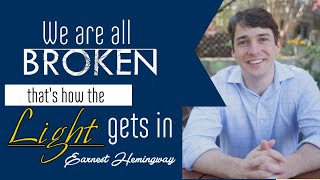
Interview (YouTube) in which Amber Hollingsworth talks with David about his personal history of substance use and recovery. David describes early use beginning around age 13, progression from alcohol/weed to cocaine and prescription opioids (OxyContin), mounting unmanageability (crime, isolation, withdrawal), and eventual treatment including a ~60-day horse-ranch program and extended sober living (~5–6 months) leading to long-term recovery and work in recovery services.
Chapters
So David, you look like the most conservative, well mannered, like, put together young guy that you could possibly come across. And then you come here, you tell me like you're a drug addict. It's really. Even though I hear you say that, it's like. And even though I know what that means, it's like really hard to picture that. So how in the world did you get involved in that illness?
It started at a pretty early age when I first, around 13, when I first drank or had drugs, I found out that it made me a different person. I went from being a very reserved, shy guy at parties or in school even. And when I drank for the first time or smoked weed for the first time, that went away. I wasn't that shy person anymore. And I could be the guy dancing on top of the table in the middle of a party. So at an early age, I had this sense that I needed, I wanted that to become this person I thought in my mind I needed to be.
Okay, what kind of family did you come from? Like, what's your family background?
Really good. I came from a very reserved Christian, grew up in a Presbyterian church family. They took me multiple times a week. They were very involved, I'd say. I didn't go through any like traumatic events growing up. I mean, I had everything that I needed and more. I was given a lot of things too. And I was also shown a work ethic at a young age where if I did want like the new Nintendo that was coming out, I had to go to my dad's store and work for that. And I started working for him at age 12 when it was. I'd sweep the floors, mop the floors, help with inventory, stuff like that to earn those extra things that I wanted. But no blowups. Like, even as a kid, I can't remember my family ever. My mom and dad never raised their voice in front of me. Like, I'm sure that they had their, their issues, but they would do that behind closed doors. Like, we never saw that as kids.
So it was like you came from a really good family, definitely. So even though you came from a good family, you still just struggled a little bit with being sort of shy, maybe a little socially anxious.
Yeah, I would say anxiety. And that's something that my mom definitely has. She comes off, she's very shy, anxious person. So I think that was kind of passed down to me. And I have a little bit more of my dad's personality. I'm a little more outgoing than my mom is, but I'd say that anxiety Carried over and it didn't sit right with me. And I found drugs and alcohol that would mask that a little bit. I didn't have to worry about that feeling anymore. That tingling or fixed it. It fixed it.
Missing piece. Like you hear in so many stories.
Yeah.
So were you one of these people that, like, when you used the first time, it was just like that, was it? Or did it take a while to develop? Like, how did that progress?
I'd say, I'm not gonna sit here and tell you. I loved the taste of alcohol right when I had it. That wasn't the case for me. I didn't necessarily love it, but I loved how it suppressed my emotions. It was like putting a suppressor on my anxiety and my fears. And it allowed me to be like, Super Dave. That's who I wanted. I wanted to be Super Dave. And that was it for me.
So it fixed. It fixed something that you wanted to fix?
Yes.
When do you think it became problematic? Like, when did things start to get out of control?
I mean, pretty early on, I'd say. By the time I was in ninth grade, I had graduated from alcohol and weed to cocaine. I was prescribed Adderall. I was crushing the pills up. And I can remember snorting my Adderall, like in algebra class, like at school. Right. The teacher would have her back to me facing the board, and I'd be taking a rail off of my algebra book.
Did your parents have any clay or gender at all?
I don't think definitely not. I think they may have caught me once or twice smelling like weed or with my eyes red, but I don't think they didn't know I was abusing Adderall or drinking on weekends.
They probably just thought like, I was a teenager getting in a little trouble, but not nearly. They didn't know anything about the extent of it.
No, not at all. I'd say it really progressed when I got to school, when I got to college, and too apart from of me, thought it was just that was a cool guy to be the guy that does all the drugs, that drinks all the beer. And I can remember my first night getting moved into my apartment at college. People were out mingling in the parking lot of the new apartment complex that everyone was moving into. And I went up to a group of guys and my first question was, where do I find drugs around here? And one of the guys was like, man, I know I like you already, and put his arm around me. And that was like, boom. Instant connection. Feel fitting right in.
So you were really attached in the drugs were. But you were attached to the identity definitely of Super Dave.
Yep.
Mr. Coolbath.
Yes. Okay.
That was important, too.
Yeah, I loved that. And then, you know, later, I didn't make it long in school before it was too problematic. It just. I didn't want to go to class anymore because I'd rather do drugs. I had a big first heartbreak there in college, and I went straight down the rabbit hole with that. To deal with those emotions, I went to what I knew. How did I deal with anxiety and fear and depression. Drugs. Drugs and alcohol. But it really ramped up there. At that point, I went from. Because at that point, I discovered oxycontin. I discovered opiates, and I loved it. I loved downers. I wasn't much of an upper guy, which I think I did that to be cool or to seem cool back.
In high school or Sympathete might do that to be cool, but you didn't like the effects of that as much as the other.
I was much more of a downer guy. So When I found OxyContin, yeah. It took one time, and I loved it. It wasn't like alcohol. It wasn't like.
So it was kind of a love at first sight.
Yeah. And weed kind of was, too. But oxycontin, much more so. Absolutely loved it the first time I did it. And it was an escape for me. It was my anxiety, my fears went out the window, and I could just relax. I could sleep, I could. You know, I didn't have to worry about anything.
Those oxycontins are awfully expensive, though, aren't they?
They are.
That's what usually leads to the gym rise. How did that go for you?
So I went. I actually saw the spike of the pill when I was going through my stuff. I could get them when I first started, around 30 or 40 bucks a pill for an 80 milligram. And that would last me a while. But by the end of it, they were $80amilligram. So it was $80 for an 80 milligram pill. And I needed like four or five of them a day. So I had to dive into that lifestyle completely to be able to afford it. That's an expensive habit.
So this is kind of when you went from just trying to be, like, super D into, like, now your life revolves around, like, obtaining this drug. Like, I have to.
This is survival mode. Right. At this point in my life, it's.
Gone from being cool to survive. Yep.
It's not cool anymore. It's like I have to have this to be okay. And I had my parents convinced that like they thought it was weed. And I just told them I needed weed. But when I got pulled from college, obviously it came out that the problem was much bigger than drinking marijuana. So they started asking me questions and it came. I got honest with them and told them it was pills and I had to. I tried several different methods. I tried the methadone clinic, Suboxone. That wasn't helpful for me. In fact, I just kind of dove deeper into it.
How did that work out for you? So those are things that a lot of people, painkills, traps, Suboxone, methadone, all that kind of stuff. Why didn't I work?
It got me high. I mean, it was something else I could abuse. And once I figured out that, oh, I can get high off of this, then it goes back into an abusive relationship with that same cycle as you were. Okay.
And had you talked to parents, were you buying methadone Subaru off the street or were you going to like methadone or Suboxone clinic?
I was going. I come from a really small town, so I was going to a family doctor who was prescribing methadone to me.
And did your family know that's what you were doing? So they were trying to support you, they thought this was the best way to help you?
Yes, but what they didn't know is that then I was buying extra methadone off the streets and increasing my habit and my intake of the drug. So that went on for a while.
I mean, at some point, keeping up, especially a painful addiction, it just is so expensive. It consumes all of your time. It is a full time job. And so you can't eventually you stop being able to manage life and manage that at the time same. So when did that start happening for you? When did life get unmanageable and what did unmanageability look like for you?
I'd say it was a couple of years into using opiates and just being submersed in the lifestyle of selling drugs in order to buy my drugs. I was living in a world that breeds anxiety, it breeds depression, it breeds fear. From getting mugged to, I mean, being on the cops radar, getting caught by the Georgia Bureau of Investigation, you know, it just instilled a lot of fear in me and it turned me into this recluse to this guy who was scared of the world and not just situational. I think the drugs played a big part in my, what was going on in my brain as well. But, I mean, I was. For a year. I became this person who was scared to leave his apartment, who was scared to drive. I completely shut everyone out of my life. There was even a period of time where I wouldn't even look at my mom. I didn't even want to look her in the eyes. I don't know if I was ashamed of myself. I'm sure that had a part to do with it, but mostly just scared. Scared of judgment and not being good enough and being alone. I remember a time where she would have to, like, go get food for me and drop it off. And there were some days where I couldn't even open the door for her. She'd have to, like, leave it at the doorstep. And I'd look out of my blinds and wait till she left. And then as soon as she did, I would go get the food and eat. I was just that scared.
So it kind of is this combination of, you're already sort of a naturally anxious person. That's kind of why the problem developed in the beginning. But now you've got already this natural anxiety, and then you've probably got a little paranoia layered on top because of the effect of the drugs themselves. And that all combines with the fact that you've been living this super sketchy lifestyle where, like, the real bad stuff happens. And so now it's not just some social anxiety. It's real, like, crippling fear.
Yeah. If you look at the gram, at the whole. The big picture, I mean, I went from taking these drugs to be Super Dave. And then I was taking these drugs, and I was the opposite of Super Dave. I was a broken individual, but needed that to survive. Because what happens if I don't get my fix? I get sick. And that's not fun. Nobody wants to go there. Yeah, opiate withdrawals won't kill you, but you will feel like you're dying.
So a lot of times I hear people. You know, the thing about people addicted to opiates is that they usually, like, steal stuff or they do bad stuff to get the drug. And that part of what creates, like, the really bad rap, this particular drug, because they're so expensive. And I hear people say, like, I would never steal from my grandmother. Like, I can't believe this person did this. I would never do this. I would never do that. What do you say about that?
I mean, in my personal experience.
I.
Was the opposite of what you just mentioned. I was the guy who didn't really want to steal from his friends, but I would steal from my mom. And dad, all day, I developed this mentality of what's yours is mine. Like, you brought me into this world. And to the point I remember popping a diamond out of my mom's ring to palm.
You owe it to me almost.
Yeah, almost. In a very entitled mindset, selfish mindset to get my fix.
Is that because you're. Were you sort of naturally like an entitled, selfish person? Where does that come from?
I don't think so. I mean, I feel like I was raised to know that you work for what you want, but when it comes down to not having your fix, not having your drug, it's, like I said, survival mode. It's like a life or death situation to me in that moment where.
I.
Was willing to do anything. I mean, don't get me wrong, I would steal from my friends. I was the guy that would steal your drugs and then help you look for them and make you think you dropped them under the couch or something. And I already smoked it. But I would definitely turn to, like, theft in those situations.
So for family members who are watching this, what is withdrawal like? So when people say I had to use so I wouldn't get sick, what does that mean? What. Can you help us understand that?
Oh, man. It's hard to explain. I mean, it is. It literally feels like death. It's coming upon you. Like, you. The first time I went through withdrawals, I didn't know what was happening to me, and I just thought I was dying. Cold sweats, nauseous all the time. And just the mental part of it, too. I was like an anxious, depressed wreck at the same time. And the first time I went through withdrawals, I remember spending, like, two days on the bathroom floor. Wouldn't leave. My mom would, like, sit there with me putting wet cloths on my head. It was just miserable.
And at that point, you knew you were on the trial?
Yes. By that time, like, once I'd been there for, like, a day, I knew that drugs had caused this.
Okay. And you were trying. You were trying to get yourself clean?
Yeah. Well, that was like with the clinics when I went through that period of my life.
So it took some trial and error.
Yes.
What are all the things you tried that didn't work?
I tried methadone, Suboxone, and, like, I tried the church thing. Getting back, that was important to my mom to just, let's get you back involved in church. And I tried that. I tried it on my own. Of course that didn't work. None of those things did. It wasn't until I, like, Got away from my friends on playground.
Did you ever try a common thing is like, okay, I have a problem with this drug, and so if I just stop that it'll be okay that I can still do this. Did you ever do that?
Oh, yeah, Yeah. I tried mixing, making my own cocktails and drugs and, you know, it still turned into like, I was messed up on something every day. Maybe it wasn't. I got to a point where I didn't need opiates every day, but it was either weed or even acid or mushrooms. Like, anything that would alter my state of mind that could get me away from the anxiety and depression, I would do it.
So it was just something all the time?
Yes.
Okay, so how did you. How did. Did you go to treatment? Did you just go to a. How did you get better?
Yeah, so I'd say my. To go back a little bit, to my breaking point was when my dad passed away in 2012, and I started to spiral downhill fast. Whenever that happened, I went back to using opiates, methadone, whatever I could get my hands on, and even somewhat suicidal at that time. And I ran. And when I say I ran, that means I was using heavily. For about two months after he passed away, I was suicidal one night and I was like, I'm either going to try to kill myself or I'm going to get help. And luckily, the way I was going to try to commit suicide didn't work out. And my other option, for some reason in my head at the time and my addiction, whatever was going on at that time, I knew I was messed up. I was drunk and high at the time, but I gave myself the option of like, okay, well, let's try to commit suicide. If it doesn't work out, you're gonna ask for help. And it didn't work out. So I went to my mom crying that night, and I was like, look, I've gotta have help, but I can't do it here. I've got to go away. I've got to be around new people. And luckily, two days later, my sister had found. My mom told my sisters about it, and she had found a place that seemed like a good fit for me. It was a place that was gonna keep me active, get me out of my head. And it was a horse ranch treatment where I was there for around 60 days.
And so at that point, you were just. You hit a bottom and you were just willing to get a treatment.
You were ready in that moment? I was ready. But once I got the treatment, I mean, I spent One day there, and I was fighting it immediately. I was calling my mom, saying, come get me. If you don't come get me, I'll kill myself. Like, you better come right now, or I will end my life just throwing threats around left and right. And the one thing she had, the best card she played was like, will you please do this for me? I just lost your dad, and I don't want to lose you too. And that stuck with me for a little bit. While it would keep me there for another two days, it was kind of her ace card. Yep. That was the ace in the hole. And it'd keep me there for, like, another two days. And then I'd call again, and I'd say, seriously, now, I've had enough. If you don't kill. If you don't come get me, I'm gonna kill myself. And I'd even come up with plans. Like, I'd been thinking about this of, like, I was at a horse ranch, and I was gonna hang myself from the rafters in the barn.
Were you really making a plan on killing yourself, or were you trying to, like, emotionally hurry your mom or both?
It was emotionally blackmail my mom.
So you never really thought that you were gonna do that?
It was definitely a thought. Not one that I wanted to act on, but it was mostly to get my way. And my plan was like, as soon as she comes and gets me, I'm gonna get back home, and I'm gonna go get some morphine or whatever I can get my hands on. So I was definitely majority blackmail.
So how long did this whole, like, begging to come home base go?
At least a few weeks. Probably the first three weeks that I was there. And I would beg to talk to my mom. They didn't want to let me talk to her. A lot of treatment centers don't let that happen.
Do they listen in? Like, they knew what you were doing when you talked to her?
Yeah, they would, like, sit in the next room.
Okay.
But they would let me talk to her, and I'd beg and beg and beg, and she'd play that card of like, please do this for me. Like, I just lost your dad. I don't want to lose you. Let's get you better. It's going to be hard. You've got to fight through it to make me stay. And eventually, after a couple of weeks, two or three weeks, I was like, okay, I'm going to stop pressing her. I'm going to finish this. But as soon as I get done, I'm going to go back home.
So it's kind of like, okay, fine, I'll do this. This is it.
Yeah. I finally was, just gave in. I was like, okay, I'll do it, but this is it. And then I'm coming back home.
Okay.
But then when it got time to leave, that wasn't the case. She was like, I.
How long were you. This is the horse ranch treatment, right?
Yeah.
So how long were you, how long was that program?
About 60 days. I was there. Yeah. And when it came time to leave there, she had a different plan. My mom said, look, I want you to go to an extended care sober living. And I just put my foot back down. I was like, no, I'm not doing it, that's not going to happen. And we went back and forth for a few days and she played like, come on, please do this for me. Do it for your dad. He would want to see you getting better. And I was like, okay, fine, I'll do it, but I get to pick the place. And I literally, I got on Google at treatment and I googled snowboarding and halfway house because I was like, if I'm gonna do this, I'm gonna have fun. I'm gonna do something I want to do. And I found a place in Asheville. So I was like, alright, found one. This is it, we'll go, you need to call them. And she called him and the guy called me and talked to me and made me feel really good about coming. He was like, look, I think you're gonna love it here. You're gonna get here. These guys are gonna love you up and down. They're gonna give you hugs, you'll have a community. And I went with it.
Was it like that when you got here?
It was not. I mean, I told him, I was like, look, man, I'm really anxious. I don't want to see a lot of people right when I get there. So they kind of made special plans for me. When I got there, everyone was at dinner where I could kind of like see the place, get a feel for where I'd be sleeping. It was perfect the way they set it up for me.
But not be bombarded.
Exactly. Yeah. And not have all of these people trying to talk to me or give me hugs. I wasn't much into that, but then it was, I mean it was that community of like these guys cared about you and they picked you up when you were down and you helped pick them up when they were down. It turned into that. And I'd say it wasn't until maybe a month into that extended care or that recovery residence that I decided for myself that I wanted to be sober.
What do you think? Was it. What made you turn that far?
I think a lot of it was seeing progress that I had made. My anxiety, my fear, it had gone down over this long period of time without drugs and alcohol. Like, naturally, my body started to go back to its norm.
You felt better?
I felt better. I could sit in one place for longer. I wasn't just a fidgety, anxious mess. And I could feel that. I could also feel the love, the community that was there. And I could see other guys my age doing the same thing that I was trying to do and wanted the same thing. They wanted to change their life. And that wore off on me. And then I got to this point where I just thought, well, if I'm actually feeling better, why wouldn't I continue this? And that was like the big click for me, the big turning point, which isn't that hard of a thing to realize or notice. But when your head's that foggy from drugs and alcohol, it's hard to.
It's hard to believe that you will feel better, because when you're stuck in it, it's like the drugs, the alcohol is the only thing that makes you feel better. And when you don't have them, you feel so horrible. And so when people tell you, like, you'll feel better, you really don't believe them. Yeah.
Do you think that's impossible?
Do you think. Was there any part of it that was like, you know, when you were younger? Part of it was it alleviated the anxiety, and the other part of it was wanting to be super daid. So once you're in a different context and you're around all these other young guys, what it takes to be super dai changes on you. Right. So is there any, like. It's like peer pressure in a positive way, wanting to fit in? Did that play any into your recovery at all?
Yes, definitely. I mean, I didn't want to get a sponsor, but that's what everyone else is doing. I thought that that was weird to go. I mean, it was like I was asking another man out on a date is to go, say, hey, will you take me through the steps? That was tough. But when you see all these other young guys doing it and getting positive results back from that, of course you want to go try that too. That peer pressure just draws you in.
So at that point, that's what you needed to do. You kind of figured you need to do that to fit in and do what you're supposed to do.
And I wanted to be that person. I wanted to change from the old lifestyle and be the guy that does. Right. I mean, I made it a point to like cover all of my bases. When I was living in that summer living, it was to make sure my bed was made, my chore was done. Even if other guys didn't do it, I wanted to be the guy that was like above and beyond.
So you still had this I want to be Super Dave. Yes, but the definition of what that meant changed.
Changed completely.
Because you're very much a I want to do the right kind of thing guy. Like who you are as a person is definitely that.
I think another big thing is looking back at the past. Drugs and alcohol gave me an excuse. Like if people would say, oh, why did you do that last night? That was so messed up. I could say, oh, that wasn't really me. I was messed up. I'd been drinking all day. I hadn't smoked weed last night. Come on, dude.
So you didn't have to, you didn't have to be responsible for the behavior you had.
Exactly.
How long were you in extended care?
I was in extended care for around five and a half to six months. And then I moved from there to a three quarter house for another month, month and a half before I moved out.
What happened to you after that?
After that I found a house that I wanted to rent and I was very nervous moving out of a sober living. Obviously I wanted to live with other sober people, but how do you, what do you do in case, if someone else relapses, is that gonna bring me down? So what I did was I rented a house where I was the only one on the lease and I created my own contract that guys had to sign to live with me. That basically went over like, if you refuse, if I think you're using, you have to take a drug test. If you refuse to take the drug test, it counts as a positive.
So this is like your first ever makeshift recovery house here.
Exactly. That's where it started.
I didn't think you were doing that, but you kind of were.
Yeah.
Okay, that's cool.
Yeah. So I had my own little contract there and it kept the house safe. I mean, if, if guys did use, if they did have a dirty positive drug screen, then they had 24 hours to get their stuff out.
Did you have to enforce that?
I did.
Once, twice? A bunch of times.
A few times.
A few times. Was it hard?
It was at first, but then it got old and it got To a point where it's just like, okay, well, this is my house that you're in. You're jeopardizing other people's recovery in it. You need to go get help. Like, we need to get you somewhere. And even in that case, I would often, like, try to get them back into a treatment facility.
Okay, so how did you get into the field? How did you make that transition?
As I was going through sober living or extended care, I knew that that's what I wanted to do. Like, I'd had lots of people carry me and help me through that, and I wanted to give that back in a way. So immediately I started asking around for recovery jobs. Where I was in North Carolina and the place where I went, they were like, yeah, you could drive for us if you want to pick guys up from the airport and help take guys to meetings and stuff. So I started there and just having recovery talk in the car and loved it. And then I started to work for a treatment center, but I was managing their Transitions program, their extended care, those treatment centers, working with young guys there and managing that program. I just knew. I knew that that's.
It was like my calling just felt right.
It felt right.
And that's when you decided to start your own?
Officially, yes. So the one I was working for, they actually changed their program and went from. They went more to. It was more of a treatment almost than a sober living, where it was very intense. Iop, they didn't get much real world experience. So I went to the CEO and I was like, well, look, I really like Transitions and bringing the real world into this. I think it's really important, and it was important to me. So if it's okay with you, I'd like to take your program and go somewhere else with it. He gave me the thumbs up. So that's when I broke away from the corporation and started my own thing.
When you were in your own personal sort of recovery journey, what was the hardest moment? Can you think back? Was there a moment or a day or a time that you can think of that was like, the most difficult.
Time, like, even in recovery?
Yeah, like, in the first place, six months?
I don't know. I'd say. I think for me, it was a little longer than that. I was riding a cloud for a while. I mean, well, at the very start of. It was very hard when I was sending out suicidal threats to my mom to come get me. But then once I calmed down, I'd say it wasn't until around, like, nine months where I started to struggle again. And for some reason, I was like, do I really want to do this? Should I go back out? Should I go try to score something tonight? But I was almost brainwashed to an extent. I'd been to so many meetings, and I'd heard so many people say, just pick up a phone call me or my sponsor told me that over and over. And that night, I remember just having a really bad night and wanting to go get some beer. Just some beer to take the edge off. And I was like, well, it's just alcohol. It's not like I'm getting back into drugs. But I called him instead, and he said, stay right where you are. I'm coming to get you. And, like, we rode around for a while, and that was, like, a big moment for me that night. And it was around nine months. And then another time where I struggled was a little bit after that. Around that 10 months, I started dating a girl. And then that first breakup was rough. And she was also sober. So, like, I didn't want to go to meetings that she may be going to. It made it difficult. I didn't want to go to meetings that she may be going to because I didn't want to see. Because it hurt. I didn't even want to. I wanted to run from that.
So it kind of takes your safe place and contaminates it a little bit.
It did, yeah. And I'm not saying that it's like you should have never date someone else that's in recovery if you're in recovery, because there are a lot of pros to it as well, but that is.
Something you have to consider.
Yep. You definitely need to think about that, because it made it tough for me.
What's been. Do you have any moments that have been the really great moments, really good moments since you got sober?
Definitely. I mean, things continue to happen over and over again. I mean, one is starting my own. This sober living, this extended care or recovery residence. I just threw out three different terms there. But, you know, starting that was great for me. I just got a fiance, and that. That's great. You know, these things wouldn't happen if I weren't sober. I just had a guy graduate from our program with a year. He picked up a year in the house. That's incredible. Like, those are great moments in my life that I won't ever forget for being sober.
What's your best piece of advice for any young person stranded?
To give in, to ask for help. Don't be ashamed, because if you can put the energy that you put into drinking and drugging towards getting sober and bettering your life. I mean, it'll be incredible. It'll be an epic journey.
What's the best piece of advice that you have for any family member of someone struggling?
You know, I haven't been on the other side of it. I've heard from my mom what it's like. I. I know it's tough, but, you know, to hold hard boundaries, don't continue to enable. And that can be extremely hard at times. As hard as, like, not going to pick up your loved one if they're saying they're going to kill themselves if you don't. But just hold boundaries and get them the help that they I.
Sa. Sam.
More from Amber








Addiction Turns “Me vs. Drinking” Into “Me vs. You” #addictionrecovery #addictionawareness

They Admit Everything Except the Addiction #addictionrecovery #addictionawareness

Stop Trying to Make Them Admit the Truth #addictionrecovery #addictionawareness