"Am I Part of the Problem? 😔💔" 5 Signs You Could Be Enabling Addiction
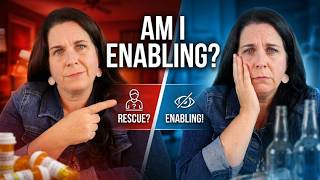
Amber Hollingsworth identifies five signs you're enabling someone's addiction: you feel obligated rather than willing to help, you resent them, others resent you for helping, you're shielding them from consequences, or helping leaves you feeling drained instead of good.
Chapters
Enabling is about a lot more than just whether or not you're paying someone's bills or letting them live under your roof or loaning them money. Yes, those are all examples of enabling, but it's a lot deeper than that. I want to go over in this video for you the five major signs that you're enabling someone. And as we go through these five signs, I want you to think to yourself, how many of these signs do I have? How bad is my enabling? Or do I not have any of these signs? Or maybe you don't have any of these signs. I'm just guessing if you clicked on the video, you're concerned about it. So let's talk about how you would know if you're falling into the enabling trap. For those of you who are new here, welcome to Put the Shovel Down. My name is Amber Hollingsworth, and this YouTube channel is all about helping you understand the science and psychology of addiction. Our goal here is to make sure that you're always five steps ahead of addiction so it doesn't ruin your life or your family. If you are new here, introduce yourself down in the comments. We're glad you're here. Welcome to our little community. Alright, so let's talk about those five signs that you're enabling first and foremost. And this is maybe the most important one, because this is why really isn't the great thing to do. Okay? If you know that your loved one has an addiction issue, that's pretty progressed, right? And you're wondering why they're in denial, why they don't seem to care, why they're not taking any steps. I want you to ask yourself, are they too comfortable? Are you doing things that are shielding them from the natural consequences of their behavior? Now, hopefully some of you have heard me talk about this before. The difference in natural consequences versus punishment. Punishment is a consequence that comes from you because you're upset with someone's behavior. Natural consequences are just things that naturally happen in the universe based on their behavior. Like, for example, if they're not showing up to work or they're not doing well at work, they might get fired from their job, which then might result in not being able to pay their bills, and so on and so forth. So natural consequence versus punishment. Are you shielding someone from their natural consequences to the point that is making them think, everything fine? I don't even have a problem? What are you even talking about? A lot of you who watch this channel, you guys know that I'm about using positive reinforcement. I'm about using your relationship as a way to help build trust and credibility with your addicted loved one. Which is the most effective way to get someone to take a look inside and admit to themselves what's really going on. Now, a lot of you have gotten kind of good at that. I'm really pretty impressed you guys have gotten really good at that. And I know this because I have lots of phone consults with you guys. And you guys are telling me you're resisting the urge to yell, you're not nagging, you're not threatening, and the trust is coming back. But some of you that are really good on that end are not necessarily great on the not enabling part or the not letting the natural consequences happen part. I think this is particularly hard if you're a parent of a young adult who has an addiction issue and they're living in your house. Now, my practice, Hope for Families, we don't tell you necessarily that you have to kick someone out. But if you have a young adult who's living in your house who doesn't seem to be making any progress towards change, maybe they're not even working, they hardly come out of their room. If you ask them to do something, they're like totally disrespectful about it. Act like you're being completely unreasonable. Those are signs that you're probably enabling. And yes, maybe you're doing a good job of trying to support them, of trying to be supportive and kind and build a relationship. But it's really those two things, the consequences in the relationship, when that comes together, that's the magic formula. That's where you want to get if you're dealing with someone in denial or someone who maybe is just stuck in their stages of change and they're just not making any progress. Okay, let's look at number two big sign that you could be enabling. The second big sign is that you feel resentful towards this person. That's right. When you feel resentful, it's probably because you're over functioning in some kind of way. I did a boundaries video recently where we talked some about this, but it's like you're doing more than they are doing. That's a real good indicator of enabling. You feel like you're taking 90 steps and they're taking two steps, or you're taking 100 steps and they're taking no steps. And eventually that leads you to a point of resentment and contempt and you're building up bad feelings and maybe you being even a little passive aggressive because of it. But even though you feel that Way you keep continuing to fix the consequences, you're fixing the messes that they're making. The thing of it is, if they don't feel the weight of those messes, why would they even think that they have a problem? Why would there even need to be any change? So if you're feeling resentful, it's a really good sign that you need to step back. Now the next sign that you're probably enabling someone is that they feel resentful toward you. Now you may think that's crazy. You're like, how they gonna feel resentful toward me? I'm the one paying the bills, I'm the one taking care of the kids, I'm the one doing all the things right. But the thing of it is, is deep down inside, when we're under functioning and we're not taking care of our responsibilities and we're not living up to what we know we should be living up to, and we're not helping the way we know we should help. We feel bad about ourselves. And what we do is we project that feeling bad shame thing onto you because it's you that makes us feel bad, because it's you that's over functioning and probably indirect and maybe not so direct ways reminding us of that. Right? And so the person begins to see you as this outward projection of what makes them feel shameful, and they start to associate you with feeling bad about themselves, even if that's not what you're trying to do. And so by this point, you've gotten into a situation where you feel bad about them and they feel bad about you, and you can feel that uncomfortable tension in the relationship. These are giant signs of enabling. But let me throw a little caveat in there. If you cut off enabling completely, they'll also likely feel resentful towards you. So with this third example of they resent you, you got to ask yourself, why do they resent you? Right. If you're completely not enabling at all and you're not giving in to their demands, especially when you used to do that, you're probably going to get some resentment too. So it might that one's not a sign of enabling, but definitely can be number four sign of enabling. I think after I say this one, you're gonna catch on to a theme here. The number four sign of enabling is that other people in your life, other family members, friends, your children, other people in your life have resentments toward you because they feel like you're over functioning for someone else. So they may feel like you're always worried about that. It's all you ever talk about, all you ever do. You work so hard, you give all your money to them, there's no room left for anyone else. So the around you begin to get frustrated and resentful for you because you're so out of balance now. You're not taking care of yourself because you're over functioning to take care of this other person. And that means all your other relationships are going to suffer. You see this a lot again, where you have a child that's addicted. When I say child, I don't mean like age wise child. I just mean they're your child, they're your son or daughter. You're married and your kid has a step parent. Like maybe you're remarried. Like if you're remarried and the person you're with isn't the natural parent of your kid, they're gonna see it faster than anyone. This whole step parent thing. They're watching you and the kid back and forth, have this sort of enabling, resentful relationship. And they're gonna start to get more and more and more frustrated with you because they're gonna feel like you're being blind to the situation, you're being taken advantage of. And they kind of have these mixed feelings of they want to take up for you and kind of have your back and they want to be mad at this other person. But at the same time they're also frustrated with you because they know that you're playing into it. And then you hit this complicated dyn. They're mad where the step parent is mad at the kid and then the kids mad at you. You're mad at the kid, but you're also mad at your spouse for pushing your kid away, right? Because you feel like maybe they're being too tough. And you might find that you actually get resentful of other people who won't jump on the enabling train. This web really starts to spread out here. Now this next one is slightly different. If you find that you are doing things for someone else that you don't want to do, but you feel like you have to for some reason, that's a big sign that you're enabling. It's either coming from fear, it's coming from guilt some place inside of you that feels like you have to step up more than you want to. Now, most of us are fine to step up and over function for a little while when someone needs us to, or when someone needs to take step back or they're sick or have an emergency or whatever. We're totally fine doing that, and we're cool with that. We feel good about it. But when we have to do that over and over and over again, and we feel like, if. If I don't do it, then something really bad is going to happen, that's a big sign. You're enabling. A lot of times I see people in this enabling situation because the addicted person has literally burned every single bridge. No one else will talk to them. No one else will help them. And you feel like you're like the last line of defense. And now you really feel on the hook because you're like, if I don't do it, no one else is going to do it. And then what's going to happen? But just think of it this way. What if you don't do it, no one else is going to do it. And then the person can feel. Feel the weight of what's going on. Now, I say on this channel all the time, you do not have to hit bottom to get better. In fact, I think that's dangerous and unnecessary because hitting bottom is pretty much death. Most people who get better from addiction hit a lot of bottoms, per se. They have a lot of bad moments. They have a lot of consequences along the way until they finally figure out, okay, like, it's the substance here. I need to do something about it, or it's the addiction here, I need to do something about it. But even though you don't have to hit bottom, the scale has to tip, okay? It has to be getting more uncomfortable than comfortable, right? The. The cons have to start outweighing the pros. And if you're preventing that scale from tipping in that way, you got a big problem. I'm gonna leave you with this last statement. You can sum up everything that I just said into this last statement if you want to. It's a great rule of thumb, okay? If you are helping someone, you walk away with a good feeling in your heart. Because as human beings, we get, like, all kinds of serotonin and oxytocin and all kind of good feelings when we help people. Because we're social creatures and we're made to look out for each other. We feel proud of ourselves, and we feel good about helping this other person when you're helping, but you're leaving with a bad feeling. Now you are not helping. Now you are enabling. And that is how you tell the difference. Helping equals good feeling, and enabling equals bad feeling. Now, for those of you who are really paying attention and you're ready to address this, I'M going to link our playlist on enabling right up here so you can dig even further into this topic.
More from Amber








Addiction Turns “Me vs. Drinking” Into “Me vs. You” #addictionrecovery #addictionawareness

They Admit Everything Except the Addiction #addictionrecovery #addictionawareness

Stop Trying to Make Them Admit the Truth #addictionrecovery #addictionawareness