Are You Trauma Bonded to Your Addicted Loved One?
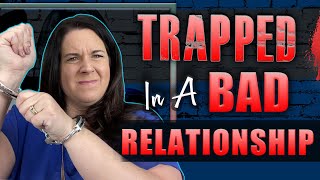
YouTube video (Amber Hollingsworth) explaining why people have difficulty leaving relationships with addicts by describing how relationships can become 'addictive' through intermittent positive reinforcement (trauma bonding), ego/bruised pride, and withdrawal-like symptoms when the relationship ends. The presenter offers practical advice: recognize the trauma-bond dynamics, stabilize your own emotional state (get off the emotional roller coaster), and choose healthier boundaries whether you stay or leave.
Chapters
This is why you can't just let go of the addict or alcoholic in your life. You know, it's toxic. You know, it's not working for you anymore, yet you still keep getting pulled back in over and over again. Well, in this video, I'm going to explain to you why that is, and I'm going to give you some helpful advice about what to do about it. For those of you who are new here, welcome to Put the Shovel down, the YouTube channel designed specifically to help you understand the science and psychology of addiction so that you can get your life and your family back on track. It's my goal to make sure you are always five steps ahead of addiction. And today's video is going to go a long ways in that direction. Okay, back to our topic. Why you just can't seem to let go of your addicted loved one. Well, you see, the very same thing that makes your loved one addicted to whatever substance or behavior it is that they're addicted to, that very same thing is at play within your relationship. Meaning the relationship between you and your addicted loved one has become addicted. It's an addictive type relationship. Let me explain a little bit more about why that is. You see, any kind of thing that gives us a positive reward can be addictive. But if that positive reward comes inconsistently or unpredictably, then it's even more addictive. And I know you've experienced this inside your relationship. It's like sometimes you're with your loved one and you see that person that you know they used to be, and everything's great, and you get hopeful and you get excited and you feel like finally, you know, we're in sync, things are back on track, or at least we're moving in that direction. And the next thing you know, it's back to those addictive behaviors. And it's hard to know when you're gonna get which version. If you think to yourself really often, like, I just never know what kind of mood they're gonna be in. I just never know what's gonna happen. That is a really good example of how the unpredictability and the sometimes positive reinforcing behavior is keeping you stuck in that addicted cycle. Let me give you another kind of silly example, but I think it's going to illustrate what I mean. Okay, to give you this example, I gotta give you a little confession here. So back last year at the beginning of COVID and the shutdown, I found myself, I got a little bit addicted to a Nintendo game called Animal Crossing. I know you're laughing at me. It's really weird because I don't even play games, let alone video games, and I don't really even know why I started playing it. But my son, he had a Nintendo Switch. I said, I heard this new game came out. I think you might like it. And then he got it, and then I started playing. And next thing you know, I'm, like, obsessively playing this game. I mean, obsessively. I mean, like, sneaking up early in the morning or late at night to play the game. Couldn't focus on anything else. It is crazy how it just took over my brain. I have no idea why, but one of the things inside of that game was the game is basically, you build a little island, and you create everything. It's kind of fun. But while you're on your little island and your little character's building your island, these balloons float across the sky, and they have a little present attached to them, and you have, like, a slingshot, and you can hit the balloon, and the present drops down. Well, a lot of times those presents will drop down, and there's, like, nothing important in them. And you're like, aww, or something you already had. But sometimes the presents drop down. They give you, like, a lot of money or something really cool that you really wanted. And so anytime I would see one of those balloons go across the sky, I would have to stop what I was doing, and I would, like, have to get that balloon, like, obsessively run after, have to get it. Just couldn't stand it. And then most of the time, the little present would drop and be like, oh, I already have that, or I don't even want it. It was so bad that even when I would watch my son or my husband play and they would be letting a balloon go by, I'd be like, what are you doing? You have to get that balloon. I would, like, literally grab the remote out of their hand and get the balloon, because I couldn't stand it. That is a perfect example of the inconsistent reinforcement that is what makes it so addictive. Now think about how that relates to the relationship you're in with your addicted loved one. You have had that experience where sometimes they're great, Sometimes you see their wonderful qualities, Sometimes you hit that jackpot and it pays off. Other times it doesn't, and probably more often than not, it doesn't work. So the not working and the not positive reinforcement is most of the time. But those little times, that can be rewarding. Those good memories, those good moments, those are very Very reinforcing. And it feels like in your head, it's such a relief and it's such a hard thing to forget that you keep going back, trying to make it work until telling you this is an absolute parallel process to what your loved one is going through. Think about how many times you've told yourself you're not going to do a certain behavior when it comes to your loved one. How many times you told yourself you're going to back away and just leave it alone. And you haven't. That's the same thing that they struggle with. In fact, there's an actual term for this kind of bonded, connected relationship. This is called a trauma bond. And initially this term was used to mean, like, when you go through something really traumatic with someone, you're sort of bonded together. I don't know if you've ever went through something really hard in your life, but maybe you and a friend or you and a sibling or you and someone else went through it together, and it's like y' all have this bond that no one else has, and you're just kind of really tight because you had that experience together. Well, a trauma bond can happen in one of these erratic, unpredictable type of relationships, too. And that's what makes that bond, and even way more stronger than a regular relationship bond. It's the inconsistency of it that makes it so addictive. Now, another thing that plays into why is it so hard to walk away from a relationship with your addicted loved one is your ego. And I know this may sound crazy, but your ego plays into it a lot. If this is a romantic relationship, a spouse, a partner, a boyfriend or girlfriend, then. Then even if you don't want to be in the relationship with them, it's really hard when they don't reciprocate back those positive feelings towards you. It's kind of like if you go on a date with someone and maybe the date wasn't even that good, and you're thinking to yourself, man, I don't even know if I want to go out with them again. But then they ghost you. You're all like, what? You're just, like, upset. You can't believe they ghosted you. You're like, what the heck? Even though you didn't even want to be in the relationship, but just the fact that you didn't make that choice, it bruises your ego. And your ego wants that, like, consoling. It wants to feel better, and that can keep you trapped in it. Now, ego can play a part in parent, child relationships. When it comes to addiction as well, because parents tend to feel so much shame or guilt about what's going on with their sibling, and it feels like it says something about them as a person. So ego can be a little piece of what keeps you trapped in these relationships. Well, as well, it's definitely not as big a piece as that first one, the trauma bonding thing, but it's in there. And the third reason, the third piece of why it's so hard to move away from these addicted relationships with your addicted loved one is because you actually go through withdrawal when you lose any relationship. So whether it's the loss of a romantic relationship, the loss of a loved one, you go through this grieving process. Because when you've spent so much time with someone, you become physically chemically dependent on them. Kind of like you become chemically dependent on a drug or alcohol. Your brain starts to release oxytocin in the context of your relationship with that person. And eventually you get used to that oxytocin. And so you have all this tolerance. So you don't even feel that it's there, that connection. It's kind of like if an alcoholic drinks every day, they don't even feel like they're drunk. They don't even feel like they're high or messed up at all. It's because they have so much tolerance for it. Well, you have built up this tolerance, which is hard to even recognize how very connected to this person that you are. Well, when that connection breaks, you suddenly realize it. Kind of like when the alcoholic doesn't drink, they suddenly realize how dependent they were on the alcohol. You literally go into a withdrawal. That heartache, that heartbreak, it is very strong feeling. It has a strong craving and desire to seek that person out. There's a ruminating, like obsessive kind of thought process. You'll make up any kind of reason or excuse to contact that person because it's a desperation to reconnect. Because it is literally a withdrawal process that you're going through. And I think one of the things that's really helpful to remember especially about this withdrawal process is just like I would tell someone who was struggling with a substance abuse addiction, it's a time limited process. It's uncomfortable. I'm not going to deny that. But it will not feel that way forever. And knowing that there is an end in sight and it won't hurt as much as it hurts now. Forever going to help you a lot when it comes to trying to get through that really tough time. It will get better now. You may be thinking to yourself, well, what if you really just don't feel like you can leave that relationship? Or what if there are some logistical reasons why you can't leave that relationship? I mean, sometimes when it's your kid, you can't really leave the relationship. And there are other times, even if it's a spouse, that you're kind of stuck and you can't quite leave even if you want to. Maybe you just really want to make it work. Most of you who watch these videos, you guys know that I have hope that your family can work out. I believe that people get better from addiction, and I encourage people to try to work it out whenever possible. So if that's where you're at, let's talk just a little bit about how to do that more successfully or at least with more sanity intact. Whether you're gonna stay or you're gonna go, you have to get off of the emotional roller coaster with your loved one. You see, the thing of it is, is they're on an emotional roller coaster because everything inside of them depends on whether or not they have the substance. They're fine when they have it, or maybe when they have it, they're more mean because the substance makes them mean or paranoid or whatever. And then other times, you know, if they can't get the substance, there are certain problematic behaviors. And so it's like they're on this roller coaster constantly. And because you're so dependent on them now, your mood is dependent on their mood. So they're chasing a substance and you're chasing them. And around and around we go. Well, even if you're not gonna leave, even if you're gonna stay, I strongly suggest that you get off of the emotional rollercoaster. And I know that that means you can't really control their behavior, but you can control whether or not you fall into every mood they have. You fall into every crisis that they have. You. You have got to find your steady so that you can, number one, help your loved one more effectively and most of all, help yourself more effectively. Now, let me tell you what it's going to feel like when you first start trying to do this. Now, I know a lot of you guys, you've seen Star wars, right? Have you seen the Force Awakens? You know, that's one of the newer ones with Kylo Ren and Rey. You guys remember that scene where Kylo Ren's got Rey, she's like, locked in this, like, locked locking mechanism or whatever where she can't move, and he's trying to make her tell him something, but she's trying not to. And then he just puts his hand up there and he's like, literally, like, mind controlling her. And he's just trying to suck the thoughts out of her head and make her give him her knowledge. That's what it's gonna feel like when you first start trying to steady yourself. You're gonna feel like you're just resisting it and the force is just pulling it out of you. But eventually you going to recognize, just like Rey, that you have the capability to stabilize your energy and stabilize your force. So if you've seen that movie, then you know that right after that part, then Rey sort of figures out that she kind of has some of these powers too. Once you can get control of your own energy, find that force within yourself. You have to stop letting all their emotions control you and. And get control of your own emotions if you want to have any chance whatsoever of surviving this with your sanity and of helping your loved one overcome their addiction. Somebody's got to be sane in this situation. Now, if you want to learn more about that, I want you to watch this video next because it goes into a little bit more detail on how to get your force, get your powers under control.
More from Amber








Addiction Turns “Me vs. Drinking” Into “Me vs. You” #addictionrecovery #addictionawareness

They Admit Everything Except the Addiction #addictionrecovery #addictionawareness

Stop Trying to Make Them Admit the Truth #addictionrecovery #addictionawareness