Disturbing Thoughts Functional Alcoholics Don't Like To Admit
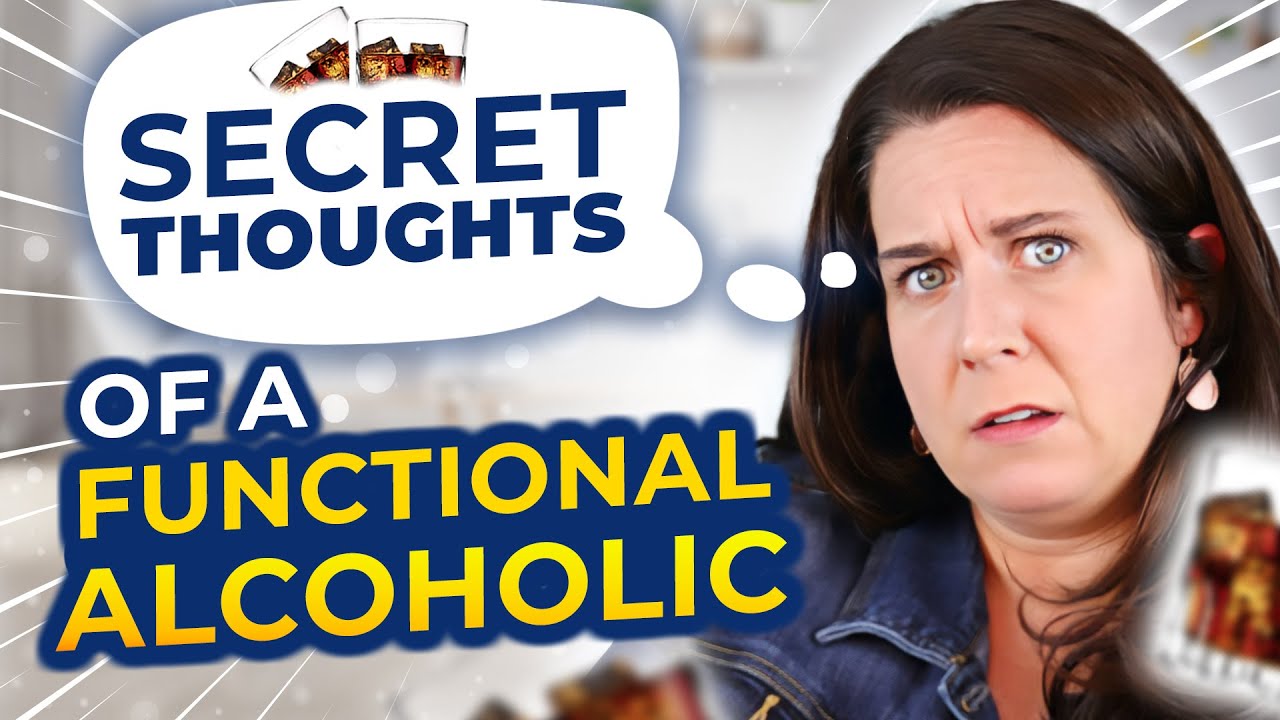
Amber Hollingsworth explains that functional alcoholism isn't a clinical diagnosis but describes people managing external responsibilities while secretly struggling with addiction. The real marker isn't how often someone drinks, but the obsessive internal thoughts: waiting for the next drink, monitoring others, breaking promises, self-justification, blame. These thoughts consume mental energy long before work performance declines.
Chapters
On the outside, everything looks, for the most part, put together. They have this ability to keep some of the things in their life together, but underneath that mask, there is a ton of obsessive, dark, and troubling thoughts going on. And that's what I want to highlight today. I want to shed the light or turn the light on. What really goes on inside the mind of someone who you or they would describe as functionally addicted. But before we do that, and I have a whole bunch of good ones, so definitely you want to stay and listen to all of them. I want to talk about what the term functional alcoholic means. That is not a clinical term at all. In the land of diagnosing alcohol use disorders, there's no such thing as a functional alcoholic. It's not in the DSM, which is what the big book that we use to diagnose. So it's not clinical at all. It's not a real thing, but it is a pretty common term that most people use and have heard, and we all have an understanding about what it means. So although it's not a clinical diagnosis, it is something that we're all familiar with. So let's talk about what it really means. Typically when someone says I'm a functional alcoholic. What that means is, okay, yeah, like I drink too much, but I'm not like a real alcoholic. It's not like that bad. It's not like I have to wake up and drink. It's not like I have, like I can't go without it. That's what the thought process is behind using that term for yourself. Now, when you're using it, that term for someone else, typically you're thinking, The biggest category is you're thinking that they still go to work usually. So the criteria is they still go to work. If it's, let's say it's a stay-at-home mom, the work of that person is to take care of the children and the house. So maybe it means they're still doing that. And for some reason we think that if someone is still going to work or they're taking care of those pieces of their responsibilities to at least a moderate degree, that they can't possibly be addicted. Now I'm going to use the word alcoholic just because it's hard to use addict and alcoholic back and forth, back and forth. But you can switch out the word alcohol for any word you want. You could be a functional addict too of any kind of substance or behavior. But just because someone goes to work, just because someone shows up to the PTA meeting even doesn't mean that they are not alcoholic or addicted. Now, they sometimes will use that term to sort of say, okay, yeah, I drink too much, but they're minimizing the issue when in reality they're just a few steps away from being what they might call like a real alcoholic or a full-fledged addict, like all the way there. And if we could stop trying to say like, I'm either alcoholic or I'm not, I'm addict or I'm not, but we could look at where we're at on the continuum, we'd have something that's more accurate. If you stop thinking about it, it's really just common sense, right? You think the person that's alcoholic met the definition of being alcoholic from the first time they drank? No, there was a lot of stages and phases that went on before they got to that point that most of us recognize as alcoholism. Like I have to drink every day or I get sick if I don't drink. The truth of it is you're alcoholic long before you're alcohol dependent. Most people think if I can stop drinking or using, I must not be addicted. That is incorrect. What that means is I must not be so far into physical dependency that I can't stop, but you have to be addicted for a long time before you're physically dependent because you have to be compulsively, obsessively using, drinking, whatever you're doing so regularly for such a long period of time in a row. That you can't stop doing it without getting very sick. That addiction is there long before physical dependency. So when you're saying to yourself or about someone else that someone is a functional addict or alcoholic, it is still the same. It's still addiction. It's still alcoholism. It's like saying, I always say, it's like saying, well, if I said to you, you had stage 3 cancer, you wouldn't go home and say, I don't really have cancer. It's all cool. You say, oh my gosh, I better do something about this because if I don't, it's going to get to that last ending point. It's the same thing with addiction. So if you're having these thoughts that we're about to have, which are for sure functional addict alcoholic thoughts, then I want you to really let it absorb in that this is addiction. Like this is the real deal thing. You're fully There. And if you don't stop, you will eventually become non-functioning. And when we think of non-functioning, it kind of goes back to what I said before. We typically think of someone that's like stopped going to work, maybe stopped paying their bills, stopped taking care of their responsibilities. For most people, especially if it's alcohol, people will continue to go to work. They are probably like Their performance will go down. They may have more missed days. They may be going through the motions, but they'll still show up to work. Where you typically see the responsibilities fall first is at home. You're going to see it first in relationship dynamics, and then you're going to see it in other practical matter kind of responsibilities. And then you will last see it usually in someone's work performance or ability to parent or something like that, their main responsibility. But they'll hang on to that. Usually a lot longer because that's the thing that people see from the outside more clearly. When you're dealing with a functional actor alcoholic, usually the person that's closest, the person that they live with or that they spend the most time with, that's usually one of the only people that know what's going on. And so what happens is that person, the one that can see it because they see behind the scenes, behind the mask, They, and we've talked about this in other videos a ton, so I won't spend much time on it, but that person that sees it starts to nag, harp, threaten, beg, plead, negotiate, do all this stuff with this person who is in this addicted cycle. But this person over here who's still functional thinks that that person is crazy because what are you talking about? I'm still going to work. Like, I'm president of the PTA. What's wrong with you? How I can't be an addict if I'm doing those things. Sure you can. When you have an addiction, you're balancing your life stuff with this constant, never-ending internal dialogue of obsessive thoughts. And as that addiction grows, those obsessive thoughts take up more and more and more space in your head, time in your life, until it gets to the point that your responsibilities And the things in your life start to fall through the cracks. And the longer it goes, the more things fall through the cracks. Those are what we call the consequences. So let's look at some of the earlier thoughts. Hopefully the reason I want to do this, the reason why it's so important is because I want you guys to catch this sooner. You do not have to wait till you lose everything. That's ridiculous. You don't have to wait until you literally have to drink First thing in the morning to say, this is a problem and I need to stop. If you'll recognize these thoughts that we're about to talk about, you can catch it early and you can stop. But just because you can stop doesn't mean you're addicted. It means you've made the decision. You see that you're on that road and you're going to go ahead and stop because you know it ain't no good at the end. I promise you there's nothing good at the end of that road. Old school recovery saying is it ends in jails, institutions, and death. And I'll have to say in my experience, that is 100% true. And it's usually jails, institutions, jails, institutions around and around until it gets you. That's the way it goes. Or you can hop off that track and get on another track. So let's look at what the thoughts are. The first thought that you're going to see appear in someone who's a dysfunctional alcoholic addict, which is kind of like a constant thought that's always there, is this thought about, I can't wait until. Now that until could be slightly different. Until 5 o'clock when I get off work, until the weekend when I can really do X, Y, or Z, until my wife leaves to go visit her family. Because man, it's on like Donkey Kong once she's gone. There's this waiting. Anything, any time that's not spent in the addictive behavior, everything else is just crap you're doing while you're waiting. And the time and energy you spend on that crap you're doing while you wait is bare minimum usually because you're just trying to get through. You're just trying to check the boxes because your whole life becomes about that addictive behavior. And if you're not doing it 24/7 all day, every day, that doesn't mean you're not addicted. It means you're just not to the end stage of it. But in your life, all that stuff starts to matter to you a little less. You definitely enjoy it a lot less, and you may still be doing it, but you know in your heart you're half-assing it. Let's be real, because that's not the thing. That's not where your heart is anymore. So you're mostly just faking it. A lot of it is just faking it. It could be, I'm just waiting for my out-of-town work trip because I know my spouse isn't there. It could be, I can't wait till my husband and kids go to bed because that's when it's on. It's this waiting until thing. Now you pretend on the outside it looks real good. You're playing the game. It looks good, but inside, this is what's happening. The other thing that happens inside is when the person is engaging with the family, And a lot of times in doing activities and things that normally you'd think they'd be fun and enjoy it, like, I don't know, Christmas morning or going out for some kind of big fun family activity or vacation or something like that. If that activity doesn't involve the addictive behavior, the person may be pretending to enjoy it on the outside, but inside underneath that mask, what's going on is, I can't wait until this is over. And eventually what happens is the person loses the ability to wait until it's over, or they have less and less ability to wait until it's over. So you'll see this person start to sort of like sneak off during activities. The most common one is like, you see them like sneak out to their car or I'm going to take a walk or whatever it is so that they can engage in that, whatever it is, that compulsive behavior that they need to do because they can't get through the whole activity without it. Another thought that you can witness in someone that's sort of what you'd call like a functional alcoholic is that if you could see inside their head, you would see that they are very, very aware of what everyone else is drinking and how much everyone else is drinking. And they almost like have this anxiety about what everyone else is drinking because They're going to be trying to match their drinking, not 100% to the other people, but they're trying to stay under the radar. So they don't want to go so far past what everyone else is doing. So they have this persistent anxiety inside it. It's almost like a pressured kind of feeling watching you drink, watching you do whatever it is. And you'll also see that they will pressure you to do more. Because then they feel better about doing more. And so a lot of people who have less, like alcoholism, for example, before they go to a drinking event, they will start drinking earlier. They will bring alcohol to sneak drink while they're drinking with you at the football game or whatever it is. There's more because they're very aware that their addictive behavior is more than other people that they're around. And so they're trying to make it look the same on the outside, but it's not the same on the inside. feel shameful about it and they're hiding it how much. And so that's why they're so aware of what other people are doing. They'll also want to naturally start to surround themselves with other people who do whatever that is excessively because number one, it enables them to do it and it makes them feel better about doing it. If they're at an event and other people are drinking or smoking or whatever it is they're doing, but they're only doing a little bit. It makes them feel guilty about what's going on with them. So they want to stay away from that. The other thing that they're aware of, and this sort of gets matrixy and a little complicated, is they're keeping track of how much you have seen them engage in the addictive behavior. So usually when someone's like a functional addict or alcoholic, it's not like they're saying like, I'm being completely sober. They're just saying like, I'm not alcoholic or I'm not addicted. So they'll let you see that they're doing whatever it is to some degree, but like I said before, they're hiding a lot of it. So they're tracking in their mind how many drinks you've seen them have. And a lot of times, like if, especially if it's like a go out or a social event or something, they'll want to do it in front of you because they're trying to prove to you That they're managing it and that their addictive behavior isn't out of control or abnormal. So they're aware of how much you're doing. They're aware of how much they're doing to some degree. They're kind of lying and minimizing it to themselves a little bit, but they're very aware of how much you are aware of how much they do. And they're trying to paint a certain picture for you. And that's what I mean when I say there is a lot going on behind the scenes. We got a lot more on this list, but can you even see just from what we talked about so far? How much time and room and space and energy this would take up. Like, it's no wonder you start missing things. It's no wonder you forget things. It's no wonder your responsibilities start to fall through the cracks. This thought process, this is what addiction is. It's not what or how much you do. It's this thought process that I'm talking about. It's not what you drink, how much you drink, or how frequently you drink. It is the thought process because sometimes I see people who are Addicted alcoholic, addict, whatever. They don't use every day. Maybe they just do it every weekend. Maybe they just do it twice a month or something like that. But if you could look inside their head, this thought process is happening, and this is what addiction is. It's not the outward thing that you see. It's the inward thing that you can't see. Another thought process that goes on is in this stage of addiction, which is what I would call stage 3 addiction. And there are 4 stages. This is stage 3. There's this process of they know they go overboard sometimes, and they know that you know that they go overboard sometimes because sometimes it's real obvious, like there's a DUI or like they forget something really important or like they show their butt at a really important family event or something like that. So it's obvious. That the dam breaks sometimes. The dam is breaking a lot more than, you know, looking from the outside, but they keep the mask together. But there are these times when the mask can't stay together and bad crap happens. Basically, when that happens, they'll start to make these little deals and promises with themselves. And sometimes with you, if they know that you know, they'll say these things to you. But if you don't quite know everything that's going on, They will definitely be making these little deals with themselves. And all these little deals are about stopping or cutting it back. It can make, maybe it looks like I'm going to take a 30-day tolerance break. I'm going to do Dry January. I'm going to basically, it's, or doesn't have to mean I'm going to quit altogether, but I'm going to cut it back. I'm not going to drink vodka anymore. I know that stuff makes me mean, that kind of thinking. So it's this, these lines in the sand that they start to draw. And these promises that they make to themselves and sometimes other people, and they really mean it when they think it. They definitely mean it when they think it to themselves. Most of the time they mean it when they say it to you. Sometimes they don't, but most of the time they do. And then guess what happens? They break the promises because there's this obsessive thought going on inside and they're really at this point not totally insightful about just how much this thing has a hold of them. So they minimize what it is really going to take conquer this problem. They try to do like in recovery, they call it the half measure. They start to do the half measures, cutting it back, this, that, and the other, and it won't work. And maybe it works for a couple days, maybe it works for a week, maybe it works for a month, but it's not going to work consistently. And so once they start breaking the promises, they usually break the promises before the family knows it. So like, let's say a person's been 6 months sober and they have a relapse and the family catches them in a relapse. So you think they're 6 months sober and they relapsed at that 6-month mark, but they probably relapsed at that 5-month mark. I mean, most people don't get caught on the very first time. Some people do, most people don't. So it's probably they've broken their promise to themselves before you know that they've broken the promise as the family member. And then when that happens, they start to feel so guilty and shameful about the fact that they're breaking those promises and they're letting themselves down. They're letting you down. That feeling bad about yourself is such a crappy, horrible feeling that they need to make that better somehow. And the way they make that better is they do more addictive behavior. That's the obvious one. But the not so obvious one is they start to justify what's happening. So start to make all these excuses about why the thing is happening, whether it was the one bad incident or just the The ongoing problem. They have all these justifications for it. Everyone does it. Everyone gets too drunk sometimes, or I couldn't help it. I just got overserved. That's my favorite, overserved. I love that one. Justifications and blame. And this is like even under the justifications, because they'll say out loud to you the justifications. And, but a lot of times they won't say out loud to you about the blame, but they're blaming their broken promises on all these external situations. And usually depending on what the situation is, the people closest to them, there's some kind of blame. Or maybe it's like they can't find a reason why they're engaging in this behavior that they know is wrong and feel kind of bad about. So they blame something from their childhood. They blame their parents. They blame their work situation. They blame the economy. They blame COVID. They blame their work environment. And so all of this justifying and blaming this happening, and keep in mind, this layer is happening over top of the, how much have I had? How much have you had? Can't wait till I get it. Wish this was over. So you got all that layer going on. Then you got all this emotional layer going on about all that thought process going on. I hope that you're starting to see just how much room and energy this takes up. It's massive. It's huge. But on the outside, for a long time, a person will look normal and functional. If a person is an opiate addict, they will look normal and functional for a long time. Years. They will be a functional opiate addict for years before you see it start to fall apart on the outside. But if you could have some kind of like MRI or something and look inside there, this is what you'd see. So they got that going on. Then the next thing that happens is because they got the blame going on and the justifying going on, they also have a lot of self-pity going on. And I have a video coming out pretty soon about this. This is such a key critical component to addiction. Like literally it's almost like a linchpin thing. And if you could pull this linchpin out, the whole house of cards starts to fall down in a good way. Like the addiction doesn't have hold of you. Because it's the self-pity that is the final way that you let yourself off the hook for changing the things that you need to change. Why should I have to? It's not fair. Too many demands are being placed on me. No one ever sees what I do right. They only see what I do wrong. So now you've got the obsessive thoughts, you've got the shame, guilt, justifying, rationalizing cycle going on. And then you layer on top of that, you got like this self-pity layer, which is how you make yourself feel better about continuing to make the bad choices. It's this weird dynamic where you like beat yourself up, but then you rescue yourself by making a reason for it. Because just like if someone else beats you up, you got to intervene. You got to stop that from happening. It goes on within our own head. We, that bully part of ourselves, because there are these phases where You really see it and you really do take responsibility of it and you hate yourself and you see very clearly what's happening and you'll beat yourself up for it. Although you don't necessarily make the right active steps and changes, the beating yourself up is of no use. It's helpful maybe for like 5 minutes of beating yourself up so that at least you can wake up enough to see you need to take some action steps. But any more beating yourself up or any more beating up from anyone outside, it's even worse. Anyone outside is beating you up or tearing you down or criticizing you, then the self-pity cycle starts. And that's like the ultimate let yourself off the hook. Secretly, another thing that's going on inside of there is these activities, these things that they're pretending like they care about, they don't really care about. And some of them, they feel really bad about the fact that they don't care about. They don't want to spend time with their brother, their sister, unless their brother or sister does the addictive behavior, their mama. They don't want to go to the important family birthday dinner, that kind of thing. They don't really care about it. And the reason I don't really care about it is because unless it involves the addictive thing, they can't care about it. Because not only are all these obsessive thoughts taking up all the space, and there are other videos on this, y'all know this, all the dopamines and the brain chemicals, you lose the Biological capacity to enjoy those things, but you're still pretending. That's what functional addiction means. It just means still pretending, still pretending. That's all it means. Doesn't mean I'm not an addict. Doesn't mean I'm not a real alcoholic. Means still pretending. Let's see. They are thinking, how much do I have left? If it's a substance, they're thinking, how much do I have left? How much money do I have? Can I buy it on Sundays? Do I have enough to get me through the week? There's this constant obsessive thought about acquiring the thing, whatever the thing is, whether it's alcohol, substance, pornography, whatever, getting access to it, having enough of it, recovering from it. And it's this completely emotionally and logistically consuming process. And then there's this whole other process that's going on. This is like a lot of layers, right? Where they have to spend a lot of time thinking about how they're going to hide it from you, man. Especially if you're a drinker, the evidence of drinking is really difficult to hide. All them empties is tough. So then you have to start buying the mini bottles because the mini bottles are really easier to sneak. You can have them on your body and people don't know them. It's easier to do the sneak drinking and all that stuff, and it's a little easier to get rid of the evidence. But especially if it's drinking, dang, drinking messes with your memory, messes with your critical thinking, and then you just forget to hide them empties. The amount of thought that goes into getting rid of the evidence, if you're a non-addict, if you could see that like a movie you could see in someone else, you would be astounded. If you're watching this video right now live or even on the playback and you're relating to what I'm saying and you want to add something, I would love to hear from you because it's hard to, it's to sometimes explain to people who don't understand it what it's like, but it's so time-consuming. It's like looking at the trash can. It's, it's all way full. Let me just add these bottles in either at the bottom or on the top. Let me tie it up and take it out. I'll take the trash out, honey. And then it's like, let me put this bag way underneath those bags because I don't want my family to see it. And I feel kind of embarrassed. I don't want to put all those wine bottles out there in the recycle bin because the The garbage guy's going to see it. The shame, the hiding, it's crazy. They also have this ongoing obsessive game they're playing with themselves about trying all these ways to cut it back. It's kind of related to the promises. The promises are kind of like, from now on, I'm not going to, and that usually involves like longer breaks, but there are these smaller cut it down kind of things, which is just like, I'm going to drink less. I'm not going to have more than 3 I'm not going to use that substance. I'm only going to use this substance, all that kind of stuff. So it's this attempt to cut it back, but never works. The cut it back thing is probably the least effective thing, although the other things don't really work in the long run either. But this one works, or this one doesn't work, falls apart even quicker. I'm going to do less. I'm going to go on, I'm going to go to the tailgate party, but this time I'm not going to get totally smashed. I'm going to drink. I'm not saying I'm not going to drink, but I'm not going to get completely wasted. The insanity, right? This is what goes on inside the mind of someone that looks on the outside like they are functional. But I want you to remember that functional means still pretending. People will hold onto that facade for as long as possible. I don't blame them, right? But eventually it gets so bad. And then all your cards on the table and everyone knows. And then when this happens, it's worse because not only is the addiction progressed, but then you move into the, yeah, I'm an alcoholic. Everybody knows it. I don't even care. And I just accept the identity and I'm either just like proud of it, you know, like maybe there should be like an alcoholic flag or something you could wave, or I reside myself to it and I say, well, this is just who I am and there's nothing else I can do. That is much more difficult to deal with because when I see people, a lot of the people, most of the people I see in our practice tend to fall into this, what I call functional category. And even though it's frustrating for outsiders to deal with them because it makes you crazy, like, how do they not see this? Why won't they stop? They're ruining their life. It makes me a little crazy sometimes too, even though I get it. It's way more easy to fix than when you deal with someone who's kept going all the way until they get to that end stage. Because so many times when they're in that end stage, they've just accepted the fact this person is a functional addict or alcoholic. They don't really want to be an addict or an alcoholic, which is good. So the fact that they're denying it to themselves and you is good because it means they don't want to be it. So a lot of times it's my job to help them In a kind of gentle, natural kind of way. See that, dude, you are that. And if you don't stop, you're going to be that kind of that. And because they don't really want to be that and they still have the capacity to stop, this is the place to intervene in my mind. Now, when I say intervene, I don't mean yell at them, beat them up, because I already told you what happens in their head when you do that. And if you need some more help with that, there are about 300 videos on this channel about that. So when I say intervene, I just mean start for this person to intervene with themselves. Or if you're the family or loved one or even counselor watching, this denial might frustrate you, but it's a good thing because like I said, it means they don't want to be that. And if we can help them see that they don't have to be that, but that they are on that road, now we have someone that actually can stop. We just got to help them make the decision. to do the stopping and help them figure out how to do the stopping. So it's a good and a bad thing. I want to take a second to remind everybody that there are always resources and links in the description. If you are struggling with alcoholism and you're not sure where you're at in that, in those phases and stages, if you go to our website, there's a Like a, in the top menu there, there's a button that says like free resources. One of those free resources is you can download the actual criteria and you can measure which phase or stage you're in if you're not sure. It's not going to talk about these inside thoughts as much. It's going to talk more about behaviors. This is kind of a mix. The clinical criteria are sort of a mix of behaviors and thoughts, but it doesn't go into this detail. But if you want to see like the official guide on how to do it, It's there. And if your addiction is something not alcohol, you can still get that same thing because literally in the DSM, the way we diagnose things, it's literally the same criteria every single time. The only difference is it just changes out the word. So you can do that too if you're trying to figure out clinically for real, like, could I be diagnosed with it? All right. So always resources in the description. And then I want to get to the people who are watching live because I really appreciate you guys showing up live. I say this all the time, but because I had to do some of these lives for so long and no one was here watching and I felt really stupid, I really appreciate you guys. So thank you. And I appreciate you guys who come back and watch on the playback. Also, thank you. I'm going to say hey to you guys. I want to answer some questions. Last thing before I do that though, because it just occurred to me, some of you guys are watching and you're thinking about someone in your life. You're like, oh yeah, they're doing that. I know they're doing that. You think I'm going to send them this video. As much as I love for you guys to share my videos, which I do love because it really helps this channel for you guys to share these videos, comment on these videos, like these videos, any interaction you make with these videos helps me and that helps me spread this information and recovery to people who need it. So I appreciate it, but I don't want you to To take this information I'm giving you right here and throw it in someone's face, either by telling them that like in a very confrontive, direct way, or sending them this video, like some kind of like hint or jab or something. That's not helpful. Now, if someone is in an active stage of change and they're open to learning about this stuff and they're open to hear it, totally fine. But don't take someone that is in your life that's in denial. And then try to force-feed them this information. It won't work and it'll backfire on you. So it'll backfire on you in a lot of ways. We'll go into that some other time. Just don't do it. All right? You can share it on your social media if you want. You can share it generally, but don't send it over to someone's text message and say, you need to watch this video in that passive-aggressive kind of way. Don't do it. All right, let's say hello to the people who are with us. All right. Hey yo, Mama! You are the first one on here. LAC is here. Sandra's here. Nancy's here. Hello, Alpha from New Mexico. Julie. Let's see here. Mama, is it Mama Mama Chia or Mama C Chichi? Mama Chichi. Am I saying it right? Hello, hello. Jennifer's here and Jennifer has a comment. Let's see what Jennifer has to say. Jennifer says, and when it progresses and that mask slips, they become non-functional and it's all out and it's a big mess. Amen to that, Jennifer. Eventually functional becomes non-functional, but what happens is it becomes less functional, less functional, less functional until non-functional. And sometimes people ask me, well, how does someone get between stage 3 and stage 4? How does someone sort of move from functional to non-functional? It can happen slowly, like we just talked, less and less functional, or it can happen more quickly if and when some major life structure changes for them. Like, because usually there's something holding the dam back, like they're married and their spouse is watching them all the time, so they have to keep it somewhat under control, or they have to go to work every day. Or something like that. If there's a change in any of that and those things that keep the gate up go away, it will move from functional to nonfunctional really fast. Like COVID was a huge one of these things because people didn't have to go to work anymore. Even if you were still working, you were probably working from home, which means you didn't have to wait till 5 o'clock anymore. Many, many people went from stage 3 to stage 4 during that time because of that, because of the The structure and the way they had to keep it together changed. If the spouse finally leaves, if the kid leaves high school and goes off to college and there's no one watching, when the structure goes, you're going to move quick from 3 to 4. Let's see here. Alpha says, I recently came across your channel and it has been life-saving for me and my husband battling addiction. Hey, thank you for the kind feedback and I'm so happy. That's why we're here. We're trying to help get all this information out to families, to people who are struggling and to people who are trying to help people who are struggling. Let's see here. Daniela says, my husband is a dry addict and behaves just like that. For those of you who don't know what the term dry means, it's like an old recovery term. It's not a real clinical thing, but it is a Sort of a common recovery term, which means it's kind of like an alcoholic who's not drinking anymore, but still acts and thinks alcoholically. I used to have a friend in recovery and he used to say you could get a drunken horse— you can get a drunken horse thief sober, but they're still a horse thief. That's what the term means. Um, who we— Poo Willie? I don't know, I'm just— I know I'm saying that wrong, I apologize. Everything's on point. I had to make the final decision of leaving the storm of lies. Yeah, sometimes, sometimes you just have to— sometimes you just have to get distance, and I get that. My ex-wife's favorite. I only had one glass of wine. Yes. One glass that you fill to the rim 6 times. So true. And a lot of times once people move into more of a state of honesty, they'll come in and they'll tell me these things. That's why I know, because they tell me these things. They're like, yeah, I drink 2 glasses, but let me tell you, those glasses are like this big. It's not like, it's like the big, like here we have the, we have QTs, QuikTrips. Do y'all have those? Like a gas station where you get like the big size drink? It's like, yeah, one of them. Steph says, sounds exhausting. It is exhausting. It's miserable. If you think from the outside looking at this person, they may look like they're having fun, but it really isn't fun. This thing that we just talked about, it's not fun at all. It's freaking misery. It's like being held hostage. You are trapped. You're like tied to a treadmill and you have to keep running and you can't stop. They just have the mask on. Because they're trying to stay in denial about it and they're trying to trick you about it, but it's misery underneath, I promise you. Let's see here. Natalie says paralyzing energy. Yes. Why would my son put the empty cans in my bedroom door? Ooh, I don't know. I guess I can have guesses. All of you reading this probably have some guesses. It's either like a big F you in your face. I'm trying to make you mad, or somehow some kind of drunken confusion, forgot, left them, something like that. One or the other would be my guess. Let's see. Natalie says, fits me 100%. Facts. Yeah, this is what's happening. And some of you guys can add to these thoughts too, because I know it's not an exhaustive list. I just jotted them down as many as I could in a short period of time, but there's more, lots more. My son uses fentanyl and it consumes everything because he'll get physically sick if he doesn't have it. That's right. And it doesn't last very long. I call it the 4-hour treadmill. And if you get 4 hours out of one dose or hit or whatever, you're lucky. You got to get on that treadmill every few hours. And that's why you can't get anything else done. So I can't go to work consistently. It's so hard to maintain that and maintain any kind of normalcy. Hey Ashley. Hey Colleen. Let's see. Colleen has a question. Can you do a talk one day about drug-induced psychosis, particularly cannabis-induced psychosis? I do have a couple of videos on this channel about that kind of thing. But what I will say, Colleen, it is a real thing. And for those of you don't know cannabis, which is marijuana, I know you guys know that part, but you, when people are compulsively using marijuana, they have a much higher chance of having a psychotic break, like delusions, like hallucinations, like psychosis, real deal. And a lot of times when that happens, it can take months and months to clear up. And people think, oh, that's just weed or whatever. Like it's not dangerous. I can't tell you how many young guys I've seen who activated lifelong mental illness because of marijuana smoking, usually around that college age. But any person who's using marijuana, your chances of having some kind of psychotic illness or disorder activate Are way, way, way higher than the general public. See, we have a Facebook user here who says, I've been married to an alcoholic for over 40 years. Everything you're sharing, I see with my loved one. The amount of energy he spends on his addiction is confounding. He's decades into drinking and pretending. It is confounding and it's exhausting for the person, but they're so used to it. It's their norm that they don't even realize how miserable and exhausting it is. Most of the time don't realize it until they get out of it for usually like at least 30, 60 days, something like that. And then they look back and they're like, golly, that was terrible. Because you've been doing it years. Usually it's just your norm. It's like an automatic. Nicole says, my addicted loved one doesn't enjoy Time with our child. I don't really see that he has pretended to enjoy things. It keeps the addiction hidden and able to thrive. It's a survival tactic. Oh, you said, I totally see that he has pretended to enjoy things. Yeah. And especially when it has to do with like enjoying time with your child, you want to enjoy that child and you know you should enjoy time. So sometimes it's like you're trying to, but deep down inside There's a whole nother life. There's a whole nother thing happening, and it's hard to keep up 2 lives at once. It's like trying to keep up 2 marriages. It's freaking hard. I don't know why anyone try to do that. Too much work. Lisa says, my husband did not hide anything. He'd leave beer cans everywhere, all over the yard, kitchen counter tables, and in the shower next to the toilet. And in the vehicle he was driving while drinking. Yeah, that's somebody who has moved, probably is either already nonfunctional or is very close to nonfunctional. Like they're not even trying to hide it anymore. That's what I mean when the— at first it's just like these little cracks in the dam and little things pop through and bad things happen every now and then. But the longer it goes, the more bad things happen, the more frequently they happen, the worse things happen. So you get to this point, you don't even, you're not You don't even care. You're not even trying to hide it. Like, that's to me, that's moved into the non-functional side of things. Granny on the Go. I'm going to put this comment up here because I like that profile name. That's fun. Do all the thought patterns apply if they quit drinking after rehab and have replaced it with a dysfunctional relationship? I don't know exactly. I mean, I know what dysfunctional relationship means, but I don't know exactly what you mean when you're saying it, but probably yes. Like, because you can be in an addictive type relationship where you're sort of like obsessively attached to someone and yeah, all these things apply. Ainsley says past alcoholic in my life claimed for months That he had quit cold turkey. Sure enough, the lies eventually caught up with him and it cost him more than if he'd just been honest about things. Oh, it always costs more. It always costs more for sure. Nani says, my husband can drink 10+ beers a day and recognizes his dependency, but claims he's not getting drunk because he's so easily able to hide the physical symptoms. Doesn't slur, walks straight, et cetera. Yeah. Sometimes you hear people like almost be braggy about that, Nonnie. Like they'll say things like, I can drink you under the table. I'm like, the dude that's walking around saying that is the dude with the problem. I probably wouldn't be bragging about it because it just means his tolerance is so high. It means like literally he needs 10+ to function, right? So at 10+, he can still look somewhat normal. That means his tolerance is that high. That's not a good sign. Nonnie says for some reason for him, that line in the sand for him, that his dependency is not that bad. Yeah, because he's telling himself, yeah, I can, I drink all those beers and I need to, but I still function. That's what he's saying. I still function. I'm still pretending, right? Like I got this, I'm doing what I'm supposed to do. I'm going to work or I'm Helping around the house or I'm doing whatever. But just because you're going to work, helping around the house doesn't mean you do not have a problem. Let's see. Denise says, I'm so glad I'm hiding empty ice cream containers these days, and I know the consequences are still coming. Diabetes, tooth decay, et cetera. Insidious how we break our own hearts and lies to ourselves. I hear you, Denise. Sometimes people ask me, why don't I talk about like food addiction or nicotine addiction or caffeine addiction? Those are definitely dependencies and addiction in and of themselves, but I don't, not only do I not talk about them on the channel, but I don't treat them in person. Like in my private practice. In fact, a lot of times when I deal with people who are coming off substances, they'll frequently also use nicotine and caffeine. And I don't care how much nicotine and caffeine they use, not because I think it's healthy for you, but because yes, it's bad for your body, but it's not going to destroy your children. It's not going to destroy your wife. It's not going to destroy the other people around you nearly. on any kind of level like some of these other ones. And I'm not trying to justify it. I'm just saying like sometimes you gotta like choose your battles and choose where your willpower is. So when Denise says, I'm glad I'm just hiding ice cream containers, with you, girl. I hear what you're saying. We the Rebel. I think going to a few AA meetings would be good for opening the eyes of problem drinkers and functional alcoholics. Hearing how drinking hurts the family from someone else's story is a big eye-opener. That's a really interesting comment because I have mixed feelings about it. It depends on whether that person is going into the AA meeting open-minded or not, because you find what you're looking for. If you're going in open-minded, then you might look at it through this lens, like what you're describing, which is like, dang man, I better stop before I get that bad. That's one thought. But the other thought, most of the time when you send a functional addict or alcoholic to a meeting and they don't really want to go, the thought is, I have no idea why I'm here. I'm not like any of these people. Like, dude, I never did that in my life. So it can make the denial worse. So it depends on the mindset, I think, which is why you don't want to force people to go to any kind of meeting because it can backfire on you in that way. Let's see. Steph says, is there any way to get past blaming and self-pity? Is that phase moving towards recovery? Is that a phase moving towards recovery? No, that is a phase moving towards more addiction. That's not a sign in the right direction at all. It's a sign in that I'm hunkering down into this thing and it's getting worse. The first part of the question, is there a way to get past the blaming and self-pity? If you're asking that for yourself, Steph, watching videos like this is like you are literally holding yourself accountable. You're confronting yourself, you're getting real with yourself. If you're asking a question, which is more likely, you're thinking about someone else in your life, the best thing that you can do is if this is happening to the person that you love, then there's a good chance that you could, they could be putting you in the bad guy role. And so if you step out of that bad guy role, it makes the blaming and the self-pity go away faster because you won't, you're not giving them any, like you're not giving them anything to work with because they want you to be mean. They want you to not have empathy. They want you to argue with them. They want you to be unfair because that allows the blaming and the self-pity to continue. So stepping out of that role, we teach all of that in our Invisible Intervention online course. And we have a whole Playlist. I couldn't think of the word or series on the channel about how to get someone out of denial. So if you haven't seen that, you might want to check it out. Just as I'm practicing compassion and empathy and have found happiness in myself, but I still told that my unhappiness is the reason we still have relationship problems. Sometimes they just want to keep putting you in a bad guy role even when you get out the bad guy role because the self-pity And the justification, that's like the fuel for the addiction. It's like even when you're trying to get out, they don't want to let you out. Hey Karen, thank you. Thank you for the nice feedback. Here's another comment from Facebook user. I'm doing all the stuff to heal myself, but my husband is pretty stubborn and stuck in denial. We've been to a therapist who uses motivational interviewing, but she said we can take his drinking off the table. As there are so many underlying issues and now he's done with therapy. Hold on, wait a minute. I'm confused. Took him to a therapist who does motivational interviewing and she said we can take his drinking off the table as there are so many underlying issues and now he's done with therapy. I don't think I can do anything to help him. It's been a good life for myself after learning how to move on. But he just stays in his past. I don't know. I'm a little confused about what you're saying that the therapist is saying to him. Is the therapist saying like, oh, it's fixed, it's off the table, he's done drinking, or we're not even going to work on it because there are bigger problems here. I don't know which one you're saying there. I wish I did. But nonetheless, I'm glad to hear that you are holding a healthy boundary and that you are taking care of yourself. If you're listening and you don't know what motivational interviewing is, it's like a counseling technique specifically designed. It's a way of communicating with someone To help find, help that person find their motivation for change and to get someone out of denial. It's a very, it's not confrontational, it's not argumentative. It's like the nice way of getting someone out of denial and it is the most effective way. We have a, if you want to learn to do that, because you don't have to be a counselor to do that, it's literally just like a communication pattern. You can learn to do that. We have a whole online course for that. It's called Motivation Masterclass. You can learn to do motivational interviewing with your loved one, which is super helpful. Or it's also inside of our Invisible Intervention. It's part of like a larger program too. You can get it by itself or inside of that. Karina says, I'm recovering alcoholic, working on my behavior, especially codependency. My husband is codependent addict. I have 6 months without substance use. You've helped so much. Thank you so much for the sweet feedback, Karina, but so proud of you. Congrats. The fact that you've got 6 months and you're still living with someone who's still actively using, like, that just blows my mind. Like, that's amazing. Like, if there's something that would show you somebody is serious and they mean it, like they are in the middle of it, in the middle of living with someone that has it and addressing their own problems. That is impressive. Super, super impressed, Karina. Christine says, my husband got a new job making more money so he could hide the money use better. Still pretending, right? There you go. My husband tells me all the time how miserable he is, and that's why he was A heavy drinker for so long. When you say that's why he was a heavy drinker for so long, does that mean he's— oh, it's Jay. I said Joe. I'm sorry, Jay. Does that mean he's no longer a heavy drinker? If so, that's a good step. Are you saying that he quit drinking, but now he's still miserable? I think maybe that's what you're saying, but I'm not 100%. Married a long time says, I just can't anymore. He crossed a boundary and I'm moving into another room of the house to get space. Any suggestions on how this could work? I've seen this happen a lot with married people. Sleeping in a different room does give you a little bit of space, especially if it's drinking, because it's like if the person stays up drinking and then they're stumbling into bed, or then they're obnoxious, or they're just difficult to deal with and be in the same room. If it's helpful to you to be in another room, that's good. But ultimately, if the problem doesn't get better, the being in another room won't necessarily solve it, but it does give you a little distance and a little self-care sometimes. Courtney says, you mentioned the alcoholic making a choice to stop for brief periods of time, especially after they've had an out-of-control event. They can stop without detox in stage 3, or do they just moderate? Most of the ones that I see in my office can, they can stop without detox. Although if it's alcohol or benzodiazepine, you know, don't just stop with, you know, without a little consultation with a medical person. But most of the time people can. And they don't, sometimes they moderate and sometimes they stop for periods of time, either or I call either which way it's still bargaining. Usually they try to cut it back and if that doesn't work, they take periods of like abstinence. Sometimes they set out to, for it to be a short period, like I'm going to take a month break or a week break or something like that. And sometimes they say I'm done, but they only last a week or a month. So it's slightly different if they say I'm done, but they only last a month. I would call that a relapse. If they're intentionally trying to take a short break, I would call it bargaining. It's just a difference in mindset. Lazies, you're— I'm not sure I'm saying it right. When my husband spent the night in my room, he would leave beer cans on the floor. It turned into a joke. Didn't pick them up. Told him it was to remember him, remind him. I didn't know he was an alcoholic. Well, if you didn't know he was an alcoholic, but you decided to leave them there, that's probably what I— if you would've consulted me about the issue, I would've just said, don't pick them up. Because if you pick them up, you're helping with the denial. Let them sit there. Not because you're— it's not a cleaning issue. It's an awareness issue in my mind. Like, And if he never picked them up, I might go back in there and pick them up later. Just if you can't stand the messiness of it, but I would let him wake up and see them because that's helping someone see the truth of it. Like if they pass out on the floor, unless they're going to like die of alcohol poisoning, leave them on the floor. Don't put them in the bed because you're helping to contribute to the denial because they think, see, I'm fine. I'm functioning. So let them see what's happening. Don't push it down their throat. Just step out of the way. My question is, what does a person do when they save themselves when they're in a situation that has them completely dependent on the addict? Not just talking about codependent, talking about money. You get yourself out of that money dependence. You figure out how to get more financially independent. And if you are in a relationship with someone who has an addiction and you are financially dependent on them, you need to start doing that right now. You need to, because you are in a very scary predicament. So start today, figure out how to not be so financially dependent on them. Start working, do something on the side, do something. Tyler says, I've heard that functional alcoholics make up a very high percent of people who struggle with alcohol. Is this true? Yes, it is definitely, definitely true. There are so many more people out there who have alcohol problems. A lot of times when I, the people I treat, like I said, I treat a lot of people who are functional and they have these like social circles, like friends, couples friends, workmates and all that. And they go out and they're like, dude, a lot of my friends drink like that too. I'm like, yeah. And secretly this is what's going on inside their head too. They're just pretending. And sometimes when you step out of it, you're like, oh, like a lot of my friends are in this functional phase. I'd say, mm-hmm, that's correct. And when you all hang out together and you're in that phase, it helps you to not see reality because like, oh, everyone does that. Like it's normal. It helps you to convince yourself. Lydia says, my son says he will taper off opiates by himself. I know this is a bargaining stage, but what are the chances of succeeding? Is it similar to an alcoholic trying to moderate drinking? Yes, I would agree with you. It's probably, that's not going to work. Now, if he's going and he's getting a medication and he's tapering off under doctor supervision with something like Suboxone or something, that might work. But just trying to say, I'm going to take less and less and less and stop, in theory it can work. Like it on a biological level, like it makes sense theoretically, but it flies in the face of addiction. It works for dependency, but it does not work When it comes to addiction, which I said is psychological, right? So there's the physical dependency, like I need it. And then there's the addiction, which is the psychology. So it'll work for one, but it won't work for the other. So ultimately, I've not seen it work. Maybe it has worked sometime, but I've not seen it work. And I've been doing this 20 years, long time. But it's one of his bargains and you have to let people do their bargains. So I'm not telling you that because I'm telling you to make him stop or tell him he can't. I'm just telling you, prepare yourself. CLS says, can someone in stage 3 functional but daily drinker stop for brief periods of time without detox? Yeah, a lot of them, a lot of people can do that and they'll do that to convince themselves that they're not alcoholic. See, alcoholic, they couldn't quit. Like they got to drink every day. They'll literally do it as a test to prove to themselves they're not alcoholic. Although that's not correct. This, these thought processes is what the addiction is. It's not whether or not you use every day. All right, everybody, thank you. Thank you so much for joining us. I'm going to link up here. If you're on YouTube, I'm going to link up here the next video for you on functional alcoholism, more on that topic, which will be super helpful for you. And if you're not watching on YouTube, you're watching on Facebook or somewhere else, you can hop right over to the YouTube channel because the— it'll be there. The playlist is there for you. All right, everybody, we will see you next time. Thanks for hanging out.
More from Amber








Addiction Turns “Me vs. Drinking” Into “Me vs. You” #addictionrecovery #addictionawareness

They Admit Everything Except the Addiction #addictionrecovery #addictionawareness

Stop Trying to Make Them Admit the Truth #addictionrecovery #addictionawareness