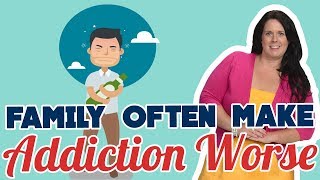
This content was created by Amber Hollingsworth. This content was uploaded by Amber Hollingsworth. This is a YouTube video titled "😯Everything You Know About Dealing With An Addict Or Alcoholic Is Wrong" created on November 8, 2018. The video features Amber Hollingsworth discussing misconceptions about dealing with addiction, emphasizing empathy and understanding over traditional tough love approaches. She references Johann Hari's TED Talk and book, "Chasing the Scream," and introduces concepts like motivational interviewing and the Invisible Intervention at Hope4Families.
Chapters
If you've got a loved one with an addiction to drugs or alcohol, you want to pay super close attention to this video because pretty much everything you know about how to deal with a drug or alcohol problem is wrong. Okay, so there's this guy, his name is Johann Hari, and he has this super good TED Talk. I know, I'm a super nerd because I love a TED Talk. Anyways, Johan has this TED Talk called Everything youg Know About Addiction is Wrong. And it's fabulous. I definitely recommend you watch it. In fact, I recommend you read the whole dang book that the talk was based off of. It's called Chasing the Scream. The first and Last Days of the War on Drugs. Loved it. Total game changer. Anyways, this isn't everything you know about addiction is wrong. This is everything you know about how to deal with addiction. You is wrong. I know most people have told you that you need to do this whole tough love thing, that you need to kick them out, that you need to sort of back up or distance yourself or withdraw from them or refuse to talk to them unless they get help. That's actually some pretty old school thinking. And honestly, most of those things make it about 10 times worse. Now, I know you inside. You're super mad, and you don't understand, and it doesn't make any sense. And the whole thing is making you crazy. And you may want to scream and yell and throw a fit. And if you're doing that just because you need to blow off steam, okay, go ahead and do it. But it's not going to be effective. It's not going to get your loved one to stop using drugs or alcohol. You know, most people think if the consequences get bad enough that the person will stop. Guess what? That's not true. Consequences don't. Don't cure addiction. In fact, most of the time, consequences make addiction worse. Because guess how people with drug and alcohol problems deal with real life problems? Mm, you guessed it. They drink more and use more drugs. They just hide further in there. Life gets worse and worse and worse, and they just do more and more and more drugs not to deal with it. So this whole, I'm mad at you, I'm not gonna talk to you anymore because you got a drug problem. Just not very effective. Now, sometimes you need to do that. You need to back up from the person for your own self, for. For your own sanity. And I would never tell you not to do that for your own sanity. But what I am telling you is don't do that because you think it's going to make them better. It's not going to make them better. In fact, guess what they're going to do with that? They're going to feel sorry for themselves and they're going to build a resentment against you because you're so mean. And they're going to feel sorry for themselves even more. And guess what they're going to do because they feel that way. They're going to drink and use more. At Hope4Families, what we teach you to do is be like super nice, play the good cop now. I mean, like nice like emotionally. Not rescuing them from their problems. You can let them feel the way of their own problems. Like, quit chasing your teenage kid that you know is smoking weed all the time and making sure they get that project turned in. I know you're so worried. What if they fail that class? Well, what if they failed that class? Maybe that'd be a good thing. Stop fixing their problems for them. Most families, they want to yell and scream and nag and preach, but they want to fix the problems. And what I'm going to tell you to do is be the opposite of that. Be nice. Be empathetic. Understand why they might want to drink or use. Now, that's not giving them permission, especially if it's a teenager. It's expressing empathy. Like, yeah, I guess it is probably pretty hard because a lot of young people do that. You know, you can be empathetic without giving permission because here's a little secret. When you express empathy to someone, it actually turns on the learning part of their brain. And so now you've accessed the part of their brain that might could think differently. There's actually a whole entire therapeutic technique around this. It's called motivational interviewing. If you want to get super clinical about it. Now, when you yell and you scream and you're mad, guess what? You're going to access the emotional part of their brain. When someone feels under attack, the thinking part pretty much shuts down and the emotional, angry, impulsive part kicks in. So there's a lot of reasons why I want to get you out of this bad cop role. A lot of what we do at Hope4Families is get the family out of the bad cop role. Because the faster the family can get out of that position, the faster the person will realize, hey, this isn't so cool. This isn't working for me nearly as good as I thought it was. And now we have a chance to change. Now, of course, there's a whole lot more to this whole getting someone clean and sober we call it the Invisible intervention, but that is definitely the place to start. For tons more information on all things addiction and recovery and lots of free expert advice. Make sure and subscribe and hit the bell so you don't miss a thing.