Everything You NEED To Know About Being SOBER CURIOUS
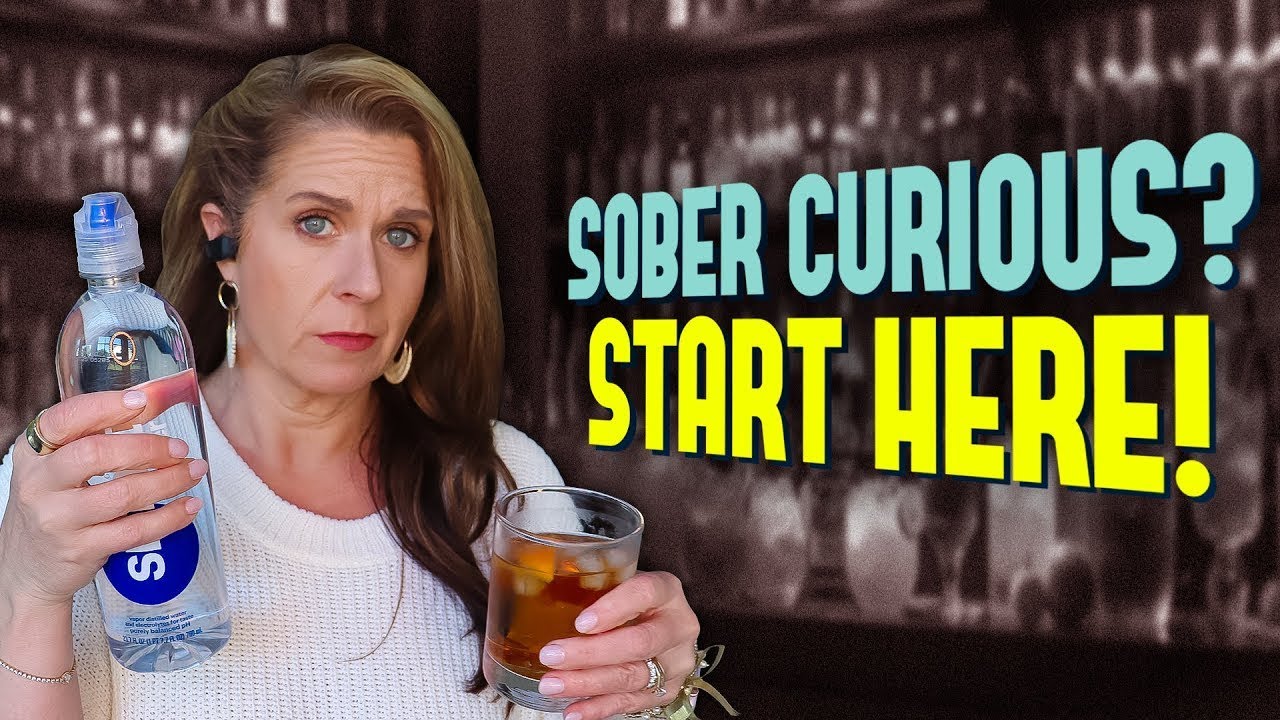
In this video Amber Hollingsworth introduces the "sober curious" movement, explaining that it’s about exploring one’s relationship with alcohol without needing to be an alcoholic or hit rock bottom. She outlines the health, emotional, and social benefits of reducing or eliminating drinking, and shares a detailed client case study of "Sarah" who tried a 30‑day sobriety trial, faced social pushback, and ultimately discovered the positive effects of sobriety while also helping a friend recognize her own drinking problem. Amber then addresses the two most common fears—life becoming boring and social exclusion—and discusses typical early challenges such as cravings, awkwardness, and habit disruption. She provides a step‑by‑step guide for getting started, emphasizing a 30‑day goal, clarifying personal motivations, reshaping routines, and preparing for social situations. Strategies for communicating one’s choice, using temporary excuses if needed, and handling judgment are covered. The video concludes with encouragement to try sobriety, an invitation for viewers to share their experiences, and a call to subscribe for more tips.
Chapters
Have you ever thought to yourself, I really want to cut back on my drinking, but I don't know if I want to stop forever? Well, that's what being sober curious is all about. You don't have to be an alcoholic to rethink your relationship with alcohol, and you definitely don't need to hit rock bottom. In this video, we're going to talk about what it means to be sober curious, what to expect, and how to get started. For those of you who are new here, my name is Amber Hollingsworth. I've been helping people overcome addictions and other bad habits for more than 20 years now, and this channel is all about helping you understand the science and psychology so that you can address issues before you lose everything. And today's topic is a perfect example of that. A good place to start is to talk about what does it mean to be sober curious? Basically, it just means you're exploring your drinking habits. You're thinking about what would life be like sober, but maybe you're not ready to commit fully to sobriety forever. You don't know if you want to, and you don't even know if you need to. Believe it or not, being sober curious is becoming more and more popular, and we'll get into the reasons for that in just a second. But first, I want you to know that being sober curious or trying sobriety doesn't mean that you have an alcohol problem. It just means you're curious. It's not about judgment. Like I said earlier, there are lots of reasons why someone might want to try sobriety. The most obvious would be the health benefits of sobriety. You're going to sleep better, have more energy, and definitely have a lot more mental clarity. But there are also emotional and psychological reasons why you might want to consider sobriety. Like for example, drinking less means having less anxiety, and it usually also It means having better relationships. Think about how often alcohol causes problems in relationships. Yeah, a lot. And then there's social reasons. Some people, when they drink, even if they're not alcoholic, even if they don't drink all the time, even if they just drink every now and then, when they drink, they turn into someone different or they make bad choices. Maybe they text their ex and that's a bad choice. Maybe they get angry or aggressive and they tend to get in fights, or maybe they just tend to overdrink when they drink. And then the next day they end up Regretting it. They might even owe some apologies, and they feel pretty embarrassed about the whole situation. All of those things are good reasons to explore sobriety. I can remember a client of mine, let's call her Sarah. That's not a real name, but we'll go with that. She wasn't really ready to quit drinking entirely, but she wanted to kind of see what life would be like without it, kind of like give it a little trial run. This was all prompted when something really embarrassing happened to Sarah during a night drinking. Well, actually, she had had several times in the past where embarrassing things had happened, but this This, for Sarah, felt like the last straw. She had ended up flirting with her cousin's boyfriend, and she really just felt terrible about it. She's like, I don't even like that guy. I don't even know what was going on with me. I need to address this. Now, Sarah didn't drink all the time. She, I definitely wouldn't categorize her as being an alcoholic, but she had a tendency to get really flirty when she drank. And naturally that caused a lot of problems in her relationships. So she decided to start with setting a goal to be 30 days sober, sort of like a Dry January or a Sober October. Obviously you don't have to wait till January Or October to try this, but 30 days is a good trial period. So she told most of her family and friends what the deal was, and pretty much everyone was supportive of her except one of her really good girlfriends. Now admittedly, this friend was a fairly heavy drinker. Most people would know this person as the life of the party. She always had a drink in her hand. Anyways, this one friend didn't really react well to Sarah's goal for being sober for 30 days. In fact, she made a lot of really passive-aggressive comments like, oh, come on, you're not fun anymore, or just one drink won't hurt. At first, Sarah just brushed it off. She didn't think that much about it, but the comments kept coming. And eventually it was to the point where she just really felt like she needed to distance herself from this friend. She started avoiding her a little bit at first and then moved to completely avoiding her. And during this time, she got some kind of nasty text messages from this friend. Now, it seemed like maybe those were drunk text messages, but clearly this friend was angry that Sarah had distanced herself. It was all these things that led Sarah to come into our office. She was really distressed because number one, she didn't understand her friend's reaction. And And she wasn't sure what to do about it, but she also needed help thinking through the alcohol thing. And she wanted to see someone who was a specialist to figure out, do I have an alcohol problem? Should I just cut it back? Do I need to quit completely? She just wanted a sounding board to think through all those things. So when she first came in, I was asking her, what was going on that made you think about being sober? And she told me about the flirting with the cousin thing and some of the other embarrassing things that had happened. And I was like, yeah, that's kind of a good reason. And Sarah was like, it's not like I even crave drinking. It's definitely not like I drink every day. It's just that when I do drink, I drink more than I probably should. For whatever reason, I just get really flirty and I always end up regretting it. So then I asked Sarah some questions about how she felt during her 30 days of sobriety. She said she actually felt a lot better. She had more energy, more motivation, and to her surprise, the whole being sober thing was overall much less difficult than she thought it would be, with the exception of the one friend. And you could tell this is where she was really struggling. She even got tearful when she was talking to me about it. She said, I don't get it. I don't know why she's not just happy for me. But it's like she's mad at me for not drinking. And so because she's mad at me, I don't want to be around her because she's always with the negative comments and it's like these little verbal jabs. But on the other hand, this had been a friend of hers for a very long time. Like they went way back to junior high school and Sarah was struggling with feeling guilty over distancing herself. And she was struggling with whether or not it was even necessary. Like, did she really even need to quit alcohol? Was that an unnecessary step causing unnecessary problems in the relationship? And ultimately in the end, Sarah ended up deciding that she definitely didn't think she was an alcoholic, but she liked the way she felt sober better, with the exception of the friend thing. So she decided to stay sober for a while longer and just see where things went. Now, the unexpected part happened about a little more than 2 months later. Sarah got a call from the friend, the one friend that said all the mean, nasty things. That friend was in tears. She was bawling when she called. She started to admit to Sarah, I think I have a drinking problem. I'm drinking almost every day, and I'm really sorry for the way I treated you. I know that wasn't right. How did you do it? How did you get sober? What's it like? Can you help me get sober? Obviously, this was a big surprise that Sarah didn't see coming, but of course she wanted to help her friend out, which is exactly what she did. Let's move on to talk about what to expect when you get started on your whole trying out sobriety journey. The most common fear that people have with the whole sober thing— actually, I guess I'll say there's 2 most common fears. The first one is that they feel like maybe life will be boring without it. I'm not even sure I'll be able to have fun without drinking or smoking. And the other big fear is they worry about feeling left out, that if they stop drinking or doing whatever it is with their friends, that their friends are just going to move on without them, that they won't get invited to things anymore. They'll just become like a lame, stay-at-home, no-friend loser kind of person. This is one of the biggest concerns, which is surprising really. It's really not about the whole giving up the alcohol part. It's about what will people think of me and what impact will that have on my lifestyle? And yes, admittedly, there are some initial challenges when you're newly sober. And one of those Facing a little bit of social awkwardness. There's also things like cravings and missing it. Most of that happens at the beginning and goes away pretty quick. In my experience, it's the social awkwardness part that people tend to worry about the most, but pretty quickly they're surprised to see how much better they feel physically, emotionally, psychologically, energy. In fact, most people end up telling me, actually, I didn't even realize I felt bad before until I feel so much better now. So I think this is a good time to talk about how to actually get started, and then we'll move into how to address some of that social awkwardness. I really think a good place to start is a 30-day goal. And the reason I say 30 days is because you tend to feel kind of worse for the first week or two. If you've been drinking real regularly or a lot, you might feel physically worse. But even if you've not been drinking regularly or a lot, you'll probably have some cravings and you'll miss it, especially if you tend to drink at certain times of the day or certain days of the week. So what I'm saying here is it gets a little harder. It's going to depend on how long it's going to take for things to start to feel better. But even for people who drink fairly heavily, they tend start feeling better somewhere around week 3. So when people are sober curious and they're asking me about should they do a trial run, of course I'm all for it. I definitely want them to do it. But if you do less than 3 weeks, you're probably not going to get a good feel for what being sober is really like because that first little while is all just about adjusting. And if you want to feel what being sober is like, you kind of have to get past that initial adjustment period. More than 30 days is even better. But if that sounds scary, Start with a goal of 30. Another really good thing to do at the beginning of your 30-day or longer journey is to really get clear about what your why is, because at some point you're going to have a hard day in there and then you're going to think to yourself, why am I even doing this? Is it worth it? So you need to have some clarity about that. Obviously you want to think that through, but an even better move would be to write it down in a journal somewhere, list the pros and cons, really think about why do I want to stop this and what do I hope happens if I get sober? This will help you stay focused and The other big thing that you're going to want to do is you're going to want to shift up your habits and routines. For most people that are not alcohol dependent, this is where the harder part comes in. It's about getting out of old habits and routines. It's not like they have to drink or they're going to go into DTs or something if they don't. It's just more about they're so used to it, like they have autopilot. Maybe they drink in the afternoons when they get home from work. Maybe they are used to going out every weekend and binge drinking with their friends. And that's a big thing. Maybe they have a mom's night out where it's like a wine thing or something. It's about shifting up the habits and routines, which brings us to those socially awkward situations. Let's go a little bit deeper into that because it's definitely one of the biggest challenges. The first thing to figure out is whether or not you feel comfortable being in a drinking environment when you're not drinking. And it's a little bit different for each person. And I think you kind of have to think through what works for you. And each social situation might be different because they're not all the same. Some social situations you might feel comfortable And others maybe not. In the first couple weeks, I suggest trying to steer away from being in any kind of situation where there's a lot of drinking going on. Like I said, this first 2-week period, it can be a little hard and you're just going to trigger cravings if you find yourself in those situations. But after that, most people find that they can be in most drinking social situations and they're totally fine. After you kind of get your brain reset and your body reset, you just don't crave it as much anymore. And so most of the clients I see, even clients that have really serious alcohol problems, eventually They're able to be in situations where other people are drinking and it doesn't bother them too much unless it's a situation where people are just really drunk. Like it's a lot of drinking, like it's hardcore drinking. And it's not even so much that it makes them want to drink. It's just kind of annoying to be in those situations when you're not drinking, to be the sober one. Everybody else thinks they're funny, but they're really kind of obnoxious. You may not enjoy super heavy drinking situations, but being around a family member or a friend who has a glass of whatever at dinner is probably not going to bother you at all. Unless maybe it's like your favorite drink or something. That might be a little outlier. You have to figure out something to do with that. Now, the next hard thing you got to figure out is what are you going to tell people about the fact that you're not drinking? Some people you might feel more comfortable with just laying it all out there for them and telling them all the reasons, and other people not so much. But if everyone's used to you drinking and now all of a sudden you're not, they're going to want to know why. People are curious, and obviously you're a grown-up independent adult. You don't owe anyone an explanation why. And so if you're comfortable with it, you don't have to say anything. But for most people, you feel like you need to say something. To your family and friends, and you're just going to have to go with whatever you feel comfortable with. In my experience, most people feel like they kind of need to have like an excuse or reason in the early days. Maybe it's like I'm giving it up for Lent, or I'm doing Sober October, or I'm on an antibiotic that you can't drink with. They feel like they kind of need to have a reason, and this comes from this idea of social pressure and social judgment. But what's really happening is the person's really judging themselves more than anything else, and they feel like other people are going to be judging them. So they're not comfortable saying all the real reasons. They just an excuse, which is totally fine. I will say though that the whole excuse about, well, I'm driving tonight, tends to not be the best one because people are always like, well, you can have one or two, or that won't hurt you, or you call Uber or whatever. They start trying to get around that reason. So find something else. Eventually, most people feel more comfortable with sobriety and they actually like being sober so much better that they just start telling people the real reasons and how they feel now, and they actually feel kind of proud of it, honestly. So even if you're nervous about it at first, you might find that you actually get to the point it doesn't bother you at all. You might be happy to tell people why you stopped And what your experience is like. But just decide for yourself what you feel comfortable with right off the bat. And I personally give you full permission. If you need the little white lie, you put the little white lie. And I'm personally okay with the little white lie technique if that's what you're comfortable with. Because the big picture here is building a life that you love, no matter what everyone else does, no matter what everyone else thinks. It's about living your best life. If you feel better sober, if you make better choices sober, if you feel more motivated sober, those are all really good reasons And who cares what everyone else thinks? Most people I know that get sober, I got to be honest, I really haven't run into anyone that regretted getting sober. At first it was hard, but eventually most people feel like their life is much better without it. So give it a try. Maybe that'll be the case for you. So let me know in the comments below if you've been thinking about getting sober and if you're comfortable with it, tell me why you're thinking about it. Or have you tried it in the past? What was your experience like? And if you're seriously thinking about getting sober, subscribe to this channel. There's tons of tips and tricks on all the best, easiest ways to do it. In fact, This video right here is a good place to start.
More from Amber








Addiction Turns “Me vs. Drinking” Into “Me vs. You” #addictionrecovery #addictionawareness

They Admit Everything Except the Addiction #addictionrecovery #addictionawareness

Stop Trying to Make Them Admit the Truth #addictionrecovery #addictionawareness