How To Know If Someone Is Addicted To Drugs or Alcohol (2020)
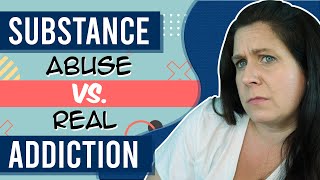
Amber Hollingsworth explains differences between common labels for problematic drug and alcohol use—'addiction', 'chemical dependency', and the clinical term 'substance use disorder'—and why terminology matters. She describes the DSM-5 diagnostic framework (11 criteria; mild/moderate/severe based on counts), contrasts it with DSM-IV's abuse/dependence split, and argues for using the stronger language ('addict', 'alcoholic') strategically to overcome denial and communicate seriousness. The video combines clinical explanation, practitioner perspective, and patient-focused anecdotes.
Chapters
Substance use disorder, chemical dependency, addiction, alcoholism. What the heck is it? What do you call it? What's the difference in all those things? And does it really even matter? That's what we're going to cover in this video. You may not be aware of this, but there is a lot of disagreement and tension in the field of addiction and treatment around terminology. And it's really not just in the field because there's a clinical way to define the situation. I'm going to tell you what that is. You know, to use the professional words, but just as far as, like, everyday language and lingo, there's this sort of divide between people about how to refer to the problem. And there are some days where I think to myself, does it really even matter what you call it? And then there are other days I think to myself, I'm like, yeah, it kind of does matter what you call it, because how you frame something sets the stage for the psychological processes around it. Let me give you an example to show you what I mean. If you go to your doctor and your doctor says you've got some cell abnormalities going on, versus if you go to your doctor and they tell you you have cancer, can you see the difference? Now, you might be sort of saying the same thing, but. But the implication of what the doctor's calling it is really sort of different. Because if your doctor tells you you've got some cell abnormalities, then you think, well, okay, well, what does that mean? What do I do about it? But you definitely don't get, like, crazy alarmed if your doctor says the C word, as in cancer. You get freaked out and panicked. You get kind of desperate. Well, in the land of addiction, recovery, treatment, all that kind of stuff, whatever you want to call it, there's been this movement over the past whole bun years to destigmatize the issue, which I am absolutely on board with, of course, because the stigma is what's kept people from getting treatment, I think, for years and years and years and years. And so in an effort to reduce the stigma, there's been sort of this sort of like, politically correct way to talk about the issue. So these days, the politically correct way to talk about the issue is to, say, persons with substance use disorders. Now, it's not that I don't really want to be politically correct, and I definitely don't want to be hurtful or offend somebody, but to be honest, most of the people that I treat in my office, the biggest obstacle, the reason that they don't get help isn't necessarily because of the stigma anymore. The biggest reason people don't get help is because they don't believe they have the problem. And I think when we describe it and define it in certain ways, it almost sort of contributes to that denial. There's sort of like pros and cons of this. And I'm gonna lay it all out for you, both the good and the bad, and let you decide for yourself. What do you want to call it? What should other people call it? What do you think is the right thing to do? Because it's a pretty gray area. So in order to do that, we're gonna look at three categories. We're gonna look at the word or title of addiction. Now, when I say addiction, that also includes alcoholism. In my mind, that's the same. That's a whole other video. But when you hear me say it in this video, then you know that I'm talking about drugs and alcohol and any other addict. One category, Another category is something called chemical dependency. We're going to come back, I'm telling you more about what that means. And then the other category is something that we're going to call substance use disorder. And if you'll think about it, in those three categories, there are three different ways essentially that people say the very same thing. But to be honest, in my mind, they kind of mean three different things. And I honestly think it's that way for most other people too. I don't know. Let me know what you think. Okay, let's see. Start with the professional way to deal with it. The current clinical nomenclature, the way that we diagnose people with drug and alcohol problems is to use the diagnosis substance use disorder. And that actually just changed not too awful long ago, a few years ago when the DSM 5 came out. That's the Diagnostic Statistical Manual 5. I know, nerdy stuff. Don't even worry about all that. But it's the official book that doctors and counselors and psychologists use to actually diagnose the issue of drug and alcohol problems. We're gonna call it substance use disorder. And in fact, they don't really leave it as that big general category. If you're really, really, really gonna put a diagnosis in someone's chart, you would put alcohol use disorder, cocaine use disorder, opiate use disorder, cannabis use disorder. You would like define it into the specific category of the chemical or substance that the person was using or abusing. So it really kind differentiates it out. Now if you were to go through that clinical book and look at the criteria for cannabis use disorder, alcohol use disorder, overuse disorder, all those different ones. You're going to see that the criteria under each are almost all the same. It's just substitute the word. There are a few minor differences in them, mostly related to like withdrawal symptoms and stuff like that. But essentially There are about 11 criteria under the category of substance use disorder. You just switch out the word for whatever substance that happens to be. Now, before the DSM 5 came out, I know you're getting a history lesson, but hang in here with me because it does mean something is kind of important. Before the DSM 5 was the DSM 4. And in the DSM 4, it was called either a substance abuse problem or a chemical dependency problem. So really they had it in two categories. And it was almost kind of like level one, level two, to be honest. So, you know, when you look at. When you would look at something, some kind of substance abuse problem, it would be sort of like problematic using, leading to problems in your life. And when you looked at chemical dependency, that would be like your body's used to it. You need that substance to function. Otherwise you get sick and you don't function well without the substance. Like, your body has adjusted to that chemical to such a degree that if you don't have it, things don't work right. So they changed it in the DSM 5 from substance abuse and dependence over to substance use disorder. And they left pretty much the same criteria. But basically it's like there are 11 of them usually. And you go through, you count them up, and if you have two or three of them, then you have a mild substance use disorder. If you have four or five of them, you have a moderate substance use disorder. And if you have six or more of them, you have a severe substance use disorder. In my mind, it's not really like you have the problem or you don't. It's really more like where you at on the continuum. And I think that that's helpful in a lot of ways because so many of us, we have this image in our head about what an alcoholic looks like, what an addict looks like. And we think, well, I don't have to have it every, you know, I don't drink in the morning. I can't be, you know, an alcoholic. And when you look at it from the purely clinical perspective, it doesn't say anything about every day or in the morning. And so it's just looking at some other criteria and it helps you differentiate. Mild, moderate, severe. But to be 100% honest with you, I don't really like either one of those terms. I'm kind of old school and I like to call it addiction. Sometimes I'll use the word alcoholism. I use the words addict and alcoholic and sometimes that gets me some bad press. And people don't like it because they feel like it is stigmatizing or it means something negative. But I like to defend myself just a little bit here about why I continue to use those words. Because it's not an accident, it's a strategic decision that I've made to continue to use those words. And here's my thinking with that. Let's go back to the beginning when I said, what if your doctor told you you had some abnormal cells versus what if your doctor told you you, your doctor tells you you have cancer. You realize you are dealing with a big major life threatening problem and you are going to have to do some serious things in order to get rid of it and deal with it. And so what you call it sometimes creates an urgency or an importance around what it's going to take to solve that problem. And while I do like the fact that the term substance use disorder destigmatizes addiction, I think a lot of times if we wrap it up in too pretty a wrapping and we dull it down too much, people don't really understand what it's going to take to get better. And maybe I'm wrong. Other people can have different experiences that are in the treatment field. But in my experience, that's where the problem is, is people don't understand the seriousness of the issue that they have. Here's what I tell my clients in my office. I say, listen, if you went to your doctor and they told you you had stage three cancer, you'd be freaked out, you would do whatever that doctor told you you needed to do because you knew it was serious and it could kill you. But you come in here, you come to me and I tell you you have stage three alcohol use disorder. And then I say, I want you to come to group and why don't you come talk to me once a week? And you're like, eh, I don't really think I want to do all that. I'm like, let me tell you what addiction is a cancer. And not only will it kill you, that's not even the bad part, but in the process of killing you, it's a terminal illness. And in the process of kill, it's going to take everything that you have. It's going to take your money, it's going to take your family, it's going to take your dignity, it's Going to take your talents, skills, ability, it is going to leave you an absolute broken human being, either dead or wishing you were dead. And I don't do that to try to scare people, really, because I don't really believe in scare tactics. But I do want people to get the seriousness of what they're dealing with, because it's way too easy to minimize. And part of the reason why it's so easy for the people that come see me to minimize it is because most of the people that come into our office are kind of what I like to call like a functioning addict or alcoholic, Meaning they're really smart, they're really talented, they may be going to college or going to work or running businesses or be physicians or whatever. And they have this substance use disorder over here on the side. But most of them don't feel like they have to use that substance every day. And most of them feel like that they can stop using the substance. In fact, they have stopped using the substance multiple times in the past before they've ever seen me. So they really struggle with the idea that they have an addiction because they can stop it, and most of the time they can sort of control it and manage it. And so you're getting all these mixed signals. You got me over here telling you got an addiction, but, you know, last week you only drank once and you drank two beers. Like, how am I telling you, you're an alcoholic? Here's how I think of it. Addiction, in my mind, as in Amber's definition, doesn't necessarily mean that you drink or use whatever substance every day. It doesn't even have anything to do with how much alcohol, drugs, or whatever else it is that you're doing. It has a whole lot more to do with the thought process. In fact, I think you can be addicted long before you're chemically dependent. I think addiction leads to chemical dependency. So remember, chemical dependency is what we used to call it several years back. And it's sort of like when your body adjusts to the substance. Well, here's the deal. You probably were really preoccupied with whatever substance that was which was triggering you to use that substance, like, a whole lot, to the point that you became chemically dependent. So in my mind, chemical dependency, it is a symptom, one of the symptoms of addiction. But by no means, absolutely not at all does it encompass the problem. Because chemical dependency is actually fairly easily medically treated and can be dealt with. Addiction is a whole lot more complicated and tricky because it's all about the psychology. It's about how much are you thinking about using? It's about how much time, planning, scheming, activity that you put in it. It's about do you enjoy your life when you don't have it? It's about is it messing up your family life? Is it allowing you to be your best version of yourself? I just think there are so many other ways to think about it that it's not so much for me anymore about reducing the stigma. Because, hey, let's face it, everyone who's anyone is in recovery. In fact, it's kind of cool status to be in recovery these days. So I really don't feel like it's the stigma. So more, it's more the denial that's the issue blocking people from getting better. And I think we could do a much better job of helping people break through denial by helping them see addiction differently in their brain, by helping them conceptualize that there's this continuum and in the beginning the problem looks like this, and then it looks like this, and then it looks like that stereotype that you're thinking about, like basketball diary style addiction. But most of the people I see are right there at that stage three, and they think, oh, I don't really have it. So what that leads them to think usually is I just need to cut it back or sew it down or I'm not going to drink anymore, I'm just going to do this. It leads to more of that bargaining. But really you've got the issue. Just like if I said you had cancer stage three, it's still cancer. And so when you guys hear me use those words, addict and alcoholic, I want you to know it's not because I have a bad feeling about it. It's not because I want people to be shameful about it. You guys know I talk all the time about that. That is not my intent at all. But it is because I want you to understand the seriousness of it. And I think when most people hear the word addict or alcoholic in their brain, they immediately start thinking that means you can't do drugs anymore or that means you can't drink anymore. So I'm kind of old school. I'm kind of a fan of still calling it addict and alcoholic. But I know there's a lot of ways to think about this issue. And I'm not telling you that's what you have to call it. If it's getting in your way, then who cares? I just want you to understand that it looks really different and that it's more on a scale and that yeah. You can have addiction and not be using every day. You can have addiction and still be able to stop sometimes. And you guys know how I feel about this. You do not have to hit bottom to get better. You just have to know that you're going to hit bottom. And of course, you know how I feel about that. You hit your bottom when you put your shovel down. Now, if this video didn't get you stirred up enough and you just want to hear something a little more controversial, take a look at my video called Addiction is Not a Disease. I'm going to put it right up here. All you have to do is click it.
More from Amber








Addiction Turns “Me vs. Drinking” Into “Me vs. You” #addictionrecovery #addictionawareness

They Admit Everything Except the Addiction #addictionrecovery #addictionawareness

Stop Trying to Make Them Admit the Truth #addictionrecovery #addictionawareness