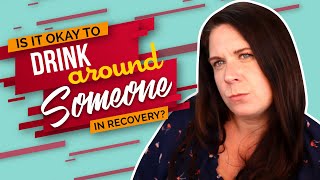
This content was created by Amber Hollingsworth. This content was uploaded by Amber Hollingsworth. This is a YouTube video titled "How To Support Someone In Early Recovery" created on November 21, 2019, by Amber Hollingsworth. In this video, Amber, a master addiction counselor, discusses how to handle situations involving alcohol at family functions when a loved one is in early recovery. She provides advice on maintaining normalcy, avoiding awkwardness, and setting boundaries to support recovery. The video also hints at a future discussion on gifting to those in active addiction.
Chapters
So, hey everybody, thanks for joining this live. I think it's gonna be a really helpful one for you because I get this question all the time, especially with the holidays coming up, people want to know if it's okay to have alcohol at the family function, at Thanksgiving dinner, at the Christmas holiday party. It's a little bit of an awkward situation if you've got a loved one in early recovery and you just don't know, like, what's the appropriate way to deal with that. So that's what we're going to answer on today's live video here. For those of you who don't know me, I'm Amber Hollingsworth, master addiction counselor, founder of Hope for Families Recovery Center. And this channel is all about helping you understand the psychology of addiction so you can overcome it or help your loved one overcome it and get your life back on track, basically. Alright, so let's get back to the question. First and foremost, if you're concerned about this and you're close to that person, as in you're their spouse or their parent or their best friend, then just ask them, hey, you know, what's the best way to support you with this? And don't be awkward about it. Don't be weird, don't say we need to talk or any kind of awkwardness like that. Just straight out ask them and be normal. That's the key. Don't be weird about it and don't try to sneak it. So whatever you do, don't tell people, hey, you know, be whispering, hey, you know, so and so is not supposed to have something to drink. And then, and then your loved one sees everybody, like sneaking into the garage and sneaking drinks. That's the absolute worst thing you can do because it makes them feel really awkward. It makes them feel like an alien. It makes them feel completely left out. And that is the trigger. It's that feeling of isolation, of shame that's way more of a trigger than the actual alcohol. So here are my rules around about having alcohol in general. If you've got a loved one in recovery, I usually say don't keep it in the house where the person lives. And I know a lot of you are going to be thinking like, well, they can get it. And yes, they can get alcohol if they want it, they can leave and get it anywhere, even if they're a kid. But having it in your house is like a whole different story because it's like, you know, when you're home, you want to relax, you want to be able to put your comfy pants on and not have to worry about things so much. You don't need some beer in the refrigerator. Talking to you all the time when you're trying to sleep or when you're trying to relax or when you're trying to watch Netflix, it's like in there talking to you. So you need that place to be able to sort of let your guard down a little bit and just, you know, not be having to willpower it all the time. So in early recovery, I definitely don't think you should keep it in the house. But if you're going to a family function or there's going to be a function, most people, unless it's like, you know, week one or week two, you know, tolerate other people around them drinking as long as it's not awkward. Now, if they're having a particularly hard time or they've really been craving, they may not even want to go to the function. And so what you may want to do to support them is like, totally cover them. You know, be their wingman, run interference for them, make up an excuse for them, have their back in that way. Or if they do want to come to the function and other people are drinking, just be normal about it and just talk to the person the same way you would always talk to the person. And if they bring it up, then talk about it. And if they don't bring it up, then you don't bring it up and be awkward even bringing it up and saying, gosh, we're so proud of you. That can even be a little bit awkward. So I to say, take your cue from the person and for goodness sake, just be normal about it. The other thing is, now if I have clients I'm seeing and they've got to go to functions or they want to go to functions, I usually tell them to always have like an escape hatch, a back out of this thing kind of plan. And so usually beforehand you can tell whoever's the host of this thing, hey, I may need to. I may need to leave early for X, Y or Z. I don't even care what excuse you give. And that gives you an out. So that if you get there and things are uncomfortable, you can exit yourself or you and your, you know, date or your friend or whoever it is or your spouse can exit yourself from that and not feel bad about it. I usually don't advise people in early recovery to stick around drinking events for, like, long periods of time. You know, as the night goes on and the drinking escalates and it just becomes a drunk Festival. Not only is it a trigger, but it's just not that pleasant when you're not drinking. You know, it's kind of, like, fun to be around people that are drinking when you're not drinking for a couple hours. Kind of funny. And after that, it's just kind of, like, annoying. So it's not pleasant. It's triggering. And so I say, yes, go to the function. Other people can drink. You know, I would. I wouldn't torture yourself with it. That's what I tell my clients. I don't say, like, you can't go. I just say, don't torture yourself with it. Now. I will. Let me. When I just said that, it, like, occurred to me. Let me put this caveat in there. I'm not talking about, like, a frat party or a party or function. This literal function is just drinking that. No, that's not a good idea for people in early recovery ever. But I'm talking about, like, the work event that you need to go to. Thanksgiving dinner, the holiday party, whatever that is you really kind of need to go to. It's important. You know, the family wedding, that kind of thing. That's different. I'm not. I'm not talking about just, like, the house party. That's literally just for drinking. So that's off the table. Hopefully that answered your questions about is it okay to drink around people in early recovery? I am going to. I am planning to do a live, hopefully next week about whether or not it's. Whether or not you should or shouldn't, or is it okay to buy or give Christmas gifts or money to people that are still actively using. I recently saw, like, a Facebook post about this, and some. It was, like, in a parent group, and a mom asked this question, like, something about, you know, is it okay to buy my, you know, adult daughter a gift? She's living on the street. It was, like, really sad. And, oh, my gosh, you should have seen the thread of comments. It was like people were going crazy with the answers. You had some people who were saying, it's totally fine. That's your kid. You do what you want. And then you had other people saying, you know, you're gonna kill your kid. You're just enabling. I mean, it got heated. Like, there were, like, hundreds of comments. Like, it was a little crazy. So I thought, well, clearly this is a topic that people want to hear about, and I do have some thoughts about this topic. So let me know what you think about that. Maybe you can get some comments about that below. Maybe if you have a strong opinion about it. And then next week I'll weigh in on that and I'll tell you exactly what I think about that. I do have a little rules for the road as far as that's concerned. Kind of like I do about the having alcohol around somebody. Early recovery okay. Thank you for joining me. If you have a loved one in recovery, you definitely should already have. If you've not already, then definitely do this. Watch the playlist and if you're watching this on the replay, I will put it here for you in the end cards and in the comments and in the description about boundaries with an addict or an alcoholic. There are so many good videos in there, some for parents, some for spouses. But the whole boundary thing is probably the hardest and most complicated of the questions that families have. So definitely check that out next and I'll see you next week. We'll talk about gift gifts for people in early recovery, gifts for people still in active addiction. See you then.