How to Tell if It’s the Addiction or Just Who They Are
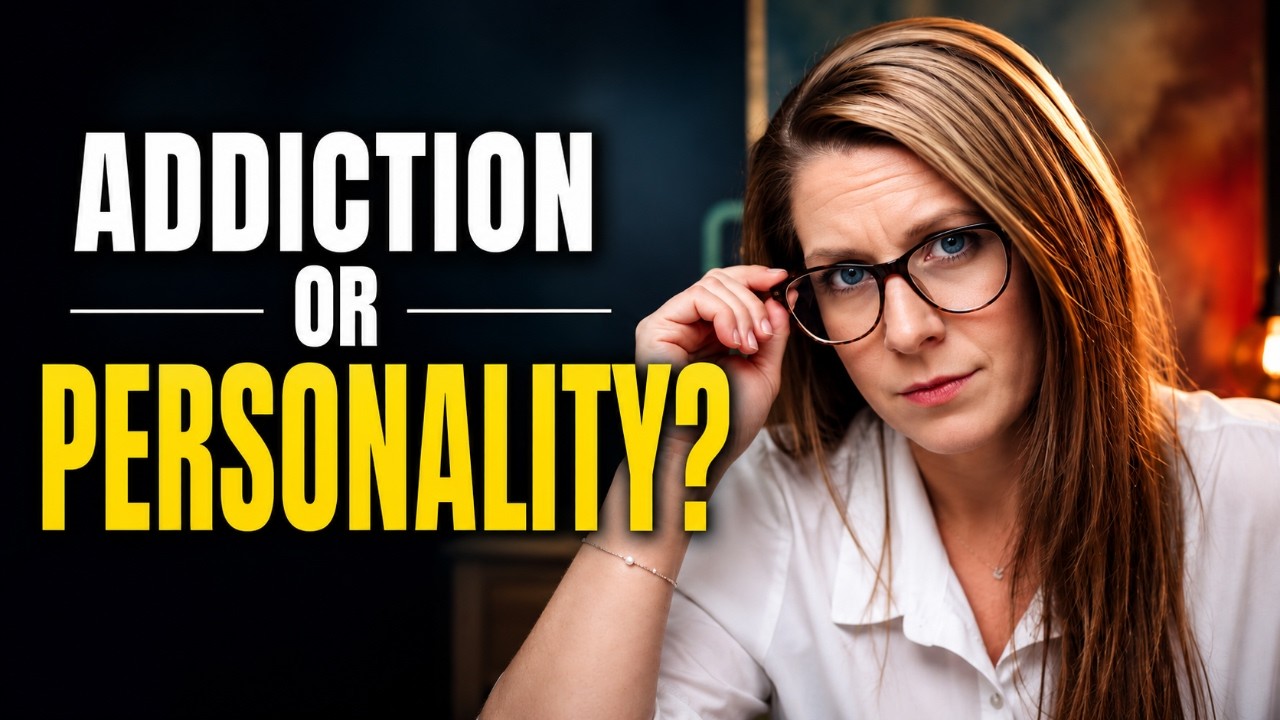
In this live‑stream, Amber Hollingsworth explains how addiction reshapes a person’s personality far beyond the obvious intoxicated behaviors. She walks through a layered model: (1) the obvious, temporary personality shifts that occur while a drug is active; (2) withdrawal‑induced mood changes that masquerade as irritability or anxiety; (3) the brain’s reward system adapting so that ordinary pleasures lose their pull, creating a perceived loss of values; (4) how repeated protective behaviors (lying, deflection, blame) become automatic coping strategies; (5) the way addiction distorts perception, leading to confirmation bias and misinterpretation of others’ actions; (6) the feedback loop between the addicted person and their family, where each side’s reactions reinforce the other’s distorted view, turning addiction into a family disease; (7) the distinction between sobriety (removal of the substance) and recovery (re‑learning emotional regulation, honesty, and trust); (8) how identity can become fused with the substance or activity, making change harder; and (9) practical advice for families on how to approach the topic and use her videos as a gentle entry point. Throughout, Amber emphasizes that many of these changes are neuro‑biological and learned, not immutable character flaws, and that recovery requires systemic work on both the individual and their loved ones.
Chapters
Everybody already knows that a substance can change your personality while you're intoxicated. You know, like alcohol might make you more aggressive, more emotional, more affectionate, more goofy. Opiates might make you more talkative, more social, maybe even feel more productive. We all understand that part, but most people have absolutely no idea just how deep it goes. And I'm going to tell you right now, this is probably one of the deepest dives into the psychology of addiction that I've done on this channel, because we're not just looking at one piece of addiction today. We're going to connect the dots, all of it. We're going to go deep today, so buckle up. You might even want to take notes on this one, because when you put all these pieces together, you start to understand just how profoundly addiction can change a person. So stay with me through this one because each piece builds on the one before it. And by the time we get to the last piece, you're going to see all of this very differently. Addiction doesn't only change what you say and you do while you're drunk or high. Over time, it starts affecting how you think, How you feel, what you notice, how you interpret other people, what feels important to you, how you react to everyday life. And even when you're completely sober in the moment, it's still changing you. Understanding this is incredibly important because if you don't recognize when addiction is influencing you in the way that you're seeing things, some pretty major decisions Based on thoughts and feelings, they seem completely reasonable at a time. You can blow up a relationship. You can quit something that was actually good for you. You can push away people who are trying to help you, convince yourself that everybody else is the problem, or make some huge life changes because you're absolutely certain that this is what you need to do. And then 6 months later, when you have a clearer brain, you look back and you start thinking, what in the world was I thinking? That's why I want you to understand all of the different ways addiction is affecting your personality, because they don't all look the same. Some are caused directly by the substance and some happen as the substance wears off. Some come from the changes in your brain's reward stress system, and some are behaviors that addiction has trained you to repeat because those behaviors help protect the substance use or the addictive behavior. And some changes are even more subtle. Addiction starts changing the way you interpret what's happening around you, which changes the way you respond to it. And if you're the person experiencing that, you usually don't recognize it while it's happening. Most people struggle with addiction can look back at something they did while they're intoxicated and they say, yeah, that wasn't really me. Like maybe you said something cruel or you picked a ridiculous fight or you got way too emotional. You made a decision with that made absolutely no sense the next morning. Those things are easy to recognize because there's a clear explanation, right? I was drunk, I was high. But what's much harder to see are the changes that happen between those episodes, because those thoughts don't feel chemically altered. They just feel like your thoughts. That irritation feels legitimate. The resentment feels legitimate. That sudden belief that everybody else is controlling you, criticizing you, disappointing you, or standing in the way. Feels completely legitimate. And meanwhile, the people around you may be thinking you didn't used to see things this way. That's what we're going to unpack, the personality change that nobody notices. So let's start with the easiest part. The most obvious personality changes are the ones that happen while the substance is actually actively affecting you, right? While you're intoxicated. We've all seen this. Some people drink and they become life of the party. They're louder, sillier, more affectionate, more confident. Another person drinks the exact same substance and they become irritated at everything. They're touchy, they're argumentative, maybe even aggressive. Somebody else gets emotional and wants to tell everybody how much they love them. And depending on the drug, you can see a completely different version of this. Like some people on opiates become much more talkative and socially comfortable. Somebody who normally feels anxious and withdrawn suddenly feels like, oh wow, this is the version of me I've been trying to find. And this is really important when it comes to addiction because sometimes the substance isn't initially experienced as this is making me into someone else. Sometimes it feels like this is finally letting me be myself, more confident, more social, more relaxed, more productive, More fun, less anxious, less self-conscious. And if you really like that version of yourself, well, now the substance isn't just giving you a buzz, it's giving you an identity. And that makes attachment to the substance or the addiction a whole lot stronger. But there may be another side to that version of you. You think you're being funny and everybody else thinks you're being obnoxious. You think you're finally saying what needed to be said and they think you're picking a ridiculous fight. You think you're being affectionate and your spouse is thinking, please stop, you're obviously drunk. And this gives us our first important clue. A behavior that happens primarily while you're intoxicated is different from a pattern that shows up across your entire life, right? If someone becomes extremely argumentative every time they drink, but is generally a reasonable person when they're sober, alcohol is obviously playing a role. That doesn't give anybody a free pass for what you do while you're intoxicated, but it does tell us something about where that behavior's coming from. And honestly, this is the part that most people— That they already understand, right? The intoxicated part. The fact that substances can temporarily change the person standing in front of you. But what happens when the alcohol is gone from your bloodstream, right? Or the other drug? You're technically sober and you're still not acting like yourself. That's where this whole thing gets much more complicated and interesting, right? Sober doesn't always mean back to normal. A lot of people think there are like 2 states basically, right? Like you're either intoxicated or you're sober. And if there's no alcohol or drug currently in your system, we assume, okay, now I'm dealing with the real person. But that's not necessarily the case. In fact, that's not usually the case because once your brain and your body have adapted to regularly having a substance around, taking that substance away creates its own state. Called withdrawal. And withdrawal changes the way you feel and the way you behave too. You may feel more irritable, more anxious, more restless, more emotionally reactive, more sensitive to criticism, less patient, less interested in people. You may have trouble sleeping, concentrating, feel physically uncomfortable, or just have this vague sense that everything is getting on your nerves all the time. Here's what makes this really tricky. You don't necessarily experience that as withdrawal. You experience that as everybody's annoying me today. My spouse will not leave me alone. My job is ridiculous. These kids are driving me insane. I just need everybody to back the hell off of me. And again, those feelings are real. I'm not saying that the irritation is imaginary. I'm saying that the intensity of your internal reaction may not match the situation. This is like kind of like what I feel like when my PMS kicks in, right? There are times when I have PMS and something genuinely annoying happens, right? The annoying thing is real. Normally, maybe that thing registers as a 3, but during PMS, my internal system goes to 8, right? And in that moment, I'm not sitting there thinking, Amber, your hormones may currently be affecting the intensity at which you're interpreting this situation. No, I'm not that rational, right? I'm thinking this person needs to be dealt with. And I'm not my— if I'm not mindful of that, I can turn a level 3 problem into a level 8 reaction. And that creates a level 10 mess of a situation. That's the way withdrawal works because withdrawal isn't always like, I'm shaking and having a seizure and I need to be in the hospital. It happens in different levels of intensity. So you may not even recognize that that's what's happening. Except the thing is with addiction, depending on the substance and the pattern of use, the cycle, it gets repeated over and over, right? It's like use, feel better, substance wears off, feel worse. Become irritable, anxious, flat, uncomfortable. Use again, feel relief. And I hope you're paying attention because this is huge. Okay, I'm going to say this slowly. Your brain starts misidentifying the source of the discomfort. Instead of, I'm uncomfortable because my brain and my body are adjusting to the substance wearing off, it becomes, I'm uncomfortable because of her or because of my parents. Or because this job is terrible, or because everybody expects too much from me. And now the addiction isn't only changing your mood, it's influencing the story you tell yourself about why you're in that mood. This is enormous. I hope you're paying attention because once you've decided that someone else is the reason you feel terrible, your behavior toward that person changes too. You avoid them, you resent them, you snap at them, you blame them. Maybe you start imagining how much better your life would be if they would just stop bothering you or go away. And the family member, oh, they're standing there thinking, what did I even do? This is one reason why families start feeling like they're walking on eggshells. They're often dealing with a nervous system that's fluctuating A lot more than either of you realize. Different substances produce different patterns. But the larger point is this. It's just not simply that they're mean when they're drunk, right? Their emotional baseline may be moving around all throughout the day. And if you live in that cycle long enough, it gets harder and harder to remember what your normal baseline feels like. And withdrawal, that's still only one layer, right? I told you we're going deep today. We're connecting all the layers. This next thing we're going to look at is what happens when your brain starts changing what feels rewarding in the first place. This is where the brain change starts looking an awful lot like a values change or a character change. When regular life stops feeling rewarding, right? That changes how you're reacting. Families describe this one as a personality problem all the time, or a character problem. They'll say they just don't care anymore, or they don't care about the family, or they don't care about their hobbies, or they don't care about their career, or they don't care that they're disappointing everybody, or that they embarrass everybody, or that they've become lazy, selfish, unmotivated. From the outside, that's what it looks like, right? But there's another layer. It's really important for both sides to understand. Addiction changes what the brain experiences as rewarding. Your reward system exists for a reason, right? This is the whole dopamine thing. It's there because it teaches you that was good. Do that thing again. Like food, sex, achievement, exercise, connecting with people, finishing something difficult, watching your kids succeed, getting a promotion, laughing with your friends. Those experiences would normally provide enough reward that your brain says, yep, this matters. But addictive substances activate reward and motivational systems intensely and rapidly. So with repeated exposure, the brain starts to adapt. Ordinary rewards start feeling flat, not necessarily terrible, just not enough. You used to enjoy sitting on the back deck with your spouse, and now you just feel bored, right? You used to feel proud after getting something accomplished, and now it's just like, whatever. You used to want to go to your kid's game, and now— Being honest, it just feels like a chore. You used to look forward to your hobbies, vacations, dinner with your friends, working towards a goal, and gradually more and more and more of those things lose their pull on you. Meanwhile, the substance has gotten incredibly good at getting your brain's attention. You keep listening because— keep listening because in a minute we're going to connect this to something that looks even more like a personality change. I'm trying to connect to you all these different levels, these different dots, so you can see all the things that are happening and changing. And that's what feels like you're dealing with a totally different person. Feels like you are a totally different person because in some ways you are. The way your thoughts begin to explain all those feelings to you. But first, let's look at it For just a second from what the family sees, because this looks exactly like a values change on the outside. Your spouse sees you care about alcohol more than you care about us. Your parent thinks you don't even care about your future anymore. Your kids experience you as something like, dad doesn't even want to do anything with us anymore. From their perspective, it's completely understandable why it feels that way. Behavior is one of the primary ways we judge what someone values. So if you repeatedly choose one thing over another, eventually people conclude, well, I guess that's just what matters to you. But inside the addicted brain, something more complicated is happening. It's not necessarily that you consciously sat down and decided, my family doesn't matter to me anymore, right? It's not that. It's that the internal reward attached to normal life has gotten a lot quieter while the motivational pull towards the substance, it gets a lot louder. And when your thoughts start to explain why you feel so different, right? What I mean by this is like, instead of thinking, wow, it's strange that almost nothing feels enjoyable to me anymore unless drinking is involved, right? That's not what you're going to think. You're going to think something like, my marriage sucks, or my marriage is boring. Instead of like, I've lost motivation for things that used to matter to me, you think, I just hate my freaking job now. Instead of, I've become disconnected from my family, you think, they've all become needy and annoying. Now we're back to that lens again, right? Your brain state changes. That changes the way you feel. Then your mind develops an explanation for the way you're feeling, and eventually you start making life decisions based on that explanation. That is how something biological starts looking like personality, right? And this is especially important because when someone stops using, regular life It doesn't necessarily become rewarding again overnight. In fact, it pretty much never becomes rewarding overnight. So now the family's looking at this person thinking, okay, they're sober now. Why are they still so selfish? Why are they still miserable? Why don't they want to do anything? And then they think, well, I guess this is just who they are. The person in recovery themselves is thinking, life freaking sucks without alcohol. Nothing is fun anymore. I felt better when I was using. If this is what sobriety is supposed to feel like, I don't think I want it. This is dangerous because nobody explains what's happening. The person starts interpreting a temporary phase of the brain of recovery as proof that sobriety is the problem. That flatness is not necessarily their new personality. And it's not necessarily what recovery is going to feel like forever. The reward system does recover. The ability to experience pleasure improves. Your motivation comes back. Your connection comes back. But that recovery, it takes some time, and the brain needs repeated exposure to normal rewarding experiences again. So keep this piece in mind because it gives us an important clue When we're trying to separate addiction from personality, you don't want to make a permanent judgment about somebody based on a brain that's still in the middle of recalibrating. Because so far we've got intoxication changing behavior. We've looked at how withdrawal changes our mood and our perception about how the reward system is changing what feels important enough for us to pursue. But we still haven't gotten to the piece that explains some of the most confusing behaviors families see. Addiction doesn't just change how you feel. It starts teaching you how to protect it. Addiction starts training your behavior. Once a behavior works, the brain remembers it. Let's say your spouse asks something like, have you been drinking? You know, the honest answer is going to create a problem, obviously. So you minimize or you lie, or you say, I just had to, or you say, why are you always accusing me of that? Right? Because that kind of response, it gets you out of the conversation. But your brain learns, hey, that worked, right? Minimizing worked. So next time they push harder, so you get defensive. Why are you always on my back? And now the conversation shifts away from your drinking onto their behavior, and your brain learns that the defensiveness works. Next time, maybe you go even one step further. You blame them. Maybe I wouldn't drink if you weren't constantly criticizing me. And now instead of talking about the alcohol, the two of you are fighting about the marriage. Again, it's like you're using this behavior and it works. Not because you consciously sat down and decided that you're going to manipulate a person so you can protect your addiction, right? It's not that rational and conscious. Most people aren't doing that. It's more like an automatic. Your brain is learning what gets me out of discomfort. What's going to end this conversation? What gets people off my back? What keeps me from having to look directly at what's happening? And whatever works gets reinforced. That's like basic learning theory, right? But I really want you to hear this next part. The behavior may have started as a way to protect the addiction, but after you've practiced it like 100 zillion times, it becomes the way you deal with life. Now it's like you're not just minimizing the alcohol, you start minimizing other mistakes. You don't just get defensive about drinking, you get defensive anytime someone gives you feedback. You don't just blame people when they bring up the substance, you blame people whenever you feel ashamed or concerned. You don't just avoid conversations about drinking. You avoid anything that creates an emotional discomfort. And from the outside, that's going to look like personality, like your personality's changed, right? Like you're dishonest or manipulative, or you can never admit when you're wrong, or everything's always somebody else's fault. At some point, the family is going to be right about that pattern because the behavior is real. The damage is real. But I do think that understanding how it developed tells us something super important, right? Stopping the substance doesn't automatically erase the behavior that's been practiced for years, right? This is where families get blindsided because they think, okay, he stopped drinking. Great. So why is he still lying? Why is he still defensive? Why does every conversation still turn into an argument? Because yes, sobriety is good, right? It removes the substance, but it doesn't— it's not like it automatically installs honesty, right? It doesn't automatically give the person emotional regulation. It doesn't automatically teach someone how to tolerate shame or conflict resolution or how to repair trust. All that, those are separate skills. And the person in recovery, they get frustrated too. They're thinking, I stopped drinking. What more do you want from me? Meanwhile, the family's thinking, I thought this was going to fix everything. And now everybody's frustrated. This is why I keep saying that sobriety and recovery, they're not exactly the same thing. Sobriety removes the chemical, but recovery is where you start changing the patterns that sort of developed and grew around the addiction. This gives us a big clue about addiction versus personality, right? Once the substance is removed, does the person gradually become able to see their patterns? Can they eventually say, yeah, I do that, or that's something I learned to do, or that behavior hurts people, right? I need to change that. They do. They don't need to become perfect overnight. They're not going to become perfect overnight, but the willingness to see and change the pattern tells us a whole lot more than whether the behavior vanished the day they stopped drinking. Now we've put a lot of pieces together. We got a lot of dots, but we're still not at the deepest level because so far we've talked about addiction, changing what you Feel and teaching you how to respond. Right now, we need to talk about something even more powerful. Addiction changes what you believe is happening around you in the first place. Once your perception changes, the reaction follows. Right? Addiction changes your lens. This could be the most important piece and probably the hardest one to recognize in yourself because. Addiction doesn't just only change how you feel. It doesn't only just teach you how to respond. It starts changing how you interpret what's happening around you in the first place. Once your perception changes, everything downstream changes with it, right? Your thoughts change, your emotions change, your decisions are different, your behavior's different. And the whole time it feels completely logical from inside your head. Like, let's, let's say your spouse says, I'm worried about how much you've been drinking lately. Before addiction really takes hold, maybe you hear, my spouse is concerned about me. But later on in the addiction, you hear, she's trying to control me. Same sentence, but it's a completely different interpretation. Or like your parents say, we don't feel comfortable giving you money anymore. And our brain hears, They're worried about what I'll do with it. That's in the beginning, right before the addiction. But the addiction protective brain hears, they don't trust me. They've always treated me like a child. Your spouse asks where you are and you hear interrogation, right? You feel like you need to call your lawyer. Someone points out a contradiction and you feel attacked. Someone sets a boundary and it feels like a punishment. Someone suggests treatment and you— And basically you hear, they think I'm some sort of pathetic addict lunatic, right? Once you start to interpret the situation that way, of course you're angry, right? Of course you're defensive. Of course you want distance from that person because based on the version of reality that your brain just handed you, your reaction makes sense. This is why arguing with someone about their perception is so incredibly frustrating. The family saying, I'm not trying to control you. And the person with the addiction is thinking, yeah, that's exactly what a controlling person would say. Everybody just gets louder and louder. They start bringing in more evidence. Somehow both people leave the conversation even more convinced that the other one is the problem. Now, all this doesn't mean that every complaint from a person struggling with an addiction is wrong. I think it's a mistake to dismiss someone's perception, right? Sometimes the spouse really is controlling. Sometimes the parent really is overstepping. I see it all the time. Sometimes the relationship really does have serious problems. The distortion doesn't necessarily invent a problem out of thin air, right? Usually it changes the weight, the meaning, the intensity of something that, yes, is actually there. And you got— and not being able to distinguish that that's happening. This is a really big part of the problem because when your brain is highly motivated to protect something that it's become attached to, information starts getting sorted different. The evidence that supports continued use, it gets a lot of attention, right? We call this confirmation bias. You know, you start to convince yourself, I still go to work, I still pay bills, I'm not drinking every day. My friends drink way more than I do. I went 3 days without it last month. That information, that's really important. It comes to the front of your brain because that's information, that's evidence that protects the addiction, right? But the evidence that threatens the addiction, the fights, the hiding, the broken promises, the increasing tolerance, the fact that people who really know you well are very worried about you. The fact that you keep trying to control it and you end up right back in the same place, that's information. All that, all that gets explained away, right? It gets minimized, it gets discredited or assigned to somebody else. Again, like you're not sitting at the kitchen table saying, let me see how I can trick myself today, right? It feels more like reasoning. And that's what makes it so powerful. You're building a case, and inside your own head, it's a pretty dang convincing case. Okay. Meanwhile, while all that's happening, everybody around you is thinking, how can they possibly not see this? I just explained to you how. That's how, right? They're seeing evidence. They're just interpreting it through a very different lens. And if you spend years interpreting concern as criticism, boundaries as control, consequences as unfairness, discomfort as someone else's fault, and the substance is the thing that finally makes you feel okay, you are going to behave differently towards the people around you. You're naturally, you're going to be more suspicious, more resentful, more defensive, more isolated, more self-focused. Eventually the family start saying, you know, this isn't the person I married. And be honest, they're not imagining that change, but the person struggling may be just as convinced that I'm not the one who changed, they changed. And now I want to add one more really important hidden piece because This is where the whole thing gets super complex, right? Addiction doesn't just change the way you perceive the people around you. I'm going to say this slow because it's important. Your behavior changes the people around you too. Let's say you've become less reliable. You've hidden things. You've broken promises. Maybe you've driven when you shouldn't have. You spent money you said you wouldn't spend. You disappeared and went MIA for days at a time. You lied about where you were. Or you said, I'm only having 2 tonight, and everybody already knows where that's going to go, right? Your spouse is going to start checking, right? They're going to start asking more questions. They're going to start watching you more closely. They want to know where you are all the time. They try to manage things before things blow up. And now you look at them and think, see, you are controlling. This is a really uncomfortable part. They are more controlling, right? They probably are more controlling than they used to be. Your perception's not completely imaginary. The environment has changed, but it changed in part in response to what's been happening. The same thing happens with criticism, right? Maybe early on in your family brought up something occasionally, right? But after years of broken promises, Escalating problems. Yes, they probably are criticizing you more. So what I'm saying is you're not just imagining they're criticizing you more. They are more suspicious, more defensive, quicker to assume the worst. They're probably going to interrogate you. They may try to control situations that they really can't control. They may start behaving in ways that don't particularly They don't particularly like those traits and that personality part of themselves. And then you as the person, you're going to experience those reactions as evidence that your original perception was correct. It's like a reinforcing thing. See, she criticizes everything I do. My parents don't trust me. Everybody's constantly watching me. Nobody gives me a chance. And now we're like in this feedback loop, right? Your addiction-related behavior changes how they respond to you. Your response changes how you feel about them. That feeling reinforces the belief that they are the problem. Then you react to them based on that belief, which makes them more anxious, controlling, suspicious, defensive. Addiction doesn't distort— doesn't just distort the lens. It starts changing the entire system around the person. This is why you hear people say addiction is a family disease, right? We say that, we don't explain it. That's what I'm explaining to you today, right? It's changing everything about how everybody's perceiving everything. This is why addiction creates so much chaos in relationships. Everybody starts adapting to everybody else. The person struggling becomes more secretive because they feel watched. The family watches more because the person becomes more secretive. The person becomes more defensive because they feel criticized. The family criticizes more because they're frustrated by the defensiveness. Around and around we go until eventually both sides are saying they've changed, you've changed. And you know what? Everybody's right. You're both right. That's why I'm very cautious about looking at somebody in active addiction or even like in early recovery and then deciding, well, I guess that's just their personality. You don't have enough information yet. Yes, everybody has traits that existed before the addiction. Maybe somebody was already impulsive. Maybe they've always been sensitive to criticism. Maybe they've Always hated conflict, right? Addiction may turn up the volume on those traits, but after everything we've just talked about, you can see why it's incredibly difficult to separate personality from addiction. The whole system is being affected. What tells you more is what happens over time in recovery, right? As the brain stabilizes, the normal rewards starts to come back, the reward system. As the substance no longer needs constant protecting, does the person start coming back online? Right? Do you see more flexibility, more empathy, more interest, more emotional stability, ability to hear feedback? And when unhealthy patterns remain, because some of those unhealthy patterns absolutely will, like automatically lying, stuff like that, does the person become more willing to look at them and work on them? That's where you're going to start getting much better information about who this person really is, because there's a bigger takeaway from everything we've talked about today. Addiction changes your personality far more than most people ever realize, not just when they're intoxicated. It changes what feels rewarding. It changes how you tolerate discomfort. It changes the way you interpret people. It trains your behavior. It changes the way you react. And then here's the thing. I think it's the big bombshell here. It doesn't just change you. It changes the personalities of the people closest to you. The spouse who used to be relaxed becomes hypervigilant. The parent who used to trust becomes suspicious. The person who never wanted to control anything starts checking, questioning, monitoring, trying to prevent the next disaster all the time. Everybody in the system adapts. And that means when recovery starts, you're not only the person— not only the person has to find their way back, right? The family has to find their way back too. And neither one of you is going to automatically snap back to your old self just because the substance is gone. Some of it improves naturally with time, right? Some things do get better as soon as the substance— Gone. The brain stabilizes, your nervous system settles down a little bit, right? The normal reward system starts coming back online. Everybody feels a little safer, but you've also been practicing these ways of thinking, reacting, interpreting, protecting, controlling, avoiding, defending for a very long time. Those, those like neuropathways are pretty dang worn. So eventually both sides start Have to start catching themselves. Oh, I'm doing that thing again. I'm assuming the worst again. I'm getting defensive before I even hear what they're saying. I'm trying to control something because I'm scared. I'm interpreting concern as attack. When you consciously practice something different, that is recovery on a much deeper level. You're not just removing the substance. You're recovering the way you think. The way you react, the way you see yourself, the way you see the people around you, and the family's doing their own version of that at the same exact time, hopefully. So if you've ever wondered how addiction can make somebody seem like an entirely different person, the answer is much more deeply than most people ever imagine. It doesn't stop With the person who's using. Addiction changes the whole system. Recovery has to change the whole system too. All right, now I know I have given you a ton here, right? If you're watching live and you want to join the conversation, you want to ask a question, you want to tell me something about your situation or give me feedback, we are about to that part of our live today. So go ahead and get those things in chat. Bree's back there. She's Moderating for us. While you get that stuff in the chat, I will tell you, I've put, as always, more links to resources in the description. If you are trying to get your thinking and your recovery back online, then take a look at recovery coaching, right? Or even if you're doing that from the family side, because like I said, all this stuff isn't going to automatically go away. A person sober for a week doesn't mean The family's automatically trusting. Doesn't mean the person in recovery is automatically trusting because it's a trust issue problem going both ways, right? Everybody's changed and it doesn't just fix, right? Because we're not drinking, right? There's work involved in that. All right, Bree, do we have any people back there? Let's see what we have. Okay. Glock 23 Northerner says, Brings up a good point. How can one sell them on maybe watching this video? You know, I was thinking about that as I was actually like writing out my notes for this. Um, you do need to wait for the right moment, and I'm glad you're asking this question. Um, I, I did— your name is new, the profile name is new, so I don't know how long you've been around, but, um, I don't know if you've heard me say, but don't ever use my videos as a confrontation. Because it's just going to backfire on you. You kind of have to warm people up to it. I would— when you're saying that, it makes me think you're dealing with a person who needs to watch this video and maybe needs to be confronted about some of this. The way I like to set it up is find a video of mine where I'm saying something they're going to totally agree with. It's going to be easy to hear. Go on that video first. Find a couple of those, like warm them up, right? I call that building trust and influence. And then you can hit them with this one after they've sort of come on board with the philosophy a little bit, like they trust what I'm saying. So if this is going to be a hard one to hear, don't make it the first one. All right. Says, I'm an addict and I wonder the same thing. Do I have a disease or is this an intrinsic aspect of who I am? Either way, I need to stay away from some. You're asking a big question there, and I think your profile name is new to us too. Welcome if you're new here. Welcome to community. I think well, let me let me just answer it to you this way. If if you're an addict, maybe you've been to some kind of recovery group or meetings, whether it was like in treatment, AA, whatever, right? And you hear people talking. If you've been around addiction long enough, you hear people saying and doing the same things. That's why going to those meetings is powerful because you're like, holy shit, I thought that too. Holy shit, I did that too. To me, when you see people from every walk of life, every race, every gender, every economic status, whatever, right? And they all have these same behaviors and thoughts and feelings. That tells me that it's a symptom of addiction, right? Not a character trait of the person, right? Because Otherwise, people are really different. For me, that's how you can kind of differentiate because you're like, maybe I'm just selfish or whatever. We're all a little selfish, of course, right? But when you're talking about a behavior and a thought that somebody you've never met before, or 20 people you've never met before said, yes, me too, that's a good indicator. It's a symptom of the problem. Even the family changes are— I can tell someone has an addiction by how their family's acting because the family changes are a symptom of the problem too. D Cool 6327 says, can a person what wouldn't normally cheat awaken a need to contact sex workers while under the influence of drugs and alcohol? Is that normal or just an excuse? Could they also have sex addiction? This is a good question, and I have seen this multiple times. Um, I would say it's sort of both, especially if it's like, um, like it's happening a lot. Like maybe they're looking at pornography a lot. They're contacting a lot of sex workers. It could be that maybe like when they drink, because drinking specifically takes your filter off, so you don't have that impulse control the same way. And if there is some kind of underlying addiction, then it sort of unleashes it, right? And I've seen a lot of people that sort of behave in the exact same ways as a sex addiction would behave, but only when they're intoxicated, right? So it's kind of hard to tell, is that addiction there always the whole time and the drinking just unleashed it? Or is it kind of like, like, um, Like, like some people think of it like this. Some people only smoke cigarettes when they drink alcohol, right? Sometimes 2 addictions go together. So it's like if one comes, the other comes and it's not really there during the other time. So it can be a little bit of both. Um, and I don't know what side you're on of that, but it, it makes it 100 times more horrible for both sides. Because if you're in a relationship with this person, you can imagine how awful that is. even if you are this person, how shameful and awful that is. Yeah, like a double whammy. Um, Fiery 154 says, can you even diagnose other mental health conditions when addiction is in play? Getting into the chicken or egg. Yeah, that's a really good question. I feel like when someone's in active addiction, they look like they have like every single mental health diagnosis. So most people, myself included, are really careful about that. If you can show a clear pattern of the diagnostic symptoms being there before the addiction took place, then you can say, yeah, it's probably both there. But honestly, I think what we mostly have to do is once someone gets sobered up for a while, not just for 5 minutes, but for a while, and you see what's left, because a lot of those mental health symptoms go away. And even someone that maybe does have an underlying mental health condition, it's going to get seriously like 70% better once the addiction's out of the way. So even if it is still there, it's going to get better. But your thinking's on point, right? It looks like every condition. Jennifer Baker says, how do I explain to my addicted loved one while the rest of the family doesn't ask them for help with anything? Because they seem unreliable for so long, he doesn't want to care. Okay, I'm gonna not answer your question, but I'm gonna give you a helpful piece of advice here. That's a natural thing to do. It's like you can't depend on them, so you quit asking them, especially if it's something that has to be done, like, can you pay the electric bill? And then they forget to pay the electric bill, and then electricity's off for weeks. And even that, you know, it's not the end of the world, but What I say is don't stop asking them. If what you need for this person to realize is that they're not reliable, you need to let them see it, right? One of the ways to do that is to think of something completely reasonable, like not something they think is stupid, not something that they think is too much, but something you know is like completely reasonable to ask them to do. Like, if this is your partner, say, hey, I've got to go, parent-teacher meetings are tomorrow night. Can you help Caleb with his math work? Whatever. Right. And then he says, yeah. And then he doesn't do it. Right. I think it's important to go ahead and ask them to do that and let them drop the ball. And you can be selective about, because I want you to know that the ball is going to be dropped. So be selective about which ones, right? What can be dropped and what can't. And then when it happens, don't lose your crap on them. Let their own guilt or embarrassment or remorse or regret or whatever, let it surface itself. Because now they get upset with themselves and they see that they're not reliable. If you ask them to do something they don't and you throw a hissy fit about it, then they just, they get off the hook basically because they just get to be mad at you because you're being ridiculous and everybody makes a mistake, right? So let some balls drop if you want them to see that they're dropping balls. Let them, let them drop. Oh, thank you for the Super Chat, Kathy. I appreciate that. Thank you so much. All right. Lynn Lito says, can you talk about how identity ties into fueling the addiction? Like the video game addict being unable to let go of the identity of a gamer? Yes. And we touched on that a little bit in this video, but sometimes people like who they are when they drink, especially if they feel kind of socially anxious otherwise. They feel like they're this best, most charming version of themselves. And sometimes they are more charming, more outgoing or whatever. Right. And video game people that get addicted to video games, they naturally get really good at it. And so they get a lot of positive reinforcement for it. Because there's a couple of things that— there's several things that make video games addictive, right? Like, it's like, I like to say video game addiction is really just like, it's like, it's being addicted to accomplishing a goal, right? Because you're like, one more level, let me kill one more bad guy. Let me get my score up. Right. And you get addicted to, really addicted to accomplishment. Right. And then other people think that you're really kind of badass and they think that you're really cool. So other people are validating it. But that's not that much different than other addictions, right? We all have using friends that validate our behavior, make us feel like we're cool, we're great, we're whatever, we're fine. But if you have your whole identity tied to that is what you're really good at, it makes it even harder to let go of. When I, um, when I deal with this, I like to help people see that actually they're addicted to accomplishment and that addiction can cross over into some other lanes that, um, might be more productive for them. So I try to get them to point that superpower in a different direction. I try to help them see it as a good thing and then redirect it. Hopefully that helps. All right. Bree says we are to the end of our time. I feel like I've talked a super ton today. Thank you guys for everybody who showed up live. You guys are awesome. Thank you so much for all of you who show up, who are subscribed to this channel, who like our videos, who share our videos. You're helping not only me feel not stupid, like I'm talking to myself. It's, it's really helpful to have somebody listening. Um, but you're helping us spread recovery. You're helping the channel grow, but you're helping other people because the number one thing I hear most often is. I don't know. I wish I knew this years ago, right? And I got to tell you, the YouTube algorithm does not like addiction topics, so I need you guys to help me spread this. It doesn't, it doesn't like this topic. It filters it out. So thank you. Thank you so much to everybody. There's more resources in the description if you need them. If you're watching on the replay, we're glad you're here too. We're live every Thursday at 1. So if you want to join the chat or ask a question or jump on here, Um, we'd love to have you Thursdays at 1. We release other videos every Tuesday, and I'll see you guys soon. Bye, everybody. Bye.
More from Amber








Addiction Turns “Me vs. Drinking” Into “Me vs. You” #addictionrecovery #addictionawareness

They Admit Everything Except the Addiction #addictionrecovery #addictionawareness

Stop Trying to Make Them Admit the Truth #addictionrecovery #addictionawareness