It’s Not Codependency—It’s Betrayal Trauma
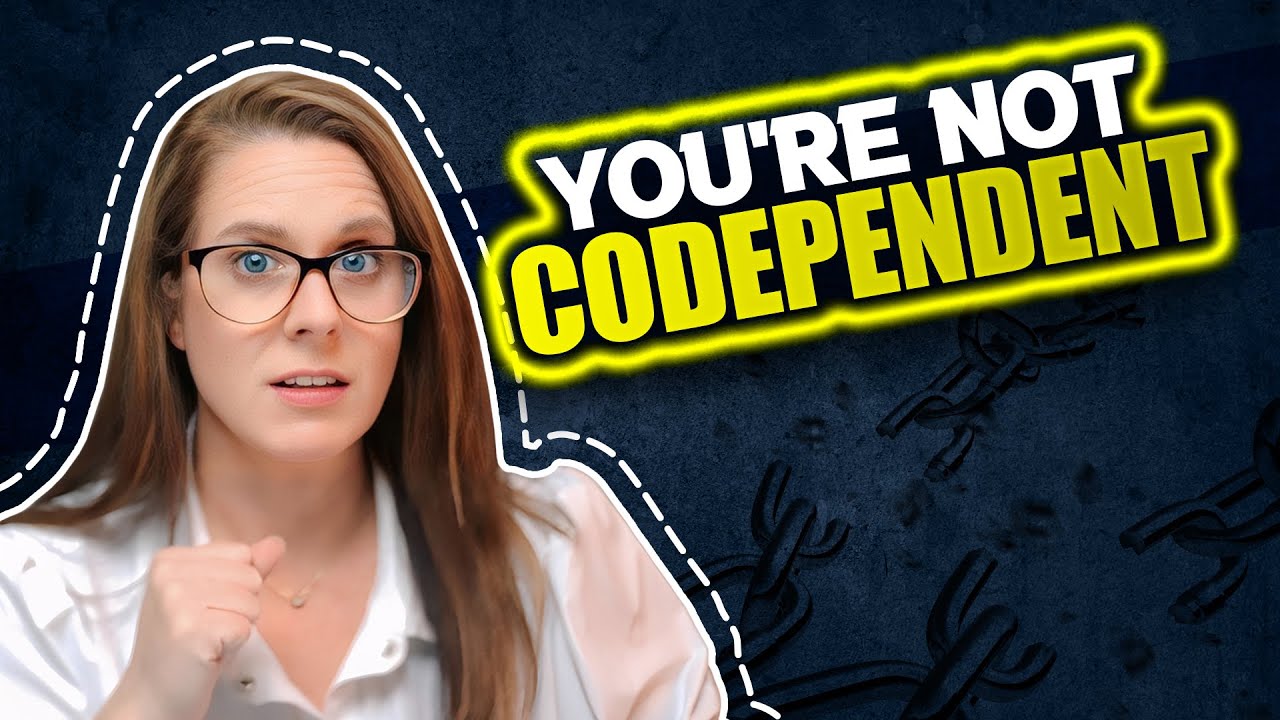
Amber Hollingsworth argues that family members of people with addiction often have betrayal trauma, not codependency. She uses the PACE system (Pause, Ask, Clarify, Express) to manage trauma activation and recommends therapies like EMDR and Accelerated Resolution Therapy to address the underlying wound.
Chapters
Ever feel like your emotions and your reactions are just out of control, specifically when it has to do with your addicted loved one, the dynamics between you, all the triggers that happens, and no matter what you do, you just can't seem to get them under control? You watch video after video, you practice your responses, you practice your communication skills. Maybe you're even inside the Invisible Intervention and you're doing all that and you understand what's going on, but you still find that you're constantly getting emotionally reactive. If that's the case, you may have been labeled codependent. Maybe someone's told you that. Maybe you're telling yourself that and you're getting all the codependency books and you're reading Melanie Beattie and you're going to Al-Anon. You're doing all the things. You're trying to address your codependency, but it's not helping. If that sounds like you, it could be because what you are experiencing isn't a codependency symptom. It's a trauma symptom, specifically very likely from betrayal trauma. And I think this happens even more. It can happen in any situation where you have an addicted loved one, but if your partner or your spouse is having an addiction and they've been keeping secrets and then it all comes out, then that reactivity is probably very connected to a betrayal trauma symptom. If it's your child, the trauma is a little bit different, but you can still have those PTSD symptoms because you're constantly like imagining these worst-case scenarios. Every time you hear that phone ring, especially if it's late at night, every time you send a message and you don't hear anything back for an hour or more, and you just start to panic and you feel constantly scared to death. You're just waiting for that bad news, that phone call, that police officer to show up on your porch, that call from jail, and Living like that over a long period of time will absolutely traumatize you. You will end up with complex trauma symptoms. I want to tell you the reason this came up, because I want to tell you about a client that we had, I don't know, maybe a year or so ago. And the client's— we're going to call her Sarah. That's not her real name. I was actually— Sarah. Seeing the husband in our, like in our strength-based recovery coaching program. And he had been doing pretty well. He'd actually been sober for, because he was sober before he started seeing me. So I think he was sober for like a month or 6 weeks or so at this point. But he was still telling me, he was like, things will be going great. We'll be getting along great. Everything's fine. Then all of a sudden, Something will happen. Usually I have no idea what it is, and she is freaking out and she just loses her mind. And then she brings up every bad thing I've ever done, and no matter what I say, I can't calm her down. And then when I mentioned that she's out of control, of course that makes her even madder. And then she blames me and tells me it's my fault of all these things I've done. And he was feeling pretty Hopeless and depressed when he was telling me this, because he's like, I know I've caused this and I feel terrible for it, but I don't think I can live like this forever. And he's like, Amber, is this going to be forever? Is this never going to get over? And I felt bad for her. I felt bad for him because both people in this scenario were trying so hard and they were getting better in so many ways, but they were still— Really struggling. And I'm sure, I mean, I didn't work with Sarah directly. She started working with one of our family counselors. I'll tell you about that part in a minute, but not even knowing Sarah, I knew what she was going through and how it feels. This trauma symptoms, what happens is your body just gets into like fight or flight response and you either shut down or you get really angry and you start a fight. And when you're in a trauma Space, there's hardly any controlling that. It kind of, it takes over. It's very overwhelming. It, you're being ran by your survival mechanisms. And so when I was talking to my client, the husband, I was trying to explain to him, I was like, look, this is what's happening. I think these are trauma symptoms. Because a lot of, and the other thing that made me know that that was what was happening is because He would frequently tell me after one of these episodes, like the next day or 2 days later, she would be like, I'm really sorry, I overreacted, and then be apologetic. And they would have a really good talk and they would work things out and things would be good another week or so. And then something happened, it would start again. So knowing that told me that his wife, Sarah, not her real name, but his wife really was trying her best to do all these skills, and she really was being triggered. And once those triggers would happen, it would just take over, and she would say and do a bunch of things that she would end up regretting later. And my heart just broke for her, really, and for him, because he, he felt so guilty about it, but also was building a lot of resentment about it. And he was just like, maybe I've broken this relationship. beyond repair. Like, I realize that this is my fault, but I can't live where I'm being like berated for hours at a time, like, and stepping on landmines I don't even know I'm stepping on forever. And I understood what he said, and I understood where he was coming from too. So I finally, I talked him into talking her into seeing one of our family counselors. And so Sarah ended up seeing Seeing Campbell, I believe it was, and working with Campbell, they were able to sort of identify that this is what was happening, that it was a trauma symptom. It wasn't codependency because this poor woman, of course, she had been going to Al-Anon and she had been getting all the advice, work the steps and detach with love and all the things. She's like, I'm doing all the things and it's not working. Or she says it's like working sometimes. She's like, most of the time. I'm cool, but sometimes it's just like something happens. Either I see something that triggers an old memory, or he does something a certain way and it makes me think he's being sketchy, or he's 5 minutes late coming home and I start to spiral. And then all that, all those skills, all that knowledge, all those abilities just go out the window. And then I lose it and I'm so angry. And she, she's telling Campbell like, I know I'm scary. I'm scared of myself when I'm like that. It is bad. It is scary. And they were able to identify that, you know, these things she was working on about blaming herself for being codependent and all these other things, that, that wasn't what was happening. Like she was experiencing real life trauma symptoms. When you're in fear for your loved one, for your family, for yourself, over this long period of time and it's constantly bad situation after bad situation, being gaslighted over and over, being fearful of DUIs, or maybe somebody's going to get in an accident, someone's getting hurt. You start to visualize these things. It really is traumatic. And then you start trying to protect yourself by getting ahead of it, by Doing all the things that we tell you not to do. I totally understand why you do them, but doing all the spying and the sneaking and the checking up and the trying to find the evidence and then the presenting of the evidence and then getting gaslit and all the things. You guys know what I'm talking about. You know the cycle. You're almost like inadvertently deepening your own trauma because when you're doing that, you're imagining these worst-case scenarios and your brain doesn't know the difference between what it imagines and what happens in real life. Like, for example, and I've had this before, I bet you guys have had this before. Have you ever, um, like had a dream at night? Maybe you were like mad at someone. Like maybe like for me, I get mad at my husband or something like that and I wake up and I even know that it was a dream. I'm still mad. Like I'm still looking at him thinking, ooh, I can't believe you did that. Even though I know he didn't do that because the emotional response is the same. Just like, just like you can be, um, watching a movie, watching something happen to someone else on a movie or a TV show, and either be scared to death or crying or feel really embarrassed for them because you're imagining it. And you can see that your body physiologically reacts the same as if it were happening to you right in that moment. That's what I mean when I say your imagination It doesn't make a difference if it happened or you're imagining it, especially when you— I call it going into the pit. You go into the pit, it's dark, it's like the rabbit hole down in there, and it just is darker and darker the deeper you go. There's this weird feeling inside that's like makes you want to obsess about it. Like somehow if I obsess about it, it's, it's going to protect me, but it actually is just re-traumatizing yourself. You guys know what I'm talking about? You get yourself like More and more and more scared, more and more upset, all the things. And then the reactivity comes. But I want you guys to know that reactive behavior isn't codependent, it's protective. Reactive is protective. Okay. The difference is, if you're wondering, is this a codependent behavior or is this like a trauma behavior or reaction? Because there is some overlap. And most people we see have some of both going on, to be honest, especially like parents. Codependent behavior is like when you're— it's the over-functioning stuff. It's the like blocking of the natural consequences, you know, the paying of bills, the overprotecting from other family members, the walking on eggshells, the trying not to tell this person. information, afraid that that's going to make them views, you know, all the things, paying for the lawyers, calling the bosses, all the things where you're enabling them, like you're protecting them from consequences. Those are codependent behaviors. Okay? When you are having a severe emotional reaction, and I mean, we all have that. Sometimes we just get mad, but those of you who have this, you know, you guys, You know I'm talking to you because you're like, oh yeah, it happens to me and it's out of the blue and I feel like I can't control it and I feel regretful about it, but then I feel mad because then I'm like, well, it's your fault I have this. Yeah, you're the ones that I'm talking to. You guys know exactly who you are because you know exactly what this feels like. Like you could be driving down the road and start thinking about something and remember something and just feel like You're losing it and they're not even there. You know, that's what I'm talking about when I say you're having that trauma response. You probably feel it physiologically in your body. Your muscles probably get really tight. You probably start maybe even sweating. You're getting like severe headaches after. You're feeling very, very tired after because your adrenaline and your cortisol is done going crazy and then you're exhausted after the fact. Yeah. If you're having that, then you are having trauma symptoms because your alert system is on the fritz because of everything that you've been through. And yes, there are things that you can do to help that. I'm going to give you a system for doing that, a system I call the PACE system to help you in those moments think through what's going on. But Also, you need to think about getting some help for yourself specifically for this. You could see a trauma-trained specific person. There's a couple of videos on this channel, like 3, I think, where I talk about a trauma-specific therapy called art therapy, but it's not like drawing. It stands for Accelerated Resolution Therapy. It's like the new EMDR, if you've heard of that. And what I really like about that is it's fast. And so that might be something to consider, or you could work with one of our family specialists. And what's nice about that is you're dealing with someone who like understands the specific situation you're in, who can help you work through these symptoms. So if you're trying all these things and it's still not working, then get some help for the trauma symptoms, right? It's going to take more than going to an Al-Anon meeting to help you emotionally reregulate. In fact, Campbell and Kim have been secretly behind the scenes working on creating a new program for family members called Beyond Boundaries. And it is just for the family member. We know that most of our content, most of our online courses, most of our coaching, it's all about what does the addicted person need. And I feel guilty all the time because I'm always telling you, say this, don't say that. And this is what your loved one needs. And this is what what they're feeling and what they're thinking. And I feel like we do a good job of that. I stand behind all that, but sometimes we're not doing a good job of helping you, the family member, get your own self back. So Kim and Campbell have been working on a program called Beyond Boundaries, because it's like, yeah, it's got some boundaries in it, but it's beyond that. And that beyond is all about getting yourself back. It's not out yet. I'll keep you guys up to date. They're finishing up. The last little things. It's going to be like part online video lessons, part one-to-one coaching. It's got several pieces to it. So we'll tell you when that comes out. But it's specifically for finding yourself again. If you feel like you've gone crazy, which maybe you have a little bit, and you can't seem to get back to yourself and you feel like you're obsessed about it and your emotions are all under control. That's for you. So in just a minute, we'll talk more about the PACE system. We're going to take some questions and some comments, so go ahead and get those in the chat if you want to. If you put question marks in front of it, it helps Bree, the moderator, know that they're questions. So go ahead and be getting those in there. I'll tell you about the PACE system. We're calling it PACE so it's easy to remember, and it's an acronym. So the P, when you feel physiologically in your body all those things that we just talked about, like you're getting tight, you get yourself worked up, maybe your loved one's not even home yet and you're thinking, oh, I'm going to I'm going to tell him this. I'm going to say this. And you're like getting all keyed up. That is your moment when you feel those physical symptoms, you're having those thoughts, you know what they are, to first start with P, which is pause. Okay? If you are in that state, you're not going to be able to be effective at any kind of communication with your loved one about it. Nothing. I know you may have the instinct to deal with this right now, to call it out right now, to make an accusation, to present your evidence, whatever it is, but you're not going to do a good job of it. And I'm not just saying that because it's not going to be pleasant for the other person. I'm saying it because it's not going to be pleasant for you and you're not going to do a very good job of getting your need met because you're going to be in that adrenaline fear-based state and you'll probably react in a way that'll make your loved one react in a way to you back that's going to make you feel worse by either like gaslighting or telling you you're crazy or telling you you're imagining it didn't happen or telling you that they can't take it anymore. You're the reason why they whatever engage in their addictive behavior. They're just not going to be helpful for you. Most of the time, unless they have massively good self-regulation skills, they're going to immediately get defensive. And then they do and say things in it that they regret too. And they may not tell you they regret it, but they tell me they regret it. So I know that they regret it and they do, they feel guilty, but when they feel under attack, they don't usually express feeling guilty. They express defensiveness, which does not help you. So pause. Okay? Don't do anything in that moment. Just buy yourself some time. And then in that time, I want you to— the A stands for ask yourself. Ask yourself, where's this coming from? What specifically am I afraid of right here? Like, get your head really wrapped around the process of what's happening to you. Maybe some of these triggers aren't even just linked to the specific addiction situation you're in. Maybe some of them go back to your childhood. Right? It may be if you grew up, especially if you grew up like in an addicted family or dysfunctional household, something that's happening now could be connecting something that happened then. And now we really have like double complex trauma going on. So do some self-reflection about it. Ask yourself these questions. Acknowledge what is really going on here. What button is being pushed? And maybe even do like some journaling or something about it. And while you're doing that, clarify for yourself what you need that would make this better, right? When you're in this really reactive state, what happens is we get in this anger state, and anger is a protective emotion. It's a valid emotion. It's just not a very productive behavior usually, but it is a productive and valid emotion. So when you're in that Self-reflection, asking yourself, state, clarify what would make it better. Okay? Sometimes that means you're going to ask for what you need, which we'll talk more about in the E part of PACE. Sometimes that might mean talking to someone who really understands about it. Sometimes that might mean taking a break, getting some distance, setting a boundary for— and I wrote this on my notes. I keep looking over here in capital letters. For yourself, because you guys know how I feel about boundaries. Boundaries are for you. Setting a boundary for yourself to help protect you. And once you've got some clarity on it and you feel a little calmer, then you move into the E, which is express yourself. So this is the time when you can actually communicate with your loved one about it more effectively because you've sorted through it a little bit. You've given yourself a little bit time to let that temperature on that thermometer come down to Somewhere reasonable. And then you can express what's going on. It's healthy for you to express what's going on. If you don't, if you're not able to express it at all, it's like it's just all this trauma and anger and fear is like trapped in the bottle. And it can be scary to express it because you feel like if I open it, it's going to be messy. So I tell clients it's like a soda bottle. that has been shaken up. And when you first start taking that lid off, it might spew everywhere. But once it spews everywhere, sometimes it fizzles down. Okay? So you might feel sad or something like that. And if you're afraid it's going to be too fizzy, you might want to first express that to someone else, almost like a practice run. But then you can express yourself to your loved one. And if you can express yourself without accusation, By express yourself, what I mean is more like ask for what you need or just explain the trigger situation. But instead of saying something that's accusing them of not caring or being sneaky, because any kind of accusation is just going to put them on the defensive, you can just say, you can go back to the whole classic, when this happens, I feel. You can externalize it to the addiction and not to the person, right? So it's kind of like making the addiction at fault and not your loved one at fault. That also helps. And just ask for what you need. It would really help me if X, Y, or Z. People tend to respond better to if you ask them for something than if you accuse them of something. And I don't know why. I'm like this too. I'm like this too. But when we feel like we're not getting what we need, the first thing we want to do is accuse them of something. You know, it's like, you're, you never. Wash the dishes. You never remember our anniversary. You never whatever, or you always. We want to accuse them of something and we basically, we're telling them it's their fault why we're so mad. And we don't do a good job of just asking for what we need. And people tend to respond a lot better to that. So PACE, pause, ask yourself, acknowledge what's happening, clarify. What you need and then express what you need so that you do a better job of getting your needs met. Because when you're able to be more calm in your expression and your loved one is able to respond to you back in a healthy, like therapeutic way, and they're able to hear you with empathy and care and concern, that's what heals this stuff. When you're very upset validly and your loved one Doesn't respond to you in a very good way, it's retraumatizing. And so we're adding to the mess that we're holding inside, and it's a nasty, ugly place. All right, we are about time to take questions, but I do want to bring up the sponsor for today's video. I feel like a real YouTuber when I say that. The sponsor for today's video is Soberlink. You guys know how much I love Soberlink. If you've never heard me talk about it before, Oh my goodness. You got to know about Soberlink. It is an alcohol breathalyzing system. If you are living in this trauma state, one of the best things you can do is externalize the accountability. So take yourself out of like the policing role and make some other person, or in this case, some other system do that for you. Oh my gosh, that's going to take your hypervigilance down from like 100 To like 30. Soberlink, it's not just a breathalyzer device. It is a device. I'm trying to remember. I've got one over here. I'll show it to you in just a second. But it's a system. And what I mean by system is it— your loved one would need to obviously be in agreement to do this, but it would, if the trouble is alcohol, it would have them breathalyze themselves several times a day. Usually 3 times a day is the the starting point. That's what research shows is most effective. Some people want their loved one to like do it every hour or 2 hours. I'm like, that's excessive. 3 times is plenty. And the purpose of it is really to prevent a relapse. If someone's still actively drinking and they're not stopped, it's not really going to help you. But if someone is in those early stages of recovery and you're trying to rebuild trust with your loved one, This is going to help the dynamics between you guys tremendously, which is going to help you and them because it's going to take you out of the policing role. Because when they are supposed to test, usually 3 times a day, they get a text message to their phone that just says, hey, you have a test. And they know the time. So you decide the time. Like when I do it, I decide the time with my clients and we build it around what works for their lifestyle. Like I give them usually a test in the morning when they wake up. Right before they typically go to sleep and somewhere in the middle. And the schedule can be different on different days. Like maybe you want a different schedule on the weekends than you want during the week or whatever. Maybe sleeping on the weekends or whatever. It can go around your schedule. It's— the purpose isn't to be a punishment. The purpose isn't to catch anyone doing anything or to be a pain in the butt. It is to, number one, make being sober easier, which it does because You know, you're not going to get away with it. So you don't have nearly as many sneaky thoughts about it. So it actually causes you to have like a lot less cravings. It makes things easier. But maybe the best benefit is what it does to the relationship dynamics. It relieves all that stress and tension. And it, because the loved one knows it's being handled and they don't have to monitor it and they don't have to constantly sneak and spy and check up on and drive by and make sure you're where you're supposed to be, all the things. Their hypervigilance can go down and it can really help in this healing process to put that accountability piece somewhere else. Let the Soberlink manage it. You don't even have to be, as the loved one, you don't even have to be the Soberlink partner. Oh, I forgot to tell you that. So if the person misses a test or they're late or they're positive, then their accountability partner gets a message that just says, hey, Jesse missed their test or whatever, or they were late, or they got a positive. If they get a positive, the accountability partner, the support person gets notified by text and it'll like retest them every 15 minutes, like up to 6 or 7 times, I think, till they're back down to below the thresholds till they're back negative, basically. And because as the loved one, you know, it's being handled, you don't even have to get those messages. In fact, I usually start out by saying for the loved one, especially if it's like a spouse or something, not to have to get the text messages because the goal for us is to decrease the hypervigilance. When the messages, like when it's my client and the message comes to me, I'm not going to freak out because I've not been traumatized by this person. Right. And if they're 5 minutes late, I'm not spiraling. Right. I could just text them and say, hey, you're late on your chest. What's going on? They'd be like, oh, I'm in a meeting. I'm going to take it in 15 minutes. I'm totally fine. And it's all cool. The purpose here is to help the trust build back faster and to help the loved one have less triggers and the person struggling with the alcohol problem to have less triggers. I think I said I'd show it to you, so let me grab it. It's over here on my shelf. This is what it looks like. I want you to see it because It's small, like it's like the size of your hand, and you can— it's in this case, which kind of just looks like a sunglasses case if you ask me. So it could be in your glove box, it could be in your purse, whatever, in your truck console, and no one's going to know it. So this is what the device looks like. It's super simple. This is the straw that you blow into. It's got a power on button. It'll start blinking when it's ready and you blow into it. Takes 20 seconds or less. You can get to the bathroom and do it. No one's ever even going to know you're doing it. I've had lots of people do this from college students to physicians to business people to super busy moms, and they're able to do this and no one even knows about it except the people that they've told about it. So if you want to learn more about Silverlink, I'll put the link in the description. You can click it. It's going to take you to a page that I made specifically for you where I show you everything, all the behind the scenes and answer all your questions about it so you can see how it works. But I love Soberlink. You see, I get excited when I talk about it. And the reason is because I've been using this long before I was making YouTube videos, like years before I started making videos. And I found it to be the number one most effective tool in helping people get sober from alcohol. So if it's not alcohol, there are other ways to externalize the accountability, like drug testing. And there are some other symptoms. Other ways of going about doing that. But it's about having a system that's really consistent. And it's most effective if it's consistent because it'll prevent it versus if you just wait until you see something and then you're upset and you're in one of your trauma spirals and you go get some drug tests out of the kitchen or you go get the breathalyzer out of the drawer, just like the plain one, and you have them do it, then you've got a fight on your hands because it's an accusation. So when I say accountability, I mean set it up in a systematic way that happens very consistently for a preventative measure, not for I'm trying to catch you. Because once, because if you catch it and it's done happened, what are you going to do then? Right? It's not even that helpful to catch it. It's more helpful to prevent it. So, oh, I see Julia saying, is Soberlink available in the UK? Yes. You can use Soberlink anywhere. They will ship it to you. We're having one shipped out of the country probably today or tomorrow. So yes, you should be able to use it in the UK without any trouble. All right, that's it for Soberlink. Let's take your questions, your comments. If you know what I'm talking about when I'm talking about these trauma symptoms and feeling out of control with your emotions, put a little hands up, like a, that's me in the chat or in the comments. So I'll know that I'm not just making this stuff up over here. All right, Bree, what do we got? Cindy McMillan says, how do you find a therapist who's going to be able to help you with trauma, grief, and anxiety? I don't feel anger, just those other things over an adult child. Okay, this is a really good This is a really good question. And you know what it reminds me of, Cindy? When Campbell, Kim, and I talk about it behind the scenes, Campbell always says the parents are scared to death. Like the big emotion is like fear and grief. Like she calls it loss of dream grief. And then Kim says the spouses are mad. Kim says they're so mad sometimes they're scary to her, which kind of makes sense when you think about it, because it's 2 different roles. If I think if you have somebody, Cindy, that understands addiction, especially from the family perspective, that's definitely going to be helpful for you. But you can get trauma-specific help, like the ART stuff, like the EMDR stuff, like other trauma help. And that can actually help to reduce those emotionally reactive symptoms, especially when you feel like they just come on out of nowhere. Like when you think of PTSD, you probably think about like a soldier and hearing a loud and jumping. It's that same thing, only maybe it's not a loud noise. Maybe it's a phone call late at night. You know, maybe it's something sketchy in the trash can and it sets you off. Those are trauma symptoms. So I would either find somebody who understands addiction or I would find somebody who specializes in trauma, or maybe both. And you can look in your area if you just sort of Google therapist. Probably the first thing will come up is Psychology Today because it's the big, like, I don't know, place that kind of lists a lot of people. And when you look at people's profiles, Cindy, look for a specialist. Like, when you're like a licensed counselor, you can be like a general practitioner. You can see anything and everything. So if you've got— if you see someone's profile and they like literally have everything listed out on their thing, as in, I see adults and children and adolescents and geriatrics, and I see people for every single issue, I'm not saying they're not good. But it's hard to be good at everything. So look for someone who says, this is what I do, and that what they're writing on there about sounds like the stuff you're dealing with. I feel like you're a lot more likely to get somebody who gets it and understands. And even though you're listing 3 things, they're probably all wrapped up in one. Even though you're listing trauma, grief, and anxiety, it's all about the trauma, probably. How do I get this type of trauma treatment while being transparent with my spouse? He will want to know where the trauma is coming from. It's from his behavior, abuse towards me, or from the addiction. This is really good. This is a good question. I haven't had this in a long time, KP. What I would say, here's how I would do it. Y'all know I can be, I can put words in like pretty wrapping is what I call it. So the way I would say it is I would say, look, I know I've been really reactive lately. My emotions have been all over the place. Sometimes I'm angry or upset or over angry or upset. I'm going to go see somebody to deal with that. I'm going to figure out why that's happening. So you don't have to say it's because of you. If you say I've been emotionally all over the place or reactive or whatever it is, your spouse probably thinking, yeah, go ahead and go. They'll probably agree with that. And you don't even have to say, you can just say, I'm not exactly sure. I just know I'm not feeling good. And then go. Maria says, when I distance myself, I'm then anxious about what he's doing and if he's using. No matter what I do, I'm anxious. How can I not be anxious when my son is killing himself? That's a really good question, right? It's like when we tell you guys to try to dial down the fear, but you're— it's like your house is on fire. How are you not supposed to be when your house is on fire? One of the things is when you feel yourself going into the rabbit hole, Maria, and you literally start imagining all these things, try to redirect yourself out of that. Try to distract yourself. And it's probably going to take more than just like watching something on TV or reading, because when you're in that state, it's hard to concentrate. So do something that like forces some amount of concentration. Do a task that requires concentration. Call someone else, start a different conversation. Call your best friend and say, I'm having a bad day. Tell me a funny story. Shift the gear about it, and that will help you to not stay in it as long. The longer you're in the rabbit hole, the worse it's going to get. It says he's always being defensive whenever I try to discuss the drinking. At what point is enough enough? I'm now starting to disassociate from him. I'm nervous to leave because of our financial— looks like entanglement. He wants me to be okay with it, but I feel like if I'm okay with it, he's just gonna do it. It's a lose-lose because if I'm angry, he's still going to do it. Okay, there's several pieces to your question here, Dan. Okay, the first thing I would— the first question you have is when is enough enough? I've got a video, a couple of videos on this channel about when to walk away, when to leave. And I outline sort of 4 specific scenarios that are like, okay, these are the cues. It's time to like at least go for now. Okay, maybe not go forever, but go for now. So take a look at those videos. You can find them right on the channel if you go to the channel page. Then I want to address this other piece that you're saying, which is he wants me to be okay with it, but I feel like if I'm okay with it, it's just, he's just going to keep doing it and feel like I'm fine with it. It depends on what your intention here is, Dan. The thing of it is, is if he doesn't think he has a problem and he's— and your person's in denial, like they're like, I don't have a problem, or you're being crazy, or okay, I do whatever too much, but it's not that big a deal. If they're in any level of denial, then if what you're trying to do is get them to deal with the issue, Then you actually don't want to slow it down by being upset and putting all these gates around it. You actually want to step out of the way and let it roll so he can see it faster. A lot of times what our instinct is, is to try to like say, okay, like you promise you're not going to have more than 3, or you promise you're not going to do it tonight. Or, you know, we try to catch them doing it. And if someone's in denial, that's really the worst thing you can do because they really truly believe they don't have a problem with this addiction. They have a problem with you. In their mind, you're the problem. So if you're trying to get them out of denial and you're scared, if I just back up from it and sort of be neutral about it, they're going to keep doing it. Yeah, you're right. They're going to keep doing it. And what you're going to do is you're not going to protect them from the consequences of it because you're going to get them to see it. That's what we talk about in the Invisible Intervention. So The difference is, is what do you need to do for yourself? What do you need to do for your loved one? And sometimes those things don't line up, honestly. That's why we have, we call it lawyering in our office, how we do it. We give the family member a lawyer, not really a lawyer, but a coach, an advocate, and the other person gets an advocate because we hope it all lines up and goes in the same direction, but sometimes it doesn't. What's next, Bri? Stephanie says, I'm struggling with asking for the help part because I don't need their help. I need them to commit to take care of things. How can I rephrase it without taking on their burdens? I think what you're saying is it's kind of like it feels frustrating to say, hey, can you help me? Because it's like, no, you're not helping me. You just need to Pick up your part of the responsibilities. I think that's what you're saying, right? Like if you're married and you have kids, you don't say, hey, can you watch the kids for me? Right? Like they're your kids together or whatever. You're like, hey, can you watch the kids? Or I need you to watch the kids. I think maybe a way to say that, Stephanie, is to say, can I rely on you for X, Y, or Z? And you're not saying like, don't say, can you help me out? Or I need help with, if what you're feeling is frustration because it's not just your responsibility. You're really just wanting them to be responsible for their part of things, which I think is what you're saying. Then I would just use the words. You can even say, I would feel so much more at ease if I knew you had this handled and I didn't even have to think about it or whatever. How do you express yourself without the alcoholic using it to attack you when they drink? I don't have a 100% surefire way to do that. I can tell you there are ways of doing it that tend to work a lot better. And so the chances of them using against you are a lot less. But sometimes when people, especially if it's drinking, that's the issue particularly, what happens is this addictive person, especially when it's alcohol, They start digging up their old resentments and self-pities, and then they just get mad. It's literally a symptom of the alcohol. And they start perseverating on some bad thing that happened or some argument you guys had or some way they felt like you treated them unfairly. And then they harp on it and it's probably the same one or two things every single time. Because usually it is. They'll bring up the same old thing. It's like they don't get over it. And it's because they don't get over things because they're dealing with whatever their Feelings are with the substance, and so the feelings come up. They pour the substance on. They squish it down. The feelings come up. They pour the substance. Like they don't get on the other side of things, so they continue to bring it up. If they're bringing up something from the past that has any legitimacy to it, maybe it wasn't your fault, but maybe you reacted in a way you didn't want to. Then just acknowledge it. But I'm just going to tell you when people drink, specifically drink, they pull up these. memories and they just get stuck. Sometimes it's mad at you, but sometimes it's like grief or something else that happened to them in their life. I can relate to this feeling. I used to overreact and then go off on my alcoholic husband. But for the past year, I made a concerted effort to react calmly during his lapses and relapses. Is it still betrayal trauma? I feel like I've internalized all those negative feelings. So what you're saying is even though you're not externally reacting like you used to, you still feel like internally you're a mess. Yeah. Yeah. Even if you're not externally expressing them, but you're feeling it inside, then yeah, it's still there. And not everyone responds to trauma by being angry, right? Some people respond to it. It's the fight, flight, freeze, fawn thing, right? And you have to decide where you're at in that spectrum. But just because you're not acting out in an angry way doesn't mean you're not experiencing trauma. Maybe you feel tearful. Maybe you feel depressed. Maybe you feel hopeless. It can be any range of those difficult feelings. All right guys, looks like we are about to the end of our time today. I want to remind you, as always, there are resources in the description. I put the Soberlink stuff down there. There's all kinds of other resources down there. And if you're watching on the playback, hey, we're glad you showed up too. If you want to join us next week live, we're live every Thursday at 1:00 PM Eastern. And I'll see you guys next time. Bye, everybody.
More from Amber








Addiction Turns “Me vs. Drinking” Into “Me vs. You” #addictionrecovery #addictionawareness

They Admit Everything Except the Addiction #addictionrecovery #addictionawareness

Stop Trying to Make Them Admit the Truth #addictionrecovery #addictionawareness