"Q&A with Addiction Expert Amber Hollingsworth: Insights and Answers"
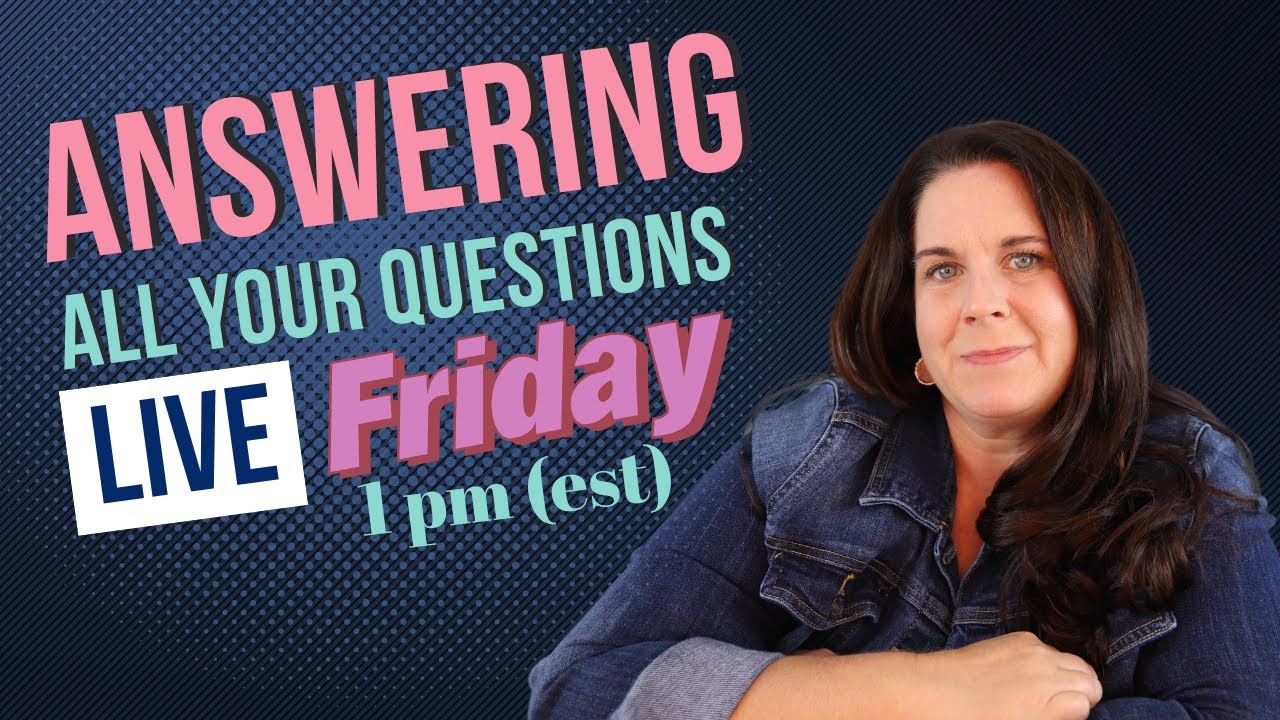
This content was created by Amber Hollingsworth. This content was uploaded by Amber Hollingsworth. This is a YouTube video titled "Q&A with Addiction Expert Amber Hollingsworth: Insights and Answers" (created 2023-07-21T19:04:02+00:00). The content appears to be a Q&A-format session featuring Amber Hollingsworth as an addiction expert, likely involving an interviewer and/or audience questions about addiction topics. No transcript text was provided in the excerpt.
Chapters
Girl, what's up? I'll see if I— oh, there he is. Hello everybody, thank you for joining me on this special Ask Amber version of a live video. This is in celebration of our 100,000th subscriber that we hit this past weekend, and I can't even begin to tell you guys how excited and happy I am about it because it's literally been the hardest thing I've ever done is build this YouTube channel. It's like a lot of things in life, it's like the hardest thing and the most rewarding thing. So, uh, that hitting that number for me was a huge, huge milestone. And hopefully— I don't know if you guys know much about YouTube land, but when you hit 100,000 subscribers, you get like this, um, plaque. It's, it's like, I don't know, it's this big. It's silver. They call it the silver play button. Like when you get like a million, you get like a gold one, and then like, I don't know, a bazillion, you get a diamond one or something crazy. But I don't know that we'll ever get there, but the fact that we're going to get one of those silver play buttons literally to me feels like I've won the Nobel Prize. I'm so excited, and I can't tell you how much I appreciate all of your support. You guys are always leaving the likes, sharing the videos, leaving me sweet messages and comments, tell me how the videos help you. And without that, I probably would have quit making these videos years ago because I spent several years making videos When we didn't have any viewers. And so when I hear you guys telling me about how these techniques work for you, about how it's helping you, about how you listen and you feel calmer after, that is exactly what keeps me motivated and actually my whole team motivated. Hopefully you got to catch some of the lives this week with Kim and Campbell. And yesterday we interviewed the founder of Accelerated Resolution Therapy. Hopefully you've caught some of those too. So I just want to say thank you guys. I feel like I should be standing at the thing where you like get your Oscar and you thank everybody, thank your team, thank you guys, all that support, and get all teary-eyed. My sons asked me what I was going to do when I got my YouTube Silver Play Button, where I was going to hang it at. And I said, I don't know if I want to hang it at the office or at the home where I usually record. And then I said, no, I think what I'm going to do is put it on a chain and wear it around my neck like Flavor Flav or something, because I'm just so excited about it. And he laughed. If you guys want to go ahead and start putting up your questions in the chat, I'm going to answer as many questions as we can possibly get to today. So you can ask me questions about addiction. You can ask me questions about me, the office, YouTubing, whatever you want to ask. I'll do my very best to answer. Okay. So Susan has got the first question up here. It says, How do I kindly tell my 30-year-old, 31-year-old son in Tennessee that he is not welcome to visit until he can demonstrate that he's not just looking for a new place to live? He's on Suboxone and alcohol issues. I'm wondering, Susan, if when you say not visit, is it your son's trying to come back home and live with you? Or is what you're saying, he'll be like, well, I just want to come visit. And then you're afraid like he'll show up and then he just like won't leave. Or are you saying, well, we don't even want him to visit the houses and come eat dinner because he has a history of causing fights or being violent or stealing stuff. I can imagine it might be any one of those scenarios. But I do think the idea of how do you ask someone in a kind way is a very important question because you could just throw it out and you could say, oh, you're not coming to our house and get your attitude in there and it just won't be very helpful for anyone. So Do you think, Susan, that he will like outright ask to come? Will he hint to come? What's the scenario that you see around this? I'm going to do the best I can just to answer it without all the information, but if he's wanting to come visit, then I would say, you know, let's meet somewhere, we'll go to dinner. I've tried to kind of redirect and avoid it in that way. That'd be my plan A. If you think he's going to outright ask to come and stay with you, I think that you are making the right decision. When you have an adult child coming to live back at home, it's just rarely a good thing. I mean, even if addiction's not involved, it can be very difficult, but with addiction involved, it almost always ends badly because he's going to want to be an adult and you can't stop being a mom. And when you see him sleeping until noon and doing all this stuff, you're going to do the mom thing and it's just going to cause conflict. And that's not even getting into all the addiction chaos. That's just regular stuff. So if he comes right out and asks you, then I would just say, I don't think it's a good idea. I think if we live together, it's not going to be good for our relationship. I love you. I support you. Be super sweet about it, but help him come up with another plan. That's what I say. What's our next one, Bree? Bree's helping me with the questions today. I feel like a total rock star. I have somebody helping me with the questions. Super happy. Super better. Hey Amber, my qualifier recently, my question is recently my son said rather adamantly that he would rather commit suicide than go through detox, uses fentanyl and meth. Is this denial fear or not ready or no desire to stop? Thanks. That's a really good question, Nancy. It could be a combination of all those things. And the clarifying question that if he were sitting in my office right now, sitting on the couch and he said something like this to me, the question I would have is, is your son talking about, I'd rather die than go through withdrawal again? Is that what he means when he says detox? Or is he saying, I'd rather die than go through detoxes and like go to the treatment facility and be— Medically tapered off. Because what he might be saying is, I'd rather die than go through that horrible withdrawal again. And honestly, I don't think that's a rare thought if that's the case, because it is pretty horrible. I usually say you won't die from withdrawal from like meth or pain opioids, which is what fentanyl is, but you'll just wish you would die. So I think that there's some validity in what he's saying. So he might just be saying, I'm too scared to go through that. horrible awfulness again. If that's the case, if you could ask that clarifying question and find out if the case is I'm scared to death of that withdrawal, then you want to help them figure out how to get some medical help tapering off so that it's not so miserable. Or if what he's saying is he's just throwing that out to you as a way of saying, I don't want to stop using, then that's sort of a different story. And the other twist piece to this that you, that's not listed here. Like, is it denial, fear, or no desire to stop? It could be a mix of those things, but it could also be an emotional manipulation statement. It could also be kind of like the ones I call emotional blackmail so that you don't push them because it's kind of like throwing the ace card out there. So I don't know if it's one of those specifically or a combination, but those are the ways, those are the things that I would explore. with him if he were in my office. For the last 5 years, I have kept a calendar and journal of my husband's moods and drinking. It seems like it's cyclical, even as far as who his drinking partners are for each session. Can I share that with him? I would not. It's going to make him really mad that you kept that journal. I don't think it's a bad thing to keep a journal. In fact, And I don't know, Liz, if you are in our Invisible Intervention program, you might, I can't remember for sure, but one of the things that you do in the beginning of the Invisible Intervention is you do this thing called behavioral analysis, which it literally asks you to think through all these things. And the fact that you have a journal is very helpful. As far as telling him that, I know what you're, or I don't know, but I'm guessing what you're thinking is maybe if he could have this insight into himself, it would make him stop, or at least maybe like Stop hanging out with certain people or something like that. I really don't think it would have that effect. I think it's going to make them feel defensive and angry. If my husband came to me and said, you know, I kept a, I've kept a journal about when you've been in a bad mood or when you didn't clean the house or something like that, I would not take it well. So I don't think you should share it with them, but it is good information for you to have. When feeling close, my husband will sometimes apologize but won't say for what. Last night he says he feels completely lost. To me, that feels like change talk, but he's like, he doesn't quite want to bring it up. And he may be afraid that if he actually, like, I don't even know what the addiction is, if it's alcohol or something else or whatever. He may be afraid if he like brings up specifically That you'll want to talk about it and he's too scared to talk about it. Like you may want to go further into that topic than he wants to. But you're saying, is this a sign he's moving more towards contemplation? I would say, yeah, I think it's probably change talk and he's thinking it through in his head. He just doesn't, he's scared to open the conversation up. So what you want to do is you want to explore this, but not Like super hardcore. You want to play it cool. And so if you were sitting in my office and he said something like that to me, like I feel lost or this or that, then I would sort of be validated and encouraging and say, I know the times have been hard. And you can kind of like talk about it without talking about it either. I sort of like to take my cue from the person that's sitting in front of me talking. So if they're sort of talking vaguely around it, I would sort of talk vaguely around it and then see how comfortable that gets. What you don't want to do is if he brings it up, and you jump and say, okay, look, this is it. This is my window. And you jump parkour, then the slam door will come down. So these are just like the beginning signs of change talk. I think it's a good sign. My alcoholic husband or addicted husband has agreed, must be alcoholic husband, agreed to stop drinking. He travels for work and is a high-functioning alcoholic. Realistically, is it likely that he can give up without any support on his own. I think it's really hard to get sober even when you really mean it and you want to, when you either live alone or when you travel a lot. And I see a lot of guys here who have drinking problems in the office and they do a lot of traveling for business. And a lot of the ones I see, even like it's part of their job to have to entertain customers and stuff, and it's a big issue. I would say that would be very difficult. That would be, Lucy, this would be the perfect situation for a Soberlink. I don't know if you've heard me talk about Soberlink in any of my videos because I talk about them sometimes. But it's like the alcohol monitoring device that you— it's portable. You can take it with you. It has reporting, has scheduled tests. If he's really in an active stage of change and he's really open to it, Soberlink, that's what I would do. And that a lot of my guys that travel, that's, they've been very successful having that accountability even when they're away. And then it makes you feel better too. You don't worry as much. My spouse is in early recovery. Yay. I'm with you. Yay. But he doesn't want to talk about it or acknowledge it. I'm hopeful and want to help. How do I support if I don't know what he needs? Thanks. What he needs is just encouragement and he may need some accountability and some things like that, but you can't really provide it, like you said, unless he asks for it. Trying to hold someone accountable that didn't ask to be held accountable isn't super helpful. But what you can do is be just positive and supportive and encouraging. And I like to send messages. I know as a family member, it's easy to say like, well, you've done this before. You said that before. Why is this time different? I like to do the opposite of that. I'll say, this time feels really different. Because this or this or this. Because subliminally you're sending messages to them that they're either going to make it or they're not going to make it. And when you say things like, well, we tried this before, you're literally putting the message in their head that they're not going to make it. So don't do that. Just be positive. And if he does talk about it at all, be super cool about it. Don't stay on the topic too long. Let him control the gas pedal. And he'll be more comfortable. The more comfortable he is, the more comfortable he'll be talking about it because he'll know he can open the subject up and he can close it back. And just because he opens it up doesn't mean you're going to like come in with a sledgehammer. That's the key. My ex and I haven't spoke for a year unless it's been about our son. Last week he text saying he misses, loves, and cherishes me. He then brags about how much he plans to drink on his work trip the next day. The next day I see him and his affair partner partying on vacation. What is his game? Obviously I'm just guessing here, Amy, but my guess is he's either texting you when he's intoxicated or he's texting you when he's not intoxicated. So what you're seeing here is like mixed signals and confusion and like one minute this and one minute that. And that's because he's on a roller coaster. You know, when he's drinking and not drinking and withdrawal, he has little moments of clarity, but then he's back in it. And so to me, it's a symptom of the turmoil, the unmanageability he's going through. You're doing awesome, by the way. You're getting me spoiled. I love it. First, I just want to say congratulations on hitting 100,000 subscribers. Thank you, Patrick. I'm telling you, I feel like Nobel Prize winner here. Our adult son lived with us until recently and left on poor terms. How can we help him want to stop taking drugs and live a more productive life? The first thing you want to do, Patrick, is instead of thinking about how can we help him want to stop using drugs and live a more productive life, the very first step in that is building a trusting relationship. You can't influence him unless You have credibility with him and trust with him. So don't even try to influence the drugs, the productivity, and any of that right now. I just want you to focus on influencing the relationship and the trust. How do I drink socially without feeling like I'm enabling him? Dan, is what you're saying like your loved one is an alcoholic? Do they— Dan, can you give me a little piece more information? Is this person still actively drinking and you think they have an alcohol problem, but they're still actively drinking? And is what you're asking, can I drink in front of them? Or what is what you're saying is your loved one is like in early recovery and they're not drinking and you don't know if your drinking socially has an impact. Can you add some more to that? And Bree, keep an eye out. Because I need a little bit more, I think, to answer that question. I understand tolerance allows them to not feel the effects of alcohol, but what does it mean in terms of driving? Like if they don't feel buzzed, are they unsafe to drive? That's a really good question because when someone is like a— I talk about this all the time— when someone's like a functional alcoholic, which isn't a real thing, but it's a term we all kind of understand. So I say it a lot. It's like they need alcohol to function. It's literally like they need alcohol to get in their car and drive to work, which is terrible. But here's what I would say about that. Number one, I don't trust anybody's ability to judge how buzzed they are because that's sort of an effect of alcohol, like not quite understanding how intoxicated you are. I mean, how many times this has happened to me, how many times I've been out with a friend who literally couldn't walk Falling down, like you're holding them up and they're telling you they're fine to drive. Like, seriously. So I don't trust their judgment on how intoxicated they are. But even besides that, even if they are not intoxicated, the thing of it is, is if something happens and they get pulled over, even if they really were fine to drink because they do have such a high tolerance, they are going to be blamed. And so it is always a bad idea. Now, all that being said, I don't, there's a limited amount that you can do to control that. But if you're asking me, is it okay if they drink, if they have a tolerance? No. Even if they can, it's a terrible idea. How do I get trust back after boundaries crossed or infidelity, especially when they don't own it? Plus, without being an investigator, it's frustrating and it's hurtful. Melody, are you asking how to get the person to trust you? Or I think what you're asking is how do you gain trust in another person? How do you start trusting them again after they crossed your boundaries and infidelity, especially when they won't own it? Plus, without being an investigator, I don't know that you can trust someone who's still lying to you and saying it didn't happen. You know, if they're not owning it or if they're saying, okay, it happened, but It doesn't mean anything. That's kind of another example of not owning it. Or they could say, well, it happened, but it was because you did this or this or this. Also an example of not owning it. If that person doesn't understand what they did, why it happened, and the magnitude of it, then you probably shouldn't trust them again yet. Now, I'm not saying that you have to leave them, but I'm saying it would be silly To trust someone who doesn't even realize that they have a problem or that something went wrong. That doesn't seem reasonable to me. Doesn't mean you have to be mean or ugly, but I wouldn't trust them. Okay, so this is the rest of Dan's question. My partner binge drinks when I'm away for work or with my family. He won't drink in front of me because of how angry I get, but he won't quit or acknowledge it. I want to live a sober lifestyle, but I do find myself wanting to drink socially at restaurants or on weekends, but I don't want him to think it's okay. If he is still actively drinking, it's not going to do you any good to stop your own drinking. In fact, if they're still actively drinking and they're drinking in front of you, and then you stop drinking in front of them and they know that you think that they have an alcohol problem, they see it as an insult or a dig and it Kind of ticks them off. I had this client once whose spouse was alcoholic and they were very upset about the fact that their spouse wouldn't acknowledge it. And they used to drink a lot together. Well, the one spouse stopped drinking as trying to be like a role model, but it really ticked the other one off because it felt like a dig. And so the one that was still drinking would literally go into the kitchen, open the liquor cabinet as loud as absolutely possible, like bang the glasses, pour the alcohol. Basically, it was like a big old You know what, F word at you because it's kind of like it made them feel defensive because they knew that you're sending a message. So I don't think it's good for you to drink like crazy and just like encourage them on and on and on. But for you to stop as a role model isn't that helpful until they decide they want to stop. Once they decide that, and then you say, I want to support you, I want to stop with you, I think it'd be good for both of us, then that might be helpful. But Not until they're to that point. What is your top tip for staying sane when your loved one is trying to get sober? My top tip for staying sane is understanding that people don't go from sick to well in a straight line. And if you understand that there will be ups and downs, there will be backwards and forwards in which you won't feel as depressed or hopeless, or you just won't be so upset if there is a setback. Once you understand that it's all part of the process and it's okay, and it doesn't mean we're never going to get there, you'll ride those waves a little easier and smoother. Worried about the fine line between being positive or neutral, which I try to do, and stating facts about his behavior. or what I can't tolerate anymore. That's definitely negative. Okay, let me read that again. The fine line between negative and positive or between positive and neutral. Awesome. And stating facts about his behavior and what I can't tolerate anymore. I don't know if you, did you catch Kim's video, which happened on Monday this week? If you didn't, that's the video for you because this is exactly what she talks about. And she breaks down boundaries a little differently than I do. And I think it was like super helpful. She talks about She talks about a request and then an information update, and she gives like a whole 3-part system for it. If you haven't seen that, I definitely suggest that you check it out. But as far as you telling him, hey, I'm not going to tolerate this kind of behavior anymore, that just never works. What you can do, and I really, if you haven't listened to Kim's video, she says it better than me. So listen to her video. But she says, you can say, hey, Basically, it's like BTW, you know, if you're going to go out, if you start drinking or whatever, here's what I'm going to do. But you're super calm about it. You're super neutral about it. Not any like ultimatum-y kind of if this, if you do this, then that's it. We're done. It's not like that. It's sort of different. I hope that helps. Fruity Mango. I think I like, I like your username there. My husband is addicted to weed for over 20 years. We've been together for 20. I've decided to set boundaries and I don't want to be married to a pothead. He told me I need to address my own issues. Is there more to that one, Bree? I don't see more to that one. Wait, I think there is more. I saw some little like fire emojis with Fruity Mango's profile name. There they are. I thought I saw something. Can we talk about weed? I'm so sick of it being labeled as safe. My husband has been addicted for 20 years and has caused multiple issues within our marriage and family. High all our kids' lives. Oh, he's been high all our kids' lives. I don't know if you've heard me say this before, Free Domingo, but I think weed addiction is the most difficult one that I treat because it is so culturally accepted. Right now it's just like the in thing. So it makes people feel like everyone does it. And also the other thing is just because it affects people so slowly, they don't, they never realize just how much is it affecting them. I always say it's like, it's like being in the ocean and playing as a kid and you're out there playing and you, you know, you see your parents up there and you wave at them and then you go back to playing on your boogie board or whatever and you look up and you can't find them anymore. You think, oh my God, they left me. But really, The ocean carried you down the beach. You just didn't feel it. And that's what happens when people are addicted to marijuana. They don't have any clue about how bad it is affecting them. As far as can you bring it up, that's a tough one. Usually bringing it up super directly isn't all that helpful. I want to know what he means when he says What are your issues? Can you tell me a little bit more about that? Like, what's he referring to? And I'm not saying it, whatever he says, they may or may not be real issues, but in his mind, what are your issues? Because he's deflecting. He's using that to deflect, obviously. So that's what I want to know. What do you think of a person who has been successful in life, career, et cetera, And then has a downfall due to addiction, do you think it is harder to recover or do you think it doesn't matter? Age, success, et cetera, makes no difference. Actually, I think it makes it easier to recover because what it means is this, that this person actually developed good adulting life skills and then they fell into an addiction. So all of those skills and knowledge are still there. If we can beat this addiction, they'll probably get back on track faster as opposed to sometimes when we deal with people who've had addiction since they were like 13 or 14 years old. Not only do they have to beat the addiction, but they literally have to build adult skills. Like they have none of them, no coping, no anything. So if it was there before, getting it back's going to be a lot easier. So it is hard. It's hard on the ego to drop that far, but as far as actually recovery, if you just get past your ego, then I think it's Actually sets you up more for success. Okay, here's the issue that he says. He says me or our 2 teenagers don't respect him. He immediately flips it. He says that I need to work on coming out of my shell because I'm not as outgoing as him. So that's really 2 issues. So one is he says that you and the kids gang up on him, that he sort of feels like the odd man out. And then the other one is he feels like he should be more outgoing. So what that tells me is before you bring up the marijuana, and you may have heard me say this to someone earlier, but you've got to build a relationship. You can't address somebody's addiction until you have trust with them. Think of it like this. It's like when I get a new client comes into my office and they sit down on the couch, I don't even know them, right? If I start talking to them about what they need to do or not do, they're going to look at me like I'm crazy. And even if I do know everything about them, because a lot of times I do, because I done heard it all from their family. Or Campbell or Kim hasn't, they've told me. Nothing I say means anything until I have some credibility and trust. So start with the credibility and the trust. I have lost all hope for my 39-year-old. He chooses to use and wants me to support him in his choice. He was on the streets for a month in Miami Beach and I made the mistake of visiting him. It broke my heart and I ended up putting him in a hotel so he could shower and rest up. He of course made promises he didn't keep. Now I have paid for a hotel and he was Baker Acted the day I paid for the hotel. He is refusing treatment in the hospital and I had to go sign consent forms so he— so they could treat him. I do not know what to do next. All of his belongings are in the hotel room. Do I extend the room so his stuff will be safe? I'm over 400 miles away and cannot go there. There's a lot to this question, so I'm just going to answer this last part first, which is the most practical part, which I think what you're saying is, what do I do with his stuff? I don't think that I would pay for a hotel room To be storage. What I would do is I would probably call the hotel room, let them know what happened, ask them if they could put his stuff in a box and put it in an office somewhere so that he would have access to it when he gets out. And then if he is in treatment, he won't be in treatment long if he's Baker acted because they usually just long enough to get stabilized. But if you could get him talked into going to a sober living or extend his treatment somehow, then I would be more willing to be helpful by, you might could help pay a little bit on the sober living. You might could help if he needed some financial help getting his stuff to him or something like that. My thing with helping is you can help as much as they help. So if they take a step, you take a step. If they take 10 steps, you take 10 steps. So there's no amount of helping that you can't do. You just don't want to be helping them more than they're helping themselves because both of you end up resentful. You end up resentful because you feel like you're doing a lot more than they're doing, and they end up resentful because they feel controlled and judged by you. So, um, my BF's— is that boyfriend or boyfriends or best friends? I don't know. Parents think they can keep him from using heroin if they keep him under constant surveillance. He has just He's 28 and just relapsed 2 weeks ago after 3 years sober. Yeah, that's a terrible idea. I'm sure you already know that. That's why you're telling it to me. You can't control addiction externally. It's an internal job. You can't control it by getting their friends away. You can't control it by monitoring. I mean, think about people in prison, like how much more monitoring and less amount of privacy can you get? And they still use. So you just can't control it that way. And I know that's frustrating because you probably already know that, but seeing them do that's not helpful. Star says alcoholic adult daughter who has a 7-year-old daughter, totally out of control and putting the child at risk. She's having men in and out of the apartment. How do we protect the little girl? That's a hard one. If you have a good relationship with your daughter and she'll let you step in and be helpful and be involved in that child's life, that's the easiest, best way is to sort of be a teammate and align with your daughter. If that's not possible, which I totally understand, that is not always possible no matter what you do. If it's to the point that you have to call Child Protective Services, you always want to put safety ahead of what's therapeutic. So you guys know I always tell you what to do to help the person, how to be positive reinforcing, all that stuff, but safety always comes before that, especially when it has to do with a child. So it may come to the fact you have to call Child Protective Services. But let me warn you, you're not going to like this. I don't like it either, but don't be surprised if Child Protective Services doesn't do a thing because it has to be like very serious, very specific, and very provable some way that it's harming the child for them to be able to do very much. It's tough. I can tell you, I grew up with addicted parents and my grandmother was very involved and just her involvement and knowing we had her there was a huge help. And that helped us like a lot more than you could imagine. Is it Kate? Kat? Kate? How do I— I don't know how to say that, Bree. Anyways, how can I stop being so reactive to being made the bad guy? My partner is sober from alcohol but stoned 24/7 still and acts as if our relationship was the issue, not his addiction. Not his addictive behavior. He probably believes that for one. So it's hard to get out of it because he believes that. And for two, he's either consciously or subconsciously trying to keep you in the bad guy role. So if he says, if he's trying to pick a fight, which could very well be possible because it's like his addiction is using that to justify his own bad choices. But even if he's sober from alcohol, he's still stoned 24/7. He's still in that addicted state. So I would still do all those other things that I talk about, like in the Invisible Intervention, and as far as like getting someone out of denial and that kind of thing. Maybe I'm saying that right. Hopefully. My ex keeps reaching out for random stuff. He spiraled since we divorced, legal issues, et cetera. Can I be hopeful that he will ever apologize or only if he gets sober? Needs closure and I'm still broken. That feeling of a need for closure, I think we can all understand that because we've all experienced that before. It's this itch that feels like it needs a certain thing and it'll be like sort of satisfied or it'll feel better, at least like close the chapter, put it in a box, but it won't. Him apologizing won't fix it as much as you think it will. So you're wanting, it's kind of like, it's kind of like the urge to have the next drink. You think it's going to satisfy it, but it's not. So I don't know if he'll ever apologize or if he has to get sober, but if he did apologize and he doesn't get sober, is that really as healing for you as you think? If he gets sober and he's able to apologize eventually, it can be helpful. But you don't need him to do or not do any certain thing to find your closure. Closure is a you thing, not a him thing. Question, my alcoholic husband is in early stages of dementia. Doctor is aware of his drinking and are monitoring memory loss and have told him to quit alcohol. My question, My question, how can I let go? This seems dangerous. If he has a wreck and injures other people or catches the house on fire trying to cook, I will have to live with the consequences too. The worry is exhausting. When you say let go, Lucy, what do you mean? Do you mean like you want out, you want to leave the relationship? Do you mean just Let go of the worry and just let him do what he's going to do with the driving and the cooking and stuff like that. I don't know how you let go of that if it really is dementia. A lot of times, or most of the time, somebody has an alcohol problem, they have a lot of memory issues, which could just be related to the drinking, like blackouts. Like they literally will tell you the same thing 100 times because they don't remember that you already had the conversation, which is different than dementia. But since you're saying it's like early dementia, it makes me think he's like been medically diagnosed with that. So that may be something else. And if that is the case, then you may very well have to like get some help, a caregiver, even an adult caregiver if it's to that point. Good afternoon, real estate planning. Can you recommend any guidelines for setting goals in an addiction trust? I think what you're asking me is like, sometimes if someone's going to get an inheritance and they have an addiction, their family will set up a trust for them, which sets up certain guidelines and rules. Most of the time when we've dealt with that, I'm not a financial planner, so literally take everything I'm saying with a grain of salt. But when we've seen that before, it's like the trust will pay for medical expenses, certain other expensive counseling expenses, stuff like that. But they can't really just draw money out of it necessarily. It's really hard in those circumstances because if somebody has access to a lot of money, it can be very dangerous, as you already know, which is why you're thinking about this. I don't really know the parts about the financial legal stuff, but one thing you could do is they could have to have passed drug tests or something like that. You could set those as requirements to access the trust money. Somebody else on here might have a better idea about that than I do. CCV says, my husband started Soberlink a week ago, but will not agree to a sober coach meetings or other support. I'm anxious about whether he will stick to the daily test. Is Soberlink alone sufficient? Sometimes it is. Sometimes it, especially if they'll stick to it, because I mean, I find Soberlink to be super effective, but if he just said, I'll just get a coach, but I won't do Soberlink, I'd probably be more worried about it than if he said, I'll do Soberlink, but not a coach. Because the Soberlink, the fact that he's doing it implies a willingness that I really am trying to stay sober. But he may just have the idea that, oh, I can just stay sober, but I don't need that extra help. And it may be that he has to do the Soberlink for a little while, and if he's not successful with it, then he may be more willing to add Some additional help in there. Betsy says, after more than a dozen rehabs paid for by insurance, would you pay for a long-term 6-month program for a 25-year-old alcoholic? Insurance is running out. Now what? It depends on how expensive the long-term rehab was and how much burden that would put on you. If you have tons of money and it's not going to It's not going to burden you or put you in a really bad place financially and you can afford it. And they seem like they're in that readiness for change, then yeah, I think 6 months of treatment is a great program for a 25-year-old. But if it's going to be a huge financial burden, it's going to put your finances in jeopardy, it's going to cause a lot of problem. I don't know that I would risk everything you have on the one rehab because it, that may not be it. And you could imagine The resentment. I mean, you could just imagine how bad it would be if you like mortgaged your house or something like that to pay for another rehab and it didn't work. So if you can comfortably do it, do it. If you can't, don't. My spouse has been on and off porn since teens. Said he dropped porn before we got married in 2001 at 27 years old. Porn has been discovered several times over the marriage and also recently. He also sneak drinks, to my knowledge, up to a fifth of vodka daily at times. We have been intimate 2 times in the past 2 years. Previously, the pattern was better, but not much, maybe 4 times a year. I have always been willing when asked. He denies porn and alcohol. Do you think the porn is still an issue or could he be telling the truth? Do you think his lack of desire for intimacy Often in married men. I often see it in alcoholic men and I often see it in men who have porn addiction. So it could be either one of those things or both. And sometimes those 2 addictions go hand in hand. Like sometimes people are addicted to alcohol, but when they drink, they tend to look at porn. So sometimes the alcohol's primary and the porn is secondary. And any one of those things can affect the intimacy and desire. But a lot of what it is, in a lot of cases, it's a practical thing. Like they're literally waiting for you to go to bed so they can stay up and drink or so they can stay up and look at porn or both. But I would suspect if it's that low of a desire for intimacy, that it probably has something to do with one or both of those addictions. You deserve all the success. You made my addiction journey with my son easier. My question— thank you. First of all, thank you, Lydia. Can I ask my son to contribute financially if I know his money is coming solely from illegal activities? Yes, you— if your son is an adult and he's living with you or whatever, then, then I think that he should contribute because I think that that's what he should do. And if you don't know how to do that, talk to Kim because she's the master of that. But, um, it's not your side of the street where the money comes from. So, and you're going to be held hostage saying, well, I can't, I can't have a good boundary and ask for him to financially contribute because then he'll not do more illegal activities. That's when you're being emotionally held hostage. This is when you got to separate your side of the street from his side of the street. My son, 31, on parole, living with me. Drug of choice is heroin, but he's substituting synthetic drugs and drinking daily so he can pass drug tests. I fear he will go back to heroin when his parole is complete in a couple of months. If the only reason that he's not using is to pass the parole test, but he's using the other substances, I would say yes, he probably will go back. I know that's probably not the answer you're looking for, Pat, but if he just got sober just for the parole test, like the drug testing, but he was sober long enough, like completely sober, there may be a chance his brain would kick in and say, you know what, I actually feel better and decide to want to stay sober. But since he's basically only just trying to get around the test, which is what I think you're saying, like he's doing a whole kind of other stuff, but not that, then it doesn't to me indicate any kind of intention about recovery or sobriety or anything. So I think he probably is going to go back. He'll probably go back before the tests are done, actually. Probably won't maintain it. I know, also not what you wanted to hear. Married Alongside says, I moved out of our bedroom and moved into another. How do I tell him to stay out? He comes in the morning to give me a kiss. How do I make it my space without hurting his feelings? If he's just coming to give you a kiss and he's not being terrible, I would just let him do it because I think you're probably just holding him too big of a boundary if you do that. You may be trying to make a statement and I don't know, there may be more to it. I mean, maybe stinky and smelly and he sticks around and then he's annoying. There may be more to it than what you're saying, but Clearly, if it's just he comes in the morning to give you a kiss, I don't know that that's the hill I would die on. What's the link between drug addiction and sex? I have been in 2— I've been with 2 different men that would relapse and look for women sexually under the influence. I mean, it depends on what they use. If they use alcohol, that takes the filter down. So a lot of times I see people who have alcohol addictions that make really bad choice under alcohol, like obsessively looking at porn or texting exes or starting conversations with people at bars or something like that. The other time you see it really connected is if it's like a stimulant drug, like a methamphetamine or something, which drives the sex drive way up. You'll also see a lot of promiscuity and stuff like that associated with stimulant drugs. How to word or express to a spouse, um, hurt thinking. Am I missing in action overnight drunk saying mean things is hurting me and unacceptable. He will let me talk but is rude and no accountability. He says he's working on it. I don't know that expressing your feelings about it is all that helpful. You may have to draw some boundaries about it, but you got to remember if you're going to do that, maybe go back and look at all the boundaries videos because boundaries are hard. It's complicated even for me. Boundaries are about you and not about them. So you're controlling yourself, not themselves. He's continually driving, messing up the house, refusing to Let me pick them up going MIA, but not doing any actions to quit. Keep saying they are doing baby steps for over a year now. This is a boundary issue, not an expressing your feelings issue. Expressing your feelings isn't going to be that helpful. In fact, I have a video on the channel called Why You Shouldn't Express Your Feelings to an Addict or an Alcoholic. If you haven't seen that one, I know the thumbnail is white. And I think the text is like red or blue or maybe both. That one might be good for you, one for you to look at, BV. YouTube says, I have limerence and have tried going no contact many times, but never succeeded. Any helpful advice to stay no contact this time for good? So for those of you who don't know what limerence is, it's basically like Addicted, infatuated state is sort of like this obsessive addicted state that you can have feelings for someone else. But it sounds like what you're saying is you're trying to like cut it off because it's not healthy. It's like an addicted state. What are you doing? If you think of it, if you think of limerence like an addiction, then you're probably going to be closer to figuring out what to do. So what you want to do is you want to keep yourself away from all reminders. When I've dealt with people who had this, like you need to take You need to take yourself off their social media and maybe even off social media altogether for a while. Because even if like you stop following them, you'll start following people that follow them and then see their stuff vicariously, all that kind of stuff. You know what you're doing to fuel it. Are you reading the letters? Are you looking at the pictures? Are you stalking their social media? What are the things that you're doing that keeps that craving? activated and are they trying to reach out to you? And that's the issue. Do you need to block them so you can't see it? Don't tell yourself like, I'm just going to resist it if they text me. If you know yourself and you have this addicted state and they're going to keep reaching out, you're probably going to have to block. So cut the contact, cut the triggers as much as possible. How do I support my 31-year-old as he moves from rehab to sober living for a second time? We are helping him get to sober living without requiring that when he gets a job, he starts paying us back money that he has owed us for a while. Hold on. I'm going to come back. Okay. Are you saying you are asking him to pay it back or you're not? While requiring that when he gets a job, he starts paying us back money that he has owed us for a while. So you're saying when you're helping him get to sober living, you're helping him financially. But you want him to pay you back. I think that's what you're saying. Jumping into working 2 jobs and going to mandatory meetings, cannot seem to understand prioritizing recovery. He is sad, just going through the motions, passive and angry. If he's that early on in recovery, I don't suggest having 2 jobs and try to do recovery. Most of the time in a lot of sober livings, they want you to have your recovery solid. Sometimes they have level systems and stuff where they don't even want you to work for a little while. They want you to just do recovery. The way I like to think about it, it's like learning to juggle. The first thing I'm going to do is I'm going to hand you one ball and that ball is recovery. And I want to get you where you can juggle that one, just that one. And you really, you got it down smooth. And then I want to hand you one more thing, which might be like a part-time job that works with your recovery schedule. And then I want you to juggle those 2 balls until you get them really good. And then I want you to start maybe paying back some money or add a class or a relationship or something like that. Jumping into sober living and 2 and 2 jobs and paying you back and trying to go to mandatory meetings. And I'm sure there's a lot more than that. It's too much and he's going to drop all those balls. So I understand the part about wanting to hold him accountable. But at this point, if he's helping himself and he's doing his recovery, you need to let him do that as the primary thing and make the paying money back thing, put it over here for now. Because if you don't and he loses that recovery, you're never going to get the money anyway. So do it in the right order. Our daughter has been seeing a therapist and medical doctor for 3 years for her depression. But none of them have suggested that her, for her to stop daily weed use. In fact, one therapist approves of weed. What can we do to suggest that weed is the problem and not the solution? That is really hard. And the thing of it is, is she's probably likely not telling the doctor and the therapist the whole extent of the weed. She's probably saying, well, yeah, I use weed sometimes. It helps my anxiety or I use it and it helps me go to sleep or something like that. But she's probably Not telling them like the full story, which is what people do. It's what people do, right? It's what people do whenever we're talking to our friends, we're talking to our therapist. We tell them information, just enough information and in the right way to get them to respond to us the way we want them to respond to us. And that is probably what she's doing, which I know is very frustrating for you as the family member because you see the big picture and you feel like they're giving bad advice, which they may very well be. And it's going to be hard to get her to see that the weed is a problem. So you go back to, you step back, you don't fix any of the problems while at the same time you build the credibility and the trust. That's the formula. I have some, I have a playlist on the channel about how do you get someone out of denial. Go back and look at that playlist if you haven't seen that, and I think it might help. Melody says, my husband has been using meth for 25 years. I begged him to quit, threatening to leave him and take our kids away. I've called the cops on him when he was high and hallucinating. Because we were married, he's Not threatening to hurt anyone, they won't arrest him. He was high in the park last and fell and got arrested and charged with possession of a controlled substance. He had to do random urinary screens and stayed clean until they released him. Now he's using every other week again. He says he wants to stop, but when he Is there more to that one? I think there's probably more. Yeah, here we go. We've only been married three years. Is there more? Because it dropped off it when he wants to stop, but when he something. There may not be more to that one, but it seemed like there was. It seemed like it stopped at a weird place, Melody. If he's been using meth for all that time and he did stop long enough to pass all those urinary screens, that was good. I don't know how long of a time it was, but hopefully it was long enough that he actually started feeling better. And when he started back, he probably told himself, which is what everyone does, well, I'm just going to use it a little. I'm not going to do it a lot like I did before. I'll keep it manageable. I call it the bargaining. phase. So he's probably trying to tell himself like, I won't let it get out of hand like it did before, but it will get out of hand like it did before. I want to know how to move the tiniest change talk into action immediately. That's a big request, Priscilla. There's a technique that counselors use. It's called motivational interviewing. Now it doesn't Act as immediately as you would like it to, which I totally understand where you're coming from, but it is the most effective thing. And motivational interviewing is where you basically, it's a training counselors have on what to do when they hear change talk. It's literally like how to ask questions. Like if they say something about wanting to change, then you might say, well, what makes you feel that way? Well, what do you think would be better if you did stop? You ask the right questions that pulls the motivation forward. And when they throw what they call, they call it sustain talk is the clinical name for it. Basically, it's like anything they say, because they can have change talk. I want to change, but this is the only thing that helps me with my anxiety. Something like that. That would be called sustain talk. Those are statements that mean I want to stay the same. You kind of Ignore or be neutral on those. And then you pick the positive ones and then you nurture them. You reinforce them, you dig in there more, you ask them more questions. To me, when I visualize it, it's like a little, you finally get a little thread on a sweater and you just keep pulling it and it grows and grows. You selectively pick the thread and you pull it to make it bigger and bigger. There is a free thing on our website where you can watch me do a motivational interviewing session and you can sort of see how it's like a real session where you can see how to respond to different ways that they talk. And then if you want like the full thing, if you really want to know how to do a change talk, then we have a course that we, it's like a little mini course called Motivational Masterclass, where it goes a lot more in depth into motivational interviewing. It teaches you those techniques. Does he have to hit rock bottom and lose everything to want to stop losing hope? He does not have to hit rock bottom. It's one of my big things is that no, people don't have to hit rock bottom. And I think that is the biggest myth and it's so silly. And if there was anything I wish we could change about addictive thinking, that's it. Because a lot of people will tell themselves, well, I haven't hit rock bottom yet. I can't stop, which is so silly. It does have to get more uncomfortable than comfortable, but hitting rock bottom, in fact, when people lose everything, like literally they've burned all their bridges, their family won't talk to them, they're living street when they really hit rock bottom, it's a lot less likely that they can get better because they don't even have enough resources, support, physical wellness enough to even pull it off. So yeah, my goal is to help people way long before that, if at all possible. And the motivational interviewing is the thing to help speed it up. My spouse uses drugs 3 times a month. While high, he says, He wants to stop and seek help. When he isn't high, he says that it's under control. Last time he used, he scheduled an appointment. Last time he used, he scheduled an appointment with you. Will it help? Did he have an appointment with me? I don't know. And I couldn't even say, I guess, if he did, I don't know. But a lot of times people, when they're intoxicated, they will say they want to stop, but then sometimes when they're not intoxicated, they're in withdrawal. So they're back in that drug-seeking mode. So that Flip-flopping nature is not uncommon, but if he will get some consistent talking to me or whoever, like another person who can help him, they can take like those techniques we were just talking about, like the motivational interviewing and stuff, and help grow that motivation. And then if you're doing it at home, then you've got like the double dose of it and it goes even, even faster. But yeah, I do think it will help. Probably going to take more than once. But yeah, I think that supportive coaching can definitely help. Belanda says, our son is just out of a 45-day program. He did well. However, making poor choices immediately. No sober living, going to a reception where everyone will be drinking, tells us, I got this. Just wondering if there's a way we can help. I know that telling someone what to do or even offering advice never works. I can tell you've been around, Volanda. I've been watching this channel. I'm proud of you. That's right. You just be kind and supportive. And it's hard because when we see somebody making choices like that and we know it's probably not going to end well, we just want to be like, that's not going to work and you need to do this, you need to do that. But what you really want to say is, I'm so proud of you. 45 days. If you're sitting here, I'd say 45 days. It's like, that's a long time. Like, you must be really trying or whatever. And then you could say, if he's going to like the reception thing, you can say, hey, I don't know if you're there, if you're not there, somebody's there. You can say, hey, if you decide you don't want to be there or you want out, like, I got your back. Call me up. I'll get you out of there. Whatever you need to do. Like, I got you. If you decide you don't like it, be supportive. Hope that it works. But if you're supportive and it doesn't work, he'll be more likely to come to you and seek your advice because he'll trust you and he'll get back on the wagon. But 45 days is pretty solid. I mean, it definitely shows some willingness and some intent. My kid has worked to be alcohol-free but is now into weed. She refused. She is very— sorry, sorry. She's very different now. Angry, argues, loses focus when speaking, talks about weird stuff. Does weed cause psychosis? Yes. Yes, it does. The people I see that are addicted to marijuana are literally the most depressed, anxious of all the clients I see, like more depressed than the alcoholics, more depressed than the opioid addicts. They're seriously a mess and they cannot see that it's marijuana. And there's a lot of research out there about marijuana and psychosis and how marijuana can trigger a psychotic episode. It could trigger an underlying mental health issue that has psychosis along with it, like a bipolar or something like that. So yeah, marijuana can definitely be causing that. My question is, how do I get my stubborn loved one out of denial? I've watched every video. Her shame is huge and she has my— and she had my granddaughter Taken away, so she the granddaughter was taken away. Is there is there more to it or is that it, Bree? I think it's um in case that's it, I'm just gonna give you the best. I think it's it's kind of like what I was saying earlier about this idea about hitting bottom. Sometimes the more consequences happen, the harder it is to get them sober. Not That's kind of what I hear when I hear your question, Judy, because if you're a mom and you've lost your child, that can go one of two ways. It can go in the way that most people think it would go, which is the way of like, oh my God, like I've lost my child. What am I doing? I gotta get my life together. That could happen. But it can also go in this other way of hopelessness and despair and just being so mad at yourself and you sort of just like give into it almost because you feel like you've ruined everything and it can't be fixed. So I think In that situation, if you could restore hope that things could get better, then she might would be more willing to take action. And it may be a situation where you have to like build her up a little bit, her self-esteem, her confidence, her ego, to be strong enough to face the situation. Mama Chichi says. How do you talk to the addicted person to think about stopping due to them doing dialysis 3 times a day? Good question. I know this is going to sound crazy because you would think someone that's on dialysis 3 times a day, like it would be evident. But the thing is, is you have to use what motivates them. And if it's not the physical aspect, if they don't see the link between the drinking and the dialysis, You have to use what motivates them. And sometimes I find with clients, like, and I know this sounds bad, but it's like the littlest, dumbest thing. I'm like, that's what's motivating you? They're like, well, I know I've put on 10 pounds from drinking. And that's what they're motivated. They're motivated to take the 10 pounds off, even though their wife has left and their grandkids won't talk to them and they lost 5 jobs. I'm like, hey, whatever it is, find their thing. We were talking earlier about the motivational interviewing and the motivational masterclass. This is the thing that you want to use, the technique that you want to use to find what their motivation is. Like for example, if someone came to my office and I said, what brings you in here? And they said, well, my wife made me come, which actually is probably one of the most common answers. And sometimes they don't say it that directly, but they give me that impression and that is the answer. Then I say, well, dude, you must really love your wife. Tell me about your wife. You love her enough to come in here and talk to some stranger and didn't even want to. So tell me about that. So whatever it is that they give you, you take that, not what you think. If somebody came in and said, well, I'm talking to you because my wife made me, I could say, well, what about that DUI you had last year and the one before that and the one before that? If that's not what's motivating them, it won't work. Should I share? That thought with my son that he can recover because he's been successful before and has adult skills, but his ego may be the problem. His adult skills seem to have gone down the drain and he's stopping. The conversation would be helpful, useful. Yes, mostly yes. I don't think you should share the part that your ego is the problem, but all the rest of it, yes. I would say whatever it was that made him successful, Obviously that required a lot of hard work and resilience and commitment because you just don't get successful without hard work, commitment, resilience, and all that stuff. And I would say, dude, you built this company, dude, you became whatever it was, Mary. You were like the top-rated skateboarder. It doesn't matter what it was. And you could say, if you did that, you can totally do this. So reminding them that they do have that power, that they are the kind of person That gets where they want to get is very helpful. That's exactly what I do. Tori says, "Can you believe I've been trying to get sober for ten years? I've made progress, but how do you convince others that you really have been fighting that long?" It's really hard, Tori, because most outside people don't understand that it does take a lot of trial and error, and that it's not a smooth journey for anyone. What they think, and they think if the person really meant it, they would just stop. But a lot of times it's a lot of, like I said, it's a lot of trial and error. It's a lot of learning process and figuring it out. And for most people, it takes a bunch of tries before they figure it out, like long term. One of the things you can do, well, one thing you do is tell them to watch this channel and then they can hear me say it and then they might believe you and they can hear Campbell say it and Kim say it and everybody say it enough times that maybe they'll And the other thing you can do is you can say to them, look, I know this has been going on a long time and you've heard me say I'm going to conquer this a million times. I just want you to know I'm still trying. I'm going to keep trying until I figure it out. So you acknowledge that there has been a lot of those announcements. You acknowledge that it has been 10 years of you saying you're going to fix it because that's what they're thinking. I call it meeting the resistance. You know they're resisting your idea because they have a thought in their head. You say it first. Susan says, Limerence question, how to respond to a college daughter who wants to move in with her boyfriend, maybe get married on paper in a few weeks? Building trust, but she announced this a week ago. You can't. You're just gonna have to— you're just gonna have to let that go down. Um, And I know you've heard me say this before, but that relationship thing is harder than the drug thing because that addicted state, people, especially girls, will give up a drug before they'll give up the boy or the relationship, boy, girl, whatever. It's harder. It's the relationship thing. And there's nothing that's going to get her out of that until she experiences kind of like There's a, there's a thing that I call like 18-year-old-itis, which really starts at like 17, which is like, I'm the boss of me. I got this. I can take care of me. I don't need you anymore. And there's only one cure for that. And that is, okay, try it. That's the only way you're going to get on the other side of it. 30-year-old son sometimes can't talk up to 15 minutes to understand. Hands are sometimes claws that can't open. Says it's not alcohol, just anxiety. Could this be chronic alcohol poison? I've never heard of that being chronic alcohol poison. I'm trying to think of what that could be. Could it be an alcohol seizure? Because you can have seizures. It's usually associated when you stop drinking. Could it be a severe panic attack? Could it be some other kind of reaction? But it sounds serious. It sounds like it's some kind of reaction. I could be wrong. I've not heard of that before being a symptom of alcohol poisoning, but somebody on here that has more medical, medical history might know more than me. But whatever that is, is super concerning. As an active alcoholic, my partner said that I was the only one with a problem with his lifestyle. Now that he's sober, will he ever acknowledge the courage I had to stand up to him when his family enabled? The fact that he's sober now is an acknowledgement, and I don't know whether he'll verbally say it to you what you want to hear, but keeping that in your heart and waiting on that forever and holding that resentment isn't going to be Helpful for you or for him. The fact that he got sober, whether he says you were right—he doesn't have to say you were right. The fact that he got sober says you were right, because even if he said it, I always say actions mean more than words. So the fact that he's sober means he knows you were right. So just take that as your acknowledgment is what I would suggest. Lee says invisible intervention helped my relationship with my son, who's 34. He says he wants help through a doctor, but never follows through. What can I say or encourage him to follow through? If he says he wants help from a doctor, can you— when you say he won't follow through, is it that he won't make the appointment? Like he won't call and get an appointment? Is it, or is it that he gets an appointment, but he won't show up? What I would do is try to If he says that he wants help from a doctor, then I would find that little string on that sweater and I would pull it. I don't, if I knew more here, I could help you more specifically, but I would make the appointment for him. I'd say, hey, let me make the appointment for you. Or I would say, here's 3 options, which one sounds the best? So I would put the things in place as quickly as possible before the window closes. Is an affair likely to— is an affair likely a function of a co-occurring sex addiction? Is some compassion instead of anger, judgment appropriate? Intense pain. The severing of attachment destructive. 25 years sober, still painful. An affair is usually an addicted state. It's not necessarily a sex addiction, but is there a history of sex addiction? Because it could be, if I have a sex addiction, an affair could be a symptom of that. That's a possibility. But lots and lots and lots of people have affairs that don't have a sex addiction. And what it is, it's an infatuation. It's It's the dopamines and all the good brain chemicals that you really get addicted. If you looked at someone's brain under like a scan that was infatuated, it would look the same as an addictive brain under scan. Like that ability to understand consequences, that ability to sort of have insight. It's like the bridge is broken. It's like they know it, but they don't know it. It's this really weird state. If you're wanting to keep the relationship, then you're going to have to find some ability to find— I don't know if compassion's the right word, but if anger and judgment is an absolute valid and even appropriate emotional response, They probably should be angry and judge you a little bit, but after a certain period of that, if you want the relationship to heal, you're going to have to decide. You have to decide to heal that in yourself too. Otherwise the relationship can't heal, which I know is kind of painful. There's actually a couple of really good other YouTube channels on that exact topic. One of them is called The Marriage Helper. I really like their stuff. So if you haven't seen that, you should check it out. I'm trying to figure out how to fix him, but we have children together. He has visitations 1 hour every other week. It's so unhealthy for our kid, and I feel like showing up is enabling him. Okay, let me take this in parts. I'm trying to figure out how to fix him, but we have children together. The thing is, is you don't want to figure out how to fix him. If you're still in a relationship with him, then there might be some things that you could do that might help him figure out that he wants to fix himself. But you can't fix him, but there are things you can do that might make them more motivated to fix themselves. He has visitations 1 hour every other week. It's so unhealthy for the kid. But I feel like— sorry, if, if he has visitations for 1 hour, I mean, just from a legal perspective, you're gonna have to, to do it. Um, and it's just 1 hour. And when you say 1 hour, it makes me think that it's probably supervised because, because you're saying that. I could be guessing. I mean, I could be reading into that, but that's what it sounds like. I think you should show up and take your, and take your kid there unless literally something is happening within that hour that is causing major, major damage. Is there a way for an addicted person to see that his substance use causes personality changes that are negatively affecting our family when there are not other negative consequences? Is it kind of like, is Julie, is kind of like what you're saying is like they get drunk and then they're either mean or they're totally disconnected and then they're just not themselves. And what you're saying is like the main consequence of the substance use is like how it's affecting us, but there's not these outside consequences. The problem is that usually it's the family, like the spouse or the parent, usually the spouse though, that feels it first. And what usually happens is because the spouse feels it first or the family member, whoever, they start trying to fix it. They start trying to express all their feelings. They start They're getting desperate and that actually slows them down from seeing it. Because what happens is, is not only are there not other consequences, but they'll start going to like their work friends and their other family and all these other people and talking about how crazy you're being and how you're just judging them and accusing them of stuff. And then they get all this positive reinforcement from all these other people who don't really know what's going on. It almost makes it worse. So you got to get into the positive and neutral. state, trying to make them— they probably have some inclination that their personality is different, but they're probably minimizing it, saying it's not as bad as you're making out. And they're probably telling themselves that it won't happen next time. So when you basically let them do what they're going to do and then just obviously keep yourself safe and protected, but other than that, let them be a jerk and then let them feel the consequences of that the next day. They feel it more than they know. you know that they know. I'm having trouble being supportive and positive. My husband has been an addict for more than 20 years and I know all his tricks. I feel horrible with myself being supportive when I know that he's lying every day. I don't know how to change that feeling and being able to be supportive and positive again. I feel like if I do it, he will think that I believe his lies. Some of what you're saying is you want to be neutral. You don't always have to be positive. You want to be positive when he's taking positive steps. So you want to positively reinforce positive behavior. So if he's lying right now and he's acting like a big jerk, but tomorrow morning he gets up and he's acting nice and he's friendly and he's not drinking, that's when you want to be positive. The other times you want to be neutral and you have to be, The lying thing is so hard because I know as the family member, the lying is probably like the most hurtful of everything. You want to call out all the lies, but you have to sort of make really selective choices about what to call out and not call out. Because even in counseling, that's what I do. A lot of times I'll kind of know the backstory because Campbell or Kim or Scott or somebody's done talked to you and they've done told me by the time I've talked to the person. Sometimes I choose to call it out and sometimes I don't. You got to ask yourself, why do I want to call it out? Is it just because I want them to know that I know and it's just an ego reason? If that's it, that's not a good reason. There has to be a good reason to do it. So when the— sometimes you might say, I guess, but that's a little bit hard for me to believe. Or you might say, are you sure? Because that doesn't sound exactly right. So you can kind of like hint the fact that you don't believe what they're saying. But you don't have to get into an argument and you get into this where they try to prove it and then you try to prove it and that kind of thing. So you can kind of hint at it, but I wouldn't confront it unless there's like a specific reason, like they saying they haven't been drinking, but they're putting your kid in the car and they're about to drive off. That's a little different. My daughter is 23, lives in a different state with her boyfriend of 7 years and his parents. I just became aware in April that the whole family became addicted to meth. My daughter just recently. I drove to their state unannounced and forced my daughter to communicate. I've been traumatized from what I saw and begged her to come home and let me help, but she refused. I'm terrified. What do I do? I know it's super scary, Gina, but you're going to have to go back to the basics. You're going to have to restore the trust in the relationship. You're going to have to build credibility and Build that bridge back between you and your daughter before you start trying to get her to change. Why do rehabs, in my experience, discourage only detox versus staying 30+ days? I feel any clean time is time away from possible overdose and consequences. Sure. Yeah. Any clean time, If somebody's in detox for 5 days and they didn't die, which is helpful, but just going to detox for 5 or 7 days and doing nothing else, it, it, it, I've not seen it work. And I worked in detox for 10 years. So the reason is, is because they go right back out there and do the same thing. Because literally when you go to medical detox, they put you on a substance to take you off and then they release you on the last day. So you literally don't even have any sober days on the days they release you. Like, If you go in for alcohol, they put you on some medicines that are kind of like alcohol but in pill form, and then they taper you down every day for like 5 days. And then like on day 6, they release you and that's like literally day 1's over. So like completely without. So that's why. Is it good that they went? It's good that they're alive 7 more days. Is it an indicator that they're going to get well and get better? Probably not. Not unless they have something else following up. Good question though. My son is 30, was diagnosed with schizophrenia when he was 17, which was also the time that he began smoking weed. He lives on his own, doesn't work, just smokes weed constantly. I help him financially. Is there more to that one, Bree? Here's that. Yeah. Are you, Mitzi, are you asking if it's okay if you help him financially? I'm not sure if you're asking that or you're just sort of saying about the situation. Does he really have schizophrenia? Is it substance-induced psychosis? It may be hard to figure that out. Can you comfortably help him? Is it putting a financial stress on you? Do you feel like you enable him with it? There's sort of a lot more there, and I'm not sure exactly what feedback you're looking for. My husband of 25 years is a functioning alcoholic who won't admit he has an addiction. What advice do you have for setting up boundaries and potentially for exiting the relationship? What resources are helpful for young adults with weed addiction who think there are only benefits to using weed? That's 2 totally separate questions. Let's take them one at a time. So let's take the first one then. Okay. So the first one is, how do you get a functioning alcoholic out of denial? This is the simple answer on this, but I have a ton of videos on this channel, Julie, all about this. I've like at least 2 whole playlists about this. One is called How to Get Someone Out of Denial, and one is called How Do You Motivate Someone for Change? Both of those would be super helpful. And if you really want the full step-by-step, then look at our Invisible Intervention because it's sort of all laid out for you there. But the simple answer is you build a trusting relationship with a person. I call it building credibility, like when you want to buy a house and you build credit at the bank so that when the right moment comes, they care what you think and they trust your advice. If you don't have credibility with the person, if they think you're the bad guy, if they think you don't understand them, then nothing you have to say or do will be helpful. Most of what you say and do will only make it worse because then they'll just focus on you and they'll think you're the problem and not them. So that's my advice on that. As far as setting boundaries and exiting the relationship, well, that's also 2 separate questions. They're setting boundaries, which like I said, Kim just did a really good video on that. If you didn't see it, check it out. It was released on Monday. So if you just go to the channel and go back, you will see it listed there. It was a live video. So go to the channel, hit live as a tab, and you'll see Kim's face there. And then the last part of the question is exiting the relationship. A few times recently I've had a sort of a version of this question, which is like, how do I support someone and encourage them to get sober but leave or stay divorced? And that's, you're trying to do 2 opposite things at once. I don't really know that you can do both at the same time. So if you are thinking about leaving, which I'm not telling you not to leave because there are a lot of situations where that is absolutely what you should do and the appropriate reaction. But if you're trying to figure out how do I be nice and be supportive, encourage them to get sober, but me, Jet, you're going to have to pick one or the other. I mean, you can be kind, you don't have to be mean about it, but if you're protecting you, you're protecting you. What resource do you have for young adults with weed addiction who think there are only benefits? When I talk to young people, which I, the whole bunch first years of my career was talking to teenagers and I still talk to young people now, but the way I handle this is I'll say something like, have you ever known anybody that did have a weed problem? Usually they'll say, yeah, like so-and-so's a pothead or whatever. And then I'll say something like, well, what makes you think they have a problem? And then they'll say something like, well, they're like 40 years old. They live in their mom's basement or whatever. You say, okay. And then you can even ask them more questions about that. The reason why this is helpful is because you're getting them to say out loud to themselves, what would warning signs look like that someone had a problem with weed? And then if they're responsive to that part of the conversation, then I would say, what would it look like? What are some boundaries or lines in the sand for you that you don't want to cross? They might say, well, I don't want to smoke every day. Or they might say something like, well, if I stop going to class or if I start using In the morning. So you're having them identify what their own boundaries with it are. Not that they're not going to cross those boundaries, but that if they've said them out loud, when they cross them, which they will, they have to acknowledge it to themselves. Not your boundaries, their boundaries. So I have them identify their own lines in the sand issues, things they're not going to do to make sure it's not a problem. So that they have to recognize it. That's how I do it. Do you have a video on how to deal with condescending behavior? I don't think I have a video on that specifically. I'd almost have to hear some examples. I mean, I have kind of an idea of what you're saying, but one thing you can do is make a process comment. So if they say something condescending, instead of responding to What they're saying. If they say something maybe like, you're just like your mother, you could respond to that by saying, I am not like her and blah, blah, blah, blah. And here's all the reasons. That'd be responding to what they're saying. Or you could say, wow, that was really hurtful. That's a process comment. What you're doing is you're bringing the person's attention to the process of what's happening and then walk away and leave it. Or you can even say, Wow, that was pretty condescending or something like that. Or, you know, and then just move away from the conversation because sometimes they don't realize they're being that way. And if that's the case, it'll make them aware. Susan says, my brother's addicted for 30 years, getting kicked out of the house soon. I need to help him know how to be prepared if and when he's willing to get Any programs that will not allow him to walk out? No. If he's an adult, unless he gets legally mandated treatment, which is usually like I'm in prison and I'm going to treatment or something, as an adult, they will let him walk out. The only way other than that is if he gets committed to treatment, and that's usually only a short-term solution. Like if someone is like an imminent danger to themselves or others, sometimes you can get committed to the hospital, but that's usually only for like 5 to 7 days. And that's not, it's not that helpful. But no, there are not programs that will not allow them to walk out. My husband is 6 months clean and has changed a lot after cheating on me, stealing from our family, and is now expecting me to change everything. Should I just change my attitude and move on for his sake? If what's going on with you, Shaney, is that you have a lot of hurt feelings and resentments, which I would imagine you would because anyone would. I know I would in your situation. But you are, but you're trying to save this relationship and you've decided to stay, then yeah, you need to move on and try to work on you, not just for him, but also for you. Because if you don't work on you, whatever happened, that hurt, that damage that's been done to you, will ruin the entire rest of your life. So if you're going to stay, you should work on you. Even if you're going to leave, you should work on you because that kind of hurt can become toxic poison to keep inside and you don't want to be that person. So that's the reason. If it's changing who you are, it's making you have a bad attitude, it's making you angry and resentful, you got to work on it for you and for the relationship if you've decided you want to stay. What's the link between high THC and psychosis? Is it reversible if the user quits using the THC products? Sometimes it is reversible. What the research shows is that any amount of marijuana use will increase your risk of having psychotic episode at some point in your life. But obviously the more you use, if you use a lot, then the risk is even higher. There's a couple of different ways that the psychosis can show up. It can be, there's something called substance-induced psychosis, which happens a lot with things like stimulants, like cocaine or methamphetamine or something like that, where it's like someone is so high that they are seeing, believing, whatever things that are not real, having delusions, having psychosis. And once the substance gets out of their system, that gets mostly better. But there's another thing that's like the drug use has triggered an underlying mental health disorder. Like let's say it's kind of like how smoking cigarettes can trigger a gene for cancer. Let's say you have a gene or a predisposition for something like schizophrenia or bipolar disorder, and you use so much marijuana, you actually activate a mental health disorder, a longer-term mental health disorder that can be harder to clear up. And that may mean that someone has to get help for that other mental health disorder. Like I said, like a bipolar, a schizophrenia, or something else. And they may need ongoing help for that. Usually the psychosis part clears up at some point or gets a lot better, but it may, especially if it's like bipolar, it may keep coming back and they may have to like take medicines or address that. Follow-up. I can no longer live with my alcoholic husband and it's too much. I would like to set a boundary that we live separately until he is sober at least 6 months. Does that boundary make the invisible intervention impossible? We share a 3-year-old and would be on the same property in 2 different houses. This is a really good question, and and this is a situation that comes up a lot. And if what you if what you want is him being sober, this is a bad plan to do it. If what you want is to protect yourself and get some peace and serenity, then I would then I would get away from it. If you want to leave, leave. If you need to leave. Please leave. I'm not trying to say, but telling them, hey, you can't be in this house. You got to be in that house. We've had this recently with some members in our membership, which by the way, that reminds me, tomorrow is the last day to get 30% off the membership. So if you haven't done that, you want to be in our advanced membership. Now's the time to do it. You get 30% every month that you're in it, and it's never been this low before. So the code for that, the coupon code is celebrate100ks. And it's, you can see it on the website too, in case you forget. But now it's time to do that. It just reminded me of that because recently we had a couple members whose spouse was in a similar situation. They were like, I don't want to live with you. And they were staying in a camper or they were staying in an apartment or rental property that the couple owned or something like that. The chances that they're going to get sober living on their own is less. So if you're doing that to protect yourself, do it. If you're doing that because you're trying to show him you mean business and you think it's going to make him change, I don't think that would work. If what you're doing is trying to push them into a situation for change, I might would, instead of asking them to move out, I might would ask them to do Soberlink or something like that. Because when they don't have anyone else there, they're relying 100% on their own willpower to not drink. And that's assuming that they even want to stop drinking. Even if they want to stop drinking, but there's no one around, that just leaves a lot of room for that addiction thought to come in. And we see this a lot. A lot of times a spouse will leave and then they'll still want the person to get better, and then they'll want the person to talk to me. And I'm like, what do you want me to do? Like, I can't, like, it's just not a good plan for that person, but it may be what you have to do for you. My 37-year-old son was staying with me for a short time, but then moved out angry with me because of the expectations. I have for him if he stays in my home. He moved back in with his girlfriend but is now not speaking to me. In the past when he's done this, I show up where he's living because it's hard on me and I miss him, but this time I'm trying to give him space and let him come back to me. Is that the right thing to do? I'm worried he'll feel like I don't care anymore or I've given up on him. I think it's fine, Dottie, to like send a message, hey, I'm thinking about you. Even just like casual conversation, everything doesn't have to be heavy conversation, but I would not show up where he's at. I feel like that's a boundary. If he's not communicating with you and he's getting distance, he is setting a boundary with you. He is saying, I don't want to talk to you. I don't want to see you. If that's what he's communicating to you, and you need to respect that the same way he needs to respect your boundaries. On the other flip side of that is if you keep letting your son live in your house and you're doing all this, like what I call it, create the home contract, and you have all these rules and expectations, that's also a bad plan. So do you need to give him a space? Yes. But you're already thinking about when he comes back. So in my mind, I could be mind reading this, but in my mind, you know, he's eventually going to come back and you're like, but this time he's going to stick to the rules. It may be you want to look at those rules. I don't know what the rules or expectations are, but a lot of times it's unreasonable or out of bounds. Like you have to go to 4 meetings a week and you have to do this and you have to do that. And you need to sort of look at, is the plan that you're setting up reasonable, rational, or are you trying to— are you setting yourself up for failure? I don't know if you've ever talked to Campbell or watched any of Campbell's videos, but she's really good with this. Just as far as like parent boundaries. My adult son, 55, finally wants help. He's an alcoholic but has past childhood trauma and sexual abuse. I had him arrested on Father's Day and then bailed him out 5 days later. I want dual diagnosis. He's on disability. I'm 73 and can't afford to pay. What can I do? If he has insurance, then you want to call the insurance company and you want to see what dual diagnosis treatment providers and facilities are in network to see if you can get him access that way. If he doesn't have insurance, then you want to look in your area and find out what free or inexpensive or non-for-profit treatment centers there are, because there usually are, especially if you live in an area That's a city or at least next to a city or something like that, then you can probably find that out. But you haven't said anything, Scarlet, about if he's saying he wants to change. At least I don't think you said that. Is he saying he wants to change or is what you're— because what I'm reading is he's got a problem. I had him arrested, but then I bailed him out, but I want him to be in treatment. You didn't really say what he thinks or what he wants. If he's not thinking he has a problem and he doesn't want treatment, then the place to start would be in the, how do I get him motivated? And then it's always good to, in the meantime, though, be looking for a place, have options for when he's ready. Because really, I know hindsight's 20/20 and this isn't helpful, but really you should not have bailed him out until you had a place for him to go. And until he said he would go, because you know, if you had him arrested, now you bailed him out. Now what? He's in the same situation. So if that were to happen again, I'm not saying you should never bail them out, but I wouldn't bail them out unless they said I'll get help. And unless you had a place case wind up because he's just right back in the same situation. My spouse went to treatment for 30 days for alcohol dependence. He has drank for 20 years. He's been home for 15 days and stayed sober. He's very depressed and on many medications, doesn't want to spend time with me or my daughter and isolates himself all the time. He goes to IOP 3 times a week, sees an addiction counselor at his IOP 1 time He has been to one AA meeting outside of treatment. He's been buying scratchers ever since he got out, even though he said he wouldn't. I have— is there more? I think there's more. Is that all of it? Oh no, there's more. How do you find a good long-term rehab for an adult male? Is that the same one, Bree? This is the same one that went to the one before. Okay. Well, the question is whether or not he would go to long-term rehab. So there's 2, you're saying, how do I find long-term rehab? But that's only a tiny piece of the issue. It sounds to me like in his mind, he's going to treatment already and it's fine and it's working. He probably thinks, I don't know, whatever he thinks, like I'm addicted to alcohol or whatever it is, I'm addressing that. And he thinks the scratchers, the scratchers, the scratchers, he's probably either not seeing as a problem or he's bargaining saying, I'll address this, but not that, or something like that. So the question you should be asking is, I think you're asking the wrong question, I guess is what I'm saying. It's like, is he really trying? Can he change? And if he's still doing scratchers, but what you want to be doing is you want to be trying to build a positive relationship with him. And the way you do that is you make sure that whatever conversations he has with you are not terrible. Don't bring up the addiction stuff all the time. Have regular conversations, be pleasant to be around as long as he's being pleasant. If he's being a jerk, don't be around him. But if he's being pleasant, you be pleasant. That's going to create more connection, more likelihood that he'll talk to you. And then you want to find out about long-term rehab. If he's already in an IOP, because I don't know where you live, they'll know of the rehab centers that are around you. So I would ask them just in case to have as a backup plan, what are some good places in case we ever need them? You said earlier that stimulants can trigger promiscuous behavior. Is the same true with alcohol or is it a need for self-validation and worth from other I think with alcohol, it's probably the need for self-validation and worth for other women more than like the physiological effects of the alcohol. The physiological effects of the alcohol will take your filter off and you'll be more likely to act on inappropriate impulses. Just like when you drink alcohol, you're more likely to act on any inappropriate impulse, like dancing on the table, like getting in a fight because your filter's off. off. So it unleashes some of those inappropriate responses. And then also if someone's an alcoholic and they have a lot of shame and their family's mad at them, then there is this other piece where they're looking for validation and all that kind of stuff. So, but stimulants actually take the sex drive and put it on hyper overdrive, which is sort of slightly different, I think. Sorry I'm late. Just joined. Hey, we're glad you're here, Dawn. Do you have any specific advice for someone? With cravings for alcohol. I just did a video probably 3 weeks back. It's got a big yellow thumbnail on it. It was one of the live videos and it's all about cravings and it was a really good one. You may want to check that out. And I have other videos about cravings. I just know I released one recently, but in general, as far as alcohol cravings, you want to try to reduce your triggers. So whatever Sights, sounds, smells, tastes remind you of it, you want to reduce that as much as possible. I know you can't do it 100%, but to the best you can. And then once the thought comes in your mind, like the man that would really, really nice thought, you want to redirect that thought. Don't— I call it going into the pit, going into the abyss and fantasizing about it and remembering about it and then feeling sorry for yourself because you can't All of that will make the craving go longer. So what you want to do is try to avoid triggering one. And then if you get one triggered, which will still happen from time to time, you want to not fuel it. You don't want to put gasoline on it to the best that you can. Any suggestions for a drug addict who may have a head injury from a car accident? That is really difficult because if you have a head injury, and I don't know the extent of the head injury, but the impulse control can be Even like you can have a lot of damage in the impulse control area. It depends on where the head is hit, like up here in the frontal lobe. If there's damage up here, bruises, stuff like that, then that's where your impulse control is. And if that part is damaged, then you can have, you can have additional issues. And I don't know what else to say other than it's a complication. Does crystal meth do the same damage to the motor I've noticed a massive decline in my ex's reflexes recently. However, it could be from long-term intravenous drug use. I don't know. I'm not sure if I know the answer to that question. I can guess, but I feel like I would just be guessing. So I don't know. I find that with long-term meth, if they're off of the stimulant, you can definitely see like a long post-acute withdrawal period where they're depressed, they don't have energy. They don't have motivation. Their dopamine levels are just sort of crashed out and it takes a long time for that to come back. So is that what you're saying? Like they're coming off of it, but they're not themselves, or you're saying they're still using it? I'm not sure. Just wondering if you have any experience with people who've had gastric sleeve surgery and became severely dependent on alcohol afterwards. Yes, I have seen that several times. Because a lot of times there's just a lot of pieces involved with that. When you have that gastric surgery, it makes you so much more likely to develop an addiction. One, because it's possible that there was a food addiction before, so the alcohol just replaces it. That's one story, but also just the biology of what happens and how the alcohol gets absorbed changes. And so that increases your Chances of developing not only an alcohol problem, but any kind of addiction problem afterwards. So yes. Our 18-year-old daughter uses alcohol and edibles to cope. She will answer our questions when asked about her substance use, but either blows it off or brags about it. While we try to ask curious questions, she responds with bragging. We don't know how to respond without sounding like we're lecturing advice. You need to Back out and let the consequences happen. There's nothing you're going to say that's going to convince her that it's a problem because right now she doesn't see this problem. She's bragging about it. So you got to let, you got to let the problem show itself. So whatever problems come up, don't fix them. Don't, I don't know if she's in school, don't call the school. Don't make sure she turns in her homework. Don't pay all her bills. Don't fix it because if you're fixing it, she's never going to see the problem. My husband and I watch your videos and try a lot of your techniques to help a loved one. Nothing has worked yet. He's a proud alcoholic. What do you do when you know they're not telling the truth? He doesn't have the best health, but even that doesn't make him quit drinking. Bree, will you put the first part of that back up there? He's a proud alcoholic. What do you know when they're not telling the truth? When you say he's a proud alcoholic, are you saying sort of like the last person said, like they brag about being alcoholic, or are you just saying like, like they just, like their pride gets in their way of admitting that it's a problem? Not that they're bragging about it, but that their pride won't tell you. If it's just that you think their pride is blocking them and they won't tell you, then there's a large chance that they do know it's a problem. They just don't admit it to you. So there's sort of 2 pieces. Do they know it's an issue is a bigger piece than will they admit it to you or not? And you don't have to necessarily confront the dishonesty. The building trust and the allowing natural consequences. Addicted stepdaughter has been living off dad's money for rent and rides to the store, et For a solid year. How do I gently get him on board to allow some natural consequences for action? Oh, this is one we get a lot because the stepparent is usually like a lot more like distant from it. So they have like a more objectivity. You know, we're not objective about our own kids. That's just how we all are. The worst thing you can do is try to force them to see it faster. So everything I teach you about how to get someone out of denial about their addiction, I want you to to apply those techniques to the husband. I want you to step back and let him do what he's going to do and let her take advantage of it and let her break all of her promises and let it not work. So you got to like let him experience the consequences of his choices while you simultaneously build that relationship and credibility. So what you're doing is you're trying to get him out of denial. So you use the same denial techniques. My brother lost his job and no longer has insurance. Are there any free resources available, or do you have any suggestions for someone in a situation that wants treatment? Yes, there are. There are lots of nonprofits out there that provide addiction treatment. Like here in Greenville, there's like Miracle Hill, which has their own men's treatment facility. And there probably is, I don't know where you live, Cindy, but in most areas there are. And if it's not in your area, if you find the next bigger city close to you, then there probably will be there. There's usually religious-run ones, there's state-run ones, there's all kinds of different treatments out there. I'm not sure if you're in our free family support group on Facebook, but if you're not, you might want to join it and ask them because there's like, there's more than 3,000 members in there and there's probably someone in there that lives in your area that might know of resources. So that'd be a good question to ask in there. No question, just want to say you're beautiful, you're awesome, you rock. Well, thank you. Donnie's my husband, you guys. You're so sweet. Thank you. My husband has brain damage from meningitis 14 years ago when he was in a coma. Just over 30 years married after a tragic loss. Oh, hold on. Uh-oh. I feel like I— I feel like if I leave him, I'm leaving with a child with drugs home alone. I feel desperately depressed. So what you're saying is, you know, your husband is disabled now and you feel stuck, um, and you feel like you have to stay. Is that what you're saying? I think that's what you're saying. Brain damage. Where'd he go? 30 years in '09. He's in a coma now. Since the loss of our adult child 2 years ago, he's been addicted to drugs. And I believe— where's the second part of that, Bree? I know that— I know you showed it to me, but I'm trying to like put it all together in my brain. I miss my husband. I feel like if I leave, I'm leaving a child with drugs at home alone. I feel desperately depressed. I totally hear what you're saying, and I feel my heart breaks for you because you feel like he's disabled. You know how much control he has over it. But if he's to the point that he can get and use drugs, then you do have to on some level hold him some responsibility. Like if he's functioning enough that he like goes out and he seeks out these drugs and he gets these Drugs, then I do think you have to hold him somewhat responsible, and it's okay to hold him somewhat responsible for dealing with that addiction. I get that you feel bad for him. I do too. He's had—he was in the coma. He's got all this stuff. You had the major loss, but it's so—it's okay to take care of you. My husband is an alcoholic and set a bunch of rules for me, and. Finds something that he considers breaking them and then forgives me and uses it as a reason to drink. How can I get out of this? What kind of rules for you? First of all, like, is that a thing? Like he sets— I don't even understand what that means. Sets rules for you. I would address that because if he's calling them boundaries, if you've seen those videos on my channel, you can't set boundaries for someone else. You can't set them for him. He can't set them for you. You can say what you will or won't do, but you can't really set rules for another adult. You can make requests and you can give information updates is how Kim said it. If you didn't see Kim's video on Monday, go back and take a look at that because that's specifically for spouses and partners and it addresses this issue. In reference to your response to Dottie, so if it's bad for them to be alone, should we allow them to live with us even though it's destroying our lives? What, where's the happy medium? This question is basically, it's like, where's the line in the sand where you leave? And I do have a couple of videos on it. The quick version of the answer to that is You don't leave because you think it's going to make them better. If you're leaving, because a lot of times we do this, we think they're going to really know I'm serious, like I'm done, and we put it out there as an ultimatum. Your leaving won't make them better. That doesn't mean it's not okay for you to leave. You leave because you're really truly done. You're just done. They're either abusive to you emotionally, physically, financially, You've turned into a crazy person because of their addiction and you can't even recognize yourself anymore and you can't fix it. There are some reasons. If you look at my channel, there's a video and the thumbnail says 4 Reasons to Walk Away. Take a look at that video. But the big thing here is, is all I'm really saying is don't make them leave or don't make yourself leave because you think it's going to fix them. It's not. You leave because it's going to fix you. Autistic Artistic Mind says, my husband and I watch your videos a lot and try these techniques with a loved one. Nothing. I think we saw this one, Bree. Oh, this is the second part. I see. Um, he's proud because he drinks more than 15 beers a day and says, I drank all my life, but I've never been drunk. He's so proud of himself and he says, says anything about his drinking, he gets mad. If he gets defensive about his drinking, then he probably on some level knows it's problematic. It's just big talk. I call it big talk. And when someone, they do that sort of braggy thing, you hear it a lot. Like, I can drink you under the table. That's how you know someone's alcoholic. If you can drink 20 beers and not be drunk, you got, that's a big problem, right? Because you shouldn't be able to drink. 15 beers a day and not be drunk. The, how do you get him out of that is you can't, there's nothing you can say to him that's going to make him see it. He, you're going to have to like, I don't know if there are other consequences in his life, but that's the thing that's going to make him recognize it. Although he probably recognizes it a little bit, it's the thing that's going to recognize, it's going to turn up the heat enough for him My dad is an alcoholic and is toxic. He's always giving unsolicited advice, highly reactive, critical, negative, and uses guilt to manipulate. Can I fix this relationship or should I walk away? Your relationship isn't going to be good unless he gets better. You can fix the relationship with him as far as you can help him feel more supported and encouraged, but that won't make you necessarily feel more satisfied. If he's really toxic and critical and negative and judgmental and makes you feel guilty, then it sounds like you need to take some space for yourself. Plus he's your dad and I, this may not be right exactly, but if it's your child, it's one thing. If it's your spouse, it's one thing. But if it's your parent, I feel like the ownership lies more on the parent than on the kid. That's just my own feelings about it. All right, Bri, are we to the end of the questions? Because my voice is almost done. I think, I think so. I want to say thank you to everyone who hung out and asked questions. You guys had some super good questions. Some of them were challenging. Thank you so much again for all your help and support. Every time you watch a video, every time you like a video, you comment, you share, all of those things help support us, and you're helping us spread recovery. Thank you so much, and I'll see you all next Thursday at 1. Bye everybody.
More from Amber








Addiction Turns “Me vs. Drinking” Into “Me vs. You” #addictionrecovery #addictionawareness

They Admit Everything Except the Addiction #addictionrecovery #addictionawareness

Stop Trying to Make Them Admit the Truth #addictionrecovery #addictionawareness