Russell Brand Demystifies The 12-Steps of Addiction Recovery
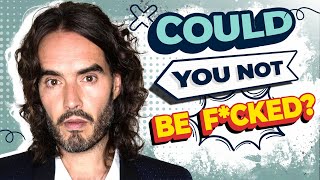
A commentary by Amber Hollingsworth summarizing and translating Russell Brand’s interpretations of the AA 12-step program from his book Freedom from Addictions. The piece contrasts the original Big Book wording with Brand’s blunt, colloquial rephrasings (e.g., “Are you fucked?” for Step 1) and explains how Brand’s plain language, humor, and spirituality make the steps more accessible to non-religious or put-off readers. It also outlines the therapeutic mechanisms (reducing shame, encouraging disclosure, moral alignment, social connection, neurochemical benefits) that help sustain recovery, and notes that 12-step components can be adapted into personally meaningful language.
Chapters
Russell Brand makes recovery so much more accessible to many, many more people. And he does this by demystifying the 12 step process. Now, the 12 steps have been around for a very long time, and still today it's the number one way that most people find recovery from drugs and alcohol or really any addiction. That being said, there are a lot of things about the 12 steps that really turn people off or rub them the wrong way. And a big one is language that's used. It's sort of confusing and metaphorical and sort of religious. And all those things can be pretty off putting, especially if you're new to the recovery arena. It kind of reminds me of like when I was in high school and you have to read Shakespeare and stuff and you're reading the words and you're like, I know this is English, but it's not computing in my head. It's like, is this really English? I'm not sure. Now, before we go much further, I feel like I need to give you a warning that there are going to be a lot of F words in this video. So if you're watching this and you've got kids around, this might be a good time to use the headphones. Now. In his book Freedom from Addictions, Russell Brand talks a lot about his own personal journey with addiction recovery. And he breaks down the 12 step recovery process in a way that's just a lot more relatable and understandable. Now, some of you know I like to listen to books as opposed to read them, and a lot of that is about my own attention span. So naturally, when I first got this book, which was years ago, I listened to it on Audible and I love, love, love the fact that Russell Brand read the book himself. I just love it when the author reads the book because I feel like you just really connect so much better with the tone and reflection and the original intent from the author. But it's even better because it's Russell Brand and he has that accent. Now what I would tell you about the book is it's sort of this like combination of humor, crudeness, poetry, spirituality. It's just such an interesting mix of those things which you wouldn't think normally go well together, but just go perfectly because it's Russell Brand and that's sort of who he is. He has this dark humor about him, but he also has this super spiritual side. And I love the way that he's able to convey the spiritual side of recovery without making it too religious or off putting. So let's take a look at the original 12 steps, the Russell brand version of the 12 steps, and dig into some of the concepts that underlie both versions. Now, in the original text of the Big Book of Alcoholics Anonymous, step one reads, we admitted to ourselves that we were powerless over alcohol and that our lives had become unmanageable. Now, there's some words in there that people really struggle with with this step, and I think it's powerless and unmanageable. People get really hung up on these words because of that. Sometimes they miss the big point. So Russell Brand's version of step number one is, are you fucked? I wish I could say it in that really cool Russell Brand accent, because when he says it, it doesn't even sound crude. And when I say it, it sounds super crude. So just try to imagine that sophisticated accent layered over the top of this super Southern kind of rednecky accent. Step number two in the original Big Book reads, we came to believe that a power greater than ourselves could restore us to sanity. If you weren't already thrown off by powerless and unmanageable, power greater than ourselves might be really throwing you for a loop. But honestly, it doesn't have to be that complicated. Russell Brand's version of step number two says, could you not be fucked? Just that simple. Step number one, are you fucked? Step number two, could you not be fucked? See how much more simple and less complicated that is? Moving on to step number three. And this is where a lot of people really hit the wall with this 12 step recovery philosophy, because this is the first step that actually mentions God. Step number three made a decision to turn our will and our lives over to God as we understood Him. So many people hit the wall right here because of religious belief or lack of religious belief or just the fact that it's so vague and philosophical, what the heck does it even mean? It goes like this. Are you going to un fuck yourself? And that is the essential element. It's the core concept behind the 12 steps, which you are going to need more than just you to conquer this problem. Now, there are lots of reasons why this is true, but the best way I can explain it to you is that step number three is about coming to terms with your own limits and letting go of the idea that you have all the answers and that maybe it's time to get some direction from somewhere else. You see, we all have natural biases and filters that we use that disallow us from seeing all the pieces of the puzz. So if you can imagine that your life is this giant puzzle and it's like this big, and you can see this much of that puzzle, but you can't see the rest of those pieces. Step number three is about understanding that maybe if I open my awareness, I could get access to some of those other puzzle pieces, which might help me make decisions differently, grow as a person, and most importantly, overcome this addiction that keeps fucking things up for me. Now, if you're still in the game and you're following these 12 steps and you're powerless and you're unmanageable and you believe you can get better and you're willing to look outside of yourself for the answer, step number four might make you want to run away screaming. In fact, I would say of the people who believe in the 12 steps, who work the 12 steps, people get really intimidated by step number four, which reads, made a searching and fearless moral inventory of ourselves. It does sound kind of scary and intimidating, doesn't it? But less so when you hear Russell Brand's version, which is write down all the things that are fucking you up and don't lie and don't leave anything out. Now, number five in the original AA text brings the word God back into the picture. It reads, admitted to God, ourselves and another human being. The exact nature of our wrongs. Or you could just go with Russell's version of it, which is, honestly, tell someone you trust how fucked up you really are. Now, at this point, you might be wondering, how does all that relate to giving up an addiction? Well, addiction is fueled by shame and secrecy and guilt and just a general whole bunch of negative feelings. And telling someone else about all of those, it's like pulling a splinter out of your foot. And now the infection can heal. Once you say those things out loud, there's something healing about it. Because when you keep it in inside and you keep all that secrecy and shame and guilt, it just builds and bubbles over and affects who you are and how you see the world and how you make decisions. And it makes you really uncomfortable inside. And guess what we want to do when we're uncomfortable? We want to numb that or distract from that, which is a huge trigger to go back to old addictive behavior. This really is a very healing component of any recovery program. Now, it's tempting when you get to this step to kind of want to leave certain pieces out that feel too scary to tell someone else. I had a client a few years back who was actually working this step, and he had it all written down. But there was one thing on his list that he wasn't sure if he was going to tell his sponsor or not. And he hadn't even decided like all the way up to the day and time that he was actually sitting with his sponsor. And his sponsor led with this question, what's on that list that you don't want to tell me about? And I just loved that because then my client, he had to lead with the very thing he was most scared about. And once he got that one out the way, it was all downhill from there. Now that was a brilliant sponsor move. Number six, we are entirely ready to have God remove these defects now that we've revealed all those up patterns. Do you seriously want to stop? Number seven, humbly ask him to remove our shortcomings. Russell's version Are you willing to live a new way that's not all about you and your previously fucked up self? Because basically you have to. Number eight Made a list of persons we have harmed and became willing to make amends to all of them or prepare to apologize to everyone and everything affected by your being so fucked up. Now, number nine to me is the scariest one of all the steps, but probably the most powerful and healing of them all. Number nine says make direct amends to such people whenever possible, except when to do so would cause harm. Or you could say it like Russell who says now apologize unless it's going to make things worse. Number 10, continue to take a personal moral inventory and be willing to promptly admit our wrongs. Russell's version Watch out for old fucked up behavior and be willing to be honest about it when it happens. Step number 11 sought through prayer and meditation to improve our conscious contact with God as we understood him, praying for only his knowledge of his will for us and the power to carry it out. Now that one is pretty deep and fairly religious in nature, so Russell really simplifies it in his version. He says stay connected to my new perspective. Much simpler, right? And number 12, having had a spiritual awakening as a result of these steps, we try to carry this message to other alcoholics and practice these principles in all our affairs. And Russell's version is just so simple and to the point. Look at life less selfishly, be nice to everyone and help people when you can. So when you look at this 12 steps through these lens, it is definitely possible to work a 12 step program even if you're not religious, even if you're agnostic. Russell Brown would say it's about self compassion, self care and compassion for others versus prioritizing your own pleasure and distraction over everything else. Now if you're still struggling with the heaviness of all that. Let me put it to you on a scientific level. When you behave in ways that fit with your morals and values, you like yourself more. In fact, you feel proud of yourself. And when you feel proud of yourself, you have more good neurochemicals in your brain like serotonin, which help protect you against addiction. Not only do you have that neurochemical buffer, but you have less shame and guilt and negative feelings, which means you have less triggers to go use. And as a cherry on top of all of that, the 12 steps really teach you how to keep your relationships healthy, which helps you maintain connection to other people. And that adds even another layer of protection against relapse. Now, you might have heard me say before that there are a lot of roads to recovery and you don't necessarily have to work a 12 step program. But there are some components in these 12 steps which I do think are essential to the recovery process. But you may have to put that into words and language that works for you.
More from Amber








Addiction Turns “Me vs. Drinking” Into “Me vs. You” #addictionrecovery #addictionawareness

They Admit Everything Except the Addiction #addictionrecovery #addictionawareness

Stop Trying to Make Them Admit the Truth #addictionrecovery #addictionawareness