Stages Of Family Recovery- (Dealing With The Emotional Roller Coaster) 🎢
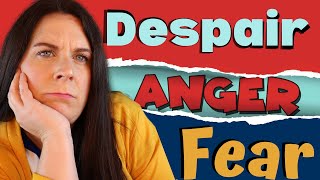
A recorded conversation (YouTube video) between host Amber Hollingsworth and Campbell, a family recovery specialist who is also a parent with lived experience. They explore the prolonged, unpredictable grief families experience when a loved one has a substance use disorder — framing it as loss of a dream/ambiguous grief rather than a single-event bereavement. The discussion mixes Campbell's personal anecdotes (notably a vivid blueberry-pie breakdown), practical guidance for parents and siblings (permission to grieve at different paces, offering family members counseling, balancing hope without naivety), and audience Q&A about rebuilding trust, lingering anger after a loved one becomes sober, and how to avoid becoming hard-hearted.
Chapters
Today, you, our guys are going to get a very special treat. We have Campbell, our family recovery specialist. And Campbell particularly sees the parents of people struggling with substance abuse problems. And she's been there herself twice. Today we're going to focus on the emotional roller coaster and the grief process that comes along with having an addicted loved one. So, Campbell, tell us a little bit about why you're an expert on this subject.
I'm an expert on grief because I think I mastered being sad at this and not in a pretty way.
And angry.
I was angry. I was. I was really angry. I was very afraid, and I was just really depressed.
Right.
And what I want to talk about today a little bit too is like, there's that initial anger fear that I see in every parent, like, as they get the news of what's happening or that they have a bigger problem. I get that they get that. But what I don't think people are prepared for is how deep it's going to go and for how long it's going to go and how unpredictable it's going to be. As you move through even your child moving into recovery and getting treatment, that grief is still in there.
Right.
And I talk a lot about how it's a loss of dream and that. That if we're just patient, sometimes there is a new dream. But I think it's. It's. You have to go through this whole depth process of the grief before you can really hang on to that concept.
I think that's a super good point because there's those initial shock kind of phases or sort of really like absorbing it. But then there's the, you know, this second thing that sets in when it just goes on and you have the ups and the downs and just the exhaustion of it.
Yeah, yeah. Because that's when the fear really kicks in is, will this end and will I ever be who I was before? Will everything that I love ever be what it was before? And the answer to that is flat out, no, you won't. And it won't. But it can be better or different, but it won't be the same.
Okay. And so it really is like a letting go process. It really is a grieving process. Can you tell us a little bit about how that went for you and then maybe share a little bit with us about how that's went with maybe some of the other families that you've worked with?
Yeah, for me, it was.
Sort of.
That initial we're talking about, and then there was sort of a level of acceptance. But then I noticed that as the summer was going on, so my first son went to treatment in July, on your birthday. And as August and September rolled around, I became really more aware that just these rounds of grief, these bouts of it would just hit me. I remember one day, our next door neighbor had brought, like, literally a bushel of blueberries over, and I knew right away that it was not going to be good because there's too many blueberries to eat, and I was going to have to make a pie. And my son's favorite dessert was blueberry pie. So I didn't want to do it, but I finally had to do it. So I was in the kitchen one day making the blueberry pie, and my daughter, who was maybe 13 at the time, was in there with me, sitting on the bench, and I made a cup of tea while the pie was in the oven. And then we had that time. Those stupid glass stove tops that you never knew if they were on or off. So I made the cup of tea, I took the pie out of the oven, I put it on top of the stove to cool, and I turned to wash a dish or something, and all of a sudden I was like, did I turn that stove off? So I turned super quickly and to pick up the pie, because I realized, no, I had not. And I moved it to another burner, thinking. And then the pie blew up everywhere. Shards of glass, blueberry just. It was a mess all over the wall, everywhere. And I just lost it, like. Like sat down on the kitchen floor on broken glass and just sobbed and sobbed and sobbed. And it wasn't the pie. It was the fact that my child was in treatment. I didn't. It was halfway through, we weren't getting great feedback. Nothing terrible, but nothing great. And I was just lost. I just lost it for my loss, for. For what I did not have. And I remember my poor daughter was just like, what in the.
I bet that scared her to death, the pie. And then you and me.
And she was afraid to get off the bench because there was hot blueberry and broken glass everywhere. And after about 20 minutes, I, you know, just like, kind of scooped her up and we got out of the room and sat on the stairs. And I remember apologizing profusely for my behavior, and she was like, it's okay. It's really sad, but. And it just came like that. You know, I'd be at the Y and listening to songs and being fine, and all of a sudden a song would come on and I would start to cry. I mean, strangers would have to come Take the bars of weights off me. It's not pretty. And I see it all the time in my family's like, you know, I've got a couple new moms right now, and they're just so broken that this bad news has come to them. And do you just have to let them go through it? And it's just hard to sit with them. But I always tell them, like, I realize that you are in a country you didn't want to come to. You didn't buy the ticket to this country. You don't. You don't want to be here, but you're here. And we're gonna have to learn how to exchange the money. We're gonna have to learn how to find out where the bathroom is. We have to learn how to live in this country that you don't want to be in because you're here, and that's really difficult. And they struggle for a long time with that. And then they get to the blueberry pie moments where they're like, why am I still so sad? It's because it's a loss of dream, and you can't see the new dream yet. And we get lost. I mean, moms more than dads most of the time, but not all the time. And then we just. Then we don't do what we know is good for us. We don't take care of ourselves. And that, of course, fuels the depression and the grief. And then eventually, we just have to say, we got to do something about it.
Right? You know, I think, you know, usually in the office, I see the person that has the addiction, and you and Kim usually see the family members, but occasionally I'll have to see the family member. And I've told you this, Kimmel, but I'll tell you all you guys, is that for me, that's 10,000 times harder. Because you're dealing with someone who's so desperate and scared and fearful and just wants. Want you to be able to fix it. And it's just so hard to watch them go through that. It's so hard to take the phone calls that we take sometimes. And I think, honestly, probably dealing with the families is what has made us be so creative and invested in getting the addicted person sick. Because I think in a lot of treatment centers, it's kind of like, well, they're just gonna have to go out there and suffer until they figure it out or it's gonna have to hit bottom. But when it's. It's not that hard, honestly, to tell that to someone that Has a substance abuse problem or the group of addicts and alcoholics, they'll tell you that all day long. But to look at someone's mom and say that, yeah, I'm just not okay with it. So we just had to do something different.
But sometimes you do have to say it right. That's really hard for them. And meanwhile, you're trying to encourage them to go toward themselves and to try to engage with some friends or to get out and do something in the exercise world. And I think what makes it really so sad is, like, if your child has the flu, the doctor says, drink fluids, stay in bed. You basically know what to do. It's not going to go flawlessly, but ultimately, you're probably going to get over the flu by following the general directions.
And, you know, there's going to be an end to it.
There's going to be an end to it, and that there's a path. But with addiction, so often the path gets messed up by. Well, right now with COVID but by the, you know, the actions, the situation, billions of things. And so it's like, it's an unsettled way to grieve because it's unpredictable, and it changes sometimes day to day, and it doesn't work always.
Sometimes we see families where. Especially parents, where one is stuck in one phase and one is stuck in the other phase. Can you talk to us a little about that? Yeah.
What I basically try to do with that is I remember when my son was diagnosed with diabetes and my husband was out trying to, like, get him into research things and bringing me back these terrible facts about diabetes and just terrible. And I'm just trying to, like, research how many carbs are in fish sticks to keep this kid alive. And we went to, like, maybe two weeks in, we went to take him to the doctor and the nurse. When he did, someone took him out to do something. And so the nurse was in the room with. With me and Frank, and she was like, you people are a hot mess. And so she sat us down and said, listen, grief is a coil. And Campbell may be over here, and Frank may be over here, Campbell may be here, and Frank may. You've got to give yourselves permission to grieve because you're not grieving in sync, and very few couples do. So I tell that story all the time. Like, you have to be able to check in, know where you are in your grief process and give the other person permission to be in theirs. And if you need to take a break from each other, take a break, because it's, it's horrible. And they're hardly ever in sync, right.
And, and it can flip flop a lot of times. You know, we'll see, one person's angry, one person's in denial, and then the next week it'll switch and it'll be opposite. So it's.
But meanwhile they're fighting until you have that conversation to, to let them know it's going to happen. And they have to be okay with it because otherwise they're fighting like, why are you saying this? Why are you doing that? Why aren't you doing this? Why aren't you? And then now we have that we don't. And I tell them all the time, addiction will take everything. It'll take your health, your life, your marriage, your job. It'll take it if you give it to it.
And then the one thing that we see too is like the family members, somebody, one of the people or some of the people will be further down the road in acceptance and others won't quite be there yet. And, and I think most people think that we're going to tell the one that's not there that they need to sort of get on board and back up and support the person that's there. But I really think what has to happen is the person that's further along has to back up.
They have to stop.
Right.
Hold and not be frustrated and not pointed out and not nag and remind. It's really hard to bite your tongue when you know your child is out doing something terrible that your spouse believes it's not that bad. Yeah, they, you have to do that. And we've got lots of couples, lots of our families that come to family group who've been coming for years and years. They tell the story of how it's usually the dad, not always again, but like there's a one couple who's like the first kid that was ever an IR Iop, you know who I'm talking about. And they tell the story about how the dad was just like, I don't know why we have to go see Campbell. Like, there's not that big of a problem. You two are overreacting. Like boys will be boys. And you know, three years later when the kid finally got sober, that I was like, yeah, I was wrong. I didn't see that.
Right. But the one that's further along wants to sort of force it on the other one. And the more they force it and the more they fight with the addicted.
Person, the more the other person won't see it.
Right?
Because they go into the defense of. Of the child in this case. And. And for. In our family, with two. I was the crazy one up front with the first one and had to wait for Frank. And with the second one, Frank was much more head, like, dude, this is happening. And I was like, no, it's not.
Yeah. You're like, it can't be happening twice. It's not happening again, statistically possible.
I'm not up for this.
Yeah. Yeah.
And it was hard. It was terrible.
Right. And so if you have. If you're going through this and there are other members of the family, whether it's two parents or sometimes siblings, there are other people usually involved in the process. You really have to give each other the space in the room to get there at their own pace. And the more you try to force it, the worse. The worse it's going to be.
I'm glad you said siblings, Amber, because in our family and in most of the families I'm seeing right now, there is a sibling. Siblings are generally angry. They are not as limbically connected to their siblings as parents are to their children. And they get angry because their parents are giving all their attention to them. Their parents are hot messes emotionally. Nothing fun's happening in the family. Maybe money's become tight. And so I think it's very important to recognize that. That anger is grief in the sibling. And you have to sit down and say, look, we. No, this is not good. We know we're hot messes, but here's what we're doing. And I always say, please offer them to come see one of us, even if it's just once or twice. Bring them with you for a session or two. Most of them don't come because once they're offered that they realize that they're probably. Their parents are doing better and that they're more safe than they thought they were. But that's. We see that a lot with siblings.
Yeah. And we usually say that you can offer it to them but not to force it, because if you force it, they're going to be more angry because it's going to be like. And now I have to go talk.
Because of his problem. I have to go talk to a counselor.
His problem is, like, messing up the whole family and now this. And so it causes more frustration.
Rarely do we get siblings, but I always ask them to offer it, and rarely do they say yes.
Okay. Yeah. And then I think too, a lot of. Not just the. The other kids, but other people don't know why this person, whoever this person is. Won't let go of the addicted person.
Right.
We won't just divorce them. They won't just get out. They won't just. And, and I think talk to us about that because I know you really struggled with that. So you're going through this grief phase and then how that sort of intertwined in with your social life, your friends, all that, because I know that was a complicated situation that was not pretty.
Basically didn't have any friends for a long time. Yeah, the people don't understand it and they get frustrated. And in my case, and I see this a ton with the parents, they're not talking about it to their friends or their community because they're embarrassed, shameful, too sad. They don't put themselves in the situation to talk about it because they just don't go to parties or they don't accept luncheon invitations or whatever, but then they don't do it. And then that's. I call that like disenfranchised grief because it's the opposite of a McDonald's franchise, which there are many of. It's disenfranchised because it doesn't have anywhere to go. It's singular. And then I just read a really cool article on ambiguous grief, which is very difficult for other people to understand because you're grieving for something that's actually not gone. So with addiction, your child is not dead. So it's ambiguous. Like, it's like if your dog has cancer and you grieve, that's ambiguous grief because the dog hasn't died yet. So that becomes very conflicting to other people because they, in their mind, they have a very easy solution. Well, if they were mine, I would blank. I would blank. But, you know, here's what everyone I know does. And you're not doing that because it doesn't work or it doesn't work for you.
Right.
And so it really does churn in there. And even among couples, there's a disparity there. And like, the person who's doesn't think there's as big of a problem isn't grieving. So they still want to go out for dinner and meet people for lunch or go to the mountains and you're just like, I can't get out of this bed. And so it's a. It's super lonely.
Right. And other people don't know whether they should bring it up, whether they shouldn't bring it up. And so they don't even know how to support you. You start mind reading what you think that they're thinking, and it's just a big. It's just a big mess. And it feels it's a big mess.
Because people don't know what to say more than they say the wrong thing on purpose. They don't know what to say. So they can say the wrong thing, but they don't mean to. But we take it so personally and then we distance ourselves from that person. We. I totally thought everybody in Greenville was talking about us. I. They weren't. I mean, I still run into people who have no idea what happened in 2009. And I was convinced they were like having a party where they could talk about us on purpose.
Wow. Okay. I'm gonna put up some comments and questions up here. If you guys have got a question for Campbell, if you guys will go ahead and post it, there's a little bit of a delay. If you'll get it in there, then we might can. We might have Campbell long enough to get her to answer some of that. Paige just wants to tell you hi.
Hi.
Melissa says so much me, so she's really identifying what you're saying. There truly needs to be more recovery facilities that counsel family and practice craft. I totally agree. I don't really understand how treatment facilities treat people without hear from the family.
I don't either. I mean, we're super smart and this concept we designed, but I can't imagine there aren't other smart people out there.
Even though we work with families so long. I can tell you what they're going to do before they do it.
If.
If the families didn't see you, I would still fall into it. I would still believe about half of it. Even though I. I've made 400 videos on manipulation or whatever because they're really good. And you. You really have to have the whole picture so complicated.
Yep. And you have to have the other counselor who you call me sketchy all the time. Because I was like, that's not true. It might be true, but my first.
Instinct is that's Campbell won't believe anything, don't believe anything. She thinks everybody's sketchy. Melissa says, I haven't accepted that my kids will not be the person. I can see their potential. So heartbreaking. It makes me hard hearted and I don't want to be. Can you talk about that? How to not get hard hearted. That's a good term.
Yeah, it is a very good term. And it's. It's particularly apt because becoming hard hearted is protective device. It doesn't work long term. But, you know, all I can say is try not to be. To recognize that that potential is lurking heavily and bring as little, little bits of joy into your life as you possibly can. Even if it's, I don't know, bowl of lemon drops. But I also really like the term yet. They may not be living up to their potential yet, but we are ten and a half and five or six years into our journey with different children. And I am amazed at the new dream it is. I never would have thought it for either one of them. And, and every time I see my boys, it gets better and better. But it took a many years for that to start to unveil itself. So I have a client that always says yet stands for you're eligible too.
Oh, I love that. I love that.
But just don't try to leave enough of your heart. Not hard to be open to the potential of what could be. And that's the hope. Don't be naive. But also don't. Don't kill the hope part of your heart.
Right. Because, you know, I'm a big believer in that you find what you're looking for. And so if you, if you're constantly expecting the worst, people I think feel somehow like you're protecting yourself, but you're really not. And on some level you can be helping the worst to happen, not at all helping yourself.
You're bringing your. Your worst nightmare more to fruition, right yourself. Because you're just going to be miserable.
Let's see. Michelle is talking about something important here. She says, my husband's been sober for 12 weeks now. I find myself feeling such anger towards him. Even still, even though I'm excited he's doing well. I'll pass a hotel and start crying. He has cheated on me with women in hotels and I resent him. 30 years of this crazy stuff is hard to overcome in three months. But he thinks I should forget it all. How do I do that? I feel very depressed. Isn't that common? The person that they get into recovery and they're sober for two weeks and they don't know why you're still upset? It's so hard. They tell me that in session. I'm like, what do you say?
They don't remember how bad it was because they were the ones doing it. They weren't the one left behind. Wringing our hands and hoping and wishing and being sad. I think the best thing to do about that is to just talk about it, is to. To realize that that's there and it's real, it will go away. Grief is A I. In my opinion, it's a giant coil, and I'm not scientific enough to know what those coils are called. They get. Are very big at the top. They get narrower and narrower at the bottom. We made toothbrush holders with a paper mache when the boys were little, but I still don't know what they're called. So you're at the top still. 12 weeks of sobriety, you're still at the top. So it's going to be very wide and come at you pretty inconsistently a lot. As that coil gets smaller and smaller, it will still be there, but it will come to you more, less and less and less unbidden. Like, I can get sad about it, but I rarely have a wave of it. I never, never have a wave of it that comes to me unless I'm thinking about a memory or a time or I'm looking at a picture or something that could hit it. So patience and talking. I would call and make a session with someone.
Do you think, Kimball, like, sometimes it. Reading what Michelle said there, it makes me think almost like sometimes you're just holding on and you get through the storm, and then after the storm, you fall apart.
Yeah.
Is it almost like. Is. Do you think that happens sometimes? It's almost like you're living in fear. Maybe you're chasing them, you're trying to get them better. And then when that happens, then the.
Well, sure, I think there's that adrenaline release. The cortisol starts to fade from your brain. But I also think at 12 weeks, you have no clue that this is going to stick. And so there's a part of you that's grieving still because this is not a permanent change yet. So I think part of it is a. Is fear that kicks you back into the grief.
Right. And even. Even. Even once they get sober, the behaviors, it's not like everything changes immediately. Still takes a long time to get this transformation of a new person. Now that happens, but it's slowly. So even when someone's sober, you may still be dealing with someone in those first weeks who's acting. I call it like acting addicty or whatever. Yeah.
Oh, yeah. They're still going to be, you know, you're not going to trust them, and they probably are lying about things they don't need to lie about because that's what happens with, you know, addicts and alcoholics. And, you know, you guys haven't found your. Your in sync this yet because you've had 31 years of not being in sync. So 12 weeks is not going to fix it. It's like losing your baby fat. It took you nine months to gain it. It's going to take you at least nine months to lose it. So you just have to recognize that. That grief is for real because it's too soon.
Mm. Maggie has got a question. She says, how do you help your addicted loved one understand that this is a grieving process for you and not something you're doing to them as a punishment or trying to be negative? That's a really good question.
It's a really good question. And I don't know, Maggie, that I know the answer to that because they can't put themselves in your shoes. And we hear this all the time here. Every now and then, we'll merge, like, the group with Amber's group, which is really more the identified client, and my group, which is the family group. And we'll try to sort of convey that. And they kind of look at us like we're talking in a foreign language. They just. I don't know that you can convey that.
Right. The healthier they get, the more they're able to see your side of things. And it's almost like they have to get healthy enough and have enough self esteem to be able to realize what the impact of what they did.
Yeah, Yeah. I think they'd have to be pretty healthy. It's kind of like children don't unders. Don't appreciate everything we do for them as parents until they have their own children. So I think for this, they really would have to be pretty sober for pretty long and have a lot of pride and connection coming back at them through their lives for them to be able to have that empathy and realize what happened on our side.
Right. Because I get this question a lot. It's like, you know, when are they ever gonna admit what they did or fully acknowledge what they did? And that happens slowly, I think, over the course of time. And if you. The more you try to rush it, the longer it takes. No.
And we've talked about this before and other things. I think you also have to recognize that it doesn't always come in a verbal form. And I also think you have to recognize that you really don't need it as much as you think you're going to need it. As time and health and happiness present themselves through your loved one, you kind of let go of all the other. I need them to apologize. I need to understand. You just are so grateful that they're healthy and happy that that becomes enough.
What was that number that you used to tell people. I can't remember if you said it used to be. You said, like, it takes the average parents how long to forgive. Used to tell this a lot. Was it three months?
I make up numbers. All I know is that parents are hardwired to forgive their children. I don't have a time frame on that. I, I don't, I don't remember making that up. But we are hardwired. So I think it sort of depends on how devastating it was. If there's been a great loss of finances or health or something that's associated with, you're probably going to hang on to it longer than. And also how long did it go on?
Right. Julie is saying she doesn't know where to even begin to rebuild trust. Do you have any thoughts on that, Campbell?
I. It's very hard, but I, I try to coach my, the families that I see to start trusting as soon as you can, especially if they've gone to treatment and are in sober living or something. Where there's some level of distance between you and the addiction is to trust as soon as possible. Because that starts to put more pride and serotonin into your child, if that's what we're talking about, or your husband, wife. It starts to build that chemical flip that I'm always talking about. If you get burned, it doesn't. Why not give them the trust? If they disappoint you, it's okay. But rather than not giving them the trust and then they disappoint you is worse.
That makes sense, right? And I think sometimes too, the feel the action may have to be there before the feeling.
Oh, yeah. Well, behavior comes before thoughts and feelings. So you just have to act as if you trust. Right. You have to let me walk out with the bag of weed in their hands and say, I'm just going to the park, to the, you know, don't be an idiot. But if they're doing basically the right thing, I say trust as soon as you possibly can.
Like, trust yourself. Because you may not have saw it the first time and it may have took you a while to catch on, but once you know it, your radar is so finely in tuned, I'm like, you're gonna know it if something's wrong, like immediately. You're gonna not be able to not know it.
Yeah, you'll know it.
Yeah. Deneen says, I feel like they have no feelings recently. I recently come tell my son. I recently calmly told my son that I have feelings and I have a right to have feelings.
So is this son actively using. We don't know. She's not there.
She didn't say, but I think she's saying, like whoever it is doesn't feel like she should have feelings about it. And they don't seem to have any. They don't seem to get upset by it or whatever.
Well, if it's, if it's the person who's using, then that makes sense because their limbic brain's not fully engaged and that's where feelings, emotions, connection, meaning is housed. So that's getting overridden by the addictive part of the brain. If it's someone else telling you that, then they must not be as involved with the situation as you are. But you are allowed to have whatever feelings you want to have. And we are not in charge of the feelings that come to us. We are sometimes in charge of what we do with the feelings. And you just. I wouldn't talk to that person. It's probably you're the person who's using, who's telling you that. And that's just because they're shame driven and they don't want to have the feelings.
Right. So. So sometimes I really don't. I mean, they're. You. Sometimes. It depends on what they're using. They really don't get it and they really don't feel it the way they should. But other times, I can tell you guys from seeing the addictive people in my office, they're way more apt to admit it to me how they regret what they've done, how shameful they are than they are to admit it to the loved ones just because they naturally get so defensive. So sometimes they won't let you see it or they won't say it, but most of the time it's there, sometimes not. But most of the times it is.
Yeah. But I don't think they're going to meet you with it if they're still using because then they might have to totally. Just not when they're towards you.
Right, right. So I think we're gonna have to hop off here because I know Campbell's got sessions to have. What I'm going to do after this, I'm going to put up Campbell's story for those of you who have not seen her share her full story. And then we also have another parent story on our channel from Scott, who's a father who went through this and I want you guys to see that as well. Thanks for hanging out with us and we will see you next Thursday. Bye, guys.
More from Amber








Addiction Turns “Me vs. Drinking” Into “Me vs. You” #addictionrecovery #addictionawareness

They Admit Everything Except the Addiction #addictionrecovery #addictionawareness

Stop Trying to Make Them Admit the Truth #addictionrecovery #addictionawareness