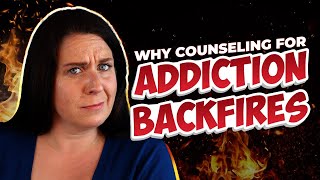
Short advice video by Amber Hollingsworth warning that persuading a loved one with substance use problems to attend couples or individual counseling before they have insight and willingness often backfires—alienating the person, validating their defensive narrative, and causing them to stop treatment. Counseling can help but timing and the addicted person’s readiness are essential.
Chapters
Talking your addicted loved one into going to individual counseling or even couples counseling can seriously blow up in your face. So you definitely want to listen to this video before you make that happen. Now, I know your whole life's mission is to get your loved one out of denial and get them to agree to get help. And you want them to go to a counselor. And maybe you can't talk them into going to individual counselor, but maybe you're trying to talk them at least into going to couples counseling. Me explain to you why that might be a terrible, terrible idea. Let's start with why couples counseling is probably a terrible idea. Okay? Sometimes you can get people with substance abuse problems to go to couples counseling easier than you can get them to go to individual therapy. The reason is, is because they definitely see there's a couples issue, right? They say, oh, yeah, there's a problem here, a family relational problem. It's you that's the problem. So when they go into couples counseling, they're going to be going in expecting and wanting the counselor to see their point of and to tell you that you're controlling, nagging, negative, codependent, all the things, right? You're going to be going in thinking, okay, they're gonna say that this person is alcoholic or they're an addict, and they're gonna tell them that. So both of you are gonna be going into that situation, pretty much trying to convince the counselor, like they're a mediator almost to like, take your side. And you think because they're a counselor, they're gonna have like these special counselor communication skills and they're just gonna be able to convince that other person how they're really wrong and they need to change their ways and, well, guess what's gonna happen? Nothing. Good. Because if you go into that counseling session and you lay it out on the line, like, what's really been happening, like, you pour it all out there and you tell them everything's been happening, your loved one is never gonna go back because they're gonna be embarrassed and humiliated and they're going to be angry with you. If you go in there though, and you soft pedal it and you kind of like hint around at it and you tell half the story, the counselor's probably not gonna really pick up exactly what you're meaning and they might sort of miss the boat. So but even in the best case scenario, even when they like totally get you and they fill in your vibe and they're like, oh, yeah, this person's alcoholic, if they come out and say that in A couples counseling session when you're in the room, when if they say, like, you know, you're hurting your wife, you know, let's say they do take up for you. Let's say they see it again, you're going to alienate your loved one. They're probably going to hate that, and then they're just going to stop going. Now, there are scenarios where your spouse might really want to keep going, and that is if they. They feel like the counselor has got their back and sees their point of view. And sometimes that does happen. And when it happens, the counselor can be inadvertently validating a bad narrative. I just think couples counseling, unless the addictive person has insight into the issue, is trying to work on it, and is going to couples counseling to repair the relationship related to the substance use, it's a lot more likely to blow up on you than to be helpful. Now, individual counseling is similar, but maybe even worse, because if you're convincing your loved one to go individual counseling, it probably means that they don't really want to go. They don't really have enough insight to tell the story accurately. And if they're addicted, I can like pretty much 100% promise you they're not going to present the story as it is. They're going to tell the story with a lot of pieces left out because it's just their narrative and some of it is conscious. But they're going to tell the story in such a way that's going to cause the individual counselor to validate their narrative, to empower them, to put their foot down, to draw the line, to have more boundaries with you. Because you're being crazy and you're crossing all the boundaries, which you probably are. But we know why you're doing it. We talked about that in other videos. So now all of a sudden, your loved one, they are going to individual counseling, they're telling sort of a half story, they're getting this not great narrative validated, and they're gonna be feeling more and more and more against you. And that is the absolute opposite of why you've been wanting them to go to therapy. You see, when someone goes to therapy, of course it can be. But it's going to help them with whatever it is they want help with. That's kind of your job as a counselor. Your job is to help the person with what they want help with. And if what they want help with is setting boundaries with their controlling, crazy, you know, codependent wife or husband or whatever it is, that's what the counselor is going to help them with. I don't want to be super negative here by saying never go to individual counseling or never go to couples counseling, because those things can be really great. I just think that you need to set the stage properly first. You need to wait for the right moment where there's at least some level of insight and willingness there. And then when you put those resources in place, it can be really magical and helpful. But timing is everything. Have you ever had one of these situations blow up in your face or backfire on you? If so, let me know in the comments below so I know I'm not just crazy making stuff up over here. And up next, I want you to watch this video. It'll help you move your person towards being more insightful and maybe ready to take some of those steps.