The Harsh Reality Behind Being A Highly Functional Alcoholic
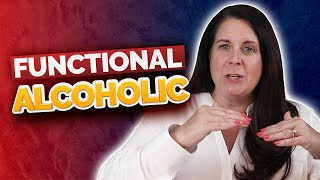
Amber Hollingsworth explains that "functional alcoholic" isn't a real diagnosis and often hides a serious alcohol use disorder. Most people who call themselves functional alcoholics actually meet 4 to 8 clinical criteria for moderate to severe dependence. Alcohol damages the brain's ability to control impulses, making early intervention crucial.
Chapters
A lot of people use the term functional alcoholic to sort of like downplay a label that means someone has a drinking problem, but they don't really consider themselves or their loved one if it's their loved one they're thinking of as a real alcoholic. But unfortunately, that's not really the whole truth here because functional alcoholic is essentially someone who's an alcoholic who hasn't lost everything yet. Keep keyword there is yet in this video, I'm going to tell you three sort of hard truths to look at when it comes to what does it mean to be a functional alcoholic and or what does it mean to live with or care about someone who is a functional alcoholic. Now, before I go much further, I do want to point out to you and say there is no such real clinical thing as a functional alcoholic. I've been an addiction counselor for 20 plus years now, and there's no diagnosis. And of such, the way alcoholism is diagnosed is it is a set of 11 symptoms. And when you diagnose someone, you count how many of the 11 that they have. Now, if you have more than two of those, you're considered a person with a mild alcohol use disorder. If you have like three or four of those, you're considered a person with a moderate alcohol use disorder. And if you have six or more, you are considered a person that has a severe alcohol use disorder. So alcoholism, or although that's not even a real term in and of itself, it's called alcohol use disorder. It's the clinical way of saying it. It is divided into mild, moderate, and severe. But really what that means is it's sort of like where someone is at in these stages of alcoholism. Not so much like, are they a mild alcoholic or severe alcoholic, but where are they at in the stages of that continuum? Because if not addressed, people tend to move through those stages from mild to moderate to severe. Most of the time when someone's labeling themselves a functional alcoholic, they are actually somewhere in the moderate right up to the severe range. They usually have somewhere between like four and eight of those actual official criteria for alcoholism. I will link up a video for you if you want to hear me go through each of those and you want to download the checklist, you want to know exactly what those are. But for the sake of this video, what I really want you to understand is it means you are in the process, much the same as if someone says you have cancer, stage 1, 2, 3 or 4, that is the way you should take it. And you shouldn't really see it as, oh, I Don't really have this problem and kind of laugh it off or push it away, either for yourself or for your loved one, because it means that you're headed towards destruction. Alcohol use disorders or alcoholism, it's a problem that doesn't really stabilize. You either address it and fix the problem, or it continues to escalate and grow bigger and bigger and bigger. Now, even though functional alcoholism isn't really a clinical term, I think what most of us think about when we think about the term is it's somebody who drinks too much but holds down a job or is productive in some important area of their life, like going to school or taking care of the children. So not everything in their life is falling apart. Typically, what you see with a functional alcoholic is everyone on the outside might not see the problem at all, but the people who live in the house with the person, they're the ones that are going to see the issue. Many times someone who is very functional at work does not function well at home because they either start drinking late in the afternoon at work or as soon as they get off. So their functionality at home is little to none. Either they come home and they sort of hide out in the garage or wherever they go so they can drink, or they drink and then they pass out, or they drink and they cause problems. But you're usually going to see non functional at home. And it's easy to convince yourself like, I'm totally fine because I go to work, I'm in, make a lot of money, my grades are fine. But it's not necessarily the case. If you are having these symptoms of alcoholism, even if they are in the moderate category, please do take it seriously, because if you don't address it, you are going to move down in there, into what you and your mind probably think of when you think of what an alcoholic is. As in, I have to drink every day, I get sick, if I don't drink, I wake up and drink, I have the shakes, all of those things. In fact, a lot of people who even consider themselves functional alcoholic, they have those withdrawal symptoms. But because they're still going to work or they're still maintaining some level of functionality in one area or the other, it's easy to convince yourself that you're fine or that you've got it under control, but deep down inside, you know it's not really the case. In fact, you've probably already tried several ways to either cut back your drinking, control your drinking, or maybe you've even tried to stop your drinking altogether. And maybe you've had some success with that. But no matter what, in the end, it just keeps sliding back to the same amount as before and probably getting a little worse and a little worse along the way. The good news here is that if you are in this functional alcoholic category, you probably can stop drinking, which is really great because most people won't recognize the problem until they can't stop, which requires a lot more treatment, a lot more intervention, and honestly, a lot more pain and suffering for yourself and everyone around you in the process. Process. So if you're considering yourself or your loved one a functional alcoholic, now's the time to deal with it while you still can. Just because you can deal with it, you shouldn't excuse it away and say, I don't have this problem. The same way as you would say, well, I don't have stage four cancer, so I'm totally fine. I can keep doing what I'm doing. Now's the time to address it. You'll have a lot better outcome. This channel is called Put the Shovel Down. The reason it's called that is our saying is you hit your bottom when you put your shovel down. And our goal is, is to get people to recognize that they have an addict to drugs or alcohol long before they lose everything. This idea of waiting until you hit bottom to do something is kind of silly, right? It's unnecessary. All you have to do is see the writing on the wall. If you're an adult who considers yourself a functional alcoholic and you're married and you have children, I do want you to be a good partner. And it is affecting your ability to be the best parent you can be. And I'm not saying you're abusive to your partner or to your kids. But I am saying, you know, you could be doing better, and chances are you are causing some damage and some harm that you might not want to admit to. You cannot hide behind the excuse of, well, I make good money or I go to work every day or my grades are fine. Now, I know this was a lot of hard truths to take in, but I don't want you to beat yourself up too much because you don't have this problem because you're a bad person. Here's the thing. If you put enough of an addictive chemical in your body, you're going to get addicted. I don't care who you are, what your background is, if you put enough alcohol in your body, you're going to develop a problem with alcohol the same way as with nicotine or any other substance. It has nothing to do with being a bad person. It has a lot to do with the way our bodies work. And essentially, alcohol is a poison. And you're pouring that poison into your brain and into your body over and over again. And alcohol specifically does something that some of the other drugs don't. And that is it shuts off the front part of your brain. And that's where you're off valve lives. The part of your brain that allows you to stop or control it or cut it back, it lives in the front part. And alcohol deactivates that part. And so that is why it is very difficult to stop once you get started. A lot of people don't think that they're a real alcoholic if they can still stop or if they don't drink every day. But the truth is, if you're the kind of person that has a ton of difficulty stopping. Once you start and you make promises and you break those promises to yourself and to other people, and you end up doing things you regret and you feel embarrassed about, and your family's upset with you, and life's getting harder and harder and you feel more stressed and more anxiety, then it's time to take a good hard look at it. But it is totally, totally fixable. In fact, of all the addiction, mental health kind of things you can have, this one is the easiest to fix. If you're in the mindset and you're ready to do something about it, then I'm going to suggest that you watch these videos next. It's my playlist, all about how to overcome an alcohol problem.
More from Amber








Addiction Turns “Me vs. Drinking” Into “Me vs. You” #addictionrecovery #addictionawareness

They Admit Everything Except the Addiction #addictionrecovery #addictionawareness

Stop Trying to Make Them Admit the Truth #addictionrecovery #addictionawareness