The Horrifying Case of Michael Taylor (Demons or Bipolar Psychosis?)
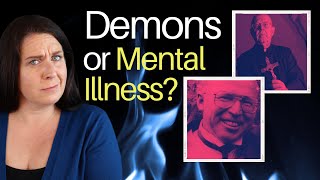
Amber Hollingsworth (YouTube) reviews the 1970s true-crime case of Michael Taylor — a man who murdered his wife in a gruesome episode — and evaluates whether the behavior was demon possession or a manic psychosis. The video recounts the events, trial outcome (not guilty by reason of insanity, institutionalization and later release), and uses the case to teach symptoms of mania/bipolar disorder and how severe mania can produce psychosis and dangerous behavior.
Chapters
So I just watched Christina Randall's video so late, her latest video on Michael Taylor. Now, this guy, this is a story from the 70s. And this guy, it's a horrific case, a true crime case. And there's the thinking behind it is that he was demon possessed. And then other people think that it was mental illness. Well, today we're going to sort through those two things. We're going to come up with a pretty definitive answer on which one it was and explain to you not only what it was, but why it was that way. Now, for those of you who are new here, I'm Amber Hollingsworth, and this YouTube channel is designed to help you understand the science and psychology of addiction. Now, occasionally we talk about mental health topics, and occasionally we do some true crime videos that relate to mental health and, or addiction. This case, really, I had no plan to talk to you guys about this, but when I saw this, I thought, oh, my goodness, I have to talk about this because this is such a terrible, terrible tragedy that totally could have been prevented. And I want to explain to you why. Now, I'm going to give you the really sort of fast, succinct version of what happened to Michael Taylor and his wife. But I highly suggest that you go watch Christine's video. If you haven't seen it already, you can watch it after this one. I'll put the link in the description. Or you may even want to stop this video. Go watch that and come back to this one. Because she is a much better storyteller than I am. She's one of my favorite true crime storytellers. And she just has an ability to keep you very engaged and hanging on the edge of your seat. Okay, so the, the facts of or the, the storyline of the case is this. Michael Taylor was about 30 years old. He was married to his wife Christine, who was about 29 years old. And they had five children, actually five sons from what I understand. And during this time in the 1970s, it was a tough time where they lived. There had been some depression, some economic problems, and everyone around was going through hard times. Now, even though everyone around was going through hard times, Michael and his wife Christine, they did okay. Things definitely got tough for them, but they did okay. But at some point, he had some kind of accident. He hurt his back, and after that, he started to really struggle with depression. Now, when you hear Christine tell the story, she actually, I think she uses the term seasonal depression to describe what he was going through. Now, Michael and his wife, they weren't particularly religious, so they Went to church some, just because that's what the cultural norm was. And pretty much that's what you were supposed to do to be a good family in the town where they lived, and. But they weren't, like, over involved or anything. Well, I think a neighbor or a friend of theirs had been concerned about Michael's depression or mood issues, and they had said, hey, why don't you go try out this new church? And the pastor of this new church was actually a woman. Her name was Mary. Hold on, I got her last name. Mary Robinson. I had it written down. Now, this was a very demonstrative church. There was a lot of loudness and prayers and speaking in tongues and healing that went on in this church. And one of the things that happened in this very first service that Michael and his wife were attending was that the pastor Mary said, you know, who needs some healing? And Michael's hand jumped up there, and he starts running down. He stops in the aisle and starts speaking in tongues. Just really like, no one had ever seen him do that before. I'm sure his wife was completely shocked. It was out of nowhere. And from that point on, it seemed like Michael became more and more and more fixated on religion and also fixated on the pastor, Mary Robinson. Now, as the days continued, they became more and more involved with this church. In fact, they started having, like, some, like, small group meetings at their house. And Michael and the pastor Mary would stay up late at night, halfway through the night, talking about religion and praying and just being super spiritual. And his wife was okay with that for a while, but she eventually started to get a little annoyed. You could imagine. You've got five kids. You know, times are tough financially. Your husband's out there talking to the pastor, which you're okay with that. Eventually you're like, okay, like, we need you to be in reality here and get some things done. So this whole thing continues to go on and on, and it just seems to get worse and worse and worse. And eventually one day they're at the church, and the wife, Christine, actually becomes really upset. Out of nowhere, just sort of calls out Michael and Mary and says, hey, y', all, this is inappropriate. I don't know what y' all got going on, but y' all need to go talk about it. And then actually says, y' all need to go up there and get some time to yourself and talk this through. Which I. I feel like is kind of a strange response if I thought something was going on with my husband and someone else, but I wasn't there. So who knows? So they go up, they talk about it. They come down, they say, you know, the demons are cast out. There's nothing wrong with us. There's nothing going on with us. And as the service goes on, then the Mary, the pastor, is doing this almost like this exorcism on this other woman, and she's like hissing and growling and barking crazy. And then she stops the exorcism, goes on to doing something else. And there was some frustration about why she stopped doing that because, like, didn't seem like the demons were out. And at that point, you know, Michael gets up, he's acting very, very bizarre. He's having this delusion that he's naked, that she's naked. And he goes up and he hits her, like all this crazy stuff. So it's a lot of drama. I mean, this whole thing is just getting bigger and bigger and bigger. Well, Michael and his wife Christine and his family, they were supposed to go on vacation this following in the following day or two. But some of the other people were really concerned because they felt like Michael had these demons in him. And they kind of like the neighbor, I think, or a friend or somebody sort of set up a situation where they ask the. Michael and Christine just stopped by this other pastor's house, this other pastor who had been known to do things like exorcisms and cast these demons out before they went on vacation. Now, they didn't really tell them that that's why they were stopping by. They just said, hey, need to just stop by Pastor so and so's house. You know, he needs to talk to you or give you something or something like that. So they stop, and the next thing you know, it's almost like one of those, like, surprise interventions where you just walk in and everyone's in circle. Only this is like a surprise exorcism. So they. They go to this preachers, and there's all these, you know, several other religious people there, and they say, hey, you know, we're concerned you've got these demons. We're going to exercise them out of you. We think it's not safe. They start to do this big, huge exorcism. This thing went on for hours and hours and hours. Supposedly, they cast out 40 demons. This thing went on for eight hours, in fact. And eventually, you know, Michael's still going. This whole time, he's growling, he's hissing, he's throwing fit. He's saying vile, awful, ugly things. Like on the exorcism, the movie, if you've ever seen It. And eventually this goes on so long that the priest involved got exhausted and they wanted to stop, take a break, and finish, like, the next day. Well, there was a person there that was like, no, I don't want you to do that. He's still got some demons in him. And I feel like if you don't get these demons out, he's gonna go home and kill his wife. And the response was, well, we've got 40 of them out. There's only three left. But supposed the three that were left were like anger and murder and I can't remember something else violent. And the. The. The person I believe it was a woman was like, you know, this isn't unsafe, or this is unsafe. But nonetheless, they decided to take this break and send Michael and his wife home with the plan to come back the next day and get the rest of these demons cast out. Well, Michael's wife Christine, took the children to their grandparents. They were at home. She was probably like, I gotta get some rest. It's crazy. I mean, this poor wife is probably just like, what is going on? My whole world is turned upside down. And meantime, Michael. And this is the part that's really pretty gruesome. So if you've got kids in the car, you don't like these things, don't listen. But Michael sort of really loses it, and he murders his wife. Now, not only does he murder his wife, but it's in a very violent, horrific way. He actually reaches in, pulls her tongue out, gouges her eyes out, rips her face off. I mean, horrible. Like. Like. Like some kind of horrible, awful, scary movie. Then he pretty much does the same thing to the dog and tears the dog's limbs off. Supposedly did all this with his hands. He. After that, he walks out. He's sort of walking around looking dazed and confused. The neighbors call the police. They say, there's a man out here. He's covered in red paint. He looks like he's not well. Somebody come check on him. So of course, they. They go check on him. They see that, like, this isn't paint. This is blood. What the heck? And they go back to his house where the police uncover this horrible, horrible, horrible scene. In fact, it was super traumatic to the police that just had to go in and find this. And these are policemen. They've seen some things, but this was over the top, of course. They took him into custody. Michael Taylor was tried, and he was found not guilty by reason of insanity. And he ended up serving something like, something small. I think it was like Five years in the. I think it was in the mental hospital, the one that's Associate Correctional Mental Hospital. And then he was released. Now, after he was released, he still struggled with depression. In fact, he tried to kill himself numerous times. And eventually, sometime after that, he was arrested again for inappropriately touching a minor. And then while he was arrested, the police noted that he seemed to have some behaviors that were very similar to the behaviors he had before. Now, let's talk about what this was. Doesn't matter. You know, religious beliefs aside, doesn't matter. You can believe in these things or not believe in these things. Doesn't matter. But in this case, that's not what that was. When I heard this case, the reason that made me really want to talk to you guys about it, because I was like, wow, this is pretty much like one of the most clear case situations I've heard of. That looks to me like bipolar disorder. This is a. For liability sake, let me just say what Dr. Grande says. Do you like him? He's another one of my favorite true crime YouTubers. You know, I'm not diagnosing. I'm just speculating what could be happening in a situation like this. Okay, here's my speculation, my strong speculation. This was bipolar disorder, manic episode. Now, this is the part where I feel like I have something to contribute. Like I said, Christina tells the story way better than me. Go watch her tell it. But let's. But I can tell you what bipolar source. I can explain to you what mania is. And I think once I do that, you're going to see, oh, my gosh, literally this story just hit every single criteria, everyone, to the fullest degree. The whole thing is just so scary. I want people to understand what this is, because this kind of thing can and does happen. And I don't want you to mistake it for something else. Because when someone gets to this point, which should have been recognized long before these horrible things happened, they need help. They need to be hospitalized. So let's talk a little bit more about that. And there's so much information here that I wanted to get it in a form. You can see it. So I'm going to try to share my screen with you here, see if I can do that. All right, here we go. So I'm going to put it up here on the screen for you so that you can see it for yourself. Let's take a look at what the symptoms of mania are. Now, just before we do that, bipolar disorder is the old. Is the new term. Excuse me, for the old Word which was manic depressive. But it's the same thing. Sometimes they just change these terms around, I guess to make them feel smarter, I don't know. But most of you probably know what depression is, so I'm going to leave that alone. I feel like most of you have a pretty good idea what that is. But a lot of people don't have any idea what mania is. And I probably wouldn't have much of an idea of what mania was, except I worked in an acute care psychiatric hospital for almost 10 years and I saw a lot of mania. And once you've seen it, there's really not much mistaking it. It has a certain feel or look. Now for me, diagnosing someone with bipolar disorder is kind of hard. In fact, I usually have to see them over a long period of time because it's not something you can tell right away unless you start, you walk in and you're dealing with someone in the moment who's manic. Now that you can tell pretty quickly, usually. So let's take a look at what mania actually looks like. There are six categories of symptoms. The first one is changes in thought process. Now this increased focus on religion, this is taken right out of the text right here. It is so common that when someone gets manic, they can get very focused on religion. It doesn't have to be religion. People in their man, they tend to get focused on something like, like obsessively over the top focused. But oftentimes it is religion. They have just jointed thinking. They have enhanced creativity and this creativity or this inventiveness, they usually see it as some kind of like breakthrough, right? They, they see it as like, I've moved this, they found their flow, maybe I'll put it that way, flight of ideas and race racing thoughts. Which basically just means your thinking is going 100 miles an hour. People also have, they can have a development of psychosis. Now one of the reasons why this happens is because when people are manic, they have a decreased need for sleep. We're going to talk a little bit more about that in a minute. But it's not so much like, you know how you can be like really tired but you can't go to sleep. It's like they don't need sleep. They have all this energy, which I said we're going to talk a little bit more about. But after you go for periods of time without sleeping, you can move into psychosis. And psychosis includes, it can be delusions, which is believing something that isn't true. Which is slightly different than hallucinations. Hallucinations is if you see, feel, taste, touch, smell. It's like your senses, you believe something there that is not there. Like if you see snakes on the floor, if you feel bugs crying crawling all over you, those are hallucinations. If you believe that the aliens brought them those snakes down and put them there and put the bugs on you, that's a delusion. Hopefully you can see the difference. And paranoia, I'm sure all of you know what paranoia means. Can you see already some of these symptoms? And Michael Taylor, I think you probably can. And you're going to see it even more as we go on. Impaired judgment, lack of insight, extreme impulsivity. People that are manic, they're usually their behavior gets pretty over the top and it can seem either really intrusive or inappropriate. It is just like excessive. It's too much. And another very common symptom of bipolar disorder mania episode is hypersexuality. That doesn't always happen, but it definitely can happen. When people are manic, they get hypersexual. It's like everything in your body, the volume is turned up on. Like your thoughts are going 100 miles an hour. You don't need sleep. At first it's like your mood gets a little better and then it gets bigger and then it gets 100 miles an hour. And then somewhere when this not sleep comes in, it sort of goes over the top. Because at first it can feel good. And especially if you have bipolar disorder, you've been depressed. It's like, I feel better, I'm coming out my shell, thank gosh, things are getting better. But what's really happening is you're moving into mania. At first it's kind of, kind of fun and then not so much. And then obviously when you are in this 100 miles an hour zone, you can do some pretty extreme reckless things. The mood changes. Now obviously all those things I just described to you, that is a description of what the mood change is. But what you also need to sort of add into your thinking about that is they call it an expansive mood. Which basically means people that are in this extreme form of mania can come feel like they're superhuman, like they're invincible, they're grandiose, they're larger than life. And that can get them to do even more crazy risk taking things like jump out of a moving car or something like that. Because they just feel like they're somehow invincible and they're very disinhibited. So there's no impulse Control going on. You can see why a situation like this could get very, very dangerous pretty quickly. Sudden changes in energy, the decreased need for sleep, increase in goal directed behavior means they get really focused and preoccupied on something. It's like they can't think about anything else. A lot of times when I worked in the psychiatric hospital, people would become hyper religious. They would say they're going to start this ch, they're going to move to this other country. I mean it's extreme and it, and it's sudden. It comes on not immediately, like all of a sudden in 10 minutes, but it, it builds quickly. This person is doing things and focus on things in a way they would not normally be. And because they have this energy, it's like they're moving a lot. Kind of like ADHD but, but on hyper overdrive and they're restless and they have inability to remain silent. One of the most prominent features of mania that stands out to me when I'm talking to somebody is a lot of times I know I'm talking fast right now. I feel like I'm manic right now talking to you. But when you talk to someone who has mania, I used to have to go in the psych hospital and do these, these biopsychosocial interviews when people would first get admitted and you could tell someone was manic because you could ask them one question and they would start talking 100 miles an hour and they probably don't even answer your question. And they're telling you this and they're telling you about their first dog they ever had. And the time saw this one train across the road, it's just like all over the place. And it's almost like you can't break into the conversation. And they're very difficult to shift. It's kind of like they're going down this track, you're trying to shift them over here. And it's called being sort of hyperverbal. Sometimes called like flight of ideas. It's just all over the place. How many of you have ever experienced this yourself or have ever experienced a friend or a loved one that had these types of symptoms? Once you've seen it, you're like, like that's what that is. And when I heard Christina Randall telling this story, I was like, I don't even know how this could be mistaken. Like literally this guy had all of these things. In fact, he had the most serious form of mania. It's kind of like stage three mania, which is this combination of mania, the 100 miles an hour thing with Psychosis, very disoriented. And this is straight out of the book. Many people experience it, need to be hospitalized to prevent harm to self or others. When people are in this state, they are not in their same mind. Their thinking is not clear. And any of us are capable of anything if we're in this altered state of mind. Now, I do want to say this, I should probably, should have said first, but not everyone who has bipolar disorder gets to this level. So I'm not trying to scare you, I'm not trying to like over dramatize what bipolar disorder is, but I just want you to understand that sometimes it can. It may look like someone has, you know, found religion. It may look like someone is doing something good. But I'm telling you, it goes over the top. If right here's the sweet spot, it goes like way up here and then starts to crash out because. And even you can hear this in the Michael Taylor story, like he becomes irritable, he's angry, he's impulsive, he's difficult to deal with. And that's what happens when you really get into those elevated manic states. So I hope you guys can see, you can see that, you know, the, the speech distortion. You could see that in the talking in tongues and some of the other things that he was doing. You could see the elevated mood because he didn't want to. So let's see, I'm gonna change my screen here for you. He didn't want to sleep. He was staying up all night. And he was talking to this preacher, the Mary lady. He got really focused on her because like I said, the sex drive goes through the roof. You do things you wouldn't normally do. And you can see just every one of these symptoms. The night sleeping, the impulsivity, the hallucinations, the delusions. Now, when this case went to trial, there was a psychologist or someone who testified who said that this exorcism that they tried to do on him is what triggered the psychosis. Because the eight hours, it was like grueling. It was intense. And I think, honestly think it was like they thought they were going to do this extreme exorcism on the sky. They were going to wear him out, the demons were going to be out. But that's not what happened because they're dealing with someone who's manic, who. They've gone eight hours, they're exhausted, and this guy's still going. I believe that this mania was already ramping up. And I think he already had psychosis going on. And this just Put it over the top. I do think that the exorcism contributed to this, because when someone is delusional, it's interesting because they'll take things, real things from their environment or their life, but they make bizarre meaning out of it. And so you've got all these people that are, you know, saying all these things to him, and they're saying, well, you still have these three demons left in you. And this other woman's like, if you let him go home, he's gonna. He's gonna kill his wife. And I think all those ideas, because he's manic, he's so impressionable, all these flight of ideas come into his head and create this perfect storm of a situation. Now, when you hear Christina tell it, she talks about how they had some ways of telling the difference back then if someone was struggling with mental illness versus, like, a demon possession. And the things they say is, you know, they have this knowledge of other people, like supernatural knowledge. They can have an extreme strength and stuff like that. But when you're manic, you have all that energy. And I will say this because there was a lot of talk in this case about, you know, if it was mania, how could he physically have done the things that he did? And I do want to add this in. Michael Taylor was also a butcher. Now, I'm not saying that the things he did would not have required a massive amount of strength, but you're also dealing with someone who's manic, who also believes that he's a demon, and also who has the knowledge of anatomy and probably has some specialist knowledge and ability to do things like that that the rest of us don't have, because he's a butcher in real life, like, his real job. So hopefully hearing this helps you to put together the pieces. Love to hear what you guys have to say. And have you had any experience with this? Have you ever seen this? If you see this in your life and you've never seen it again, I want you to recognize that is not normal, that not sleeping, that believing things that are bizarre. And it can be a little tricky understanding when someone's delusional or psychosis, because, like I said, it. It comes from, like, things that are almost true, but they get twisted, right? So it's like I always say, it's like, you could be. They'll tell you something. Like, I was in the line at the grocery store, and I looked over and I saw Oprah magazine sitting there. And then I just knew Oprah was looking at me, and she was telling me this secret message from somewhere else, like, okay, like, was following you this far and then can't really go that next way. And so some of the things they put together can seem somewhat believable. So it's hard sometimes to experience. But when you're dealing mania, it escalates, escalates and escalates and can become very serious and very dangerous. I've seen many, many, many, many people hospitalized because of this level of psychosis and mania. All right, thank you guys for joining me. Up next, more true crime, mental health and addiction.
More from Amber








Addiction Turns “Me vs. Drinking” Into “Me vs. You” #addictionrecovery #addictionawareness

They Admit Everything Except the Addiction #addictionrecovery #addictionawareness

Stop Trying to Make Them Admit the Truth #addictionrecovery #addictionawareness