The Link Between Social Anxiety and Addiction (that no one wants to talk about!)
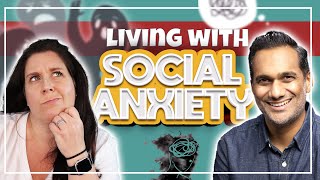
This YouTube interview (May 30, 2023) features Amber Hollingsworth and Dr. Ali Matu discussing how social anxiety can contribute to substance use and addiction. Dr. Matu shares personal history (selective mutism progressing to social anxiety and depression), defines social anxiety (fear of evaluation, avoidance, internal overfocus and mind-reading), and gives clinical examples showing wide variability in presentation. They emphasize that people self-medicate (alcohol, cannabis, nicotine) to cope—sometimes briefly helpful but often worsening anxiety over time—and that lack of social connection fuels both anxiety and substance use. Treatment discussion favors combined individual + group therapy, graded exposures (practice, eye contact), family/systemic work, and normalizing everyday bravery. Practical barriers (difficulty contacting therapists, fear of the spotlight) and resources (Dr. Ali's YouTube channel) are noted.
Chapters
I had selective mutism, which meant in certain situations, I didn't speak when I was outside of the home. I didn't speak around new people. I wouldn't speak. It's like someone press a mute button on me. And that later developed into social anxiety, and then that sort of led to depression, and it was. It was a long time before I was able to get some good support and good help for this.
We have a very, very exciting guest speaker today. We have Dr. Ali Matu from the YouTube channel, Dr. Ali Matu. Some of you might have seen him on our channel recently where we dissected one of. I don't know. Would you call it a session? A session. A meeting conversation?
What did I call the. I think I call those things Office hours.
Office hours conversation that he had a viewer about social anxiety. And you just did such a great job with that young man, talking him through social anxiety. I was super excited when you agreed to come talk to us about it, because social anxiety is a big struggle for a lot of people that I see that have trouble with alcohol.
First off, Amber, I gotta say thank you for doing that, for dissecting my video, for diving. Dissecting sounds so scary. But what. What I think you did when you reached out and you said, hey, is this okay? Can I. Can I do this? First off, I was just really honored that you would think something I did is worth, like, further investigation.
It definitely was. Yeah.
I mean, that's like, from. From colleague to colleague. What a. What a great compliment that is. So thank you for that. I was. I just thought that was so cool. So then when you said, hey, you want to talk more about this stuff? I was like, yes, because I love collaborating with people who want to collaborate and help. So thanks for having me.
For our listeners, just give us a general idea about what social anxiety might look like or feel like, or how would you know if you had it? Or how would you know if your loved one had it?
Yeah. So self disclosure. I am very passionate about this subject because this is what I had or have and didn't realize it. When I was a kid in kindergarten, kindergarten was like, the first time I was really doing stuff outside of my home. I had selective mutism, which meant in certain situations, I didn't speak. When I was outside of the home, I didn't speak around new people. I wouldn't speak. It's like someone pressed a mute button on me, and that later developed into social anxiety, and. And then that sort of led to depression, and it was a long time before I was able to get some good support and good help for this. So this is something that's very personal to me. When I was a full time practicing clinician, this is something that I spent a lot of time treating in individual and group therapy. So I'm so excited to talk about this. But your question is such a difficult one because no two people with social anxiety look quite the same. You know, Amber, I think there's a stereotype about what social anxiety looks like. And if you, if you do a Google image search, you'll find like people with their hoodies on, like, no. Or there's, you know. Have you ever seen this one, Amber though?
Huh? Yeah.
There's like all these Google images like that. And I've never seen.
Never had a client in your office doing that.
Yeah, yeah. Or like in the corner, like. Yeah. Oh, I've never, I've never seen that. You know, social anxiety, like diagnostically what it's about, it's about a fear of evaluation, a fear of being judged, a fear of doing something embarrassing. And people might laugh at you, you might be ridiculed, you might be judged for something you do or something you believe or something about your appearance. And if you start working with people, you might dig down further and you find people are really worried about being stupid, dumb, strange, unlovable, ugly, all of these things that are socially undesirable traits. And what happens to people who have social anxiety is they either avoid certain social situations or they're able to go through them and it's quite difficult for them, quite distressing, or they are able to go through them, but their performance really just plummets. And this could be about going to parties and socializing and making friends, but it can also be about presenting at work, it could be about networking. It can also be about being an athlete and performing and the fear of evaluation from other people and of professional judges. You know, how are you going to be seen? It could be a musician who has to perform. If you think about it, all the times in the day that we have to interact with other people, from answering a phone call to opening the front door, to going to a store, to talking to a teacher, talking to a boss, a coworker. We're always having to interact with other people, even like typing online. There's so many ways in which every day we're interacting with people and people who have social anxiety very much struggle with those interactions. They might avoid those interactions or they might not do well in those interactions.
Yeah. And I think it's really Hard because they can have that, like you said, avoidance reaction or a freeze reaction or, like, I also like that you said, you know, it might even be that the person can be in social situations. They do it, but they're extremely uncomfortable. So some people may have social anxiety, might never know. Like a YouTuber, you know, that's on, you know, and they could have social anxiety, but you don't even know it because you think, how could they possibly have it? Like, they're talking to people right now or something.
Well, what you don't see is what's happening here, you know, by heart, like, racing. Like, you are one of the most comfortable people for me to talk to. So. Yeah, so I. I'm not. I'm not that socially anxious here.
Yeah.
Um, but I'm always. I always feel better around other mental health folks. It's just, you know, because I feel like, you got me, you know me, we're good. But when I am. When I'm doing this kind of stuff with someone who my brain says, oh, no, they think you're not good, then my heart starts to race. I sweat. My pits are just like, wet is the ocean. Yeah. Oh, yeah. Oh, yeah. And then, you know what happens in my head, Amber? Then I'm like, oh, no. They see I'm sweating, which makes me sweat even worse, which I hate. Oh, my gosh. And then it's like that cycle of judgment. But, you know, in my work, I have met people who don't have a lot of friends, are quite lonely. They have a hard time meeting new people, and they kind of fit that example of social anxiety. But then I've also worked with people who. It's all professional. They have a hard time advocating for themselves. They have a hard time saying no, of being assertive. They feel like they're often taken advantage of, and it's that kind of social anxiety. And then I've worked with people who. They do incredibly well at work. They have a great career, but there's one or two small areas, whether it's about communicating their wants and needs with. With their partners, and they're just not able to do that because of their social anxiety or, you know, something else where you would never guess that this person struggles in this way. You know, no two people with social anxiety look alike. It's. It can be so. It can be so different person to.
Person because it's about your own inner experience, and you're the only one that knows about your own inner experience.
And that's the world of anxiety. And that's the challenge of anxiety. That's why I think a lot of people who might have anxiety disorders don't realize they have anxiety disorders because it can feel so invisible. And, yeah, you can navigate the world. You. You can avoid things, you can do things badly, you can struggle with them, and other people are not going to know.
I like how you're giving the different examples of, you know, how it shows up in different people, because as you're saying that, I'm even just remembering back different clients I've had, and some that it looked like I'm just going to avoid going, others that looked like super put together, and then they're telling me these thoughts they have in their head, and I'm like, really?
You.
You know, like, and. And I'm even surprised because it really is quite different, which is kind of similar to the things that I treat, you know, like, I. Alcoholism looks very different in different people. And that stereotype, a lot of times gets in the way of people getting help or getting better because they may think they don't even have it because they're thinking of it. It looks a certain way.
There was a moment in my life as a therapist where I said to myself, you know what? You keep trying to read these phone screens or, you know, the initial contact you get from new patients. You read the description, right? And then your head is trying to, like, already create the story of who this person is. And there was this moment where I was like, ali, stop. Because you're. You're always wrong. I know your first impression, your second, third, fourth, fifth impression is always wrong. I feel like it's not until a few weeks in that you might be beginning yet. Where this person is coming from and what their life is is like, oh, yeah, 100%.
I've had that experience a million times. And then I've also had it when my client was telling me about someone in their life, and I had, like, this picture in my head of who they were. Like, they're like a character in their show, you know, and then I meet them like, you're nothing like I thought you were. You think you know everything about them, but you don't. Yeah.
Humans have a way of constantly surprising you. And I think one of the challenges of being a therapist is being, like, totally open to that. That, like, you. You don't know. You don't know what's going to happen week to week. You never know the story of someone's life. And I think the coolest thing about people in mental health is they are so Open. And we work so hard to be compassionate and not judging.
So I've had several clients who. I feel like that the social anxiety was at the core. You know, when it comes to, like, drugs and alcohol, people always say, you know, what's the. What's the core issue? What's really going on? That's sort of the lingo, and I don't always buy into that, but a lot of times there is an underlying thing that is triggering or, you know, maybe even cause the problem to start develop in the beginning. And social anxiety is a. Is a big one for a lot of people. Not only is it a core underlying issue, but it's. It also keeps them stuck in it because they're very scared. They won't be able to function without it. They won't be able to go to work. They won't be able to interact.
Yeah. And it can also keep people from getting help, too. On one of my social anxiety videos, there was a comment where someone said, hey, Dr. Ali, I wish you also mentioned that social anxiety can make it hard to talk to a therapist.
Yeah, that's a really good point.
It's a really good point. I should have mentioned that in my video.
I'm glad. Yeah.
Because, you know, the courage it takes to pick up the phone, to write an email. You know, Amber, it's so hard. It's so hard to find a therapist. It's so hard to overcome all that stuff that says, no, you got it. Don't reach out. You're fine. You're fine. You can handle this yourself. Or to, like, navigate all the billing issues, the paying issues, insurance issues, blah, blah, blah. I hate all that.
When you have social anxiety, you're already worried what people are thinking about you, and then you put yourself in a room to sit on the couch where someone's full 100, like, on the spotlight being spotlight, you know, and you know that they're, like, totally analyzing you.
They're writing all this stuff down that you're saying. What are they writing?
What are they thinking? Behavioral desensitization in and of itself. Just the act of going, oh, yeah, yeah.
Oh, yeah. It's. It's hard. Yeah, I have. I, I. When. When I was practicing full time, I. I never said this, though. Maybe I should have said this. When. When someone comes to my office, I kind of want to say, like, I'm so happy you're here. You. You made it to this point. Like, this takes such courage to make it this far. I'm so proud of you. But, like, that's like, before you even met the person, you know? But I want to, like. I want to just, like, give them a hug and say, I am so proud of you for making it to this. This point, you know, because I really. I really, really feel that way. Obviously, I don't. And then we talk about informed consent and all that stuff, but I want to do that. That's where my head goes.
I'm thinking of a client that I had forever who's a very smart guy, very professional guy, and he struggled with social anxiety, and you could tell it in. In the office. And I worked with him for, literally on and off for years, and I thought the world of him. And I know he, you know, he trusted me, but every time he come to my office, he looked like he was going to puke for the first 10 minutes. Like he had that, like, white ghosted, like.
Yeah.
And then, you know, sometimes I'd even say, you got that look, dude. Like, how long we got to do this? Or whatever. He's like, I know. And it just. Even though we had talked so many times for so long, he's. You could see it on him.
When social anxiety is a big part of the picture, it's all those little daily social interactions. And. And this is where I would always talk about everyday bravery. I'm not talking about superhero bravery. I'm not talking about, like, what. What you see in the movies. Again, like, I'm gonna. I'm gonna pick on Hollywood here. Um, when you see bravery in the movies, it's this big, strong, heroic person who looks fearless. But that's. If you look up the definition of courage, it's not being fearless.
Right.
It's being afraid and facing the thing that scares you.
Right.
You cannot be courageous without being scared. So your client, who looked like they were going to puke, I think is one of the highest examples of courage because they're literally facing their fear in that moment. I think that is just, like, the most heroic thing. And everyday courage. Everyday bravery for me is about all those small moments in the day that are difficult, and you choose. Choose to face them because it's. It's the life you want to live.
Especially when it comes to, like, addiction recovery kind of stuff. It's almost all done in groups.
Yeah.
So, yeah, at times when I've had clients who. Who were struggling and. And maybe they were seeing me individually, but I wanted them to be in an Iop or something like that. Man, that is a hurdle. I mean, it's always a hurdle. People to go to, like, Group therapy or even AA or whatever. But, like, now you're looking at, you know, they're looking at you like, are you kidding me?
Yeah.
But something interesting I found, in the event that I can get them to go, a lot of times they function better in the group than they do individually. And I think I know why, but I don't. I'm not sure.
I'm just guessing.
I'm just like, I have a theory on it, but I don't. I don't know.
What's your theory? What's your theory?
My theory is, and I try to tell them this, too. I'm like, look, you can sit in the back. You don't have to say nothing if you don't want to. I'm not going to, like, embarrass you.
Yeah, yeah.
Because you can just sit in the back and watch and not say anything if you want to. And when you're in an individual session, the spotlight is on you, like, 100%. And there's no, like, evading or taking a break or having your own thoughts. You know, like, somebody's watching you. So that's my theory on it. It's really hard to convince people to go.
It's. It's so hard. It's so hard. I. I'm a big, big believer in the 1, 2 combo of group and individual. To work on social anxiety, you kind of need to be in social situations.
Yes.
I would often tell my patients, like, look, I love working with you, but this is not a social situation. It's one on one. And my job is purely to help you. Like, you need to be with a few other people. Like, one person is distracted, One person who's rambling, one person who, like, wants to talk to you, One person who you're not sure and, like, kind of looking at you, you like, all that social stuff has to get activated. And then when you're in a living, breathing social situation, you can start practicing all the things we're learning. I had a client that I worked with who was like that, who would be so much more calm in a social situation unless I called on them, because that person would never raise their hand. They would never volunteer. They would never, like, you know, and so we talked about it, and I said, hey, John Doe, your goal is to volunteer more. And if you don't in the first half of group, I'm going to call on you. So this is what you're working on, you know? And then the other thing, Amber, I had another person who I was working with who, for Her. She would get so overwhelmed in a social group situation that she would feel that need to flee, like, immediately. And in fact, she did that in the first group that we were in. She just ran out and then was crying. And I said, okay, Jane Doe, we're gonna build up your ability just to be there. Just sit. You don't have to say anything. Your goal is just to sit and get through. And I want you to practice ABC skill when you're in there and just sit. And she went through, like, one round of my group, just learning how to be in there and not be overwhelmed. And then she did another group and. And then she did another group, and by that third group, you were like, who is this person who is this social butterfly?
I think it's hard to convince people of it. Even people that don't have social media, it's really hard to convince people. Once they do it, they, like, love it. And I try to tell them, like, listen, once you get in there, you're going to want to go because you're, like, listening to people's lives. It's like your show, and you got to watch the next episode. I'm like, that's how I feel. I got to show up, see if somebody. And so his wife kicked them out or, you know, like, whatever happens, you know, and you do get very connected. And that. That's the key is for a lot of people that we see with addictions, you know, in our world, and this is my belief, connection is the cure for addiction. And so now it's not just that you need to go into that group to hear about addiction. You know, you can watch my YouTube videos and do that. That's not what it is. It's about the interaction piece that's happening. And so when you're dealing with somebody that has social anxiety, particularly, they're literally, like, sometimes, like, dying of loneliness by the time. And yes, and I'm like, you. If you don't connect, you're just sicker and sicker and sicker, you know, in the drinking or whatever it is. It's just this other byproduct of the whole thing.
Oh, if I could give you more thumbs up for that comment. I'll give you all the thumbs up in the world. I think you just. You just hit the nail on the head about the connection, too, between social anxiety and also substance use and substance use problems. It's about connection. People with social anxiety struggle because they don't have that connection. The anxiety gets in the way of connecting with other people, and A lot of times people use substances because we're wired for connection. And if you don't have enough of that in the world, you're going to get it with. With other things. You're going to get it with alcohol, you're going to get it with shopping, you're going to get with porn. You're going to get it somewhere, right? The best things in my groups was when I had someone who had done a few rounds of it, and they were there that first day, someone else was trying. Because I can. Amber, I can say whatever I want, but at the end of the day, people are like, well, he's a therapist. He has to say that, right? But if there's someone who said, hey, look, I've been doing this, like, eight weeks like you. I thought this was total bs But I'm here to tell you, like, I'm so happy I've done this. So, like, stick with it. Like, when would someone. To say that I'd be like, yes, thank you. You're making my job so much easier. But when group is working, well, I think it's the best thing in mental health.
I'm thinking of a couple of just past scenarios I've run into. Like, I saw this young guy. This was several years back, but he was a college student, and he first started seeing me because he was, like, smoking too much weed. Too much weed. And once I got in there, it was pretty obvious with him that the thing that was going on was pretty severe social anxiety. And then that meat addiction turned into alcohol and turned into something else. But when I would hear this young man talking, he was in a fraternity, and he really wanted to be in the fraternity, but. But in order to even go to any fraternity event, he had to get so messed up. And I remember him telling me, one of the things that fraternity, which I thought was a good thing to do, is one of the members, or two of the members, two of the members, anytime they had, like, a party or event, had to stay sober. They were like the sober lookouts, you know, watching after everybody, which I thought was a good idea. Well, it was his turn to be the sober lookout. And he was freaked out. Ow. I mean, he was like, I can't do it. I cannot. I don't know what I'm gonna do. And he was just in a sheer panic.
Yeah. Yeah. I've. I feel like I've worked with this person.
Okay.
Yeah. I. And I think this is like, if you and I were in the same clinic, these are probably the kind of cases we'd be. We'd be sharing a lot. Yeah. You know, this is where these two things interact as well, is I. When I got started as a psychologist, I really wanted to focus on anxiety because research is me search. That was my thing. I wanted to help out people who had gone through the stuff that I'm going through or I had gone through. And my first job was at a place called the clinic for anxiety and related disorders. And so I was like, all right, what are these related disorders?
Everything else I was thinking, what doesn't go in that category?
I had no idea that I was signing up to learn about. Also substance use, addiction, cannabis, depression, depression, alcohol.
I'm trying to think of what wouldn't go along with it.
Yes. Yeah, yeah, yeah. The list goes on. Right. Anxiety is the most common mental health problem for adults. And, yeah, it relates to a lot of other things. So weed is a good example where weed can so quickly bring down your anxiety. Same thing with alcohol. And sometimes, you know, weed can also bring up anxiety. And, like, in short amounts, alcohol might activate you, but in bigger amounts, it, like, depresses you. Like, you know, all these substances do these weird things, but a lot of times people start using them as a way of managing their anxiety. Kind of like how you would by taking something like a Klonopin that. It's a pill that very quickly brings down your anxiety. Well, people might start using alcohol or cannabis as ways of managing it, and then, like, it mixes with social situations. So if you have social anxiety about meeting new people, but you're going to an event where they serve alcohol, well, problem solved. I can just have a drink or two, loosen up. Liquid courage, as. As they used to call it or still sometimes call it. And. And nowadays, Amber, if you have a vape pen, you can, you know, without anyone even knowing indoors. One of my patients took me a long time to figure out, but he was. He was getting high in our waiting room.
Yeah, yeah.
Right before coming to see me. Took me a while to figure that one out. I felt like such a. Such an old fart.
I know, I know.
So that. That is a part of social anxiety, and that might also be a part of a. Of a substance use problem. And. And that it might be hard to, like, figure out. All right, what came first, what's influencing each other. The reality is they. They. They both are kind of influencing each other. I think. What a big criticism I have of, like, the way most mental health works in America. First off, most mental health just doesn't work in America. Our Healthcare system is like, I don't think it's much better in most parts of the world, but. But, yeah, it's. It's bad here, but we can so easily get focus on the individual. I think anxiety therapists do this more than addiction people. I think addiction people think much more in terms of family, just naturally. That's, like, the culture over there. But, you know, I got trained as working as a kid person, and then when I was practicing, I was working mostly with teenagers and adults and young adults, but I was trained as a kid person. And when you do work with kids, it's really doing work as a family.
Oh, yeah.
Like, I can do whatever I want with the kid, but if the parent is maintaining the anxiety, what am I doing? Like, I'm wasting my time. And mental health problems are family problems. Mental health problems are relationship problems. Mental health problems are friendship problems. It's like what you said earlier about connection, Amber. If we don't weave in all these other pieces of, like, how, like, well, you know, what if my wife is making all the difficult calls for me so I don't have to deal with that social anxiety? Or what if my friends might be like, my relationship with my friends is purely dependent on me going out for drinks with them and, you know, these kind of things, they tug and pull and push these different problems. And we got to weave this stuff in because we're not. We're not individuals. We're all parts of communities and families and friendships and all that stuff.
Yeah, for sure. And so, you know, when you. When you can look at the big picture, and the bigger picture, the better. In our office, I like to say, I'm gonna want to see your grandmama and your dog and your. You know, like, we don't want. You know, obviously not all that, but. But we do like to have the big picture, because when you can get the system working right, everything. Everything moves smoother. But it is. It is a lot of work. And I do feel for people when we say that, because it. I feel like, oh, I'm like the mechanic. No, you cannot do all this and this and this, and you're like, I just want brakes or whatever, you know.
I've always pushed back against comparisons to mechanics, okay? Because I think, like, yeah, in child therapy, folks, have you ever heard of, like, the Jiffy Lube parrot? Have you ever heard this, like, saying.
I don't know what a helicopter parent is?
Right, right. We got helicopter. So Jiffy Lubes. Maybe. Maybe it's like a West coast thing. I'm Here in California, but we have these, like, oil change.
Yeah, we have those.
Yeah, yeah, yeah. So you drop off your car, 30 minutes later, you pick it up, it's all fixed.
Right.
It's that idea that there are a lot of parents in child therapy that drop off their kid, and they want the kid fixed, and they pick them up, you know, an hour later, and they want the problem solved. And it's like, that's not how it works because, like, you got to be involved. Right. I can't just fix your car.
So, like, that's right.
I've always, like, anytime someone, like, compares a therapist to a mechanic, I'm like, whoa. It's not. It's not like that. But in this way, I think you're totally right that a lot of times, we think it's a simple problem. And the pro. All the. Like, in a car, like, all these things are connected. Cars are comp. And they're way more complex now. And people are like that, too, where you can't just fix one small thing. It's not like changing, like, one little light bulb. If it was, you'd be able to do that yourself. And a lot of people are able to fix their own little problems by themselves, but if they're seeing us, it might be a bigger problem.
Okay.
You got to get everything in.
Well, by the time it gets to us, it's become that way. And I try to tell families that. It's not like I'm saying the family created the problem, but the problem itself will change the family system. You know, that's just. You know, if your right knee gets hurt, you start leaning on your left knee too much, and then your left knee has a problem. So, yes, it's. You know, it's not a blame thing. It's not even saying, you know, something wrong with your family. It's just saying, like, we need to re. Like the teeth. We just need to move everything a little bit. Fits back.
Yeah. About 15 years ago, Amber, I. I broke. I broke my leg. I dislocated it. I tore a ligament. I needed surgery to fix it. Doing something very stupid. I was. I was just on the beach. My. My friend's nephew was skimboarding.
Yeah.
It's like. Yeah, yeah. And I fell down the wrong way. My. My leg went one way, I went another way, broke it. Needed to get it fixed. Right. And then I was on crutches after that. Like, my leg was healing fine. Surgery went fine. But as I was on crutches, then I developed trigger finger. I don't know if you know what trigger finger is.
Yeah, I've heard of that. Yeah.
It's when this figure is, like, you're pulling. You know, you got your hand in a gun and, like, it's pulling the trigger. So my finger would get stuck on this. And so then I had to go to a doctor for this. So I went to a different doctor, an orthopedic doctor for my trigger finger. And I walked in, and they're like, so, what's. What's wrong with your leg? He saw the cast on my leg, and then he's. He. He thought I was in for help with the leg. And I'm like, don't worry about the leg. I gotta talk about the hand. And then we just had this, like, funny moment where he was like, oh, you know, I'm an orthopedic guy. I saw the cast. I thought, you know, this. But, like, that's how our. You're so right. Like, that's how our body works. It tries to compensate in different ways. And my. My hands were taking up too much of the work now, and so they're overstressed. And this other problem developed. And. And then I found out that it's apparently Ali's physical therapy hour here, but. And then I found out that I have this, like, genetic. Genetically, I have, like, worse arthritis than most people.
Okay.
And so that's what made me vulnerable for this. And so, you know, we start talking about families, and it's like, yeah, if there's one problem, the family's trying to compensate. And maybe there's genetically stuff floating in families that's more common. Like, my arthritis is. Maybe it was anxiety, maybe it's depression, maybe it's this other stuff. And, you know, we all got our stuff, and we're all trying to help each other. So let's figure out what's going on in the body, let's figure out how to help each other, and let's figure out how to move forward.
Yeah. So one of the ways, obviously, that people with social anxiety tend to compensate, at least in my world, I'm sure there are other things they do, but is substances, particularly alcohol and marijuana. Those are the two biggies that I see. Adults, alcohol, younger people, marijuana, you know, exact same. There's a little on both sides there. But as a rule of thumb these days, that's kind of what I'm seeing. Especially the young people I see smoking weed. They're the most depressed, anxious of all the patients I see. I'm like, they are the worst. They're just so miserable. They're so unhappy. It's amazing.
Well, I mean, the data backs that up, like anxiety and depression. Loneliness is really high among Gen Z. We also know that, like, young girls are particularly struggling with, with depression. So it's, it's a really tough time out there. And I think a lot of it has to do with how hard it is for young people to be able to, like, do things together now outside of school and home and all that sort of stuff. I think there's. We got a big loneliness problem. And that loneliness has been. The loneliness epidemic has been going on since decades. I think it's only gotten worse. So the. I'm glad you mentioned the word coping, because I got a colleague of mine, we would spend a lot of time talking about this and we'd have some of those, like, you know, those great, like, debate slash fights that you have.
Yeah.
With colleagues where you're like, really, like, try to figure this stuff out. I would have this with her about coping skills. And, and we, we got to a good place of figuring this out. And what we agreed to is a coping skill is something that helps you to be flexible.
Okay.
And it helps you to face difficult things in a flexible way.
Okay.
And that means you're not completely dependent upon it. That means it doesn't limit your options, it expands your options. So if you think about substances, I had this one patient who I treated, she had panic disorder, and she had a panic disorder and agoraphobia, and she had to get on a really long flight. First time in her life she had to get on a flight that's more than an hour long. She had to do this for work, and she didn't want to tell her job. I'm like, too anxious. I can't do this.
Right.
So I, I actually encouraged and, and she came to me with like two weeks until the flight. So I was like, we don't have a lot of time. Maybe go talk to my friend, the psychiatrist. Maybe she can prescribe you some Klonopin and take that and maybe that'll help you with this flight and you'll be able to get over it. For whatever reason, she, she decided, you know what? I'm gonna try to just like, have a shot at the airport and maybe that'll be enough. And if I need another drink, I'll have another drink and I can do that and I'll get over the floor flight. And I said, you know, you, you could try whatever you want to try. Like, it's. Go for it. She did that and she was fine. She never really otherwise drinks. She doesn't really have to go on these flights along a lot time. And so in that situation, did it help her to be flexible and face her goals?
Yeah, maybe, yeah.
But this is very different than someone who like, like the, the client you were describing, where if they didn't have enough weed or enough alcohol, they couldn't go to those fraternity events or their anxiety would go so high for them. It sounds like substances limited their choices because without the substance they can't do this stuff. So I think it's very complicated like what expands your options and helps you to be flexible and you're not stuck with those choices versus what limits and what makes you more inflexible.
And there's certain circumstances that can be helpful, but then it crosses the line. And if you use a substance over and over and over as a self medicating thing, then it even just on a neurochemical level begins to make the anxiety worse and worse and worse. And now whatever, usually anything that's addictive, whatever you started taking it for, whatever the thing does for you initially, it makes sometimes worse in the back end. So like if you take stimulants because you want more energy and motivation, well, the rebound of that is depression. No energy. You know, if you drink to feel less anxious, the rebound of alcohol is crazy anxiety. So it's like whatever it's solving up front, it makes worse. So when you start over and over and over, then you get trapped.
That is so fascinating. That is so. I feel like we could talk about what you just said for like hours. I've never really thought about it like that. I think you're so right. It immediately made, it made me think of like a few people I worked with who struggled with smoking.
And that's probably one of the biggest obstacles for people with substance use problems because they remember when it was helpful and they desperately want, they usually want to cut it back. You know, they don't want to do whatever they're doing to the extent they are right now. They want to cut it back but, but they lose that capacity in there somewhere. And that's.
I'm a big, big Star Trek fan.
Yeah.
Amber. And you got this guy, Jean Luc Picard. He, he's like this big hero, right? So what he was known for in Star Trek the Next Generation is drinking Earl Grey tea. And they just brought back the character in this new series and now he's drinking decaf because he's like, my body just can't handle it anymore.
You know, like, like in the show he's drinking decaf. Okay.
The show, they made a point. Like, he's a lot older now. Now he's. Now he's on decaf because he can't handle the caffeine. You know, our relationship to substances changes over the course of our life and over the course of, like our. The experience in the moment might be in right now.
I can't even remember what book this was when I was reading it. I think it was like one of Dr. Daniel Steagall books or something. But talking about that there's this like, physical part of the brain that is responsible for self awareness. And we all think like, oh, it would be good to be self aware, but there is such a thing as too self aware, you know?
Yeah.
And so he's like, you know, it's like when you're like aware of where your hands are when you're having a conversation with someone.
Yeah.
And then if you're aware of too much at once, then it creates this just real uncomfortableness inside. And I thought, okay, there's like a part of the brain that maybe the volume is turned up too high on and that can create this over consciousness almost.
Yeah. I think a big part of social anxiety is you are too internally focused. Whether that's like your. Your frontal cortex is thinking too much about what's going on inside of you, I'm not sure, like neuropsychologically what's going on here, but absolutely there's too much of an internal focus. My sweat, my heart racing, my thoughts, like what I'm doing with my hands, my eye contact, all that stuff. And so what tends to happen is you get so internally focused that you're not actually looking at other people and you're not taking in the real world data.
Right.
What you end up doing is a lot of mind reading, which is that person thinks I'm bored, this person thinks I'm ugly. This person doesn't want to talk to me. They're looking at their watch the whole time. And you think you're Professor X from the X Men. You think you can read other people's minds. But no, it's your anxiety talking.
Right.
And it's your anxiety making you too aware inside what's happening here. The thing about social anxiety is about bringing the intention out right in the eye contact here. Like letting whatever the heck this. This thing is going to do, let it do its thing. But your job right now is to connect. There's that word again with this other human focus on them, you know, and. And take in the real data. That's a lot of what my exposures were always focused on is don't make any decisions based on what your anxiety is telling you. Let's go get some real world data, some practical therapy, and let's collect the information about what is really happening.
Right.
And Amber, so much of it often was just me helping people bring their eye contact up.
Right? Yeah.
Because if we did this interview and I was looking at you this, this way, you'd be like, what, is Ollie okay? Like, what's wrong with him? Is he depressed? What's going on? And anyone who's watching probably would lose interest too, you know, but you need that eye contact. You need to be able to connect with another person. And a lot of this is me helping people to take the focus away from here and bring it.
Right, Right. I was in a training recently on polyvagal theory, and they have this saying in that concept and it's called story follow state. And that was like the thing I took away from the whole training, which I liked. And meaning your narrative is really based on what's going on inside of you physiologically. So if you're like in this calm state, if you put somebody in a situation in a calm state and you say what happened, they're going to come back with a totally different story. If you put a person that's in this like. Like a fight or flight state or something like this over awareness state, in that situation, they come back with a totally different story.
Totally.
Right. Our narrative is really.
You experience a world totally different. Yeah. Yeah, Absolutely. Absolutely.
So, yeah, I love that because. And then that's reinforcing the wrong ideas because what you remember about what happened wasn't what really happened, it was what happened in here. And then you're deciding that that's a reflection of that. And then so you're just. I knew it. They were thinking that, you know, I knew I would sound like an idiot and I did. And all that kind of stuff. Can you tell?
Yeah.
That was where to find you. If they want to learn more from you. Where. Where should they look for you?
Yeah, you know, my home on the Internet is my YouTube channel. So if you go to YouTube.com. That'll get you to me, Dr. Ali. That's my YouTube channel. Lots of stuff there, Lots of stuff on social anxiety and I'm always posting things. So, yeah, let's get connected on YouTube. I'd love to see people there.
More from Amber








Addiction Turns “Me vs. Drinking” Into “Me vs. You” #addictionrecovery #addictionawareness

They Admit Everything Except the Addiction #addictionrecovery #addictionawareness

Stop Trying to Make Them Admit the Truth #addictionrecovery #addictionawareness