The Trauma Of Loving An Addict (Or Alcoholic) Can Cause These SERIOUS Symptoms
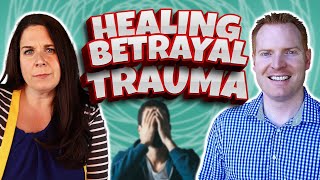
A YouTube interview (Amber Hollingsworth with couples counselor Nevin) about betrayal trauma—harm caused when prolonged deception (addiction, infidelity, financial secrecy, pornography, etc.) is uncovered in intimate relationships. They define betrayal trauma as a deep violation of trust that collapses intimacy, describe common categories and how addiction often combines multiple betrayals, explain why people conceal (shame, rationalization), outline therapeutic goals (ownership, triggers, root contributors, balancing disclosure), and note that recovery is possible and can strengthen couples if work is done. The content also promotes Nevin’s Renew Relationship Counseling resources (YouTube channel and membership).
Chapters
When you're in a relationship with someone and then suddenly you become aware that there's been some deception. Right. And especially if that deception has been going on, like, a long time. We're not talking about, like, I lied and I spent $10 and I didn't tell you. We're talking about, like, major, like, stuff that's happened usually over a pretty good long period of time. And when that kind of thing gets uncovered in a relationship, the damage that ca is caused by that is very deep and is very, very difficult to heal. And we call that. It's got a social name. We call that betrayal trauma. And I know that a lot of. A lot of our viewers deal with that. We deal with addiction, but it's not just like, oma, my spouse secretly had addiction to cocaine. I didn't know. Like, that's bad enough. Right. But there's always a lot more.
Yeah.
In connection to that. And all of. And a lot of times it's that other stuff that we just get stuck on and it. We can't move forward. And so for that reason, we have special guests. I call. I call my guest expert witnesses Nevin. And Nevin is like a real life couples counselor. And just for you guys who don't know, like, the couples counselors, I think, are like, like, what are like in the army, like, what's the. Like, the ones that are like, the hard chorus. What do they call them? Like, that's what the couple's counselors are like. They do the hardest, dirtiest front lines were like, I'm. I don't want to put people in the same room. I'm too scared of that. All my respect and admiration. You are, like, in the trenches. Impressive.
Thank you.
Nevin's gonna tell us how to navigate this big old minefield of a mess called betrayal trauma. Thank you so much for being here, Nevin.
Yeah, thank you, Amber, for having me. I am so thrilled with the content you create and the good that you do in the world and excited to be part of that today. I'm flattered that you would invite me, so.
Oh, yeah. We're gonna get a lot of good stuff out of. Now, Obviously, when I deal with addiction, I have an idea about how that leads to betrayal trauma. But there are other things that causes it too. So I kind of want to know first, like, what are the. What are the most common things that. That trigger this sort of issue in response?
You know, I. And I love the introduction that you gave and the way that you. The way that you brought that topic in, because you're right, betrayal trauma is real. It's a real category of trauma. Right. And we hear about lots of different traumas that people can run into. You know, trauma that comes out of assault or trauma that comes out of abuse, or trauma that comes out of post trauma experiences like 9, 11 or military service. Right. These are all legitimate forms of trauma. And betrayal trauma in a relationship is just as real. Oh yeah, it exists just as real. Right. And, and, and the foundation of betrayal trauma, like the thing that really causes the most damage for the individual who's betrayed and really for the betrayer as well, is the violations of trust that occur with betrayal trauma. Right. It's, it's even bigger than the actions that people take. It's the violation that occurs in trust. And, and trust is extremely important because when you look at intimacy, if we use intimacy is a term that we just applied it to, that connecting and bonding component in a relationship. When you look at intimacy and the connection and attachment that's formed with intimacy, the more trust that can exist in a relationship, the stronger the intimacy can be, right? So when trust is really high in a relationship, we have a really strong bond and connective power between two individuals. And when trust is weak in a relationship, that intimacy is also very weak and sometimes even non existent. Well, with partners, right. When you're talking about, you know, spouses in a marriage or life partners that are, that are kind of navigating the world with one another, the goal for that type of a relationship, a marriage type relationship is meant to be the most intimate of all connections that we might experience with another person. And, and so you take that, that intimacy that we know is founded on deep levels of trust. And, and then you find out one day, and, and, and especially the way that you described it, I find out one day that for years, right? But, but it doesn't always have to be years. It can be weeks or months, but especially years, right. I find out one day that this, this core component of our relationship, trust, has been violated over and over again. You can see how quickly intimacy can drop from extremely high levels to almost non existent in a moment.
Oh yeah.
Yesterday I felt close and connected, safe, secure with you. And now in the last five minutes, I feel like I don't even know who you are.
Yeah. And maybe even like a level not, not just I don't feel connected to you, but I feel unsafe with you. Like I feel this is dangerous.
Like almost you're my enemy.
Even like, oh yeah, because it's sort of a, the Deepest kind of wounding. Because I think it's, like, what you're talking about. It's not the mistake someone else makes.
Yes.
It's the deception that messes with your mind. Like, it messes you up.
Absolutely. Right. And. And you're not just any person in my world. You're the person.
You're my person. Like. Yes. Right.
I've given myself to you on deeper levels than anybody else. I've invited you into my world on deeper levels than anybody else. You know things about me that most people don't know. You've seen me at my best, you've seen me at my worst. Right. And. And. And I've allowed you into this space with me because of this love and this bond and this connection that I feel with you. And it's that. It's that safety, that security, that trust that. That gets betrayed in a couple's relationship that is so devastating. Right. And. And can feel. And can feel so alarming to an individual that. That's what we're talking about when we say betrayal. Trauma. Right. And I'm sure for those listening, if you've experienced some of that, you know it, like, you know what that feels like in your heart and in your gut and in your mind. Right. The. The anxiety, the hurt, the sadness is extremely deep, and it's very difficult for couples to navigate.
Yeah. I was listening to. I was at a workshop, this was a few years back, and I was listening to, like, a sex addiction therapist, and they were talking about, you know, you get the question all the time, like, what is cheating? You know, is like talking to someone, you know, and just so you guys know, we're talking about more than just cheating. Like, that's one kind of trouble. There's. There's lots of them. But. And then the. The person answer, which I thought was a really interesting answer, she said, it's when one partner has a secret that the other. A big secret that the other one doesn't. And the problem with that is, is it. It makes the power differential totally skewed. And I thought, well, that's kind of a simple way to look at it. Right? Like, instead of like, well, is trusting cheating? Or is like, you know, where's the line? Yeah, it's the secret holding. And I think it's the secret holding whether it's with that kind of cheating or any other kind. Because there's, like, financial deception.
Absolutely.
There's substance abuse. There's all kinds. So tell us, what are the big, like, categories of it that you. That you see in your practice, Nevin.
Yeah, I know. And I'm glad that you bring up the secrecy and, and what compounds on top of that secrecy also is I'm keeping something from you. And not just keeping something from you. I'm keeping something from. From you with some knowledge that if you knew, would hurt you.
Oh, yeah. If I. If I might have didn't tell you something because I didn't even think of it or anything. That's. That's not what we're talking about. Like, I didn't even know you wanted to know, you know? Yes, definitely. Like purposeful. Yeah. Yes.
Which then. Which then. Right. Like, to the. The other individual in the relationship, it feels like your loyalty was to the thing more than me. Right, Right. It really is as though it introduces another loyalty partner. And it could be money, like you said. Right. Like it could be money. It could be decisions that you're making with. With family or siblings behind my back. Right. It could be emotionally inappropriate relationships, like an emotional affair, physical affair. Oftentimes partners will feel very portrayed with things like pornography or pornography use or masturbation use. Right. You know, outside of the relationship, it could be things with spirituality. Right. Religion. I see it in almost any category that you can think of, because this type of betrayal trauma can exist with any topic that's extremely meaningful to one or both partners.
Right.
So it really is where their values are, where the, where the principles are for them individually and in the relationship that this type of thing can exist. I mean, it can even exist. I interacted with a couple that. With maintenance of one of their rental properties and one partner saying, yeah, yeah, yeah, I'm getting it done. And, you know, it's being maintained, the flooring is being maintained. We're doing, you know, we're doing walkthroughs and things to make sure this property is taken care of and finds out three. Three years later, this property is a complete dump. At this point, there's been no maintenance happening. Right. And there's this alarming experience in the relationship. All of a sudden it's like, wait a second, I've asked you about this multiple times, and you made it seem completely different than what I'm realizing.
Like you. Yeah, yeah.
So really any topic.
Right.
Like, it could really exist. And it's really about the values and the principles that really mean something to one or both partners. That being betrayed in a way that's not just a partner being unawares and unknowing. Right. It's this knowing and. And intentionally lying kind of prioritizing a thing over here more than the feelings you might feel for me here.
Relationship. Right, right, right.
So the topics are kind of endless, but those are the big ones I see is financially, right. You know, in the emotional and physical affair categories, pornography use categories, substance use categories. These are kind of the. The most common ones.
I found that the. When someone has an addiction, the addiction pretty much brings all the categories in, Right. Because the person is spending a lot of time that they're not accounted for. So they're. You know, there's time issues. Where were you? What were you doing? Like, maybe I was supposed to be working on the property, but I wasn't. There's frequently, like, sometimes, especially when someone finds out someone has an opioid addiction.
Yeah.
Always a huge financial mess. I mean, huge. So it's not. Not only did I find out, like, you have this addiction, but, oh, my gosh, like you have $100,000 in payday loans or something crazy, you know, like, it's almost always there. And then, you know, other addictions lead more to, like, emotional infidelity and physical infidelity. So there's. I feel like addiction almost always brings those other prongs with it, and a lot of times it's multiple others.
Yep. Yeah. Really complicated layers, right. That when you start looking at the impacts of distrust and betrayed trust in the relationship, starts to navigate multiple categories, right? So there's this. There's distrust and. And broken trust that comes out of lack of honesty. Right? And then there's the broken trust that comes out of doing a thing that, you know, would hurt me.
Right?
And then there's the distrust, right. That comes out of all the times that you could have brought it up that you didn't. You omitted it. And then a few times that you kind of just straight up gaslighted me, right. That you made me feel like a fool being curious. Right. Like, you know, so we're talking about multi layers of trust that needs to be healed and. And rebuild relationship. And like you said, multiple consequence outlets, Right. Like multiple places in which the relationship's now injured and needs repair.
Right. You know, and even though we're talking about this, I want to sort of almost like turn the table a little bit here because we're talking about how, like, this villain person is just this horrible, horrible things. Right? But the worst part about it is this other person isn't, like, necessarily like a villain.
Right.
Anybody could find their self on either side of this issue. That's what I want you guys to know.
Absolutely.
Anybody could be on either side. So how. How does someone find their self in the, like, the betrayer category? Like, how does someone get to this point where they're. Where they're deceiving on this level? Which is so hurtful.
Yeah. And I'm glad that you bring that up, Amber. And. And you know just as well, maybe better than most. Right. That most individuals that are out there in the world aren't sociopaths. Right. They're not out to. Typically, they don't wake up in the morning and conniving ways. Think, how can I maliciously hurt the most meaningful people in my world? Right.
And they're not narcissists either. Settle down. Not even covert. There are some of us out there, but I just feel like those get thrown out. I'm like, oh, my gosh, everyone's not a nurse. Okay.
So anybody who offends me is a narcissist. Right. So I'm glad that. I'm glad that you bring that up. And I like to tell my clients, you know what the reality is? We're all about three decisions away from catastrophic outcomes. Right. Like, at any given point. Right. Like, it. It doesn't take a lot to really send yourself down a negative path. And nobody's. Nobody's immune.
Right.
We're all vulnerable. We all need to watch ourselves, check ourselves and be thoughtful and mindful of ourselves every day, especially in the relationships that we care about most. Those are the relationships that really afford. They're the ones that we ought to be giving our best in and using those relationships to know, how am I doing and how am I showing up? So I'm glad that you bring that topic up, that we're not talking about evil, malicious people, typically. In fact, I'll tell you a story about a client that I worked with, you know, recently. He was keeping a secret from his spouse, and he had been keeping that secret for the whole time in which they'd been in a relationship. He had really struggled in this category of pornography and knew in their relationship that she was very sensitive to that dynamic in inviting intimate and sexual feelings into the relationship for. For pictures and videos and whatever else that aren't her.
Yeah.
Really wanted that fidelity for her. Right. And. And he knew he had the struggle. The struggle predated her. So. So he struggled with this before he even met her. He found out very early on in the dating relationship that she had concern and issue about that with past boyfriends and things that she'd been with. And. And so he knew that if he were going to Pursue a relationship with her, which he really felt strongly for her. He had to get rid of this problem. And he, he set his mind to it in the beginning. I'm going to kick this, and I'm going to kick it because I know she's not. It would hurt her. She. She might even choose not to be with me if she knew about it. Right. And so instead of telling her I've struggled, I'm just going to kick it. Right. I'm going to kick it. She doesn't have to be hurt. We can move our relationship forward. And he justified and rationalized that way for years. Right. Fast forward about five years into their relationship and she discovers a few files one day on his phone, just innocently looking for a communication that they were having with a mortgage company and stumbled across some files on his phone, opened them up, realized that there had been a long pattern of, of, you know, accessing pornographic material and confronted him about it. And at that point was so dear in the headlights with her that he lied. Right. I don't know where those are. I don't know where they came from. They're not mine, all the things. Right, Right. And so she had to not only discover it, but she had to dig it out of him slowly to get the truth. Right, Right. And at this point, he's just bawling. I mean, he feels terrible. And his, his terrible feelings are genuine. I trust them. I believe them. I. I believe he never intended to hurt her. Right. But what he did in the very beginning was he rationalized and justified keeping some things from his partner that he knew would hurt her.
Because I don't want to hurt her.
Yep. He drove them underground and he tried to wrestle with them alone and isolated instead of really reaching outside of himself, Honesty with her and others and getting himself some help because he drove it down and inward. And this is a mistake that a lot of, a lot of individuals make. They realize that there's some warning signs and red flags in the world. And instead of looking outside of themselves and connecting to resources to tackle them, they'll hide them.
Right.
They'll drive them down inside, tell themselves, I got this and I'll figure it out. And each time he would make a mistake, he's like, that's the last time. I'm never doing it again.
Right.
Like, I'm going to get rid of this. She doesn't have to know about it. And he would justify, I'm keeping her safe.
Right.
I'm preserving her feelings. I don't want her to feel hurt. Right. And five years later.
Yeah. In recovery, we say secrets keep you sick. And I tell people, you can't get well in secrecy.
Yeah.
You don't tell everybody, but you can't just like, keep this thing that you've been compulsively doing for all this long time and think, well, I can just sort of fix this on my own and we'll ever know. It just doesn't ever work.
Yeah. And I'm yet to watch that be great result. But. But justifications like that is one category.
Right.
I'll justify inside. I'm preserving her. It's a loving thing for me to do, not to let her know. Right. That's.
It's the opposite. Right. Like for her, it's like. Or for the other person, because it can be harder him. But it could be like, this is the most hurtful thing you could have possibly done. Right. And it's like, well, but really what's happening is, yes, I'm trying to protect her, but. But really it's like protecting yourself from shame, which is awful. You know, it's just like we all have that and we just don't want to deal with it.
Yeah.
Don't like doing mine either.
Because in almost all cases when I talk with couples and the truth finally comes out, it really is the trust violation.
Yep.
That was the most. That did the most harm, this couple and almost every single couple that I work with. Right. It's bad enough that there's this thing going on that, you know, would hurt me, but what hurts even worse is you didn't let me be a confidant with you. You didn't pull me into it, help me understand it, and allow me to be part of the dissolution. Right. Instead, it's almost like you maintain fidelity and loyalty to this thing.
Right.
With me in the dark.
Right.
And. And that trust violation almost 100% of the time is the worst violation. That's.
Oh, yeah.
And the hardest one to overcome. Right. Because long after, you know, individuals get the help that they need and overcome the betraying issue in the relationship, long after that exists this question in the mind of the person who was betrayed, this question that says, how do I know? And what if. And man, we can. What if thousands of scenarios. What if he's doing it again? What if he's just gotten better at hiding it? What if he's just got better at lying? Right?
Because it's not just that you lost trust in that other person when you've been to see for a long period of time, you lose Trust in yourself. And then you can't. You're like, obviously, I'm an idiot. You know, obviously, go on 10 years and I'd even know it. I'm probably missing everything. And then I, like, lose trust in myself and in every relationship I have. That's why it's so, like, devastating.
Yep. And I watched that, too. I'll watch couples come into a next relationship now and still really struggling with trust. And there's nothing about their current partner, in my assessment and in their assessment that they can really put their finger on that's creating a lack of trust. It probably could have. Could be a really healthy connection. But because I've been through this distrust in the past, I don't. Like you said, I don't trust myself. I'm paranoid and suspicious of others, especially. The more vulnerable the relationship becomes, the more that paranoia can sometimes increase. And then now that I was the one who was betrayed in the previous relationship, I left it because I wasn't okay with it. I get into the current relationship, and now it's my anxiety that's creating the issues in the relationship.
Right. And now I create problems for the next.
Right.
I'm so glad you said that. Never. Because sometimes we think, well, the answer is just to get out of it. No, that's not the answer. I'm not saying you shouldn't get out. I'm just saying that doesn't fix it. And so, sure. It's so important for you guys to be thinking about this if this is a concern for you, because if you don't deal with it, it's not. You got to deal with it and forgive this other person. I mean, that's helpful. If you don't deal with this, it's gonna, like, pull poison everything in your future. So. So whether you stay, you go, you forgive, you don't want. You got to deal with it in here because it just continues to fester and. And make problems. Yep.
And both parties. And that's. That's the other thing that I'll tell couples, too. You know, it's like, you know, here we find ourselves in this situation, and you both need healing, and. And if you both need healing and you're willing to do that healing together, let's give that a shot. Best case scenario, we can heal and heal the relationship at the same time. But if you're not willing to do it together, which I understand, there's some situations that are so betraying or hurtful or traumatic that maybe you choose not to be with that person anymore. Maybe it's the most healthy choice you can make is to leave that relationship. There's still. Both parties still need to do that work, Right. Whether they stay together or whether they don't stay together, we got to do that work because it's going to get in the way of a healthy relationship in the next relationship. If I don't do that work, it will continue.
Yeah.
Yep. And, yeah, so. So. So I'm. Yeah, I'm really grateful that you bring that up, but that's. It really is about that, that. That betrayal of trust. And I. For any viewers that are listening, right, like, if you find yourself in that spot where you know you're holding something that would hurt your spouse, right. And there's that justification narrative in your mind that's saying, I'm protecting them by not letting them in on this. Right. Like, ultimately, I'm being compassionate or I'm being thoughtful by not letting them in on this. I would agree with you, Amber. That's actually what's happening is I'm protecting myself from confronting the issue probably in a way that needs to be, and I'm protecting myself from the shame that I might feel and admitting to the issue. But that's why in classic 12 step stuff, right? That's why admitting to myself and to others that there's an issue is the first step, right? And especially to the people who love me the most, especially the people who. Who I owe the most fidelity and loyalty to. Because most of the time, it's not the actual issue that's going to hurt them the most. It's the fact that I never had the guts. I never found inside me the strength to let them be more important to me than. Than the.
Right.
Right.
Let me ask you this because. Because you brought up like, like the traditional 12 step, and this is a scenario I ran into, like, recently, very recently. So. And commonly, like, it comes up a lot. So when I first get a new client, I call myself the defense attorney. I see the person, somebody else sees the family member. And we're always the one, we always the bad guys. So I'm like, defense turn. I say, listen, I'm here for you, man. I'm defensive, get at it.
So you're covered.
But people come see me, they already, like, dug into this big, giant hole. Really. I was like, I know you're in a doghouse and I'm gonna help you get out of it, because that's what we're gonna do. But most of the time, you know, somebody's done gotten in trouble for the first time or the hundredth time or whatever. But there's always like, more secrets. And so one of the first things I say to them, I'll say, what else is in there that they don't know about? Because I want, I want to know what it is so we can decide whether or not we need to, like, out it. Because if we get six months down the road and we're doing like, really awesome, and this stupid thing comes out like, there was this other 300 that you owed this drug dealer, but you just didn't tell it because you're just like, they're already so upset with you and you're just like, why pile on it. Which I understand. But I was like, it's gonna take us back to negative million. Right? Like, so I'm like, you're already in so much trouble.
Yeah. Yes.
And I say, I will go across the hall and talk to their counselor and I will say, well, we need to have something and I need a free pass. Go find out if I can get it. I'm like, please, please tell it because it's gonna come out in the stupidest way. And then you have worked so hard, it's gonna destroy you.
Yeah.
So there's that scenario.
Absolutely.
Then. But then this is the curveball in 12 step work, the amends making. There's this concept of like, you make amends except wherever it would cause harm. There's some situations like the classic one is like, I slept with my brother's wife and he doesn't know it. Should I tell my brother? Yeah, that kind of situation. So recently, you know, almost any time there's like any of these things, I'm like, let's just have the secrets. I owe some money. There's just credit cards I don't know about. Whatever, whatever, whatever. I'm like, let's just get it out because you're in so much trouble. Like, really, it's not going to be that much more right now, like on day one of therapy.
Yeah.
So let's do it. But sometimes it's big. And when I say big, usually it's like, Like a big long term affair.
Yeah.
And I gotta be honest with you, Nevin, I'm like, I don't know still. That one. I'm glad you told me because we are gonna talk about like. Yeah, what do you think? And maybe I'm telling them wrong. That's why I'm asking you, because, you know.
Yeah. No, I. No, I love it. You know, I love what you're saying and I I absolutely agree with you. Almost the exact same conversation with my clients as betrayal has come out. And that's why they're coming in, right. Is they're like, we're dealing with all this betrayal. I mean, that's. That can be a really common reason that couples first talk to me, or we get in four or five, six sessions. You know, they know they're having tons of conflict. They can't figure out why, and then all of a sudden, it just blows out.
Right, right, right.
You know, now I know. You know, and, and. And so almost the exact same conversation I'll have with people. Right. Like, look, we are, like, at the bottom right now. Yeah. Right. And we want to build from here. And I have a lot of confidence I can help you do that if you choose that it's the right thing for both of you. Right. And before we start climbing that ladder, please, please, if there's anything else that would shock, alarm or hurt your spouse if they were to find out, let's put it there now. Right. Because. Because we want. Once we start rebuilding trust, taking those steps, we need to. To heal and move forward with trust. We don't want to violate it again after we've had this good. This good period. Because next time we have that good period, they're going to be suspicious of it the whole time, right?
Oh, oh, yeah. We're gonna go back a million times, way back here, and it's going to be a hundred times harder to even get the ground back.
I love that conversation. Now, now you're talking about really sensitive information, right?
Yeah. Like the basic ones like the money and the this. And like. And I told mom this when I told you, like, whatever, we gonna get those out because it's not gonna hurt us anymore.
Yeah. And in most scenarios, the way that I like to think about it, and I will, and I'll tell the therapists that work with me too, we really need to play those individual by individual case. I think there's a lot of dynamics that can be playing out in their world. Right. And it's hard to just give a blanket statement. But the blanket statement that I would say is that in most cases, if that thing coming out has high probability of hurting the person you're trying to build the relationship with the most, the primary person. So you used an example earlier of like, you know, the brother or whatever. Right. Or. Or a neighbor or something.
Right, right, right.
If that relationship isn't the primary one, we're focused on healing. Right. But. But if it, you know, that then Then maybe. But if it has capacity to really hurt this primary person that I'm trying to build trust and loyalty and fidelity with, rebuild that healing with. To hurt them, you know, specifically and individually, most of the time I'm going to be on the side of. It's better for them to know, especially if there's a. There's a pretty good chance it may come out in the next five to ten years.
Right, Right. And that's a good point, that it may come out because one of the things I said and I said in this recent situation, I said, listen, you just got busted for this. And what happens when they found out this big secret? And I talk about this on the channel all the time. The person goes crazy and they start. I mean, the FBI could not investigate as good as this person, I promise you. Like, they develop skills. I mean, it is so obsessive, I can't even explain it.
And it's miserable.
They dig through every. So I'm like, dude, I promise you, they're in this state over there. So, yeah, it's going to get found is pretty. Like, you may have been doing it for 20 years and then I got found. But now we're on a different. Now the FBI is in here.
So, yeah, yeah, it's tough. And. And then the other dynamic with that, too, Right. Is that for the sake of the person who's done the betraying, I really want them to get to a place where they feel like they've started with a clean slate inside.
Yeah.
Right. That their heart is kind of like, you know, what. All the nasties out there.
And.
And now as I rebuild, I'm not rebuilding with the, like, yeah, I'm being a lot better. But there's still that thing I feel a ton of shame about.
Right.
There's that thing that I've never. I've never quite admitted to anybody. There's still that thing, Right. That every time they want to feel new and fresh, keeps calling their mind back to not. Right. Don't feel too good about yourself because look at this thing nobody knows about. Right.
Be sick. That's right.
So there's. On their behalf, too, But. But certainly there's going to be situations like, you know, substance abuse or betrayal or whatever, where. Where, you know, somebody else's spouse. Right. Maybe I haven't gone and admitted and whatever to them, you know, and, you know, that. That relationships over here, this is the one we're primarily focused on. This is the one where we really want to create, you know, and there's going to be some of those peripheral things that's almost impossible to heal to. And like you said, maybe even avoiding doing harm in those other relationships. Right. Like, but in this one, I really owe my partner the most loyalty and fidelity of anyone, if I'm going to call them, you know, you know, my partner, my spouse. That's what I'm saying. That's part of the commitment that I'm making, is you are my person.
Right.
So I need to be. I need to be the most transparent with you than any other.
All right, let me throw a slight curveball at you here. Yes. Because I'm so excited to have the expert.
I love this.
I've been on the other side of this betrayal trauma. Like, I've had this happen to me, and I'm not sure I would want to be told every time. It was so hurtful. I don't even know, like, I want to be fixed. So that's why I'm like, I don't. There's some things I'm just not even sure. Like. Yeah, you know, it's just. This is awful. And so it's just like, do I even, like. It's like, you do, but you don't. You know, and sometimes, even when I'm working with, like, the family member and they want to know everything, one of the things we do, and I don't know if you did. I'm like, stop looking. Because you don't want to know.
Yeah.
Because once you know, you can't unknow. Stop. Like, you already know. This general issue is there. You do not need every detail. And I, like, we beg them, please.
Yeah.
FBI badge in, like, give the black light back. Stop. Turn the passwords over. Because it's not. I mean, at some point, knowing more and more and more, every detail. I promise you, it's not helpful. Can you speak to that?
Yes. Correct. Yes. And thank you for differentiating this. Yes. So I was talking with a colleague of mine, just actually two days ago, about the same thing. Right. So when I talk about, like, knowing everything, what I'm really talking about is knowing all the big categories of the things. Right. So, for example, knowing. Knowing that my. My partner cheated.
Right.
Cheated meant, you know, this is a general category. Cheated meant, you know, getting deeper, emotionally connected to three different people at work more than she should have. Kind of an emotional affair.
Right.
And then one other person, it went to intercourse.
Right, right, right.
Like, understanding this is what happened. Right. Like, those general categories, we're not talking, you know, details of those intimate interactions because those you're absolutely right. Have power and capacity to really relive now and replay in the mind of the person who's been betrayed over and over and over again. Right. We need enough information that it shuts down the anxiety of the mind that wonders, what if, what if, what if?
Right.
But not so much detail that we're painting vivid pictures for the person. Right. That they. They may never be able to move past, especially if their goal is to be to preserve the relationship. Right.
Right.
So we want to know.
It's the natural response of the betrayed person to obsessively want to know every single detail.
Yep. And it's a balance to try to give them enough.
You almost can't even control it.
Yes.
It's almost like, I don't know, it's just. It's just this hard thing. And when I'm working with a family, I'm like, I'm telling you, stop.
Yep. Because once that door is opened. Right. Like it was shut before I had safety at security. Once that door is open, the mind and the anxious mind and I. I do a couple YouTube videos on this specifically. Right. Like how the anxious brain works, but the anxious mind wants to step through that door and it starts rattling off thousands of what ifs. Right. What if this time you were with somebody? What if that time you lied to me? What if this time, this. What if this thing you've said to me in our most intimate moments, you said to them, what if you know, like all these things, Right. And the brain just rattles off and really there's. There's no limit to that. What if it can be as catastrophic as the imagination can take it?
Oh, it gets bigger the longer and the worse it gets. And not only is like, what if this happened? But it's even worse because, like. And when it happened, I know you were thinking this, oh, my gosh, I think it's like half thousand levels deep.
Absolutely. Right. So that's why in that. That kind of confessional period of the healing, right. Where the individual is really trying to be accountable and open about, hey, here's the ways in which I betrayed. You never should have had to dig this out of me. This is always something I should have protected for you. Right. We want a balance of enough information that we're able to address all the major categories that the betrayal occurred in. Right. And. But not. Not spend so much time in the minute details that those details themselves start to re. Traumatize an individual. So. And there's a balance there with anxiety. A person needs A certain amount of information to help that anxious process come down. But there's a point at which too much information sends it right back up again. Oh, my gosh.
Yeah.
And so working with a trained professional that has helped couples through that, there's a balance there for sure. But what I'm talking about when I say keeping details is I'm talking about, like, oh, and there's this other person over here that I work with that I don't want to tell you about what happened with them because I don't really want to have to quit my job or fire that employee because of this issue that we had. But, you know, three days, three years later, you might find out I never told you about her, and I've been working for her for the last three years. Like, guess what's going to happen in our relationship when that comes out?
Right? Everything.
You know, I mean, like, and I could have sincerely really healed that betrayal trauma for my spouse for the three years, been completely loyal and faithful, but because this has come out now three years later, and it's somebody I work with, and I. And I kept that one in the dark. That's the type of stuff I'm talking about. Said, no, let's. Let's get all that stuff out. Especially with the person we're rebuilding trust with. Yeah.
Oftentimes, you know, when we do the work with the family member, we'll say, like, stop. Stop looking. Do not read the journal. Do not, like, stop. But they can't. And we get that. Like, it's like when I'm working with alcoholic, and they stop drinking, and then they drink tomorrow. Like, okay, like, I'm. You should stop. But I kind of, you know, I get it at the same time. And then let's say they can't stop and. Or they stop for three days and then they realize that, because the family does that too, you know, so. And then they just want to know when they're, like, grilling this person, interrogation style, like, the spotlight, you know, like, what should the person that's being grilled, do they tell it? Should they not tell it? Because the last thing, you know, what do I do?
Yeah, you know, it's. It's. It's tough. If they have the opportunity to be working with someone, I think taking cues from that objective third party can be helpful. Right. Like, there's. There's very few couples that are going to be trained to know how to manage this type of dynamic in their relationship together. So if there can be an objective third party, and that could Be a spiritual leader. That could be a mental health therapist, that could be an addiction recovery coach or professional. That could be, you know, a member who objectively loves and cares about this relationship. Right. But allowing somebody maybe outside of us to help navigate some of that is really important. But the other thing that I found when. When on the betray side, the person who's been betrayed, when there's this obsessive peace that's happening in the. In the relationship, one of the other things that I found that can really help calm that is actually shifting focus in a little bit different direction. One of the first therapeutic goals that we have for a couple, especially on the betrayee side, the person who's been betrayed, is for them to examine the meaning that they attach to the betrayal. So we want them to start looking at, how am I internalizing what my partner has done?
Oh, yeah.
What are the messages? I'm connecting to it.
Oh, yeah. It means you didn't respect me. It means you don't even care me. It means you think I'm an idiot. Oh, I could just.
Yep, you don't love me. Maybe I start questioning, am I lovable?
Oh, yeah.
Worth to anybody? Am I worthless? Right. Like, am I inadequate? Right. Like all these messages. And most of the time those messages are, I would say all the time, those messages.
Yeah. Those are like, those are pretty much always right.
Yeah. And they're not accurate. Right.
Something about something they're dealing with. It really, it ha. It's something that's going on with them. And I can tell you that from defense attorney standpoint, promise you. Like, it's about them, not about you.
Absolutely. Right. Because the healthier person is, the easier they do things like trust and loyalty and love. Right. The less healthy their internal world is, the harder it is for them to give that in relationships outside of them.
Right.
And. But when we're in a couple's relationship, we do this thing where all of a sudden, because I'm in this relationship with you, I take my heart and I take my value and I kind of offer it into the relationship. And I say to myself, I'm going to use you and my interactions with you now to know you're going to be my expert witness of my own value. And that works pretty well when the relationship's healthy on both sides. But when my partner is not a healthy person and I've just handed to them, I've made them an expert. Excuse me, I've made them an expert on my value, and then something like this comes out all of a Sudden, all that they've done has everything to do with my value. And that's devastating. Right. That can leave me in very devastated places. And so I become almost hyper vigilant about needing to know more and no more and no more. Not because actually the details are helpful to me at all, but because I am gleaning out of this more and more and more toxicity about my value and my worth. Like, it's almost like I'm being devastated. Deeper and deeper and deeper, the more that I find out. And a lot of times we want to cut off that process for a minute and help that person really take a look at what am I internalizing as I find out about these details. Right. Because we want to separate the performance of your partner, whatever thing they did, their behaviors, we want to separate that from your value for a minute. Especially in this category. Right. Because. And oftentimes as couples start to heal, that is, the person who's been betrayed starts to realize, okay, like a lot of this acting out behavior actually had a lot more to do with the unhealthy in my partner's world than with me. Lots of times we'll watch that obsessive needing to know.
Right? Right. It's almost always about an insecurity or some unment this other person has. But I'll tell you, it is very complicated because not only does the betrayed person got betrayed person start to attach those meanings, but to add like 400 levels of other psychological matrix stuff, the person that's doing the betraying will oftentimes manage to convince themselves of that. And that's what I talk about all the time as far as addiction. The emotional justification that a person has to tap dance that they have to go through to justify these continued bad decisions that don't fit with their value system. It's a maze of spider web. And it's almost always like, I mean, they'll set traps for the other person.
Yep.
They'll make that other person act like a jerk. They'll set traps for that other person to prove to themselves. So. So it's even harder because the other person, not on some level kind of is thinking that. And that's how they've like convinced themselves, like, it's all right to do that. They may have told you that like, and that makes it like really messy.
Yeah. Amber, this is one of the reasons you're so fantastic. I mean, you have a tremendous mind for understanding these complexities. Right. And that's why there isn't like, you know, easy staple, you know, decisions to Just apply to any betrayed process because for sure, right. Like, I find myself empathizing with both sides of this betrayal problem all the time. Right. I worked with a woman who developed an emotional affair in her relationship with her husband. And of course, wrong. Bad shouldn't happen. Right. And as, as you, as you dig into that a little bit more, we find out that there's always been a difficult struggle in the relationship for both of them to connect in emotionally meaningful ways. Both of them come from. From environments that they didn't learn how to do this connection thing. They both have felt in a drought for a long time. And then as I learn a little bit more about this woman who did the betraying, right. And her past, her relationship with her parents, her relationship with her siblings. Long story short, right, She's. She's been walking around with a lot of insecurity about her worth and her value for years before she meets her husband.
Oh, yeah, right.
Like desperately needing words of affirmation and attention, external reinforcers, that way to know that she has any value at all. And when it wasn't happening a lot in their relationship, nobody's fault. They're just not good at knowing how to give each other emotional connection.
Right.
She became very vulnerable to it when it was offered in a workplace.
Right?
Right. And on the one hand, yes, never should have happened, for sure. No couple, you know, deserved to go through that. On the other hand, I can totally see how she ended up vulnerable to that. Right. And, and, and how she got there and where she got. Right. That doesn't make her a malicious evil person.
Right.
We definitely want to heal what's going on there so that it doesn't continue to hurt people that she loves and doesn't continue to injure and tear apart her opportunity for meaningful relationships.
Right?
Right. So that's on the person who's done the betraying on their side. Some of the first steps that I start with as we work with couples is taking a look at do I have a good understanding of what the betraying behavior has been? Can I define it and can I name it? Can I own it? Second, what were my triggers? Like, what are the things that led me there to this thing that I wouldn't typically do? It doesn't even match with my moral and values.
How did I do this choice?
And then the third part of that is, what are the root contributors to those triggers that set me up to do this behavior? Right. So taking even one step, look deeper and saying what's going on in my world or in My past and present. That even makes those triggers triggering.
Like, why was I vulnerable to that in the first place? Right.
Because as soon as I feel that the vulnerabilities and the root contributors, now all of a sudden the triggers lose as much potency as they had before. And I'm much more likely to align with the core values that I hold and that I desire in relationships. Right? Like, I'm not. I'm not white knuckling staying away from problematic issues anymore. I literally don't desire that. I don't desire them, and there's nothing inside me that needs them.
Right.
Right. So. So then we're just dealing with bad habits to break, and a couple can be off to a lot healthier dynamic. So we want to look at that. Not just what is the. The bad behavior that's hurt my relationship, but what are the triggers? And then deeper than the triggers, what are those root contributors that have occurred in my life that make those triggers triggering?
And. And I would probably even add, like, one more layer on to that because that's so, you know, it's. It's complex. Everything's come. Nothing's black and white. There's no goods and evils. It's just not like that. But, you know, it's like, what did I do? Why did I do it? Why did I want to do it? But how? Along the way. And this is specific, especially with addictions. How did I convince myself and rationalize and justify? And where was I aligning myself? A long way. Because with addictions, if you don't identify that, it's going to keep happening to you because it's so sneaky. And. And the way this works is never as malicious as it seems. It's kind of like, like I, like, I have to be careful because I like binge, like Netflix series and stuff. I'm totally, like, I have. I can't even start it unless the whole thing's there. Because I'm just gonna, like, stay up for four days and watch this is.
The Way I am.
Because that way. But yeah, I love. Some of the newer ones are so cool because they have these, like, really complex characters, you know, like. And the reason I like it was like, you know, like the old, like, Breaking Bad series, you know, it's just this, like, one choice.
Yeah.
Probably not great, but you kind of, like, had a justified reason. But then that makes you make another bad choice, and then that makes you tell this lot. And so then that makes. And so what happens is you get stuck in this web of mess and you can kind of see it on these shows. Like, what's the other one that has Jason Bateman where he's like the. He's scrubbing the money. I don't know if you watched that. What's the name of that, you guys? It's Jason Bateman and he's like washing the money, whatever they call that, like where he's the money guy, like that kind of thing. And that's. That's how it works.
Yeah, yeah, yeah.
Just people I see get themselves in the messes they get.
It's like, yeah, that self deception, right. That begins with some justification and rationalization. And I would say, as far as couples go, betrayal trauma goes. Any time that I find myself rationalizing something that I know would hurt my partner, that deserves a step back and a long stare.
Oh, yeah, warning sign.
Yeah.
Big red clue. Like I say, if I'm doing something that I know I can't tell you.
No matter if I have justifications in my head or not. Right. I'm probably going down this.
This path of probably making a wrong choice. Right.
That's how it works. Like justification and rationalization. It'll take the imperfections of my partner and it'll give me lots of good reasons why it's okay that I'm doing this thing if I'm not careful with myself.
Right, right.
And so we want to catch that early, if we can, and instead address the thing that's hurting in the relationship instead of finding these alternative ways, you know, to keep secrets and. And to act out and things. Right. Like let's. Let's get to the heart of what that relational issue or need or concern is. Early, you know, and if not early, it's never too late.
Right, Right.
Like we can. We can always go in and start to tackle these really hard things, you.
Know, and just so we leave people on a little bit of a happy ending. I don't know if this is your experience, but my experience is couples that can get through this. You, you're. I always say people that conquer addiction are the strongest, healthiest people out there. Because you have to. You can't get through it without developing some serious muscles. And so couples that can get through this in a healthy way can really have a deeper relationship than they ever had before.
Yep. And in fact, I watch with couples who recover in their relationship. Right. And move beyond really difficult things. If we say that difficult moments in our life have the power to pummel us or refine us.
Right.
Whichever direction we choose. Right, Right. This type of dynamic in A couple's relationship is heavier than many couples will go through. But if they go through together, it has the potential to elevate that intimacy, that connective power in their relationship beyond the average. The couples who have the best relationships have navigated the most difficulty successfully.
Right.
They have the most depth, they have the most meaning. They have the most meaning connected to their love and loyalty to one another. They know where they've been, they've seen really hard things. Right. They've managed to overcome it together. So there absolutely is hope. And I. That's, that's, that's. That's why I'm passionate about this work, is I want individuals to know that no matter where you've been and what you've been through, if healing is what you desire, you, healing is possible. Right. If health and wellness are what you're after, it's possible. Right. It's going to take a lot of work. There's no magic fairy dust.
Yeah. I don't recommend you go out and script your life just to do this, but if you find yourself here, you know, you can, you can get better. And, and when I say, you know, couples are stronger, individually, you're stronger, better people, and as a couple, you're stronger, I don't mean, like, okay, this happened, and then we just made a promise not to ever bring it up again, and crammed inside, that's. That's a way to make sure other bad things happen. Yeah, but I'm talking about, like, really did the work here and dealt with it. You can come out the other side and you can come out better and stronger. I mean, most people don't. They're. They don't say, I'm glad this happened. Okay. Of course, we're not saying that, but. But they may say, I'm glad I have grown in this way or, like, you know, this new thing that we have or something like that.
Yeah, yeah. Because some of the most significant growth in our lives comes out of these really tough moments, these defining moments. Right. And we don't have to go looking for that trouble because life will naturally present stumbling blocks to each of us.
Oh, yeah. No worries.
Yeah. None of us are gonna. None of us are gonna get through this, this mortal journey without some of those. So. Yeah.
So, Nevin, tell it. Tell everybody, like, where they can find you if they want to, like, learn more from you or maybe even seek your services or you have this, like, cool new membership thing too, I think, right. For couples.
Yeah. No, thank you. Yeah. So. So on YouTube at renew relationship Counseling you can. You can check out our YouTube channel. And we. We put out close to 100 videos now on. On marriage and marriage relationships and. And how to support healthy relationships. So. So take a look at that. The membership that you're talking about. What we've done is in working with thousands of couples over the years, there's some really core principles we call the Renew system. Really core principles for couples who are looking to strengthen their relationship. Maybe they've been through some betrayal traumas, maybe they haven't, but they want to strengthen their communication. They're running into connection issues, intimacy issues, trying to figure out how to resolve differences in their relationship. These are. These are topics that almost any couple trying to build a relationship is going to have questions about. We've taken those topics and we've. We've packaged them into materials, videos, activities, you know, worksheets and things that couples, if they'll do together, can really expedite growth and healing in a relationship. And we've made those available to couples through a membership. So for 25 bucks a month, they can access all those materials, plus our live Q&As and webinars and things, and give their relationship a real shotgun into growth and wellness and healing. So.
And what. I don't know if you have kind of come across this, Nevin, but, like, we have. We have online, like, courses and memberships, too. And what I like about that, it's not so much that I say, like, oh, you can just do this instead. Sometimes you can actually just do that instead of counseling. But, you know, people come to counseling. Let's say you sit with your counselor for an hour, and then it's like, you know, 20 minutes of him saying what he didn't like this week and 20 minutes of her saying what she didn't like this week, and then the counselor trying to make sure everybody feels validated and heard, you know, and, like, five minutes of, like, the counselor wisdom comes out, right? Like, yeah, well, people are so mad they're not English to you anyway, because they're just like, can't believe you said that. What I like about, like, in the, like, information, educate. Because then you can, like, absorb it and we can learn and you're gaining skills. You know, we're growing, learning. Like, it. To me, it's the fast track.
Yeah.
Like, and if you want to do counseling on top of that, even better. But, like, yeah, y' all know, if you've been to a couple's family counseling session, y' all know what that's like. Like, it's a lot of time like, yeah, y' all go talk to Nevin about that. Yeah, that's rough. You did this.
Yeah. Almost all of the appointment can be taken up in that. Right. And it's, it's necessary for those couples who can't communicate, it's necessary that they have a person trying to help them. You're right though. The problem is there's just very little time for the actual principles that they need to learn to apply that one day gets them to a point where they don't need the counselor anymore. Right. So I always say that for couples. I think it's a good starting point for couples to access those types of materials. Because if your relationship, if all of it's needing is a little bit more good, healthy information, it can get you to your goals as quickly as you want to get there. You can access those on demand night or day 24 7. And if you find that you're having a really hard time applying those principles, then you get yourself a next level of support coaching or marital counseling or whatever it is. You bring in a support person. And now that you're learning these materials, they're helping you in the application part of them. And many couples need that. Right. But, but if you just focus on the application part and you're not giving yourself access to those principles in the in between times, you're really, wait, you're, you're relying on a 50 minute appointment maybe once a week, maybe twice a month to try to cover ground that you could be self studying daily.
Right. I think that's the, to me, that's the best. Like if you're only going to do one, I say do the education.
More.
Than I would do the education. And again, because I'm just gonna say, I mean you guys, but sometimes you say shut up and listen. We're counsel person. Not gonna say that to you. I said it to you. So this is me telling you. Sometimes you just need to hush and quit complaining and listen because this counselor's been doing this 150 years and they've learned some lessons. And then us counselors, we're sort of taught not to like interrupt this session and make it about us. So we don't even stop and teach you that. So this is a good way to do it. So you guys check Nevin out. I've put the link to your website in the description, but you guys can also find Nevin on YouTube. Will you say the name of that one more time?
Renew relationship counseling on YouTube? Yep.
Awesome. Thank you so much. This has been interesting. I could literally go on about this bread.
Fantastic. Yeah. I'm so grateful you'd have me.
See you guys next week. Bye, everybody.
More from Amber








Addiction Turns “Me vs. Drinking” Into “Me vs. You” #addictionrecovery #addictionawareness

They Admit Everything Except the Addiction #addictionrecovery #addictionawareness

Stop Trying to Make Them Admit the Truth #addictionrecovery #addictionawareness