These Addiction Recovery Messages Do More Harm than Good
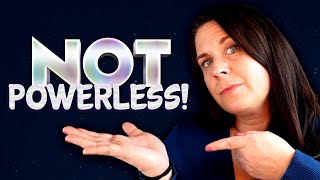
Amber Hollingsworth (YouTube live) examines common addiction-recovery sayings, focusing on the 12-step idea of "powerlessness." She accepts a narrow reading (most people cannot reliably moderate an active addiction) but argues against interpreting powerlessness as total lack of agency. Amber emphasizes empowerment and actionable steps—changing people/places/things, setting boundaries, using positive reinforcement (contingency management), and family influence—to place addiction into remission rather than resigning to helplessness. The video includes live-chat Q&A and references other recovery sayings ("hit bottom," "put the shovel down," spirituality/12-step rituals).
Chapters
There are just some of the most common recovery messages, teachings, whatever you want to call them, lessons out there that I just don't quite agree with. And you guys have heard me talk about these things before. I'm sure you guys, a lot of you have seen my videos about, you know, that I don't really believe people have to hit rock bottom. That I don't believe that people have to get recovery or do it only for themselves. You guys have heard me talk about some of those concepts. I probably don't fall completely into that category. Of agreement with most of the kind of like the widely accepted addiction recovery messages, knowledge, that sort of thing. But today I want to focus specifically on one of the messages that I think can cause harm to people when they either don't think about it critically or misinterpret it or. Or maybe they just grab onto it too hard. So that message they want to focus specifically on today is this whole concept of powerlessness. And this has been around for a long time. It comes from the 12 step philosophy. From the first step actually, which goes something like this. We admitted to ourselves that we were powerless over our addictions. And our lives have become unmanageable. I may have said those two sentences in reverse, but basically that's it, that's the gist of it. And I do think that is such an important foundation for recovery is basically. It's essentially saying this is not working for me anymore. And I've tried to manage it, I've tried to get it under control and it's just not working. And basically it's about saying like, yeah, I'm going to quit trying it that way. Because clearly not making any progress. So as far as the concept of step one, big believer, all about it, Definitely a fan. But this whole idea, this word within that step, powerlessness really gets, I think, taken to an extreme. Because I think people really interpret that to mean in a really black and white concrete way. I'm powerless over my addiction. And I think that's where I'm little gray on that. I'm just not quite fully in that camp. I'd like to sort of. Let's take a look at that together. Definitely want to know your thoughts about that. This is. This is a live video. So if you're watching live, love to hear from you. This is definitely a two way conversation. And I'll share my thoughts, you share your thoughts. And hopefully someone out there watching will get something from that. So. So this whole idea, I think the way I. This is the way I interpret it. This is the part about the word powerless I like. Where I can really agree with that term is the fact that most people try to manage whatever it is they're addicted to, meaning they try to get it, like under control as opposed to giving it up. Now that just doesn't work in about 99% cases. And so I really think that's where the term powerless comes from. So if it's the idea that I'm trying to manage it, control it, rain it back, that you're probably pretty powerless to do. But probably, I wouldn't even say completely powerless to do with that. I would say probably you can't do that very consistently and it probably isn't gonna work out too well for you in the end, because when it. When it doesn't work, and it won't always work for you to be able to manage it and control it, bad things happen, as in really bad things, and the consequences way far outweigh the benefits of managing it. I was listening to one of the other YouTubers that I like to listen to the other day, and he was just talking about how, you know, it's the. It's the alcoholic journey to constantly want to be able to drink moderately. But the problem is when you drink moderately, you don't enjoy it. Right. And so it's just that question that people eventually have to get to is, number one, can I moderate it? Can I, you know, like, bring it in? And number two, if I can do I really like doing that. Like, really and truly, do you really enjoy. You really want to have just two drinks? Probably. If you're talking to someone who has problem with alcohol in their heart of hearts, the truth of it is is that that probably isn't going to make them happy. There's this part of their brain that always wants to be like, yeah, it'd be nice to be able to have wine with dinner or whatever. But in reality, it's probably not gonna quite make sense for them. It's not even gonna be fun. So it's kinda like, why do I want to risk it? Ultimately, I think that's where people get to that. So in the idea of powerlessness in that regards, I'm a fan, but in the idea of like, powerlessness as a whole over the addiction, completely, I don't agree with it. I don't agree with it from an individual perspective, and I don't agree with it from family perspective. Because just like most things in recovery, there's this parallel process between the person struggling with addiction and the family and Even in most family programs, there's this. It's almost like the same program that you're working. It's like the. The person with the addiction problem admits they're powerless over their addictions and the family admits that they're powerless over the person with the addiction because it's like that person is like the family's addiction. So it's this parent parallel process thing. I do agree that there is a parallel process that happens and that the road to recovery is pretty similar. But I think that there are many, many, many, many things that someone struggling with an addiction can do to help themselves. Some of them are just pretty like practical and small, right? Like change your people, places and things. You've got the power to do that, right? You've got the power to decide if you're gonna put yourself around it or not. You've got the power to decide if you're gon to treatment or not. It's not. When I say that, it's not me saying it's your fault you have an addiction. This is not like a blaming thing, but this is really more of an empowerment thing because it's too easy to fall back on the, well, you know, there's just nothing I can do about it. It's a disease. It's not my fault I'm powerless. And I think even people that work a very traditional 12 step program, even though they believe in that concept, I think there's these competing messages in their brain because I think there's also this. But you must. But even just the idea of the steps, but if you take these steps, it can get better, right? So that in and of itself is a message that says you're not completely powerless. There are things you can do. So and even more than even on the person with the addiction struggling side, I think it's even more true for the family. Now I know there are a lot of programs that you go to and family workshops and whatever and they talk about accept accepting your powerlessness. And there's part of that I agree with, just like on the individual side. And part of that I'm just not quite there with yet. The part I agree with is you've got to stop trying to control it, manage it the way you've been trying to manage it. So just like the person with the addiction has to stop trying to trick themselves into thinking if they do this, they can just like cut it back or stop spending so much money or just stop drinking, driving, and it's going to make the problem go away. Families also Go through that period where they. I call it bargaining, right? It's like they're bargaining with it and they think, well, if I do this, if I make them sign a home contract, if I. If they really know I mean business, if I enforce the consequences, whatever, that this problem is going to go away. And so in that regard, most families end up coming to the. Coming to terms with the idea that that's not working for them either. But does that mean you are completely powerless over the problem? No. There's lots of things that families can do. I like to say families can influence the situation. Can you control it? No. But can you influence it? Sure. And a lot of times when I say that, people get kind of almost like offended because they're so bought into this concept that they can't have any control or influence over it. And in a lot of ways, that's a good feeling, right? Because it's like, okay, I'm off the hook. Like, this is not me. This is 100% them. Nothing I can do about it. Throw my hands in the air. And once people get to that point, that's kind of a relief, right? And I can understand that. It's just kind of easier to be like, well, wash my hands. That's not me powerless, right? But there are things you can do to influence. Is that me saying that you should never wash your hands of it? No, I'm not saying that at all. There are plenty of times where that is 100% appropriate. But what I am saying is, most people, if you asked them, if I said, are there things that families could do to make things worse, I feel like almost like a hundred percent of people would say, yeah, there are things families do that make it worse. So if you believe that, if you think there are things that families do that make it worse, I think you kind of also have to believe that there are things families can do to make it better. And most of you guys who've watched a lot of my videos, you guys know I talk so much about positive reinforcement, setting healthy boundaries, knowing the difference in a boundary and a consequence, and it's really that combination from the family perspective that will influence the situation in the right way. It's the combination of the healthy boundaries, which is not punishment, and the positive reinforcement. Those are the two biggest influences you can have. And the person, the individual who's struggling with addiction, the biggest power you have over the situation is if you can just come to terms with the fact that the trying to reign it in isn't going to work. And Come to terms with the fact that you need to get the substance out of your life, then you have all the power in the world. You have all the choice in the world as far as things you can do to make that addiction be in remission. We'll call it that. Right. Because it doesn't really go away, but you can kind of stabilize it and put it in remission and get back to living the life that you want to live. And as I like to say, you can get yourself five steps ahead of it. Hey, Sue. Let's say hey to some of the people we have on here. I see sue and Hollow Streets and Dovetails from Oklahoma. Hey, all the way out in Oklahoma. And suffering Succotash. I like that name. And Sarah. Hey, Sarah, thanks for joining us. Let me know what you think about this concept of powerless. Are there other recovery sayings that seems like everyone else believes in that you're just not quite so sure in? Or do you want to defend this idea of powerlessness? Or maybe you have a different way of looking at it that makes sense for you, and maybe you want to share that with the rest of us and it can help us out as well. I'm just a big believer in empowering yourself to understand what things you can do to make a difference. I just don't like the whole idea of taking your hands off of it completely and saying that there's nothing I can do. Hey, TK From Alabama and Debbie, we got lots of people on here. And Brenda. So once you've accepted that you can't control it the way you have been controlling it, then it's time to decide what you can do. And it's really just a matter. It's almost like an opposite. I used to have a friend in recovery, and he used to say that sometimes the best way to win a tug of war is to drop the rope. And I just love that. That stuck with me for a long time. In fact, I almost named this channel Drop the Rope. So to put the shovel down. And I thought about changing the name of that a few times. What do y' all think about that? Should we change the name at some point? Drop the Rope. Like, the best way to win a tug of war is to drop the rope. Just quit fighting with it in this way that you have been fighting with it. But there are other things you can do. Hey, Dion, if you've got a question or something you want to pop it up there, let me know, and we will answer those for you at the end. And in general. But While I'm waiting on that, in general, I really am a big believer in this idea of personal responsibility. And a lot of that comes back to. It's sort of like your beliefs. Are you in the camp of addiction as a disease? Are you in the camp of addiction as a choice? And I think the whole idea of powerlessness is all intertwined with those deeper, more hardcore philosophies as far as how you feel about what it is, why it happens, and that sort of thing. And some of you already know this, but I am now. I say the word powerlessness a lot, and I've even said. And still say it occasionally, just because it's such a habit about addiction being a disease. That's one of those other gray areas, right? It's like there is a part of it where the brain changes, and you can call that part of disease, but that's really just one symptom of a bigger, larger problem called addiction, which is really much more complex than just a disease itself. And I do have a whole video on that, which I'll link up for you here at the end in case you guys want to check that out, in case I didn't get you stirred up enough by arguing with this belief. Watch that one, and maybe that one will get you stirred up. Let's see. Hey, Lori. Hey, Anna. Dion said, God doesn't give us more than we can handle. I find that false. That's one of those recovery sayings. Or that you don't. That you don't agree with. Let's see. And it says, oh, thank you for all your videos. Well, thank you for watching. I really appreciate that. See, TK Says I took the name of put the shovel down and stop digging your own grave. When I first saw it made sense to me. That's right. T.K. put the shovel down is like a recovery saying. And the saying is, you hit your bottom when you put your shovel down, which I really identify with because it's kind of like you don't have to go lower and lower and lower. You can decide at any point where your bottom is. All you have to do is say, okay, this is bottom enough for me. I put my shovel down. And. And if you didn't see the videos, the video I released on Tuesday and the one from this weekend, both of those are about that whole concept of hitting bottom. How bad does it have to get? You know, how much do consequences play into the fact of addiction and all that kind of stuff? So make sure you check those out. If you haven't seen them, all right. Facebook user says, I don't agree with the idea that people remain powerless, but I can see when someone is in the throes of addiction, they can't consider cutting down as an option. They don't have the power to choose how much they use. I think that's where the original concept comes from, but it has been completely distorted. Man, I love it. You said it. You said it better than I said it. The person doesn't have the ability to control how much they use. Exactly. That's what I'm saying. That part right there. There is some like, gray area of like, they really don't always have that much control over it. But whether or not they decide they want to continue feed and addiction in a big picture sense, there's lots of power and control that people can take over that. Jennifer says, hi, my mom in Kentucky shares your video. So I started watching them as well in Mexico. Well, that's pretty cool. Hello, Jennifer from Mexico. Let's see here. Anybody else had any of those addiction recovery sayings that they either really like or really disagree with, says suffering succotash, says, I'm totally with you on this. Greetings from London. Thanks for all your works for. Hey, thanks for watching. What time is it in London right now? What time is it in Mexico? What time is it? London might be pretty similar in Mexico, I'm guessing. All right, how many of you watching right now or on the playback? How many of you are traditional 12 step philosophy, if you're not that, do you prescribe to a certain. It's almost like religious beliefs, like recovery religion, I call them. Are you a smart recovery person? Are you a celebrate recovery person? Are you a get your butt to church person? Are you like, you need to go to treatment or see counselors kind of person? I like it all, by the way. People ask me a lot and I say I'm non denominational. I like all of it. Whatever works for you works and I'm a fan of it. So just be interested to know though, like, do you have a certain sort of set of recovery beliefs that work for you? Flapjack says hitting bottom is a perspective and some people's bottom is bottomless. Right on. Flapjack saying that one is powerless is a hard step because it almost makes you want to focus more on. On what that's supposed to be meant versus what it looks like. I'm missing the last part of that. Maybe in two sections or something. I think what Flapjack's saying though is it. It makes you focus on the wrong Thing. It's kind of like what you can't have versus what you can have, which I do think is a helpful recovery philosophy. It's like, instead of saying, like, don't drink, don't use constantly in your brain like that. It's like thinking about what you do want instead. It's like, I do want to have healthy relationship with my family. I do want to have the ability to be present in all the really great moments and not be constantly in my head thinking, like, when is this over so I can get my next drink or fix or whatever it is, you know, what is it that you want from recovery instead of focusing on all the things you're not supposed to do? Because our brains are just wired and that trying not to do something is a lot harder than trying to do something. So focus on what you want instead. Let's see. Whit says, hey, Amber, 12 steps are great for me, but I thought it was the stupidest thing ever at first. Spirituality component is crucial for my recovery. I think that you are probably like almost all people when you. If you've never been to a 12 step meeting. There's a lot of just like, ritual and routine and way people say things that really takes a minute to get your head wrapped around. It's just a lot of tradition and structure and all this stuff. And what you really. What most people really hate about it at first, they end up liking in the end all that silly routine and structure that makes you so crazy in the beginning. In the end, you just. It's almost like comforting to you that you can go to a meeting anywhere in the whole world and the same things are going to happen. So most people really don't like it at first. It does take you a minute to get used to it. In the town where we live, Greenville, there's an organization called Favor Faces and Voices of Recovery. And they run all recovery meetings. And I find for new people, that's almost like an easier entryway because there's not as much rules and structure, you know, like, if you go to 12 step, they have rules around no cross talk. And most people don't even know what that means. And if you're new and you walk in, you. You're not familiar with that, and you end up saying the wrong things. Basically what that means is if someone shares. You don't give advice directly to people or ask people direct advice. It's this sort of dance around the subject thing. It's just kind of like you share your experience, strength and hope, but you don't question or directly give feedback to a specific person. And there's a reason why that's the rule. It's helpful because 12 step groups are ran by other people in recovery, and they're just volunteers. And when you get into like giving people direct feedback or questioning or confronting like that, things can get ugly pretty quick. And so without having like a paid moderator or a trained professional, you want to really limit that. So there's. There are reasons why those are good rules in those kind of meetings. Brenda says, what are rewards appropriate when the person is doing better? I absolutely think rewards are appropriate. To me, that falls right into positive reinforcement. And there's this whole, like, therapy. This is interesting. You'll like this. There's this whole therapeutic approach to addiction treatment called contingent contingency management. And it's actually been researched and studied to be one of the more effective addiction treatments that there is. And the whole thing is this. Like, let's say you run like a. Like in our office, we have historically ran like an intensive outpatient group. And so you almost set up like this reward structure. I know it sounds silly. Like kindergarten. You get like gold stars. But like, if you get this many clean drug tests, you can have like a gift card for this, or you can get movie tickets, or you can get this or that. And I know you would think, like, that's the silliest thing ever. Like, why would someone care about that? Because it may seem almost like a small prize, but that stuff works. People get excited about reaching that level because it's not just the reward itself, but it's almost like a status attainment. You know, it's the recognition, it's the hey, I'm proud of myself. It's like, I got my gold star on the chalkboard and everybody can see it kind of thing. I know it seems silly, but research has proven that's one of the more effective therapies out there. Doesn't even sound like therapy. Right. It's just an add on that helps motivate people to do better. If it works, I'm for it. You guys know that. Let's see. Any of them are better than nothing, I think. And if one doesn't feel right for all them, Absolutely. Saska says yes. That's what I love about Al Anon. No advice and no judgment. Everyone has the right to dignity, to make their own choices. That's right. You must be talking about the crosstalk thing. That's what I'm guessing. Yes. Like, you can't be like, trying to boss people around and the groups that are around in treatment centers like the one I run, I like to say it's all cross talk. We question everybody about everything the group members do that we give advice, but we do it with a really good humor. You know, we like. If somebody's like, got two jobs they're applying for, the group wants to vote on what the group likes. Not really that we think the person should, like, do what we say, but we just have fun. We like to put our own opinion in. And if you have a lot of safety and comfort between people, that really works. Okay. But in groups that are volunteer ran and that are like open groups where there's different people coming in all the time, that's not the best idea. Jennifer. The rewards would cause effects of oxytocin, Is that correct? Oxytocin is the connection and bonding chemical, which I think rewarding someone can make them feel more connected to you just because they feel like you like them. And we like people that like us. But it also really supports serotonin because it makes people feel proud of themselves. So you get a good drip of both of those really good chemicals that are super important in the healing of addiction. Serving succotash. I'm so glad I have found you all. Feels like I've arrived for dinner. It's so 6:23pm in London, man. It's like lunch here and it's dinner there. All right, well, thank you everyone who joined us today. We will be on live every Thursday. And this weekend I have a special guest coming. His name is Chris. And we are going to talk about some of the internal thoughts and rationalizations. He's going to share with you some of his own personal experience about those things, his own internal thoughts and rationalizations about how he made things okay in his own head when he was in his active addiction. So make sure you have the bell turned on because if you have that turned on, you'll know and you'll get those bonus episodes that we do. Don't always do an extra third video each week, but I try to. And you have to have the bell turned on to be able to know about those. So I will catch you this weekend, hopefully. Bye, everybody.
More from Amber








Addiction Turns “Me vs. Drinking” Into “Me vs. You” #addictionrecovery #addictionawareness

They Admit Everything Except the Addiction #addictionrecovery #addictionawareness

Stop Trying to Make Them Admit the Truth #addictionrecovery #addictionawareness