Top 7 Relapse Prevention Strategies
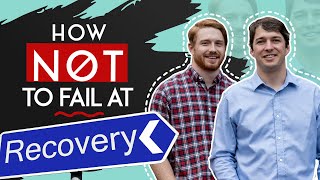
This content was created by Amber Hollingsworth. This content was uploaded by Amber Hollingsworth. This is a YouTube video titled "Top 7 Relapse Prevention Strategies" created on April 7, 2019, featuring a conversation between Amber Hollingsworth, Lucas, and David. They discuss seven habits for successful recovery from addiction, including motivation, community, honesty, accountability, routine, spirituality, and hobbies, sharing personal experiences and insights.
Chapters
So in this one, you guys are going to tell us the seven habits of what you guys feel like are the most effective things you guys have done for your recovery, right?
Yes.
All right, let's get started. Seven habits of successful recovery. Number one, we put motivation down on the list. And you've probably heard Amber talk about the why. So what's driving us to do this? What's driving us to be in recovery? Is it core over our head? Is it mom and dad saying they're not gonna help us financially or finish school? What's the reason behind it? And it better be a good reason, because it's tough.
Yeah. I feel like the why is allowed to evolve as well. Where at first, you know, my why was that my parents were threatening to kick me out of their house. I was going to be homeless. And that why got to slowly evolve into being my why, being that I like being sober and that my life was better and it was just what I wanted for me. And that became a more sustainable why for long term. Because now it didn't depend on parents or, you know, if it was court, then what? If my court stuff goes away, then now what's my why to be sober. And if I don't have one, am I going to continue to go back and get high?
Great points, Lucas. Next, number two, we have community. You know, community. Just who we're surrounding ourselves with. Is it like minded people who are also trying to get sober? People we've seen in meetings around the therapy center, you know, at Iop, Also people that have things that we want. Like, obviously coming out of a life of addiction. I know my life was in shambles. So what I wanted was I wanted my life to look like the guy who had the house, who had the wife and kids and a family and had the car, you know, that someone who had their stuff together. And I was after that. So I wanted to surround myself with people like that to give me something to strive for.
Yeah. And I think that one gets some room to evolve as well. Where, you know, at first what I wanted was to be cool and be sober and, like, feel like I would still fit in with, like, the social scene. So my first sponsor was like a young guy who's actually younger than me because he was like a young guy with tattoos and. And had a girlfriend and was doing cool stuff. And that was what I wanted. And that's gotten to change over time where what I think is cool and what I want for my life gets to evolve. And now I'm looking for people who have really loved their life and are happy and have a happy marriage and healthy relationships with their family. And that's the kind of people that I want to surround myself with so that hopefully they influence me.
Awesome. You want to take us away with number three? I believe it's honesty.
Take us away with number three. Honesty. Yeah, honesty was huge for me because I was a pathological liar. I'd lie about anything for any reason most of the time to get people to like me, validation, approval to fit in. You know, if someone had a story and I'd do the worst kind of lying, I'd one up people's stories with a lie because I just wanted to be the best and have all the attention on me. So it became really important in recovery for me to have rigorous honesty. Where at first it made me look like a fool when I'd say something and then have to immediately back step and say that was a lie. I don't know why I said that. I apologize, and that kind of makes you look like an idiot. But that shame kind of drove me to stop lying.
So when I think about honesty, before I got sober, when I was dishonest, I mean, it brought along feelings of shame and guilt. But I had drugs and alcohol to cover that up. I could always mask those feelings. It was, I like to call it a snowball effect. Like, I would, you know, run into these problems, run into these bad feelings or emotions that I didn't want to deal with. And I would take a drink or drug, and it was like I was throwing these problems behind me. And I like to picture myself running down a hill. And as I'm throwing these problems behind me, they're like, building up a bigger, bigger snowball. And eventually I'm gonna get to the bottom of that hill, and that big snowball is gonna come crashing into me. And ultimately, that was, like, my bottom. I like to visualize that as my bottom, where I was like, okay, something's gotta give. I've gotta change here when I put the shovel down. But moving on today, I can't handle those feelings. Like, I don't like to have shame and guilt in my life. So even if I do catch myself in a lie, or tickling the truth, as I like to call it, sometimes, you know, I need to confront that right away. It makes me think of, you know, being in recovery. It's important for me, to me to share that with people. If I'm out to. To the bar, you know, sometimes I'll go out with friends that do drink, even Though I don't drink. And they're like, maybe they don't know my background. A friend of a friend. So they're like, hey, what do you want to drink? And I'm like, oh, I'm good with water. And they're like, no, come on, get something. Everybody's drinking, you know, or at a wedding. And I'm like, no, I'm fine with water. And they're like, oh, come on, man. It's like, okay, dude, I'm an alcoholic, and if you give me a drink, I'm gonna ruin your night, maybe the rest of your life. So let's just cut it right there. Let's not go any further with it. And it's important. I just like to share that with people. And I couldn't imagine, like, keeping that. I understand that some people do keep that away for, like, professional reasons, and that's okay. I'm not saying there's anything wrong with that, but for me personally, I like to be out front, in the open with everything. All right, moving on to number four.
Number four, accountability.
That's a big one.
I feel like that goes hand in hand with honesty a bit where, you know, I had to find people that were gonna not co sign my bs. And I like to surround myself with people who would co sign my BS when I was using because it made things comfortable for me when people would believe my lies. I wanted the easiest marks that I could lie and manipulate, and it became important. And also it's good, you know, that when you come into recovery, it's other addicts I was surrounding myself with. So, you know, in the realm of lying, I was maybe playing in a wiffle ball setting, and now I was in the majors. I was around a bunch of addicts that all lied themselves, and. And they know how to do it on a professional level. And the reason that was good for me is then they could call it out at me, and they would immediately say, that doesn't really sound right, or call me out on some of my stuff that I needed to be called out on because that was the only way I was ever gonna look at it. While it was uncomfortable and difficult in the time to get called out by someone, especially publicly, in front of other people, it was the catalyst for change that I needed to really start looking at these things today. Needed a change in my life.
Yeah, I think we pretty much covered it for accountability. I don't know what else to say about that.
Yeah.
Is there anything else we should say for accountability?
How do you create accountability for Yourself, like, how do you go about putting that in? I think early on, you. You know, you do it by. You know, we do it here by, like, Soberlink drug screens, the family count. You know, we. We put those things in place for people. But eventually you have to.
Oh, God, I know where I'm going with this. So I'd say a big moment where a lot of accountability came into my life was when I went into, like, treatment and sober living. And, you know, one of the big rules there was, like, right when you wake up in the morning, you make your bed. That's not something I was used to. And then being held accountable to, like, make my bed, make it to morning meditation, do my morning chores. You know, those small things that come with sober living or recovery residences. And if you don't do them, there's typically a consequence, or you don't get your keys for the day or your phone for the day. But that was. It was really good for me to get in the habit of doing those small things to build some structure. And it was good to have those people holding me accountable. If they're not going to let me slip on that stuff, they're not going to let me slip on going, sneaking out to take a drink or anything of that nature. So that's all I have on accountability. Okay, next number five, we've got routine down routine. What do you think about routine?
I think a lot about routine.
Me too.
I love routine because I function at my highest level with routine and structure in my life. I don't like it, and I don't like to admit that I do, but I do. And when I am left to my own devices, I will play video games for 16 hours, not brush my teeth, and not eat regularly or bathe or shower. So I need routine to keep my life together. I do well with a job, and I feel like it goes such in contrast with my life. When I was using that, I had no routine, no structure. I was running the show, and it was a disaster and a mess. And I feel like my brain was constantly in fight or flight because anything could happen at any moment. And I think that my brain finally got to take a chill pill, a natural one in sobriety, where now all of a sudden my brain got to kind of relax and it was like, okay, this is what I'm doing. I do it the same thing every day. Monday through Saturday, I go to my job. I get off at this time. I'm going to hit a meeting. I'm gonna go meet up with some friends afterwards. There just wasn't as much variation that I had to worry about of what's gonna happen next. And then also did a world of good for my anxiety to have some dependability on my schedule.
Yeah, I agree with all of that.
To start building that where I can be reliable and dependable to people in my life because that was something that I could not be dependent on while I was using is to be on time or to show up at all, or that if you told me to do something and I said I was gonna do it, that I would actually do it. So I think routine and accountability just go hand there sick.
I think we should move along to number six, which is spirituality. Yeah, this is a big one for me and I don't want people to get confused. I know that that's. Hearing that word could be a turn off for some people and they automatically connect spirituality with Christianity or Buddhism or. But I'm here to say, whatever that looks like, whether it's, whatever approach you have, whether it's smart recovery or a Buddhist approach, or a Christian approach or a nature approach, it's just very important to have something to get outside of yourself, to realize that you were just in control in your active addiction and things weren't working out for you. So maybe let's like remove you from the situation. Take others advice. Don't be the know it all and have some faith. Have some faith in a different process.
Yeah, I think the only thing that I would, I would stress on spirituality that you didn't cover is just that idea of me not being my own higher power that I had continuously done everything my own way. I put AA to the side, I put psychiatrists to the side. I put doctors, medication, inpatient treatment. I mean, you name all these like experts in the field who would come into my life and say, hey, you have a problem, I'm a professional. Let me give you some pointers, some tips, maybe you can do this. And it was just like, no 18 year old Lucas knows what to do to stop doing drugs. And you know, go figure, it never worked out. So I finally just had to take my hands off the wheel. And at first it was people in the program of 12 step programs. That was my higher power. And my life was better listening to what they had to say than what I wanted to do.
All right, moving on to number seven, hobbies. Last but not least, not least, yeah, we have hobbies. You want to start us off with hobbies?
Start us off with hobbies.
I love hobbies.
Hobbies, Hobby, lobbies. It Is a cool store. So, hobbies? Yeah. In the beginning of my addiction, I had a lot of things that I loved to do, like playing piano. I played drums and bands. I like to paint occasionally. I like to make music on the computer, like, produce songs. And as I got more and more into my addiction, all that stuff fell to the wayside. It just wasn't as fulfilling to me. And when I got sober, it was hard to get right back into those things. I felt like I was disconnected from them. But over time and effort, now they're some of the things that I cherish the most in my life. I'm fortunate enough to have a piano. It didn't come easily. And I remember that being frustrating when I first got sober, that all these kind of grand plans of, I'm gonna get back into music and join a band and play drums and be a rock star and all this stuff. And when it wasn't there for me, it was tough. I mean, even video games were tough for me when I first got sober, that I just wasn't as into them as I was when I was younger. And so just kind of sticking with some of those things to really let them come back into my life was important. And it's good to have just outlets for having fun. I mean, I didn't get sober to have a miserable life. I got sober to have a better life and have fun and, you know, hobbies allow me to do that and share them in community. You know, David and I, we lived in Nashville, went to waterfalls all the time and go track them down and jump off of them and hike to them. And that was, like, a fun activity that, you know, built our relationship as friends while also having fun and being sober. So scared.
So scared. So I had to go try new things. It was scary at first, but I had to put myself out there, meet new people, try new things, to figure out what do I really enjoy. Because I can tell you, you're not gonna stay sober if you're miserable. Not just gonna go away magically. Like, you're not just gonna work 12 steps, and the problem goes away. You have to find replacements. Like, you're gonna have an addictive personality, but we have to have a better outlet for that, is what I'm trying to say. Like, I turned to the gym for a while, and I was like, that even got kind of unhealthy for me. I was going multiple times a day. I was lifting weights that were, you know, amounts of weight that were bad for my joints. And then I had to revisit that. So I even took what was a healthy habit and kind of turned it unhealthy. I was taking all kinds of, like, pro hormones workout, what's creatine, protein, pre workout. And that was probably hurting me too, taking all of these different chemicals. So, I mean, I still have to revisit these things.
I think Joey told me that you were, like, jacked up when he was intrigued or something like that.
Yeah, a small Toyota truck. He's a monster. We were scared to tell him. He was starting to look a little weird.
Wow, that bad?
I was big. I'll show you a picture. I've got a picture of me holding my knees so my forearms are as big as she is.
Oh, my gosh.
When she was like one. Okay, so that is our list of seven habits of highly successful recovery. I'd like to hear from you guys in the comments section below. Like, what would you add to that list? What do you think are some crucial items to have on this list? Because we can make it way more than seven. We got days to talk about this stuff.
Despite what it may look like, David and Lucas weren't always this put together. And if you want to hear more about the behind the scenes and what it took to get here, make sure you check out each of their personal stories. You can see David's story here and you can see Lucas's story here. Trust me, it wasn't a smooth or easy journey for either of them.
More from Amber








Addiction Turns “Me vs. Drinking” Into “Me vs. You” #addictionrecovery #addictionawareness

They Admit Everything Except the Addiction #addictionrecovery #addictionawareness

Stop Trying to Make Them Admit the Truth #addictionrecovery #addictionawareness