Uncovering The Truth Behind Alex Murdaugh's Shocking Choices
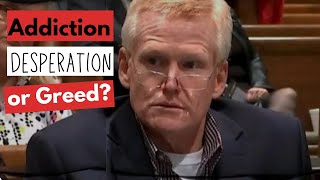
Amber Hollingsworth (licensed/master addiction counselor) analyzes Alex Murdaugh’s long-running opioid (pain‑pill) addiction as a possible motive/driver for his prolonged financial thefts, extreme lying, and deteriorating functioning. She cautions she is not diagnosing Murdaugh, explains how opioid tolerance and withdrawal create a four‑hour “treadmill” that can motivate theft and secrecy, and emphasizes addiction’s impact on family and community (including liability concerns around the boat crash). She frames many of Murdaugh’s non‑homicide behaviors as textbook opioid‑addiction symptoms, scaled up by his access to large sums of money.
Chapters
Can addiction really and truly make someone like Alec Murdaugh make such horrible, horrible decisions? Or do you have to be just genuinely downright a bad person to make the kind of decisions and mistakes and cause the destruction that Alex Murdaugh has caused for self, his family, his business, his career, his finances, his community, everything. It has been sort of like mass destruction. That's what I want to talk about on today's video. We are going to talk about the addiction motive. I want to go through it piece by piece and explain to you what pieces of this could possibly have been caused by the addiction, how that works, how it went on for 20 years without ever being noticed. We're going to dig into the juicy, gory details of it. But for those of you who are new here, welcome to Put the Shovel Down. I'm Amber Hollingsworth, and I have. I'm a master addiction counselor. I've been counseling people and their families for addiction for 20 years now. And so I've got a lot of experience with dealing with family situations related to addiction. And I've been watching this Alex Murdoch case, you know, sort of compulsively like so many of you have. I'll admit it's kind of embarrassing to admit, and I just couldn't keep my mouth shut anymore about it. Had to jump on here and talk to you guys about what is really going on. Now, before we go much further, I took my little disclaimer out there, and I have to tell you that, yes, I am a licensed addiction counselor. I'm a licensed professional counselor, which means that I need to tell you that I am not diagnosing Mr. Murdoch in this video or anyone else, as Dr. Grande likes to say. I'm simply speculating on what could be happening in a situation like this. So to be honest with you, I don't know whether he. Whether he committed those murders that they say he did. I have no idea whether he did that or not. A lot of evidence out there that doesn't look good, but we haven't heard the defensive side yet, so. So the jury's still out on that one. But I do have some pretty solid thoughts about the addiction, the stealing, and could it possibly have put him in a position to commit a huge, horrible crime like that? Let's take a look at it. I think the first question that comes to mind for most people is how did this go on for, like, 20 years and no one ever knew it? Well, the reason it could go on for that long and no one ever know it is because of the type of addiction that he had. He readily admits he has an addiction. Sorry, I'm just going to go out on a limb and say that. But he has a, he had a pain pill addiction. I think he was, I think he was using oxycodone. I'm remembering that. Right. But I know it was pain pills. So when you, when someone's using pain pills is very difficult to tell. It's not like if someone is abusing alcohol and you can sort of smell it on them or they walk funny or they talk funny. It's not like if somebody's using other substances and their eyes look funny. There's really not a lot of outward signs when someone has a pain pill addiction. And it actually is very, very common for it to go on for many years before other people start to catch on. A lot of times the families that come see us, they're literally like, how did it, you know, how did I miss it? And then all of a sudden, just like in this case, it's like once one thing comes out and then you start backtracking like, like they did in this case, like the law firm. And you just start seeing it. And then you're like, how? Like this was in front of me the whole time and I missed it. But it's because you don't, they don't seem funny. In fact, most people for the first years of a painful addiction function better because the, the medicine sort of gives you more. The medicine, the, the drug gives you more energy. You are slightly more social and talkative because not only does the pain pill take care of physical pain, because that's what it's for, but it takes care of emotional pain too. So you have this energy, you have this general sense of well being, your anx anxiety is decreased. And so a lot of people function better. That's why you see so many professionals that have this type of addiction. You know, you see a lot of nurses who get addicted to this stuff because they have to work 12 or 16 hour shifts. Now, I would say most people's addiction doesn't go on for 20 years before it gets noticed, but it usually does go on for several years before it gets noticed. And I think the reason why other people don't go on for 20 years is as simple as money. Because the symptom that is most notable with pain pill addiction is missing money. And that's usually where the family starts to pick up on it first. It's, it's the money more than like the whatever's going on with the person you know, because they don't look intoxicated, but they start to notice, like, why are you always out of money? You know, where's that money that's supposed to be in the checking account? Sometimes even missing items from the house, Sometimes finding out somebody has like six credit cards you didn't know about, or they've been pawning stuff, or they have a bunch of payday loans or something like that. So just like in the Alex Murdoch situation, where the finances start to unravel in the office first, you know, there's like these little glimpses of, wait a minute, that's not right. You know, and he kind of like spins a little tail. He says, oh, it's fine, you know, blah, blah, it's a mistake or whatever. And he kind of throws them off the scent for a short period of time. That is very, very parallel to what happens. And I would say 90% of the cases that we see for people who have painful addiction now, other people's don't last 20 years because they run out of money and they can't maintain their addiction effectively. And so what happens with most people, the other symptom that you start seeing besides the money is like, they're. They're great, and then they're sick, and then they come to work and they're like the best employee, but then they don't show up for two days, and then they come back to work and they're just awesome for four days. And then they call out a lot. And so that's the second symptom that you'll usually start to pick up on when it comes to painful addictions. Like a real inconsistency. And at first you just think the person is sick because in fact, they actually are sick. Because the withdrawal symptoms from oxycodone, heroin, any kind of pain pill, is first of all, physical pain. It's really bad in the back, the lower back and the legs. It causes something called like, restless leg syndrome. It is very difficult to sleep. And then you have all these other symptoms which are like flu, like, only magnified. And so you have, like, runny nose. You're tired. You're very, very tired, but you can't sleep. You're just uncomfortable. You feel like you're going to come out of your skin. You won't die from withdrawal from opioids. But I like to say you will lay in bed and wish you would die and you will pray that God would take you, because that's how horrible it is. And I could only imagine, in fact, I actually. I can't even really imagine the amount that this man must have been taking for this addiction, of it going on for 20 years and the amount of money he was spending on it. Massive. Way more massive than most any other people that I've seen. Probably up there with, like, when I read, like, Matthew Perry's book, the guy from Friends, he talked about how much he was using. Probably up there in that land is what I would imagine as far as the amount. And you. You might think it's. It's like, how could someone take, you know, that many pills and not die? Because you just build this tolerance. And that's what happens when you get hooked. As you build this tolerance, you need more and more and more. And he probably need. He probably needed 10, 20, 30, 40, 50 pills a day to function. And I know that seems crazy if you've never been through that or known someone that's been through that, but it's. That is actually happens, and it actually is possible in my. I have no idea how much it was taken, but I would have to imagine it would have been massive. So some of the things that really stick out to me in this case, obviously there's the missing money, but it's so much money that's missing, I mean, millions and millions of dollars. Yesterday, I was listening to the testimony of the. The office manager, cfo, accountant lady. What's her name? Is it Genie? I think it's Genie. And first of all, I'm watching Jeannie testify, and I'm thinking, I don't even know how I got away with it so long because she sounded like a pretty sharp cookie. And she seems like somebody just don't, like, miss stuff unless. Okay, what do you guys think? Like, did she come across that way to you guys? Did you see it? She's like, oh, yeah, that is off. That person right there ruins the office. You could tell, like, she had the right, not just knowledge, but, like, personality to be doing what she's doing. So that came to my mind first. But then she was on the witness stand for, like, hours. I think the video I was listening to was, like, three hours long or something. And, you know, first you start listening to it, and she starts sort of talking you through how they unravel piece by piece by piece. And they start to notice this, and then they start to notice that, and that's kind of like, oh, my gosh. And you can just feel the story, like, unfolding. And then she hits this point in the. It was very tedious because the prosecutor was like, and how much was that check for? And who wrote that check and who signed that check? And what's that? What is that really refer to? And she's like, it's stealing money. And you literally go through the same process of these same, like, five questions for check after check after check, payment, payment, payment. So much so that I just got exhausted from this, too. I had to fast forward to the end. I was like, I can't even listen anymore because it's so much money. I can't even wrap my head around it. And I lost count trying to calculate, like 20 minutes ago. Does anybody know what the total number was? Because I can't remember what the total. I remember it was like 3 million and then 2 million and another 2 million. I don't even know. But there were so many that she found that she went through that. You. You literally couldn't even listen to them all. It was like, crazy. And just to imagine spending that much money on it. Now, I'm pretty aware that you can spend massive amounts of money on opioids because that it's so expensive and you build. You build so much tolerance and so quickly that even if you make a lot of money, you don't make enough money to fund an opioid addiction. You just don't. Look at Alex Murdoch, look at Matthew Perry. You don't make that much money unless you're. Unless you're, you know, like Elon Musk or Bill Gates or something. And you got that much money, you probably not even gonna be alive from your opioid addiction. So I don't know how he's still alive. One thing I think is because he. He kept himself mostly out of the withdrawal cycle because he had that constant supply of it. And he probably. I don't know this because this has not been said. This is total guess here. But my guess is he sort of knew what he was getting. And he probably. Because a lot of times when you have addiction to pain pills these days, you go out there and you buy them, and they're not really like oxycodone. They're not really like the prescription med. What you're getting is what they call, like, pressed pills that somebody made in their basement with some press they bought off the Dark Web. And you don't know what's in it. And usually there's fentanyl in there almost always. In fact, a lot of people these days was like, a lot of families think people, their loved ones who are addicted, you know, got these drugs and it was laced with Fentanyl, which absolutely can happen. But these days, people are actually looking for it. Like, they're not getting tricked. Like, they're. They're literally looking for those kind because they know what's in them. That's a super scary thought. I know. But. But it is true. So I kind of had the feeling that wasn't going with Alex Murdaugh, because if it had been, you would have seen more symptoms. You would have seen overdoses, all kinds of stuff like that. So you've got the money, you've got the functioning. I want to talk about the functioning. I think it's interesting when you watch these prosecutors, because they're like, how often was he on his phone? Like, witness after witness after witness has got up there, and he's made every single one of them say that this man was constantly on his phone. And when you. You hear these witnesses describe as his sort of, like, general demeanor, you definitely get the impression that he has sort of this. Jittery, preoccupied, sort of like ADHD type of vibe. His energy. That's the vibe I get listening to everyone describe. You know, he would come in late. I do want to say that you heard several of the people that worked in the office say that he. He was never there in the morning. He was always there in the late afternoon. And then. So then they would stay, you know, and then they'd have to work later, and he would come in, like, right five o', clock, and he would start barking orders. So I want to explain to you why that is and how that fits with addiction. When you're addicted to pain pills, however long the ones you have last, which are usually about four hours, you have to get more every four hours. So you are literally. I call it the treadmill. You are tied to the treadmill and you can't stop running. And every four hours. So, number one, that's why he's tied to his phone. Because you can imagine if you got to keep this constant supplying you every four hours to literally be able to function and get up. Like, you can't even get up out the bed unless you have them. It. It's a massive amount of time and energy. And so. And the longer it goes on, the worse it is, as far as that goes. And so he's got to get these things every four hours, otherwise it's going to be very, very, very, very sick. And so it's this constant dance of obtaining them, using them, trying to find the balance to be able to function. And so most people who are addicted to pain pills they don't get up in the morning. In fact, like at my office, when I have people that I'm seeing, they're addicted to opioids. Like, I don't schedule them early because they go miss their appointment. I know that's terrible, but it's true. And part of the reason is, is because when you wake up, if you've slept for enough hours, you wake up and withdrawal. So every single day when you wake up, when you have an addiction like this, you wake up as sick as a dog. Like, just horrible sick. The worst, worst kind of sickness. And so what happens for most people is they have to have some in their nightstand. Like, literally not in the cabinet, not out in your car, hidden somewhere, not in the bathroom. It's gonna have to be in your nightstand or in your pocket. And the reason it's gonna have to be there is because you're not even gonna be able to get up and go get them. That's how sick you're going to be. So most people that have this kind of addiction, they. They to wake up enough to take another dose of whatever it is or hit whatever, and then lay there until it kicks in for them to be able to even get up out of the bed. And you could imagine for a lot of people who have an addiction like this, if you don't have any to take that next morning. Which when you have this addiction, you always tell yourself, like, okay, I'm going to have this many. You know, I got five. I'm going to take three today, and I'm gonna save two tomorrow. Well, that don't work because you have an addiction. And so it's not uncommon for people to wake up. You know, they meant to save one so they could get up in the morning, but then they didn't. So you can imagine if you. When you wake up first thing in the morning and you are deathly sick and you have to get out there and you have to find the money and then get a hold of it. And then you have to go through this whole process. For most people who don't have bazillion dollars like Mr. Murdoch and your own little personal drug runner like he had. I forgot the guy's name. What's the guy's name? What's the guy's name? You guys? The one that he paid to shoot him in the head. That guy. I don't remember his name. Anyways, you don't have your own personal. Then you have to, like, call up these people that, you know that can get it for You. And then you have to sit there in your car and you have to wait for them to bring it to you. And if you have enough money, you're like, I'll pay you extra to bring it to me right now. And it's just this horrible feeling. And you're sitting in these parking lots and these gas stations and these church parking lots for hours on hours, like waiting for this person to get there, feeling sick until they do. And so you really are held hostage. Eddie. Eddie Cousins? Is that what you're saying? Is that the name of the guy? Eddie? That sounds right. Eddie might be right. I think you might be right. The guy, the one that shot him with the beard and all that, in the gray pickup truck from the. I remember him. I remember Mr. Rall saying that. So if you don't have that, then you're in this desperation mode of trying to get it. And even. Even Mr. Murder, who obviously did have like a pretty strong connect, he even got desperate to the point that he asked these other couple of people, which you know was super risky, like the. The. The health care worker, one of the healthcare workers that worked, I think, helping one of the parents. He asked them and he told him this story about how he had a client who was in need and couldn't get the meds because they injured or something like that. Some kind of crazy stories. All of that is true. And you have lying. And I think what a lot of people think when they think about this, Alex Murdock is just the massive amounts of stealing and the massive amounts of lying. And one of the biggest reasons why I wanted to talk about this today is because when you see someone like this and you think, what kind of person do you have to be to be capable of lying in such an extreme way for such a long time and stealing so much money, you know, I think it's easy to think this guy must be a sociopath or whatever, and maybe he is, I don't know. But I would say that all of his behaviors that I've heard so far are for sure within keeping of addiction. So you could see someone do everything that he has done so far that we know for sure and say, yes, that is addiction symptom, and you cannot be a sociopath, you cannot be a narcissist, you cannot have any of those more severe personality disorders that we all like to sort of label people with who do horrible things. We like to say, oh, they've just been horrible the whole time. They've just been hiding it. That's their true Self. But when you have an addiction to the level he had. Yeah, I could see, I could see him doing every single bit of that. And when you think about it, makes sense because every single thing he's done besides what he's on trial for now, like I said, I don't know if he's done that. He might have. Everything else is exactly 100 what every single person who has this type of addiction does. He has. Besides the murders, he hasn't done anything else. The people with this addiction do not do. He's just doing it on a much bigger, more giant scale. And that's only because he has that he had access to that much more money. So it's all the same behaviors and same processes. And you know, people talk about how he is so like charismatic and he like read people and they, the way the prosecutors keep asking these witnesses to sort of speak to that. Like, like several times they're asking some of the people from the firm like, was he really a good lawyer? And then he's like getting them to say, well, yeah, I was a good lawyer. But not because he's really like good at the law, but because he like understood people and he. And he read people and. I know, I don't know, but my guess is part of the reason he was trying to pull that out is trying to sort of pull attention to. This guy's just a horrible person. He's a manipulator and he's just a bad person all along. And he just had access to all these resources and so it went on and on. But like I said, all of those behaviors I see in every single client I've ever treated with this type of addiction, it is very by the book. It's just magnified. You. You also hear him talking a lot about how he was sort of preoccupied and fidgety and looking at his phone all the time. And that's because not only is he a lawyer with this busy, you know, client caseload. Right. He also has a family that he's highly involved with. And I don't know about you guys. I noticed like how many people work for this family? Like they got all these employees coming up that not even from the firm, just from like this healthcare worker and that healthcare worker and this housekeeper and that maintenance. I mean, so many. It's like he has like his whole staff of people and he has like all these houses just keeping up with all that. And he's on this four hour treadmill. So juggling all of that would be pretty much impossible in Fact, it is impossible. And that's why he eventually fell off of the treadmill. But one of the things I want you guys to know is you don't have to be a sociopath to do these kinds of things. The reason I want you to know it is because if you, you know, if you're like me and you like to watch these true crime things, you probably like to watch it because you want to know, like, how, why, you know, the psychology behind it. I think that's why most of us watch the True Crime. I just think it's easier these days. We just throw a label on it, which is usually they're a narcissist or they're a sociopath. And sometimes they are. A lot of, you know, a lot of times they are, but a lot of times they're not. And you can find yourself in a situation like this before you know it. And the best way to protect yourself from that is to know that you could get yourself in a situation like this. So by being in denial and saying to yourself, oh, those are just evil people. They've been evil since they were born, and there was just nothing that could be done about them. Recognizing that there is a process that human beings go through to get from being a good person to a person who makes horrible decisions like that. And it is not always that. They're just like a bad seed. Most of the time, that's not the case. Most of the time, it's this slow process that we go through. And when you hear people talk, when you hear these witnesses talking about, most of them say, like, he loved his wife, he loved his son, you know, and in the way they say, it makes you think, Even knowing what they know now, they still sort of believe that. And I think I still sort of believe that, too. And you may think, well, how could you lie to the people you love for so long if you really love them? Well, when you have an addiction like this, what addiction does to your brain, actually the part of your brain that lets you think through consequences and lets you sort of connect dots together, like that gets disrupted. Like, actually physically, the brain changes in that way. And so you. You begin to compartmentalize things in such a separate fashion. It's like, yes, he knows he's doing all this, and, yes, he feels this way about his family. And it's like the bridge between the two things are not being. It's just not built. It's, like, not there. And there is a lot of, like, biology and physiology that goes into why that is the Best way I know how to explain it to you. If you've not felt or had an addiction before or had someone, or even if you have had a loved one, it's still hard to understand, but you haven't been there yourself before. It's like the same kind of way as you can, like as people lose their mind when they have an affair, it's like they can feel like, yes, I love my family and I love my wife, but I'm also over here with this person or husband or whatever, you know, it doesn't matter. It's like the bridge doesn't cross. And you get with addiction, you get so caught up in survival, you're on this four hour treadmill that you really don't see much past every four hours. Like everything else in your life you're doing is really just playing the game, waiting until you can like get to what you really want to get to, which is the next dose of whatever it is. And that's pretty much how it has to be. And that's why eventually he couldn't keep up with all these things and he did fall apart. Did you guys see? Is it Eddie? You guys are telling me it's Eddie. Did you guys see or not see? But here where he gave the confession. I think he was in rehab and he gave the confession to the police that he did hire the guy to come and it was planned to kill him because he wanted to die or whatever. When I was listening to that and he's, you know, they were asking him, you know, was he, you know, impaired at the time? Was he impaired now? All this kind of stuff. And he said, no, I had taken the last ones at like 4am and I was in withdrawal. But I think he said I had given the rest of the pills to the guy or whatever. And I was thinking he really did want to die, like if that's the way it happened. And it sounds like it was that he really. That's really what he was trying to do and planned to do. Because other he wouldn't have been without those pills. He wouldn't have given the rest that he had away because he literally needed those to survive. And so I think in his mind this was it not. I'm not weighing in on right or wrong about it. I'm just saying I believe that. And then he talked in that same recording he talked about, because they were saying, well, did have you talked to the guy since you've been in rehab? And he says, well, I think I have talked to him because people told Me, I did. And it's like on my phone record or whatever, but I don't remember it. And I know people were saying, well, how do you not remember it? The amount of detox drugs that they had have been given this guy to get him off of that amount of pain pills. I can't even imagine how much drugs that'd be. They had to get to be able to take someone off of something that they're physically dependent on, whether it's pain pills, alcohol, benzodiazepines, whatever it is. They give you a medicine that's very similar in nature in the detox facility and they. But it's usually like a more longer lasting one. And then they gradually bring you down. And I imagine they were giving him some mega heavy drugs in there. So he probably doesn't remember. But what he does say is, which I totally believed he does say if I did call him, I don't know what I said to him because I really don't remember it, which I believe. But I was probably in withdrawal trying to get more pills for him, trying to get him to bring me some up here. And I 100% totally believe that as well there. Jennifer, I see your comment on who Jennifer. Jennifer's saying, I'm so intrigued by the level of lying and addiction and the fact that they can rationalize it to themselves. That is exactly right. The rationalization and the justification with any type of addiction is mind boggling. And even though I've done this for 20 years, whenever I have people in my office, new people, and they're so clearly, I mean, just really in deep water and they still can't see it. It just amazes me every single time. Addiction is very powerful. It changes the circuitry in your brain. And I'm not saying any of this to defend this guy because he needs to be punished for what he did, regardless of why. That's how I feel about it. So I don't want you guys to think I'm defending him, but I'm not. I'm just trying to explain how do you get. How does a person get from being a regular person to this kind of person? And it can happen and it can happen to any of us if we don't work really hard to make sure we don't go down those paths. And the way you do that is you don't let yourself start down those paths because once you get halfway down that, it's really hard to get out. And that's what happened to him. You know, he's been stuck in it for years and years and years. My guess is, I don't know, like I said, but my guess is he probably was an alright, decent kind of guy. The whole thing reminds me of like, did you guys watch like Breaking Bad? It's like the rich guy version of Breaking Bad. Those of you who watched it, you know, like the character Ex, you know, especially the, the main character, you know, he finds himself making this first bad decision because, you know, you think he's just like looking out for his family. And then that bad decision made him have to make this other bad decision which got him in a little deeper. And then that bad decision made him have to make another bad decision and got him in a little deeper. And that happens to people every day. And I think that that's what happened to Mr. Murda. How many of you think he, he did what he's on trial for? How many of you think he didn't do what he's on trial for? Let me know in the comments. My head says he did. My heart says I really hope he didn't. There, there was a lot of other things going on. So I think it's possible that this could end up in a mistrial or a hung jury or something because we haven't heard the defense yet. And even though we've heard all this evidence for motive, you know, there was other people in motive and there were other things, you know, situations happening that could have, that could have caused all this. And one more thing I want to mention before we adjourn and while I'll jump in and hear from you guys who are on here live with me is I want to sort of speak to the, the boat, the boat case or the boat accident. It really stood out to me. I think it was yesterday when I was watching a lot of this test testimony. Oh, it was the guy that was the lawyer for the girl's family that was suing everybody. It was suing Alec, was suing the sun, was suing the alcohol store, like all the people, which I totally understood that. But it just came to my attention about how many parents out there that we see who have addicted kids and how scary it is that even if you're not addicted to yourself, but your kid is. Let's say you, you know, your kid has an addiction, you sent them to rehab, they're back out, they're staying at your house. You don't know that they've relapsed and they're out there driving your car and something like this happens. So for me, it also Feels very scary. Like, you know, as a parent, was there negligence on some of that part? Yeah, I think there probably was because it was obvious that everyone knew that this young man was drinking and was encouraging it. But probably, you know, but the amount of liability involved there is pretty shocking. It's. It's scary to think about for me only because I know so many families out there who are dealing with addictive family members who are doing everything that they can to try to help the situation, control the situation, and they can't. And then that person is still going out and doing all these dangerous, high risk things that is putting not just themselves but their whole family at risk, which is what happened in this situation. Addiction doesn't just impact a person, it impacts the whole family. And in this case, I think this impacted his whole community because it was. He was just that embedded in the community. Let's take some of your comments. Let's hear what you guys have to say about it. All right, look, I know this was sort of a surprise. I just last minute decided to jump on here and do this because I couldn't take anymore because I was just listening to it. Keepers says, yeah, we won't get this perspective anywhere else. I don't know. I don't. I haven't really heard people talking about this addiction part of it. I mean, people are saying, yeah, there was this addiction, but people aren't really tying all the pieces to that the way that I feel like they're all tied to that. I feel like they are all tied to the addiction. And Debbie says, now I have to watch this trial stuff. Debbie, don't go in there, man, because it's a vortex. If you're not already in there, you got to be careful because you're going to get like caught up in it. And this story has so many twists and turns. It blows your mind. It's crazy. Amy says my daughter bought some kind of dietary supplements and at the Quick Stop and they were laced with fentanyl in Delray Beach, Florida. I've not heard of that before. Like dietary supplements, like something that actually came in like a sealed container of some sort, like, like that you buy at a store that has like the, you know, the plastic ceiling in it. I've not heard of anything like that being laced with fentanyl. And I really don't even understand why something like that would be laced in fentanyl. So my first, I'll be honest with you, my first thought is, I don't know about that. But you know, supplements and that Kind of thing aren't regulated very well. So possible, but that would just be hard for me to wrap my head around. Anything could happen, though. Hey, Debbie and Ruth. Senator Armstrong. The fat nutter. What a profile name. That's a mouthful. Let's talk about how modern women are attracted to bad boys. Not really on the subject, but I could definitely do a video on that. It's not the badness, it's the confidence. And that's not a modern women thing. That's a biological things since way back. Hate to say it, but it's like, let's talk about why men like young women. So not saying it's right. I'm just saying it is. So if you want me to comment on it, that's my comment. Let's see here. Deborah says, yes, I totally understood when he said I was in a really bad place. I'm with you. Like, when he said that, not only did I understand, like, always in a bad place, like, I just, like, had almost like a visual. Like, I know exactly what he's saying. Like, and when you're in this world, this addiction recovery world, like, I am like you. You have a pretty deep understanding about what he's saying when he says that. Debbie says, could it honest. Could he honestly don't know or remember if he himself is guilty? No, no, I don't think. No, I don't think that that's the case, Debbie. I think when he's. When he was in detox and he said he didn't remember making the phone call to the drug dealer guy, I think that's probably highly possible because they put you. I worked in detox for a bunch of years, and they put you on a bunch of drugs and you're sort of there, but not there. Just like barely there half the time. So I do believe that. I don't believe if he did do what they say he did, possible I. He would remember it. Pain pills don't make you forget things like benzos do or alcohol do. You don't really get in a blackout from it. So you know what you're doing. You are in control of yourself. Other than the fact that you have to go get these pills all the time, everything else you're. You're in control of, like, your. Your brain is working. Like I said, other than the fact that it's telling you go get drugs, the other things are working and sometimes even working better than regular people's for a while. So, no, I don't believe that he doesn't remember it. If he did it. He knows he did it. Debbie Smith says, I agree with you. I'm thinking hung jury. My head says, maybe. My heart says, I sure hope he didn't. Me, too. Me, too. This is. It's a terrible, terrible, scary thought. I have heard clients in recovery tell me things that were like thoughts about wishing their parents were dead so they could get their inheritance, going as far as scheming in their head about it. And these are things that aren't easily admitted out loud, but when you hear people talk about how far and how disconnected they got in their head that far into an addiction, then it makes me know that it is possible. And, you know, I hear that from people who are, like, in recovery and who I know for sure aren't horrible, bad people, but they'll say, this is how bad it got for me. These are the things that I was thinking. You're just in such a desperate mode that you're just making one desperate decision after another after another. It's a scary, scary thing. Thanks, everybody, for hanging out with me. If this is your first time here and you just stopped by to visit to hear about the Murdoch trial, if you have someone in your life, in your family or yourself, who has things going on related to addiction, then come back by and check out the channel some more, because this is what we talk about and this is what we deal with every day over here. All right, everybody, I'll see you soon.
More from Amber








Addiction Turns “Me vs. Drinking” Into “Me vs. You” #addictionrecovery #addictionawareness

They Admit Everything Except the Addiction #addictionrecovery #addictionawareness

Stop Trying to Make Them Admit the Truth #addictionrecovery #addictionawareness