Why They Get MORE Defensive When You Have Proof
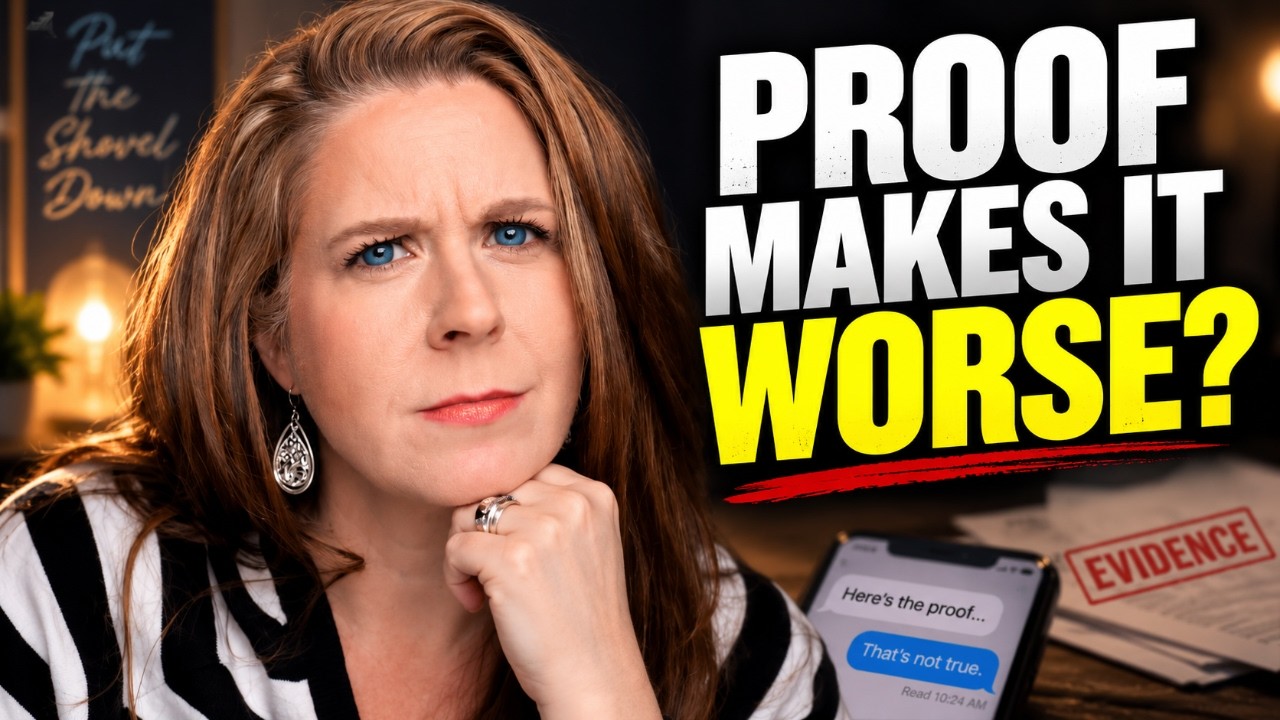
In this live talk Amber Hollingsworth explains why presenting solid proof often makes a person become more defensive instead of conceding. She shows that the reaction isn’t about lacking information but about protecting a threatened self‑story. Using everyday examples (a $2,800 laptop, a spouse’s drinking) she illustrates cognitive dissonance – the discomfort when evidence clashes with one’s identity – and psychological reactance – the urge to push back when autonomy feels threatened. Amber argues that evidence is useful for personal decision‑making but ineffective when used to force another’s confession, because it turns the conversation into a courtroom. She proposes a strategic shift: move from “prove you’re wrong” to “respond to the pattern” and use curious, non‑accusatory questions that let the other person think for themselves (self‑persuasion). She stresses looking at the whole pattern rather than explaining away each data point, and warns that defensiveness is not proof of guilt. Practical tools are offered, including a free “Say This, Not That” guide, a Denial Breakthrough Intensive for families dealing with addiction, and links to related videos. The session ends with live audience questions covering spouses, children, and substance‑use scenarios, reinforcing the core message that effective communication requires less control, more alignment, and strategic use of evidence.
Chapters
You finally catch them. Not a suspicion, not a gut feeling. You have the text, the receipt, the bank statement, the bottle, the email, whatever it is, you have proof. And you think, finally, we're not going to argue about this anymore. Oh, as we say in the South, bless your little heart, because 5 minutes later, They're not going to be explaining what they did. They're going to question how you find out, how you found out. They're going to pick apart every tiny detail. They're going to tell you that you're being dramatic, controlling, obsessed. Maybe they bring up something you did 6 months ago and somehow you're now defending yourself. How in the hell did that happen? And here's the part that makes it even more confusing. Sometimes the stronger your evidence is, the more defensive the person gets. Which seems completely backwards. If somebody's denying something because they just don't have enough information, even better evidence should make that denial go away, right? But oftentimes, in fact, I'm going to go with most of the time, it doesn't. Most of the time it goes up, and that tells us something really important. Tells us that you're not dealing with an information problem, that you're dealing with something that information is threatening. Once you understand what's being threatened, a whole bunch of bizarre behavior starts to make a lot more sense. Like why they suddenly attack you, why they argue about tiny irrelevant details, why they acknowledge part of the truth, but somehow Miss the giant conclusion sitting right in front of them. And this next part is especially important if you love someone struggling with alcohol or drugs or any other kind of addiction, because bringing exhibit F, G, H, and I may not actually make your job easier. It's going to make your job harder, right? Because before we get, before we even get into addiction, I want to show you that this is not some weird thing that only those people with addictions do. Your brain does this too. Mine does this. This is human psychology. Addiction just turns the volume way up. So imagine this, you research a new laptop for 3 weeks. You finally buy it. You spend $2,800. You're excited about it. And then your friend sends you an article. The article's called The Top 10 Laptops You Should Never Buy, and guess which laptop is number 1? Yours. Now, theoretically, you should say, oh, new information. Let me carefully and objectively evaluate this. Do you? Hell no, you don't. Your internal defense attorney clocks in for work. Who wrote this article? Probably sponsored by another company. The reviewer doesn't know what they're talking about. Mine has an upgraded processor. Most of these complaints are probably user error. And somewhere in there you'll probably say, well, I've always had luck with this brand. Notice what your brain is doing. You're not just evaluating the laptop anymore. You're protecting the decision that you made because accepting new information would mean maybe I made a bad decision. Maybe I wasted $2,800. Maybe I should have listened to my husband. And obviously we cannot allow that thought to get in there, right? So the brain starts recognizing, reorganizing the evidence. That's actually, there's actually a name for this part. You might've heard me talk about it before, but this is an example of cognitive dissonance. It's the discomfort we feel when things we believe don't fit very well together. For example, if we believe I make smart financial decisions and I may have just spent $2,800 on a terrible laptop, those 2 things start bumping into each other. They start colliding and the brain, your brain, it wants to resolve that discomfort. And one way that it resolves it is maybe I made a mistake. But there's another way that it resolves it. And the way it resolves it that way is to discredit the evidence. Guess which one of those feels better in the short term? Exactly. Now take that same brain mechanism and raise the stakes, right? Like raise the stakes a lot. For example, if you think I am a good husband and I've been lying to my wife, Or I'm a responsible person and I missed work because I was drinking. I don't have a drug problem and I'm borrowing money again because I spent mine getting high. I'm not becoming my father and I'm doing some of the exact same things I swore I would never do. Now we're not talking about a laptop. We're talking about your identity. And this is where defensiveness gets really intense because when you say, You've been drinking every night this week. The person hears, the person, this is what the person hears. They don't hear that. They hear, they hear, they don't only hear you've been drinking every night this week. They hear you're an alcoholic, you're failing, you're weak, you're bad, just like your father. You're turning into your mother. You're not the person you think you are. Now the evidence isn't just threatening the behavior, it's threatening the person's story about who they are. And human beings will work pretty freaking hard to protect their story. This is why someone can admit to every individual piece of evidence and still reject the conclusion. Watch this. Did you drink Monday? Yes. Tuesday? Yes. Wednesday? Yeah, but Wednesday was different. Thursday? Yes. Did you call out of work on Friday? Yes, but I was also tired. Did you tell me you weren't going to drink this week? Yes. So you think drinking, so you think drinking may be becoming a problem for you? No. It's like, what the heck? You're sitting there thinking, how did we just take 7 exits off the highway and still somehow not arrive at the destination? Because they're evaluating each individual fact like a defense attorney does. Monday had an explanation. Tuesday was stressful. Wednesday was a special occasion. Thursday, you really didn't even drink that much. It doesn't even count. Friday, you were tired anyway. Each individual piece of evidence has an explanation, right? And pretty soon the explanation becomes, therefore, there is no pattern. But there very clearly is a pattern. This is something I want everybody watching to pay attention to in your own life too. Because one of the easiest ways we fool ourselves is explaining away every individual piece of evidence instead of stepping back and looking at the whole picture. You can explain almost anything if it's one piece of evidence at a time, right? My credit card bill is high because it was Christmas. I've been eating out a lot because work's been crazy. I haven't exercised because my knee got hurt on Tuesday. Oops, I lost my place. I yelled because they pushed my buttons. It's your fault, right? Every single explanation may be true, but if you zoom out, right, what does that pattern say? That question is a lot harder to wiggle out of, right? The big picture question. Now cognitive dissonance explains a big part of what we're talking about. But it's still only half because there's another thing happening when you show somebody proof and families accidentally trigger this all the time. Let's say the person's already privately worried, like they're laying in bed thinking, I probably am drinking too much. I need to get this under control. I don't like where this is going. I really should take a break. Those thoughts are already happening in their head, but then somebody walks in and says, see, I told you, this proves it. You have to quit. You need treatment. You're going to a meeting. You're going to call somebody tomorrow. And suddenly the person who was thinking, I need to change, starts thinking, you're not telling me what to do. That's called psychological reactance. It's our tendency to push back when we feel like our Freedom and autonomy is being threatened. And you know this one because you do it too. You're going to clean the kitchen. Then somebody says, are you ever going to clean that kitchen? And suddenly it's like, oh, hell no. Now I don't even want to look at that kitchen. Not because the kitchen doesn't need cleaning, because now cleaning it means we're somehow surrendering. Our autonomy. This is huge in addiction because the family can accidentally become the thing the person is fighting against. In fact, that's usually what happens. The original internal conflict was me versus this behavior, but after enough confrontation, monitoring, proving, and pressure, the conflict turns into me versus you. And when that happens, the substance issue can almost disappear behind this like relationship battle because now they're talking about privacy, control, respect, how you found that evidence. That's a big one, right? Your tone, your behavior, your flaws. And this is how you end up in that bizarre situation that started with you have proof of something they did and 20 minutes later you're the one on trial. Why were you looking at my phone? Why are you checking my bank account? Why are you always watching me? You're obsessed. You don't trust me. And then you start explaining yourself. Well, okay, I checked it because this week you said— Just stop. Stop right there. Look at what just happened. The conversation moved from what happened to were you justified in noticing what happened? It's 2 different things, right? And if you've been lying, living around addiction for a while, you probably are getting pulled into this like a lot, maybe even constantly. You become the prosecuting attorney. You've got Exhibit A, Exhibit B, you got the screenshots, you got the dates, you got the receipts, you got witness testimony, and you could put it all together in a PowerPoint. And your thinking is, If I can just make a strong enough case, they'll have to admit it. Except you're not in a courtroom. There's no judge who's going to go bang on the gavel and say, Amber has presented sufficient evidence and you are hereby ordered to have insight. It really just doesn't work that way. And this next little distinction changes the strategy completely. Evidence is extremely useful for helping you decide what is true. It is much less useful when you're trying to force another person to admit what is true. It's like 2 different jobs here, right? Let me say it again because this is one of the big takeaways from today. You can use evidence to make your decisions without using evidence to demand somebody else's confession. You see, that's where we get into problems with this. That's accountability without control. So instead of, I know you drank, stop lying to me about it, I found the bottle, you can say, I can see that you don't agree with my conclusion. I'm not going to argue about it. I'm going to make my decisions based on what I'm observing. You see the difference there? The first one says, I need you to agree with me before I can move forward. The second one says, you're allowed to think whatever you want. I'm still allowed to respond to the reality that I see. That change, that little difference there, it takes you out of the courtroom. And here's another example. This one's outside of addiction. Let's say somebody at work repeatedly misses deadlines. You bring it up. They've got an explanation every single time, right? A computer issue, a vendor delay, a miscommunication. They're waiting on somebody else. And maybe every one of those explanations is technically true. Eventually, you don't need to prove that you're an irresponsible employee. You can simply say, regardless of the reason, you've missed 4 deadlines this month, and I need a different plan going forward. You see, now you're responding to the pattern. You're not trying to prosecute the person's character, and that's a much stronger position to come from. And here's where it gets like even a little bit more interesting. Sometimes questions work better than evidence, not because questions are magic, but because good questions make the other person do some of the thinking. So instead of Your drinking is out of control. Try, what do you make out of what happened this week? Instead of, you can't keep doing this. Try, do you feel like this is working for you? Instead of, you've tried to cut back 5 times and it never works. Try, what usually happens when you try to cut back? Now, tone here is really important, right? You got to say it But without sarcasm. So like instead of, you obviously have a problem, you say, what would have to happen for you to decide this was becoming a problem? Now listen, don't use questions like sneaky little interrogation traps. People can feel that. If your tone is, I already know the answer and I'm just waiting for you to say the correct thing, you're still prosecuting. You just put like a question mark on the end and pretended you were doing it different. The real goal here, the real goal is like get curious enough so that the person has enough room to hear themselves think. Because self-persuasion, that's the important one. Self-persuasion. It's powerful. If I say you have a problem, you now have something to argue with. If you say, I'm starting to wonder if this is becoming a problem, that came from inside your own head. It's really different and it's going to get a different result. Now, I promised at the beginning I was going to turn this around. So if you spent this whole video thinking, yes, this is exactly what my husband does, or this is my daughter to a T, or that's my boss, I'm going to make you slightly uncomfortable But only for like 2 minutes, okay? Because you do this too. We all do. So the next time somebody gives you feedback you don't like, watch what your mind does right before you decide whether they're wrong. Do you immediately attack their motive? They're jealous, they're controlling, they don't understand. Do you find one tiny little thing they got wrong and dismiss the whole message? Do you bring up their flaws? Well, you're not exactly perfect either. Do you explain every individual piece instead of looking at the pattern? Do you decide their tone invalidates the content of what they're saying? Because this is the sneaky one. Somebody can communicate something terribly and still be right. That is highly inconvenient, I would say. Here's one of the best questions you can ask yourself when you notice That defensive feeling like bubbling up in you. What evidence would change your mind? Really think about that. What would I need to see? What would I need to experience? What pattern would finally make me reconsider my position? Because if the answer is nothing, then you're not really evaluating evidence anymore. You're defending a conclusion. That's the kind of thing you need to pay attention to. There's another question that I really like. Here it is. Ready? If this person had delivered the message perfectly, would there still be something here I don't want to look at? Maybe the person did say it badly. Maybe they were controlling. Maybe they were accusatory. Maybe their timing was terrible. Fair enough. But does that automatically mean the underlying concern is wrong? Not necessarily, if we're honest with ourselves, right? And this is where emotional maturity starts to show up. Can I dislike the messenger and still examine the message? That one is hard. Now, I want to add one really important caution here, right? Defensiveness does not prove guilt. Please don't walk away from this video and say, Amber says if they get defensive, that means I'm right. I didn't say that. People get defensive when they're falsely accused too. So look how defensive you're getting is not evidence. What defensiveness tells you is something about this conversation feels threatening. That's the useful piece of information. It's not a lie detector. You still have to look at actual behavior, actual evidence, actual patterns, and consequences over time. Now let's bring this all back to addiction because this is where the stakes get really high for families. If you're constantly trying to make someone admit, yes, I have a problem, you're going to lose years battling that. You can become so focused on getting the confession that you miss opportunities to influence actual change and insight because insight doesn't always come before behavior change. Sometimes people make changes while they're still ambivalent. They're not sure. Sometimes they agree to take a break before they fully know that they need to stop. Sometimes they accept help because things aren't working, even though they're not ready to label it what you want them to. Like maybe they're not ready to say it's an addiction or it's alcoholism. You do not have to win the diagnosis argument first. Families accidentally burn like crazy amounts of energy right there. Admit you're an alcoholic. Admit the drugs are a problem. Admit this is ruining your life, right? We hear all the time, the first step is to admit you have a problem. Maybe we could skip that step eventually. Maybe they will see that. But the more strategic question is, what gets us one step closer to change? That might be, would you be willing to go 30 days without drinking and see what you notice? Or what's one thing this situation that you're tired of? Or if nothing changes over the next 6 months, what worries you most? Or what would make getting help something worth trying? Can you hear the differences there? Because we're moving from admit I'm right to think about your own life. This is a much more productive direction. And this is the part I really want families to hold onto. The goal is not to make denial, to lose the argument, right? The goal is to make reality easier to face. Sometimes that means asking instead of telling. Sometimes that means less pressure. Sometimes it means allowing consequences to speak for themselves. Sometimes it means refusing to participate in the debate or argument. Sometimes it means saying, we clearly see this differently and I'm not going to keep arguing about it. And sometimes it means making your own decision without requiring permission or agreement from the other person first. That's strategy. It's not passivity. It's not enabling. It's not pretending everything is fine. It's strategy. Because if proof were enough, You wouldn't still be having this argument. And once you realize that, the question changes. You stop asking, how do I prove this? And you start asking, what is making this truth so difficult to face? And now we're getting somewhere. If you're dealing with somebody who's deeply stuck in denial around alcohol or any other kind of addiction, this is exactly the kind of thing that we talk about and teach in our Denial Breakthrough Intensive. We do it like every 8 or 9 weeks. The next one's coming up in October. We go much deeper into what denial is protecting, why the obvious approaches create so much resistance, and how to communicate in ways that actually increase the chances the person starts thinking differently for themselves. I'll put the link for that in the description below. And I also have a free downloadable guide for you that could be helpful. It's called the Say This, Not That guide. It's for family members because once you understand that arguing harder isn't the answer, the obvious question is, okay, Amber, what the heck do I say then? That guide gives you some specific examples. And if this video described conversations you've had 100 times, the next video that I want you to watch, I'll link it up here at the end, is the one that we did several weeks back called Reasoning with Someone Who Refuses to Face the Truth. I'll put the link in the description. I'll remember to link it up here too at the end because these ideas all fit together. You don't need to get better at winning the argument. You need a better strategy for what's actually happening. The psychological piece is like underneath. Once you understand that, the whole conversation Changes. For those of you who are here with us and you're watching live, go ahead and put your questions and your comments and your feedback in chat because Bree is back there. She's moderating, and I'm going to take the time to answer your questions and give you some feedback if you have it or if you want it. And while you're doing that, you can look for those resources in the description if you are trying to find those. If you're watching on the playback, hey, we're glad you're here too. Go ahead and put your questions, your comments, your feedback in the comment section below. I read every single comment that comes in, the good ones and the bad ones. All right, Bree, do we have any conversations going on back there we need to take a look at? I gotta put my glasses on because I can't see. All right, here we go. Absolutely. I can see how I've done this with my son. What's the best way to handle this? Well, hopefully this video has helped you find some best ways to handle this. You can also get that free, it's totally free, the download, the Say This, Not That worksheet guide I made for you guys. But generally you got to look at what's happening, right? What's happening is it's psychological. thing where they're trying to protect something that their ego can't see. So keeping on giving evidence is just, they're just, you're just going to keep digging in. You have to create an alignment with this person. You have to make the problem easier to look at, not scarier to look at. All right. Our next question says, husband stopped drinking but remains having limited insight, still smokes weed and blames me for his mental health problems. Will we ever have any insight or am I lying to myself? It's hard. It's hard to say because to me it's like they, if you stop one substance but you continue another substance and you're using that other substance as a coping skill, it's really just another example of the thing that I call bargaining, right? It's trying to keep something in your life somehow without giving it up totally. And it usually doesn't end well. The other thing that's happening here is just because you quit drinking, if now you're using the marijuana as the coping skill, you're still not developing that emotional maturity or insight because you just switched from one substance to another substance. And sometimes people feel like that's helpful because they say, well, maybe alcohol makes me really angry and I say and do really aggressive things when I Drink. And so I need to stop doing that. And maybe the other substance doesn't make you aggressive like that. So you've solved part of the problem, but you haven't solved the whole problem. And so when you're in a situation with someone like that, you want to start by acknowledging the solid progress that they have made, right? You want to align with this person. The Denial Breakthrough Challenge might be a really good one for you if you haven't done that yet. You could take a look at it sometime close to the beginning of October. We're going to do that again. So good and true. Very helpful. Thank you for positive feedback. I used to jade all the time. Oh, I've not heard this before. Jade, justify, argue, defend, explain. Used to blame and shame. Once I love and accepted and stopped focusing on them and obsessing and trying to catch I think there's more of this. People improve, things got better, right? Once you get yourself out the courtroom, you're not trying to prove guilty beyond reasonable doubt, right? You're trying to align with this person. You're trying to make something tolerable to look at so that you guys can conquer it together, right? Get away from this, we're against each other to we're in this together. I love it. Super insightful, Robin. You're spot on. Says, what is the best motivational suggestions or questions I should offer my daughter whom I have inconsistent contact with? She struggles with complex PTSD and SUD. Okay, so your question here is what's the best motivational suggestions and questions? Okay. The best ones are more questions than suggestions. A better question would be, has anything ever helped in the past? What do you think might be helpful? You want to try to pull it out of her instead of put something in. So if you can just visually imagine it like that. People usually have their answers inside. Sometimes they're just scary to look at, right? So you want to make the answers less scary for one, and you want to try to pull it from them instead of pushing it in because just asking the questions makes them think the thoughts and say the things, which motivates them to change. When we're trying to push something on someone, even trying to push something that maybe they know they need to do, it just hits that reactance button where we get rebellious and we don't want to be controlled. We want to preserve our autonomy and we just start fighting because it's like I'm the boss of me, right? So hopefully that helps. Pull it out, don't push it in. It seems like it could be a lot easier to do with a child versus a spouse. Maybe. I think honestly it depends on personality. The thing that, there's things about dealing with a child that makes it harder and easier. When it's your child, you're more scared. You guys know Bree and Campbell. I mean, Campbell and Kim, right? And Campbell says, parents are coming from a very, I'm scared to death place. And Kim says partners and spouses are coming from a, I'm pissed off, resentful space. So you might be dealing with the same problem, but your feeling about it might be slightly different. And I don't know that one is necessarily better than the other. Personality probably comes into play a lot. My husband isn't drinking as much as before, like maybe once or so a week in an effort to cut back. The drinking is less of a problem now, but he will now, he now will not talk about things such as finances. The kids, et cetera, things I feel we need to be on the same page about. He yeses me to death and does what he wants to do. Okay. So I think that's really insightful, Grace, because you're noticing that defensiveness, which means kind of going back to what we talked about, it's not an information issue. It's a, this conversation is really hard issue. So, you make it less difficult. I've got a lot of videos and I have some different suggestions on this, but one thing you do is don't, let's sit down and talk about this. Have the conversation in little bitty like micro statements while you're driving in the car here, there, and keep it really casual. Say, oh, what do you think about this? Or how about that? Or whatever. And so you, it doesn't feel threatening. It's like you're bypassing, stepping on those alarm buttons is what you're doing. You're making it less threatening. This, Sit down, look each other eye to eye. We need to have a talk. That makes it super scary. So anything you can do to make it feel less threatening, you're gonna have better chances of having some conversation about it. And don't make the conversations long, like short, little, not long. All right, Bree says we are to the end of our time today. Thank you guys so much for everybody who shows up live. I appreciate you. Makes me Feel like I'm not talking to myself, which totally helps. And thank you for the ones of you who are here for the playback. I know you got to work and you're busy doing things. If you want to come to the live, we're live every Thursday at one, and we would love to have you here joining the conversation. We also release videos every Tuesday. And before we leave, not only do I want to say thank you to all of you show love, I want to say thank you to all of you who just support this channel. Every time you watch a video, every time you Give it a like or you leave a comment or you share, it doesn't just help me, it helps put these videos in front of more people because basically it triggers the algorithm and the algorithm is like the YouTube god basically that decides who gets to watch what videos. And the most common question I get is, I wish I knew this earlier. So thank you guys. All of your support is so helpful and I, I can't tell you how much I appreciate it. I'll see you guys next week. Bye, everybody.
More from Amber








Addiction Turns “Me vs. Drinking” Into “Me vs. You” #addictionrecovery #addictionawareness

They Admit Everything Except the Addiction #addictionrecovery #addictionawareness

Stop Trying to Make Them Admit the Truth #addictionrecovery #addictionawareness