Worried About Your Son or Daughters Drug/Alcohol Use? (this video is for you!)
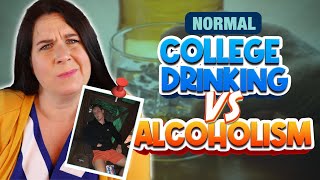
YouTube interview (hosted by Amber Hollingsworth) featuring Joe, with Sam and Lucas, about Joe's progression from frequent college drinking to diagnosable alcohol use disorder and his path toward recovery. Key events in Joe's testimony: escalation from weekend-only drinking to daily use, academic and social consequences, peers and parents confronting him, a DUI in December 2020 leading to jail, a clinical assessment claiming he met most diagnostic criteria, agreement to a 30-day program, followed by approximately six months in sober living where gradual behavior change and peer/staff support aided recovery. The video also mixes conversational diagnostic summaries (counts of criteria and severity thresholds) and points viewers to resources (Greenville Transitions, Lucas's story).
Chapters
I know lots of people that go to college do some excessive drinking, but there really is a clear difference between having some fun, maybe drinking a little excessively socially with your friends, and alcohol use disorder. So in just a second, you're going to hear from Joe, who's going to talk to you in a very open, honest way about his experience in college and his struggles with alcoholism. And watch closely, because as Joe tells his story, I'm going to be showing you the real criteria for alcohol use disorder so that you can see the differences in college partying and real life alcohol use disorder. Make sure you watch all the way to the end, because there's some really cool pictures and clips that you're definitely going to want to see.
In the beginning, it seemed normal just because, you know, I think everybody, like me, was so eager to kind of have that college experience and start, you know, going out on the weekends and doing all those things you hear of, like, what college is. And then I think pretty quickly it turned to, you know, if I was gonna drink on Friday and Saturday, I might as well drink Sunday, Monday, Tuesday, Wednesday, Thursday.
Okay.
And I think just because I was in college, it, you know, it seemed like, although maybe everybody else wasn't doing it, you know, it didn't seem like the biggest deal in the world at the time. And then, you know, it just kind of progressed and progressed to where it was like, that was the only thing I really cared about. And it was just, how can I get to. How can I get to the night where it's like, at least it's nighttime and, like, I can drink. I get drink and you know, just kind of be like, it's just. Just unwinding at the end of the day.
Okay.
Yeah.
How long before you were drinking? Most days?
I'd say maybe for the first few months of college, I was kind of only on the weekends. And then pretty shortly after that, it just kind of became, you know, four days a week. And then once it was four days a week, it was like, well, it might as well be five days a week, and then six, and then I might as well just drink every night of the week.
Okay.
At what point in the story do.
You feel like it's maybe went beyond regular college, having fun?
I think probably the whole time it was beyond the college experience, but I don't think I started to kind of see and understand that until I realized I was the only one that was failing the majority of my classes, the only one that, you know, would skip doing assignments because it was like, how Well, I want to drink. Or, you know, I could start to feel a riff with some friends where it was like, you know, I started to become more of a nuisance than, like, actually hanging out and having a relationship with these people. So I think that was kind of my first look into that. Maybe it was becoming a more than just a college experience thing.
And tell me what you mean by a nuisance to other people. What do you. What are you saying?
I mean, I would say that just their relationships and friendships kind of became secondary to what I felt like my needs and my wants were. And, you know, my needs and my wants were drinking and using, and I wanted to do that first and foremost. And I think that, you know, a lot of times it made it easy to cross boundaries with people. You know, even if it was little things like, you know, I'm drinking now. I'm hungry. It's not my food in the fridge. I'll eat their food. You know, I'll say sorry in the morning, or, you know, just late hours of the night, TV on, loud, just because that's what I want to do. And kind of just. And when you're sleeping on people's couches, too, it's like, you know, you're just.
Kind of like, homeless, college friend.
Almost anything can be a nuisance there.
Okay.
Yeah.
Did they say something to you about it, or did you just feel the energy it took?
You know, people would make. It started out kind of as a joke of like, you know, I even remember people being like, oh, Joe's the alcoholic. And it was like. But at that time, in my mind, it was like kind of this funny joke of like, oh, Joe can drink the most. Joe can. You know, I think in the beginning, it probably felt almost like a badge.
Of honor, a sense of pride.
Yeah.
Like, I can drink you under the table.
And then, you know, it started to become less of a funny joke and more of like, I don't know, Joe. I think Joe may really be an alcoholic.
The tone changes.
Yeah. And then finally, I went on a trip to the national championship game in New Orleans and went with Buddy and his parents, who I. I had gone to high school with him and knew his parents, and we went out and I just made a fool of myself. I had to get carried back to the hotel room, fell asleep in the hotel floor. And I think, you know, it crossed a line where it was, not only are you, like, it's one thing to make a fool in front of yourself in front of us, but then, like.
Our parents, like, dude, My parents are here.
Yeah, my parents are here. Like, this is the time when I need you to kind of, like, at least dial it back and control.
Yeah.
And then so when I got back, that was like, the first time that anybody sat me down. And we're like, we don't really want you drinking, you know, around us.
Dude, what did you think? I mean, what was going through your head?
How can. Who am I gonna drink with other than these people? And that's pretty much exactly what I did. I had.
So he.
Wait a minute, hold on. So your buddy says, dude, like, we don't even want to be around you drink anymore. And you're like, well, damn, who can I drink with then?
Yeah, I think, you know, at that time, immediately I was like, my problem is that they have a problem with me. It's, you know, if they would just leave me alone about it. Really, it's their problem.
Like, they're making a big deal about this one thing. Yeah, they're being ridiculous.
It's like, could have happened to anybody.
Did you have moments in there, like, after an incident like this or any of the incidents where you're like, dang, I really went too far last night, or did you have little moments at all where you thought, I don't need to let that happen again?
I'd say the first time that I got a DUI in the back of my mind, I think I thought, you know, I've probably gone too far. But also, it was just an unfortunate thing, you know, not. Not anything to keep me from drinking, but just, okay, I need to, you know, watch my actions a little bit when I'm drinking. And that was all the justification I needed to, you know, continue what I was doing, but with this false sense of, like, well, I'll die. I'll monitor myself a little more. It's easier to kind of brush off things that you don't remember. You know, a lot of times I would wake up and I wouldn't see the worst of myself.
Right.
Everyone else saw the worst of myself, but because I don't. Didn't remember it and couldn't see it, it was kind of easier to just say, well, you know, yeah, what I remember is like, yeah, sure, I'm drinking. Yeah, I had fun. I was drinking. And, you know, the problems I caused them weren't really problems for me as much as, like, a nuisance to them. And at that point, I think I was in a very selfish mindset of, like, they can either get over it or, you know, I'll just Go to different friends. Okay.
Plus, there's this other thing with alcohol where it's like, everyone does it. You know what I mean? Especially in a college setting.
Yeah.
It would be really hard to decide you had a drinking problem in a college situation, I think, because you could probably find anybody that's done any. Any of the things that happened to you, you could find another person that's happened to.
Right?
Yeah.
Okay.
And I think that there's, like. I can think of a lot of, like, family, friends, and even friends or just family members that everyone. It seems like it's normal that everyone gets a little bit too drunk every now and again.
Right.
You know, like, I can think about family members of mine that are not alcoholics, but at one Christmas party party, or at one wet man, that was the time that they just went all in. So it's like, who is seeing you how many times? And if you can spread the load out enough, everybody can kind of think like, oh, well, that was like, maybe once a week on a Saturday, he goes hard, but then a different person seeing you on the Tuesday night, but they're not seeing you on the Saturday. So the more you can spread it out, the easier I feel like you can hide within, like, the normalcy of drinking.
Yeah, that's a good point. Right. Because not. Not nobody has all the puzzle pieces. Everybody has maybe, like, one or two of the puzzle pieces.
Yeah.
Okay.
And it sounds like when someone does get all the puzzle pieces, they're like, we don't think you should drink around us.
Yeah. You know, now pretty much everybody in my life is starting to catch on. You know, my parents are. They're starting to pick up on the fact that, like, you know, I got friends calling my parents, saying, like, he's blacked out here. You know, we had to bring him back. We don't really want him here.
I have to stop you again.
Okay.
To me, that's big.
Yeah.
I tell parents all the time, I said, if your son or daughter's friends call you and tell you they're concerned, it's bad because you're not gonna call your friend's parents unless you are really worried for them.
Yeah.
So tells me your friends, like, were very concerned. For real?
For sure.
Okay.
Yeah. And in my mind, it was like, they just. They just didn't want to deal with my problems and, like, they should have been better friends and dealt with my problems.
Yeah. Okay.
Like, if you're my real friend, you should deal with me on my worst.
Right.
So my parents catch on. You Know, my parents start implementing, like, you know, you can't drink here. And if I was. If they found cans in my car or bottles in my car or anything, they really wanted to sit down and talk about it. Which only drove me, you know, further to, like, you know, I'll hang out with anybody. I'll hang out with anybody. Just to be, like, not at my house and doing what I want to do.
What would you think when your parents would have a talk with you?
I think for the longest time, I was just in the mindset of just, you know, if everybody would just leave me alone, then this would all be. My life would be fine. Like, if you guys would just quit caring and just leave me alone, we would all be. We would all be, you know, living happily ever after. I'm doing what I want to do. You're. You're not worried about me. And so I think that was really my mindset. So then my parents decided that they were going to send me to Cat Substance abuse specialist.
Okay.
She ran me through a list of questions, and she. At the end of it, I think. I'm not sure, I think she said there was like, 14 criteria or something. And at the end of it, she said, I met, like, 13 of 14. I checked 14 or 13 of 14 boxes of what makes an alcoholic. And I vividly remember walking out and looking at my parents and being like, this lady is out of her mind. This lady doesn't know me. She doesn't know anything about me. Like, how could she? Who is she to say that I'm an alcoholic?
I'm just a college student.
I don't know. And, you know, I think that was all they needed to really have the seed planted of, like, okay, this is more than just, you know, he's really going hard in college. Right.
It's more than just a phase.
Yeah. Okay. And so I kind of started then started seeing a counselor and doing little things. Like, I told them, you know, I'd. I'd do a Breathalyzer to show that I could drink responsibly. And so I had certain times in the day when I'd have to blow. And really, I just got better at swimming or something. Yeah. Just timing. It was. If I was. If I needed to blow at 9, I'd drink one beer at 8,50. That way, you know, I would blow a responsible.
Okay, so you're sneaky because you weren't even trying to just go, zero. You're like, let me show them I can drink. Just barely have a level.
Yeah. And so My thing was my number would always be something that, you know, clearly I wasn't.
Yeah.
Super intoxicated and. But I knew they wouldn't believe zero that I was. That it was zero.
Yeah.
So it was. Let me just dial it back for until whatever time I need to blow. Do that. And then I'd be off and running.
The dam breaks is on. Okay.
Who gave them the 9pm time?
I don't, I don't remember if it was 9pm I think it could have been later.
Yeah. I feel like you want like midnight 1:00am, 2:00am where it's like, truly, you can't drink like that.
Yeah.
You'd still have somebody wait until 1:59 to drink that one beer and then go hard afterwards.
Yeah. Or I think, you know, worst come to worst, I would have just said, oh, I was here. I left the breathalyzer there. And I'm sure I did that a time or two. So now my parents are catching on. And then finally, In December of 2020, I'm watching a Clemson football game at a buddy's house and an argument with my at that time girlfriend breaks out. And at this point, I'm well over the legal limit to drive. And I mean, I vividly remember everybody there saying, like, do not drive. Just. Just let it die. Like, calm down. And I said, nope, I'm getting in my car, got in my car, get pulled over. And immediately I knew I was like this. I'm definitely getting done for now. I'm getting a second one now. So get pulled over, spend the night in jail. And at this point it's like, I really can't. I'm not ready to give it up. But at this point I have to start doing some of the things that like my parents really want me to do. Right.
I'm back into a corner now.
Yeah. So. So that's when I agreed to do a 30 day program.
Okay.
Yeah, in the 30 day. I had somewhat good intentions. You know, I liked the idea of what they told me in the 30 day. Just, you know, you can really get your life back on track.
And did you consider at all, like, when you were in the 30 day, did it cross your mind at all that you would be sober when you left?
When I was in there, I was kind of in the honeymoon phase of like, you know, everybody's telling me, oh, how great it'll be. And at that point, you know, I think part of me believe that. And I think that on a very surface level, I was like, yeah, I can. Oh, I'm Gonna do it my way. Like I'm not. Yeah, I hear all this stuff about AA meeting. I said let's back it up to where? Let's back it up to where it's my, like I'm gonna live my life the same way I've been living it. But I like what you're saying of like, if you don't drink, it'll be, it'll be better.
I'm gonna get my act together. But yeah, I don't need all them meetings and stuff.
For sure.
Okay.
I think I knew before I left my house that as soon as I got my license I was going to the liquor store.
Okay.
And so did that. And then it was immediately back off and running the same way it was before I went to the 30 day.
Back to the races.
Yeah, I was definitely drinking alcoholically, but it was just, I knew no one else could know secretly.
Okay, can I ask you this? When you said I was definitely drinking alcoholically, what does that mean when you say that? What are you thinking? What do you mean when you say that?
I mean for me it was go to the liquor store and I'd say, I'd buy, you know, fifth or something. And I'd say, alright, well this is good for me to have this because I can, you know, I can just drink over three days, four days, whatever. Then you know, immediately that night I wake up, the whole bottle's gone. Or wake up the next morning, the whole bottle's gone. I don't remember. Don't remember it. I'd have people tell me, you know, you were telling me to come out and hang out at three in the morning. And so I think it was really just like not in control of my actions and definitely not in control of like how much I was drinking.
Drinking more than intended. That's one of those, like criteria.
Yeah.
For sure. Which I gotta point out, I think you only have to have like, is it like six or seven of the 14?
Actually there's 11 of them. And if you have two, it's considered mild alcohol yeast.
Yeah.
If you have two to four, three or four, it's moderate and anything over five is like severe.
I think.
Yeah, I think so.
You were like, then I think I.
Had 10 of 11. I remember being one short of.
Yep.
I worked with another guy who had 10 out of 11. He was like, that's pretty good. Not 11 out of 11. It's like you are almost double the amount you need to be a full fledged alcoholic.
It takes a long time to build up to that. Level of alcoholism?
Yeah.
Like, you were in the honors course for sure. Okay.
Yeah.
Okay.
You know, the real, like, behaviors that had consequences started creeping back in.
Okay.
And, you know, it started with the drinking and driving and started with, you know, at this time, I worked at a golf course. And, you know, it started, like, creeping over into that, where it was like, okay, well, I'll drink at work, but I'll. You know, I'll. I won't drink till I'm drunk. So it's like, you know, if they can't tell, then it's no big deal.
Okay.
And then my dad had just got a new boat, and he already had a rule where it was like, if you're gonna be drinking, you can't take the boat out. At this point, you know, I'm telling my parents I'm doing. I'm doing this recovery. Like, I'm going to these Clemson meetings, like, going to these meetings and kind of using that as leverage against them to get more, you know, more freedom. And so that night, I. What I tell my dad is, hey, you know, I got my boss from work who. He loves fishing, and, you know, he's. He's not drinking, and I just think it would be fun to, like, go out and fish under the bridge. So now I. My dad, you know, he assumes. He thinks me and this guy work with her, are going fishing. So I. They come to my neighborhood, and it has a boat ramp on the end of it. I say, go down there. I'll drive down, pick you up down there. And so that way, you know, my dad doesn't see five people come down onto the dock when it's supposed to be me and the guy I work with.
Okay. So they knew you were taking the boat? They didn't know, like, the story. I'm just getting up here, like, sneaking in at. And dark and like.
No, in the.
It's kind of quietly.
Yeah. It's funny because I definitely had done that.
Okay.
I mean, there were plenty of nights where it was 2, 3am and it was just. I happen to know where the boat key is, and it's just, can I sneak down there, get it off the boat lift without them hearing me? So there definitely was that, but in this particular one, it was. I had made up a story of I'm going fishing with a guy, and I need. I need this. I need friends. Like, you don't want me to not have friends. And, you know, this is something cool I can do with a friend.
Sober.
Yeah, that's sober. And. And meanwhile, I Think I had been golfing earlier in the day, drinking. So I'm. I have already been drinking.
Okay.
Before that, go out. And so now I have all these people on the boat and we can't get the boat lights to work. We go out, I think, you know, all of us are smoking weed and we're doing, you know, normal college kid stuff. And they don't know how bad my, you know, my drinking and like, the decision making I have while we're out there. And Clemson has two big dikes, and so none of us are paying attention. And then all of a sudden I just hear the boat stop. And I don't know what. I don't know what's going on. We. I turn the engine off. Everybody's screaming at this point. And my buddy had gone off the front and he was. He was laying there, and luckily he's fine, nothing really serious. But, you know, in my mind, he gets up, gets back in the boat. I know he's alive. And then at that point, one of the girls calls 911. And at that point I'm like, I gotta be anywhere but right here. So take off running. And I don't know what my plan is. My plan is just I gotta get out of here and I'll figure it out and then call one of my buddies and say, hey, you gotta pick me up from down the road, whatever, you know, I just gotta figure it out and then we'll do something about it. Luckily, my friend has the sense to call my parents. And then once I see my parents calling, you know, I know, like, they.
Know you're done for now.
Yeah. And at this point, it's like, you know, where am I going? They know it's. They're gonna know it's our boat.
You got. There's nothing to say at this point. Like, there's no tap dance. You can pull out.
Like, yeah, wow. And, you know, I had kind of doomed myself because. To kind of get pity from them, you know, I'm saying, like, I don't know, maybe like a sober living would be good for me because it's like, I don't know, I'm just scared. I don't want to do it, but, you know, maybe it would be good for me. And so now I've put all these ideas in their head. They've got. I'm dead to rights.
You're back in the corner.
Yeah, you're done. I'm dead to rights. And I think part of me was, in a way, relieved, just kind of that it Felt like it was over.
Did it hit you at this point that I do really have a problem? Like, did it?
I think I had known.
Okay?
I had known for. You know, I think my denial wasn't so much that I had a problem. My denial was more in the fact that I thought, eventually, I'm gonna figure it out. And I'm gonna figure it out without sober living, without going to AA meetings. You know, all these people. That's great for them. I'm too smart to need that. I'll figure it out on my own. And, you know, a part of me did want sobriety, but then I think there's so much fear of, like. There's weirdly comfort in the chaos of, like, as chaotic and terrible as it was, it was. It was like that toxic, codependent relationship of, like, I need this. And, you know, no matter how bad it is, like, this is still my best friend.
Right.
And, like, I'm really accepting that, like, maybe sobriety was gonna work or be the thing for me.
Okay, what scared you the most about the idea sober?
I think one. As much as I wasn't having a normal college experience, a part of me, like, craved that. And, you know, I just thought if I get sober, you know, although I've already created all the. Like, I've already shown these people that, like, I can't drink with them anyway.
Right.
You know, a part of me thought, like, I'll never. I'll never have fun again. Like, now it's gonna be me and a bunch of old guys in AA and not gonna have, like, gonna miss out on everything. Yeah, I'm gonna miss out. How am I gonna go to football games? How am I gonna go.
I mean, are you even old enough to drink at this point in the story?
Yeah, I would have been 22. 20. Yeah. Almost 22, I think. Okay.
So barely, but yes.
Yeah.
Okay.
So the major. I would say, like, it was about.
I mean, you have to be thinking, like, yeah, I'm 22 years old. I can't, like, for sure I'm never gonna drink again. That's, like, massive.
Yeah. I think that was another thing, too. It was like, forever is way too much to comprehend.
Oh, yeah.
Like, I don't. I don't see myself. I don't see this lasting forever. And if I don't see it lasting forever, there's no point in me doing it at all.
Okay.
And so I think my fear was just, like, all the things that I love to do, I love to do when I'm drinking.
Right.
And if I'm not drinking, I'm not gonna love to do them anymore.
Right. And because one of the things that happens, one of those criteria, once you, you know, you fall into an addiction, you lose the capacity to experience joy and happiness from other things, for sure. So the idea of sobriety for someone who's in it, it does seem like, dude, I don't even know if I want to live that life. Like, that just seems like it's awful. Because you're imagining that you won't enjoy anything ever again, I'm guessing.
Yeah.
Okay.
Yeah, for sure. I think that I just, like, you know, I thought it's going to be impossible to make friends because that's what people my age do. We drink and socialize, and if I can't do that, then there's no way I'll make friends right now.
Lucas, is this sort of close to the story where you come in?
Yeah, we just arrived.
So I love it if you tell from your perspective. So we got a little lead up.
Yeah.
How do you guys come into the picture?
So I meet Joe right around that time. Comes to sober living. And, you know, I think this guy is full of crap. From the day that I meet him. Can just see that he's good, you know, he's, you know, he's very charismatic. He's got the charm. He's saying all the right things, but you just, you know, you get that feeling.
So he's talking the good talk.
When he talks, he's talking the good talk. Enough. His intentions and motivations.
You got your sketch out.
Yeah. Yeah.
Okay.
But also, I mean, the perfect guy we work with, college age, getting into trouble. Real deal alcoholic. Not, like, just got in trouble one weekend. And maybe it's an overblown thing.
Like, oh, yeah, he's at the right.
The track record's there.
Yeah.
This is made for this situation.
This is firmly one of our guys, you know?
Yeah, he's one of us. Okay.
Yeah. So then we. We started to get into it.
So you go and you sober living. So you have to go and live there.
So I think when I got there, you know, one of my biggest, like, hurdles was that because fun was such, like, a big part of what I wanted to do. It was like, now I'm in this environment where it's like, me and a house full of guys that are about my age, and we're kind of in this controlled environment where we can't really get into too much trouble. And so I think that when I got there, it was like, well, this is, like, you know, this is the perfect place to, like, just kind of have fun and with no stress of, like, getting in trouble and. But I think that there was the, like. Because I had that mindset, a lot of times I, like, missed out on the bigger point of, like, what I was doing there.
So just, like, you know what? I need to take a step back, get my thoughts together, have a little fun on here at the Recovery resort. Okay.
You know, a lot of people say they have, like, this spiritual, like, moment where it all changes, but I think for me, it was like, just kind of little pieces of the puzzle along the way. Whether it was, like, just somebody said the right thing that, like, hit me in a certain way or, you know, I think I'm not. I don't really like confrontation, but I think there were, like, a couple moments where, you know, I was confronted on something, and it was like I had now had a little time of, like, not drinking, not using to where at least my brain was starting to function like a normal person again. And I think that those little moments of, like, confrontation with. Whether it was, like, a staff member or another guy kind of showed me that, like, there you can have relationships.
And.
And I think it was just piece by piece over, you know, the six months that I spent there that I started to at least feel like, all right, maybe this is gonna. Maybe this is gonna work for me.
And I guess one thing that always kind of stood out to me with Joe and the time he was in the house was like, I feel like his struggle a little bit with, like, authority and, like, rules and, like, very, like, black and white. And he liked to kind of hide in the nuances and the gray of it, you know, just like, well, I know that rule applies to these people for that reason, but I'm kind of different. And most of the time, he'd kind of have a case of, like, okay, you know, I don't think he missed a single morning meditation, you know, always did his chore. Definitely had the mindset of just, like, let me do all my stuff so that I don't have to be talked to about anything. And so it would kind of be true, you know, if, like, if there was anyone to give an exception to, it might be him. But then also trying to kind of maybe counter that mindset of, like, you know, while there may be a case for you being an exceptional person, that doesn't always mean you're going to get the exceptions. And the rules are the rules, and, you know, they're all what they are. Because I remember letting Joe do, you know, online school in phase one, you know, at some point when guys leave you hand in the keys and it's like, hey, now, either, like, do it or don't, right? I'm no longer here to, you know, hold you to these things or make sure you go to meetings or talk to your sponsor or do whatever, Right? And I think that for Joe, I always worried a little bit because of that, like, trouble part of when the trouble goes away, does the drinking come back in?
Right?
And I think as I saw him get closer and closer to being out of the trouble and fully having that behind him, the more confident I felt that it was real and that he had gotten a big enough chunk of it and, like, a taste of this in his life, that it was working and things were better, that it was like, it's not worth going back.
What did you see that made you feel like, now I think he's really getting it.
I'd say for him, probably the biggest one was just, like, staying plugged in, plugged in with staff. Like with David and me and Cole would stop by the office and say, hey. And I mean, the other thing with Joe that sometimes, like, I have his number is because he's so much like me. And when I went through sober living, I got way. I got along way better with the staff than I did my peers.
Okay.
And when I was coming back to the house, I was coming back to see the staff.
My mom always told me that Luke has said to her, like, well, you know, we just hope that, like, after a little bit of time, maybe he'll see that even though we were, like, authoritarians to him, we always had, like, his best interest in mind. And I think in my mind, I was like, losers, nerds. And then it was like, very shortly after, it was like, I did find myself back up at the office, did find myself spending more time up there. And then it was like when you kind of. When you get out and you kind of have a little more freedom and you start to see them as like, your peers less than somebody in charge of you. Like, I kind of like this guy.
Yeah.
And I think that friends who had long term sobriety after the fact, and I think that was one of my biggest resources from it. And then I think, like, the easiest, best part was just getting to be around people with the same goal as you, whether it was guys in the house or staff or. And going to meetings. And because, you know, those first 90 days, you do 90 meetings and the odds that somebody like me goes to 90 meetings and doesn't hear something that they relate to or somebody's story where you're like, hey, that sounds like me a lot. And then, you know, you see that same guy drive off in his Porsche, and his life is great. You think to yourself, you know, well, I guess maybe there's something here.
Maybe there's something to this thing.
Yeah.
Have you ever been on YouTube and seen Lucas's story? So if you guys haven't seen Lucas's story, then I'm gonna put it right up here for you to click on. And you can. And you can watch and listen to that. It was a lot of years.
Mm.
A lot of painful things happened.
Yeah.
So you guys can check that out. And if you want to learn more about Greenville Transitions, I'll put the link in the description for you, and I'll also link it right up here at the end of this video so you can click it and learn more about Groomba Transitions. And then, last thing is, what are you doing these days?
So I am almost done at Clemson. I got just a few classes left, and then I'll graduate. And right now, I'm working for somebody who's in recovery, too. She owns a environmental consulting company, so doing that while finishing school. And once I graduate, we'll see what happens from there.
All right. That's a good end until the start.
Sam.
More from Amber








Addiction Turns “Me vs. Drinking” Into “Me vs. You” #addictionrecovery #addictionawareness

They Admit Everything Except the Addiction #addictionrecovery #addictionawareness

Stop Trying to Make Them Admit the Truth #addictionrecovery #addictionawareness