Dr. Sherene McHenry: The People IQ Expert(R) -- Espresso with Experts Podcast w/ Randy Dean
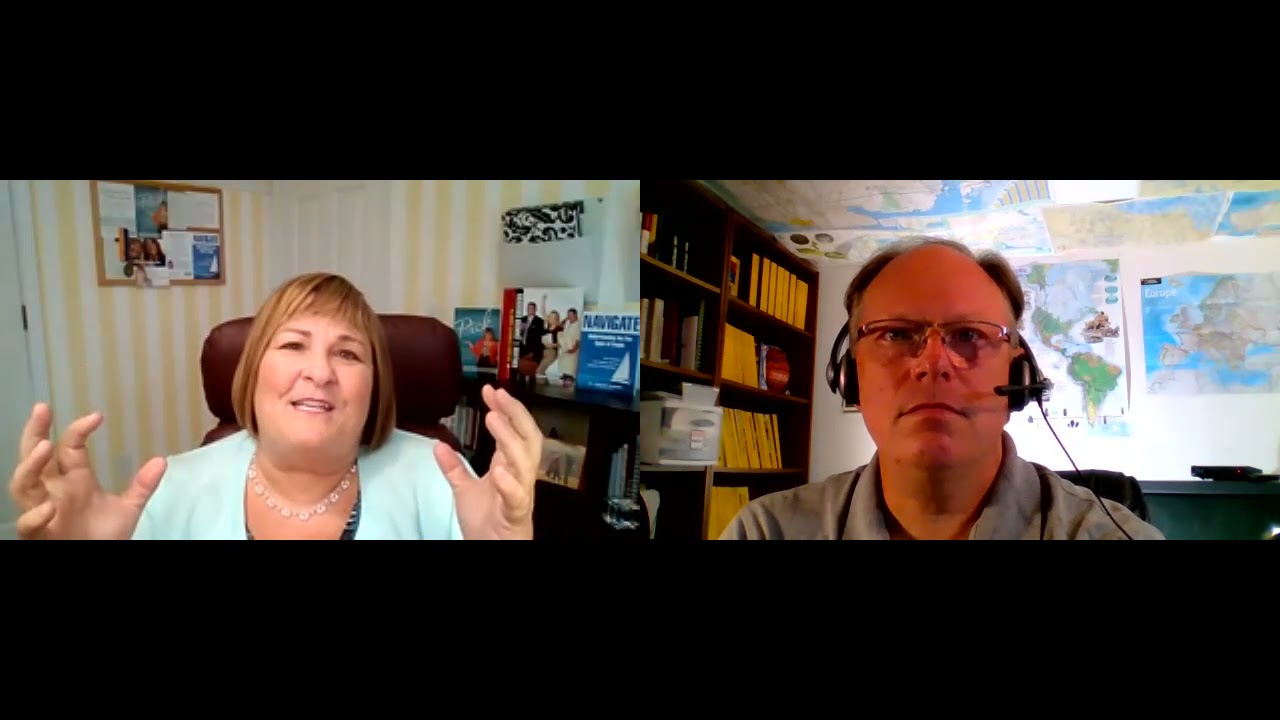
This content was created by Randall F. Dean. This content was uploaded by Randall F. Dean. This is a YouTube podcast episode (Espresso with the Experts) titled "Dr. Sherene McHenry: The People IQ Expert(R) -- Espresso with Experts Podcast w/ Randy Dean" published September 22, 2021. It is an interview-style conversation between host Randall F. Dean (Randy Dean) and guest Dr. Sherene McHenry, a People IQ/conflict-resolution expert. They discuss workplace dynamics and conflict (identifying types of saboteurs or "hackers" — lacker, covert/COVID, and overt — and strategies for leaders to problem-solve or problem-manage them), give examples and anecdotes, and offer practical advice (conflict resolution skills, HR processes, 360-feedback, and the “mess up, fess up, make it right, move on” approach). The episode includes promotional/contacts details for the guest and host and is presented as a recorded livestream/interview on YouTube.
Chapters
All right, hi everybody! It is now time for another episode of Espresso with the Experts, and I have a really fun session for you today with Dr. Shereen McHenry, who is the People IQ expert. Right there, that should make you want to jump out and make this happen. Uh, Shereen, say hi, uh, say hi to everybody.
Hey everyone, grateful to be here.
Awesome. Now, as you can see, she jumped right on the screen. You probably know me, I'm Randy Dean, the Email Sanity Expert, as you can see below. And we'll talk a little bit more about that later. But what I'm gonna do is hide this PowerPoint front screen. We're gonna turn off the share so we can go side by side and start having a good conversation here. Shereen, so let— whoa, geez, what am I doing here? Oh, there we go. That's much better. So let's go ahead and dive in and talk about this. Now, as we talk about the format of this, it's all about the coffee cup story to start. So, and I think you showed me that you have a coffee cup. Let's hear it. Now put it closer to the screen so people can read it. Hello.
Hello, gorgeous.
All right, there's gotta be a good story behind this one.
Well, my mother gave it to me. And so her love language is gifts, if you know anything about that. But I don't know anyone who doesn't get a pick-me-up with a good cup of coffee and a Hello Gorgeous in the morning. And I'll use it in the afternoon too.
Yeah, there you go. And actually, that's interesting. What's your, what's your favorite fill-up in here? Do you have a specified kind?
I like strong coffee with sweet cream. Cream. And so that's what I have in it today.
Oh, okay. And when you say strong coffee, what, like Starbucks?
It's got French roast too. And that's, I like my mouth to be alive. I had a family friend and she used to say, "I like my mouth to feel like it's gone somewhere." See, I'm a bit weird.
I like my coffee-flavored milk and sugar water, although it's not sugar, it's Truvia. So I don't like the hard sharp bend to the coffee. I try to get the, you know, like if I go into Starbucks, give me a blonde roast with a lot of milk in it, you know, so. So, uh, awesome. Well, that's good. That's a good start. Now, now you call yourself the People IQ Expert. How long you've been talking on this topic?
28 years.
Wow. And, uh, give me a quick little— give me your, give me your elevator speech as to what that means. What's your key area that you talk about when you say People IQ?
I hope people understand themselves and others better so they can set themselves up for success and others up for success. So I do a lot of work with leaders, and then I also work with a lot of associations, and their members tend to be very hardworking professionals who are very high risk for burnout. And so my doctorate's in counseling, and I, I just love helping people understand people, and I don't want our best and our brightest burning out. And I've watched that happen too many times. And so the better you understand yourself, you set yourself up for success. Understand other people and you can lead with brilliance.
Wow, I like that. Lead with brilliance. Okay, so I want to show you something here. I'm going to go back into share screen. Because I have a program. Let me jump out of this one. I have a program that I lead called Managing and Leading Great Staff and Team Meetings. And in that program, we have an exercise. Now, I don't declare myself as the, you you know, People IQ expert, actually what we do, which is sort of funny, is we first have a big group breakout where I say, okay, let's talk about all the different kinds of people that can sabotage a meeting. And we come up with all of these funny little names. And then the part 2 of the exercise is to then break into small groups, and each small group picks one of the people, and then Uh, they come up with some strategies to bring back to the large group of how you could maybe better handle that type of situation. And I just thought, I just thought you'd get a kick out of some of these, like Larry Lack of Prep, Nick the Know-it-all, Quinn the Quiet, uh, Ophelia the O'Kind. I, I thought that one was pretty fun. Horst the Horsebeater, uh, Callie the Clueless, Sally the Saboteur. So these are just some of the ones that we came up with in one of these sessions. Uh, any of these strike you as relevant with what you like to do?
I would love today to talk about Sally the Saboteur. And I gotta say, I love the humor in what you did and the empowerment of other people coming up with strategies. When we look at saboteurs, I like to call them hackers. And in my own life, I was ill-equipped for hackers, and most people are. And so I've identified 3 types of hackers, and I think it's just gonna be helpful for your listeners to know what they are, to have a vocabulary, and then to have a few strategies.
Sure.
So the first one, they're just lacker hackers. They lack conflict resolution skills or they lack courage, but for whatever reason, they're not dealing with problems as they're coming up. And so what happens is if you don't deal with it, you start packing it down and it's like a powder keg and you pack enough of it down, one of two things is going to happen. Your anger is going to turn inward and depression's going to result, or far more likely is your anger gets triggered one day over a small infraction and you blow up like Mount St. Helens. I like to say build up, blow up. And so you can be nice 997 times, but on the 996th time, you're going to come out and it's going to be so disproportionate that people are going to discount you. And if you're doing it in the workforce, you're going to be part of the problem and part of what creates a psychologically unsafe workplace, which means productivity is going to be down, creativity is going to be down. People are going to be spending their energy self-protecting or trying to figure out what just happened, or they are going to just keep their mouths quiet because nobody wants shamed, nobody wants Nobody wants ridiculed. And that's the real danger of not dealing with these hackers. Yeah.
And now coming back to that, you know, hearing about this person, I, you know, I hate to say it, I could even potentially see if they have the wrong profile, they might be a physical danger to their coworkers if they're suppressing, suppressing, suppressing, and then one day they explode. And even if they're not physically dangerous, all it takes is that one time, like you said, you know, you're there 997 times, you're good. 998, you blow up. They're only going to remember 998 and it might be a career ender, I would think too. Is that fair, Ashley?
Interesting that you say that. I was working with a Fortune 500 company here in Lansing and a really nice guy blew up one day at somebody. Leadership was good. They called him in and they said, if you ever do that again, you will no longer work here. So leadership said, that's not how we're going to behave, which protects everybody else. But it didn't really leave him with an alternative behavior. And he came down to me after I had spoken and told me this story. And I was able to say to him, and I meant it with sincerity, I love that you're a warrior and you did what you felt was right and that you were fighting for your company. And you need some conflict resolution skills. And he's like, that's exactly what my wife's been telling me. I thought, oh boy, you know, you always know, don't they? And so I just strongly suggested he go work with someone on conflict resolution skills. They brought me back about a year later to do another presentation for them, and he's like, do you remember me? And I'm like, I do, how are you doing? He said, I went and I learned conflict resolution skills and my whole life is better.
Yeah.
And I said to him, congratulations. So many people think about doing stuff but don't act on it. You had the information. It was a tough life lesson and you took action. Kudos. Those are the people I want around me and on my team. Not perfect people, people who learn. And when they mess up, they fess up, they make it right, and then they figure out what they're going to do differently so it doesn't happen again in the future.
Yeah, you learn more from, uh, when you get beat up than from when you win easily, for sure. No doubt about it. Yeah.
So as scary as the lacker hacker can be, and they can be physically intimidating— I had a colleague do this to me and his chest got about 6 inches bigger. I'd never seen that before. He came across the table, was yelling at me, and what I didn't know was when a new department chair came in and he did this behavior again, that man called him into his office and said, "If you ever do that again, I'll call campus police." So this was back when I was a faculty member, but I didn't know that the department chair had protected me. All I knew was that this man was terrifying.
Yeah.
And it was a really big bully way of saying, "Don't cross me because I will eviscerate you." And everybody else, when this guy would get mad, everybody walked on eggshells around him. But one of my StrengthFinders is do the right thing. And so I'm going to say the right thing, even if it has a personal cost, because I believe I'm doing the right thing. And so I would just trigger him and it was, it was bad.
So yeah, yeah, but it does sound like it was more his issue than yours. And what you sort of went through there might have actually helped improve the overall department functionality.
Well, he became my boss, Randy, and he was still that same lacquer hacker. And then he passively-aggressively got mad at something that I did, and he sent me a letter of reprimand because by this time I had said to him, if you take me on in public again, I'm taking you on back, and I'm not going to do a courtesy of a closed door because it's not safe. At which point he yelled at me, I wasn't safe, get out of my office. So he knew that I wasn't going to engage with him. So he sends me a letter. I'm like, oh, that doesn't work for me. And so I called up the dean, which is what I train people to do is when there are these bullies, you need a higher power to work with people who are that dysfunctional. And so I called the dean. I'm like, I'd like a meeting with you and the department chair. He's like, fine, no problem. And we went in and this guy who was like a lion in the Colosseum who hadn't been fed for a month, He acted like a pussycat in front of his boss because there was no way he was going to do that behavior in front of somebody that he respected and answered to. And because we had a mitigating powerful third party, he and I were able to create a solution and to create a relationship that worked. And when he retired about 8 years later, I cried, not tears of joy, but of sorrow. I had grown because he had quit the blowing up hacker behavior, I'd grown to appreciate him, admire him, and even respect him. So I was losing a colleague, I was losing a friend, and I was losing an ally in a department that was not the most functional in the world. And allies were pretty precious.
Yeah. And it's interesting how, you know, by going through this area of conflict, you were able to get to a place that was much more constructive. And I remember when very early in my career, I remember I was in a situation in one of my jobs right out of undergrad where there was a high-level, you know, sort of direct conflict between two really intelligent and highly powerful people in the organization I was in. They never got cross and nasty with each other, but they just had a really strong difference of opinion about how to do something moving forward. And I just happened to be as part of the meeting, but young guy and my boss, she's in the room watching what was going on. Watching how I was responding to this, she actually had the foresight to pull me off to the side. And she goes, did you see what just happened there? And I went, yeah, wow, boy, big difference of opinion. She goes, two things I want you to see. One, they didn't get nasty or personal. They kept it very professional, but they advocated strongly for where they were at. I go, yes. She goes, the conflict though When they finally worked through it, both of them got us to a better place. Then she said, I just want you to realize this because you probably haven't seen that in a professional workplace setting before. Not all conflict is bad. Sometimes conflict, it leads you to a better place.
What a phenomenal boss, and what incredible mentoring. And how true— the absence of conflict isn't the indicator of a healthy work environment, it's how conflict is handled. And I liked that she was okay with the intensity of their disagreement, but that she called them to civility and noted to you, hey, this is civilly done. And, and again, they got somewhere where neither one could have gone on their own. And your apartment couldn't go if people didn't have the safety to use their voice. But I would have been like that if I—
Oh yeah, my eyes, my eyes were that big, like, oh my gosh, what's going on here? You know, and, you know, just think about what that does when you're 22 years old and you get pulled off to the side after seeing something like that, what it says about the nature of the culture. And actually she didn't even have to get in the middle of it. They both behaved themselves well. You know, they had this strong difference of opinion. You could hear the energy, but they did not get mean or personal. They kept it professional.
So, yeah. And so I love that. And I love that they're passionate and that they have their voice. But I also love that, like, a boss took a newbie aside and said, this is the culture and it's okay because it's civil. Because so much right about where you worked and about who your leader was.
Yeah, yeah.
It was fascinating. And I bet you guys moved forward quickly and did incredible things.
Oh yeah, absolutely. It was, it was a great place. Now, coming back to this though. So you said that's number one. I, the one final thing. You sort of intimated on it. It sounds like the lacker hacker also would be very likely to use passive aggressiveness as part of their strategies too.
They can. All of us can. I have spent almost 30 years with conflict resolution skills, and if I don't take care of what I need to take care of, I call it clean plate living. I don't want anything in between me and you. I want you to succeed. I want to succeed. And I just have watched these little things over time move into grand canyons, or a little brick create a huge wall. And so if I'm not careful, I can zing people. And it was interesting, about 5 years ago, we were at the beach as a family, and my sister said something, and I responded with a hacker remark. And she's like, well, that's passive-aggressive. And I did what most people do. I kind of laughed it off. I said, no, no, I was just joking. No, I wasn't joking. I was angry about something. She called me on it. I'm pretty good at telling myself the truth because she went back inside and I sat there and I went, you know what? She's right. And so I did what I, my mantra, mess up, fess up, make it right, move on. And I said, you're right. I did that. I'm sorry. Here's what I'd like for us to talk about. And we were able to work through it. So every single one of us can do a passive-aggressive jab. And if anybody ever says to you, I'm just joking. No, they're not joking. There is a thread of truth. It was is designed to wound, silence, or shame. And it's a very vicious tool to use. And so I was really grateful that my sister called me on that. And we just— there's really no place for those passive-aggressive remarks. And if anybody ever says again, "Oh, I was just joking," I don't say it, but here's what I'd love for you to think. No, you weren't. What you need is conflict resolution skills. Because what they always tell you is you need to develop a sense of humor. No, no, I have a really good sense of humor and I know what hurts when it's said. We're pretty good at reading voice tone and knowing intent, but we can't often put it into words. And it flies in under our radar. We're so shocked that we sometimes have to go away and process it.
So yeah, what was it I read once? It says they won't remember exactly what you said. They often won't remember what you did, but they will absolutely never forget how you made them feel.
Yeah, unless you say I'm sorry.
Yeah, and that's why I love that. I love that phrase that you've said a couple of times: mess up, fess up, and then make it right. I mean, that's, that's a, that's a really good— and then the final one is move on. Mess up, mess up, make it right, move on.
Yeah, so when I'm working with a group, that move on is letting go of perfectionism, letting go of our discomfort with making mistakes, or our discomfort with how people accept or don't accept our apology. We don't have a lot of control over that, but we, but we have the ability to move on. And if I work with people, and especially women, if you've apologized more than twice you have a discomfort there, and that's your discomfort. And what you're now moving into is managing people and placating people, and they're going to treat you worse because it's perceived, especially by a hacker, as being weak. And we don't tend to respect or like weak people, and it can actually make people want to poke you into being angry. And, um, it's just a nasty cycle.
Yeah, that does sound like a vicious cycle. I really do like that though. It's like almost like a user's guide for screwing up in life, you know, mess up, fess up, make it right, move on, you know? Love it.
Love it.
Yeah, there you go.
Roll forward.
Okay, whoops, drop the eggs there. Let me clean up the eggs.
What are you gonna do?
Exactly, yeah. So now you mentioned that you have two other types though, right? Yes, let's, let's talk about, let's talk about those fairly quickly.
Then the second type is the COVID hacker, and the third type is the overt hacker. So the COVID hacker is different than the lacquer hacker. The COVID hacker is usually a gossiper. They like to pit people against each other. The old saying, stir the pot. They do it all behind the scenes, which is how it's so hard to capture them doing it. Because if you're not looking for it, you don't even see it. And so they just very skillfully drop a question here, one little remark here, and they throw you as a leader under the bus. And so my strategy, to the best of my ability, is to not hire these people. It is so much easier to not hire them than have to deal with them. And in an interview, they're going to throw their boss or their former workplace under the bus. They ask them how they deal with problems and they won't have a good answer. They have a sketchy work pattern that isn't about moving up. It's about, about every 2 years they burn through their system and then their game has been exposed and they have to go somewhere else. And so it's all behind your back. You don't see it. It's a lot like cancer until the symptoms show up, but by then it can be very insidious.
Already infested, right?
Yeah.
So that's interesting. Now, what, what do you recommend if you, let's say you are a new leader in an existing workspace and you come in and find that you have a stir the pot person already basically entrenched? What do you do in that situation?
You know, I like to say problem solve, problem manage. If they're underneath you, you have the ability to solve a problem. You can call it what it is. If it's your boss, if it's a coworker, you can try to solve it. But if you can't solve it, then I really encourage people to go quickly into problem management, which is how do we mitigate the effects of this? So if somebody comes and tries to talk to you about another employee, I would really suggest strongly that you say, "Oh, I wouldn't be comfortable talking about Shireen unless she were here." Um, or, hey, I need for you to talk to Shereen first. If you two can't work it out, come and see me, and I'm happy to meet with both of you. But you literally just refuse to listen to gossip. And if people start doing that, it's like, hey guys, this is a safe place. We don't talk about each other, we talk to each other. And you begin to say no to that behavior and you ask the rest of your staff to do it. One of two things will happen. The person will up their game and modify their behavior. That's a win. Or they will probably escalate their behavior, which then you'll have to deal with it, but that's okay. What you'd ideally like is for them to leave of their own accord, and if not, you'd want to work with them through your HR. So I hired a hacker. Go ahead.
Oh, no, I was just going to say, yeah, it just seems like, you know, and it reminds me when I was in grad school, we had an OD class, organizational design. And the one thing that I remember more than anything else from that class, from the HR segment: whenever you hire someone, immediately create the file where you can save the evidence to fire them. And it's, it's unfortunate that you have to do that, but in certain circumstances, they're probably the best thing for the organization, for the group, for the team is to take that person that is basically undermining the entire performance by their behaviors and finding a way to get them out of the team, you know. So I think, you know, that's where evidence matters, you know.
Yeah, it does. And so again, I'm a big— I'll try and talk to somebody twice. Maya Angelou says, when people tell you who they are, believe them the first time. So something happens once and I talk to you about it, I'm going to give you a pass on the first one and assume that you didn't understand. Where there was something going on. But once you know, if you choose to do it again, you've told me who you are. I'm going to choose to believe you. And after the second time, then it's going to be, what do we need to do differently? And so what I've watched is the people that are the more insidious, the COVID and the overt hackers, they can behave for 30 days, 60 days, 90 days. It's really hard for anybody to behave more than 6 months. Is my observation, but they can behave for short periods of time. So if you put them through an HR process, don't stop it after 30 days, or you do your 30 days. And if it happens again, because it's a pattern, then what you want to do is you want to sit in the second time, or working with HR and through your system, certainly on the third time, if this happens again, because you've already had two warnings, because what most HRs do is they forget or don't put into the paperwork you've already had 2 warning periods.
Right.
And so it's just a clock ticking again, and they'll behave for what they have to behave. These people are tough, tough people. And again, what you'll just notice is, is people are going to be fighting. There's going to be distrust. And just start looking at who's pairing off with who. And it's really interesting when you have a healthy team, even though there may be what you might consider some more easily led people, they will be led into health. But if you bring in one of these covert hackers They are going to draw to them the least healthy people and get their little minions who they talk with. And so sometimes you can even hear it, like going, ooh, I shouldn't be hearing that out of that person's mouth because that was a private conversation. It's— there are just these clues. Pay attention to them. And don't— they are very good at massaging your ego and the ego of the leader. That's one of the ways that they manage people. And so if you have a very loyal person who people are now turning against, or if somebody tells you there's a problem and you're like, well, I don't see it, they're fantastic. These people are savvy. They have run the board before anybody else knows there's a game. They curry favor with people above their boss's level, like they'll become their friends, they start going to their kids' soccer games. It's really fascinating to watch because what they want is this insulation of protection where somebody goes, well, that person's perfect. And then your loyal employee who has been there for forever, who's being treated differently when you're not around and becoming the target, is trying to tell you there's a problem. It's like loyalty. Pay attention to somebody who's always been there, always been loyal, and they're starting to tell you there's a problem. If you don't see it, it's because people behave differently when they're in this level of drama.
I was just going to say, you know, through my professional career, I have seen people that clearly act very differently when they're around the supervisors or leadership than they do when they're with their coworkers or their subordinates. And that right there should be a sign for people. If you see a huge, very big difference in how they treat people at different levels, that is a signal that there is something not quite right. Potentially.
Yeah, no, it takes me back to when I was in grad school and the assistant directorship for our department was coming up and there was a covert hacker there and he would make snide remarks about other coworkers. So maybe he was an overt— anyway, I remember going to my boss and I'm just a lowly GA and just saying, I don't think he would be a good hire. He puts people down. And he was married to a vice president in the university, so he was part of a power couple. And this woman risked her own career and chose not to advance him and to create a safe work environment. And he and the power couple vice president divorced because he was a hacker and You know, so it became evident even in the marriage then at some point. Oh yeah, it's just scary to watch. And again, what you want are good bosses who want psychologically safe work environments. Those are places people want to stay, where people flourish, where creativity and productivity flourish, and therefore profitability follows those.
Yeah, I read a great quote recently which said, people don't quit jobs, they quit bosses.
Yeah, they fire them, right?
Yeah, people, they don't have the power to let them go. They don't fire their boss, they just leave. Exactly. Um, now overt, since, you know, I want to make sure we get this done fairly quickly, you know, because we don't want to talk forever and waste your entire day. Uh, but tell me about the overt very quickly and what you recommend to do with that one.
Overt hackers are doing it in front of you. They roll their eyes, they make jabs, they blow up, their chest gets bigger, and they're in your face like my colleague. It's all done in front of you. There's, there's no hiding the behavior. And what the skilled leader does is the skilled leader says, we don't do that here. So I have an open door policy. You can talk to me about anything, but you will do it civilly, is what a college president said. And boy, everybody behaved. Other things that you can say are things like, mm, the tone of this conversation is no longer professional in nature, or I'm going to redirect us It's okay with me if we disagree, but we are going to treat each other with respect here. And the leader needs to solve that and say that is not acceptable behavior. If the leader chooses not to do that, the opposite of your work environment where those strong personalities disagreed is that people will go silent and you'll— they'll either— they'll go along to get along and they've said we don't want to rock the boat and then there's no forward progress made. Or it's at such a slow clip because really smart people are going to keep their mouth shut and they're going to duck and cover and they're going to do what it takes to self-protect. And so these people are scarier because it's overt, it's in your face, they're scaring other people. And what you want to know is that the research in the U.S. says that between 5 and 7% of people have a personality disorder. And so I always treated these people unwisely, um, as though they cared about people, but they lack empathy. They don't take responsibility. They, they don't care about hurting people. With the overt, they actually can delight and get a high off of making people emotionally bleed and battering them about. They're just bullies. And so you want to You want to know they're meaner than you're ever going to be. But if you— the boss sets the— boss sets the law, which is why they get paid the big bucks. If they put the kibosh on it, the behavior can be kept in check, or the person will leave. If the boss lets it run rampant, everyone suffers, and the company and department does as well.
Yeah, you know, It's basically sort of standing up to the bully and making it clear that the bullying won't be allowed. It's what it sounds like to me.
Ralph has the power to do that. But again, they're meaner than you. They're more cunning than you. They're more tenacious than you. The more mentally unwilling they are, the more they— you do that, fine, I'm coming in here. You do that, I'm coming in here. It's just— you just have to work with HR if you have them. If you're the leader, problem solve, work with HR. But if you don't have the power, move quickly into problem manage. How do I protect my people? How do I protect my sanity and well-being in this environment where there is no help? What do I need to do? Because I made this mistake with a hacker colleague for 15 years trying to resolve conflict because I made the assumption that everybody cared about relationships like I did and that anything could be solved. And I think that's probably true for 80% of the people. And then you're going to need some conflict resolution skills. And then the hackers, overt and covert, are that mental health thing that gets in there, keeps that from happening. And so you don't have to bloody your head against the wall for 15 years. You just say, can I problem solve? Try. Doesn't work, move into problem management. And then you can keep your sanity. You can ride out a storm. You can make a decision if staying there is the best thing, or if you want to transfer within your organization, or even look at going outside of your organization. Because the organization is more powerful than the individual.
Yeah.
That's always the case. So, yeah.
So it sounds— let me ask you this. Are you a fan of like 360-degree feedback on positions?
Not an expert on 360-degree feedback, but I think that anytime that we get feedback above, around, and underneath us, it's an invitation to learn and to grow. And I think if it's done right, it can be very, very powerful.
Yeah, it just seems to me like, you know, that would help maybe if you're in a senior management position and you have, especially like a covert hacker that, you know, is treating you extremely well. And then you don't realize that perhaps they're being, you know, disingenuous or even abusive at the lower levels. So, you know, and that's where you maybe could identify some of that that stuff. But like you said, it's got to be done right, you know. I think the key thing is probably anonymity if you want to get true response and result from it, or else otherwise people are going to just feel like they're, you know, stepping out on the plank and getting their legs cut out from under them.
And that's what they will be. Yeah, you have to be so, so careful. I just did a presentation for an organization, and one of the people reached out to me and she's like, our organization is everything that you were talking about, And I thought, I'm not going to put into writing what my answer is. I don't think that's safe for her. I don't know who reads her emails, but I just said, give me a call. I'd be happy to coach you through this. I just think you have to be so, so careful. And work should be fun. We should be able to flourish. We should be safe. You have a legal right to a non-hostile work environment. And if that gets provided for you is kind of for questioning, but I just wish that there weren't hackers, but there are. And I would love for your listeners now to have a vocabulary and to go, lacker, hacker, covert, overt, okay. And problem solve, problem manage, do my best. And when I'm in a, the position that I have the ability and the power to solve, then I'm going to solve it. Because I was doing work for PricewaterhouseCoopers troopers, an entire division, and they had moved the hacker into 4 silos within the division. I was like, oh my gosh, at what point are you going to be courageous? And instead of passing along the problem child, let's correct the problem.
And they all agreed that day with either correct the problem or remove the problem. Exactly.
And they agreed that they were going to take care of it instead of Everybody doing what was easiest for them and then kicking the problem down the line. And I was really proud of them that day. But you know, you just start going, these are well-educated, powerful people who make huge decisions and impact the world, and they're terrified to take care of the hackers. And so if hackers scare you, get somebody to work with you and get somebody to tell you coach you through it and how to do it. Otherwise, they're just— the bully ones are too big and too powerful to take care of on your own. And again, here are the benefits. Short-term pain. I don't like conflict resolution to this day. It makes me sick on my stomach, and I'll do it because I like the results. So you either pay up front or you pay long term. Take your pick. You're paying a price.
Um, yeah, but the long term could destroy teams, could destroy relationships, could destroy productivity, could destroy organizations.
And I wonder—
it seems like not a good option.
It's not a good option. And I'm going to go one step further. It destroys health and mental well-being.
Oh yeah, that's a good point.
You know, when people are on the receiving end of this, especially hard-working people that they can't even If I have a vocabulary and some strategies, I can begin to navigate something. But without a vocabulary and without strategies, it just swirls around in my head. What is going on? What just happened here? What do I want to try next? Um, and so again, I read—
yeah, I read something the other day about what happens if you're in a situation that is consistently a never-ending no-win. You, you get to a phase called learned helplessness. And it's a devastating place to be in either your career or in your personal life. And so it sounds to me like you've given some strategies here today that maybe could help some people avoid that trap. Yeah.
Yeah. And I'm back to, you don't have to go alone, get a coach. If it's an organization thing, bring somebody like me in to set out a new playbook for the whole organization. The system is really powerful. You bring one person in with changes, it's hard. You lay it out for everyone, it's so much easier to change an organization. But you don't have to do it alone. Get a coach, um, work with somebody. There are, again, videos like this, there are books. You just don't have to do it alone. But you need to be armed, and you need to know these people exist, and you need some strategies. Otherwise, they're eating you for lunch, and they're not even going to say thank you very much. Move on and have you for a snack again later.
This sounds like a perfect time to segue into— because you just said, you know, hire somebody like me to help you out. Let's go to the share screen again because look what else I did here. Hold on, let me jump back to the PowerPoint. I put in slide 2. Here's how you can get a hold of Shereen. Yeah, let's, uh, let's put this big screen so they can see that a little bit better. Anything you want to add to this?
No, that you can. I guess the other thing, if you like to digest good information, pick me up about personal and professional life. You can find me on Facebook or Instagram or LinkedIn. I just, my joy is helping people again, healthier relationships, greater success in and out of the workplace. And I just like good information being out there and helping people.
So yeah, I was going to say, I do follow you on LinkedIn, and I love some of the content that you're posting out there.
Thank you.
Yeah, thank you so much. That if you're active on LinkedIn, that's a good place to get informed better of some of Sherine's work and areas of interest. So keep that one in mind too.
Thank you so much.
Yeah, add that to the list. All right, so I think we can wrap this up. Uh, any final thoughts?
This was so fun. I love having fascinating conversations. What a privilege to be on your show and to get to share time with your listeners. Thank you for the gift of this. I'll be grinning for days.
This was fun. That's great. Okay, so, and to close this up, uh, obviously let me put my picture over my picture. I am Randy Dean, the, uh, email sanity expert. This is going to be posted obviously on my new podcast series on my YouTube channel called Espresso with the Experts. So watch for this and more coming in the future. If you like the video, please consider giving it a like, maybe subscribe to the channel. And if you'd like to get a whole series of bonus productivity PDFs on time management, email management, Outlook usage, smartphone tablet usage, Google, Google Workspace, gmail usage and how to reduce your distractions, send me an email, randy@randalldean.com, put YouTube PDF in the subject line, and I'll send you a whole bunch of personal self-study stuff. And with that, I would like to say thank you one more time to Sherene. Sherene, you can say goodbye one more time too. Jump in, say goodbye.
Thanks so much. I love being here. Good luck, y'all. You can do these. You can work with these hackers.
You got this. Take the hackers on. And with that, we're going to say thank you for your time today. Have a great rest of your day.
More from Randall

This simple #ADHD #hack might end your #tasklist paralysis called #executivedysfuntion #productivity

Have #ADHD? Do you make a daily #tasklist ? This might help. #tasks #productivity #procrastination

Found too many cool Petoskey Stones and “Greens” on vacation. Had to do something!


Another free #pallet project: I built a heavy duty #ladder stand for #housepainting

Quick Windows Tip: Organizing Multiple Windows on One Monitor or Screen for Faster Multi-Tasking!

Classic Outlook (New Screen): Converting an Email to Task, Calendar, or Contact Using Drag & Drop

Email Sanity Expert Tests SaneBox: Is This AI Email Tool Worth It? Might be for overloaded inbox!

Taming the Outlook Email Beast: 3 Flexible Learning Paths to Master Your Inbox (Video Course Intro)

#workspace #productivity multiscreen setup #email #calendar #pdf #outlook #gmail #microsoft #google
