Jeff Tobe Espresso w Experts: "Coloring Outside the Lines" from Cust. Service to Customer Experience
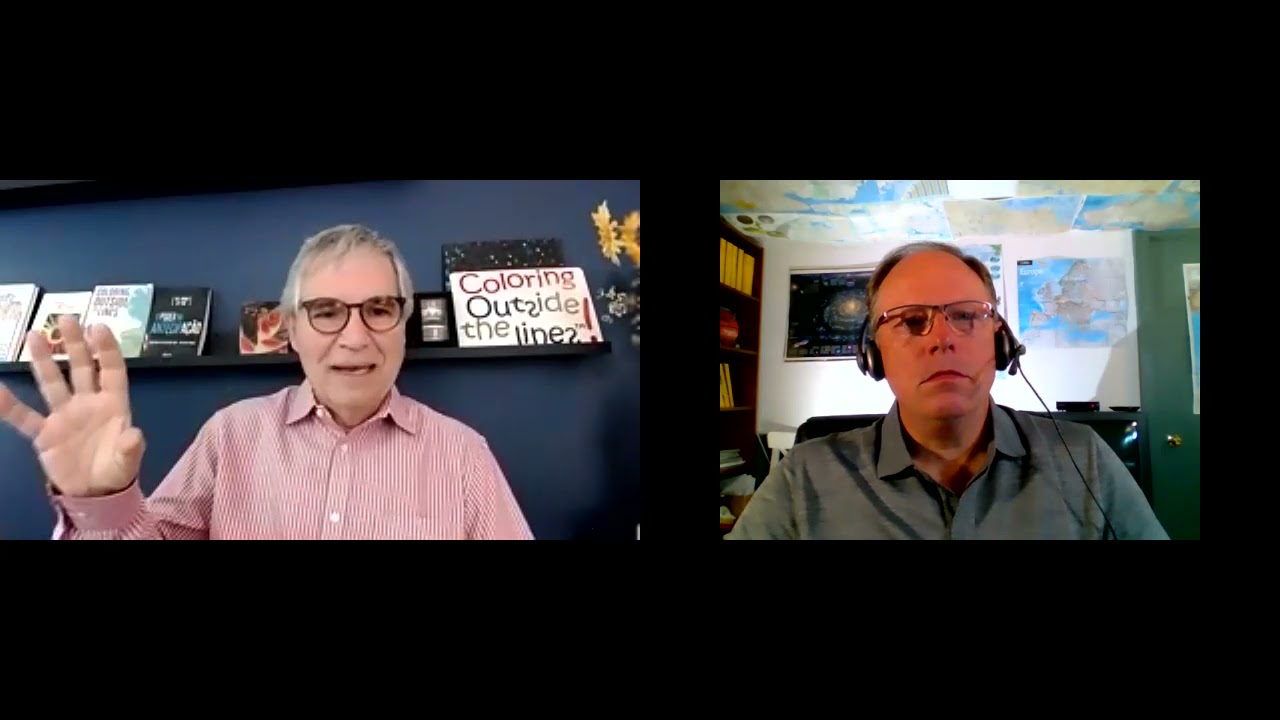
In this episode of "Espresso with the Experts," host Randy Dean interviews Jeff Tobe, the creator of the trademarked concept "Coloring Outside the Lines." The conversation begins with light‑hearted anecdotes about a coffee‑cup ritual and personal quirks, then moves into the core of Tobe’s philosophy: encouraging organizations to move beyond basic customer service toward a holistic customer experience and ultimately customer excellence. Tobe explains that many firms are stuck in a service mindset and fail to recognize the strategic difference between service, experience, and excellence. He introduces his proprietary framework, which includes establishing a cross‑functional CX council (60% management, 40% frontline), launching a year‑long internal engagement journey, and deploying "service excellence advisors" to train staff. Concrete results from a manufacturing client are shared—employee engagement rose from 63% to 98%, customer turnover dropped from 38% to 16%, and revenue grew 12% year‑over‑year. Tobe also references Blue Ocean Strategy, describing how creating barriers to entry and turning a top customer into a true partner ("customer wiring") can generate sustainable competitive advantage. He illustrates the mindset of spotting invisible opportunities with a story about the film Harvey, urging listeners to look for hidden possibilities. The interview closes with Tobe offering a free PDF of his illustrated book "Coloring Outside the Lines" (illustrated by his daughter) to anyone who emails him, and both participants promote their respective websites and additional resources.
Chapters
All right, hi everybody, it's time for another installment of Espresso with the Experts, and today I'm excited to bring with you Jeff Tobe. Did I say your last name right?
Absolutely, you can say it. I'll speak French if you want.
Yeah, I didn't know, sometimes it might be Tobé, you know, or something like that, uh, who has a tagline called coloring outside the lines, which I just find extraordinarily interesting. I can't wait to hear what this discussion's about. But as you know, in the format of these programs, we're going to start this off with a little coffee cup story. So, but before we do that, what I'm going to do is I'm going to turn off screen sharing so you can see us in larger mode. And, uh, now we can actually start and have the discussion, Jeff. So, uh, did you bring your coffee cup?
Absolutely. First of all, thanks for having me. And second of all, you told me this was an adult-only discussion, correct?
This is adults only. I clicked not for kids.
I brought mine.
That's great. Yeah, okay. What's this story?
I'm not—
no, don't read it. Let's not read it out loud. But, uh, what's the story behind that?
I've had this coffee cup for over 25 years. 25 years ago, I used to be in the marketing and advertising business, and, uh, without making a long story longer, the bottom line was that we had one customer who we were their call-in center, basically. And I used to talk to people, and apparently, I didn't know this, but my staff would always hear me saying this after I hung up. And so they got me the cup, and I've never— I use it often.
Every time you get off the phone with them. That's hilarious. So this is great, because you're going to love this. This is sort of related. We have like a group of friends that we get together with pretty regularly, you know, to have drinks or dinner or whatever. We all met from our daughter's dance studio. So all of our daughters were dancing together and that's how we met. And they're just a great group of friends. And one night, I can't remember, we're sitting there and we're all venting about something, all of us together, you know, and all of a sudden, one of our friends who's really deadpan in his delivery too, sometimes, Like he'll deliver something you think, is he serious? And he just goes, oh, eff the effin' effers, you know? And, but he said the actual words, right? And I think we all laughed for about 10 minutes straight right after he did that, you know, because that's become one of my motto taglines now when I'm out driving in traffic, you know.
You'll have to buy him a coffee mug with that on.
That's actually great. I might do just that. That's so funny. So, but But yeah, that's wonderful that it was after a client call that you did that. So very fun. So, all right. By the way, what are you drinking? I'm always curious what you're drinking too. Oh, so you got tea in the coffee cup.
I'm a Canadian. You may not know this. I'm a Canadian. So we drink our tea hot.
Ah, hey, I like hot tea, eh? You know what's funny? You know what I used to do when I was flying a lot? You know how Delta can give you hot tea, right? So what I would do, because I really, you know, especially in the summer months, I like a cold tea, cold brewed tea. Yeah, I would order a hot tea and an empty glass of ice.
Yeah.
And I would take the hot tea, brew it, and then pour it into the empty glass of ice. And what was great is the flight attendant almost always would say, you want lemon?
Right?
I go, yeah, sure, that's great.
You know, that's great.
The one that's my, uh, Little life hack on how you can get yourself a cold tea from a hot tea on an airplane.
I love it. Yeah.
So, okay, well, you have a tagline called Coloring Outside the Line.
Yes.
Yeah, it's right there behind you. Look, it's right there on the screen. Um, yeah, tell me about this. I'm curious about what this, what this means.
Yeah, I'm an unabashed self-promoter. You'll find out too. So, you know, coloring outside the lines is more than it Tagline, it's my trademark, my legal trademark. I, many years ago, it comes from a poem that my dad gave me when I was 10 years old. So I would tell the story during my talks, and then I decided, you know what, in one of my presentations, I thought I'll call the presentation Coloring Outside the Lines because it's about creative thinking. And not long after that, I was in Detroit Airport going down one of those walking or moving walkways, guy coming the other way kind of looks at me, He goes, "I know you, you're the coloring outside the lines guy." He didn't know my name, he had no clue where he'd heard me speak, but I thought I got to do something about that. So, so it really has become a wonderful umbrella for me because what I talk about at Randall and what I do is really about creative thinking as it applies to the customer experience. It's about getting outside your comfort zone and kind of looking at what you do from a whole different perspective.
Oh, that's fantastic. And so In essence, you're sort of, I would assume then, then when you're working with the clients, you're looking at their existing customer delivery model and challenging them to say, how can you take this to a new level beyond what you've done before to enhance that experience? Is that, is that a fair assessment of what you're trying to do?
Absolutely a fair assessment. The challenge we have though is that most of my clients are stuck in customer service mode. And they don't think that they're using the verbiage customer experience, but they don't think there's a difference. And in our eyes, there's a huge difference between customer service and making the leap to customer experience. And then there's a third part, and that's the customer excellence. So there's actually three parts to what we do. And the tough thing for us is to convince clients that they are not, you know, focused on customer experience. They're focused on customer service in most cases.
Yeah, and you know, so when I think of customer experience, I think of organizations like Disney and Starbucks and places like that. And, and because when you walk in, you know, you're getting more than just the product. Yeah, it's not just the product, it's the whole, it's the whole delivery of the product. You know, like how Disney's famously always said, you're, you're not a staff member, you're a cast member.
Exactly.
To even the, you know, person out cleaning up horse dew on Main Street USA, they're a member of the cast.
Absolutely.
You know, and that, that changes the whole philosophy in terms of self-ownership and everything.
You know, just to simplify it for your viewers and listeners, it really is— customer service is what I find most people do fairly well, although it sucks in most companies in the US, and that gives it— that gives me an advantage. But, but when, when they do it well, it comes from the heart. What can I do for you? How can I help you?
Yeah.
Customer experience to me is the ability to step back and ask ourselves, you know, what's my customer's experience from the minute they make contact with us till the minute they're done? And so that's what Disney gets. That's what Zappos gets, is it's not just, you know, the person who you're dealing with one-on-one, or you have to return an item and you get great service. It's really from the minute I make contact to the minute— and so that's a collaboration. Of what you're saying is all the cast members at Disney, they all make up the customer experience, not just that one vendor or that one, you know, or Cinderella dressed up like a princess. Right, right. So that's the difference. And then when you can offer that experience consistently, which is not easy to do, that's when you move to customer excellence.
Mm-hmm, yeah, and that makes a ton of sense because, you know, the biggest and hardest thing is you're probably dealing with these things called human beings. Yeah, and you hire these human beings and there's variability amongst these human beings, you know, and so I would imagine that a big part of what you're doing is trying to get, you know, the companies, the clients to find ways to get that entire staff to level up their game. Is that a fair assessment?
Absolutely, you got it right on. As a matter of fact, you know, we've launched a 1-year customer experience journey for customers. For clients where we take them through a year of training and our focus is internal. My entire philosophy is the more engaged people are internally, the better the experience externally. So why focus externally? Let's focus internally and get your people at all levels, no matter their department, no matter their title, get them engaged and you'll find a huge difference in the customer experience.
Oh, that's fantastic! Can you give me some examples of some of the kinds— I, I obviously, I don't want to get you to be naming client organizations if that's something that's, you know, you should probably not, but, uh, can you give me some examples of some of the kinds of things that you've worked on with some of the clients in terms of how it elevated their, uh, from customer service to customer experience?
Yeah, absolutely. So we worked with the manufacturing company recently. We seem to have a niche in manufacturing, but we work with all kinds of companies. I do a lot of work in healthcare with small rural hospitals for some reason too. But the bottom line is what we did— first I'll tell you what we did and then the results. But what we did is we established, and we do this with all our clients, we establish internally what's called a CX council. So internally they— it's made up of 60% management, 40% frontline, and they're kind of the governing body over this new CX initiative that we're going to launch. And under them, if you can imagine, now there are what we call— they have organizational-wide projects. So depending on their size, it's typically one project for every 20 supervisors, managers. And they pick a project, a year-long project that they're going to work on all year to change the customer experience. And it's cross-departmental. This is not specifically departmental. And then under them finally are what we call our service excellence advisors. And they are frontline people who we actually teach a workshop to. It's train the trainer. And they in turn teach it to all employees in the organization. So we're working with organizations that are 150 to 500 employees, that middle kind of company. And result, the manufacturing company. We ran a recent employee engagement survey. They went from 63% of their employees last year saying they would work with this company, work for this company a year from now, to 98%.
Wow.
And that they would recommend the company to others to work, which is huge, right?
Yeah, that's massive. I mean, to have a 98% declared retention rate moving forward.
And how about their customer retention? They had a problem with customer retention because they're in a very competitive market. And they went from a— I'm making these numbers up. I can't remember exactly. But it was a huge increase. I don't want to give numbers because then I'd be— but I think it was like they had a 38% turnover in customers down to something like a 16% turnover in customers.
So you basically cut turnover pretty much in half.
Absolutely. And then finally, their CEO said to me recently, she said, you know, I can't attribute our increase in revenue specifically to the program, she said, but we've increased revenue year over year by 12%, and she said that's a huge part due to the CX program. So, yeah, so it's there, and I don't understand why more organizations aren't focusing on customer experience to increase their bottom line. To become the vendor of choice and the employer of choice.
Right. Yeah, I mean, that's fantastic. Those are the kind of metrics that I think just about any company would be dying to have. And it's interesting to me because I think that the mentality is that, like you said, well, we just have to be good at customer service. And that whole concept of moving it from service to experience, then hopefully to excellence, You could see why in a competitive field, people might even be willing to pay a premium for those products because of the service they get. And once again, I'm going to bring back the Disney model, you know, I mean, you know, you're going to pay a lot of money, but you know, the experience you're going to get is probably going to be worth it. That's why they keep doing what they do. So yeah.
So yeah, a book called Blue Ocean Strategy by—
I know I have not. Who's the author? Do you know?
It's an old book. I don't even— I'm sorry, I don't remember the author.
Blue Ocean Strategy, though.
The premise was that we all compete in red ocean, bloody red ocean. We compete on price and service, on product. How do you create blue ocean is the whole premise. In other words, where nobody else can compete with you. They're called barriers to entry. But the one I wanted to bring up, are you familiar with Cirque du Soleil?
Yeah.
So they use that in the book. And they say, who would have thought that you'd pay $120 to go to a circus? Because that's what it is. It's a circus without animals. That's where they came up with the idea. Where I used to pay $7 in the small town where I grew up when the circus came to town. Right, right. I think that's a great example of what you're talking about. People, you know, customers are more willing to pay a premium when the experience is exceptional.
Yeah, yeah, that's interesting. So that was called Blue Ocean Strategy. I might take a look and see if I can find a link to it to put in the comments following the video. Yeah, it reminds me of, you know, I have an MBA and One of the things that I remember talking about extensively during our marketing and strategy classes was sustainable competitive advantage. And, and they say that the firms that can find what's called a sustainable competitive advantage have a profit premium over the rest of their industries because the people that are trying to compete with them just cannot break into that SCA. And, and, and so they say, you know, if you want to have a viable long-term business that's going to be profitable and do well, you've got to find an SCA that you can truly stand on. And it sounds like that's sort of what you're, you're actually coaching the people to do, because you can't replicate that. It's not easy to replicate that kind of customer experience.
No, exactly, and again, we go back to what I call barriers to entry. How do you create barriers to entry for your competition? I'll give you another one if I can, Randall. One of the things we do with organizations, I have them identify their number one customer. Now, I tell them right up front, that's not the one who makes you the most money. It's the one who trusts you, who will, you know, is loyal to you, is a champion for you, and maybe they don't spend as much as your top customer. Who are they? Once we identify them, what I do is custom— what I call customer wiring, and that's simply that at every level of the organization, they get together with every level of the customer's organization. For example, worked with a wire company out of Houston, and traditionally, the manager of shipping in my customer's facility had corresponded with the manager of receiving over at their biggest customers, and I said, "No, I don't want management. I want everybody in shipping to get together with everybody in receiving. So we had a breakfast, they get together, and my customer says, uh, sorry, what, how can we help you? And the other, and the, the, their customer said, you know, when you ship these things to us, we have to cut them because we cut them to certain sizes for our customers. It would help us if you did it, you know, that kind of thing. And they go, oh, we never knew that. And then they, and then they said, um, the customer, my customer said to them, do Do you know that it takes you an average of 3 days to empty our trucks? Is there anything we could do to speed that up? And they go, yeah, of course. So it was that interaction of people who never would interact, but we did it at every level. Accounting got together with accounting. You know, so if you want to do that, you've got a customer for life, you know, completely customized. And now you start to work, who's your number 2 customer? Let's do that. So, so that's part of that 1-year journey that we take a client on. It's exactly what you're talking about, that competitive advantage.
Yeah, and it sounds like basically what you've done is you've gone, you've done two things there that I think are very interesting with that model. You've taken their number one customer, not necessarily in terms of profits or, or what, but the one that they know is their number one.
Yeah.
And you've changed them from being a customer to a partner.
Exactly.
That's what, that's what you've done. Uh, and by doing that, um, what's like you said, it's going to be really hard for somebody to break into that competition there because they're going to be like, no, no, these are our partners, we, we aren't leaving our partners, you know. So that, that's fascinating and a great model to maybe replicate.
So yeah, absolutely.
Yeah, well, wonderful. Well, uh, you know, uh, any, any other anecdotes you want to share here? I think we're getting to where we might want to wrap this up because I think you've given some really good stories, but, uh, any final Any final comments that you have?
Absolutely. One of my favorite things, and I have to plug, it's in my book, Coloring Outside the Lines, but have you ever— did you ever see the movie Harvey with Jimmy Stewart?
No, I haven't.
So it was an old black and white movie. I watched it as a kid. Jimmy Stewart's character is the only one who can see this 6-foot white rabbit. It's invisible.
Oh, I've heard of it, but I've never seen it.
It's a Broadway show as well. It was anyway. So I watched this as a kid, I took it at face value, and then fast forward maybe 10 years ago, I rented it to watch with my daughters because I was so excited, I wanted them to see it. And for some reason, I watched it from a whole different perspective. You know, even if you haven't seen the movie, at the beginning of the movie, they want to commit Jimmy Stewart's character to a mental institution. He's crazy, he's the only one who can see this 6-foot white rabbit, he's named Harvey. Watching from a different perspective, by the end of the movie, I started to question whether or not he was the crazy one. Maybe, just maybe, it was everybody who couldn't see Harvey who was crazy. How does that apply to our professional lives? I developed this whole thing, but the bottom line is this, and that I want to leave your, your listeners and your viewers with this: learn to see invisible opportunities where everyone else sees only visible limitations. Yeah, say it again. Learn to see invisible opportunities where everyone else says it can't be done, where everyone else says we tried that 4 years ago before you got here, it doesn't work. Where everyone else says you can't do that in this industry. That's where the opportunities lie.
Learn to see the invisible because that's where the opportunity lies. I love that. You might want to get that as a trademark too. So yeah, I like that.
Definitely a copy— copyright anyway.
Yeah, there you go. Learn to see the invisible. That's where the opportunity lies. Yeah. You know, honestly, uh, now you got me thinking about, um, Jeffrey Bezos and Steve Jobs and, you know, uh, all of the other ones who saw something where nobody else saw it, you know.
Ah, but the difference that I'm a student of Steve Jobs, not personally, I don't love what he did personally, but I got to tell you, there's a guy that started with the end in mind. He always thought of what is the experience I want my customer to have before he made anything, before he developed an idea. That's what I love.
Yeah, yeah, he wasn't thinking about the widget, he was thinking about the experience, and then he put the widget in to fit the experience, which, yeah, that's a, that's a different mentality completely. But yeah, I agree, you know, when you hear about— he's sort of a, uh, his legacy is sort of a mixed bag because of, you know, some of the things about it, but, you know, you can't argue his genius, that's for sure.
So Awesome.
Well, let me, let me go back to share screen so we can end this thing. But a wonderful discussion here. And there we are. We're back into the slideshow. And now to finish this thing up, once again, that was Jeff. Jeff, do you want to give a quick plug to your website?
Absolutely. And can I make my offer as well?
Yeah, make an offer and plug your website before I do my finishing.
Absolutely. My, my offer is that if any of your listeners or viewers want a copy of Coloring Outside the Lines, and I'll brag, it's the only business book in the world illustrated by my then 12-year-old daughter. Um, I'm glad to send a free PDF of the book. Remember, now this is not a Kindle version, it's a PDF. All you got to do is email me. My email is jeff@jefftobe.com. You see my name up there.
I'll put that in the comments.
All right, and in the subject line put free book, and you must tell me in the text where you heard me. That you heard me, uh, on Randall's, uh, uh, podcast Espresso with the Experts.
There you go.
Yeah, jefftobe.com, and my website is jefftobe.com.
Excellent. And I checked it out, it's a cool website, so, uh, we'll get that link down in the bottom too. All right, so, and as you know, I'm Randy Dean. I want to thank you all for your time today. Here, I'm going to put myself over my own face in the video. If you'd like to learn more about what I do as the email sanity expert, go check out my website, randalldean.com. If you like these videos, please hit like, please consider subscribing to the channel. Please leave comments too, because I'm really hoping that we can sort of turn these into more of an interactive experience for the people that are watching these podcasts. And if you'd like to get a whole series of little PDF tip sheets on time and email management using Outlook, Google, smartphones and tablets, uh, reducing your distraction, all that stuff, send me an email. Uh, like Jeff said to send him an email, send me an email. Put randy@randalldean.com and in the subject line put YouTube PDF and I'll send you a whole bunch of free stuff, keep you busy for a while. All right, thanks Jeff. Thanks for being part of this. I'm gonna hit end on the recording now.
More from Randall

This simple #ADHD #hack might end your #tasklist paralysis called #executivedysfuntion #productivity

Have #ADHD? Do you make a daily #tasklist ? This might help. #tasks #productivity #procrastination

Found too many cool Petoskey Stones and “Greens” on vacation. Had to do something!


Another free #pallet project: I built a heavy duty #ladder stand for #housepainting

Quick Windows Tip: Organizing Multiple Windows on One Monitor or Screen for Faster Multi-Tasking!

Classic Outlook (New Screen): Converting an Email to Task, Calendar, or Contact Using Drag & Drop

Email Sanity Expert Tests SaneBox: Is This AI Email Tool Worth It? Might be for overloaded inbox!

Taming the Outlook Email Beast: 3 Flexible Learning Paths to Master Your Inbox (Video Course Intro)

#workspace #productivity multiscreen setup #email #calendar #pdf #outlook #gmail #microsoft #google
