John Kennedy Espresso w/ The Experts: "If Better is Possible, Good Isn't Enough."
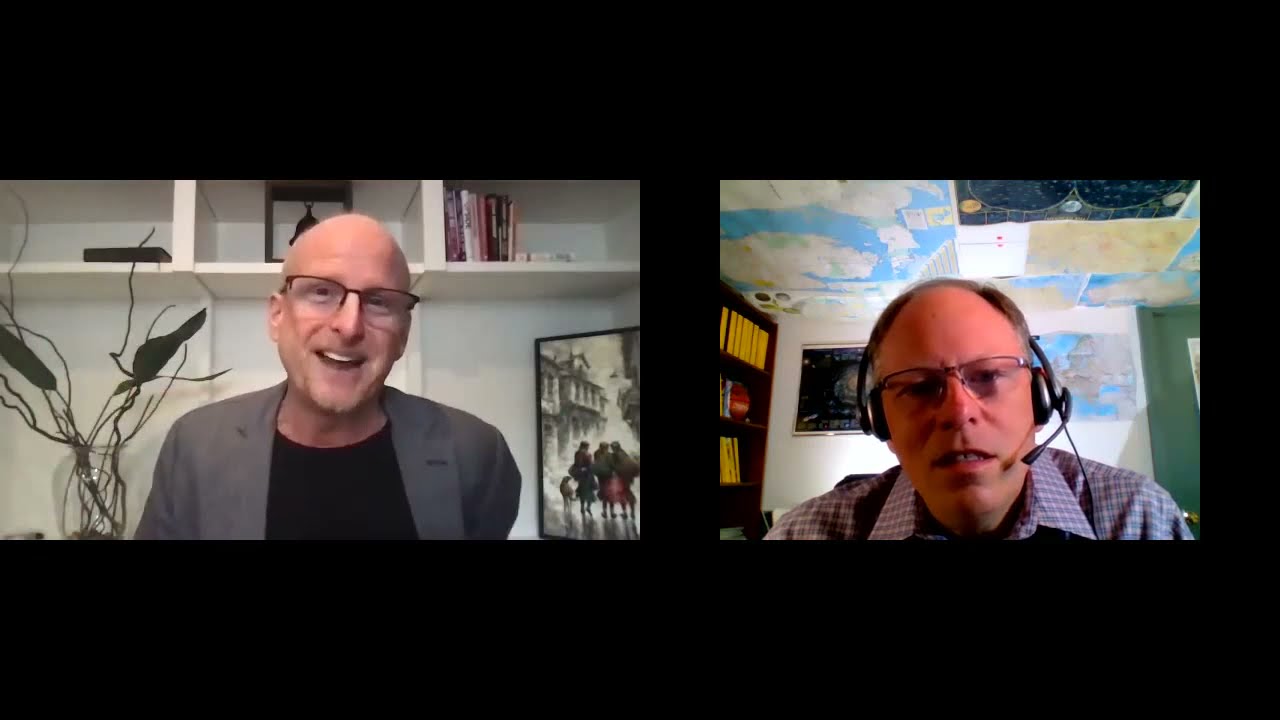
John Kennedy turned his wife's pandemic job loss into a mobile consulting business. He bought an RV and now travels to agritourism farms for two-day strategy sessions, using video, data analytics, and a proprietary intranet platform called ShareSpace. The model lets him work from the road while helping an industry that's slow to adopt new practices.
Chapters
All right, good morning everyone. It's time for a new, uh, Espresso for the Experts. Actually, that should be Espresso with the Experts, uh, but, um, I guess we're gonna have some coffee, so why not, uh, say it's for us. Uh, today's guest is actually one of my longer time speaker friends. We've probably been speaking at that one event together for— it has to be close to 10 years now, wouldn't you agree, John?
Yeah, I for sure, I was in the, uh, I was on my walk this morning and was thinking about today this morning and being with you and thinking about when we met. That event has been 24 years coming for me, um, and I, I think it's been, I think it's been over 10 years, Randy.
Yeah, I think it's more, I think it might be more than 10 years that we've both been speaking at the same event. It's usually our Kickstarter at the start of the year, uh, with the American Bus Association. And I have to tell you, uh, you know, great client, uh, but, um, your, your tagline, I love I love it. If better is possible, then good isn't enough. We might want to talk about that for a minute too as we do today's session. What I'm going to do to make it a little easier for everybody, I'm going to quickly turn off my screen sharing so that we can go into bigger mode. Hey, look at that. Now you can see us better. Ta-da! And, you know, this is called Espresso for the Experts. And so, you know, you're supposed to talk about your coffee cup story to start. Notice everyone, I brought my Yellowstone coffee cup. And the quick story short for me about this coffee cup, this is one of our best family vacations. I took the slideshow from the vacation and turned it into my top 10 places to visit in Yellowstone National Park, which is actually one of my highest view videos on my YouTube channel in the link below. So, John, tell me, Tell me about your coffee cup. And oh, by the way, what kind of coffee you drinking this morning?
Well, good question. So I'll do with the coffee type first because it relates to the story. Kona coffee. I became a fan of Kona coffee on a visit to Hawaii with my wife. And while we were there, had a wonderful time. So there's Iggy Love Pottery. Iggy Love Pottery is a Hawaiian-based pottery place. And she does amazing work. So we had 2 customized mugs made for the Kennedys on our trip to Hawaii, and then more recently in a magazine that we have called Agritourism Life, we highlighted all things Hawaii and spotlighted her pottery place, and there's a lei place that every anniversary we have Hawaiian leis sent to us that we wear for a day or 2 because we think we're kind of cool, but That sounds really bougie, and I apologize, but we just love Hawaii. And this is a mug that is a matching set with my wife's. Inside is Kona coffee with my secret ingredient that my cardiologist is probably pissed about, uh, condensed milk. Condensed milk, a little bit of a sweet feel to it. Kona coffee, condensed milk, but that's it. That's my only vice. Cheers, Randy.
Cheers.
Nice to see you.
Yeah, nice to see you too, John. And actually, it's sort of fun because, um, we both brought travel mugs, right, from our trips. Uh, we did a— we did a Hawaii trip a few years ago, and, uh, we had the best pineapple I ever had.
Yeah, yeah.
Uh, we were driving, um, uh, from North Shore in Oahu back to Waikiki, where our hotel was, after a day of snorkeling. And there's this little roadside shack. It says fresh pineapple. We pull in, dude goes, "Oh, you want me to cut it up for you?" And we go, "Yeah." And he pulls out, I'm not kidding, it was a machete that must've been 18 inches long and about yay thick. That's not a knife. And he cuts that thing up in like a second flat. Oh my gosh. So yeah, stop if you can. All right, let's dive in. Yeah, yeah, you got a little anecdote, it looks like, yeah.
Well, I mean, funny thing, I think we had a pineapple from the same damn guy. I mean, it's right along the coast. So we literally did that whole North Shore and went to get the, whatever it is, my wife would tell me, the type of shaved ice at Montezuma or something like that, shaved ice place right there at North Shore. And came back down the shoreline, pulled into a beautiful view, took a lot of pictures, got sunburned, and across the street from that beautiful view was a guy with a pineapple hut place, and we went in and got fresh pineapple. So did he— I'm almost— and we were at the same place, maybe.
Yeah. Did he pull out a machete when he cut it up?
Yeah, I think. But, you know, pretty much everybody in Hawaii has a machete, so it really didn't jump at me.
Yeah, yeah. Keep that in mind, everyone. Be nice because pretty much everyone has a machete. Um, that's fun. All right, so, uh, you, uh, when we were talking about getting this thing going, you brought up this new concept called curbside consulting. And it looked to me like it was sort of the COVID pandemic that created this concept a bit for you, or at least made it a bigger concept. Can you tell me a bit more about this?
Sure, absolutely. Uh, it's like that, where were you when the shuttle exploded? Or where were you, for folks older than us, when Kennedy died? Or where were you when Reagan was shot? Or those types of things. And where were you on the day that you knew that the world changed underneath your feet? And I was speaking in Hurricane, Utah at the Utah Parks and Rec Association on March 11th. And that night, um, the NBA announced that they were closing for the season. Uh, we all learned that Tom Hanks had COVID with his wife. Uh, and that flight home was the last flight I took for almost a year. Um, and came in, got some groceries, and gathered the family up and said, let's get let's get ready to become a tighter-knit family. So, my wife worked in the travel industry. She was a data analyst for a company that measures and metrics stuff that you and I used to do all the time and are probably doing a little more now these days in our travel. But at any airport, if you bop into a restaurant and have a bite to eat, she's the data analyst that measures all of the food, all the drinks, all the snacks, all the items consumed, and then creates reports to show trends to say, hey, this is what we're seeing at these airports. We need to change or adapt or improve or remove items that are either selling well or not selling at all. So she, understandably tied to the travel industry, by April they had given notice that, hey, we're, there's no, there's no data because there's no people flying. So there are two of us now, me off the road and Sunni, my wife, at that point released from work. And we sat and we thought, okay, well, we're not one to sit too long. Let's come up with something. So she first gave the idea about an RV. Why don't we maybe travel in a safe environment and look at an RV? We've been thinking about it for a little it. So we went and started shopping around for it. And then I thought, well, hold on, there's more to it than that. I have a client in the agritourism industry that your data analytics would be really good for. So we created an entire benchmarking platform for the agritourism industry. So Herd Data Analytics stood up a whole platform under Agritourism Life for benchmarking. And then from there, I'm thinking, well, maybe we could visit these farms and garden centers and wineries and interview them, talk to them, promote them, help them get people to come out when time is right. So that became the magazine, Agritourism Life Magazine. So that idea of Agritourism Life and the magazine and the benchmarking and the website gave birth then— well, there are other clients that I work with, maybe we could take this model to other industries and do this curbside consulting piece. So the RV, and the tax guy believes me too, is a business expense now. I'm able to write off because I literally travel 60% of the time in it visiting clients, working with them. And so our latest example, Randy, uh, is Libby's U-Picks Farm up in Limerick, Maine. And my wife and I drive up there, uh, we work on something created in a digital space called a share space, uh, yoursharespace.com. And that's a digital platform for me to be able to interact with the clients and to give them some tools to be successful in communication internally. It's an intranet. So we set that up to begin with before we arrive, propagate it with information that's appropriate, drive up to the client, and work the first day on strategic planning. So we do visions, value, mission, the whole element of how it is that we want to be able to improve over the next 1, 2, and 3 years. Because if better is possible, then good isn't enough. And we're good at what we do, but we want to get better at what we do. And the coolest part, and I'm going off on it because I'm excited, and I've got Kona coffee, is that we then spend the night at an orchard in the RV. So, we lay over that night on property for those clients that we work with in the agritourism industry and we go to work. So, we have pictures of me sitting out on a beautiful picnic table overlooking an amazing mountain scene of orchard apples going, "How cool is my life?" Right? And Sunni and I work on propagating the strategic plan, Putting it up into their share space, setting up our game plan for the next day, strategic plan, what our core values are, what we stand for, and what part you play. So there's that. I fly my videographer Matt in, and Matt then shoots an onboarding video. So then I, dressed in client attire, introduce the next generation of people that will be joining the company, or folks that will be coming back to work for the company, to be able to tell them about who we are, what we do, and why we do it. Our core values, what customer experience should be like, doing it the Libby's way. So in about a 2-day visit of curbside consulting, the client gets a ShareSpace digital solution, they get a strategic plan, they get core training program for their employees, and an onboarding video that's then edited, produced, and then professionally completed with music, and that's placed up into their ShareSpace as well. So it's an amazing, productive, valuable investment of time, energy, and effort to have that client up and running with a whole new set of tools, uh, within a 2-day visit, and then usually a 2-week time for the turnaround of the, uh, of the videos, which it sounds like you visited the website, you may have had a chance to see one or two of the onboarding videos, uh, and they're, they're pretty, pretty sweet. They really work out really well.
Two things, two things, two things. One, You just mentioned a whole bunch of stuff. I want to get all the website links and put them in the comments below. And so let's get the— for the magazine if you have it. And you also mentioned a couple other things. Let's get, let's get that stuff in for all of the viewers. The second thing is for your tax guy.
Yeah.
So your travel expenses in terms of gasoline and everything with the RV as a write-off definitely would— went up, but your hotel expenses have gone way down because you now have the RV. So correct, that should show you that, you know, you could use that as if you need to justify the expense. I think I just gave you the pathway to do that. So that's super cool though. You get to, you can stay on the properties. It's, that's awesome. Yeah, absolutely.
We had another client, Bednar's Farm, uh, out in McDonnell, Pennsylvania. That was our first time to do it back in like August or September of last year was our first dry run of curbside consulting. It was an existing client, it's a garden center out in the, in the McDonald outside of Pittsburgh area, but they're also a grower and they have a corn maze and a lot of other cool things. And we opted to say, if it's okay, we'll drive over and then we'll just stay on the farm. It was the coolest thing ever. And similar to you, some of our best feedback that we have is people now follow us @LifeDetour. I'll have to give you all these things, but @LifeDetour, is our Instagram, and that's the one that got the most views. And to your point about taxes, Pleasure-Way. So, it's Pleasure-Way is the name of the brand of the RV that we bought. And they found out about us, they started following us, and interviewed us, and did a whole piece on how a client in America, because it's a Canadian company, is using their RV as a business. And they laid out this whole 5-page, really wonderfully done, article about the Kennedys and curbside consulting and using an RV not just for pleasure but for work as well. So, I photocopied that, saddle stitched it, and handed it to my accountant and said, hey, this is why I'm tax deducting this thing as an expense, not only on travel but for the whole damn thing. I mean, I got 57% of the write-off of the amount that I paid for it right off the top of my income based on the fact that I could justify that it's a business expense And there's even an article that supports it.
So— Oh yeah, it literally is your traveling hotel/consulting office. Correct. So, I mean, and it makes just a ton of sense, you know? So that's a really cool story. Boy, it makes me tempted to get one, but I'd only wanna do it if I had an auto drive so that, you know, I could read something while I'm heading down the interstate. That's scary.
Yeah, no, not yet. Tesla hasn't come up with an RV yet. But last thing, if I may. Ooh, that would be a neat idea for Tesla, actually. Back to the, um, the idea of the great pause. I'll call this the great pause of COVID It has strengthened my relationship with my wife. It has strengthened the relationship with the family. It has strengthened the relationship, uh, you know, truly from a spiritual sense. And now because of her work kind of letting her go, I saw something today that said sometimes a rejection is nothing more than a redirection. And, and that's literally what happened with her, as she felt badly at first about being let go of her job But now, we both are in partnership in this business and she could not be more valuable to my clients. Oftentimes, they'll just call and say, "Can I talk to Sunni?" I'm like, "What? Who am I?" You know, so, we've redone our whole thing. And then lastly, you know, we had a trip to Jacksonville. I worked with a home builder down in Jacksonville this past week and then took an extra couple days, Randy. I drove across to Seaside Beach and Mexico Beach and Destin and then we drove up to Nashville and Asheville and came home. So, you You and I, I would fly into a gig, speak, get on the plane, and leave. And that happened for 20 years, 23 actually. And I would never take the time to learn about the city that I was visiting, the town that I'm in, the culture, the people, or anything. And this experience of COVID and I pray for every family member that's lost somebody, I do, has also been remarkably amazing for myself with my relationship with my wife and we now travel together more than we've ever traveled before. And, um, some, some folks can do that with their spouse and better half. Um, some folks can't. I wouldn't suggest it if you can't, but if you can, oh my God, uh, it's, it's amazing. It's amazing. I am a lucky, blessed, and grateful man.
Yeah, no, it's a neat model. And, um, you know, I sort of love how you, uh, put that together. You know, obviously COVID has been so awful in so many ways, but I hope that others have had at least that one positive side because I had the exact same thing, you know. My kids were forced to stay home to go to school, you know, they went to complete streaming for a year and 3 months and, you know, that isn't great for them in terms of losing the connections with their friends, but The two of them, you know, grew so much closer with each other. And I think, you know, it was one of those blessings in terms of us as parents having time with those kids. And we took actually several road trips because we didn't think it was safe to fly. And we did the— actually, it's funny, we did the drive down to Jacksonville via Asheville. So, you know, so yeah, you know, it's sort of like we were, who knows, maybe we were at the same rest stop at the same time, didn't even know it, you know.
Asheville's a great town. Isn't it?
Isn't it wonderful? What a wonderful little hippie enclave way up on top of the mountaintops, right?
You know. Agreed.
Yeah.
Agreed.
So, so, um, you know, hearing all of this, you know, I don't want to keep our viewers too crazy long, but you know, it sounds like what you've done is you've taken the consulting model that you were likely using for your corporate and governmental and university clients before COVID and basically bringing it right into this agritourism area. You know, do you want to talk for just a minute maybe on the step-by-step procedure of how you sort of go about this? I think you sort of mentioned it briefly, but I'd like to hear that one more time about the process that you use with these clients.
Sure, and to your point, the adaptation or transformation or pivot that occurred that everybody was forced to be able to have to deal with, we took it then to the next step. And we realized that if better is possible, then good isn't enough for the Kennedys as well, right? So, I've leveraged gratefully the immense amount of horsepower that my wife's brain brings to her world. So, creating solutions that are digital. She would watch me type up a summary for a client, attach it as a PDF, and send it off as an email. And she just shook her head and she said, "Oh my God, there's a better way than that." I'm like, "Well, what is it?" So, she literally has created this whole platform that I work with now called Start Moving Mountains. And Start Moving Mountains has been around for about 2 years, but it's my strategic planning platform that I now use So instead of me having to go and visit with the client every time, I'm able to visit once and then propagate this digital solution in to start moving mountains and then work with them as an accountability coach from a distance in this type of format now, right? Because we're all used to Zoom and the digital connectivity. I think the hybrid model is gonna work really well. So, COVID advanced this type of communication model probably by 5 to 7 years. 5 to 7 years from now, we would have been doing this more often, but COVID accelerated that to 2020. And, um, all of a sudden now in 2021, my thought is, why do we— why do we need to go back to the way that it was? Why can't we keep part of this?
So yeah, new nor— I, I've been telling everybody, new normal. We're not going back to the old normal. This is the new normal with what we're doing right here, but it's going to intermix back to more in-person again too, but it's not going to be as reliant on in-person. It's going to be a combination of the two because that's— it's just more convenient for people. It really is.
Yeah. And it forced us to rethink everything, which I'm really cool about. So, I'm from the school, if you're going to change, change everything. So, we literally just went to school on ourselves. It's the cobbler's kids have no shoes, right? The plumber's house always leaks. That here we are as consultants and working to help other businesses do better. Better by themselves, maybe we should turn the mirror back on ourselves and say, hey, what are you doing to improve? So, maybe the 5 years of me being so busy that I forgot about improving my business model, the 1 year that we had accelerated me 5 years into the future. So, we're now in the yoursharespace.com, we're into the startmovingmountains.com, we're into the curbside consulting where it's an interesting different way of combining travel and work and life, balancing all of that together. And honestly, to be able to, you know, I'll say it this way, justify the travel to a winery or a garden center or a farm, to be able to highlight them for our magazine, interview them about what they're doing, post that up onto our website as well as our Instagram, as well as to the magazine, it all feeds each other, right? There's all that piece that feeds each other. And then the last piece, Randy, that really became wonderful was the benchmarking piece because you and I know that the success of any business has mostly to do with, although relationships are important, recurring revenue is everything. Relationships are important.
It sure is, isn't it?
Yeah, recurring revenue is everything. So now we have this benchmarking model where we have about 40 different farms throughout North America that monthly are paying a monthly fee to benchmark about how they're doing compared to other farms that are in a particular association. And now we have 3 or 4 other clients that are like, I've heard about you've got your agribenchmarking platform, can you come and build that for us? We have a client tomorrow in Virginia that's gonna wanna be able to benchmark all the farm markets in the state of Virginia against each other in a healthy way, not in a competitive way, in a collaborative, communicative, and comparative way on how they could then improve. Oh, you're selling those items? We don't sell that. Looks like they're good sellers. We should do the same. So, so the digital solutions, the curbside consulting, doing what I do, but doing it better, bringing more value to the clients. Other than just the visit and the nice, how you doing, here's some training transaction. We literally are transforming the way in which we bring our skill sets to our clients. And by doing that, transforming our clients to the new age of digital solutions, onboarding videos, employee engagement, measurements, metrics, accountability, and all the things that all organizations say that they want, but sometimes are too busy to invest in. So, we've made it a fairly simple package. A 2-day visit, a video, all of it gets you right there up and running quickly. And then, the interaction in this capacity like you and I are having throughout the year with the follow-up visit later to make sure that everybody's doing what they said and connectivity along the way and executive coaching. So, all good stuff.
Yeah, it's very cool stuff. One question for you. Have any of your agritourism clients seen your promotion model for what you're doing for your business and integrated some of those ideas of how to integrate their social and relationship building, social media and relationship building, as how they promote their business? Have they done any of that?
It's a really good question, and I have to be delicate in the way in which I answer it, but I'll give it to you this way. The executive director of an association that's in the green industry— agriculture growers, nurseries, garden centers, farms— agritourism has been around for a long time, but it's a fairly new word that people are starting to see. I mean, you've always gone to the local farm and brought your kids to the corn maze and We do the cherries and we do these strawberry picks and the blueberries and all that stuff. We've always done it just at the farm down the street, but didn't realize you were participating really greatly in agritourism, which is an up-and-coming industry and has tripled in the last 10 years and has certainly become more relevant than ever because of COVID But this executive director said that the green industry is very good at being first at being third. Which, which I think is profoundly funny. We are very good at being first at being third, which means that they're usually about a decade or more behind on anything that most corporations are typically doing. And that's where—
so at the end of— if the end of the world comes, we want to go to the agritourism location closest to us because everything happens there 10 years later.
Yeah, so then you got 10 more years to win.
I grew up in a town like that.
Oh, absolutely. But it's so good for local businesses, small farms, and honestly, they've done a, you know, I won't get into the politics of agriculture, but I mean, some of the trade wars that were fought over the last 4 years did much harm to the farmers of America. And so they oftentimes have to now rethink, how am I able to leverage the land in a way that creates revenue differently different than crops. So, they've created, you know, well, let's grow the corn, but then let's just cut out a really cool corn maze and charge people $5 to walk through it. They're making more money growing corn for a corn maze than they were growing corn to sell it on a commodity trading market. So, fascinating, that model. To your question, are they leveraging or promoting some of the things that we're doing? Some of them, yes. Like Simon Sinek says, that there are the early adapters and the innovators, and that represents about 20% of any business. And then there's the folks that wait a little bit to see if— how did it go, and then I'll do it. And then there's the "I'm first at being third" folks that do it. So you're always going to have that in any industry, agritourism just as much as in HVAC, just as much as in state college environments or state parks or whatever. But the ones that do, the younger generation that are coming into agritourism, and there's a lot of them that are wanting to get back to the basics and their value system of locally grown, locally sourced, doing right by sustainability, that whole embracing of a value system that makes Maybe you and I in our age group maybe not have done so much, but they certainly are. Those folks are swarming to the agriculture and agritourism world. Some of my clients are up 30-40% year over year for the last 2 years. It is a trend. What those that are good at what they do, not just good, but really good at what they do, are leveraging Instagram, social media, digital platforms, marketing promotion. We love to highlight them in our magazine because our magazine then drives our followers and subscribers to those subscribers. So we literally, my wife and I, are trying to lift up the agritourism industry in a way that benchmarks it, promotes it, engages it, and gives them digital tools for them to catch up with what other people have been doing 10 years prior and put them right smack square into the hands of anybody. I want to go somewhere, I should be able to look it up on my phone. Well, we don't do that. Why not? Well, we're just a farm. Well, if you think that you're just a farm, then you're just a farm. You're a tourism destination that probably has people asking, could we have a wedding at your farm? Yeah, we don't do weddings. Okay, how many people have asked you if they could have a wedding at your farm? Probably like 50 a year. Okay, so you've said no 50 times to probably $5,000 to $10,000. I guess I'd like to be in a position to say no 50 times. That whole ability to adopt and change and embrace what that, to your point, new now is, the quicker you can, the better it'll be. But some folks, they just are maybe hesitant or comfortable in where they are, and I'm okay with that too.
So yeah, so it sounds to me though, and maybe this is a good finishing point, um, you're really working pretty hard to take an industry which is really good at being first at being third, and hopefully at least making quite a few of them first at being second.
Right.
And let's move it up a step.
And, you know, yeah, in their industry, they very well will become first at being first.
Yeah.
Uh, because we do have some of those innovators and early adopters that are buying into the platform, buying into the benchmarking, buying into the subscription of the Agritourism Life magazine and whatnot, and really realizing that this is us being able to promote, engage, and benchmark our industry. Because on their own, Randy, if I can, they're busy running a farm, right? They're busy working in their business. They don't have the time to work on their business. And if you knew, because I grew up on a farm, it's 5 in the morning until 7 at night. It is a long, hard, arduous, and now apparently in most of the United States, hot, uh, time to be working. Uh, by the time it's done and the kids get dinner and all that stuff, I'm whooped. I don't have time to do stuff. So, we want to help them and make their job and their life and their farm and their industry easier on them and better for everybody. So, that's the game plan and it comes from the right place, right? A servant heart, help type of a model that I've always wanted to be in, but sometimes we're so busy working on what I had in front of me that I wasn't able to look too far much in front. I'm blessed and fortunate for COVID in a way, while at the same time, uh, prayerful for all of those lost souls, um, that have passed based on this unbelievable time in our lives.
Yeah, it's been, it's been truly something, hasn't it? Um, you know what, uh, I think this is great. Let's, let's, uh, go ahead and, um, end this right here. But, uh, I want to reiterate, uh, you're going to send me the links and I'm gonna put the links, uh, in the description so that, uh, he mentioned so many different resources and tools and sites. And, um, you know, let's go ahead and, uh, get some really good content out there to follow the video for everybody down in the comments below.
All right, if you don't mind, I'll offer this. Some of your, um, some of your followers, I imagine want to figure out how do we metric and manage and improve in a fun, creative, clever, cultural way, there's a video series I have called The Great Game of Business. It's about an hour. So I'm going to toss that in into the video links so that your followers can go hit that link and they can go watch The Great Game of Business video training program to see how they might get their teams and their culture engaged in fun metrics and measurements. So I'm happy to do that because I'm a friend of yours and you're a friend of training and I want to support you just as much as I can. How does that sound?
All right, sounds awesome. I'm going to make that the first link below then. Sound good? Good. Awesome. Well, this was wonderful, John, and have yourself, you know, I imagine you're probably going to be getting in the RV and tooling off down the road to another client here shortly. It's that time of year, isn't it? Yeah, so it is.
I speak in Columbus, Ohio at Cultivate. Cultivate is the largest gathering of the green industry in the United States. It happens happens in July every year. Last year it was virtual. This year it's live again. They're excited about it. Soonie and I will head out on Saturday and I do 6 gigs, 6 speaking engagements over a 3-day period in Columbus, Ohio late this week and early next week. So, it's kicking back in again, Randy.
I'm happy about it.
I did.
I took my first, 2 weeks ago I did my first road trip to an in-person client event here in Northern Michigan and then, Last week I flew to my first in-person convention where I was speaking at, and yeah, so we're getting back out there again. Still doing a ton of this kind of stuff, you know, but you know, it looks to me like hopefully we can get back to that new normal I was talking about. So yeah, awesome.
Thank you so much for the invitation. We'll see you on the road, and thank you to your fan base for allowing me to be a short part of their day.
All right, I'm going to put the end tag on this thing. Going back, uh, let's go back to share screen. There's John again. Uh, remember that tagline he had that I thought was awesome? If better is possible, then good isn't enough. Uh, for those of you to remember, I'm Randall F. Dean, the Email Sanity Guy. And if you'd like to, uh, obviously, you know, I'm going to move both John and I up here to the top. Isn't that fun how I did that? Uh, I want to say thank you for your time. Uh, if you like this video, please like, please, uh, consider subscribing to the channel. I'm hoping to interview more experts like John in the near future. Uh, you know, please make comments, uh, if you have some comments about what we talked about. Let's make this a bit interactive. And if you want to get my bonus goodies, uh, PDF tip sheets on my YouTube channel, uh, managing your email, managing your software a little better, smartphones and tablets, send me an email randy@randalldean.com and put in YouTube PDF at the end. And with that, I'm gonna sign us off and stop the recording. Bye, everybody!
More from Randall

This simple #ADHD #hack might end your #tasklist paralysis called #executivedysfuntion #productivity

Have #ADHD? Do you make a daily #tasklist ? This might help. #tasks #productivity #procrastination

Found too many cool Petoskey Stones and “Greens” on vacation. Had to do something!


Another free #pallet project: I built a heavy duty #ladder stand for #housepainting

Quick Windows Tip: Organizing Multiple Windows on One Monitor or Screen for Faster Multi-Tasking!

Classic Outlook (New Screen): Converting an Email to Task, Calendar, or Contact Using Drag & Drop

Email Sanity Expert Tests SaneBox: Is This AI Email Tool Worth It? Might be for overloaded inbox!

Taming the Outlook Email Beast: 3 Flexible Learning Paths to Master Your Inbox (Video Course Intro)

#workspace #productivity multiscreen setup #email #calendar #pdf #outlook #gmail #microsoft #google
