Episode 306: Family Dynamics: Identity and Belonging
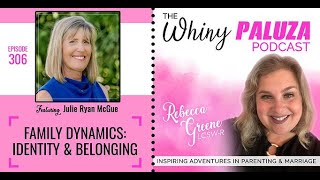
In this Wine Inklusive podcast episode, host Rebecca Greene interviews memoirist and columnist Julie Ryan McGee about her personal adoption journey as an identical twin adopted through Catholic Charities in a closed adoption. Julie recounts how a breast‑biopsy prompted a five‑year search for her birth family, navigating Illinois’ progressive record‑access laws, an intermediary program, and the emotional complexities of a birth mother who initially rejected contact. She describes the supportive role of a post‑adoption group that included birth and adoptive parents, and how her twin sister’s presence shaped her sense of identity and belonging. The conversation explores the evolution of adoption practices—from the mid‑20th‑century “baby‑scoop” era of closed adoptions to today’s open‑adoption models, and the impact of recent legal shifts such as the reversal of Roe v. Wade. Julie shares practical advice for adoptees (building support systems, using intermediaries, preparing for possible rejection) and for adoptive families (using respectful language, acknowledging loss on all sides of the adoption triad). She discusses how writing her memoirs—Twice a Daughter and Belonging Matters—has served as therapeutic work and a resource for others, and she announces a forthcoming prequel book. Throughout, the dialogue emphasizes themes of identity, family dynamics, the right to medical and personal history, and the importance of compassionate, informed conversations about adoption.
Chapters
Hello everyone, this is Rebecca Green for the Wine Inklusive podcast, and I am super excited today because I get to talk to Julie Ryan McGee. Julie, thank you so much for being here with me today.
I'm happy to be here. Thanks for having me.
This is very exciting for me because I just told Julie I have done, I think, almost 300 podcasts and I have never talked about this topic. So this is going to be so fun for me. And I really want to tell you a little bit about this fantastic lady. She is a memoirist. She decided to start out with a tongue twister for me. She is a memoirist. I love that word. Blogger and columnist. Her writing centers on finding out about who you are, where you belong, and making sense of it. Julie's weekly essays focus on identity, family, and life's quirky moments. Her debut memoir, Twice a Daughter, about her 5-year search for birth relatives. I can't wait to hear about that. Julie recently published her follow-up book, Belonging Matters: Conversations on Adoption, Family, and Kinship. Julie holds a master's in management focused in marketing and finance from Northwestern University Kellogg School of Management and a BA in psychology from Indiana University. So we both got our BAs in psychology, so we have that in common. So Julie, I, I mean, I want to know so much, and I had to go over my questions so many times because I had to figure out where I wanted to start with you. But I really want to know, can you start by sharing your personal adoption journey and how it has shaped your perspective on family and belonging? Can we start with your own journey?
Absolutely. Well, one of the big pieces of that adoption journey is that I'm an identical twin. Yes. And, um, we— my sister and I were adopted through Catholic Charities. And one of the most important thing is that Catholic Charities always places, uh, multiple, uh, births in the same family. So I am one of those very lucky adopted people that was raised with a full sibling.
Oh.
That's amazing. It's amazing. It hardly ever happens. Sometimes it happens now in the current climate with foster care adoptions where siblings will be adopted into a family together. But to be— to go through my whole life with my identical sister and through the whole adoption journey has just been an amazing thing. So because I was raised with my full sibling, one of the big questions that adoptees always have in their mind if they don't have contact with their first family is, who do I look like? Um, who do I take after? And I, I mean, I just look like next to me and say, well, I, I look like her. I belong to her. Um, my identity is shaped with my relationship with my sister. So My adoption story started— I was 48 years old and I was sent for a breast biopsy. And I came back from the breast biopsy and my husband, who could be a bit of a stinker, said, this is it. You got to figure out your medical history from your family. And I'm from a closed adoption, which means there's absolutely no information that is given to the adoptive parents about the children that they're adopting. Nothing. No names, no medical history. Just, "These are your babies. They're yours." You know, so, um, because of that closed adoption, there was a lot of state laws in place about access to information. Fortunately for me, the state of Illinois was very progressive. And they started opening up adoption records. So my sister and I lucked into a confidential intermediary program that helped us access information. It took 5 years. It was not an easy process.
Oh my goodness.
My birth mother didn't want contact with us. My birth father's name was not on my original birth record, so we had to find her before we could find him. It, that, that's what the first book is about. It's about this full search. But to circle back to my twin sister, she and I did this together. Um, so those moments when, you know, ultimate re rejection, when your mom, who you've had a lot of fantasies about throughout your life, doesn't want anything to do with you. You know, I had that support. Going back to the psychology piece, the, um, I contacted Catholic Charities and there's a social worker, several of them that are very involved in post-adoption services. And that social worker got me involved in a post-adoption support group that's made up of birth parents, adoptive parents, and adoptees who are all going through the same search process at the same time. And that very supportive community allowed me to understand all of the things that my birth mom was probably going through. It's like you go to the movies and you show up in the middle of the movie and you don't know what happened the first part. That was exactly what happened with my birth mom. I didn't know, for example, because I do, um, I have a relationship with her now. I didn't know that she didn't get married till she was later in life. She never told her husband after being married for 30-some years that she had twin daughters and, you know, placed them for adoption. And she had no other kids. So just imagine, because I do have so much sympathy for her situation, that Mother's Day comes along and you can't claim it. You can't celebrate it because you have daughters, but no one knows you have daughters. Our birthday, um, such a traumatic event for her. Not only did she give birth, but she had all the shame of being an unwed mother. Anyway, I can go on and on and on about this topic, um, but, you know, to circle back, I, again, I'm so grateful that I had my twin sister going through life, but also this adoption search process. And, um, we've met so many, um, cousins and birth siblings. I have a brother and a sister that I find. That's part of the end of my, my book, Twice a Daughter. Um, and it's just been a liberating experience to have figured out all these identity issues. And then the next step to that, Rebecca, is Now I have this writing career based on something I never even planned on doing. But that's, that's life.
That's, that's life. We end up where we're supposed to end up. I really believe that. Yeah.
Yeah. And if you follow one path, it's gonna lead you one way. And, you know, I could have said no to my husband that day and said, no, I don't want anything to do with this.
But I listened.
And because I had 4, I have 4 kids. I really, it was really more about them, providing them with some medical history. And, um, as it turns out, I didn't end up getting breast cancer.
Wonderful.
It was a beautiful thing. But I found out that breast cancer runs on both sides of my family. So everybody's watchful and careful and, um, on top of it.
Oh my goodness. I mean, there's so many questions from what you said. So I I would love to know if you're comfortable. I mean, like, don't share anything you're not comfortable with, but how did your mother go from not wanting anything to do with you to now she's in your life? How did that shift happen?
Um, I think she had to get used to the idea that we were out there and had found her. She was very angry that Catholic Charities— gosh, You know, she thought it was this big secret and nobody would ever see her. And so she was very angry when she was first contacted. And I think that's often the reaction when people surprise us. We get angry. She let her anger simmer, and then she got worried. Why are they contacting me now? Why do they want medical history? She got worried about us and our health. And then that's that changed her mind. So it took about 9 months, which I think that's kind of cool that 9 months means you're having a baby usually.
And you just gave me chills.
She came back into our life and we met her husband, who— I mean, because life is like this. Everybody's touched by adoption in some way, whether it's a sibling, a friend, or our children's friends, which is what's so important about this conversation. There's so much that most people don't know about the whole adoption thing and how complicated it is, which is why we need to talk about it more. Yeah. Anyway, my stepfather was the father of 3 adopted kids, so he, he was like all in right from the beginning. He understood me and my sister because he raised 3 adopted kids. Uh, he understood my birth mother's plight and what the gift was that she gave my parents that raised us. Um, which I'm going to bring this up because, um, for your listeners that want to talk about adoption with their own kids, there's some positive adoption language. It's called P-A-L, and there's, uh, language that I grew up using that's not politically correct anymore.
Oh, okay.
So my sister and I always talked about being given up for adoption because, um, we really did get— give up a lot of things. We lost our identity and, uh, a belonging to our first family. But now people— the, the required language is placed for adoption, which gives the birth mother a little bit more ownership of placing and helping select the adoptive parents. They're often— this open adoption process, they're often involved in— the adoptive parents can be in the birthing room. Often they contribute financially to the birth mother's pregnancy. She can have contact with them. Such a better experience than the closed adoption process that I went through.
So absolutely. Well, and I'm curious, so your stepdad knew nothing about this, right? So I mean, how did the two of them do with finding this out and her having to tell him?
Um, I think she knew the reaction that he would have. Um, and he, he did react appropriately and he was very excited to meet us. The wrinkle was a little bit further out. She had a hard time telling her siblings. She was one of 12 children.
Oh, and they didn't know? They didn't. How did—
he didn't know. She came, she was from Minnesota. She came to Chicago with a girlfriend, girlfriend. They lived in a women's home. She went through her whole pregnancy and it was the wintertime and nobody was traveling and I think chickenpox was on, on an outbreak, and she just claimed to have chickenpox and couldn't see her family. And so she did all this with nobody's knowledge and never told anybody. So expanding the circle of who knows to her family once we were in her life was very painful for her because she didn't want them to look at her disdainfully. Um, she's very Catholic, and there is In our Catholic culture, there's a lot of shame and guilt that we do to one another, but we also do to ourselves. So, um, she had a little bit to do with that.
Well, so to the listeners whose mother or father does not want to be found, any advice to them?
One of the things we learn in support group therapy is when you walk down this path, you don't know what you're going to find. And there's a lot of education around the consequences of what you're doing. First of all, you have to be ready to do it. So in my case, I was ready to do it. I was a middle-aged adult with, um, a big support system. Uh, so that's the first thing is to have, um, a support system and knowledge of what you might run into. And the rejection was big, always. For example, I never met my birth father. He chose not to have any relationship with us. He gave us our medical history. He let his son and daughter know. I have a beautiful relationship with them, and I'm okay with that. It's his choice. I have to respect that choice. And that is one of the things I would advise the listeners is you have to realize what your wants and needs are, are not necessarily going to be the same on the other side. And to understand what could happen, um, and have that support system in place for yourself when, when you might get that rejection.
Really good advice. Can we shift to your adopted family.
Absolutely.
And I just have some—
that's a journey too.
Well, yeah, I mean, I would love to hear about it because I would love to hear how did you feel about belonging to them, your sense of belonging, your sense of identity. How did they talk about adoption? Can you tell us about that part of it?
They, um, well, my mother is still alive. Um, she's a— she was a fabulous mother. So my family, there were 3 adopted kids and 3 biological kids.
Oh, wow. Yeah.
So that often happens, you know, um, you're infertile and then all of a sudden you're not, right? Um, the 3 oldest of us are adopted, and, um, great relationships with my younger siblings. Um, my parents, they had this, this tendency around our birthday to have this little adoption chat. In the living room, and my sister and I always like, are we in trouble? What did we do? But they— it was like a checking in, you know, if you ever want us to help you down the road, we'll help you. It was a really awkward conversation, and I always had the sense that while they were having this conversation with us, maybe a social worker advised them to, that if we went through with it, we would disappoint them. And, you know, there is that thread through this whole adoption search process. We do, out of loyalty to our adoptive family, kind of hold back and decide, is this the right thing for me and right thing for my family? And it wasn't the right thing for me to do until I was faced with the health challenge. Um, and my mom, uh, she wasn't that happy when I called her and said, I just had this breast biopsy. I had this argument with my husband about doing this, and I'm going to do it, and I need my adoption papers to get started. She was not happy. Um, and she was surprised.
Yeah.
And she was threatened. So, I mean, I've got this health history, my adoptive mom's not being cooperative, and I don't know what I'm doing. So there was a lot at play in the beginning. And there's a great chapter in the middle of the book about when I revealed to her that I have found my birth mother and she's not happy at all. And we have this falling out, which, you know, now to this day, we're fine. In fact, she's got a little bit of Alzheimer's and memory issues, so she doesn't remember the conflict the way I remember it viscerally. But she's so sweet. She's gotten sweeter with age. She said to me the other day, we were having coffee at Panera, and she said, how is your birth mother? And I was like, she's fine. She's doing fine. She's like, you know, your age, mom. She's older and has some health issues. She goes, I often wonder why she and I never had a relationship. Oh my God. She forgot all of that. And what a blessing, right? Because if she could forget about it, I need to move on too.
Oh my gosh. Well, I mean, do you feel like you can have a close relationship with your birth mother without—
Absolutely. You know, it's like, it's like having kids. You have your first child and you think, oh, how am I ever going to love another child? And then you have the second child and you're like, Of course I could do that. It's the same thing. I have two mothers. I have two fathers. I adore each of them for different things, and I have room for them in my life and in my heart. So the same thing with, with my brothers and sisters. So when I, when I found all my adoption history out and gave my family members the early versions of the book, they were like, we're so glad you did this. You deserve this. Um, so, you know, at the end of the day, we're all adults and, and we do want what's generally, I think, um, good for everybody. Now, my story is different than a lot of other adoptees. Um, I tend to be on the positive side. That's just my demeanor. I look at everything that worked out for me as opposed to focusing on that my birth father didn't want a relationship with me. Um, not everybody is positive. There's a lot of angry adoptees out there. Um, you know, adoption happened to us and we were not consulted because we were infants. So there's, there's a different spin on the topic depending on the person's experience. Again, I fall back on— I'm so fortunate that I have my twin sister in my life, and I had a good childhood and a good life. And now I'm a writer writing about all this stuff.
I know. Well, and I'm just curious, like, how does it feel? I know nothing about adoption, so forgive me, but how does it feel to be the adoptee and know that— and I'm just making assumptions here. I would guess that birth parents are usually placing their children in an adopted family because they want better for them. I'm just making that assumption.
I think so, um, although the adoption climate has changed so dramatically from when I was, um, a newborn in the, in the 1950s, '60s, and '70s. That's called the baby scoop era. It was before birth control, before abortion. Women were controlled by their families, by religion and expectations. And so they didn't have a lot of choices. Yeah. And the climate changed. So there were so many white babies available for adoption during that time period, hence the whole closed adoption thing, protecting everybody's parental rights and personal rights. And then the climate changed with Roe v. Wade. Abortion becomes available, birth control is available, and the adoption climate changed again. And then we get the open adoption process where there's exchange of information, that birth parents and adoptive parents are involved in each other's lives. So it's changed over time. I think we're in a point of time now. I'm on an adoption agency's board, and some of the things that are happening in that agency because of Roe v. Wade being reversed, we're seeing more closed adoptions coming back into the fray from these very conservative states. So it's interesting to watch history sort of The pendulum is, is tilting.
Well, and I feel so bad because the, the latest word that I have heard with adoption is trauma, so that the adoptee has gone through trauma that the adopted parents may not understand. And I never looked at it that way.
Yeah, um, it's something that I explore a lot in my books, this um, primal wound. And I think there's so much confusion in a developing child's brain. Um, I, I think parents do a better job of talking to adoptees about their story. It's hard for kids to understand, um, okay, I didn't grow up in your tummy, but you're my mom and dad, but why isn't it that the mom and dad, uh, my first parents, why isn't it that they didn't keep me? So that rejection, that not being wanted thing is the trauma that you're talking about. And it takes, um, a lot of hard work on the part of the adoptive family to make that child feel like they belong, belonging and wanted. Uh, I think my parents did a really good job about that. But often, um, an adoptee, if they're the only adopted kid in the family, they don't, you know, the exposure to other adoptees that they can talk about this and, and exchange their feelings and fantasies or whatever is minimal. Um, in my family, I had my twin sister, and then I also had my brother 2 years younger who was adopted, and we were a little pack. Um, we You know, we, we could talk about things. We had each other's back. So I think that support system is so important, um, when a child is growing up. Um, I have, I have a book I'll just show you. The readers can't hear, but this is like the ancient book, um, that families sat down and read with their adopted child. It's called The Adopted Family by Florence Rondell. And it helps the parents talk about the adoption process and what it means in kind words.
I love that. Well, and they may be watching this on Facebook or YouTube, so they may be able to see the book. So some people are watching, most people listen. But my question for you is there— your story is so unique because you had 3 biological kids in the family and 3 adopted kids in the family, and I'm wondering how that played out with your sense of how did everybody get along? How did every— how did you feel that you belonged in the family when there were other biological kids? How did that play out?
You know, my folks did a really good job of not, um, playing favorites. Um, my sister and I have talked about this before because we're twins. And because that's a unique thing, we were always in the spotlight. I think that, you know, I'm going to be honest, I think we were my father's favorite. We spent a lot of time with him and he was a great dad. And so I think the twin piece of this, it makes it so unique. I think I have met through writing my books. I have met 5 sets of adopted twins. And we share a lot of information with each other. I just did an interview with an adopted twin whose our stories are so similar. So it's on my blog, which is accessible on my website, juliemcguireauthor.com, if anyone wants to read it. And to almost to the exact experience, we had the same issues. You know, this, this passenger-driver relationship with our twin sister where one's in charge and the other one says, okay, you got this. And then the other one says, no, this is mine. I'll do this. And we just, we kind of go along. Um, so this idea of being an adopted twin is a really unique experience. And I think that Um, I think my younger brothers and sisters were a little intimidated by us. Uh, we were the oldest, so the, the whole birth order thing gets thrown in there.
Um, yeah, so, so, so unique. It's a very— you had a very unique path, I will tell you that. So to people listening who want to talk to their adopted family about you know, find— maybe finding their birth parents, and they don't know how to approach the topic. Any advice to them?
Um, well, some of the, the listeners that are going to go down that path may or may not have their paperwork. For, uh, my parents kept mine, so they knew exactly when I was going down this path because I had to call them and ask them for the paperwork. If an adoptee has their own paperwork, you know, the climate's changed quite a bit because of genetic genealogy and the access to ancestry.com and 23andMe. It didn't help me in 2010, 2011 when I was going down this path because the subscriber database was so small. I was matching with third and fourth, fifth cousins, and I didn't have names or whatever. So it didn't help me, um, and it may or may not help your listeners, uh, depending on who signed up. Uh, I would caution the listeners, if you're going to do that first before you sit down and talk with your parents, to, um, it's, it's sometimes important to have an intermediary before you make contact with birth family, um, because I think the intermediary, more often than not, they're social workers they can provide some guidance. There's a lot of great online adoption-related sites where you can be in community with all sorts of members of the adoption circle. That's very supportive. But to make contact on your own through one of those sites, wow. I mean, you have to have a couple cups of coffee before you do that, have that little liquid courage because it's It's a tough road to go, and you don't know what you're going to find out and how it's going to be received. So, um, I would, I would give the readers a little caution with doing that because I, I do know of many people where it's been disastrous. It's kind of nice to lead into that with, you know, someone helping you do that work.
That makes a lot of sense. That is really good advice. Now you are writing every week about this topic. How, how is writing helping you personally?
I think so. I love— I was a big journaler growing up, so I kept a lot of those journals and they were very helpful to me in writing the first book, Twice a Daughter. I still journal, but it's more of a gratitude journal. And I think the writing piece helps you figure out what you think about something. So I took a long time figuring out what I thought about my adoption and what I wanted to do with it. Um, and in my second book, Belonging Matters, I share a lot of difficult conversations that I had with birth relatives. My, um, birth mom was a stinker, uh, as I said before, in trying to make contact with her.
Oh my goodness.
My adoptive mom was difficult at points. Certainly my relationship with my birth father was something I needed to work through. And writing really helps me figure out, yeah, that's what I think about that. That's where I'm going to land with this. Because you, you know, you have people telling you what to think, um, even all the great advisors and all the wonderful adoption books. But until you really sit down and write it out or free write, you don't really know where you land with it. And certainly not every adoptee needs to do what I did.
Right.
Perfectly okay if you are happy with your life the way it is and you don't want to complicate your, the rest of your life journey. Um, power to you. That's your choice and that's the right path for you.
Absolutely. Well, and I'm sure you've had lots of people reach out to you and tell you how much, you your writing is helping them?
Oh my gosh, that is the best part of having written these two books. Not, not to make money, but I sort of— the first book, Twice a Daughter, I wrote it as kind of a guidebook to somebody like me. Like, these are all the things I did, these things didn't work, don't do them, don't make the mistakes I made, and these are the obstacles I ran into, so be prepared. It was really meant to be helpful. I had no idea that birth mothers were going to read this book and understand what happened to their child. And this— and adoptive parents have reached out to me and said, I had no idea my adopted child was thinking this. And it has improved conversations. Um, amazing. I have a daughter that's in her late 30s, and one of her high school friends, um, was adopted. Never talked about it, like nobody really knew she was adopted. It was kind of a taboo subject even in her family. And she found out about Twice a Daughter. She read it, she gave it to her mother, and she said, I want you to read this. And they both knew me, of course. And when you're done reading, this book, I want to sit down and talk to you because we have a lot of hurts we need to fix. So it was a vehicle for healing in a family that I knew. I mean, we don't know the consequences of the things that we do until later, but I'm great, so grateful for, um, the feedback and the knowledge that's come from, uh, having put the book out there.
That's beautiful. I had no doubt that you were going to have stories like that. So, so as a society, okay, because I'm part of this society that doesn't know how to support you and others. You know, what do you think we can do to support adoptees? Because I don't really know.
Um, well, try to use the right language. So, um, place for adoption is, is the right terminology. The one, one phrase that I hate, hate, hate, hate hearing is Well, how do you feel about your real parents? Oh my gosh. Oh my—
who would say— I see, I would not say that.
But which one is the real parent? Is the real parent— yes, the biological parent, or is the real parent the one that put all the time and energy into raising me? Okay, so both of them are real, right? But one is not more real than the other. So please don't ever say that. An adoptive.
That is such a good point. Thank you.
Um, there's the first parents and the adoptive parents. There's birth parents and adoptive parents. So that's kind of the, the best language. Um, I, I think, I think if you're sensitive to the fact, um, that somebody might be struggling with where they belong and straddling that line between do I belong more to my adoptive family or do I belong more to my biological family? They belong to both.
Yes.
And they, they need to learn to accept that both families that want the best for them. Uh, the other thing that I would pass on, um, is not to sit back in judgment of anybody that is in the adoption triad. There's so much loss involved in adoption. Adoptive parents are driven to adopt because of some issue— infertility, I mean, the list goes on. Birth parents lost the ability to raise their child for whatever reason, because they're not married, because of financial, because they've been using drugs, whatever. There's loss. There. Adoptees lose the connection to their first family, um, they lose identity issues. There's so much loss involved. So if we can sit back and look at the triangle, the triad, and know that there's a lot of pain and loss there, and not to judge, um, when I went down this path to find my birth parents because of my health issue I had a friend, a good friend, intimate to me that I was being disloyal to my adoptive parents for going down this path. And I was like, how is that? I'm a middle-aged woman trying to find my health history so I can pass it on to my kids. How is that being disloyal to my parents who are mostly supporting me in this journey? We need to sit back, not judge if we don't wear those shoes. Just listen. Just listen. Be a compassionate listener. Ask questions. If there's not good answers coming back, maybe they just don't want to share. So that's my advice to the listeners out there.
Well, and forgive me if this is totally wrong, what I'm about to say. Okay, because like I told you, I'm ignorant about this topic. So yes to health history. If I was you, I would want to know my health history from both of my birth parents. However, take the health out of it. I think that as an adoptee, at any point in your life— I'm not being PC at all— you have the right to explore this part of your life. Just because you want to know and you want to know more about yourself, right?
You have nailed the biggest issue right here. It, all of it is the right to know versus the right to privacy.
Yeah.
And that is in at the forefront of all of the states in the country trying to change their access to original birth records. Birth parents and adoptive parents want that right to privacy to remain in place. Yeah, adoptees like me believe we have the right to information. So this is where everything gets ugly. Everybody's taking sides.
That, um, well, and I'm not even thinking about the birth parents when I say that. I, I didn't even think about the fact that they might not want to be found. I have to remember that side of it. But I'm saying for you personally, there should never be any judgment of wanting to explore more who you are and where you come from. Yeah, I mean, I can't even imagine judging someone because they want to know more about themselves.
But think how hard it would be, Rebecca, if your, if your child was adopted and they came to you and you've put all this time and energy into raising them and they want to find these other people. It does feel like a, a slap in the face. But because you are a, a social worker and a psychologist and a kind and gentle person, you're going to say— you're going to swallow that, and you're going to— I will support you in whatever you—
100%.
100%. But it's hard.
It's hard. And I, and I understand everyone's perspective that you just listed, because there's three different sides to this. And I think that as an adopted parent who raised a child to not take it personally would be the biggest thing. It's not about them, it's not about their parenting. They were— I'm sure they were wonderful parents to, you know, hopefully every adoptee. I hope has wonderful adopted parents, but it's more about the per— the adoptee wanting to find out more about who they are and not about the adopted parents.
Yeah, but you are enlightened, and we hope our list— your listeners are enlightened.
There's hopefully we're spreading it.
Yes, because there's always the adoptive parent out there that will draw the line in the sand and say, yeah, no, no, it's, it's them or me. You can't have us both.
I—
oh, that's heartbreaking.
That is very hard. Yeah, you're right, there's 3 different sides to this.
Yeah.
Oh my goodness. I mean, you have taught me so much. I knew you would teach me a ton today. I told you that. I'm like, let's to explore a topic that I know nothing about.
Well, hopefully, um, people will listen to our conversation and they'll be more sensitive to, uh, the, the child that is adopted and what they may or may not be feeling. It may be recognizing what they feel. Um, and you know, we don't, we don't want people to feel sorry for us. We just want them to understand were a little more complicated than the average child growing up. Um, as a teenager, the journaling was so important to me. And I think, um, finding peers. I didn't know anybody that was adopted when I was a teenager. Um, but it would have been so helpful, um, to have had a group of teenagers to hang out with and say, hey, have you thought about this? Have you thought about that? What do you feel about this? Um, so if there are any parents that are listening that have adopted kids, or maybe their, their kids have friends that are adopted, maybe they're going to be a little more open to a sensitive conversation.
I love that. And my question for you is, to the adopted parents who have adopted kids who maybe don't know any other adopted kids, are there support groups for the kids to meet other adopted children?
There are. Um, it depends on the adoption agency. Um, the board that I'm on, they have two support groups, one for waiting parents. So that's a whole thing. It's so hard to adopt kids now. Um, there's a support group for them and there's a support group for birth mothers. So it just really depends on where you're located geographically and what's available. Always go to the adoption agency and see what they provide and what kind of resources they can connect you to.
So what's next for you? You've done so much.
Um, well, I'll probably never get tired of talking about this. And, um, you know, life provides a lot of material. Oh my goodness, it does. Family, kids, grandkids. Um, I actually am just finishing up a third book It is, if you will, the prequel to Twice a Daughter. A lot of my readers have asked me, well, what was it like to grow up as a twin and an adoptee? Yes. We had some traumatic childhood experiences in my family. I lost a sibling suddenly, died of a virus. And that was a really pivotal point in my family's life. And healing from that. So this next book traces from the— my sisters and I beginnings to when I have my first daughter. And so I'm really excited about finishing it. I'm like this close to being done.
How exciting.
I am excited. It's also the— like any story, when you sit down to write something, you're like, Okay, this is what I'm going to write about. And then you start writing. Oh my gosh, all this stuff comes out and like, oh no, this is not where this is going. And it— I'm really, really proud of the way this book is shaping up. It's a testament to my family that you can get through some really tough times with support, family support, shared values. Love, strong faith. And so I hope it's inspirational at the same time as making you cry a little bit and cheer for joy also at the same time. So thank you.
I'm sure. Oh my gosh. Well, I'm sure it's going to be wonderful. And tell everyone where to find your books and you.
Well, the books are sold wherever books are available. Bookshop.org is one of my favorites because it supports independent bookstores and you can literally buy any book that's available on Amazon or in any of the bookstores. You pick your local bookstore as the recipient for the purchases. But both my books are on Audible. So if you got listeners that want to listen versus reading. And yeah, and then my website is juliemcguireauthor.com and I write a blog every 2 weeks. Uh, depends on whatever happened that the last 2 weeks, what I decide to write about.
Oh my gosh. I'm doing the same thing over here. Family, parenting, marriage. So I, and I can't believe the material that my family gives me. Sometimes I'm like, is it okay if I write about this? Because I really think it's going to help people. And thankfully my kids are used to it.
Yeah. I love the interview you did with your daughter.
Oh, thank you.
That was very sweet. Yeah.
Oh, well, I can't thank you enough for spending time with me today and for teaching me so much that, um, yeah, I knew nothing about this topic. So thank you.
Great. Thanks. It was so much fun.
This is Rebecca Green reminding everyone to spend every day laughing, learning, and loving. Thank you for tuning in to the Winey Palooza podcast. If you like what you heard, Please be sure to subscribe so you never miss an episode.
While you are there, leave a review. I love to hear your feedback.
Thank you so much for listening. Until next time.
This show has been produced by Market Domination LLC. To discover how you can have your own show completely done for you and turn it into a real published book and become the authority in your marketplace, go to www.marketdominationllc.com/podcastoffer. 49 faces looked to him in triumph. Over the last 12 months, they had each taken turns and promoted his business for a week at a time, driving over $987,342 in revenue. What if you had a network of 50 centers of influence who promoted your business every week for a year? Grab your copy of the number one Amazon bestselling book, The Ultimate Guide to Growing Your Business with a Podcast, at 33% off the Amazon price by going to ultimatepodcastbook.com.
Book.com.
Again, that website for 33% off the Amazon price is ultimatepodcastbook.com.










