Episode 328: Co-Parenting, Dating & Self Discovery after Break Up
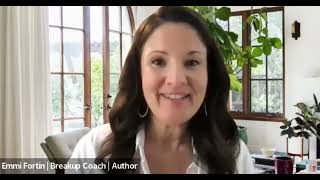
In this Winey Palooza episode, host Rebecca Greene interviews Emmy (Emmi) Fortin, a former high‑school biology teacher turned breakup and relationship coach. Emmy shares how a six‑year on‑again/off‑again "situationship" and the pain of love addiction led her to write a memoir, "Who Is Your Red Dress?" and develop the RED process (Restore, Elevate, Dare) for intentional breakup recovery. She explains love addiction, common post‑breakup challenges such as loneliness, loss of purpose, grief, and identity confusion, and introduces the concept of conscious uncoupling—taking a purposeful pause to re‑evaluate one’s relationship narrative. The conversation covers practical boundary‑setting for co‑parents, strategies for re‑entering dating (self‑assessment, mindful app use, reducing pressure), and social‑media guidelines after a split. Emmy highlights how travel, especially a solo trip to Spain, embodied the RED framework, rebuilding confidence and prompting her to become an author and coach. She emphasizes community support through meet‑ups and virtual groups, and provides resources: her website (www.emmi14.com), coaching services, and a series of guided journals. The episode ends with encouragement for listeners to seek connection, practice self‑care, and consider Emmy’s coaching for breakup recovery.
Chapters
Hello everyone, this is Rebecca Green for the Winey Palooza podcast, and I am very excited for our guest today because I get to talk to Emmy Fortin. Emmy, thank you so much for doing this with me today.
Hi, thank you for having me. I'm excited for our conversation.
Me too. And I was just telling Emmy, this is like a new and unique and helpful topic that I'm really excited to cover for everyone. And I want to tell you a little bit about Emmy. She is a breakup and relationship coach using her RED process to guide individuals through intentional breakup recovery periods. Beyond being a captivating author, Emmy is an engaging speaker drawing from her journey of healing and extensive travels to over 20 countries. Wow, I'm gonna have to ask her about that travel. So I am so excited to talk to her. I told her I came up with way too many questions, so I'm gonna jump in. And I really wanna start with, could you share a little bit about your background and how you became a breakup and relationship coach?
Sure, I would love to. And I do, you know, a lot of people are curious about that because it's not, you know, your everyday job that you hear people talk about, right? And it does all stem from my personal experience. So I was actually a high school biology teacher for 16 years, really enjoyed, you know, working with students and teach. And I love, you know, I'm a science nerd in general.
So my son would love you.
Yeah, I, I I really loved it. But during that time, I found myself in a very tumultuous, passionate relationship, and it really just kind of turned my whole life upside down. So while I was going through that, there were some times that I was really deeply struggling. This was— it wasn't a traditional relationship. I don't know if you or anyone who's listening has heard of the term situationship, but it's a very uncertain thing. Have a title for each other. Our particular relationship was on again, off again, so we were constantly going through breakups with each other. And this was over a stretch of like 6 years, so, you know, it wasn't like a quick stint. Um, and so yeah, that took its toll on me. And I knew at one point during that time, I was like so miserable that I was determined. I was like, I am going to help other people who are in similar situations as me someday. I don't know how yet, but I know I'm going to. And so that kind of, you know, triggered my, my own self-discovery journey. It triggered me, you know, writing my own memoir, which, you know, kind of moved me into the space of becoming certified as a coach and then eventually transitioning out of teaching and doing this full time.
That's an amazing story. I love that there's a personal experience behind it because I think it makes people more understanding and more helpful. And I'm sure you relate to the people that you talk to. And right.
So, so tell us, go ahead, Tina. When they're—
sorry.
Um, when they're telling you their story, it's like, you know, everybody is unique, so I can't say like, I know how you're feeling, but I definitely can super empathize, um, because I've been in a similar state. So yeah.
Yeah. I mean, that's, that's wonderful. And I love that you used a bad thing and turned it into something wonderful.
Yeah. Thank you.
So you have a book with a very cool title, Who Is Your Red Dress? So can you tell us about your book and what the RED process is?
Yeah. So While I was in that relationship, I, I started writing, you know, and journal writing has always been a part of my life. So that's a really great way if people are looking for ways to release their emotions. Journal writing is a great place to start. But for some reason, you know, this one morning I just, I looked over at this man who was sleeping next to me and a thought just popped into my head, which was that, wow, He's just like a red dress. Now, I chose red dress because we are both salsa dancers. And so, like, the red dress is just like this image that you always see in any salsa scene, right? And I was like, damn, like, he's just like a red dress. And then from that moment, I just— I don't know why, but all these, like, words and phrases were, like, shooting into my head from left and right. And I was like, I got to write this down. And that was the first time that I ever started writing from the third-person perspective. And so I started writing these little vignettes all throughout the relationship to process my own feelings. But, you know, I later realized, wow, I can, you know, string these all together to form this, you know, more comprehensive story. And so it ended up, you know, turning into a memoir, which is— these are all the true events that happened in my life, but I got to include the creative storytelling element. Which is typically not present in journal writing, right? Like usually you're just kind of vomiting your feelings, which is very cathartic. But this element of the creative memoir style, third person writing, helps me to gain lots of new perspectives that I wasn't able to see before. And so, yeah, it morphed. And that's where the Red Dress title comes from. The whole book starts from that one little story, that one little thought. And, um, yeah, it's— the subtitle is One Woman's Quest to Break Up with a Love Addiction, which is totally what I was in.
Wow. Wow. Okay. So, so much to unpack. So many questions. So I really wanna know exactly what— I did not look it up. I do not have knowledge on this topic. I really wanna know what a love addiction is, and I really wanna know what your RED process is.
Oh yes, I forgot about your second half because I went on a tangent. That's okay. Yeah, it's a great question because even myself, I mean, I only associated addiction previously with just substance abuse, right? You know, you hear about alcoholism all the time, drug addiction, but an addictive behavior, if you actually look up the synonyms, other words are dependent, fixated. Obsessed. And then when you look at the behaviors of anyone who has an addiction to something, it's doing a behavior that, you know, isn't good for you, but you keep doing it anyway. It's something that is just in your mind all the time. Like maybe you can't even focus on other things that you're doing because you can't wait to do that behavior again. And then oftentimes it has a component of void filling. You are trying to provide yourself an escape from something in yourself or in your life. And so these behaviors offer you a momentary escape and maybe even momentary pleasure or happiness. So love addiction is, you know, all of those things, but you're using this either person or idea of the relationship as your substance. Essentially. And so my RED process is basically came from my own experience through my recovery kind of process and also, you know, learning from lots of different experts along the way and picking up my own practices. So the R stands for Restore, which means that there are basically 3 areas of our lives that I believe we need to be working on simultaneously in order to truly achieve transformation and come out the other side. So the first step, R, is that we have to reconnect with ourselves. Mm-hmm. Most of the time when we're in that state, we are reaching outside of ourselves for pretty much everything. The second step is E, elevate. We have to elevate our own lives through learning and personal development and growth. And then the third step is dare. We must push beyond our comfort zone. To do things that are uncomfortable in order to put us on a new and different path that we want to be on.
Wow. So you came up with this through all of your exploration and studies and, and you're using this now with your clients?
Correct. Yes. Thank you for, for pointing that out. It is the journey I took, but it's also the journey that I, I now guide my clients through. Um, I have a, a coaching program that is arranged and structured in small steps because it is a process. And I know a lot of people won't like hearing that, you know, it's not something that you just wake up and feel better. You know, it's, it is the journey, the process that you need to take to identify the root cause of everything that's causing your struggling. But then when you come out the other side, it's It's this like glorious, almost like liberation, this, this freedom from the thing you've been struggling with, and it can be the greatest opportunity of your life.
Sounds amazing. And I know so many people need you and, you know, I know that people have lots of challenges through a breakup.
Yes.
Can you talk about some of those challenges that you see and how you're helping?
Sure. I think everyone can identify right away with the sense of loneliness. And that is one of the most common. I've spoken to hundreds of people. And if I'm thinking, OK, what are the top things that people tell me? Loneliness is definitely right up there in the top 5, top 3 maybe.
Absolutely.
Also a loss of sense of purpose, which again goes back to the connection with yourself. You have this disconnect from yourself. Some people even say like, I forget who I even was before the relationship, right? And so it's like they also use words like, I need to find myself again.
Yeah, yeah.
And it's all about reconnecting. Let's see, another thing people are dealing with grief and I don't think they give themselves the grace and the patience that it takes to move through grief. And, and it's not just grieving the loss of the person in your life and, you know, the daily habits and routines that you're accustomed to, but it's also a version of reality that you're grieving is now gone or changed.
Absolutely. I mean, you're hitting it all. You're hitting it all. Every single issue that I've been hearing And I know that you have something that you call conscious uncoupling. Am I saying that right?
Yeah, that, that's actually, um, a, a phrase. I think that was termed by, uh, someone else who wrote a book about it, but yes, it's the same idea.
Same idea. So, so what, what exactly does it mean?
So I came up with this idea that it is really important when you're going through any really big life transition, honestly, but specifically, you know, the ending of a relationship that you need to take a pause. You need a— I was calling it a breakup recovery period, but essentially it's a pause and it is a time when you get to be really intentional about how you're going to choose to think about your past relationship and what happened and really intentional about how you're going to choose to think about moving forward. A lot of people drag their baggage from the last relationship, maybe even multiple relationships. And I mean, I was doing it too. So, you know, I'm definitely not perfect. Like, I'm here talking about all these things because I've been through all of them. And so when we bring our baggage that we haven't worked through yet, into new relationships, it just causes the same problems or the same patterns over and over. And so with the idea of conscious uncoupling, it's like, how can we get really intentional about making this an experience that is going to serve us rather than hold us back or keep us stuck?
That makes so much sense. And I know that— I mean, it's kind of even fuzzy as I say this. I know there's probably like healthy boundaries to have through a breakup. Can we talk about what that would look like? Yeah.
And here's where the intentional piece, the conscious piece comes in, because I'm sure that the first thing anybody does, maybe, you know, I know I did, is like when you're going through something like this, what do you do? You immediately go to your friends and your friends love you and they will offer their advice to you. But what is true for one person might not be the right thing for you to do. So here's an example. Most, I would say, people in the relationship sphere, like in my, you know, line of work, would say you have to go no contact. Would I say that this is a great piece of advice? I would say I think it probably is for a lot of people, but this is where we need to really be intentional with who we are and what's best for us. If you're a co-parent, that's not possible, right? So everybody's situation is unique, but you need to be honest with yourself when you're making the choice to either contact or not contact, right? It's like, what is the outcome that I'm expecting here? What is the outcome? You know, is this really going to serve where I want to get myself? Or am I just seeking that dopamine hit? I'm like, ooh, you know, he or she responded. Or, oh, you know, now it's like causing you that drama that maybe you're, you know, attached to. So it all comes down to your intention and listening to guidance, but ultimately making the choice that you know is right for you.
Yeah, because as you're talking, you know, in my life it's all co-parents that I know people, you know, might listen who aren't parents, but I'm thinking of all the divorced couples and some of them are communicating all the time about the kids and some of them don't want to communicate. So it just seems like it's so unique for each couple.
It is. And when you asked about boundaries, I don't think I like— I only gave like one example. But yeah, so I worked with someone once who was co-parenting and we set a boundary. Rather than having the messages just, you know, come into her inbox whenever or, you know, into her, you know, texting whenever, you know, she made it a point that she would only schedule it like at certain times in her day so that she could kind of be like mentally prepared. Okay, I'm going to check my messages. I'm going to go into this and be ready rather than, you know, having a— maybe she's having like a good time doing something and then she gets a message and it's It's like, boom, blows up that whole experience.
Exactly.
Yes. And so, you know, you can do things to set boundaries, um, in circumstances like that.
I like that example. That's really good and, and really realistic. And, um, you know, as they're getting back into the dating field, you know, you're, you're divorced, you wanna start dating again. It's very daunting to some people. I see some people jump back into it. And they're excited and I see some people hesitate. Can you give some advice of getting back into the dating world?
Yes, I can. I was someone who was on and off of dating apps for years and years. And I also have, you know, lots of clients who are going through the same thing. And it comes back to that first part of the RED process. R, I think you really need to be honest with yourself do I feel connected to myself regarding who I am, what I really want in a partnership? I encourage people to think about why did you get into your previous partnerships in your life, and, you know, why would you be getting into one now specifically? And if those reasons are anything having to do with insecurities, like, oh my God, I'm afraid to be alone. Fears— oh my God, if I don't meet someone now, I'll die alone, right? If you're motivated by fears or insecurities to get back into dating, I would encourage you to take a pause and to get in touch with reasons that support where you want to be and your well-being.
Yeah, I mean, that's really good advice, and I think that Some people don't wanna be alone, like you're saying, and some people just want to finally experience something totally different that they've been longing. So, you know, you see so many different scenarios. So they're getting back out there, they're dating. Some of them, I mean, I know people love to meet people through other people. I think that's a great way, but there's also all the dating apps. So can you talk about your experience with the dating apps and some advice around that? Because I can give nobody advice on that.
Yeah. And listen, everything you're saying about, you know, people wanting to feel in love again and to feel happy again, like those are super valid, you know, and I'm not in any way saying like you shouldn't want those things. So when you're going into the dating world, I just think it's really important for you to have a solid foundation in yourself because some people have great experiences with the dating apps and dating in general, and other people, it's just really frustrating and disappointing. And it can be a mix. You know, it's not like one or the other. I know that I definitely experienced both. Like, I would say a piece of advice would be only do it for certain stints of time. Like, try it out for 2 weeks and then get off of it for 2 weeks and like recalibrate. Be like, all right, I'm ready to jump back in. Go on for 2 weeks, get off for 2. Like, notice, be aware of how it's making you feel. Be aware of whether you are kind of waiting for someone else to kind of accept you or choose you, or are you the one doing the choosing, right? I always say think less about what they think of you and think more about what you think of them. Because especially when we're going on like first dates, like it can be just the whole time you might spend just being totally nervous about like, oh my God, I wonder what they're thinking of me. Do they find me attractive? Is what I said just— was that stupid? Like our inner talk is crazy.
It really is.
If you can go on the date just with the mindset of, I'm just gonna go have a conversation with another human and just see if like we even vibe. You know, take the pressure off of yourself as much as possible.
Well, and I just said to my husband when we were talking about his clients, I said, you know, you have— they have to be a good fit for you. You're not selling yourself to them. They need— you need to, to interview them and make sure that you wanna work with them. It's like the same thing. It's like, why do we think We have to sell ourselves like, no, no, no, no, no. I have to make sure I want this person, right?
Yeah, that's equally important.
Yeah.
And I do also hear, you know, like when you're creating a dating profile, like, yes, you are kind of like, you know, selling yourself on your profile. But I think what it comes down to is, are you yourself on your profile or are you just trying to create the this like image of yourself. People are going to be able to pick up on that.
Yeah, that's really good advice. And I know that social media is another thing that is probably so hard through a breakup. Can you give a little social media advice?
Yeah, here, here is an instance where I can feel very confident about saying like everyone would benefit from, you know, not following your ex-partner and being up in their business of what they're doing because I would say one of the most important processes to start immediately is how can I just slowly, step by step, start to disconnect myself from that person? And even though it's a process you might not want to or be ready to do, really nothing good comes from watching what your ex-partner is doing. So yeah. When you can bring the focus back onto you and your life, you're doing that, that R, reconnect.
That makes so much sense. And I think I'm being totally idealistic when I say this, but I, you know, I have this fantasy and I do see this with my friend. Um, you know, at first it's raw and at first I think that you really need some distance to find yourself and recalibrate. But as time went on, I saw her and her husband become— ex-husband become friends, and they're co-parenting in such a wonderful way where they, they are all in each other's lives. And, you know, they both have other people. So all 4 of them are raising the kids together. And it's like this idealistic situation. Like, to me, I mean, I know everyone can't have that, but that just seems like such a good scenario.
Oh yeah. I mean, I agree if that's possible for you, then absolutely. Um, but like you're saying, if it's really raw in the beginning and just finding yourself really struggling or it being really triggering for you, then you might need to take that distance upfront. And then maybe later after you've had time to process, you'll, you'll come around.
Yeah, that makes a lot of sense. Now we have to talk about your travel. I mean, I can't, I can't let you go until we talk about your travel. So 20 countries. I know Spain was a really good one for you. Can you talk about your travel experiences and how it changed you? Yeah.
Oh, one of my favorite topics. Um, so travel at that time in my life was a way for me to do the R piece, the reconnect with myself. Um, I had developed a lot of ideas about myself of things that I was and wasn't capable of doing, or, you know, my self-worth had like completely plummeted. And so in addition to deciding that, okay, I'm not even capable of holding my own boundary of like not, you know, interacting with this man because we ran in the same circles. So I was like, I literally need to leave the country. So to distance myself physically. So that was the first step. But I had another intention when I was going to Spain in particular, which was, I know I want to reconnect with my sense of independence, my sense of competence, and my sense of wonder. And so I knew that going to Spain would do that for me because I wanted to learn Spanish very badly. So I enrolled in intensive Spanish courses in the morning. And so that would be kind of filling this excitement and the building piece, the elevate piece. I'd be learning about the culture, which is something interesting for me. And then I would also be doing the dare because I would be super pushing my boundaries around just meeting all new people while I was there, being on my own. So it encompassed like the RED all at once, and it allowed me to prove to myself that I actually could do it. I never thought I would be the kind of person to go travel someplace foreign on my own. Like I had barely ever even taken the Boston subway by myself, which is where I live.
Yeah, I mean, this is amazing. This is amazing to me. I can't even picture it. For myself.
Yeah. And you know, it might not be everybody's path, but, um, for me, the intention was that I wanted to like rebuild myself and prove to myself that I'm a freaking strong, smart woman. There's no reason why I can't go do this. And that was a belief that was limiting, and I, I wanted to let go of that.
Yeah, I'm, I'm really impressed with you.
Thank you.
So you probably felt really brave and strong because I know I would.
I mean, it was scary as hell, for sure. I was extremely uncomfortable the whole time because it was scary. However, it was also extremely liberating and enjoyable. And that's what happens when you're in— you're pushing your comfort zone. You're like, you're breaking out of the box that, you know, you thought you should be in or that you always had in and new doors open when you can push through that.
I mean, how did you feel after the Spain trip? How were you different? Like, what came out of it?
Oh gosh. And, and that was like just the beginning, you know? It's like when I came back, just knowing that I had done it, it, it just felt like the biggest success, honestly, of my life. Yeah, and it just proved like, wow, like, if I can do that, what else can I do? You know, I never thought I would be an— I never wanted to be an author. I didn't even know I was, you know, good at writing. But then after coming back from Spain, I was like, well, what if I could be an author, right? What if I could be a coach, leave my job? Like, these are things that never would have occurred to me if I hadn't, like, reconnected with my own inner strength and capabilities.
I, I, like I said, I'm amazed. I always tell myself, okay, so feel the fear and then do it anyway.
Yeah, I mean, as long as it's, like, relatively safe, right?
As long as I'm not— I really will— I really don't want to jump out of a plane. That's not on my list, so I've done that. Hey, you live in Boston. We just went to Boston and I, and I said to my husband, I said, just, I want to let you know, I will never drive in Boston. I'm like, I will drive the 6 hours to Boston if you will drive.
Nice. I totally can understand why you would feel that way.
But we loved it. It's a beautiful city and, um, I just will never drive there.
Yeah. And you know, there's plenty of public transit, so, but I wish I would've known the next time if you do come again, you know, I'll have to show you around.
Absolutely. I would love that. So, okay. So someone's jumping into dating, someone's breaking up. Let's just go with someone's breaking up. Let's not jump into dating. What is the first step? That you would tell them to take?
Yes, the first step is— I know it's very hard, um, but to try to cultivate a sense of patience with yourself because you are going— you're heading into a journey, um, and you're at the beginning, and it's okay to feel your feelings and do everything that you can to release those.
Mm-hmm.
So whether it's writing in a journal, whether it's talking to a friend or a professional, whether it is, um, doing exercise or other kinds of movement that are made specifically to move your energy. For example, I did a lot of yoga and I did not like yoga when I started it at all. Um, but it was a form of movement that helped me connect with my breathing. And that is a really important piece as well to be able to calm your nervous system. Your nervous system is just in complete stress reaction mode when you're going through a breakup. And so doing any kind of practice that can calm your nervous system is going to help you.
Yeah, that is excellent advice. That is so true. So I have asked you so many questions. Is there anything that I didn't touch on that you think that we should give to them before I let you go?
Yeah, I really, I want to make sure that people know that they are not alone. In what, in what they're going through. One of the things that I hear most from people when I talk to them is that they feel lonely, like we said.
Yes.
But it's also because you can tend to isolate. You know, it's really easy to close up and just like not be motivated to even get out of bed or leave your house. And even though that's like what you really want to do, it is really important for you to not isolate. And that there are lots of other people going through similar things as you. I have been running a meetup group for over 2 years, and I've been doing virtual meetings. And I've had so many people reach out who came to the meetings that said, you know, just hearing other people talk about what they're going through made me feel better and made me feel like I'm not so alone.
Oh, I love it.
So story sharing is huge. Sharing your story if you feel comfortable, but sometimes just listening to someone else's story.
Yeah.
So stay connected is, is what I would say, you know, super important.
Well, and I have a friend and I just always admire how she reaches out to people. Text, calls, makes plans. She's just very diligent about that. And I think that we can get busy with other stuff and forget to connect. So she always reminds me, like, don't wait for the text, don't wait for the call. Like, I need to reach out.
Yes. And, and another thing on that, keep in mind, you know, if you're the kind of person who's like, well, my friends know I'm going through a breakup, they should be checking up on me. Oh, I want you to know that a lot of people do not know how they should, like, deal with you, essentially. Not, not that you're a problem, but like, they don't know how to best help you. And so sometimes they might even be thinking in their head, oh, I know she's going through a hard time, just going to give her her space and leave her alone. It is not because they don't care about you. It is not because they don't want to help you. They don't know how. And so it is your responsibility to let your loved ones know how they can best help you.
That is so good. And, and I need to ask, I need to ask people because I don't always ask and I don't always know what to do. So thank you for saying that. Yeah. And if anyone wants you to coach them through this, you know, relationship issues, breakup issues, where, where can they find you?
Yeah, they can find me at my website, www.emmi14.com, which is E-M-M-I. They can email me, can set up a discovery call, and listen, I make it as easy as possible. We're just gonna have a conversation, no strings attached. We're just gonna figure out what you're going through, where you wanna be, and we're gonna see if we're a good fit to get you from point A to point B.
That's wonderful. And your book, is your book on your website?
Yes. So I actually have a series of 4 self-reinvention guided journals. And the point is to help people in whatever part of their journey they're on. It's kind of like a transformative series. And then my memoir is also on my website under the Books tab.
Well, I can't thank you enough. I have no doubt that this is going to help people. So thank you so much for your time and your expertise.
Thanks for letting me come and share my story and talk about my favorite topic.
It was so fun. Definitely a new topic for me. I loved it.
Good, good. I look forward to hearing from anyone who's listening.
For sure. This is Rebecca Green, and I want to remind everyone to spend every day laughing, learning, and loving.
Thank you for tuning in to the Winey Palooza podcast. If you like what you heard, please be sure to subscribe so you never miss an episode. While you are there, leave a review. I love to hear your feedback. Thank you so much for listening. Until next time. This show has been produced by Market Domination LLC.
To discover how you can have your own show completely done for you and turn it into a real published book and become the authority in your marketplace, go to www.marketdominationllc.com/podcastoffer.










