Episode 334: Unlock the power of your Perception
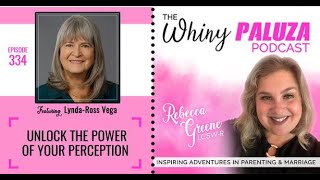
In this Winey Palooza podcast episode, host Rebecca Greene interviews human‑diversity coach and author Linda Ross Vega. Linda shares her unconventional career path—from working with juvenile offenders to corporate project rescue, then partnering with clinical psychologist Dr. Gary Jordan to develop Perceptual Style Theory. The theory posits that everyone filters raw sensory input through an innate perceptual style, shaping behavior and skill acquisition. Six innate styles are described—Activity, Adjustments, Flow, Goals, Methods, and Vision—each with characteristic preferences and strengths. Linda outlines practical ways to discover one’s own style: solicit trusted feedback, use free or paid assessments, and follow the “4 Ps” of skill development (Permission, Protection, Power, Promotion). She applies the framework to parenting, advising when children can meaningfully assess their style, how to nurture strengths through exploration, and how to navigate family conflict by recognizing differing perceptual lenses. The conversation also addresses women’s self‑criticism, the importance of community (“posse”), and self‑care practices such as recognizing “glimmers.” Listeners are directed to Vega’s book Unlock the Power of Your Perception and her coaching site yourtalentadvantage.com for further resources.
Chapters
Hello everyone, this is Rebecca Green for the Winey Palooza podcast, and I am very excited today because I get to talk to the wonderful Linda Ross Vega. Linda Ross, thank you so much for doing this with me today.
I'm excited for our chat. Been really been looking forward to it.
Me too. I was just telling Linda Ross that I have been reading all about her and getting all excited to talk to her. She is a human diversity coach and an author. She has so much to teach us today. And I really want to start with what inspired you to become a human diversity coach and author?
Oh, gosh, I love that. I think I have always been curious about what makes people tick. It's been one of my lifelong things. And I had a really odd, uh, or diverse, shall we say, background. I, when I went to college, I thought I wanted to work with juvenile offenders in the police system. Uh, I, I did that. I, you know, got my degree, and then I went, oh gosh, I met them and I, I really did enjoy it. I realized I really wanted to be on the front side as opposed to the back side of that activity. Um, and I, I, uh, sort of fell into corporate America and technology and ended up doing a career in systems and stuff there. And part of what always was a challenge for me is how do you match people to what they do best? Because if they're doing something they really enjoy and they have a natural aptitude for, you know, they— things get done on time, people are happier. Um, and so I sort of developed a specialization of helping to rescue projects that were in help, were, were, were, that needed help, that were in trouble. And in the process of doing that, I ran into one that really challenged me. And I, uh, reached out for some other tools and resources. And that's how I met, uh, Dr. Gary Jordan, who's my business partner. And he's a clinical psychologist who had done his doctoral thesis on style theories. And so we were all about how do we match people with tasks at hand? How do we, how do we get to the fact that we all see life differently, but yet there's commonality and we all have the same kind of life experiences? And how can we leverage that for folks? And so that's how we developed, uh, Perceptual Style Theory. And that's how I sort of refocused my process again and moved out of corporate America and moved into coaching and seminars and stuff.
Well, I mean, this is so fascinating to me for someone who loves human behavior. And, you know, I really don't know exactly what Perceptual Style Theory is. I don't know if you can explain that to us at all and how we use it to leverage our natural strengths. How do we do that? How do we understand that?
Sure. So Perceptual Style Theory basically describes the process of perception and takes it a step further and how it impacts your behaviors. So if we look at the process of perception the way we define it in the theory, you take in information through your 5 senses, and it's raw data when you're taking it in. So it's sight, hearing, touch, smell, and taste. And research says, you know, generic research in the field of psychology is that the average person who has all 5 senses gets about 75% of their input from sight, about 20% from hearing, and then taste, touch, and smell sort of round it out.
Okay.
So if you think about those things happening, we're constantly taking in information, this raw data, and it's hitting our brain, and our brain has to do something with it to sort it out and decide what's important, what's not important, what do I pay attention to, what can I totally ignore? And that's where perceptual style comes in. It's literally a filter that we were born with, that the raw data comes in and our brain makes meaning of that raw data. And think of how important it is to have a filter. If we were bombarded with all that all day long, we would be in such overwhelm, we wouldn't be able to do anything, right? Yes. And so what happens is we filter it. So raw data comes in, we filter it to make meaning, and then our brain does one other really, really great thing, and it checks a validation against life experience. So those memories you've stored and experiences you've had, your brain has cataloged those for you on things that are important or unimportant, you know, fun stories versus life lessons. And as you're making meaning, your brain is also saying, has this been true for me before? Is this something new? Is this, you know, do I pay attention because I have no frame of reference? Do I have frame of reference to continue to refine my thought process? That sounds like a lot, but it literally happens in nanoseconds. It's sort of like the blink of an eye.
Pretty amazing.
Well, it is. It's fascinating. But it does explain how we can all, you know, the standard police show thing where they have 7 witnesses and they've all seen something slightly different, right?
Yes.
But it explains why that happens, because we don't all filter the same way. And that's where perceptual style comes in. And so with perceptual style theory, we've defined 6 styles that basically everybody has one. You're born with it. You— it's innate, not inherited. And you— it, you know, your awareness of it grows over the years as you start to settle into what is meaningful for you and what you value and those types of things. But it's definitely influenced by that style. And then because of that, there are going to be behaviors and skills that are so much easier for you to do because they're very congruent. They're in alignment with how you see the world, you know. So you've got all this potential, and it's, you know, we all have to learn skills, right? We don't just pop up one day and know how to do something. But I like to use the analogy of riding a bike. So when you start, you're trying to understand movement and balance and coordination and arms and feet. And then once you've got it, it's like muscle memory. You can get on a bike again 20 years later and you still have the basics, right? And that skill development is so much faster and easier when it's a natural— it's supported by your perceptual style and what you naturally see. And the other thing that's fascinating is that it continues to grow and develop. Um, the example I like to use here is you've met somebody that you just think is amazing at doing something, and they try to tell you how it is they do that, and they skip all the beginning stuff, right? Because for them, they, they've forgotten all that how to start from scratch. They're into— it's grown and it's exploded and it's natural for them, and they're trying to recreate that learning process for you. And that can be hard, but that's what happens for a natural skill, is it just continues to grow and blossom. So, so that was a very long way of explaining the theory. And so then how do you use it is you basically learn what your perceptual style is, and then you can use action guides and study and just practical experience to do more of using those skills that you have the potential for. You know, sometimes we don't recognize our natural skills because we take them for granted. We assume that everybody can do it, which is not true, right? Yes. And being human beings, we like to focus on what's missing. You know, that's also part of our brain development, right? Back in the days when we were hunters and gatherers, we really needed to know what was missing all the time because it was life-threatening.
Safety. Yeah.
But now it's that, that proven fact that You can have 22 compliments and 1 criticism, and you're going to remember the criticism, right?
So true and so very sad.
It is. So we try to, you know, we all have blind spots and weaknesses, but the whole thing about where joy in life is, is trying to focus on the things you do well and put those other things in perspective because we can't be everything to everybody. Nor do we enjoy it when we try. Right.
I agree with that. And I don't want to put you on the spot, but can you tell us these 6 different styles? Is that too complicated?
Oh, no, it's real easy. Um, so, uh, I'll do them in alphabetical order because that's the easiest way for me to remember them. So there's Activity. These people jump into life with both feet. They are real experiential learners. Okay? And experience is what gives them meaning. And you'll, you'll see, you'll, you'll get a taste of an activity person when they keep telling you stories to help share their experience, right? So that you can experience it the same way. Um, there's adjustments. These folks probably see the most complexity there is in the world. They see ripple effects and cause and effects and, and connections and things. Um, they tend to be very language-oriented, you know, because they can use refinement and nuance, and they usually have great wit as well because they have such an ability with language. Um, there's Flow, and these people see the natural connection and rhythms of life and how things depend and support on each other, and they are very in tune and have a natural empathy for relating to other people and how things around them are affecting the people. You know, so they're, they're natural community builders. Um, there's, there's goals. These folks are— see the world in terms— they understand nuance and complexity, but they believe that usually the right answer is the simplest and more straightforward. You know, the world is more binary, a little more black and white for them because there's A problem, it needs a solution, not 6 months of discussion. It needs a solution today, and then we're going to go to the next problem, right? And if by chance that solution that was determined right on the spur of the moment doesn't work out fully, they'll change it, no problem. But it's, you know, it's moving forward and win-lose type of things. There's methods. And these folks are amazing at putting things into step-by-step, repeatable, reliable processes. So they tend to take complex problems and break them into small pieces, um, and that are doable for everybody. Uh, they're also champion list builders. They don't just write a list, they reuse their list. They've got reusable lists because they see those things. Very logical, very observing, very rational in their approach to things. And then last but not least is Vision. And these are the folks that are sort of forward thinking all the time. They see opportunities and possibilities just about everywhere. They're great slogan people. They're the, you know, follow me over the ridge. We're going to have such a good time on the other side. Won't it be great when this is done? You know, so So they're always looking for opportunities and possibilities. Natural poster children for optimism. Um, so, you know, we, we show the 6 styles in a circle. So it's like everybody has a piece of that circle. And if you think of this circle as objective reality, which none of us can really see, right? Right. Um, what we have is we're all seeing our piece. Of reality together. If we're sitting in a room and we saw the same thing, we'd all have a little bit different to come through. We, we probably could build as much of an objective reality as possible, but we're seeing, we're seeing our piece, so we don't always see the same things, and different things have importance.
Well, yeah, and I— and as you're talking, I'm, you know, obviously listing people in my life and putting them into categories, and right, it's just it's so fascinating because we can use everyone's strengths together to achieve things. Like, I do better with someone who has different strengths than I do to work together.
Yeah, exactly.
Yeah.
And it, it, it explains a lot. And the other thing I would say before we get into all the fun of this thing is that, um, labels are for boxes and not for people. And so The reason for coming up with a tool like this and language around it, like naming the styles and naming characteristics, is to help people have a shortcut reference in their minds. Right. It's sort of like how we learn the names of flowers and genus and species in science. Right. It helps us get an immediate picture in our head of what we mean. So that's what makes the tool valuable, to have simple labels and things like that. But people are really complex, and you're You're not just your perceptual style. You're the combination of your perception and your perceptual style and your life experience. Yeah. And that's why you and I can have the exact same perceptual style, but we'll express it slightly differently. And we will, you know, some things will be more important to me because my life experience says I really need to key on these. And your life experience says, ah, no big deal. I'm gonna focus on this other part over here. Right. We can bond easily if we have the same style because we know the basic process and how it's going. And it can be very exciting, actually, like, oh, we're thinking the same thing. I can finish your sentence. But our life experience will kick in, and that's what makes us unique.
So, yeah, I mean, I've never met two people who are the same.
Exactly. Right.
Exactly.
They can have likenesses and they can understand each other, but they're not the same. Right.
Exactly. Well, and I heard that there's three easy steps to learn our own natural strengths. Ranks. Is that accurate?
It is.
It is.
You can start without our book or without the theory. It's pretty easy to do.
So tell everybody, tell everybody your book before you jump into the answer.
Okay. The book is Unlock the Power of Your Perception. Uh, it's available on Amazon, um, and it goes through the theory and it goes through the descriptions of the 6 styles and it goes through some of these steps I'm going to describe. But here's what you can do, is to start focusing more on your strengths, because that's really where we want to start. You know, self, self-empowerment, self-development is about understanding yourself first, because if you don't understand yourself and you don't like yourself, it's really hard to do that for other people, you know. So you got to see the best in you too. So the way to do it is pick 2 or 3 people that you really trust, okay? People that will tell you the truth. And ask them to give you 2 or 3 things they really admire about you. You'll be surprised. Um, there'll be something there that you'll think, doesn't everybody? There'll be something there that feels validating, like, oh my gosh, they noticed. That's so nice, right? But there'll be something there that you learn. And the point is to then start looking for the times when you do it without realizing it, or looking for more opportunities to do those skills that they admire in you. And that's the way to start reframing to a strength-based mindset. Now, You can go further. We have a free assessment, and we also have a really thorough paid-for assessment. But both of them give you some results that give you even more potentials of your natural strengths that you can look at and refer to and look for opportunities to use them. So, um, with skill development, you probably do some of this in, in your working with families and kids for sure. We like to talk about the 4 Ps for skill development. Um, we borrowed 3 of them from transactional analysis. I don't know if you're familiar with that. It was— it's a psychological approach to therapy, uh, developed by Eric Berne in about, I think, the 1950s, something like that. It became really popular in like the '70s and '80s, and it has a real solid place in Um, but we borrowed that. And so the first three are: to develop a skill, you have to have permission, right? Either from a parent or someone in authority, or for yourself when you're an adult, you have to give yourself the okay to go do this.
Yeah.
You need to have protection, like you need to protect yourself from catastrophic failure. So What would catastrophic failure feel like? Well, if you're trying to learn a skill like planning, don't start with a, you know, thing for 150 people for 4 hours. Start with a small dinner party for friends.
Yeah, I like that advice.
Yeah. So you're going to start small because the growth, the psychological growth, the development growth, the awareness of your skills is the same. But it's so much safer. And you know what most people think of as catastrophic failure is embarrassment. You know, they're embarrassed or they're, they're afraid of being made fun of, or, you know, that they will somehow feel like a failure. And by starting things small, that's a much easier way to do it. It's back to our bike analogy. It's training wheels. It's the walking bike. It's training wheels. It's, it's your, I like that. Your parent or the person that's helping you holding on to the seat the first couple of times you try without, you know, it's, it's that word cushioning. There may be a fall, but it's cushioned. It's not scary. It's, you can get back on the bike. So protection is very important. Permission, protection. And the last is, we call it power. And that is, you need to feel good about the skill when you're doing it. Either because someone says great job and makes you feel good, or, you know, it's the applause, or it's the thank you. It's the, it's the joy of having done it. And when you're doing natural skills, it's interesting, as you develop them, the joy is in the doing. The joy is in the doing. Now there's a fourth P called promotion. Oh, okay. So that's basically when you and I have different perceptual styles. This happens to parents all the time. We all suffer from this. And we really want our child to learn something, and it's hard for them to learn it the way that we do it, but we're promoting that our way of doing it is the right way for them to learn it. Right. And, yeah, and, you know, if there's some things in life you really need to do that, and you can, you can take the brakes off as the child gets older. But, you know, don't touch a hot stove is don't touch a hot stove. There. We don't, we don't need to see it differently, you know. There's a— right, right. There's some things you need to do to protect your child and teach them. But when we're promoting something, it's like we're— and we do it as adults to employees, to friends, you know, if you would just do it this way, you would be better. So we're promoting what for them, for that person, will be an acquired skill. And we all have acquired skills. You can't live without them. But the point is not to build your life around them. And when something is overpromoted, we spend all of our focus doing this thing to try and master it. We can get really, really good at it. So acquired skills are not a statement of quality. They're a statement of quantity. If you are doing a lot of acquired skills, the easiest way you can figure it out is, are you exhausted at the end of the day? Is what you're doing more fun when you're done? Is the feeling, you know, the feeling of accomplishment when you are finished, as opposed to when you are doing it, you know, revved up doing it, that's probably natural. Do you feel like, oh my gosh, I'm slogging through this and I'm finally done? That's probably acquired. Right? And so when you're looking at shifting to your strengths, you don't give up acquired skills. My goodness, you've worked for them. You've mastered them for a reason. But if you can approach things more from your natural strengths, you'll know when to draw those out and when to use them to augment your day as opposed to be the basis of your day.
Sounds like we all have a lot to learn, but you know, it will, you know, exactly.
It's normal. And, and the thing is, is that some of us are lucky enough that we were encouraged to do what comes naturally to us. And so we feel that freedom. And when we go to try new things, we just inherently understand from that previous experience to just give something a shot and see what happens. Some people absolutely didn't enjoy that. You know, they didn't enjoy that freedom as children or as young people, or they were, they were slotted into a career because, you know, all of our family are engineers, um, and they just don't enjoy it. And so sometimes that's a reframing thing that needs to happen.
But, and I love, I love that you're talking about career because I think that we as parents start to see what our kids shine in.
Yes.
And we see them head— like, I see my son heading towards data science because he loves that stuff. I headed towards therapy because I was always helping people with— I was always talking to people and helping them with their problems. So I think we do— a lot of us tend to go in the area of our natural strengths.
Exactly. I think so. Again, when you've had that kind of encouragement and environment. But if you've had a childhood that encouraged you to not be you, wanted you to have different— like, let's say you're a really active child and interested and defocused easily in rabbit, squirrel, and that's part of the enjoyment. And that can happen to activity kids as they're growing up. Then it can be, well, you need to be more formal, you need to be more staged, you need to be more whatever. And what you end up with is someone being interested in something but not sure how to go about it because they, they feel like they've dampened their enthusiasm for it.
Um, okay, so as a mom to 3 children and to all the moms listening, I mean, give us some advice to help our kids with their style and their strengths. I want to promote that? I don't want to—
I love it. Yes, exactly. So the first thing is, I will tell you that we don't give assessments to, uh, kids younger than about 15 or 16. Okay. Reason for it is, is that it's words, right? So you need to have a vocabulary that you need to understand, and you need to have enough life experience and ego, uh, separation that you, you know what you like, not what you've been told that you like.
Oh, I like that.
Yeah. Okay. So we find that we've done work with like juniors and seniors in high school, and that seems to be a really good age to be able to help them, you know, uh, learn from it and see what their strengths are and help, help guide them a little bit. Um, younger kids though start demonstrating their skills early on, and you'll, you'll notice you'll notice things that your kids are gravitating towards, you know, between the 3 and 5. And, um, I'm sure you're probably familiar with Piaget, the child psychology, and the brain spurts, growth spurts. And so you're going to see more of the natural skills showing when your child hits about the 8 to 11, because that's about— that 8 is when we're— they're finally getting some levels of, uh, understanding consequences, understanding, um, what they like, you know, because they've sort of done exploratory. Um, and then by 11, 13, you start to see really, really definitive, you know. And I think that the, the key is, is to recognize that it's highly likely your child doesn't see the world same way you do.
Mm-mm, not at all.
No, in my, in my family, we have, we have, uh, two children, and, uh, none of us have the same style. It's really, really common. I mean, think of it, if we think about the styles, we're most likely opposites attract, opposites repel. So it's highly likely your, your, your, your parents are not the same style. And then because it's innate, not inherited, it's— you only have, you know, what, 2/6 of a chance that you're going to match one of them. Now, sometimes you do, but it just seems to be the luck of the draw. We have no— we have no idea, uh, research-wise, what causes it. But we have— our research shows that all 6 styles are evenly distributed in the world. No gender differences, no cultural differences. So it's pretty much, it's there, right? Um, so the point is, is that your child is probably going to be different than you and you can pick up on the cues of the things they like or the things that look harder for them that you think should be really easy for them to get.
Yeah.
You know, like, why can't you remember to do this? And it's like, literally it doesn't sink in because it's not important. Um, and so it's, it's, uh, childhood is so much fun. Or can be, but it's also such pressure in learning. And, you know, from social skills to, you know, intellectual skills. And it's looking to see where your kid looks to be really tired and helping them to help you come up with something that would make that easier. Because part of going to school, right, is learning some of the things that We don't all do, but that gives us a great background, right?
Yeah.
So we're not talking about teaching eagles to swim or rabbits to fly, but we are saying, okay, so this particular thing is difficult for you. How could we break it into pieces? Or what would make it more fun? Or you sort of engage them in, in coming up with ideas and potential solutions together. And then you'll be able to see which things work and be able to encourage that a little bit more.
Really good advice. And I, and I wanna tell you that I can guarantee you that there's multiple perceptual styles in my house, and I think everybody listening would agree with me. So we have all these different perceptions, all these different styles. You've got married couples, you've got, you know, grandparents, children, friends, like, help us with conflict is inevitable, but it is. But can you help us with the aversion, the conflict that we have with differing perceptions?
Sure. I love that you said conflict is inevitable because it is. We can't avoid it. But what we can do is mitigate it and put it into perspective. I mean, everything doesn't have to be a sword to fall on or the hill to take. And some conflicts, some, it's okay to say, we don't agree, how do we move on? And usually, excuse me, we will be disagreeing at a level of detail. And the way to find commonality is to keep moving that up to a higher, a higher conversation or more generic conversation type thing. What we do with perceptual style as a tool when I do like relationship coaching or things like that, is the key is first understanding how you see the world, right? And then understanding a little bit— you don't have to understand a lot of it, but a little bit about how that other person sees it differently than you do. And by understanding the difference, it can help you reframe or pick different words to communicate what you're thinking. I'll give you a practical example. So my husband is activity, I'm vision. And so one of the things about activity people is they, they're very experiential oriented. So, you know, it's based— they use words like always and never all the time because they have real meaning for them. It always has been true for them, or it never has been true for them. Vision people tend to be situational, you know, where the opportunity, the opportunity, possibility people. So maybe it didn't work last time, maybe it'll work this time. So always and never are not part of my vocabulary.
Right.
And he'll say, you always do this. And I can feel the hackles go up on the back of my neck. Right.
Yeah.
That is like, no, I don't. Right. But what you learn is that's his perspective. It's not judgmental. And the way I was hearing it was judgmental. So that's just a small little nit. Vision people tend to talk in, um, here's the key highlight bullet form when they're trying to get a point across and sort of leave out some of the context if they don't know better. And you can be dealing with someone who needs context and you didn't realize it. So they, they've taken what you said and misinterpreted from what you intended because you didn't give them the amount of information they needed in order to be on the same page as you, you know. So it's learning little tricks like that that help communication.
I mean, I'm thinking of an example in my head of someone that I severely disagree with, and I understand his perspective. He doesn't understand my perspective, but I don't agree with him, and the conflict keeps coming up, and it's based on his life experience, and my life experience is completely different, right? And it's like, it's just this constant conflict that I'm trying to just— I don't— we can't solve it, but it's hard to deal with. And I know it is.
It is. And it's life experience, because we can't distill our life experience and have someone else experience and get the same meaning from it that we have. And sometimes, I mean, we really believe there are unsolvable conflicts, and it's the ones that are based on life experience. And, and it's so, it's like we just need to be comfortable agreeing to disagree. And so how does that, how does that then help us move forward? Is this something we're going to knock against every time we're trying to do something together, or is this something that we're going to recognize that, hey, this is You know, like my husband and I have, oh, this is going to date me, but those old Bayer aspirin commercials used to be Headache 101, and it would be, you know, the repetitive, like, we know that this is. And so we'll just look at— there's some things that's just like, nah, we're not going to agree. And we find ourselves getting into the circle of it and go, whoa, wait a second, isn't this the one where we're just not going to worry about this? Ah, yeah, okay. Calm it down. Yeah. So, you know, it's— you feel frustrating that there's no resolution, but I guess the comfort in there that I try to share is that neither person feels total resolution. They both wish the other person understood it the same way they do, but it's okay that the other person doesn't. It's not malicious. They're not being twits. You know, they're not trying to purposely hurt you. They literally don't see it the same way. And that's good. Let's move on.
I respect that. And I think that I have learned the older I get to just agree to disagree sometimes.
Right? Right.
I mean, we don't have to convince people to agree with us.
No, no. In fact, if everybody agreed with us, we'd be bored.
I would be so bored.
We would. And honestly, fewer things in the world would get done because we wouldn't have different approaches and different ideas to getting it done, you know. So yeah, it's, it's really valuable. I mean, the, the sayings like no man is an island and things like that, they're truisms, they're truths with a small t, because we all function better in community than we do alone. And look at the— look at the research on children and I— what I— early isolation does on the development of behaviors and personal value and things like that. Or even in today's age, the, the, the, the difficulties we had as a human population in the aloneness that hit us with the pandemic. Oh yeah, the aloneness. And, and it was, it was palpable for people and It was tough to get over, and people had to find a new way to connect, you know, thus Zoom, or, you know, letter writing, something. But it's just feeling alone and nobody to chat with, and people not smiling at each other anymore because they were hurrying in and out of whatever they were doing. Now we're coming out of that, but it, it was an incredibly vital life lesson that the whole world got at the same time. Yes, we did. That community is important.
Very important.
It helps us be our best selves, and it helps us belong and feel value.
So I think, so I think in my journey with this podcast, I have really wanted a female community, and I'm sure that there's men listening and they are welcome to listen, but I will tell you most of our listeners are females.
Right.
And I know how hard women are on themselves, you know, mothers, wives, you know, career-wise, so much self-doubt, so hard on themselves. Can we give them some help with that to shift their perspective on that?
I love that. Yes, we can. Let me, let me just— I'm trying to see how I want to go about that. So first thing is that we are all our own worst critics.
Mm-hmm.
Right. And, um, we tend to give more credibility to that bad roommate in our heads some days, the one that rethinks and replays and says, oh, you should have, or they're not calling you because they really hate you. Those, those negative things. And, you know, and that's part of our brain trying to help us protect us from hurt. It's, it's a well-intentioned function of our brain that doesn't do us a lot of good, you know, when you're thinking, when you're being a self-critic. And so I think that the most important thing is to spend a little bit of time making sure you're really comfortable with you and know what it is that you do well and know what it is that you don't enjoy. And isn't it nice that somebody else can do that and you don't have to do it? Okay, so that you can kind of set yourself up for— if I'm going to have to go into something and I know this is not my favorite thing to do, I'm going to be a little more gentle with myself today. I'm not going to plan 7 things in a row. I'm going to plan just 1 or 2 and a small little celebration. Um, I heard something the other day that I love. It was the opposite of a trigger. Is a glimmer. Yes. Yeah, I love that.
I love it too. Yes.
And I like that concept of, I think, being aware of the things that feed your soul, that, that are part of how you think and make you feel good and make you feel like you're adding value. Being able to do a little bit of that every day adds those glimmers. Mm-hmm. Adds those glimmers, right?
Yeah.
And then I think the other hard thing for all, for women, all of us experience this, is that I don't know whether this is cultural, but we all seem to think we need to do it all too much.
We expect too much.
And we expect too much. And we share that with each other, like, oh my gosh, I'm exhausted. I'm trying to do this. And we hear each other say the exact same things, but we don't We don't stop each other from trying to do it all, right?
I do have a friend who does try to stop me, so let's give her credit right now.
Okay, let's give her credit. But I think that's really important, is to have that in your life. I think having someone that you can chat with, or a group of someones, um, I have a dear friend that refers to us as her posse.
Yes, I love that.
These are— this is my posse. I need to talk to some, some people.
I need my posse.
I need my posse. I need to check it out. But I think that that's the important thing. And I also, um, so I would advise anything that you do, any tool that you use, or books that you read, or just friend conversations that you have that help you explore what's important to you, what, what you feel good about for yourself will help you get that foundation so that you can deal with the challenges of life from a foundation of your natural strengths, as opposed to a, oh my gosh, what do I do this time, looking over your shoulder approach. Because when you are comfortable with your strengths, it's easier to say, this is not in my wheelhouse. Who do I know? Who do I know that has this in their wheelhouse? Let me tap them. Right? As opposed to, oh my gosh, I'm going to have to go figure this out and I'm going to have to do this whole thing by myself. And that's not there. But other times it'll be like, oh yeah, I got this one. This is, this is mine. I can go all day doing this. This is wonderful. So I think that that's the most important thing. And it's, yeah, I've read several, there's, you know, so much out there about how to reframe negative thoughts. But it's to try and recognize them for what they are. And I, I, one of the other sayings I like is forgiveness is the act of letting go of the idea that you could change the past.
Hmm.
You know, so sometimes you just got to forgive yourself. Yep, it was an inept try, or yep, you didn't do your best, or you weren't showing up that day. Okay, so what do you do to move forward? What do you do today? Do you call and say, let me help you with this. Sorry about that other thing. Is it just something you need to do for yourself to just let go of the self-recrimination of something? Um, you know, looking at things in hindsight and thinking we should have done it differently doesn't always help us. If you can look at something and say, ah, lesson learned, presented with the same situation. You know, you know, the next time I think I'll try this or this to do that part differently, or I could have taken a deep breath before I reacted, or, you know, okay, those are life lessons that we just have to practice. None of us are perfect.
Well, and I love that you're teaching us to be a little gentler with ourselves.
Oh, it's critical. It's critical. I mean, no one— it being a parent, being a mom is tough. No one gives you a manual.
You know how many manuals I read about parenting? I laugh so hard and I say, all the classes, all the courses, all the books— you need experience.
You do.
You just need experience.
It's what happens. And I'm a stepparent, and I, I kept saying, I, I came into the family when the kids were 13 and 14. And I kept looking at my husband going, where is the reference guide? I, you know, I, I, I've skipped into early teenage and I've missed all the cute hugging my leg part, you know. So, you know, where are they? I mean, it worked out great, but the point is, is that you, you just don't know. And your children are different and they have different personalities and what they need at different times is different. And then we have that whole complexity of first and second and youngest. And, you know, there are so many aspects to being a parent that you cannot have it right all the time. All you can do is give it your best shot every day.
Well, and I, and I love that you say, I think we, we really spend a lot of time getting to know people.
Yes.
And I think that what you're teaching me today is it's about getting to know ourselves better and getting to know our kids better. Because as you're talking, I'm thinking about, you know, how my daughter loves to organize and the other two don't. Like, we're seeing What do they love to do? What are their strengths? And we're getting to know them.
Exactly. Exactly. And it's— I remember where a train of thought went a little earlier is that I like to believe that school age, you know, up through high school is the one time in your life that you really can kind of experiment with things with abandon. Try different sports. I don't like those. Try different courses. As you're finding what you like. And the more opportunities you can give your kids to experiment a little bit in learning things—
I love it—
the, the more you'll see their strengths start to pop through, because they'll be making decisions about what they like and don't like. And the more limited we keep them, the less experience they've got, then that whole 'grass might be greener on the other side,' 'if only I were a cheerleader,' or 'only if I'd played,' you know, 'if only I had done' football or something, but it's giving them different opportunities to try things and put them down.
Really good advice. Really good advice. I mean, I've asked you— I'm looking at my questions. I've asked you so many questions. I mean, is there anything else that you think there's important, that is important to share before I let you go?
No, I think, I think we've covered all the basics. I think the most important thing, I mean, if you're interested in perceptual style, great. You know, we've got the tools for you. Do it. But there are other tools there too. The most important thing to do is spend some time being confident and learning about yourself and stand in your strengths, because standing in your strengths is the thing that's going to make the journey of life more enjoyable. You know, it's that old thing, happiness doesn't happen. It's what it's it's constantly interwoven in your day if you allow it. But it's not, you know, not the destination you're going to next Thursday. And so what you can do each day to be able to feel grounded in who you are, that's the most important thing. And understand self-care and when to turn, you know, when to send the bad roommate out for lunch and when to not do too much.
We talked about that too. Doing, you know, doing a little less maybe.
Exactly. We all need down days where we just are kind of relaxing and doing something to just feed our minds and feed our souls, whether that's reading a book or playing with plants or doing nothing for an hour. You know, that's, that's delightful.
I agree. Well, can you tell everybody where they can find you?
Oh, sure. Our website is yourtalentadvantage.com. That's our coaching business. You can find the book Unlock the Power of Your Perception on Amazon. And we, you know, blog and do all sorts of other stuff. So if you're interested, you can find us best in those two places.
You're a busy lady. Well, I appreciate your time and your expertise today.
Well, thank you very much. I enjoyed the conversation. It's always so much fun to talk about this stuff.
I love it. I knew I was going to love this topic. Well, I want to remind everybody to spend every day laughing, learning, and loving. Thank you. Thank you for joining us. Thank you for tuning in to the Winey Palooza podcast. If you like what you heard, please be sure to subscribe so you never miss an episode. While you are there, leave a review. I love to hear your feedback. Thank you so much for listening. Until next time.
This show has been produced by Market Domination LLC. To discover how you can have your own show completely done for you, and turn it into a real published book and become the authority in your marketplace, go to www.marketdominationllc.com/podcastoffer. 49 faces looked to him in triumph. Over the last 12 months, they had each taken turns and promoted his business for a week at a time, driving over $987,342 in revenue. What if you had a network of 50 centers of influence who promoted your business every week for a year? Grab your copy of the number one Amazon bestselling book, The Ultimate Guide to Growing Your Business with a Podcast, at 33% off the Amazon price by going to ultimatepodcastbook.com. Again, that website for 33% off the Amazon price is ultimatepodcastbook.com.










