Episode 336: How to Discover Your True Self through Resilience
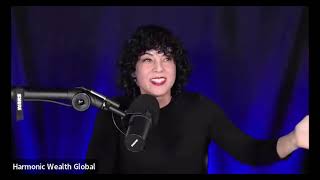
In this Winey Bluesa Podcast episode, host Rebecca Greene interviews Bursobe Ray, a survivor of the Iran‑Iraq war, religious persecution, and multiple personal traumas who has transformed into an intuitive consultant and co‑founder of Harmonic Wealth Global. Bursobe recounts her early life in Iran, where bombings, the revolution, and the imprisonment of her Bahá'í father created a constant sense of danger. After her father’s daring escape and subsequent capture, the family endured further violence, including the rape of her mother by a guard. The family eventually fled Iran via a perilous smuggling route through Pakistan. In the United States, language barriers, low‑wage work, and unsafe neighborhoods led Bursobe into gangs, cigarettes, drugs, and early addiction. Determined to break the cycle, she embarked on a “cleanup work”—a rigorous process of detoxifying body, mind, and spirit—supported by her husband James, who himself had rebuilt his life after prison and business loss. Bursobe describes her intuitive consulting practice, which blends tarot, soul‑retrieval, and collective‑consciousness work, emphasizing that true healing requires discipline, not just meditation. She outlines the “harmonic wealth” framework, a five‑area model (financial, physical, mental/emotional, relational, spiritual) that must be kept in dynamic harmony rather than static balance. Throughout the conversation, Bursobe stresses resilience as the foundation of self‑knowledge, the importance of shared values in relationships, and the pivotal role of women in shaping family and society. The episode concludes with practical encouragement for listeners to recognize their brokenness as a gateway to wholeness and provides her website and social media handles.
Chapters
Hello everyone, this is Rebecca Green for the Winey Bluesa Podcast, and I am very excited today because I get the privilege and honor to speak to Bursobe Ray. How did I do?
You did fantastic.
She has such a beautiful name. I was practicing before I met her. I was a little bit off.
You did well.
Well, um, I don't even know where to start. I mean, she's going to tell us about her amazing life and everything she's gone through, and we're going to learn so much from her. But I want to start with the fact that you were born in Iran during the tumultuous Iran-Iraq War. She overcame a childhood—
whoa—
overcame a childhood marred by trauma and displacement. To become an intuitive consultant, helping others heal from their past. With her profound experiences of resilience and rebirth, she has dedicated her life to empowering individuals to reclaim their power and find healing. Wow. Did you find meaning from everything you have gone through? Did I find meaning? Yes, you did. 100%. I am, I am not wearing my glasses. I'm being stubborn. And it looked like You, it said that you overcame childhood married by trauma. And I'm like, she was not married in childhood. No, I was not.
Thank God.
Oh my gosh. So let's start with, can you share what it was like growing up in Iran during the war and how those experiences shaped your early perception of life and resilience?
Ooh, that is a fantastic question. Well, uh, we're getting deep. Yes, we're diving in deep. Well, growing up in Iran, uh, imagine one of your first childhood memories being bombs dropping. That were my experiences. Yeah, I remember the first, um, not the first, but we got really lucky. We had, if you imagine, if wherever you are, just walk outside and count 5, 6 houses down. And that's where one time a bomb dropped. And it, and that, when you hear something like that, you will never forget it. And we got so lucky that it didn't land on us. But that, that was every night. There wasn't—
Oh my gosh.
Yeah, it was during the day, it was at night. So it, my idea of what the world was is that it's not safe. Mm-hmm. Not at all. And having, because of what was going on between the war and also the revolution, the so-called revolution that happened in Iran, we were always watching our backs because of our faith background and religion. It was, we had a tough time. And because of that, I mean, I could go deeper. Do you want me to just go into it?
I mean, I, you know, I want you to dive in deep here.
So that, that, okay, so that's, that's one aspect of it, was having to— the idea that the world is not safe, and any moment you could either get shot or a bomb could drop on you, you could get blown up. And when the beginning of the, um, it was kind of the beginning of the revolution or so Maybe a few years into it, the military came and broke down the door, came into our home and ripped my dad out and threw him in prison. And the reason why was because he was a Bahá'í and that, you know, unfortunately they were giving the Bahá'ís and the Jewish people and the Christian people a really hard time. So when they threw him in prison, they took all of our gold. They took all of our music for whatever reason. I'm not sure why. So he ended up going to prison and the, what the sentence of going to prison there meant that it's death. He's not coming back. And luckily enough, he did come back. And from that point on, they said, okay, we can't stay here. We won't be able to have a life for us or for our kids. And they're more, more so thinking of us and my mom being a woman, because if you're a man there, it's okay, you'll make it. You know, you can live, you could work, you could live a lot more comfortable than a woman could. Um, so the second time We decide, my dad said, let me, I'm gonna go to the States. He had to escape. And how you escape from there is that you find people that you pay and they smuggle you outta the country because you can't leave.
Oh my goodness.
Yeah. So he said, let me go so I don't put you guys in danger. So he came and unfortunately he got caught. Oh yeah. And when he got caught, my mom thought, this is it. That's it. We're never going to see him again. And it was pretty traumatic. And she couldn't work because she's a woman and she was a bai. So she would get cigarettes and she would sell cigarettes so she could provide for us kids.
Oh my gosh.
Yeah, it was horrible. And so this time, um, she— when he went to prison, she, she went to go visit him. And unfortunately, when she went to go visit him in prison, um, she was, uh, raped.
Oh my gosh.
By the, uh, guards there. Well, if you want to call them guards.
That's terrible.
Yeah. And, uh, and since something like that around those times that it was so, uh, common than not that it happened to me as a young child. Oh God. Yeah. And father wasn't around, mother wasn't around. So those kind of things were, uh, unfortunately they happen.
And was this a guard? Was this just someone on the street?
This was actually a neighbor.
Oh gosh.
Yeah, it was, uh, and you know, at that age you don't, you have no idea. I think you, the first time was probably 3 or 4 years old, which is, yeah.
The first time. Yeah. So you're dealing with a war. Your father not being there with you guys, your mother getting raped, you getting raped. I mean, it's bombs, it's, it's everything. How are you surviving through this?
So, um, when my father, he finally was able, thank, thank God he made it out the second time because I, he made some, you could say, you could call them allies in, in prison. Where he was able to make it out. Because when he went there, he would count every night of how many shots were being fired because they were killing people at night. They would pull 'em outta the cell and shoot 'em. And he would count 200 shots every single night of how many people were dying then. I mean, it was brutal. It really was brutal. A lot of people died when that—
I can't believe this.
—thing was going on. Yeah. So thankfully when he made it out, we decided that we're all going to go as a family. And, uh, so we found people, we paid them, and they smuggled us, uh, out of the country. And we— and the way it happened was that, um, it was in the middle of the night, there was no lights, it's in pitch black, and this guy is driving like a madman. And we're all in the back of a pickup truck, and you have to be super quiet. You can't No peep. Just driving. I don't know how fast he was going through the desert until we luckily made it past the borderline into Pakistan. And then from there was, uh, it was a celebration that we made it.
I mean, I mean, I can't believe that he made it out twice. Yes. You got to, you got to teach us how he did that.
I know.
And I can't believe you all made it out. I mean, that is some some talent.
Yes, he— okay, so the way he did it in prison was he was kind of, um, I, I— maybe a tough guy is not the right term, but they have this kind of a, uh, it's a workout they do in Iran. It's a, it's a very traditional workout, and, um, only certain, uh, groups and men are capable of doing this. So then he would join and he made ally friends kind of with one of the guards there. And so they would do these, it's called varzeshe bastani, but you know, for your viewers, it's kind of hard to explain what it is, but it's very, what do you call it? Rhythmic movements that you do for a very long period of time. And so he would do this with some of the guards there, and that kind of gave him a little bit of, uh, I guess you say chops, where they respected him in a sense. Okay. So he had that thing about him where people didn't mess with him too much. So they, they respected that in him, that he wasn't, um, uh, like, coward is not the right term, but he wouldn't fold or be scared. Because when you do that, then they attack you more, you can say.
I mean, talk about resilience. I mean, your father is the beacon of resilience.
Yes, yes, he took some beatings in there too, where they would take them and, uh, uh, whip their, um, what is called whiplashes every— I mean, it was brutal. And when I think about just their story alone and how they made it, and I'm— that makes my jaw drop too.
My jaw has dropped since I met you, so I'm just gonna let you know that. So I know that there was some experience with gangs and drugs. Was this before you escaped? This is—
no, this is all after. This was after.
Okay, so can we talk about that and, and how that influenced you?
Yes, of course. So when we came to the States, um, we obviously we didn't speak the language, um, and parents had to go to work from like 6 AM till 1 PM at night working. Oh my gosh. Minimum wage. And they're never there. So then, you know, what's raising us is the television. And because of the amount of money they're not making, we lived in really bad neighborhoods. So you can imagine the people that were there was migrated towards. And the only attention that we're getting, or I was getting, was by the wrong crowd. So I started smoking at a very early age. I was about 12, I think, but I hit it, and I was hanging out with the wrong people. And, you know, you do these things— if I think about it now and reflect on it, is because it's being driven by the pain of all the things that you experienced prior that you didn't know how to deal with or cope with, right? Now you're like, oh, cigarettes, drugs. Oh, that makes me feel better inside. So that's how all that went. And my nickname when I was in my younger years was Baggy. So you can imagine what kind of clothes I wore. I was like a little hoodlum. If you would've seen me then, you, you would not recognize the same person sitting here.
Not at all. You look, you look beautiful today. That's all I know. Thank you. Oh my gosh. So, okay. I mean, we know you're in a better place. And, and I can only imagine the list of stuff that you could tell us that you've been through to get here. Mm-hmm. But, you know, you're an intuitive consultant, which is, like, amazing to me. I think that's the most amazing title ever. Can you tell, tell us the path? Tell us how you got to that and what exactly it is.
Okay, sure. So this is something, uh, I've heard this and I, I don't, I don't know if it's rings, if it has truth to it or not, but I've seen it from my experience. Um, I've heard that this is, if you have this intuitive capability or something, it's, um, within the family, you could say, uh, genealogy of some sorts. And I only say that because my mom does, has it too. But she does coffee readings. Oh yeah. And she's really good. Like scary good. Like you don't want her to read it if you're hiding something.
Could she do it on Zoom?
She can. Yeah, for sure.
Oh my gosh. We gotta get her on here. Okay. I'm sorry. Keep going.
No, you're okay. So, um, this was something that I've seen growing up and I've always felt it. My thing is that I'm able to feel people's, um, feelings way too much. And I've always— it has scared me because I saw what I saw with my mom and some of the things that I experienced that you wouldn't normally see growing up, you know, besides the other stuff. So I kind of stayed away from it. And the other reason I stayed away from it was because when you have that capability, what happens is that not only are you feeling other people's stuff, That stuff goes on top of your own things that you feel, and then it's just like chaos. Too much. Yeah. And if you don't know how to handle your own stuff and you have other people's coming in, then you, you know, the drugs and the cigarettes and the alcohol and all that, because you don't know how to handle it. So, right, when I started doing the cleanup work, which is get rid of cigarettes, now let's deal with what's coming up, what was burying that because of the cigarettes and the drugs. When I did that and I did the cleanup work and diet And there's a lot of things that go into cleanup work, and it's not fun. But if you can get through it—
What made you want to do the cleanup work?
Oh, I so wanted to experience a life. Didn't have— let me put it this way. I wanted to be able to sit on the couch and not need any kind of cigarettes, drugs, alcohol. I wanted to be perfectly content just sitting there not needing anything. And that's what I wanted to experience. I wanted to experience being a completely different, well, completely new person and not having to be attached to my, emotionally attached to the experiences that I've had to run my life. I wanted to have my freedom. My sovereignty is what it was. And that's what I went after. I'm like, I have to experience that. Before I exit this life.
That's amazing that you felt inspired to do that, because I think a lot of people are not there yet.
Yeah. You know what? From my experiences, I've realized when you get to a place that you've experienced so much pain that you've just had enough, like in the Toltec tradition, say, they say, get back into a corner with a dagger hanging over your head. When you get to that point, you, you do what's necessary. You have to. It's like, it's like your crossroads, you know. You get one. This is your last opportunity. Are you going to take it? Are you going to keep doing the same thing you were doing? You're just gonna wither out, and it's a, it's a, it's a life that it's, it's wasted.
Was it smooth, or were there lots of bumps getting clean?
Oh, it was the hardest thing that I had to ever go through. I bet. Given everything else that I've experienced, the cleanup work was horrific. And no matter how much, like I say, how bad or how horrible it was, I don't think it really explains it because what happens is everything that I was stuffing that happened to me, from the war to sexual abuse to, uh, physical abuse to verbal abuse. I mean, all of it. I've experienced all the abuses. It all starts coming up. Now you gotta deal with it, then you gotta clean it up. So when I started doing my cleanup work, and my husband— my husband now helped me with this, and he was a great help, support. Then you— what happens is your body, your channel starts becoming clean. So now other things start coming in. And I was hesitant about doing this intuitive consultation work. I was like, I don't know, you know. And then I tried it on someone. I said, let's do it for fun. Let's see what happens, you know. Yeah. So we did it and it was It was, it blew me away and it blew the person away because afterwards we're both sitting there going, what just happened right now? And we're looking at each other. I go, did you feel that? And he's like, I felt it. Did you feel it? I'm like, I felt it.
So, so give us an example of what this looks like. Okay.
So how I do it is I do with Tarot. I do tarot reading. Hmm. And so let's say you come to me and you say, you know, I have— I keep getting into the same relationship and it's a horrible relationship, let's say, right? An abusive relationship, whatever. And I don't know why I keep doing this. I just— I can't find the right person. We'll just use that. And I say, okay, so then we go— I do— it's a meditative process. I say, okay, so let's go in. I have you go inside. And then I have you access, uh, it's all associated to a feeling inside of you. I have you access that. Let's say there's a pain that you have, uh, a hurtful pain that you have associated to relationships. I have you access that, and then I take you back to where that first originated and have you relive that experience. It can be a trauma, and it's really hard for people You know, I totally understand that. And I have them re-access that, relive it, and then they get a completely different perspective on it. They reclaim, you could say, your soul. It's like a soul retrieval. Wow. They bring it back, and it's very powerful. And when I— the first time I did this, I saw the, the relief that the person got. And the results, and I said, holy crap, I can't— I don't have a choice but not to do this for people because this is what I did for myself. And if I could do it for other people, I mean, if you can experience being a sovereign being, meaning that your past experiences don't control your emotions and you can choose how you feel about certain things and, and not be controlled by that, It, it's, it's a beautiful life to live. You're absolutely free.
Can you do it on yourself or does it have to be on somebody else?
It's very hard to do it on yourself. I could, I could go in to figure out what's, um, I can feel, uh, what it could be related to or connected to. Then I'll have, um, then I'll need someone to guide me through it. So I can get to it. Yeah.
But it's some— that's some— that's some talk about deep stuff. You have a term that you tap into called the collective consciousness. Yes. Is that correct? Can you explain to us what that is? Because I would love to hear about that.
Oh, of course. That is— okay. So Take your own awareness and consciousness of just your own world. Okay. Now, if you go, um, take that further out, you could take it to your family that's within the house. So just, just that area there, all those, all those things affect us. And sometimes what happens is that we do things that were, um, we do, and we're like, well, I don't know why I did that. Why did you do that? It could be because, you know, you've got other people's thinking and thoughts and feelings that's affecting you as well. So now if you go into the collective, let's say right now in the world, it's a little, you know, it's a little hectic, right? We can say that. So if you don't think that that's not driving all of us, you, you gotta think again, right? So if, if the mass majority of people are feeling fear, oh, you're gonna feel it too. And if people would pay attention to that, then you could take a step back and go, whoa, wait a minute, I'm just— I don't— because it's almost like getting caught by the herd, and then next thing you know, you're like being pushed and you're like, what is going on right now? But if you're aware of that, you could totally pull yourself out and go, hold on, How do I feel about this? What's going on? Is this even my own thinking, or am I being affected by the collective?
Yeah. I totally see that happen even within our family. Yeah. Right? Mm-hmm. Yes. One person can influence the whole house. That's all I can say.
Oh, for sure. Oh, that's absolutely true. It's usually the women. I'll just say that.
Yeah, no, that's true. It's like, it's like we're the heart of the home in a good and a bad way.
Yes, no, that— yes. And women, yes, they— yes, the home is the most important environment before you go out into the world. And the woman is, is the, uh, is her kingdom in there. Absolutely.
Well, we're talking about family, so I want to talk about yours, and I want to talk about your husband. You met James, and it says here in my tons of notes that you helped him rebuild his life, which, you know, to me sounds amazing. And it sounds like you helped each other. So can you talk about meeting him and helping him? Sure.
So James has, yeah, he has a very interesting story himself. I think that's why we get along so well and how we met. But he had a falling out in his business too, in his life, and it was a big one. And, um, when we met, and this is when, when, I don't know, your audience doesn't know the backstory because I met him when he first got out of prison. That doesn't sound— I know what, what happened to him was really tragic. And in my eyes, when I met him, I felt like he was, it was just not right. It was unjust what happened to him. Mm-hmm. So, and he, he was a person who, I don't know if you're, if you are familiar, if your viewers are familiar with the movie The Secret. He— yes. Okay. So he was, he was the guy in The Secret, the genie guy. You know, your wish is my command. That was him.
Wow. Now I got to go watch it again. Yeah.
So he had went through a terrible accident where he lost his entire business and his entire, his reputation, everything going from the peak of being on Oprah and Larry King and all that, going to the pit of being homeless and having to go through prison. I mean, it was horrible. So when I first met him, I had actually gotten out of my first marriage, which I was divorced. Okay. And I met him and I saw him speak somewhere and I thought, and the way he spoke and what he was talking about, it was so real, raw and real that it spoke to me. And I thought, I, I, there's something there and I want to be a part of it. And the more I got to know him, the more I was like, you know, this isn't— this doesn't feel right. What happened to him does not feel right. And it's, you know, because it was my own thing too, because I know what it feels like to have things happen to you that are not just, that are unjust. So I, you know, I said, I'm gonna— I'm gonna help. And that's how we met, was I started working for him. And I was, uh, I run all the, you know, the graphics and the, uh, the AVs and all that stuff. So I started doing that and then we became really good friends because we would be together all the time in meetings and this and that. And then, you know, there is a little bit of attraction there and then we talked about it because we're like, we don't know if we want to mess this up because it's like Right? Yeah. So it took a little bit before we decided to get into a romantic relationship. But once we did that, then we decided to get married. But all of that, you know, we really helped each other do the cleanup work. And I think that's really important for relationships is we set our— we do this yearly thing where we sit down and we talk about what we value. What our values are, right? Not only for our personal values, but values for our relationship. And we do this every year. And when, when there's some kind of, uh, miscommunication, or we have arguments— because, you know, everybody has their arguments, not all roses and, you know, butterflies, right? Had a really rough time together, uh, we would sit down and talk about it. And I think one of the most important things in this marriage, because I was previously married, is that it's really important to find, to be with someone who shares the same values, not the same interests. You know, people say, oh, we have so many things in common. Well, it's not the same thing as having the same values. Same values is like for us is that we both strive to be a good person, right? Like he grew up in a home where they all sat around the table and had dinner or ate together. I didn't. So we do that now because it's so important as a family unit. You sit down together, you eat together. So it's those things. It's been in, in this life, if you would've told me 10 years ago that this would be my life today, I would say no way. Because I couldn't even, I couldn't even picture something like this. For myself. So, I mean, I—
you have no idea how happy I am for you. You're smiling, you're talking about some really heavy stuff that I'm still thinking about.
Yeah, you have. I've done the work. No, you've done the work well.
And you are, you know, you're both so resilient. So we have to talk about resilience. I mean, I think that's the most important quality that people can have. Oh, for sure. And you, you say that knowing who you are is the key. Does that sound right? Does that sound like your words? Yeah. Can you, can you tell us why that is?
Okay. So when you get to the center of who you are, your true self, your soul, your true self, that then you have a place of, um, a solid foundation where you can stand on, and, and there's no moving you once you have that. Once you have that stance, that stability, nothing can shake you. How you get there is letting go of all the baggage that we carry around with ourselves. And here's like, I work with individuals because here's the thing, even doing these like, uh, intuitive integrations and processes there is a certain point you do them to. And how that works is that you, you do them to the point where these things are no longer controlling you, right? So now you're at a point where you have to discipline yourself to do what's necessary to do. Like, I can't— when you— for someone who's an addict of any kind, you have to put in the work of, I am not gonna do that no matter what I feel. Or what I'm going through, I'm not gonna pick up, for example, a cigarette. I'm not gonna do it. That is the, that's where the resilience comes in. That's where the discipline comes in. You have to have discipline. And the more you push yourself in something you don't wanna do, the bigger bandwidth you have to be able to have, to be able to take more and your resilience becomes more. And that's how that grows. But you can't, like I tell my clients, I'm like, you can't process your way into making magic happen. That doesn't work. You got to put in the work. You have to do the hard things, clean up your diet. You have to exercise. All these things matter. It's not just let's meditate on this and it's going to go away. It doesn't work. Unfortunately, it doesn't work.
It sounds so nice though. That sounds so nice. No, right? I wish. I wish. Oh my gosh. It applies to so many things. So many things. I mean, I said to my husband, whatever we were stressed about, I was like, so normally I would go eat my feelings and I'm not going to go do that.
No, I get it. I totally get it. Yeah. Because in that moment you're like, oh, this is making me feel good. Yeah.
Well, you're talking about cigarettes and I'm like, I never wanted to smoke a cigarette, but I did want to go get some chocolate. Yeah.
No, I, I, I get it. You know what it is? It's— this is a very great example because the, this, the feeling that you're trying to, uh, feed, that content feeling, is the same thing an addict is trying to do. Yeah. With cigarettes. It's just the same thing. Yeah, exactly.
And taking control is a good feeling. Yes. Right?
Do that, it's like you're unstoppable.
Well, I mean, We can all hope to be unstoppable. Oh my gosh. Well, you talk about a shared route to success across all areas of life, and I would love to tap into that.
Say that the first part again. I missed that.
I'm sorry. That there's a shared route to success across all areas of life. I mean, what could sound better than that? Yeah.
Yes. So what we do in our business too is that when we talk to people, we tell them there's 5 key areas of your life that you have to attend to. And normally people go after financial or physical, and the physical is just, I want to look good. Which is not the, you know, that is, that's not why you do it. I mean, it's nice, but that's not the main reason. Right. So we talk about you have financial, which is just a small part of it. Then you have your physical body, which is eating well and taking care of yourself and working out and having movement. And the other one is mental. Which also counts as your emotional. So you have to clean. So what do you watch? What do you listen to? What do you read? All those things count. I know it's definitely— So not the Real Housewives. Oh yeah, you can't be sitting down and looking. What is this, soap operas? You can't do that.
Oh my God, so much drama. My husband's like, turn off this crap. I'm sorry, keep going.
No, but you're right. But think about it, right? Even that, the watching the drama shows, that is what's putting inside of you. So you're already, it's like you're creating this chaos that's not necessary that you don't need on top of your own.
No, it's true. You're right. Right. Oh my gosh. I interrupted you. No, you're okay. You're okay.
You're okay. And then you have relational. So this is relationships, not only with your romantic partner, but with your kids. With your friends, with, with food, with, you know, just every— because one thing James says is that, you know, the quality of your relationships determines the quality of your life.
I love that.
Yeah. Right. Really good. Yeah, it's powerful. And the last one is spiritual.
That I was just I was just gonna ask you about spiritual. I have it right here. Strong spiritual base. I was literally just gonna ask you that. Okay, so that's number 5.
Yeah. So that's on— we have what is called a harmonic wealth. And if you could have all those 5 key areas in harmony, then you have a fulfilling life because we don't say balance because balance and balance, he says nothing is moving. When it's in harmony, because sometimes, yes, you have to attend to your relationships more than you have to attend to financial, for instance. So it's always this moving target that you have to attend to, but you always attend to each one of them, you know, a little bit. You don't just neglect one and go towards the other because that's what throws you off. That's what throws us off in life. And that's what we talk about. Is to— you have to have all those keys. You have to work on all those. That's what makes us who we are as a human being.
Can you talk a little bit about how we can focus on the spiritual part? Like, how does the spiritual part help you?
Yes. So this is hard to define. And everyone has a different way of experiencing that, whether it's religion or meditation or however you want to do it. How I come from it is that all of life, I look at it, all of life is actually a spiritual act. We're spiritual beings having a physical experience. So I don't believe that we were sent here to ascend. No, I think you need to bring what's over there down here, right? So everything that's in this physical, tangible reality came from a spiritual place in order for it to even come to fruition. So the more you clean this up and get all the junk out, the more you're able to access and bring into the physical form to put to use. Because what is the point of going and meditating, uh, you know, sitting down and meditating for 20 hours, 20 years, whatever, and you're not bringing it into the world to do anything with it?
That, that's That's my take. Very interesting. It's all so interesting. And I know that there's people listening who are probably struggling right now, and you have gotten through so much. So can you give them, you know, some last piece, last words of wisdom?
Okay. So for you listening, if you feel, if you're broken, if you feel broken, No matter how broken you feel, I promise you that you can totally become whole and live a fulfilling life. It's totally possible. I promise you that.
That's really good advice, cuz I think people get very hopeless. Yes.
No, I, I know exactly how that feels. Yeah. Yeah.
Well, and you have such a rich, full background. I mean, I just, cannot believe everything you've been through. There's no way that I asked you everything. There's no way we covered everything. Is there anything that you think you need to share right now that I didn't ask you?
I believe you got— you, you got— we got through quite a bit.
I thought I tried. I get so many questions. I'm like looking through, I'm like, how many questions are you gonna ask her? Oh my goodness.
No, that's fantastic. No, I, I love it that your, um, your listeners are, uh, you know, ladies and families out there. And I will tell the ladies, your job— I will say this to them— your role in the house is so important, and it's been so minimized by society. You as a mother, as a grandmother, as a sister, you have such an important role in this life. Because we're the ones that shape society. So remember that. Remember who you are and how important you are.
Oh, that, that is so meaningful what you just said. Thank you for saying that. And tell everybody where they can find you.
Okay, you, you can find me on, uh, go to harmonicwealthglobal.com, and we're all over social media.
Well, I mean, I can't thank you enough for sharing with us and, you know, giving us your story and your wisdom, and I really appreciate it.
Oh, thank you, Rebecca. This was fun. I enjoyed it. Thank you for having me.
This is Rebecca Green, and I want to remind everyone to spend every day laughing, learning, and loving. Thank you for tuning in to the Winey Palooza podcast. If you like what you heard, please be sure to subscribe. Subscribe so you never miss an episode. While you are there, leave a review. I love to hear your feedback. Thank you so much for listening. Until next time. This show has been produced by Market Domination LLC. To discover how you can have your own show completely done for you and turn it into a real published book and become the authority in your marketplace, go to www.marketdominationllc.com/podcastoffer.
49 faces look to him in triumph. Over the last 12 months, they had each taken turns and promoted his business for a week at a time, driving over $987,342 in revenue. What if you had a network of 50 centers of influence who promoted your business every week for a year? Grab your copy of the number one Amazon bestselling book, The Ultimate Guide to Growing Your Business with a Podcast, at 33% off the Amazon price by going to ultimatepodcastbook.com. Again, that website for 33% off the Amazon price is ultimatepodcastbook.com.










