Episode 483: Powerful Life lessons in Parenting, Marriage and Purpose
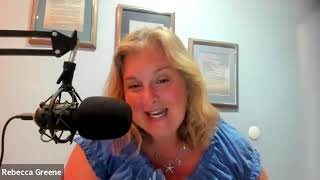
In this episode of the Winey Palooza podcast, host Rebecca Greene interviews Dr. Casey, a certified life, love, and sex coach, seven‑time author, ordained minister, Army veteran, and founder of Speaking Freedom. The conversation begins with Dr. Casey’s harrowing childhood—her mother’s attempted murder, chronic neglect, and early exposure to trauma—and how those experiences sparked a lifelong mission to help others heal. She recounts her path to the military, describing how the structure, discipline, and a profound spiritual encounter in Iraq shaped her values and provided a framework for resilience. Dr. Casey explains her theory of "Spiritual Human Behavior," a blend of psychology, purpose, and spirituality that underpins her books and coaching practice. She shares practical relationship advice, emphasizing the role of sexual intimacy as a tool for honest communication, the importance of aligning marital goals, and the need for couples to understand each other's love languages. Parenting teenagers is addressed through gentle‑parenting principles, empathy, and modeling self‑awareness. Dr. Casey also discusses how stepping out of comfort zones is tied to discovering one’s purpose, and she outlines the various ventures under the Speaking Freedom umbrella—including Good Head Group Media, The Aligned Soul, and Love Gang—highlighting her commitment to providing secular spiritual resources. The episode closes with a concise piece of wisdom: approach others with love and compassion to gain deeper understanding, and a reminder of where listeners can find Dr. Casey’s content across her website and social platforms.
Chapters
Hello everyone, this is Rebecca Green for the Whiny Plousa podcast, and I am super excited today because I get to talk to the amazing, fascinating, brilliant Dr. Casey today. Dr. Casey, thank you so much for doing this with me today.
Of course, of course, of course. I love that you invited me on your show.
Well, I, I told her before I pressed record that she is just like— I have so many things I want to ask her because she is just so qualified on so many things. So let me tell you about this fantastic woman. She is a certified life, love, and sex coach, 7-time published author, ordained minister, Army war veteran, founder of Speaking Freedom. I mean, do you have any free time?
So the way my life is set up, I, I make time. Okay, truly, um, everything that I do with my business are things that I would do if I had free time. So I worked at University of Phoenix once upon a time, and the question that I would ask my students is, what would you do if you didn't have to worry about money ever again? Like, what would that be? And when I came to a point to where I could apply that to my life, that's exactly what I did.
So I got That's such perfect advice already. So Dr. Casey is a single mom, an intuitive speaker. She helps people heal from childhood trauma, build self-love, and live their soul's purpose. Dr. Casey blends psychology, spirituality, and real-world grit, drawing on experiences that include surviving an abusive childhood, PTSD, and sepsis. She wants to inspire wholeness, inner peace, and fearless love. Like, could you be any more amazing?
Like, Ah, thank you so much.
One of the best bios I've ever read, I just want to tell you that.
Thank you.
So I would love to know, there, there must have been a turning point when you transformed your deep childhood trauma into a mission of healing and love for yourself and others. So tell us what inspired that.
So, um, at 17, well, when I just turned 17, my mother literally Tried to kill me, beat my head on the concrete, strangled me until my eyes was rolling in the back of my head. Thankfully, I had a friend that was there also, and a man, a mystery man in a white suit in a white Cadillac, you know, one of the old Cadillacs back in the day. He got out of his car and helped me literally and took me to a phone booth so I could call the police. I would say enduring trauma from my mother was probably the most pivotal thing for me, um, because she wasn't all bad. Um, it's just what I've learned since is that in our family we have generational things that kind of have happened. So, um, parents sometimes put their kids off on the grandparent or somebody else, um, while they pursue their dreams or whatever. And so it was just a matter of her her, I don't want to say not wanting me, but not understanding how to appropriate time for me in her grand scheme of things. So when that happened, I just felt like there's no way that God allowed me to experience this and not help somebody get through it or not help somebody else. And I think at 17, that's when it really became or felt like a calling. Um, after the incident, I used to talk to friends on the phone about the Bible and just different stuff, and it was a little bit different for me. I've always felt like a minister of sorts. I've always given advice to older cousins, friends, and everything. So I think it's always been a part of my nature.
That makes so much sense. Was it a pattern of abuse? Was this like a pattern for your mom?
Sort of, kind of, but not really. So when my brother turned a certain age, they got into a physical confrontation and he ended up moving out. And then for me growing up, I ended up living with a lot of friends. So I might live with a summer, uh, my mother worked night shift, GM. So, um, that really is a time-consuming experience anyways. If you've ever known somebody that worked for auto plant and you talking about 16-hour days, 12-hour days, and then still needing to do whatever they were doing. And I recently told my mother I just didn't like being left home alone. I was always smart and independent, so she knew that she could trust me in those situations, but it was a lonely experience. So I would go and spend a night at a friend's house over time, and I think that set her up in the mindset to where even though she had a child, she didn't have a child because everybody else was doing the grunt of the work. And so It was more a pattern of neglect, I would say. I was abandoned in Kentucky once and had to find my own way home. It was just a series of little things, but it was because of lack of parenting, because of lack of presence. And so the incident actually unraveled because she told me that I wasn't shit. I hope that's not a bad thing to cuss on your show. Response was, well, I am an example of you, so if I am not shit, then, you know, hey, it looks like you aren't either. And that's what, um, spun her out of control that day. Um, and so that in itself has been an interesting thing to deal with because over the years I've had to stop talking to my mother for years at a time, you know. Um, and protect my own peace. Um, of course now— well, not of course— now we are in a better place. But even as recently as last year, um, she had like a little spaz out, and I don't understand what it was from, but she wasn't getting her way. And it, it was, you know, not the best experience. But it was before we were supposed to go visit, and that just canceled the visit. So I don't know if maybe it was an emotional thing for her, because she could be dealing with stuff to where, you know, traumas from her past is making her feel some type of way, even with us coming to visit. So, um, I just— I don't, uh, overly blame her because I understand that there were circumstances that happened to her childhood and her mother and things like that. So over the years, it has helped me to help others see past the trauma that they experienced with their parent and kind of put in perspective the parent's trauma and things that have gone on in their life that made them eventually act like that.
Do you feel like that's what has helped you overcome the trauma and overcome the PTSD is the understanding?
Definitely. So I study psychology. One of the reasons why I study psychology and human behavior is because, one, I like to understand people in general, but it was also helping me understand myself. So it was things, whether it was depression or the different narratives of PTSD, is like a wide range of things that could be going on with a person. I know a lot of people think that it's exclusively like a war veteran type thing, but post-traumatic stress disorder can come from any trauma that you experience, whether childhood, birth trauma, or, you know, relationship trauma, whether you experience somebody close to you dying or something like that, that can also create a PTSD type of thing. So I think that understanding psychology and the nature of human behavior and how things coincide and go together is the— has been the most helpful thing because I know that The way you act is not just how you're acting based on what's going on right now in this moment. It's really how you're responding to trauma from your past, if you've healed from that trauma, or if you've reimagined what that experience was. Because sometimes trauma can be turned into a learning lesson, and then it doesn't have the same effect when you experience, because now when you're remembering it you, you are seeing it from a different light.
I love all of that. You've come so far. I mean, it's pretty amazing. And, and I want to, I want to shift you. You mentioned the military. Okay, so tell us— listen to me laughing, it's just because I would never ever do this, that's why I'm laughing. Okay, tell us why you joined the military and tell us what that was like.
So the reason why I joined, after the incident with my mom She eventually unenrolled me from high school. Hmm.
So—
and then she wouldn't put me back in high school. Now, to give her a little grace, I definitely got expelled for fighting. And it was a lot of things going on, which was really a response to trauma. I'm experiencing a lot of stuff at home. So now I'm a ticking time bomb at school. And so after the incident, I end up being homeless. I lived with a cousin for a little while, then lived with a friend, then lived with my mom's friend who helped me get my GED. GED, and then, um, that kind of opened the door for me to go to the Army. So I ended up living on a friend's couch, um, we're in a spare bedroom, and, um, I would call and play on the military phone. Like, I would call the recruiting station to hang up. Like, I would call, and it was so funny because during this time I was also watching The Passion of Christ. Like, this was a new movie, and back then they used to bring the VHS tapes to your house. I'm aging myself here, but— So it was a combination of things. I'm watching The Passion of Christ, and I'm playing on the military phone. And then one day, I actually said something, and this person's name was Sergeant Pharrell. And when he got on the phone, he— I don't want to say that he ran game on me, but he was talking to me in a way that I could receive it. And then every time he would say something, he would be like, my name is Pharrell, because I'm Pharrell. He would just— he made it sound appealing with already my situation. That was how I ended up joining the Army. So he helped me stop smoking weed and, you know, really just did everything to open up that door for me. And the reason why I ended up joining is because after I passed all the tests, um, my graduation date from boot camp was on my birthday. So that was like I'm a— I, I haven't never realized how much I'm an alignment person. I've been all of my life until I think about moments like that, that, oh, well, I can graduate on my— that sounds like it's perfect, I should go. That was the reason why I signed up. Wow.
I mean, it's, it's just so meant to— it was so meant to be.
So meant to be.
So meant to be. So tell us how it changed your outlook on life and relationships. How did that change you?
Well, I went to the Army because I felt like I needed some discipline and structure, just because of, of course, my background that I just told you. So it gave me everything that I needed. It helped an already very determined person to get some structure, literally to learn how to set goals, to learn about, you know, just the, the nature of working together as a team. Honor, dignity, respect, you know, the very simple things of life. And I think that that helped me more than anything. So my first duty station was in Korea, which was crazy, but it was fun because it's an 18-year-old young girl. I mean, just turned 18, coming out of basic training, and the first stop is Korea. And so that was a great experience. I really enjoyed it. It was I think a great first duty station because it shaped my mindset of what the military was, but also being exposed to seeing another country and interacting in a way that most people don't get an opportunity to do. And so the military was the best thing that I did, one of the first best decisions that I ever made for my life, because not only did it take me away from where I was, It also helped instill in me values that really have set the precedence for all of my life. You know, so the best experience ever. Basic was not as hard as you would think it is. One, because in the process you realize that a lot of the drill sergeants are really nice. They are the nicest people on earth, but they have to be mean in order to do their job, you know. But it takes a person who has leadership skills skills, who want to impact the younger generation to even take the position. So it was a great experience. Went to war. That was another great, interesting experience. Would I recommend people go to war? It wasn't as bad as you think. It was a different experience. I went with, I would say, like the second wave of people that went to Iraq. So it was— we built our own facilities. We were starting from scratch, and it was interesting. It was a different experience than Korea because literally we got attacked. We definitely got into shootouts, and it was a lot. But one of the things before I went, a person asked me, "Well, what if you go to war?" And my understanding and reflection at the time was, hey, I know a person that got killed a couple minutes up the road. So it's a gamble either way. And so when I was in war, I dreamt about it. I didn't have to go to war. I had knee surgery in April. They went to war in September. I could have stayed back, but I had a dream about going to Iraq. I saw the bunk beds. I saw everything that I would eventually see in Iraq. I dreamed about getting into a shootout and everything to the point to where we were on the way to our location and one of our last breakdowns. I'm like, dang, in my dream I had to dream that we were shooting and everything, like, and the very next stop it unfolded. So I think that I have a very unique life experience because I always feel led into a place, protected in that space, and then guided to the next step because I got saved or learned about God most in Iraq. So one day I was— we had got attacked, I think maybe either the night before or a couple of nights prior. And so one of the sergeants asked me if I wanted to go to church. And I was like, you know, if nobody answers the phone, I'm about to call back home, then I'll come over there. And literally, I called every single number that I can remember. If there were 10 numbers that I had at the top of my brain, I called everyone. Nobody— I mean, when I tell you nobody answered, I mean, oh my God, absolutely not a person answered, Rebecca. And I'm just like, OK, well, I told her I was going to come. I'm a woman of my word. And I got there, and they asked everybody to stand up and pray. And I was like, I just felt so heavy. Like, I was depressed. I was just overwhelmed with— emotion. My leg was hurting. It was just a lot of things going on. And I went up to the front and they prayed for me. And when they prayed for me, I felt somebody push me down. When I asked about it, they said nobody touched me. So I fell down. I was like convulsing, or, you know, like filled with the Holy Spirit. Because when I went back to my seat, I was trying to say, thank you, God, thank you, God. And that is not what I was hearing coming out of my mouth. It was like gibberish coming out of my mouth. But I am determined to say it, and the more I try to say it, the more it is not what I'm hearing that's coming out of my mouth. So, um, after that experience, I went back to church a few times, and in that, um, series of going to church, one of the nights it was a sergeant, Sergeant Bradley, who literally pronounced all these things about how I was going to be so great and help so many women in the world, and it was just so much It was like I was in a trance during the whole— whatever he spoke over my life, it was— it put me in a trance. I get chills just talking about it now. And after that, I would say probably not even a week later, I got the orders to go back home. I ended up leaving Iraq January 11th, 2004. And I eventually ended up getting out the Army. And that was probably more traumatic. Than my experiences in the Army, because getting out of the Army is a culture shock. You get out, you're used to a certain regimen every day, a certain, you know, way of life. And then you're not used to paying monthly bills or any of those things. So it's a lot of things getting out of the Army that you have to get used to. Then you have to try to get a job. Then, you know, it's just so many things. But I really struggled when I got out the Army because I missed it so much.
Oh, I'm glad you had such a good experience. I'm just like, I didn't expect to hear any of that. That is not what I expected. I, I'm sure that you inspired some people to look into that.
I, it was, it was a great experience. Um, I definitely recommend it, um, to individuals that may be lost or they don't know what they want to do. One, because it sets you up long term, but the skills mentally, physically and sometimes even spiritually that you learn in those environments is the most beneficial thing that you'll get.
Well, and you're very spiritual and you have a term that you call spiritual human behavior.
Yes.
Can you tell us what that means and how that guides you?
Well, that's actually a book now.
Oh my goodness.
So, um, the title It is, um, Spiritual Human Behavior. It's the theory of spiritual human behavior, um, and this is a mixture of psychology, human behavior, and purpose. So the goal when writing this book— I wrote this book and 4 other books, faith books— and, um, it was really about finding myself. So in the process of getting divorced Um, I just went through a series of feelings and emotions. I was depressed for a minute. I was sad. I felt useless and worthless, although I had done so many things and had so many accomplishments already. Just the change of wanting to be a wife to now being single was a lot. So in the process, I started noticing patterns within myself that also applied to other people. So as a person that studied psychology and human behavior anyways, now I am using those great research skills from college to put two and two together. So I'm aligning behavior patterns with, um, sometimes spiritual awareness or childhood trauma, and then kind of helping you to unravel why you are exactly who you are, whether it was the, um, things that you went through, through your childhood um, and then helping you reshape how you see those things. Because sometimes the trauma is actually things that, um, you need— I'm gonna explain that in a minute— you need in order to get to where you're supposed to be. So in my belief system, and as written in the book, um, we have a talk with God before we come to Earth. I think that we sign up for whatever we're going to experience in whatever family that we're going to experiencing it. And our job as humans on this earth is to remember who God told us that we were supposed to be, what God told us that we were supposed to do, and the things that we would endure in the process. And when you get just that level of understanding, it kind of helps you kind of again look back over your life and say, okay, well, what was I supposed to learn from this experience? And how was I supposed to allow it to shape me? We don't have to go through trauma in order to learn. We don't have to be abused, misused, or any of those things. Right. Sometimes it is our decisions that put us in those positions that we need to learn how to make better decisions, how we need to learn how to see things for what they are. Versus what we hope they could be or want them to be, despite the fact that that is not literally what we see. Um, also, um, there is experience in life that you, you don't deserve as a child. Um, you don't deserve to experience. However, you can reshape those experiences to see, um, how that might have grown you, how it might have um, helped you in a way as well. Um, not being raised with my mom all the time might have made me a better person. It definitely exposed me to different families, made me more adaptable, and allowed me to see different versions of what life could be. Whether it was a married couple that had been married for years that's helping all their, um, relatives because they can't have kids, Or if it's an aunt that is the generous aunt and helps every person that they can just because they understand the struggle that's within the family. Or, you know, it's a grandmother that is a foster mom for other kids but also raises her grandkids and takes you in. You know, it's just so many different experiences that I was blessed with. Because it was people that went to church. I remember when Lion King first came out, we went to the movies to see the Lion King and I got sick. I mean, I don't know if I had strep throat or whatever was going on, but at the family that I was living with at the time, the uncle literally came and prayed for me. The next morning I was better. I mean, when I say the next morning I was better, Um, but it's those things that I was able to experience outside because my mother would never take me to church. Um, my grandmother-in-law used to take me to church from time to time, but you know, without living with that family for those summers, I would have never experienced the power that God really has on this earth. And so it's those things that help me to reshape even when I think about being abandoned in Kentucky. I learned a lot. I learned how to make sure that I'm okay. If nothing else, it taught me a couple of things. To be mindful of where I go and make sure I got a ride. I don't like being dropped off nowhere now. I don't even like riding with people necessarily because I need to know that I'm going to be able to get to wherever I need to be. Um, but when you start looking at things differently, you see the life skills that come from everything. And when you're able to see the life skills, it helps change you. So Spiritual Human Behavior is really a journey of the things that helped heal me that I also beta tested in the community. So I wrote this starting in like 2012, 2013, when social media was fairly still new. And so there was not a lot of social media managers and all of the hoopla that we see now. You are able to communicate with people and help people. And I would give suggestions to people, um, and they would take those suggestions and it would work. So I would know that what I'm saying is accurate. And so I kind of built all of my books, um, based on my own life experience, but also beta testing information in the community. And if it was— if it made sense then it made sense, you know.
I just hope that people who have been through a lot of trauma in their life, or even some trauma, if they're struggling, I hope that they are listening to you, taking this all in, and feeling the inspiration, because I can't tell you how inspiring you are. I mean, the fact that you're not like boohoo crying about your life and you have really turned it into such great things. I'm just so amazed by you.
Thank you so much. It has not always been easy, um, but even when my mom tried to kill me, a lot of times I would talk about that. I mean, I've always talked about it. It's never been like, oh no, I'm afraid. I've always been very vocal about what happened. Um, I am like a truth sayer to a lot of people, so even if I experience bad things I feel like God just want me to expose it because I, I experienced a lot of crazy stuff, like the sepsis thing. My bowel literally got nicked at the VA Medical Center. They did not document it in my medical records. And then one of the nurses was like, hey, I think you have sepsis. And that's what unraveled me looking into it. So for 9 years, until maybe about 2 weeks ago, They just now put that my bowel was nicked at the time. And so just imagine 9 years of telling people, hey, this is what happened. But they looking in your medical records like, sure, that's what happened. But now it's finally getting documented. But it really took the persistence of me not letting it go because I felt like I don't want this to happen to somebody else. Because just imagine if it was an older veteran that did not have the willpower or mental capacity to even recover from sepsis. I literally met people weeks after getting out of the hospital, like, man, I had my mom die from sepsis, or I knew this person, and I'm like, don't I feel blessed? Because it could not be this way, or I could be totally mentally incapacitated and not be able to function at all. So when you start looking at things and reasons to be thankful and grateful you stop complaining. But then you also understand that the more you complain, the more you get upset, the more your blood pressure is up, and the more problems you draw into your life just from looking at the negative all the time.
Such good advice. Well, and I, and I have you, so I want to talk about couples because you help couples too.
Yes.
And, you know, I want you to share with us, you help them strengthen their marriage through spirituality, finding purpose. Can you talk about that?
So when you get married, hopefully if you're already married, y'all are in alignment with each other. Y'all have similar goals, similar beliefs on family, love, and relationship. Um, but the biggest issue when getting married is that oftentimes we marry too quick without really understanding who we marry. And we don't get a chance to see beyond the veil of what they want you to be. So we don't really get to discover who they really are to know if it's a real match. That in itself, um, could help so many people because if we stop going so fast for the title, then we would, um, deter the amount of divorce that we see as well as the amount of frustration going into a marriage. Um, my biggest and best suggestion that if you're married, sex is important. Um, it is the bonding tool between you two. Um, I think that, um, it should be used to help solve disputes. Let me explain.
I love this, I'm listening.
I feel that if, um, if you have sex and you have an issue after having an orgasm or having that, you know, euphoric experience, I think that is the best time to talk about things that you may have not been comfortable enough to talk about outside of the bedroom. Now, there is a disclaimer, because if you still get upset after you naked and y'all laying in bed together then it might be a deeper issue that you might need to seek help to solve or resolve, or some things that you need to seek within yourself to figure out how you are contributing to the problem and how you can help resolve the problem. Because a lot of times the biggest problem is that we don't listen to understand and comprehend and accept that person for who they are. A lot of people listen to rebuttal, to change how that person think, and to, um, really get caught up in their own emotions. So if you can learn to, um, learn your love languages, because if you can learn the other person's love language, then you can speak to them in the way that's best for them. We might be together, but that doesn't mean that we love or feel love the same. You might like gifts, For me, gifts is at the bottom of the totem pole because my mother used to give me everything, but she was not present. So when you have things thrown at you, you don't value them as much because it's just something. Um, versus somebody else might feel like— I, the other day on Instagram, it was a lady, she said she's married, um, and she said that sometimes her husband doesn't come home because he's out making money. And I'm telling her Ma'am, you need to find— the, the comment was find somebody who has balance, not somebody who's going to prioritize work over family. Because at the end of the day, if your family is jacked up, your work is going to be off. And this lady argued me down like sometimes he might have to be out overnight because he's working. Baby, sound like he cheating. Because if he, if he, if this is a repetitive thing then that's a problem because a man should want to have balance. He should want to love on his family just as much as he works. Matter of fact, his family should be a vacation from work. It should be like, oh, I get to go home to my family tonight. Now the problem is, do you make your husband feel like that? Right, right.
It's— we laugh because sometimes on Monday morning my husband is like, I'm gonna go relax at work now. I mean, he's kidding, he's kidding. He works really hard, but like, you know, home with kids is— it's— we, we all love our kids, but it's not easy.
And depending on how many children you have, it is very overwhelming. And I—
so I have teenagers now, and, um, I know you're speaking to the choir right over here with my teenagers.
And then I'm, I'm at a point to where, as a mom and a sister friend to whatever mom of daughters that I meet, listen, if you think they bad now, just give it a second. Prepare for the teenage years because the cycles and the mood changes and all of that. Just try to find your inner little child in you because I used to be like that too.
Oh my God.
And for me, it's a different struggle because I'm like, well, my mom wasn't around, so I had a reason to have an attitude and to feel like, hmm. But I'm like my daughter, which some days are better than others.
Right.
And I'm kind of learning her as she learns me because I'm like, baby, I don't know when I can talk to you or not. Sometimes I just don't know because I don't want to say something and then you're not in the mood. Today. And oh my God, you're making me feel so much better right now.
Everybody listening, you're not alone.
Listen, I'm— I, I don't want to get you to your show flag, but I want to go, you are not alone. I mean, listen, it is a real thing. And you know, um, it is exciting though, because honestly like everything else, I really look forward to who she will become as she gets older. I keep saying, oh, and I tell her all the time, baby, when you get older, one, you gonna be thankful you had a mama like me because you're gonna start to talk to people that didn't have the same type of mom, and then you will learn to appreciate it.
Oh, yes.
But not only that, I'm looking forward to when you're nicer. You're just, you know, When you feel like— because we actually laugh and have fun when she's in a good mood.
Yes.
I'm just ready for that phase. So I look forward to those things, and it helps me with the trauma of today.
Oh my God. I'm like, who's going to walk down the stairs today?
Every day. And you don't know. You just don't know. And again, moms and dads, because dads see it. Even though they might not experience it as much. You're not alone.
Not alone.
Everybody goes through it. The best advice that I can give is looking forward to the future, as well as considering who, um, you were as a child in that stage, what you were going through. Not even, you know, just the mental changes, the, the high school drama. All we experience so much, but it's best if we help our children by reflecting on what we've been through.
Oh, wonderful advice. I, I did say to my mom the other day, because I was nice to her, I was, and she looks at my daughter and she's like, I know she's thinking, what are you doing wrong? I think my daughter is more normal than me. I think it's very normal to be moody and snappy. And, and I'll say to her, I know I don't say everything wrong But she definitely makes you feel like it.
This is—
oh my God. So anyways, yes, so I love your advice. I will look to the future and be excited for who she will become after all of the moodiness.
See, the thing is, is that I don't want to minimize her voice. I want her to have a voice, so I don't want to always chump her off or make her feel like she can't talk or say what she feels. And, and that's important for me. But gentle parenting is, is, is a difficult thing, okay? Because sometimes you just be, hey, you want me to pop you? Hey, hey, I know we had—
you and I have excellent self-control with our daughters. I can tell, and I'm impressed with myself every time I don't go—
I mean, because, hey, but when you think about, you know just what children are seeing on TV and social media and just the way of the world. And then a lot of shows show daughters and mothers headbutting. So yes, the shows teach daughters that that's the way it's supposed to be. Even with siblings, a lot of them show sibling rivalries. And I always teach my children, no, you cannot treat your sister— they are your best friend, even over me, because one day I won't be here and all y'all have is each other. And so It's so much to parenting. It's just a lot.
We could do a whole podcast on parenting, okay?
Listen, but if that's all that is being programmed within them, whether it is anime shows or Nickelodeon, we have to kind of make sure we keep our footing in there as well to, hey, it's not really like— it doesn't have to be like that. That's true.
I— you know what, and I don't even think about what she's watching, so that's great advice. So, you know, what I see around me is a lot of women who feel stuck, who don't want to get out of their comfort zone. You are very good at that. Can you give them some advice how to step out of their comfort zone?
So it's a little hard for me because I feel like God doesn't allow me to get comfortable too often, especially if I try to divert to another path. I took a mortgage loan officer class. I keep trying to study for it, but everything else is keep being priority. So it truly feels like every time I try to do something that's not in alignment, it just doesn't work. I applied for Delta. I need some flights. Benefits. I want to fly for free all over the world. Okay. Right. If it doesn't work, then that means it's not for me. So because my life is guided a little bit differently, it may come differently for somebody else. But the biggest thing is understanding where you want to go in life, what you want to do. And once you start tapping into your purpose, then it will help you kind of navigate those terrains. I didn't do videos for a very long time, and then I just felt the nudge to start doing interviews. So, and I think it was 2022, I started doing interviews like this. I mean, I was doing them all the time. It was making me put my makeup on, it was making me do my hair, all of the things that I had just kind of like, you know, I'm a mom, like, I just— so I kind of prepared though for when my children— as my children get older, what am I going to do with myself? I've been a a stay-at-home mom this whole time. So, um, and because I always had the book ideas and things like that, it really helped me kind of stay consistent. But the military background makes me a little bit different because instead of learning to use my machine for others— my machine being my body— um, I've learned to use it for purposeful things. So a lot of it is being in alignment with your purpose, understanding who you are so you will know what comes naturally to you. A lot of times we are forced to do things that we don't even like to do. It don't feel natural, doesn't come natural, but we've been doing it so long that we feel like we're stuck in that way. But if you really start to decode yourself, what do you like? What don't you like? Especially as moms, um, that kind of helps you get out your shell because now you're breaking the mold of who you think you have to be. And then you start becoming who you want to become. Um, the only problem with that, um, when it comes to healing, when it comes to growth and all of those things, if you're in marriages or relationships or around people that are not trying to grow, it could mess up where you— what you have going on. Um, I've seen people that have healed from childhood trauma that after they heal, they don't have a commonality or trauma bond with their spouse anymore, and their spouse is okay with the trauma and being, you know, who they've always been. Yeah. And so healing is a double-edged sword. Healing comes with growth and the uncomfortability to be who you are, but it can also come with disconnecting from people and places that really don't serve you, your purpose, or where you have to go. Um, so I always tell people, I want you to heal, but you have to be understanding of what comes with becoming the person you were meant to be, because it might not be who you are today.
Wow. Oh, well, I mean, you're as amazing as I knew you would be. I mean, you know, I have a list of more questions, but like, how long am I going to keep you, Dr. Casey? I feel like—
listen, I, I, uh, as a veteran, I, uh, I work from home. So once I get finished here with you, I will be, um, on this computer for another couple hours, honestly.
I understand, I understand. I mean, I've asked you so many questions. Do you feel like there's anything important that I didn't ask you about?
Man, you have asked me everything, and I've literally, um, touched on every single topic that um, would make a difference in somebody's life. But if there's any other questions that you have, feel free, give me a curveball here.
Oh my gosh, well, I mean, I want you to talk about Speaking Freedom before I let you go. You're the founder.
Yes.
I mean, tell us, Miss CEO, about Speaking Freedom.
So Speaking Freedom is a company that I started, um, probably about 15 years ago doing blog talk radio. And it was a radio show that I started after I stopped going to church. I was learning different things about God, spirituality, and psychology. This was when I was fresh in psychology. And you know, in psychology, they tell you how church can be a tool to control people. That was kind of the underlying tone of how it was created. And so that kind of, um, that and experiencing, uh, church hurt, um, being exposed to the reality of what church is, um, it is a religious, uh, based business. I call it the business of religion. And so when I started understanding the business of religion better, I wanted to expose that, like tell people about cults cults and the different things that, you know, can be, um, a hindrance that we sometimes think is good. I, I have a book that I'm supposed to write that's called Oops, I Joined a Cult and Didn't Know It. Um, listen, church isn't all bad. It is a great foundational tool to get you started on the right path to knowing God and understanding how God works and what what he's capable of. But I think it's a stepping tool. So Speaking Freedom kind of launched from that. The more I learned, the more I was sharing information. If you go back on my Speaking Freedom Instagram page, you will see I used to just share. I would go and look up something. My curious mind shares everything that I found informational or that could be beneficial. So I would just post all type of Word documents. I mean, I'm literally screenshotting that, so I would post 100 20-something posts a day. And so, um, Speaking Freedom turned into, um, from the radio show to me creating content. Um, I wanted to own a bank at one point. I wanted to do all of these different things, but Speaking Freedom was just still the baby. So I had used that to do podcasts and to do motivational things. Um, but also now Speaking Freedom is is the umbrella branch of, or the umbrella to, um, several businesses. I have, um, Good Head Group Media, that is the author or producer of all of my media content. I have, um, The Aligned Soul, which is a wellness, um, business that I have. I do massage therapy as well. So, um, what, what do—
what don't you— how do you have time to be trained in so many things?
All things self-care. So I do all things that have to do with self-care. Um, so the Align Soul is my massage business, which will eventually become a brick-and-mortar company, um, where I can offer courses and also, um, employ or contract with licensed massage therapists. Um, and then I have Love Gang, which is, um, now a community of non-religious believers um, and we kind of facilitate, um, a space where you can know God in your own personal experience. Um, it's a lot of things that people demonize or say that are bad, but sometimes people are using those things and still praying to God. And we just want to give space for people to communicate with God in the way that feels most natural and best for them without without any religious undertone where, no, you're wrong because you're using this or you're doing this. Um, your relationship with God should be freeing. And so, um, we try to educate and provide information that allows people to understand faith and love and self-worth and purpose, which is where all these books kind of fall into place.
Amazing. It's all absolutely amazing. So to the couple that's maybe struggling in their marriage, to the mother who's maybe struggling with their teenager. Listen, can you leave us with some words of wisdom?
The words of wisdom that I would speak to someone, um, going through anything is to, um, try to see it through the eyes of love and understand where that person is coming from, whether it's a teenager, whether it's a spouse. Whether it's a friend or a relative, um, if you put yourself in somebody else's shoes, um, you will get a better understanding of their why. It might not solve the problem, it might not dissipate the issue, but it will help you have a better understanding of why they are who they are and why they are dealing with you or approaching something the way that they Um, that in itself will help you because when you see it with the eyes of compassion, you kind of judge it a little bit different. Because if you went through what they went through, if you got to where they got to, how they got to it, you might not be who you think you are, you know, because, um, everybody goes through challenges in life. What might be small to one person could be huge to another person. And when you see it like that, it really changes how you see the world. The world.
I think that is an amazing note to end. I think that all of your advice has been amazing. And before I let you go, can you tell everybody where to find you?
I am on speakingfreedom.org. That is my main website. Um, all of my— well, not all. So on IG, on Instagram, is Speaking Freedom. On Twitter/X, it is speaking Speaking Freedom without the G, um, because somebody got my name, um, and Twitter will not let me get it back. Um, and, um, those are the main platforms. I'm also on TikTok with Speaking Freedom, and of course Speaking Freedom TV on YouTube, um, is always available. And I have over 600 or 700 videos there where you can go and find content just like this about almost any topic you could think of to help you get a better understanding of yourself and others.
Well, I cannot thank you enough for your time and your expertise. This was so much fun.
I appreciate you having me on your show.
Thank you. This is Rebecca Green, and I want to remind everyone to spend every day laughing, learning, and loving. Go find Dr. Casey.
Bye.
Thank you for tuning in to the Winey Palooza podcast. If you like what you heard, Please be sure to subscribe so you never miss an episode. While you are there, leave a review. I love to hear your feedback. Thank you so much for listening. Until next time.
This show has been produced by Market Domination LLC. To discover how you can have your own show completely done for you and turn it into a real published book and become the authority in your marketplace, go to www.marketdominationllc.com/podcastoffer.










